I just learned that UpCountry Sportfishing had to pull out of the show; I’m still going to tie, but obviously not at their table. I had planned on focusing solely on wet flies for trout, but I’ll probably do a little saltwater, too. You can find me on Tyers Row.
Also, due to some prior commitments, I won’t be able to tie the whole time. Figure something like 9am to 1pm-ish. Hope to see some of my local followers there.
The CFFA Expo is held at Maneeley’s, 65 Rye Street, South Windsor, CT, 2/1/14.
I will be tying wet flies at the UpCountry Sportfishing table at the CFFA Expo, Saturday, February 1. The event runs from 9am-3pm; unfortunately, due to some prior commitments, I won’t be able to tie the whole time. Figure something like 10am to 1pm-ish. Hope to see some of my local followers there.
The CFFA Expo is held at Maneeley’s, 65 Rye Street, South Windsor, CT.
This is one of my more popular tying classes. We explore buggy, impressionistic wets and nymphs geared toward fishing the Farmington, but the patterns and skills you’ll learn will serve you well on almost any trout stream. The class places an emphasis on using natural materials to create flies for specific hatches, as well as attractor patterns. Participants will need a vise, thread and tools. All other materials will be provided from my magical, mystical stash. The cost is $50.
Learn to tie the Squirrel and Ginger, and many other patterns that trout won’t be able to resist.
When: Sunday, February 9, 2014, 9am-2pm
Where: UpCountry Sportfishing, New Hartford, CT
Sign Up: I can’t enroll you; you can sign up by calling UpCountry at 860-379-1952.
Middletown isn’t actually in the middle of Connecticut. It’s more like the mid-point between New York and Boston. Being centrally located has its benefits. I’m 45 minutes from Housatonic stripers. Just over an hour to Rhode Island. The Farmington River is as close as 35 minutes. But to get where I was going Thursday, I needed about two-and-a-half hours. One way.
In addition to drive time, the price of admission includes a hike that sends your heart rate soaring. (And, if you like to detour off the trail to get to those feeder streamlets that tumble down the sides of mountains as much as I do, some semi-treacherous bushwhacking.) It’s definitely not for everyone. But for the adventurous soul, rich rewards await in the form of magnificent solitude. Seductively clear water. And armies of obliging brookies.
~
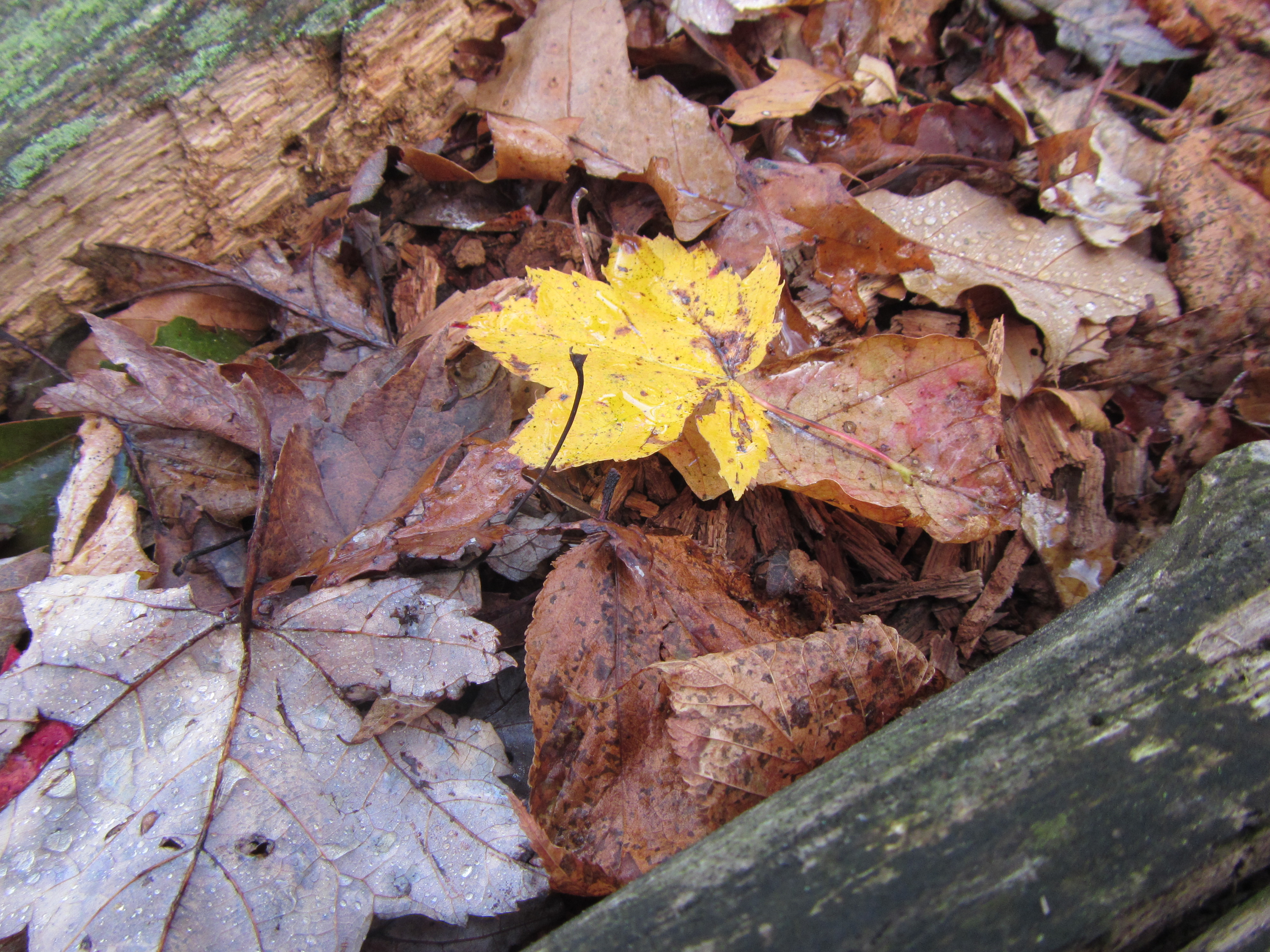
The day began grey with dense fog banks and light drizzle. My energy on the way into the woods was the typical I-can’t-wait-to-get-my-line wet rush. It usually takes a lot to distract me when I’m in hurry-up fishing mode. But I was captured by this splash of color against muted brown. Sitting here at home now, I’m glad I stopped.
~
We haven’t had much rain in the northeast during the last month. The brooks were way down compared to last fall. (And nice and cold at 50 degrees.) But even the feeders were teeming with char. Nature finds a way. Like this hemlock, growing hard against a rocky outcrop, roots searching for precious water, splayed out like the tentacles of a beached squid.
~
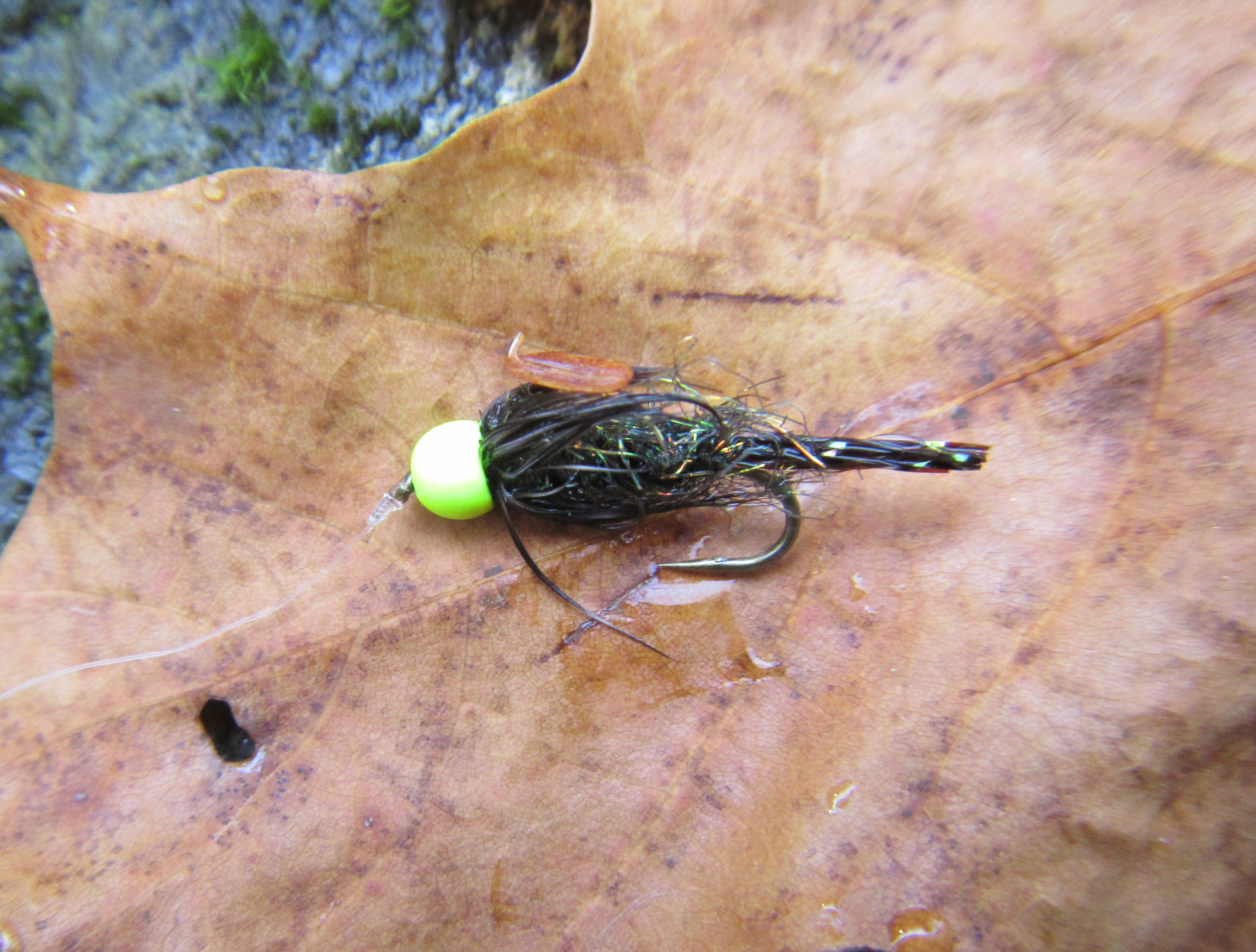
I began fishing downstream, dry, with a size 16 Improved Sofa Pillow. When streams are this low and clear, the bite is often better if you go subsurface. It’s easy to figure why. The fish are feeling vulnerable in the lower flows. Whereas they’re bashful about showing themselves on top, they remain undisciplined gluttons below. Once I made the change to weighted beadhead soft-hackles, I saw an exponential increase in strikes. The nips began the moment the fly settled beneath the surface. One of the flies I used — as yet unnamed — was a soft-hackle with a hot chartreuse bead head I tied up a few weeks ago. I could easily track the fly in the water, as well as the dark forms that would materialize out of nowhere to attack the intruder.
“Unnamed”
Hook: 2x stout, 3x long, size 14
Thread: Black
Bead: Tungsten, chartreuse
Tail: Black Krystal flash
Body: Peacock Ice dub
Hackle: Grizzly hen
~
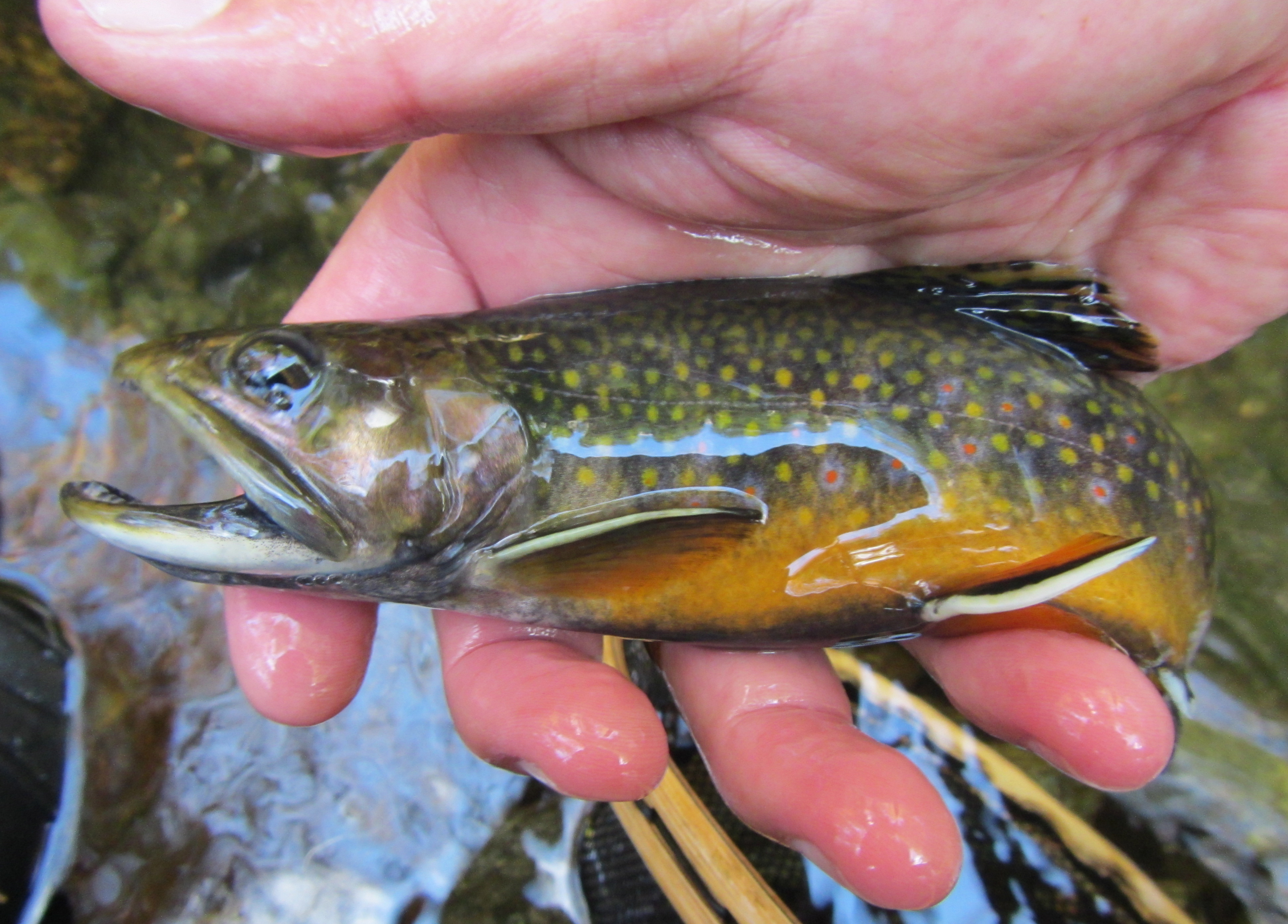
Most of the brookies I pricked and brought to hand were in the 3-6″ class. But there were a few more substantial fish in the mix, like this handsome buck, ablaze in fall spawning colors. A proper Brobdingnagian, he’s been in the brook for quite a few years.
~
Turned out nice again. It’s hard to manage the thought of the coming snow and shelf ice when the mercury’s pushing 65 and the sun is dancing off the tree tops.
~
Can you stand to look at one more picture of a brook trout in blazing fall technicolor? If we must. I could wax poetic about the Fontinalis fin, the haloed spots, and the vibrant belly. But the camo pattern on the dorsal fin is inspired.
~
Like fishing trips, all fishing reports regrettably must end. This is the fish from the photo above just at the moment of release. Till we meet again.
We haven’t had rain in a while; the brook was low and the forest floor dry as tinder. Still, I found a spirited rivulet of groundwater that wended down the fall line before tumbling over a mossy ledge. When the water is this clear and low, the brookies tend to stay in the darker, deeper sections — or in the whitewater just below that miniature waterfall next to the moss-covered boulder.
~
Vibrant red spots ringed by blue halos adorn an eastern brook trout. Brookies are the only trout (technically, they are char) native to much of the eastern United States.
~
Fall is living up to its name. The deluge of soon-to-be-ex-flora has already begun in the hills. Fishing-wise, the leaves weren’t really an issue; I only hooked a few here and there. I was looking for photo ops when I glanced down at my feet. I was struck by contrast of these two leaves against the rock, but what really captured my fancy was how, in that swift current, did they manage to find a toehold — and how are they able to so stubbornly cling to their perch?
~
A lot of people don’t know this, but Vincent Van Gogh was an avid fly fisherman. He used to jet from his estate in Holland to his cabin in the Appalachian foothills, where he could pursue his passion: fishing for Salvelinus fontinalis. The flank of the brook trout is said to have been Vincent’s inspiration for his masterwork Starry Night.
Well, at least that’s what I heard.
Fishing notes: Water was 56 degrees. Not surprisingly, most of the fish I pricked came from deeper holes, dark runs, and plunge pools. I found one abyss where there was a bona fide lunker (for this size stream) of about 11-12 inches. Pricked him twice, but couldn’t get a good enough hookset to close the deal. I tried for over a half hour, and in the end decided that that fish might be responsible for populating hundreds of yards of brook — and with spawning season so close, would be better left uncaught. I fished mostly downstream. Dry fly was a size 16 Improved Sofa Pillow; wets were a cornucopia of bead head soft-hackles. Cigar was an Aroma de Cuba Reserve maduro Churchill.
First Place Winner: James. James is an experienced fly angler who wanted to learn the ancient and traditional ways of the wet fly. He aced Wet Flies 101, got into double digits of fish, and even had a double on a February Red and a Squirrel and Ginger. Good job wading, good job mending, good job presenting. If he keeps at it, James is going to be a dangerous machine. Trout, you’ve been warned.
Almost a grownup. The signature ink of youth has just about faded away from his flanks. A spirited fish, this one. I’m amazed he held still long enough for a photo.
First Place Winner: The weather. Cool air. Warm sun. Blazing, brilliant sunshine. All day long. Water temp 59. Whoever ordered this day, I’d like to buy you a drink. And a cigar.
First Place Winner: The bite.Thank you, trout, for making my job easy. Your recklessness creates the illusion of genius in the form of a fishing guide. I really appreciate it.
First Place Winner: The hatches. See “The bite.” Caddis (smaller creamy size 16 and big tan size 12s), midges, BWOs, and especially a bumper crop of Isonychia. All our trout came on the Squirrel and Ginger (caddis) size 14, size 12 February Red, and size 12 Hackled March Brown.
James’ brown. The hardest working trout in the Farmington River? Or simply one of the many fish James brought to net?
One of the more rewarding aspects of being a part of the fishing-industrial complex is sharing experiences and information face-to-face with fellow flyfishers. I’m a national-level speaker who loves teaching, and that positive energy comes across in my highly entertaining and interactive presentations. I also do an audience Q&A session after each seminar. Some clubs like to invite their speaker out to dinner; I try to accommodate those requests whenever possible. Rates vary according to travel time and expenses. And of course, Zoom presentations are the perfect way for us to gather across the miles and time zones. To book an appearance, or for more information, please email me at swculton at yahoo.com, or call 860-918-0228. For references and testimonials, please see the comments section below.
CURRENT PRESENTATIONS
WET FLIES 2.0 (Updated Winter 2021)
Wet Flies 2.0 takes a deeper dive into wet flies and wet fly fishing. Starting with the essential wet fly tackle and toolbox, Wet Flies 2.0 explores topics like matching hatches with wet flies (from caddis to mayflies to midges to stoneflies to terrestrials); searching tactics with wet flies; presentation and rigging options to match conditions and situations; fishing wet flies as nymphs or dry flies; wet flies on small streams; and much more! If your group has not yet seen Wet Flies 101, I strongly recommend you start with that introductory presentation.
~
WET FLIES 101
As the title suggests, Wet Flies 101 is my introductory presentation on wet fly fishing. Wet flies have been taking trout for centuries — and the fish aren’t getting any smarter. More and more anglers are discovering that a wet fly is often the best way to match a hatch. Explore the wonders of the wet fly as we cover basics like wet fly types, leader construction, where to fish wet flies, and how to fish them.
~
THE LITTLE THINGS 1.0
The Little Things is a series of some of my most popular presentations. There are currently three The Little Things, each one different and loaded with priceless information that will up your catch rate in fresh or saltwater. This is the original seminar. They say that 10% of the anglers catch 90% of the fish. If that’s true, it’s not because those 10% are supernaturally gifted angling demigods. It’s not because they are lucky. It’s because they do a lot of little things that other anglers don’t. As a guide, I have the opportunity to observe how people fish. I see their mistakes as well as their triumphs. When I’m fishing, I am constantly making adjustments and trying new approaches. That’s what The Little Things is all about – seemingly insignificant practices that can make a big difference in your fishing.
~
THE LITTLE THINGS 2.0
If you liked the original, you’re going to love the sequel. We’re all looking for an edge when it comes to catching more fish. It is my firm belief that the little things are largely responsible for the fabled 10% of the anglers who catch 90% of the fish. The Little Things 2.0 builds on the theme of seemingly insignificant things you can do make your time on the water more productive. As with all seminars in this series, the lessons apply to multiple species fly fishing in fresh or saltwater.
~
THE LITTLE THINGS 3.0
The Little Things 3.0: In this third installment, we cover more of the seemingly insignificant things that can have a huge impact on your catch rate. This is all new material, geared for both veteran and rookie fly anglers, covering fresh and saltwater, and popular species from trout to stripers to steelhead to smallmouth and more. Pay attention to the little things, and you may become one of the 10% who catches 90% of the fish.
~
TROUT FISHING FOR STRIPED BASS
Anyone can catch aggressive, willing-to-chase striped bass. But what about the stripers that are holding on station, feeding on a specific bait? What about the larger bass — those that are measured in pounds instead of inches — that are not willing to chase a stripped fly? Many of the answers can be found within traditional trout and salmon tactics. Trout Fishing For Striped Bass reveals that stripers behave very much like trout. By taking a more analytic approach to striper fishing, matching flies to bait, and harnessing the power of the floating line, anglers can present flies like the naturals the stripers are feeding on — and begin to catch the striped bass that everyone can’t.
~
THE WEST BRANCH OF THE FARMINGTON RIVER
Updated in Fall 2019 with new video, photos, and content. Those who live in or near southern New England are fortunate to be close to one of the finest trout streams on the east coast. The secret is out — this is blue ribbon trout water. There’s something for everyone on the Farmington: Classic dry fly pools. Mysterious pockets for nymphing. Spirited runs for swinging wets and deep holes for drifting streamers. A classic tailwater, the Farmington fishes well year round, and offers anglers an opportunity to catch stocked as well as holdover and stream-born wild trout.
~
THE EASTERN BROOK TROUT
The only trout that is native to most of the eastern U.S., the brook trout — technically a char — has inspired generations of anglers with its stunning colors, aggressive nature, and often lovely habitat. The Eastern Brook Trout gives an overview of the species, its habitat and habits, and then the basics of small stream wild brookie fishing — from tackle to presentations to where to find brook trout water. Eastern brook trout populations continue to decline, and the more you know about these precious jewels, the better an environmental steward you’ll be.
Tonight I kicked off my 2013-2014 speaking schedule with a presentation at the Hammonasset Chapter of TU: Wet Flies 101. I’d like to thank the group for being so welcoming (What? Food? Yes! Loved the pulled pork and the slaw and, oh, yes, the chocolate chip cookie) and for asking a lot of terrific questions. You made my night an enjoyable one.
It was a slow day on the river for most of the anglers I spoke to. We were likely done in by the sudden shift in weather and the noon spike of the dam flow (the Upper TMA jumped from 370 to 480cfs; water was lightly stained and 65 degrees). Still, my friend Pete and his brother got into some very nice larger browns in the Upper TMA. As for your humble scribe, I had to be content with a mob of juvenile Atlantic salmon and one lonely rainbow trout. I was committed to the wet fly cause today — I just got an article assignment from American Angler on wets and was hoping to get some good fly-in-trout-mouth shots. Instead, you’ll have to settle for this simple flora-at-dusk portrait:
As Woody Allen said, sometimes 80% of success is just showing up. Pete had gone downstream, and I went to the head of the run. It was a-quarter-to-noon, but the bank was already in the shade. First cast, BANG! The wet flies had barely settled into the water. I saw the splashy rise and felt the weight of the fish. A bantamweight wild brown had delivered a roundhouse right to the top dropper, a Squirrel and Ginger.
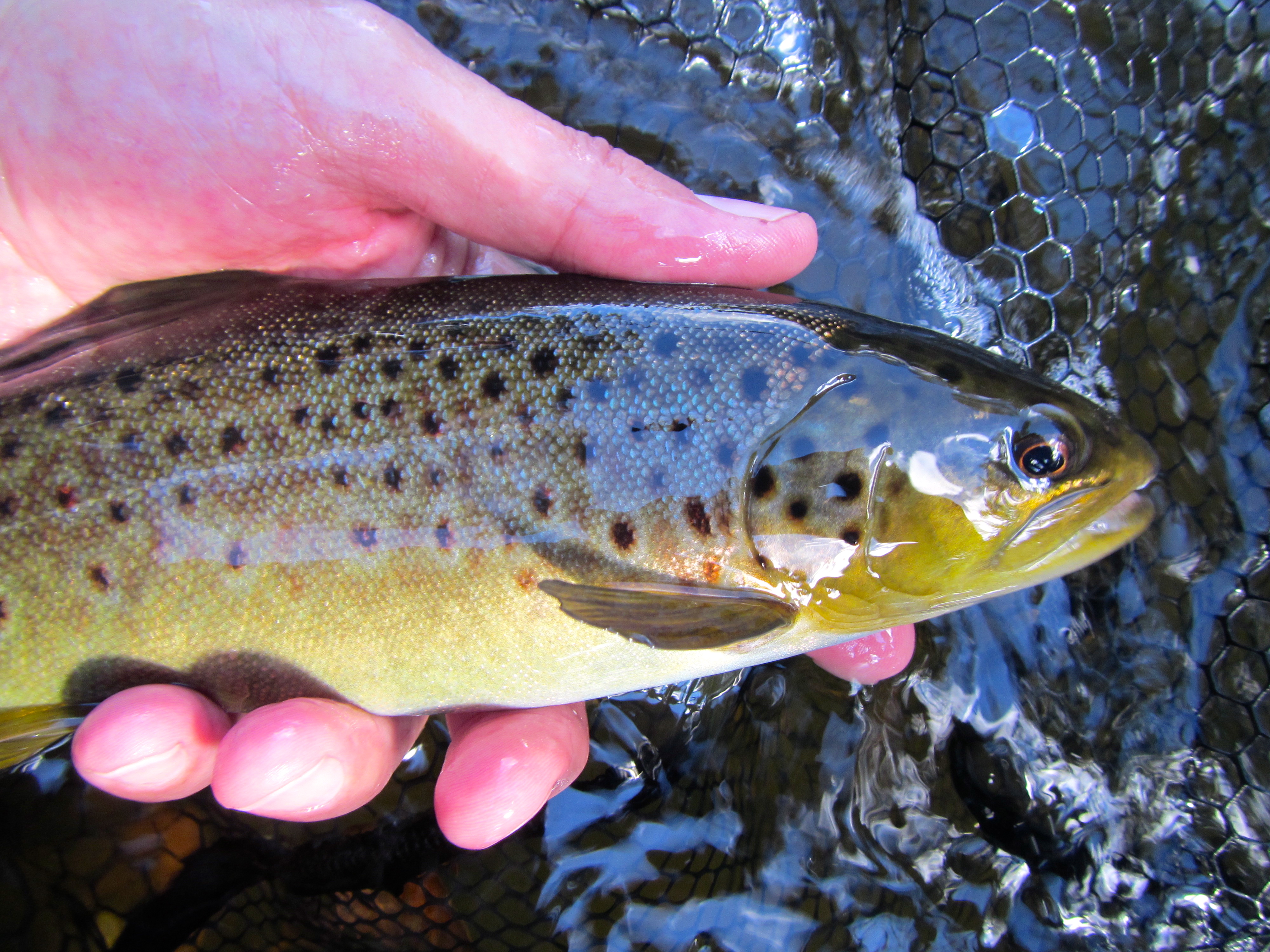
A feisty pug of a wild Farmington brown. This fish had an almost perch-like shape, with a tubby midsection that tapered dramatically before the tail.
I took two more wild browns on the way down to where Pete was fishing. He was also doing well with a combination of wet flies and nymphs. (I was dedicated to the wet fly cause all afternoon.)
What pair we made. I’m partially deaf in one ear. Pete had his vocal chords compromised by recent surgery and can only speak in a whisper. After my tenth, “What?!?” we decided on a policy of sign language and close-quarters conversation.
After our fast start, though, things slowed. Dramatically. We walked well over a half mile of prime water in the upper TMA with only one dropped fish to show for it. “What?!?” indeed. Very little hatch activity, and the water was running clear and cold.
Pete left around 2:30, so I took a flyer on a spot I hadn’t fished since May. I started off in some snotty water above it and was rewarded with a nice little brown and a few juvenile salmon. Then, in the run proper, I took a beautiful holdover brown on a mended swing. The water was clear enough to see the whole transaction, from the flash of gold as the trout darted out from behind a rock, to its striper-like thrashing on the surface at hook set. Another (dis)satisfied customer on the Squirrel and Ginger (this fly has become an automatic as my top dropper). I took two more smaller fish, then called it a day. A damn fine day. Thanks, July. Ya done good.
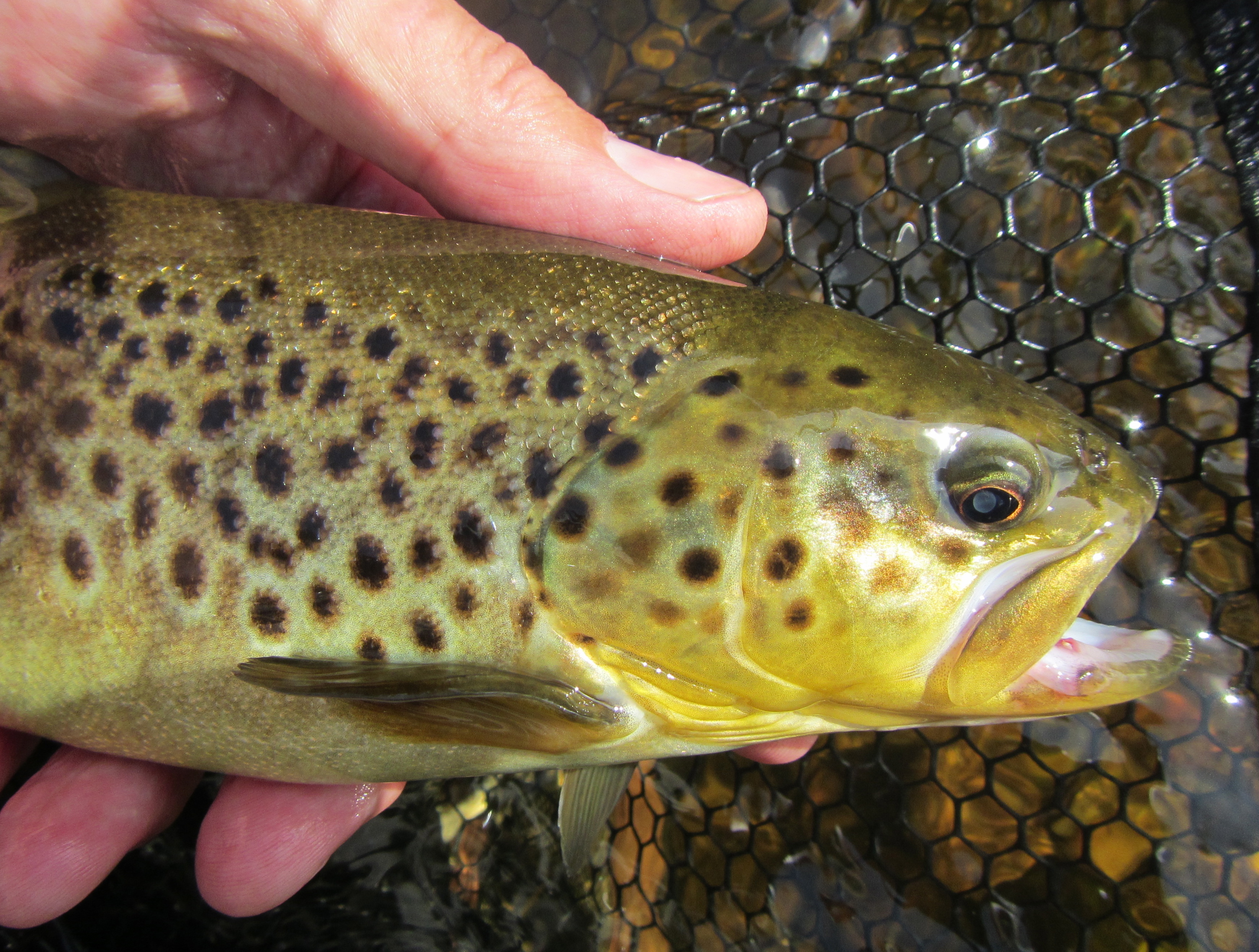
This could be a wild fish, but whether it’s stream-born or not, it had large pectoral fins that it used to repeatedly glide into deeper parts of the run.









 currentseams.com