Matching The Hatch with Wet Flies

“Matching The Hatch With Wet Flies.” That’s the title of my Featured Tier demo this Sunday at 11:45am at the International Fly Tying Symposium in Somerset, NJ. As I prepare for the demo, I had a few thoughts I wanted to share.

When you’re fishing wet flies, matching the hatch doesn’t matter — until it does. And then, you’d best be prepared. What I mean is, there will be times when fish will eat a wet fly simply because it looks alive and like something good to eat. The bug that wet fly is supposed to represent may not be hatching at that moment. It may be entirely out of season. It may be the wrong color or size. But nonetheless, it gets stomped.

However, the more you fish with a team of three wet flies, the more you will encounter situations where the trout will only have what’s hatching, presented in the water column exactly where they are feeding on the naturals. They may pick out one fly on the three fly team to the ruthless exclusion of the other flies. That’s when matching the hatch pays dividends. You’ll be the person leaving the pool, trailed by other anglers who will want to know, “What fly were you using?”

So: know your hatch windows. Understand what food is most likely to be in the water. Understand how those bugs behave. Specific patterns aren’t as important as matching size, color, and profile. Give the trout a choice. They will always tell you when you get it right.

See you this weekend!

LaFontaine’s Diving Caddis is a good choice for a late afternoon-into evening pattern — because that’s when the trout are most likely to be seeing egg-laying female caddisflies. One memorable evening, I landed two dozen trout in two hours — sixteen on the Diving Caddis.

Currentseams Q&A: Wet fly or dry/dropper for emergers?

I got this question when I spoke earlier this month the EJTU meeting. It’s a good one. I’d just shown the group a video of trout taking sulphur emergers. The rises were regularly timed and showy/splashy. You could also see the bugs in the air.

The question was: When you get to the river and you see a scene like that, do you automatically go to a a dry/dropper? A: No. I will start with a wet fly team of three, and two of them will likely be sulphur patterns. There’s a lot to unpack here in terms of that decision. In this particular video, it was late afternoon in June. The rise forms clearly said the fish were on emergers. The time of year, time of day, rise forms, and visible bugs (sulphurs, whose nymphs are in the drift a good long time before emergence) indicated that the trout were taking their food just below the surface. A dry/dropper might get you some takes, but why not feed the fish like they’re already eating? Which is, subsurface, just below the film. A wet fly team of three fits that bill perfectly.

A splashy, emerger rise form (upper left) still taken from the video. You can also confirm that the trout are taking the emerger by the lack of duns on the surface. This doesn’t mean you can’t catch fish on the surface. It just means the dry fly may not be the most efficient method.

Note that a dry-dropper may be a better method for presenting just under the surface with different hatches. A midge pupa in winter would be a good example of that.

Farmington River Report and Tip of the Week

There are precious few absolutes – like gravity or the firmness of the earth – in fly fishing. But certainly this one is unimpeachable: wet flies in the water catch more fish. This is why I recommend that you keep your wet fly team in the water as much as possible, especially when you’re wading to a new position up or down or across stream.

The value of this practice, which I teach in every wet fly lesson, was driven home to me on Wednesday when I was out on shooting photos for the Farmington River book with Derrick Kirkpatrick and Joey Takeman. We’d just returned to the river after a thunderstorm delay, and were crossing a shallow (1-2 feet) riffle. I hadn’t fished yet, but this time I had my rod with me, and while I intended to take more photos, I couldn’t resist stripping out ten feet of line and dangling my team of three (16 Sulphur soft hackle, 16 Diving Caddis, 12 Isonychia soft hackle) in the current below me. Whack! I felt a sharp tug, and although the hook found no purchase, I’d already proven my point. It was a quality take, more like a loud foul than a swing and a miss.

An hour later, on another part of the river, we were walking upstream when I spotted a pod of rising trout across the stream. I told the guys that I had to take a few casts at them. I did, landed two, then began to cross back to the other side — team of three, naturally, dangling in the current below me. Wham! Another hit, and this time a hook set.

As dusk deepened, I left Joey and Derrick to return to the area where I’d seen the pod of trout. As I started to cross the river, a large trout delivered a thunderous hit on one of my flies. It immediately put itself on the reel, and peeled off 30 feet of line as by drag was not set for such a creature. In the gloaming, a spectacular aerial revealed that I had indeed hooked one of the FRAA-stocked 5-7 pound trophy rainbows. Another run, then another aerial, and as I tried to regain some line, yet another aerial. Tremendous sport! 

I wasn’t worried about the hook set as the fish clobbered the fly. I had fresh Maxima 4-pound as my tippet. I was going to land this mini-steelhead. I wish Chad a better picture for you, but I wanted to get her back to swimming. Besides, the light was lousy. And so, off she went.

Great rainbow trout, lousy photo. My net length is 19″ and she did not come close to fitting. I’d guess 22 inches or so. For those who want to know, she took the Diving Caddis. Now, repeat after me: flies in the water catch more fish…

Farmington River Report 5/28/24: A tale of two outings

I’ve been having a tough time with lessons this year. Not the clients! All have been enthusiastic learners and a treat to coach and teach. Rather, the bite windows have generally stunk (and they really shouldn’t be stinking). Yesterday’s lesson was a case in point. Craig did an outstanding job casting and mending and presenting and hunting and covering water. The last couple hours in particular, you could really see him taking to the wet fly. He never got discouraged, and he deserved a lot better than four touches and two in the hoop. But I’m happy to declare that Craig is going to be a certified Wet Fly Dangerous Machine if he keeps on keeping on! Great job, Craig.

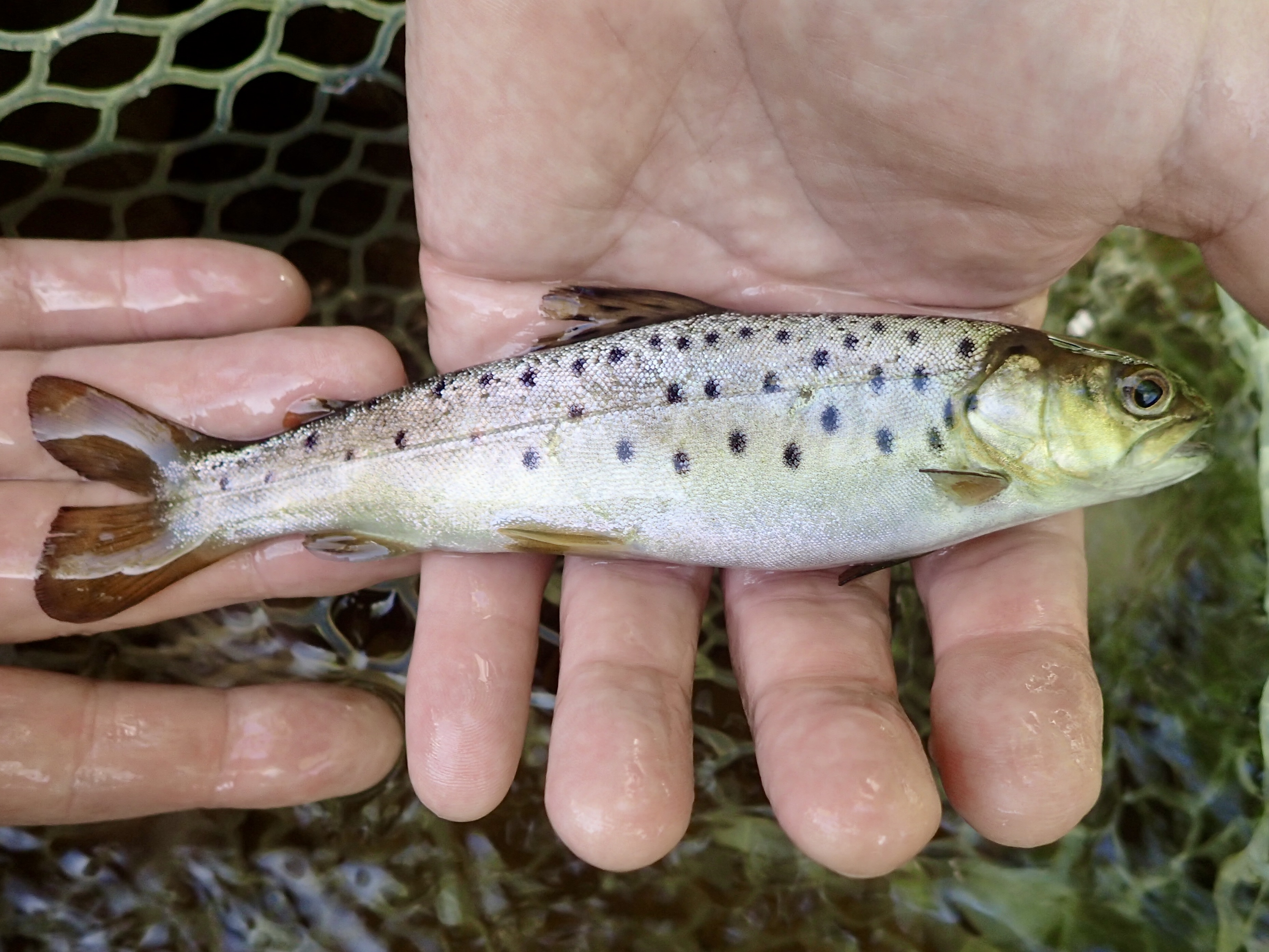
The river was up from the rains, but in the 400s of cfs it was not too high for the wet fly. Weather was perfect, save for some breezy moments. No, I think the main culprit was the almost total lack of hatch activity, and zero visible feeding. I think I saw a half dozen(!) caddis in four hours. This was Craig’s first fish. I thought at first it might be a salmon/trout half-breed, but after closer inspection the maxillary is all brown trout. What threw me off was the tail, but I believe the fork is created by rending of the tissue. Whatever it is, it smacked the fly with gusto, and is a beautiful creature worthy of the wet fly.

I had a window of opportunity, so I decided to try my luck with the evening rise, although, between you and me, I didn’t think there would be much of one. Turns out I was right. Kindof. I wanted to fish the lower river, which was running much higher at 730cfs. It was, to say the least, a tricky wade. I was in the water fishing at 6:15, and for quite a while, absolutely nothing was happening. I started debating the merits of fishing vs. having a couch date with my wife, but decided to stick it out, if for no other reason than scientific curiosity. Then I got into a fish. And another. It wasn’t gangbusters, and still nothing was happening bug- or hatch- or rise-wise, but I was catching trout and having fun. I stuck it out to 8:30. Moments before, I had declared that it was over, when a big wild brown slammed by fly. I don’t usually put fish on the reel, but this hefty brown told me I really should. Final tally was 15 hooked and 12 in the hoop. Not bad for high water and nothing going on.

Of the dozen to net, 9 were stocked rainbows, a few of which thought they were steelhead, with multiple gravity-defying aerials. Three were wild browns: the big guy, a little guy, and this mid-range guy. This is significant because I was fishing in an area that would have been torched last summer in the heat and low flows. Nature finds a way. For those keeping score at home, the big one took LaFontaine’s Diving Caddis winged wet, middle dropper, which you should be fishing right now late afternoons into dusk.

Many thanks to EJTU for hosting me, and the question of the day (with a better answer!)

On Wednesday night I spoke to the East Jersey Trout Unlimited group about wet flies — specifically, getting into wet fly fishing, with the program title being “Wet Flies 101.” What a great group, very involved audience, and a gratifying turnout. The passion this group has for fly fishing is very evident. I’m already looking forward to coming back, especially if I can start the evening off with a burger and an IPA at ReBar just a few minutes away.

During the post-presentation Q&A, I was asked a really good question. I didn’t like my answer, and it bothered me all the way home. I’d like to represent the question, and give what I think is a much better answer.

Q: You say when you’re swinging wets, you have to wait a few seconds before you set the hook or you’ll lose the fish. How come when you’re nymphing you need to set the hook right away? A: I don’t know if this is a definitive answer, but I can tell you my best calculated guess. When you’re swinging or dangling a wet fly downstream in current, you’re fishing a tight line. There’s tension present. And then, you have a moving fish applying force, and then quickly changing the direction of that force. My advice to clients is to feel the hit, ask the question, “Are you still there?” and then set the hook. Do that, and the fish essentially hooks itself. When you’re nymphing, the fish behaves differently. It doesn’t rise from the depths, then turn and swim a few feet back down to the bottom. It’s typically feeding on station, near the bottom, perhaps not moving much at all, or maybe just a few inches. It sees your nymph, opens its mouth, and eats the fly. It’s a far more passive transaction. Setting the hook forcefully downstream seals the deal before the trout can reject the fly (if it does that at all). When you’re nymphing, you can still catch fish without setting — we’ve all had instances when we’re not paying attention and we manage to hook and land the fish regardless — but setting the hook had and fast will certainly result in more trout to net.

Do this when nymphing — a downstream set with a low, hard sweep — and your catch rate will soar. Hooksets are free, so look for a reason to set the hook on every drift!

The shortest distance between two anglers is a hello

This has been happening more and more: I’m fishing near people, and later in the parking lot they come up to me and introduce themselves. That’s great, because I love meeting currentseams readers. But invariably they tell me that they didn’t say hello on the water because they didn’t want to “bother” me (the air quotes are mine). Folks, you’re not bothering me. Please introduce yourself.

Sure, if I’m guiding a client, I probably can’t have an extended conversation with you; that would be unfair to my client, who deserves my full attention. But it’s no secret that places like the Farmington River are more crowded than ever. Space in prime fishing marks is often scarce. So instead of me looking at you as a potential hostile invader — and vice versa — wouldn’t it be better if we could share the water without angst? Come say hello. If you’re looking for a place to fish, ask if there’s room. (Maybe if I get there after you, I’ll ask you!) If there is, we’ll make it work. If there isn’t, there’s always next time. And at the very least we now have faces and names connected. That’s a win for everyone.

Speaking of sharing water, I want to thank everyone I’ve encountered this season who has been so darned friendly and accommodating about doing so. I typically expect the worst from people, so it is a delight to be proven wrong about human nature. Kindness from strangers is a blessing. May the river gods bestow the tightest of lines upon all of you!

These gentlemen came all the way from Spain (really) to say hello.

OLYMPUS DIGITAL CAMERA

Leisenring’s Pale Watery Nymph (light-colored dun version)

This is the second Pale Watery Nymph listed in Leisenring’s book. He adds the qualifier, “effective when light-colored duns are on the water.” No doubt. Buggy, simple, and highly edible.

Leisenring’s Pale Watery Nymph (light-colored duns)

OLYMPUS DIGITAL CAMERA

~

Hook: 15, 16
Silk: White, waxed with colorless wax
Hackle: One turn of very short honey dun cock hackle.
Tail: Three strands of very short, soft-blue-dun cock fibers.
Rib: None.
Body: Undyed seal fur or pale buff Australian opossum fur dubbed lightly at the tail and thicker at the thorax.
~
Tying notes: Absent cock hackle, I used hen. I didn’t have the right color opossum, so I used Hareline Dubbin rabbit. This is a very straightforward tie.

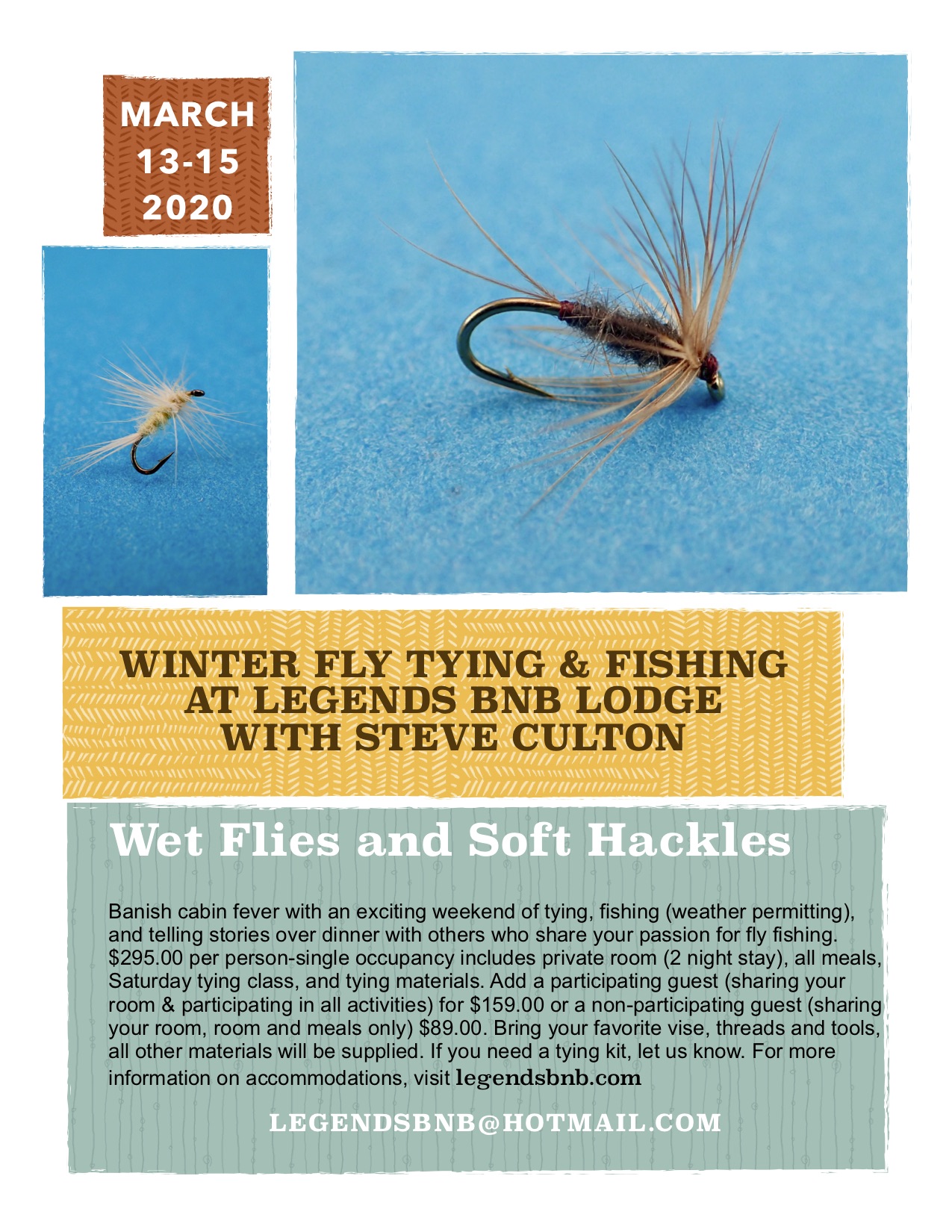
“Wet Flies and Soft Hackles” at Legends new dates: March 13-15

It was my bad, folks, as the original date conflicted with the state hockey tournament. New dates for the Wet Flies and Soft Hackles weekend at Legends BNB on the Farmington are March 13-15. I’ll be there on Saturday March 14 to lead a day-long tying class and wet fly seminar. You get to stay at an amazing lodge on the banks of the Farmington and, weather permitting, get out and do a little fishing. Please note, you cannot book through me — you need to contact Legends directly. Last year’s event was a blast — hope to see you there!

CultonWetFlyLegendsPoster

CultonWetFlyLegendsPoster

Best of 2019: a fun little fly fishing recap

With today’s guide trip cancelled, I turn my attention to reflecting upon the fishing year that was 2019. Here we go, in chronological order:

Fly Fishing Shows in Marlborough and Edison. The Marlborough Show was particularly memorable for the weekend ice storm that paralyzed the region. Let’s just say that — ahem — attendance was light on Sunday. Nonetheless, I had three(!) intrepid anglers at my presentation, “Lost Secrets of Legendary Anglers.” I spent the rest of the morning chortling that I had the day’s biggest crowd, which was accurate until Ed Engle beat me by two. “Lost Secrets of Legendary Anglers” will return in 2020 at 10am, Saturday January 20 in the DT Room C, along with other Seminars and classes. What makes these shows memorable — and appreciated — is the chance to see old friends, connect with peers, and meet you, my valued reader. Please come say hello at the shows in January!

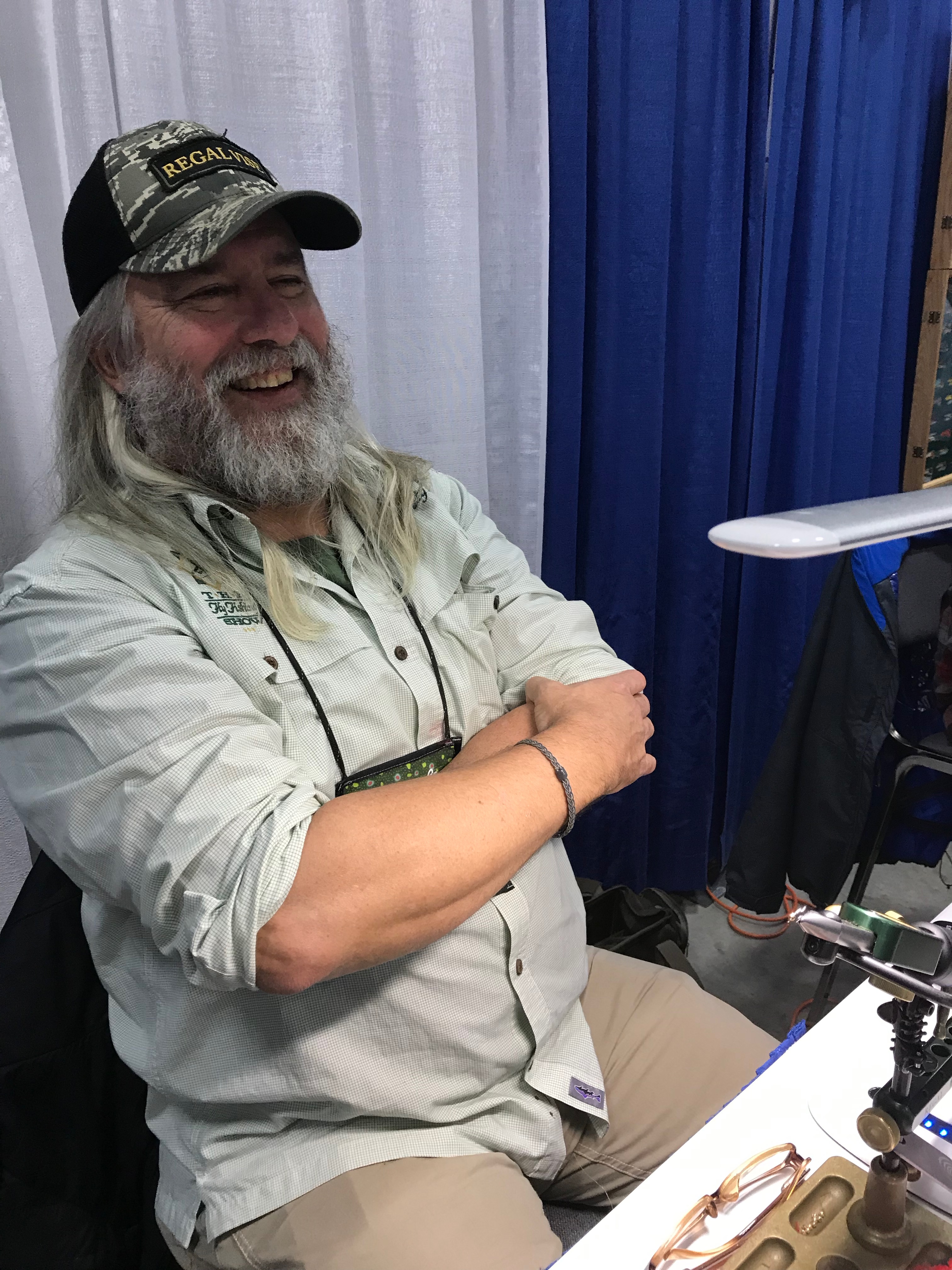
Old friend Tim Flagler is one of the nicest people you’re going to meet at the Fly Fishing Show.
timflags

~

Speaking of Speaking: every fly fishing/tying club gig I did. This may sound like a shameless attempt to curry favor, but I assure you it’s on the level. Teaching and talking about fly fishing is by far my favorite part of this job, and it would not be possible without your support and enthusiasm. So, thank you CFFA Expo, Cape Cod Flyrodders, Legends on the Farmington (I’m doing another class in February 2020 so stay tuned), Russell Library, Hammonasset TU, Thames Valley TU, Capital District Fly Fishers, Farmington Valley TU, and Nutmeg TU for your patronage.

~

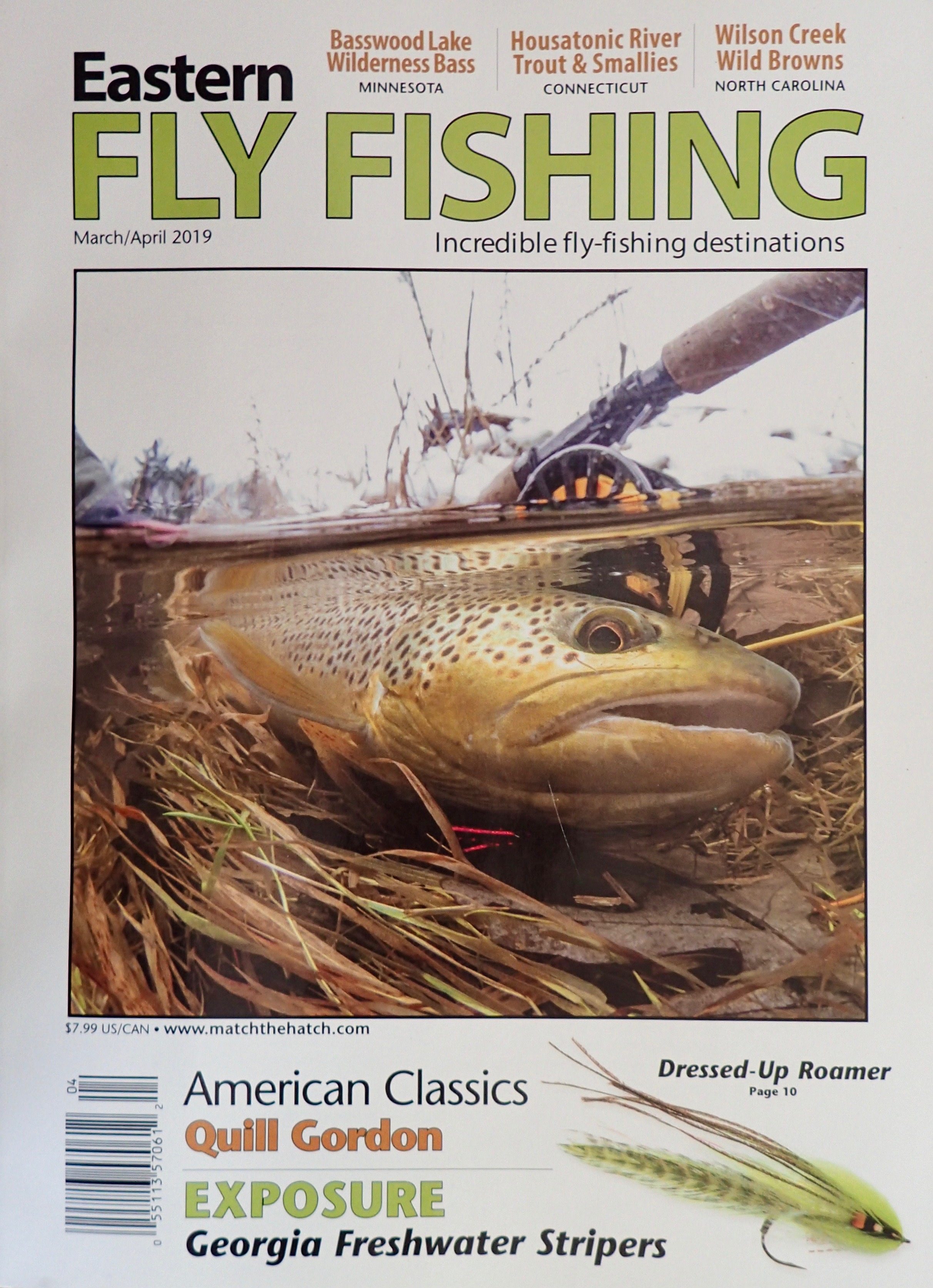
Housy and Farmington River features in Eastern Fly Fishing magazine. Wow. I actually get paid to write about two of my favorite rivers? What a country! And thanks to editor John Shewey for thinking of me.
OLYMPUS DIGITAL CAMERA

~

My new two-handed cannon. Once I figured out the right head configuration, I became a dangerous casting machine. Many thanks to old mate Mike Oliver for his wonderful design and exacting craftsmanship. I now sneer at the wind at the mouth of the Hous. And the west side of Block. So there.

In addition to being a fine rod builder, Mike also brews a delicious cuppa on the beach. Milk is included. Very civilized.

OLYMPUS DIGITAL CAMERA

~

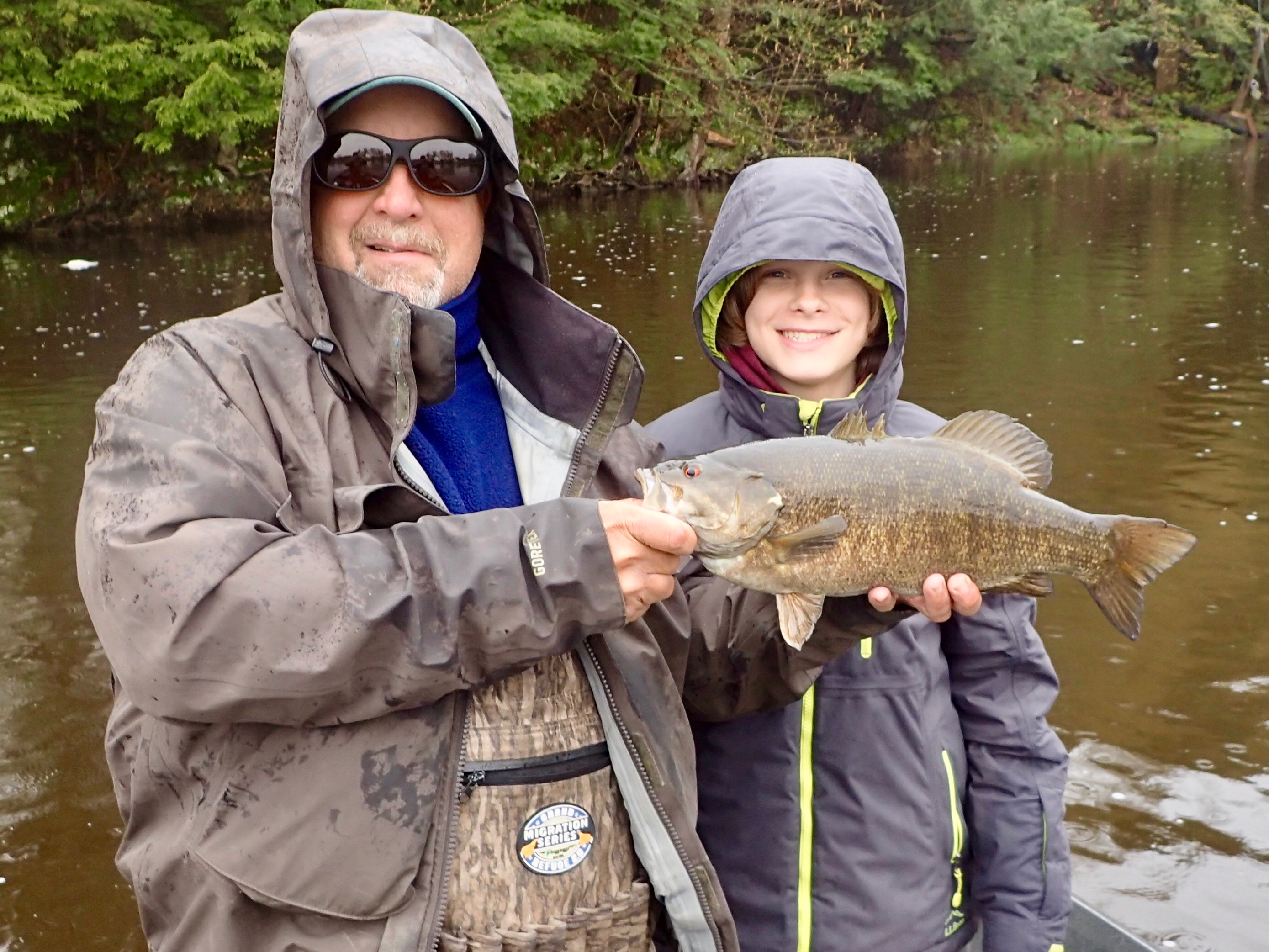
Trophy Smallmouth on the Little Salmon River. We got kicked in the nuts by Mother Nature for spring steelhead, so a-smallmouthing we did go. They sure grow ’em big up north.

Gordo and Row Jimmy with a bronze slob. 
OLYMPUS DIGITAL CAMERA

~

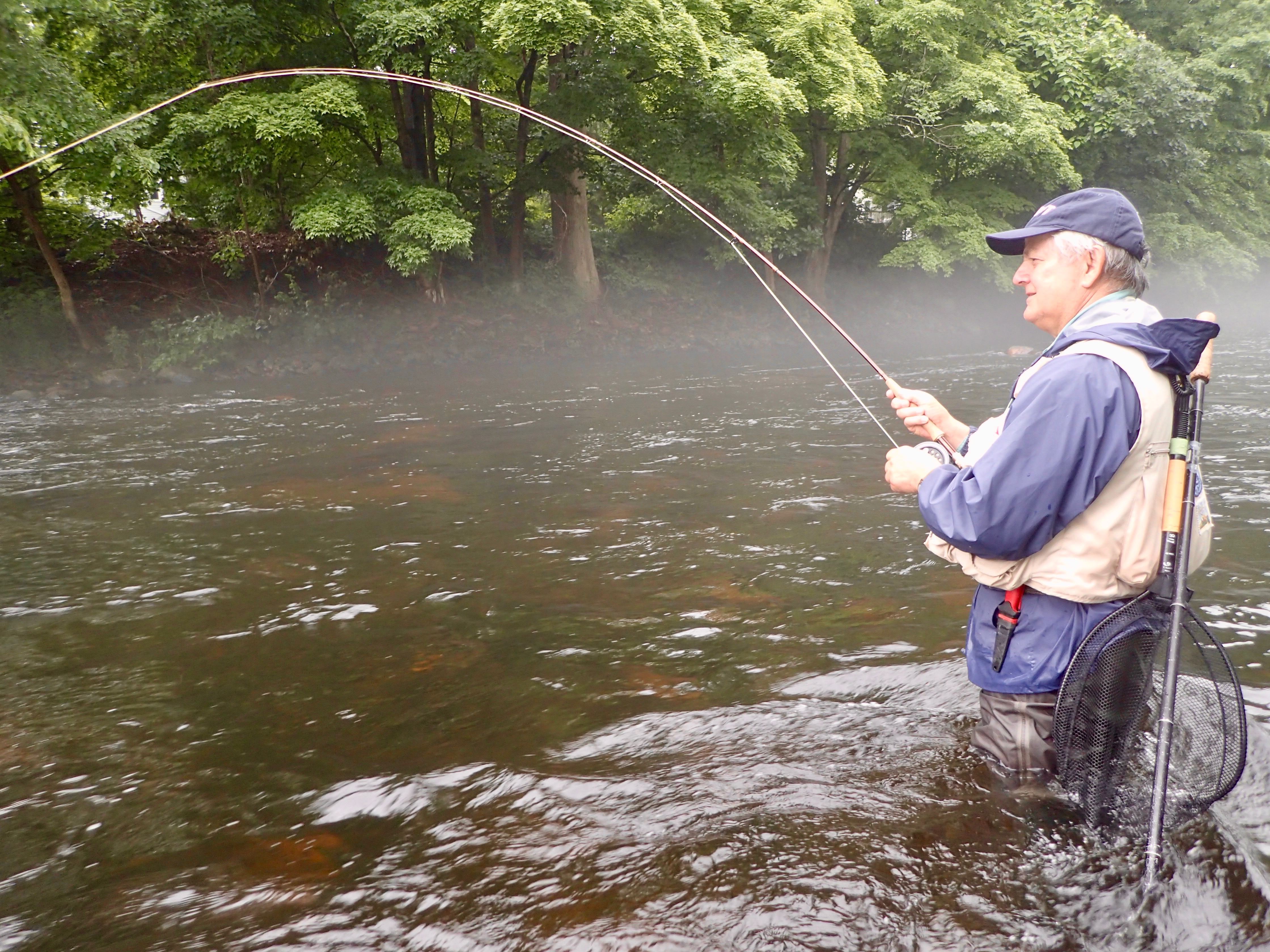
Epic June wet fly bites. My goodness, how I love the Farmington River’s Light Cahill/Sulphur/Caddis/Iso bite window of late spring/early summer. Both clients and I enjoyed the thrill of double-digit days.

Figure 1 (of many). Greg’s rod might have permanent bend.
OLYMPUS DIGITAL CAMERA

~

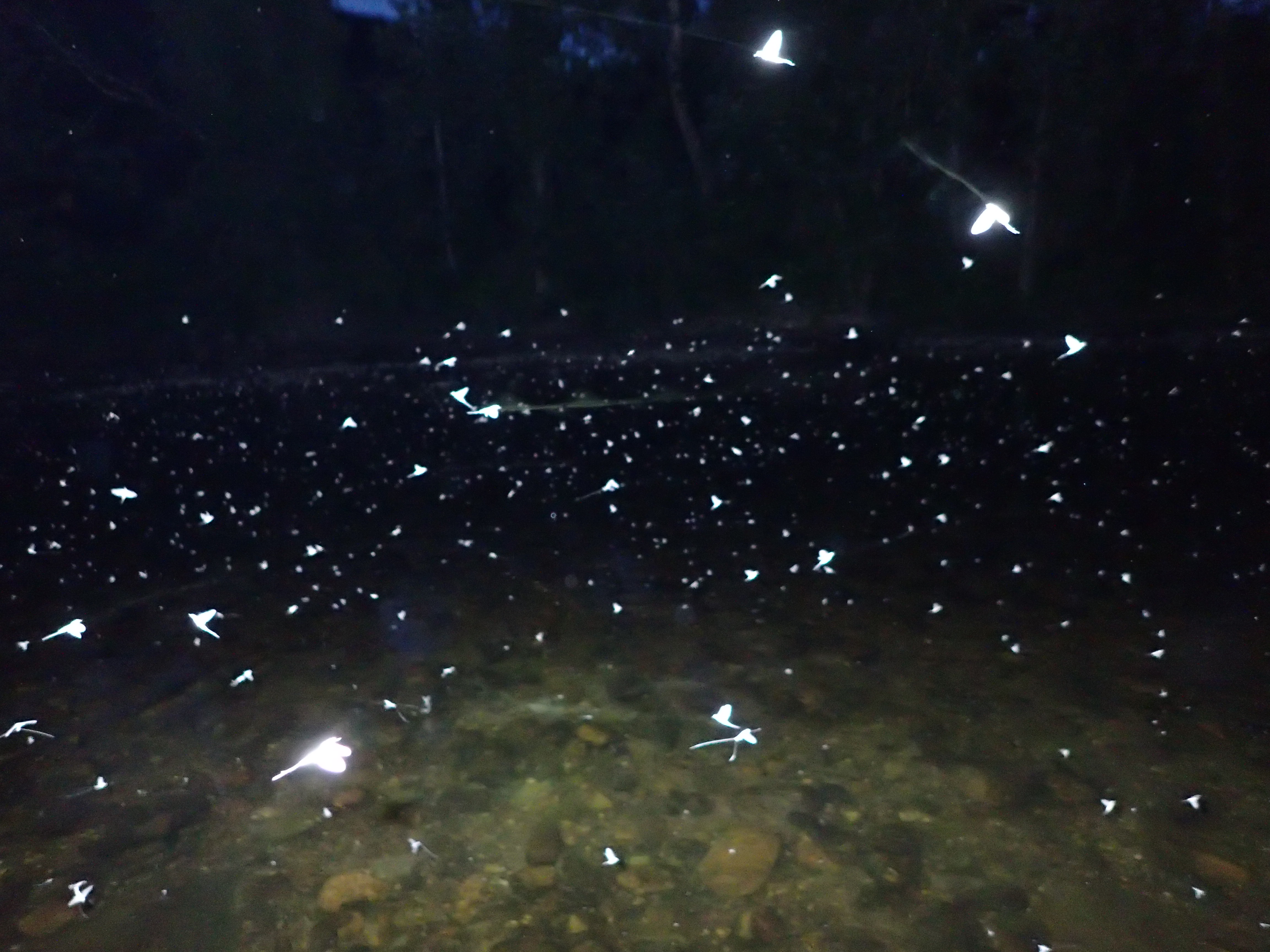
A hot Housy White Fly bite. If you go enough, sooner of later you’re going to hit the summer blizzard just right. I think I missed it last year; this year on more than one occasion I was snow-blinded in August.  There’s a certain rush you get from drifting a size 10 White Wulff that you can no longer see, then feeling a sudden crushing blow that resonates down to your fingertips. Wow, wow, wow.

Be sure to keep your mouth shut. White flies do not taste good.
OLYMPUS DIGITAL CAMERA

~

Catching a Scottish trout on a traditional Scottish wet fly. The conditions were disgusting — driving rain and windy — but Cam and I soldiered on and were rewarded with several hefty trout to net. The highlight for me was catching one on a Kate McLaren I’d tied several years before, never dreaming that I would one day be fishing it bob-style on a loch.

Cam with his first fish and guide Graeme Ferguson (wonderful to make a new friend); a kiss for a fellow lover of Kate McLaren.

OLYMPUS DIGITAL CAMERA


OLYMPUS DIGITAL CAMERA

~

Fun at the Striper Moon film premier. It was in many ways a Who’s Who of southern New England striper fly fishing. What a treat to watch Lori Shankar’s film with Ken in the audience.

MeCamKen

~

(Finally) establishing a presence on Instagram. If you’re not already following me, please do. I post content on stevecultonflyfishing that you won’t find here.
IMG_4272

~

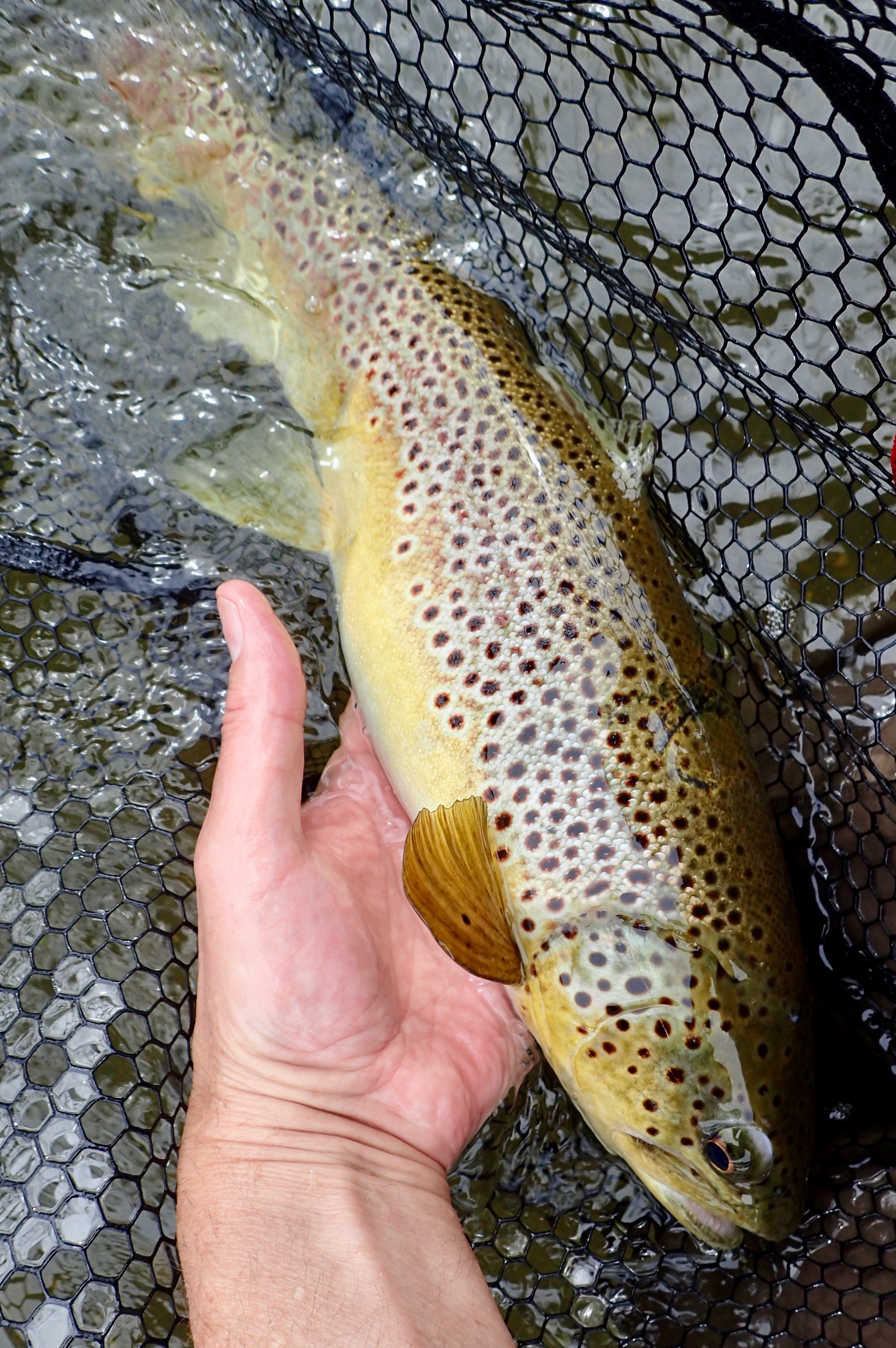
Big Fall Housy Browns. After last fall and this year’s winter high water, the resident browns had ample opportunity to feed and grow with very little angling pressure. A lot of the Housy faithful I spoke to declared this the best fall fishing in years. Can’t argue with them!

Over 20″ of holdover butter.
OLYMPUS DIGITAL CAMERA

~

A silver lining to a poor Salmon River steelhead run cloud. I only need one steelhead to make me happy, so landing this big buck on a morning where the temperature never got out of the teens had me in a grinning mood.

OLYMPUS DIGITAL CAMERA

~

So, you’ve made it this far. Please tell us about your 2019 highlights.
 

CT DEEP Trout and Salmon Forums this October

“DEEP Wants Your Opinions on Trout and Salmon Fishing in Connecticut.
Public Discussions Scheduled Statewide in October
The Connecticut Department of Energy and Environmental Protection’s (DEEP) Fisheries Division is pleased to invite all interested people to attend one of the public discussions focused on the State’s recreational trout and salmon fisheries. The purpose of the meeting is to obtain ideas and concerns specific to recreational fishing for trout and salmon via face-to-face conversation.
“Informed conversations between our passionate and loyal anglers and the Fisheries Division are essential to ensuring we are managing these fisheries in the most relevant and meaningful manner, consistent with the preferences and desires of the people we serve,” said Peter Aarrestad, Director of DEEP’s Fisheries Division.
Each meeting will begin with a brief presentation about the Fisheries Division’s management of trout and salmon to date and then expand to discussion on four key focal points related to trout and salmon fishing:
• What makes a good fishing trip?
• What is the Fisheries Division doing well?
• Where can the Fisheries Division improve?
• What actions could be taken to increase the number people fishing?
All people are encouraged to provide their perspectives. At the conclusion of all of the meetings, comments will be compiled and considered to help inform the Fisheries Division’s development of a statewide trout and salmon action plan.
To help determine the level of attendance and ensure sufficient accommodations for all, we are asking likely attendees to RSVP in advance by selecting the “tickets” button for the appropriate date and location.
RSVP can also be made by calling the Fisheries Division at 860-424-3474 or by email to mike.beauchene@ct.gov
Doors will open 30 minute prior to the start of each meeting.”
You can find the dates and locations here.