Book Review: “A Flyfisher’s Revelations” by Ed Van Put

Part memoir, part how-to, Ed Van Put’s A Flyfisher’s Revelations: Practical Tips, Strategies, and Wisdom From 50 Years Experience from Skyhorse Publishing. print ISBN: 978-1-5107-8333-1, is absolutely essential reading for any serious trout angler. I loved this book. I’d only heard about Ed after he passed away a year ago, so the name carried no particular weight. That’s a pity, because this is a man I would have like to have sat down with for a chat or an interview — or even better, spent some time together on a river.

If you want to be one of the 10% of the anglers who catch 90% of the fish, Ed’s book is an excellent place to start.

Your permission to believe me comes in the form of a back-cover blurb, where Lee Wulff calls Ed, “one of the best trout fisherman I know.” Once you dive in, you quickly glean that Lee is spot-on. While one of Ed’s claims-to-fame is that he valued presentation over fly selection (he’s known for using very few different patterns on the river, and clams that 70% of his dry fly hookups came from on an Adams), there are plenty of fly patterns pictured, and recipes, in the book. That’s of particular interest to a fly tying nerd like me.

This book works for both beginning and advanced anglers alike. I’m always thrilled when someone who I perceive to be a better angler than me talk about concepts and tactics that I myself teach. Rookie anglers will be able to grasp the over-arching principles without getting bogged down in minutia. I also liked that he starts every chapter with a meaningful quote from another angler. My copy is filled with highlighted sections for future reference.

Now, I’ve gotta go through it all again. There’s more fish to be caught!

Swinging with Dave, 2H rods, fishing starting to pick up

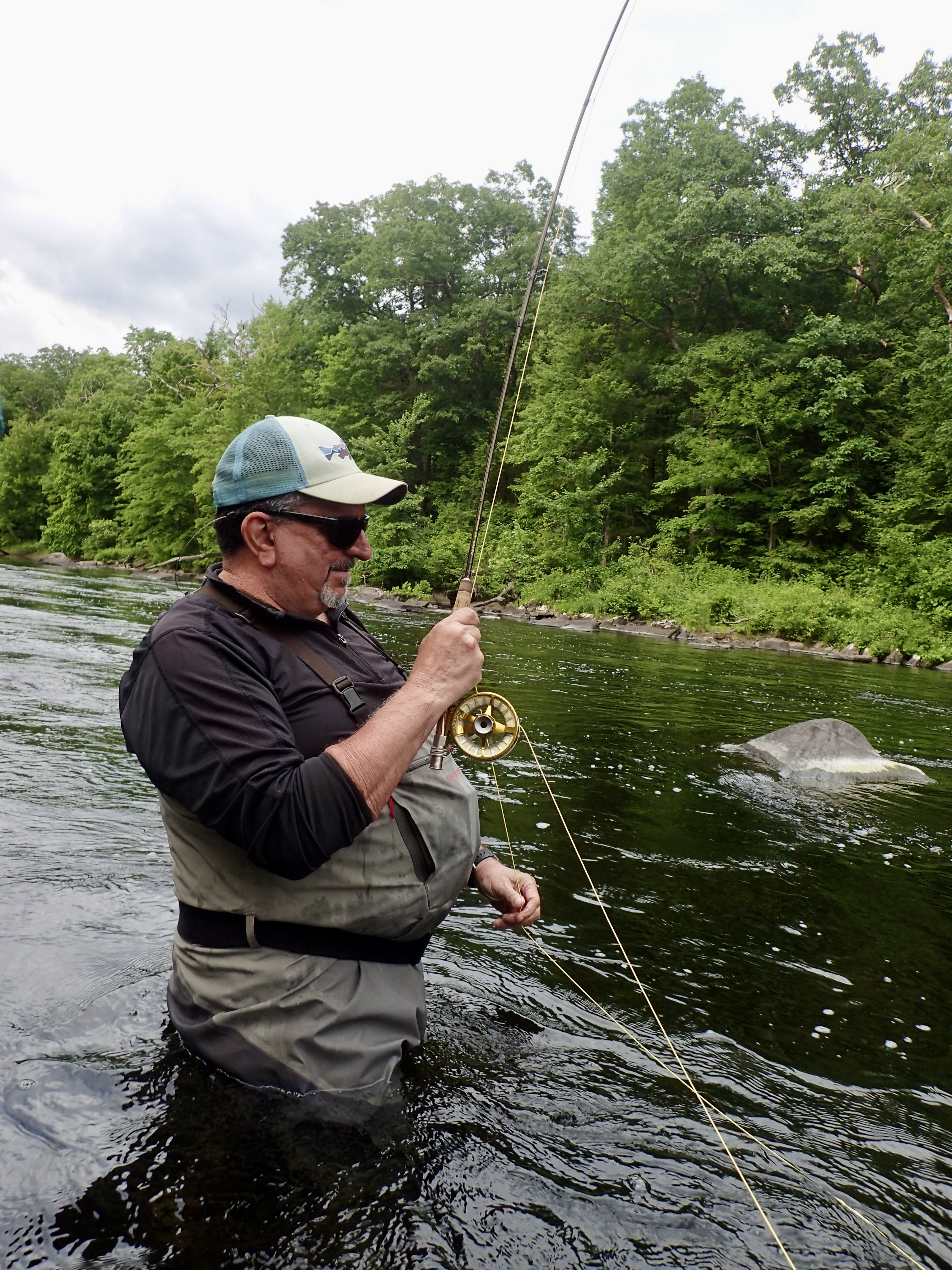
I spent last Wednesday afternoon with Dave, who wanted to explore the river and learn how to swing streamers and wets, and give his trout spey rod some action. We hit several marks within the PTMA, both to fish and investigate. While the weather was gorgeous (mid 60s and sunny), the water was still very cold (below 40 degrees in New Hartford). That’s a little chilly to expect significant action on the swung fly. Still, we managed a couple touches, and Dave did a fantastic job casting and managing his drifts. In another time and situation, he’s going to be a dangerous trout-catching machine.

I don’t usually talk about specific pools, but when we hiked into the Boneyard — the gate is still closed — the advantages of the two-handed rod became glaringly evident. Especially if you’re swinging a streamer. Dave was making effortless 60-75 foot casts — well, semi-effortless — and reaching spots most single hand casters would struggle with. Food for thought if you’re considering the 2H rod.

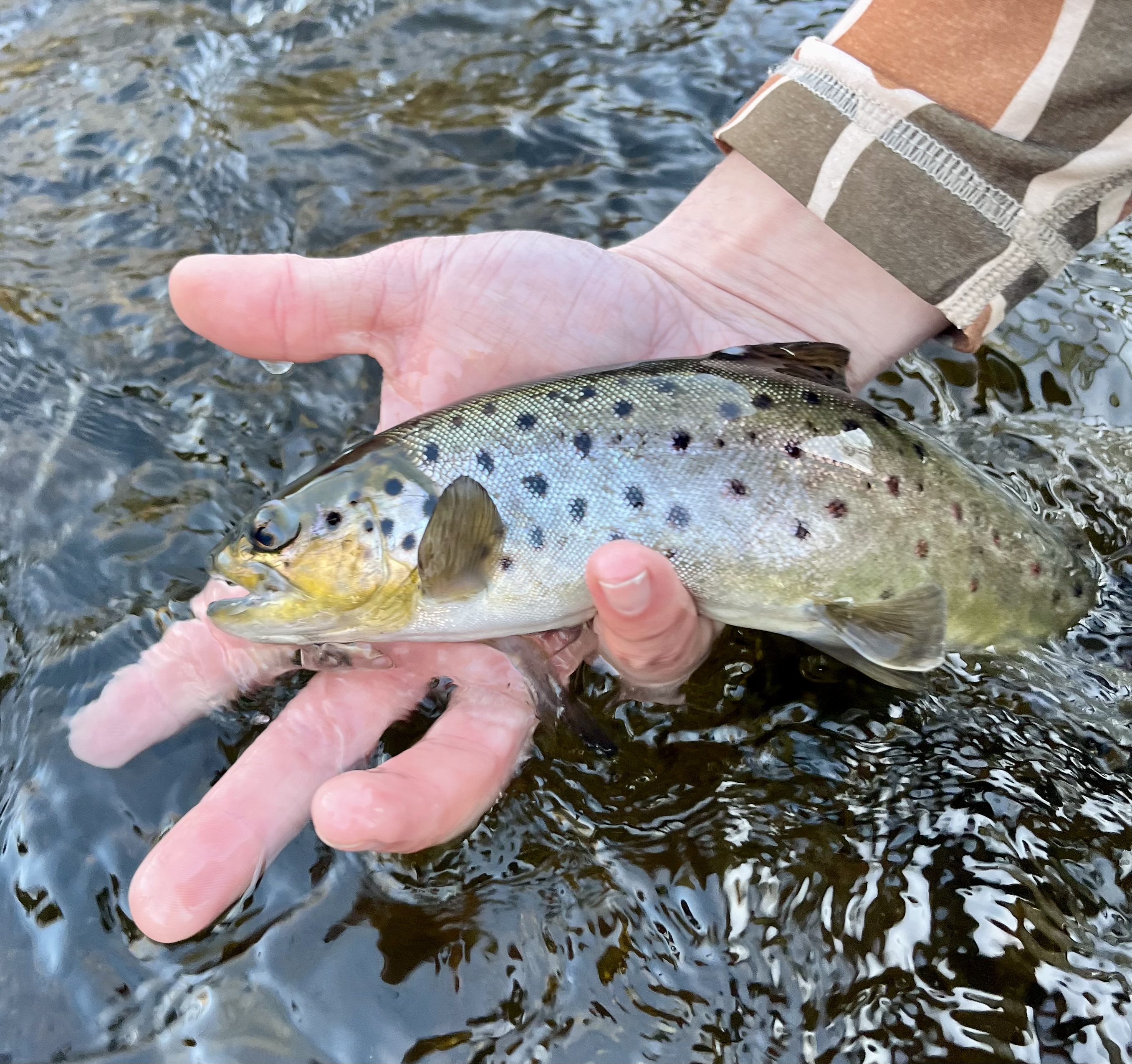
Ed releasing a lovely wild brown his buddy nymphed up. The size of the fins and the fish’s skinny I-made-it-through-winter body told me that it has been in the river for a very long time.

After our session, I went to do some scouting for the book, and I ran into Ed and Drew from the Avon Orvis store. They were nymphing with a couple friends below the PTMA, and having some success. To illustrate how a cold front can squash the bite, I went back the next day to do more recon, and hit the marks where they were getting into fish. Not. A. Touch. The overnight cold front and gale-force winds clearly had the trout in a dour mood.

Still, the fishing is starting to pick up. And it will only be getting better as we get into April. Fish ’em if ya got ’em!

Fishing with Joe, trout stocking, and finally a weather break!

I gave Joe a wet fly lesson last week — a little early to expect action on a swung fly, but that’s when we had a window. The rain held off, and we enjoyed having vast stretches of the river all to ourselves. The bite was predictably slow, but Joe did a great job with his presentations. I have the highest confidence that he will be a deadly wet fly machine this spring once the Hendricksons begin to pop. Sadly, I saw very little bug activity — not even some courtesy winter stones — only a couple lonely midges.

How Pipeline Pool got its name. I’m working hard on researching accurate information on river access, including parking. Of course, each of you is ultimately responsible for where you park and fish. Pipeline is one of those places where there is plenty of easy access and parking.

The next day, I spent a few hours on river recon for the book — it was blustery and cold and we even had a few sun snow showers to add to the wintry ambiance. But today, it’s warm, and it looks like a decent week to get out and fish. I’ve got more recon time scheduled tomorrow, and hopefully I’ll be able to play a little hooky and wet a line. The river got blasted by that rain last Wednesday/Thursday, but has dropped nicely. What’s more, the state has stocked the Farmington (and a lot of other rivers) — not within the PTMA, but from Hogback Dam down to Whittemore; below the 219 bridge down through Canton; and from Collinsville dam down to Unionville. Enjoy the fresh fish while they last.

CFFA Show this Saturday, Feb 1: The Best Little Fly Fishing Show Around

I will be appearing again at the CFFA Fly Fishing Expo, this Saturday, 9am-3pm, at Nomads Adventure Quest in South Windsor, CT. This truly is the best little fly fishing show around: vendors, tiers, speakers, and more. I’ll be on Tier’s Row, and at 1:30pm I’ll be presenting a program on Fly Fishing Connecticut’s Small Streams. Hope to see you there, and please come say hello!

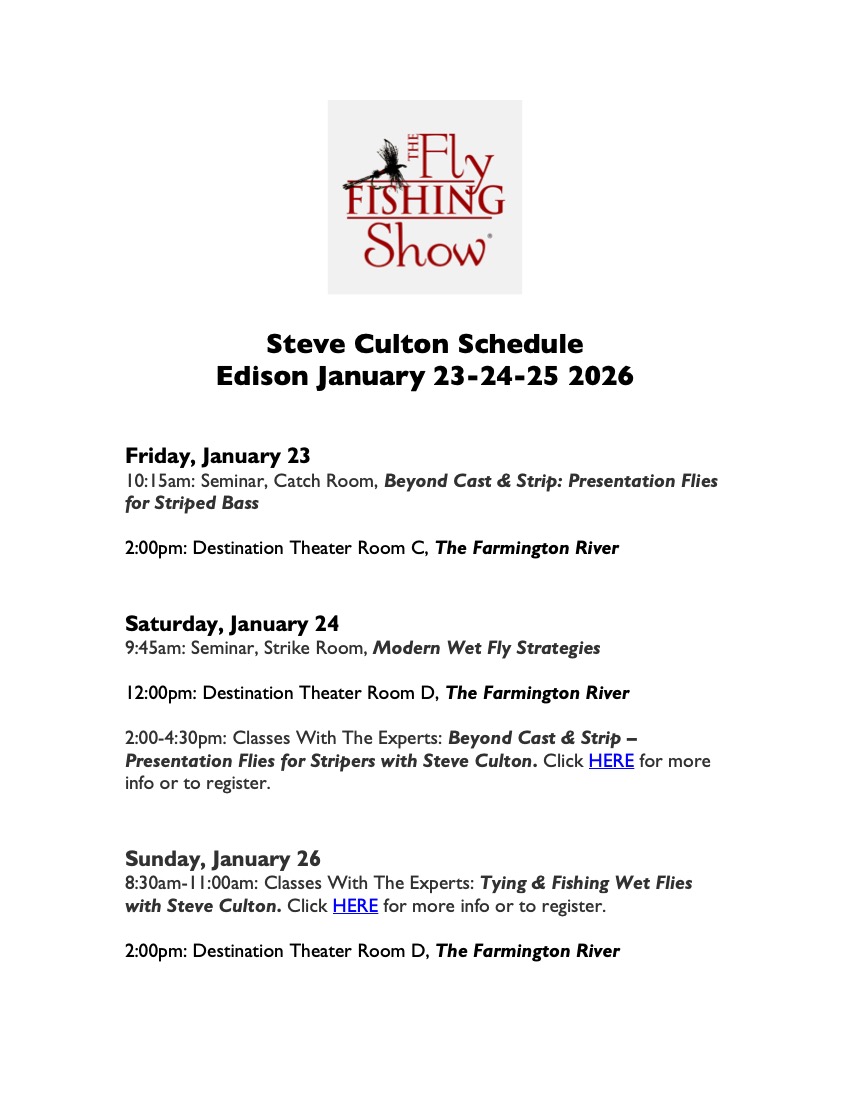
Two Wet Fly Tying Demos from Steve Culton at the Marlborough Fly Fishing Show

I’m so honored to have the opportunity to twice be the Featured Fly Tier at the Marlborough Fly Fishing Show next weekend, Jan 17-18-19. I’ve added new content to one program, and the other program is entirely new. All Featured Fly Tier demos take place on the main show floor.

Up first is “Matching The Hatch With Wet Flies,” Friday, Jan 17 at 2:30pm. I debuted this presentation last November at the International Fly Tying Symposium. Since then, I’ve added some more specific visual reference about the characteristics of the hatches I’ll be covering, which I think takes the program up another level.

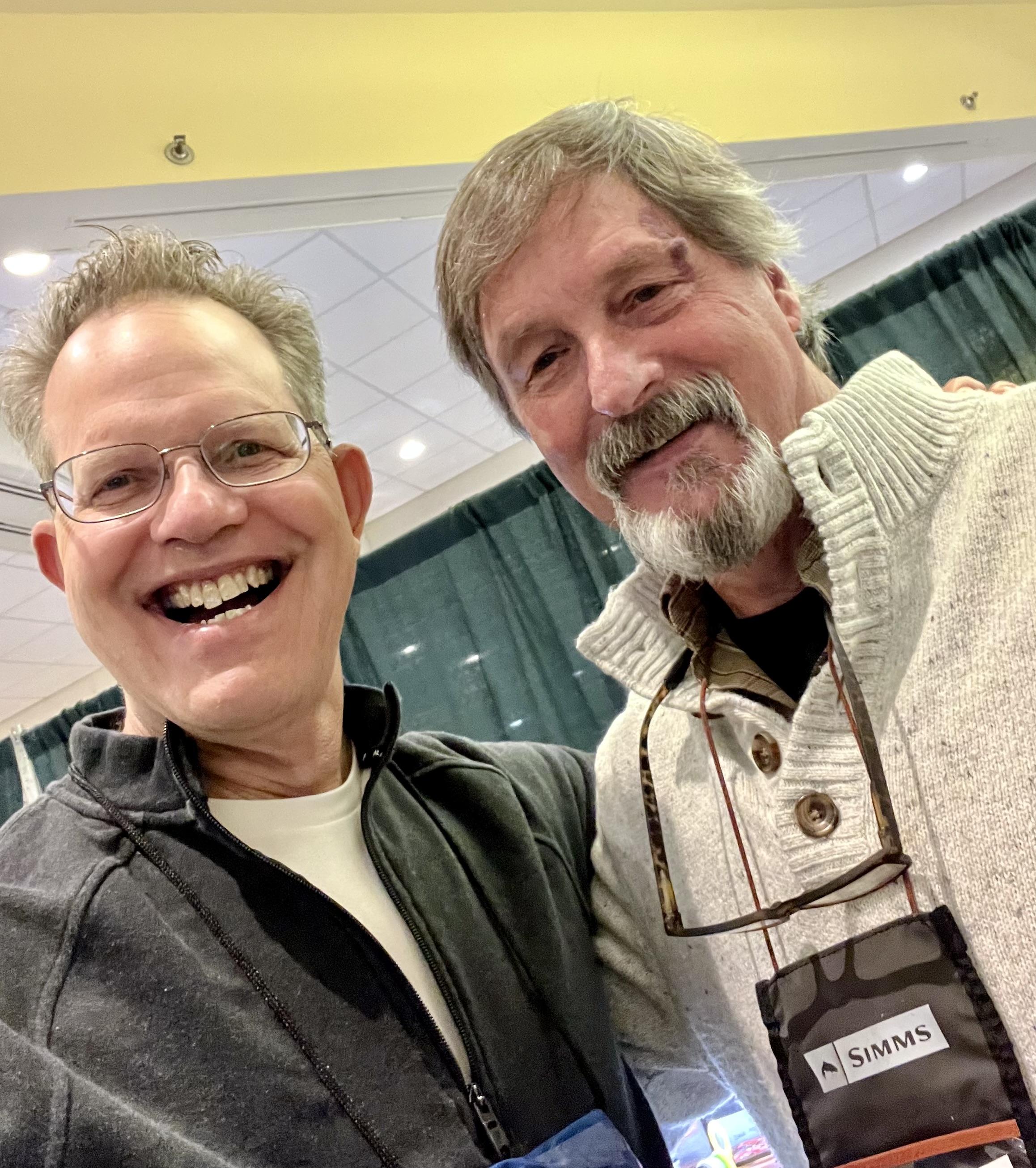
Not bad company. There’s a lot of talent on this list!

On Saturday, January 18 at 11:30am, “Farmington River Favorites” will have its premier performance — and you can be there when it happens! This program will cover at least one pattern from each of the four major fly groups: nymph, wet, dry, and streamer. If time permits, I’ll throw in a bonus fly. These are all proven producers for me on the Farmington, and of course they’ll also work on any river in the northeast.

Tying the old favorite Squirrel and Ginger last year. Come see me this year, where I’ll be tying some new patterns that belong in your box.

Marlborough Classes: Tying & Fishing Wet Flies, Saturday January 18; Beyond Cast & Strip: Presentation Flies for Stripers, Sunday January 19.

Once again, I’ll be leading two “Classes With The Experts” at the Marlborough Fly Fishing Show next weekend. This is a great opportunity for you to book some time with me for far less than the cost of a guided trip. Both classes are designed to duplicate a teaching session on the water. Here are some details.

Tying & Fishing Wet Flies. Saturday, January 18, 2:00-4:30PM. What you’ll learn: When, where and how to fish wet flies; how to tie classic spiders, soft hackles, winged and wingless wets (I will demo these patterns and discuss materials); leader construction and how to build a team of three wet flies; matching the hatch and fly selection; plus more. Did I mention having fun?

Wet flies have been fooling trout for centuries, and the fish aren’t getting any smarter. This lovely wild Farmington River brown savaged an Isonychia soft hackle on a steamy August late afternoon.

Beyond Cast & Strip: Presentation Flies For Stripers. Sunday, January 18, 8:30-11:00AM. What You’ll Learn: How to catch the stripers that other anglers can’t; why cast-and-strip presentations are ultimately limiting; how to target and catch bigger bass on a consistent basis; how to tie classic New England-style sparse flies like bucktails, soft-hackles, and flatwings (I will demo such patterns and discuss materials); the presentations that bring your fly to the fish; and more!

Being able to repeatedly catch big bass like this on the fly from shore is no accident. Take this class, and I’ll reveal my secrets of how I do it.

To register for these classes, you must go to the Fly Fishing Show website. See you there!

‘Tis the season! Give the gift of a class or guided trip

I don’t usually make posts like this. But if people want to know what to get you for the holidays, and you’re struggling with gift ideas, here are two suggestions.

Book a guide trip with me for 2025. There’s no real gift certificate, but there is the promise that we’ll go out fishing for four hours next year. Your gift giver pays now, but it’s at my 2024 rate (rates usually go up every few years). I build a 20% gratuity into the price, so all you have to do is show up with your gear on a mutually-agreed-upon date and time and we have at it. If you’re interested in wet flies, we’re looking at a May-Juneish window. Because of the book writing process, I will be limiting my guide trips in 2025, so this is a great way to lock in. Easy-squeezy…

Insert your likeness here.

Take a “Classes With The Experts” with me at the Fly Marlborough Fishing Show. With this, you get almost instant gratification. Two choices: Saturday, January 18, 2pm-4:30pm, Tying and Fishing Wet Flies with Steve Culton:  Watch Steve tie classic North Country spiders, winged, and wingless wet flies that trout can’t resist, and learn how to rig and fish them. The course also covers basics like leader construction, matching the hatch, fly selection, where to fish wet flies, and how to fish them. All levels.

Or, Sunday, January 19, 8:30am-11am, Beyond Cast & Strip – Presentation Flies for Stripers with Steve Culton:  Learn how to tie (Steve will demo) presentation flies – traditional New England-style flies that create the illusion of life even when at rest – and how and where to present them. All Levels.

For the Fly Fishing Show classes, you cannot register and pre-pay through me. You do that on the Fly Fishing Show Site, which is here.

I’m hoping to be offering the same for Edison on January 24-26, but that schedule has not been released. Stay tuned for my full Marlborough and Edison schedules.

2024 IFTS Redux

The 2024 International Fly Tying Symposium has come and gone, leaving in its wake many fond memories, new tying swag, and new acquaintances made. The event runs from Saturday to Sunday; Saturday is typically the busy day, with crowds dwindling by Sunday afternoon (it’s hard to compete with the NFL). If you’ve never been, you should, because it’s a tremendous opportunity to watch some of the best tyers in the world in action. You can meet them, watch them, talk to them, ask questions — I do all of that when I take a break and walk the room. There are private classes where you can receive personalized instruction. There are seminars that are included in the price of your ticket. And four times a day, featured fly tyers who tie and present to a small audience.

On Saturday night there’s a banquet, and everyone who attends gets a goody bag of fly tying swag. Thread, tools, materials…it’s all good stuff. Post-dinner, I hosted a little wine party attended by several luminaries in the fly tying world. Properly hydrated, Sunday went off without a hitch. Here’s some of the weekend in photos. Check out my Instagram @stevecultonflyfishing for more, soon.

The first thing I did Saturday morning was put on my fanboy hat and go meet Jeff Blood. Jeff’s the originator of the Blood Dot Egg, my favorite steelhead egg pattern. Jeff was warm and welcoming and it was invaluable to be able to discuss steelheading and Lake Erie trib fly fishing with him. Jeff gave me some braid we use to tie the White Death Zonker, another favorite pattern of his. Later, I returned to my tying station to find two dozen Blood Dots and another package of White Death braid on my chair. Wow! Thank you, Jeff!
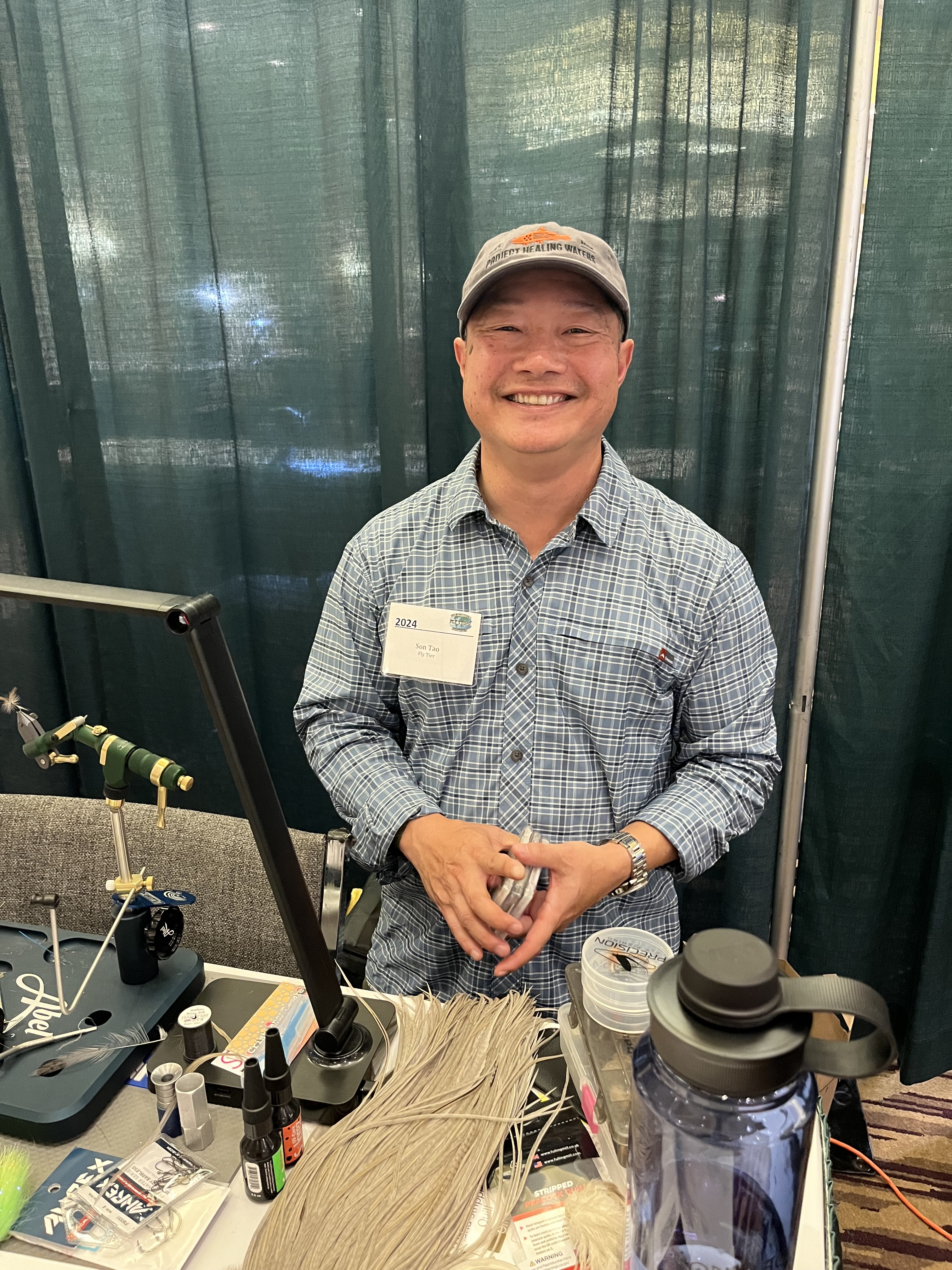
I’ve also wanted to meet Son Tao since I read about his Caddis Emerger pattern in Pat Dorsey’s book Favorite Flies for Colorado. I shared a table with Bob Lindquist, Delaware River guide extraordinaire (and contributing photographer for my upcoming Farmington River book). Son was one table down the aisle, so it was easy to chat. He is one heckuva skilled tier. Also a shout out to David White who sat at the table next to me. Great to meet you!
Not too shabby company! I was so honored to be included in this roster. This was my first time as Featured Tier in the Symposium, and my session was very well attended. If you were in the group, thank you for participating. Thank you also to everyone who stopped by my table to watch and ask questions and talk fly fishing.
Tying LaFontaine’s Diving Caddis. Thanks, Phil, for the wonderful photos.
It’s hard to believe that I’d never met Bob Clouser before this weekend. Bob was FFT just before me, so that seemed like a natural time to say hello. Whether you’re a presenter like me, a vendor, or an attendee, Bob’s kind nature is typical of the overwhelmingly positive energy you’ll get from everyone at the show. You’re with your tribe. People want to talk to you. So…you’re coming next year. Right? Or to the Marlborough and Edison Fly Fishing Shows in January. Right?

Halfway done with the Farmington River book!

Last week, I reached my first manuscript milestone, which included 50% of the text, maps, and a couple dozen photos with captions. Off it went to the publisher, and here I sit with a satisfied smile on my face. So, this seems like a good time to give you a detailed update on the work.

Let’s start here: I’m really excited about what I’ve written so far. I don’t do anything halfway, so it’s particularly gratifying to be able to work on a project that I’m so passionate about. I think I’ve found a nice balance between dispensing facts, being conversational, and mixing in both anecdotes and even a little humor.

In terms of content, the template of Fly Fishing Guide to the Farmington River will generally reflect the other books in the Stackpole line of “Fly Fishing Guide To…” books. In my book, you’ll get a little history of the river; general information about the trout that live there; maps of the STMA that point out pools and major parking areas; descriptions of the major pools and the river in general; and outlines of the most productive fishing methods.

After reading the book, you’ll know that tying a big Isonychia soft hackle on point in August and swinging it through snotty pocket water is a very good idea.

But the truly useful part of the book will be the sections on hatches, seasonal conditions, and fly patterns. My goal for the work is that you’ll be able to read it and have a pretty good idea of where you should fish on December 2, with which method, and what flies to tie on. The book will feature over a dozen local patterns that are proven producers.

Even if you think you know the river, I guarantee there will be lots of information that will be new and useful to you. I’ve been fishing this river since the 1970s, I’m writing the damn thing — and I cannot tell you how much I’ve learned while writing this book.

A book like this cannot be written by one person without the help from others. I’ve been fortunate enough to be able to get input from guides and local experts; their knowledge, experience, and wisdom has been invaluable. My final deadline is June 1, 2025. My hope is that next year at this time, we’ll have a book ready for you to read!

Thank you so much for continuing to follow currentseams during this busy time. I’ll try to get you caught up a bit this month on other happenings. Up next, in this order: the IFTS redux, western PA steelhead, and SR steelhead reports. Also, the Fly Fishing Show in January. I’ll be at Marlborough and Edison.

See you on the river.

Matching The Hatch with Wet Flies

“Matching The Hatch With Wet Flies.” That’s the title of my Featured Tier demo this Sunday at 11:45am at the International Fly Tying Symposium in Somerset, NJ. As I prepare for the demo, I had a few thoughts I wanted to share.

When you’re fishing wet flies, matching the hatch doesn’t matter — until it does. And then, you’d best be prepared. What I mean is, there will be times when fish will eat a wet fly simply because it looks alive and like something good to eat. The bug that wet fly is supposed to represent may not be hatching at that moment. It may be entirely out of season. It may be the wrong color or size. But nonetheless, it gets stomped.

However, the more you fish with a team of three wet flies, the more you will encounter situations where the trout will only have what’s hatching, presented in the water column exactly where they are feeding on the naturals. They may pick out one fly on the three fly team to the ruthless exclusion of the other flies. That’s when matching the hatch pays dividends. You’ll be the person leaving the pool, trailed by other anglers who will want to know, “What fly were you using?”

So: know your hatch windows. Understand what food is most likely to be in the water. Understand how those bugs behave. Specific patterns aren’t as important as matching size, color, and profile. Give the trout a choice. They will always tell you when you get it right.

See you this weekend!

LaFontaine’s Diving Caddis is a good choice for a late afternoon-into evening pattern — because that’s when the trout are most likely to be seeing egg-laying female caddisflies. One memorable evening, I landed two dozen trout in two hours — sixteen on the Diving Caddis.