And, we’re back

TGIF! Sorry for the 1-week hiatus, but I was re-called to emergency book duties. I believe — fingers crossed — that I’m all set on that front for a while. I hope. Now I can take some time to do all the things I haven’t done in the last few months, like go fishing. And resume regular posts here. The yard work list is also impressive. And just in time for the heat wave.

This warm weather coupled with cold water should kick-start the hatches on the Farmington, which have generally been lagging. Please be aware of temperature spikes in the afternoon. Carry a thermometer, and if you get 67 degrees or higher, go fish farther upstream. There will be plenty of colder water near the dam –it’s releasing at 52 degrees. You can also fish first light to mid-morning, when water temps will be lowest. Catch ’em up, and have fun.

No. Not this week.

And just like that, I’m back on the book

No rest for the weary. The publisher has asked for more photos (that’s a good thing!) and captions for the Fly Fishing Guide to the Farmington River. So, instead of a report on my small stream outing this week, you get this update. Regular reports will be somewhat on hold until I get this book business finished.

The Farmington River continues to run high out of the gate. Hopefully they’ll reduce it by the weekend. I’m on the river giving a lesson tomorrow. Even the Hous is well over 1K cfs. I suppose a little too much water is better than the D-word.

Have fun, go fishing, and a pre-Happy Father’s Day to all you dads out there!

And I still haven’t gone striper fishing this year! I’m also working on a new piece for Surfcaster’s Journal. Details on that to come.

Back in the Small Stream Groove

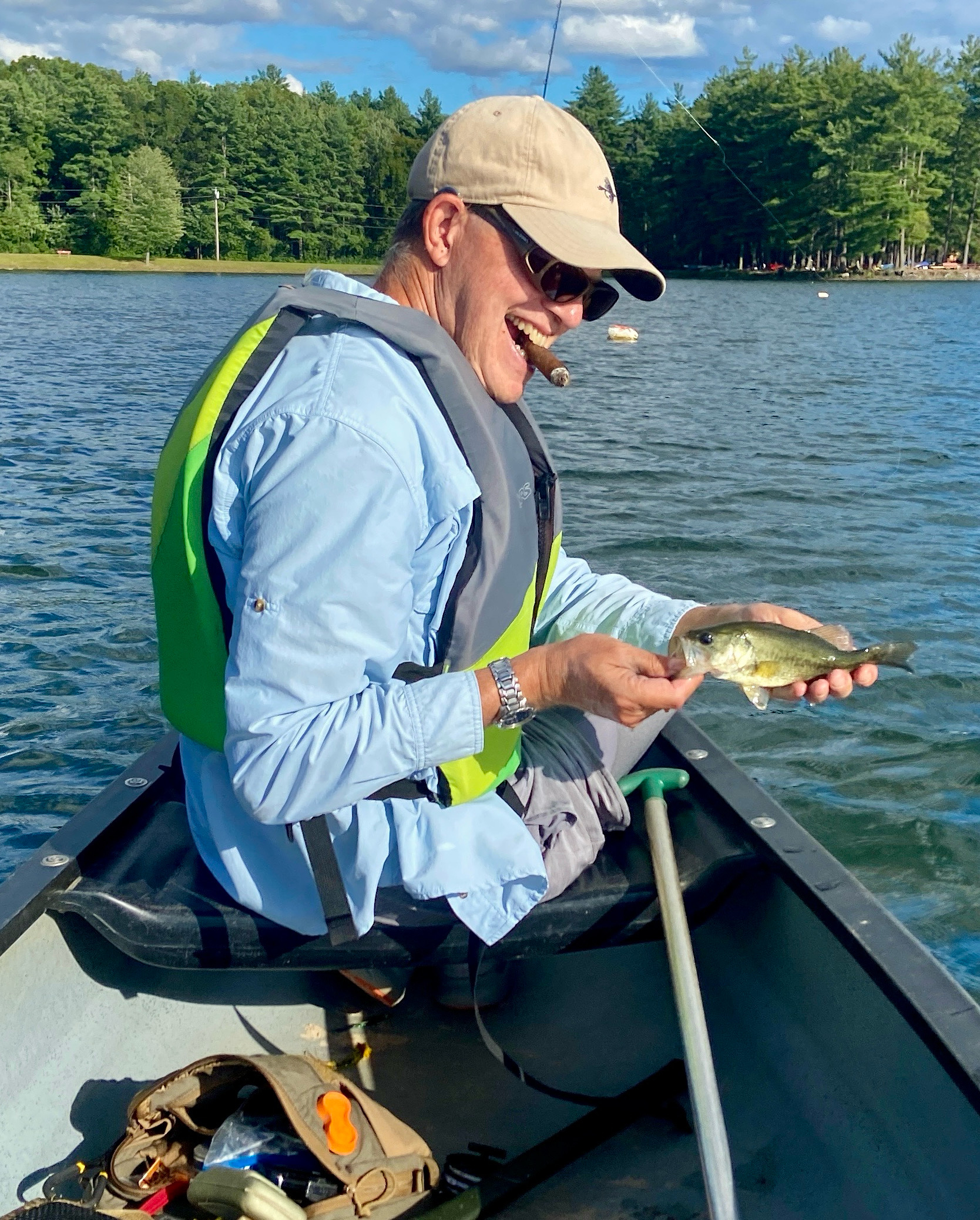
What a treat to be able to fish a small stream again. It’s hard to believe that this was my first fishing-for-fun-only outing of 2025. Surfcaster extraordinaire Toby Lapinski and I spent a few hours last week exploring a woodland gem. Although we fished mid-afternoon, dense canopy blocked the sunlight and the water was surprisingly cold. Water height was on the low side of medium. Although I fished a dry dropper system, the local char showed a clear preference for the dry. Toby fished a size 10 hopper, and they attacked it with wanton ferocity. We pricked a bunch, landed several, and left feeling happy.

I could get used to this. I really, really could. Toby Lapinski photo

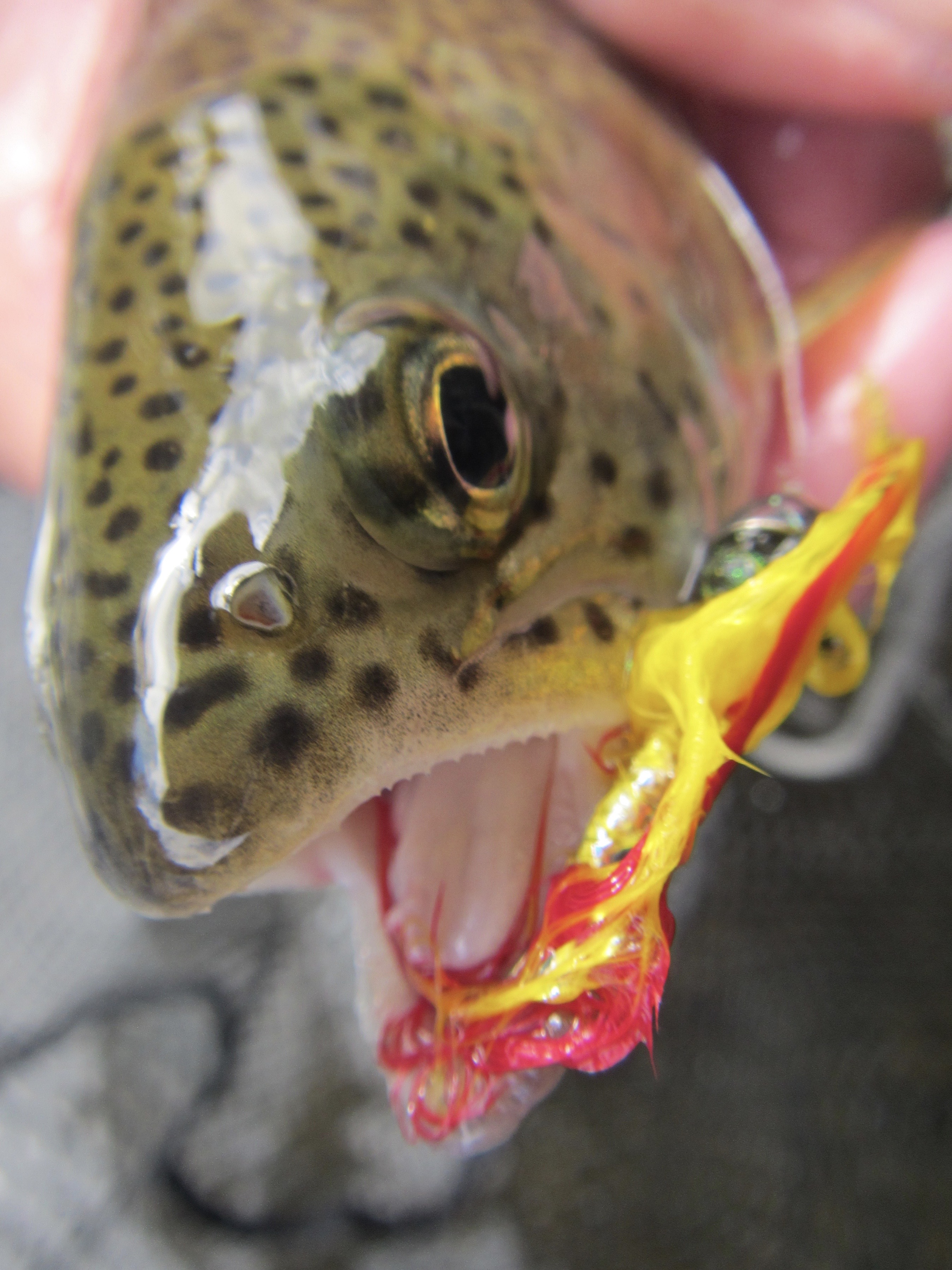
Given the daylight and shallower water, I found it curious that the fish weren’t that interested in subsurface offerings. Besides the dry/dropper, I also fished the Squirmy Jiggy Thingy. I felt many nips and tugs, but those were clearly generated by smaller fish. (By the way, we saw/spooked dozens of fingerlings, which portends for a bright next year.) The moment of the day, however, was when we witnessed a 3-foot long northern water snake capture and kill an 8″ brook trout. I’d never seen anything like it. The snake took the fish out of the water, and clamped down on its “neck” to suffocate it. There’s a theory which states that on small streams, terrestrials become a huge part of the trout’s summer diet. Apparently, the tables are sometimes turned.

Steve Culton’s Iso Soft Hackle featured in On The Water’s “Guide Flies” column

What’s this? Two posts in one week? Yessir, campers! As promised, we are trying to return to a regular posting schedule on currentseams.com. I want to thank everyone for their patience and loyalty over the past year. Let’s get to it.

The Iso Soft Hackle is a wet fly I prototyped several years ago. Then, I test it on the river for months or years to prove its worthiness before I pass it along to you. This is an outstanding pattern (he said, modestly). The past two summers, it has accounted for some of my biggest trout taken on wet flies. It’s easy to tie, and the materials are readily available. Here’s the fly and the recipe as outlined by Tony Lolli in his outstanding Guide Flies column from On The Water. So what are you waiting for? Get to the vise. It’s Iso time!

A jpeg and pdf for your viewing pleasure.

Ladies and Gentlemen, the Farmington River manuscript has left the building!

Writing a book is all about milestones and deadlines, and the first truly big ones are now in the rear view mirror. Yesterday I sent the complete manuscript to the publisher, along with photos and captions. Next step will be their read and review, and then my edits and re-writes. The target publish date is still next summer. Many of you have asked about orders and pre-orders — that’s exciting to hear! I don’t have any information on that yet, but of course when I do, I’ll let you know here and elsewhere on social media.

Now, I’m going fishing.

Yeah. I’m excited.

First roses bloom, Sulphurs here soon

My first hybrid tea rose, Peace, bloomed this week. That means that our creamy and yellow mayfly friends are beginning on the lower river. The waters are down to an excellent 465cfs in Unionville. I’d hop on it, but I am crashing my final draft deadline of June 1. Please wish me luck, and I hope you get out this weekend…or even today.

Peace, baby. It’s a good color to signify the arrival of Sulphurs.

We’re in the home stretch! And a word about caddisflies.

Happy Hump Day to all. Sorry about missing a post last week, but I have a really good excuse (besides the book): #2 Son Cam’s graduation from the College of Wooster in Ohio. And now, we’re back. Except I spent the last two days planting over 50 cucumbers, chili peppers, and tomatoes. (Advil, anyone?) Now that those are in the ground, I’m back at the book, fast and furious, as my June 1 deadline approaches rapidly from the east.

That means no fishing for me, but I hope you’re picking up the slack. We’re supposed to get dumped on Thursday, so that will no doubt jack up the rivers. Hopefully the waters will recede somewhat by the weekend. Connecticut needs the rain, and we’ll be grateful for the influx into the reservoirs.

Two years ago, May 30, LaFontaine’s Diving Caddis.

While this has been a crappy, cool month so far, I have been thinking about caddisflies. The warmer days tend to really get them going. May is typically prime time for caddis on the Farmington, and when the book comes out, I hope you’ll pay particular attention to the section devoted to this highly underrated bug. If I were nymphing or swinging wets today, you can be sure I’d have at least one caddis pattern in the mix.

Must go write. And I’m really looking forward to finishing.

Tip of the Week: Beware (or at least be aware of) the shadow hatch

Who knows why the trout aren’t eating your Hendrickson fly? The Shadow Hatch knows. Shadow hatches are so named because they are concurrent with — and less glamorous than — the hatch you think the trout are eating. In the case of the Hendricksons, the shadow hatches are likely to be tan caddis and BWOs, although in early afternoon, the tan caddis are the likely culprits. This phenomenon manifested last week during my lone outing. I was fishing a team of three flies: Hare’s Lug and Plover (caddis) top dropper, with two Hendricksons below. Hendricksons were in the air and there were rising trout. Yet all of my fish came on the Hare’s Lug and Plover. This is the strongest argument for fishing a team of three: droppers are always the fastest way to find out what the fish want.

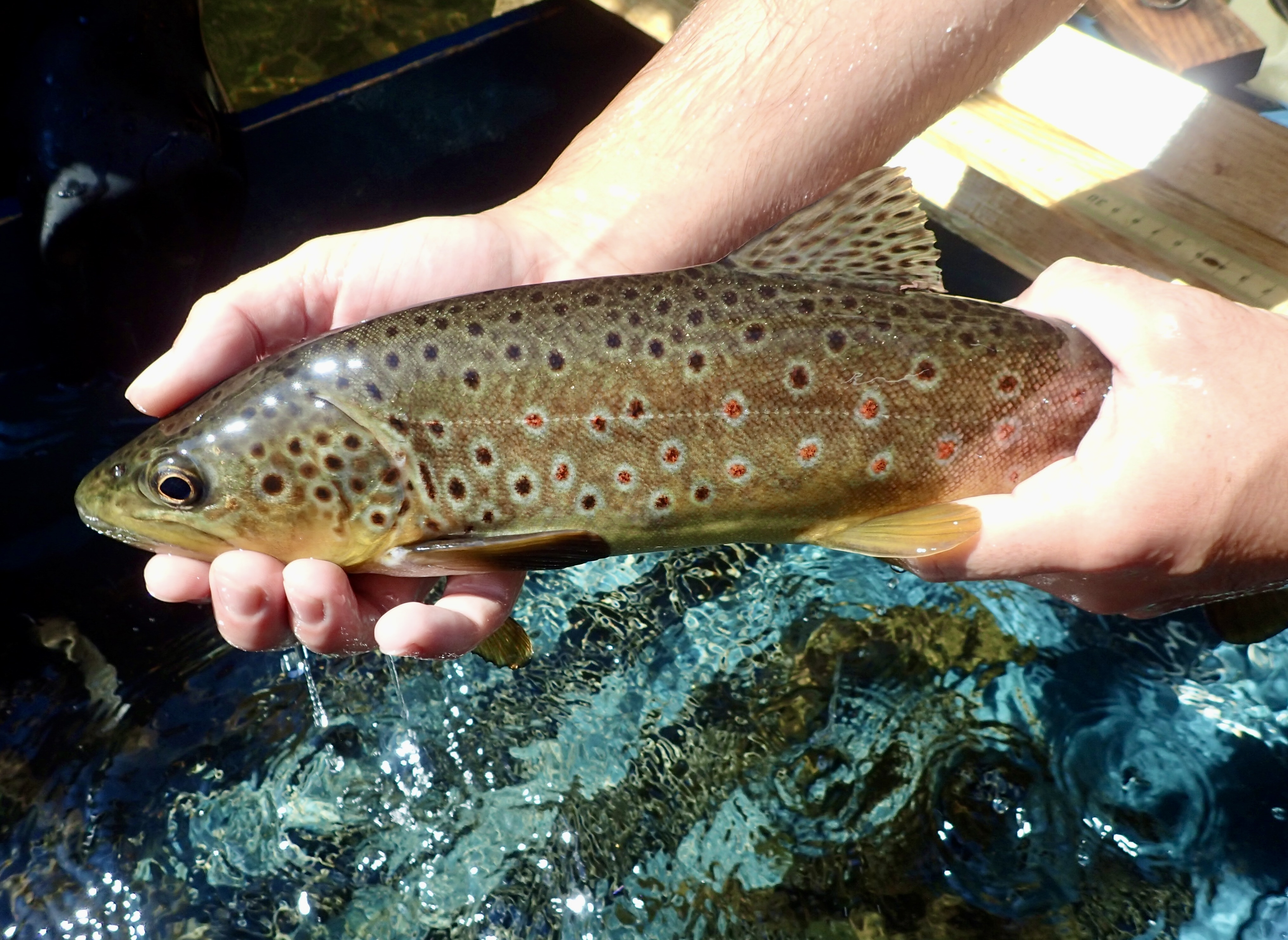
This magnificent brown might not have eaten had I not given it the choice of a caddis. You can get a better view of the fish’s weight and size on my Instagram @stevecultonflyfishing — and while you’re at it, please follow me there.

Last week’s underwhelming Hendrickson outing

I managed about 3 hours of fishing last Tuesday, and it was a disappointing. True, I got my first few trout of the year on a swung wet fly. True, the weather was pretty darn nice. True, I rather enjoyed my Ashton VSG torpedo. But the bite and the Hendrickson hatch were disappointing. I’d give the hatch a 4/10 and the bite a 2/10. There just weren’t than many fish rising, and when they did, it was for an all too brief 30-minute window.

Some of the details: I fished with guide extraordinaire Steve Hogan for about an hour. He fished nymphs, I fished wets. He stuck several fish. I didn’t get a touch. We fished in the lower STMA. Water temp was low 50s, good medium-low flow. After Steve left, my action picked up, but again, only for a brief window. I then went to a mark a quarter-mile upstream and fished a 150-yard section with a team of wets, again without a touch. Normally, I would have expected at least a half-dozen fish. I heard from others who fished in the Canton area that it was similarly underwhelming.

I just wrote the section in the book about ID-ing an Atlantic salmon smolt. They’re often confused with small wild browns, but once you learn the specific markers, you won’t ever again mistake a salar for a trutta.

I’m going to try to get out again this week, then continue pounding away on my keyboard. The book is nearing the completed draft home stretch, but not quite there. Still gotta round that clubhouse turn.

Hendricksons are here!

We all could use a good Hendrickson hatch, and now we don’t have to wait. Well, you might have to get to the river early enough to secure a spot, and then wait for the bugs to pop — usually early afternoon — but the hatch is on and moving upriver. I guided James and his daughter Charlotte last Friday on the lower river, and the hatch was just getting started. With favorable air temps forecast for the entire week, now’s the time to jump on it. it should be on in the PTMA this week.

Pick an active feeder during the first phase of the Hendrickson hatch, place one of these soft-hackled Hendricksons over its lie, then hang on.

Hendricksons are one of the mayflies that will be featured in my book. They’ll be part of a general chapter on mayflies (caddisflies, stoneflies, midges, and other food sources are the other four categories) which then breaks down into some of the more popular/important specific hatches. The intent is not create an in-depth, Latin-heavy, scientific bug-biology geek white paper; rather, it’s to give you meaningful, useful information. The better you understand the hatch, the more fish you’ll catch.

Here’s this again in case you missed it: The best soft hackles and wet flies for fishing the Hendrickson hatch.