No fishing today, but lots of writing. Polishing an article and starting to build some new presentations. I’m so fortunate to have this job, and it’s all because of readers and anglers like you. Here’s the scene from currentseams headquarters:

No fishing today, but lots of writing. Polishing an article and starting to build some new presentations. I’m so fortunate to have this job, and it’s all because of readers and anglers like you. Here’s the scene from currentseams headquarters:

Fall is booking up fast! I have four presentations in the next four weeks all over the northeast:
“Trout Fishing For Striped Bass,” Wednesday, September 26, Narragansett TU 225, West Greenwich, RI, 7pm. Everybody welcome. You can get more information here.
“Wet Flies 101,”, Tuesday, October 9, SEMASS TU 241, Middleborough, MA, 7:30pm. Everybody welcome. You can get more information here.
“Wet Flies 101,” Wednesday, October 17, Long Island Chapter TU, 7:30pm, Hicksville, NY. Everybody welcome. You can get more information here.
“The Little Things,” Thursday, October 25, Taconic Chapter TU, 6:00pm, Cork ‘n’ Hearth, Laurel Street, Lee, MA. Everybody welcome. You can get more information here.
Hope to see you there, and if you’re a currentseams reader or follower, please come say hello.
Hightail it to one of these meetings!

I can tell everyone’s busy elsewhere, and that’s good. Enjoy the last blast of summer! Normally, I’d be pounding up slab smallies on the Hous, but I’m playing an everlasting gobstopper-type game with the flows, which still aren’t below 500cfs. So, we wait. In the meantime:
One of my flies, the Soft-Hackled Flatwing, will be featured in an upcoming issue of On The Water magazine.
I’m speaking at the Long Island Flyrodders next Tuesday, September 4. The subject is “Trout Fishing For Stripers,” but I’m pretty sure it’s a members only gig. So if you’re a member and you’re reading this, see you then!
The Soft-Hackled Flatwing is an oldie but goodie. Play around with colors and let the stripers tell you what they like!

Six Countermeasures to go, ready to drive some big brown or slab of a smallie out of its mind.

I don’t usually do this, but I’m going to share a concept/work-in-progress. What do we know? The Hous is high and it’s loaded with rusty crayfish which smallies eat. I’ve done precious little bottom bouncing with crayfish patterns, and I want to explore that. So: dumbbell eyes, inverted hook, lots of marabou = lots of motion, rusty/orange/red/brown/green colors, a little flash. We’ll see what the focus group thinks.
No name yet, not even the final materials and colors, but if I were a smallmouth, I’d chow down.

The Countermeasure is a riff on a bunch of proven patterns. It’s basically a Deep Threat in crayfish colors with a deer hair collar and head tied Zoo Cougar style. Bite triggers abound: a seductive Zonker-like tail; hints of flash; flowing soft hackles; dangly legs; bulky head. It’s a surface and film fly that you can land with a loud splat!, then swing, wake, strip, and/or dangle. (I’ve had smallies try to pick it out of the air.) There’s really no wrong way to fish it. It shines on a floating line, but it also ventures into neutrally buoyant territory if you use it with a full sink line.
I’ve been field testing the Countermeasure for three years now, and rarely disappoints. There are times when the smallmouth can’t keep away from it, and will bull rush it the moment it hits the water. And did I mention it’s a killer pattern for those big malevolent Farmington river browns?
The Countermeasure smallmouth bass and trout bug

~
A closer look at the head, viewed from above. It’s not a super-tight pack; two pencil-sized clumps of hair spun on the shank usually do it. I start shaping it with a razor blade by trimming the bottom flat, then the top at gentle upwards angle. Scissors do the rest.

~
It took me a long time to come up with a name that I liked. Then, few weeks ago, I was watching The Hunt For Red October for the millionth time, and I saw the Dallas release these brilliantly devised gadgets that churned and boiled and made the torpedo think they were the intended target. Then I thought about how the smallies would rather kill than critique this bug. And there it was. So, Red October fans, repeat after me: “Release Countermeasures, on my mark!”

~
The Countermeasure Rogues’ Gallery:
Housy smallmouth, August 2016

~
Housy smallmouth, August 2016

~
Farmington River brown, August 2017

~
Housy smallmouth, July 2018

~
Housy smallmouth, July 2019

~
Big tailwater brown, August 2019

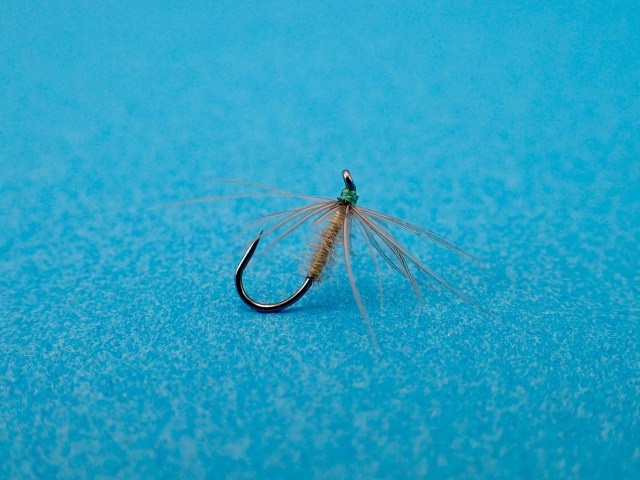
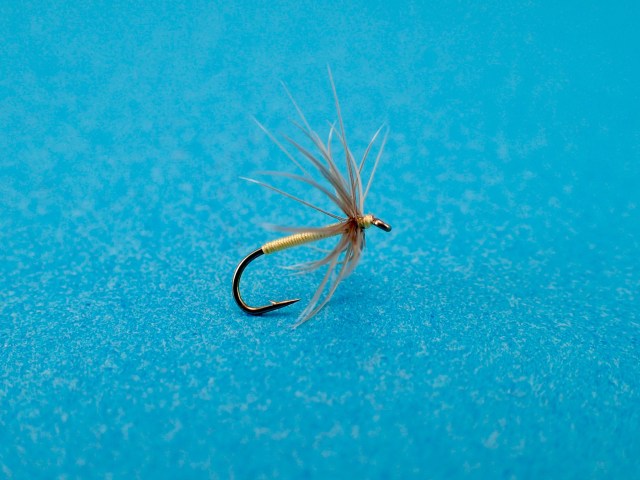
The results of a wee tying binge for myself and customers: summer nymphs and dries for ye olde Farmington River. All eagerly awaiting a hungry mouth(s).
Rainbow Warriors, Frenchie variants, soft-hackled PTs, wingless March Browns, Usuals, Catskill Light Cahills, Magic Flies. Be prepared to downsize your dries to 20s this time of year. (Although I had success last week casting big (8-12) stuff to smutting trout in frog water.)

I was going through currentseams the other day and was surprised by how few fly patterns I’ve actually posted. Take the Big Eelie. I’ve been tying it in a seemingly endless series of colors for — well, for as long as I’ve been tying it — but I haven’t posted many of those variants. Let’s begin to remedy that with the Olive Fireworm Big Eelie. It draws its palette from the single feather flatwing of the same name found in Ken Abrames’ A Perfect Fish. The result is an explosion of bass-tempting pyrotechnics. Fish it on or around July 4th to celebrate Independence Day — or the fact that you’re out casting a fly to striped bass. Aw, heck. Fish it when ever you like. It is, after all, a free country.
The Olive Fireworm Big Eelie

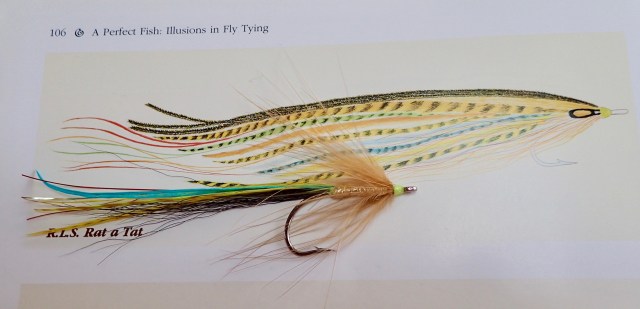
Many years ago I adapted Ken Abrames’ R.L.S. Herr Blue bucktail into a large nine-feather flatwing. I was pleased with the result, and that fly produced many large bass for me. But the recent acquisition of a ginger saddle brought out the tinkerer in me. And since I never did a three feather flatwing-bucktail version of the Herr Blue, I went to work.
If you’re unfamiliar with the concept, a flatwing/bucktail hybrid combines the seductive motion and swimming action of a flatwing (using three contrasting saddles) and the color-blending deliciousness and adding-the-illusion-of-mass properties of bucktail. I originally started tying these not only as a way to conserve precious flatwing saddles, but also to use bucktail in place of saddle colors I did not have. The template is Razzle Dazzle, with all strands of flash extending at least 3/4″ beyond the longest feather. (See the Rock Island and Crazy Menhaden three-feather flatwings.) Bonus: they’re easy to cast for their size, and they swim beautifully on the greased line swing.
Obviously this fly is intended to imitate a river herring or alewife; it could also easily pass for other larger baitfish like menhaden. I tied two, one 8″ and the other 10″. So without further ado, I present the Herr Blue three-feather flawing. DIA. (Danke In Advance.)

~
A closer look at the blend of nine different colors of bucktail.

For the uninitiated, a flatwing/bucktail hybrid combines the seductive motion and swimming action of the flatwing (three contrasting feathers here) with the color-blending deliciousness and adding-the-illusion-of-mass properties of bucktail. (See the Rock Island and Crazy Menhaden three feather flatwings.) So, just a taste for now. Details to come soon.
I don’t know how important color is to a striper at any given moment, but I really like the blends on this fly.