Menhaden action alert, Farmington River book, IFTS, and other fishy goings on

The first thing I’d like you to do after reading this opening paragraph is head over the ASGA website and sign their official letter calling for major reductions to the menhaden harvest. It will take you less than five minutes, and it’s an excellent use of your time. Long story short: Atlantic menhaden are a critical bait and ecosystem fish; they’ve been grossly over harvested; that needs to stop now. Please do this, even if you don’t fish for striped bass. We need all the voices we can get.

Galley copy for the Fly Fishing Guide to the Farmington River has been reviewed by yours truly and sent back to the editors. This was simply my review and comments on their edits. I was pleased to discover that the edits weren’t substantial, and book flowed from one subject to another like…a river? There. I’ve made my unfunny joke of the day. Maps were also reviewed, and I really like the artwork. If you don’t know the river, you’ll find them highly useful. Next steps: the whole shebang gets put into page layout, then reviewed. That should happen in November. We’re getting closer!
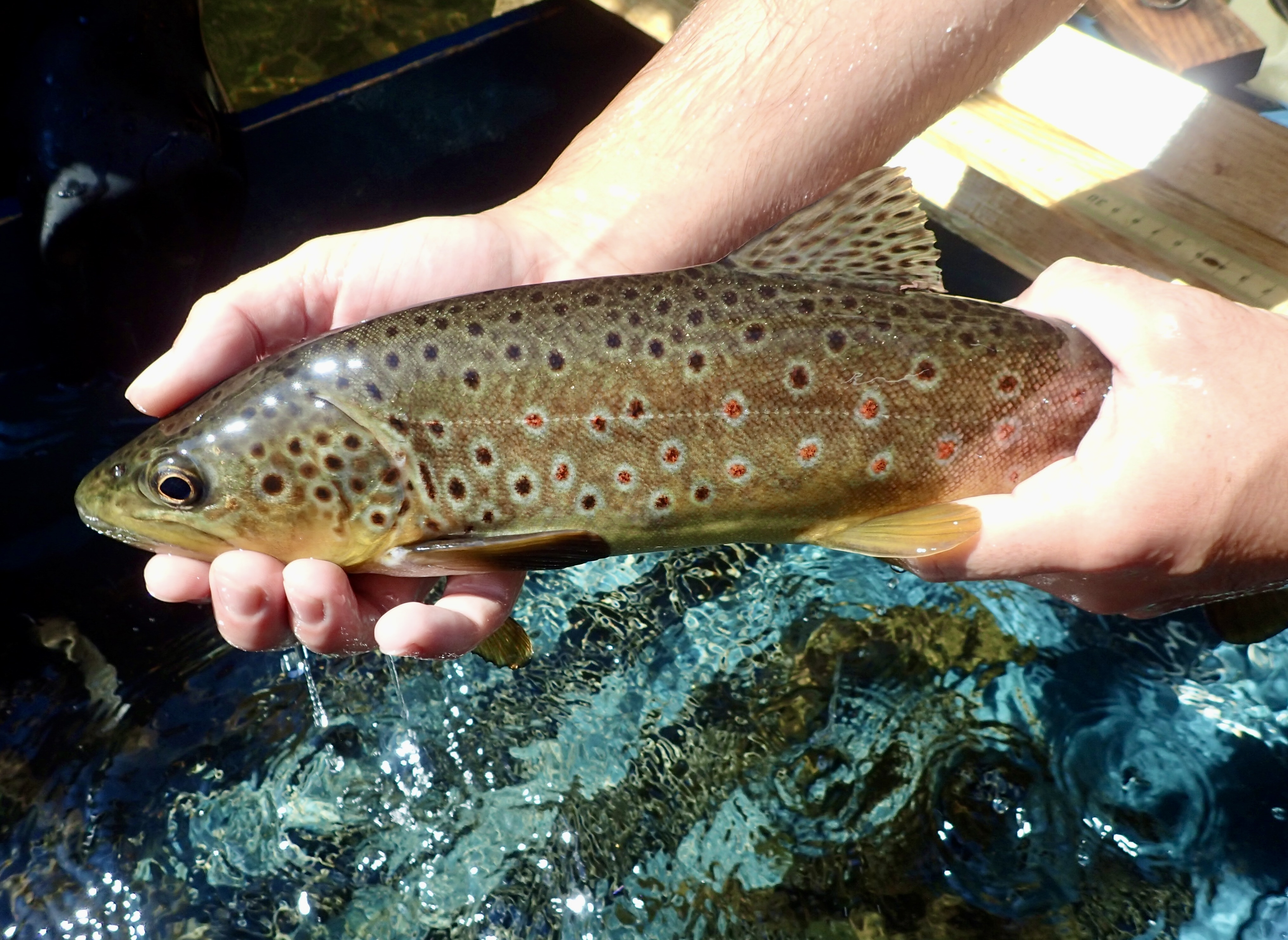
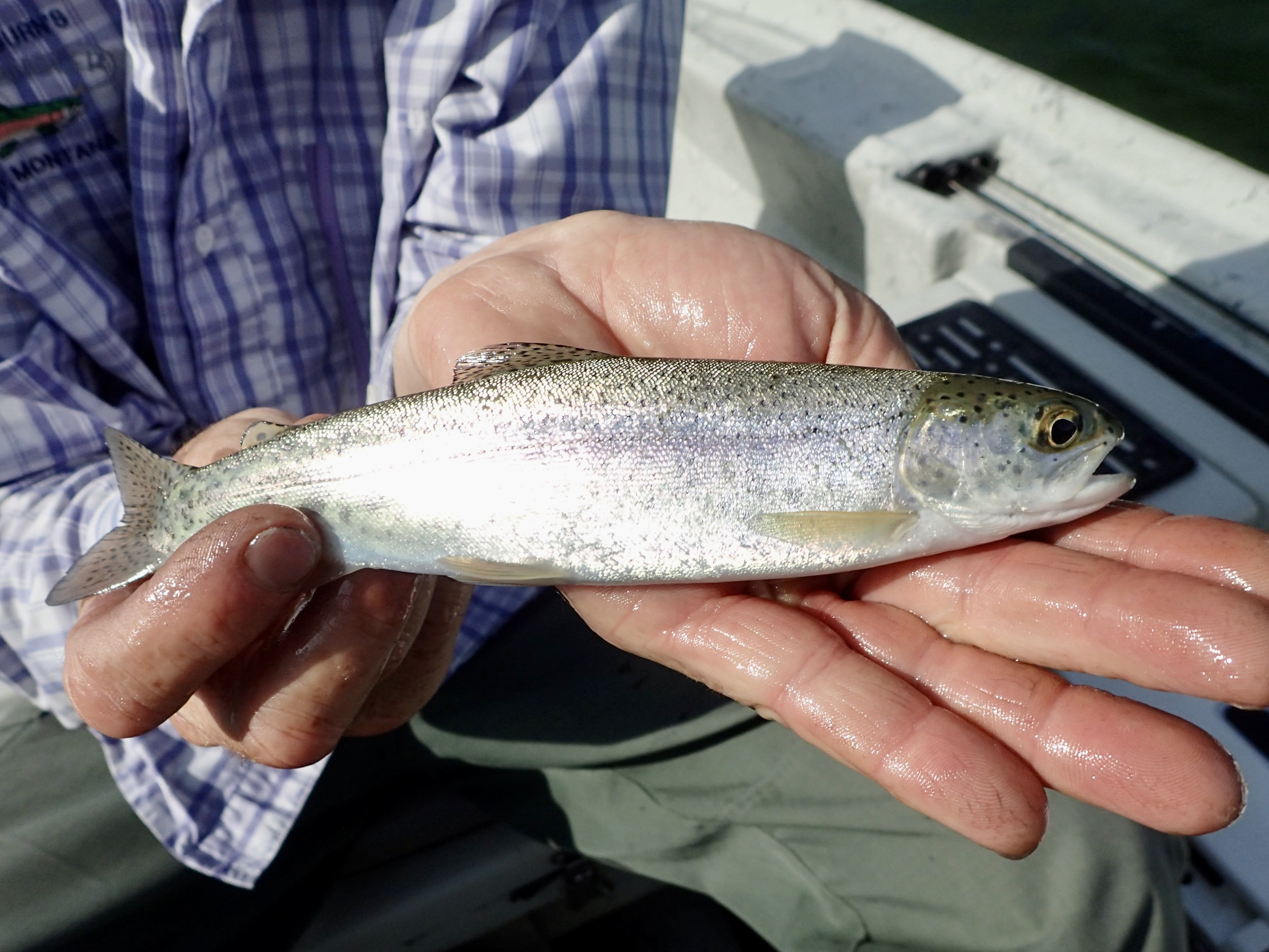
A successful spawn means more of these. This fish was sampled by DEEP last September during broodstock collection for the Survivor Strain program. If you see a redd and canoodling trout, be like The Beatles and let it be.

Speaking of the Farmington river, the spawn has begun. If you’re fishing, please be on the lookout for redds! They are generally lighter, oval-shaped patches surrounded by dark substrate. Keep a safe distance. And of course, never target spawning fish. That’s just bad form.

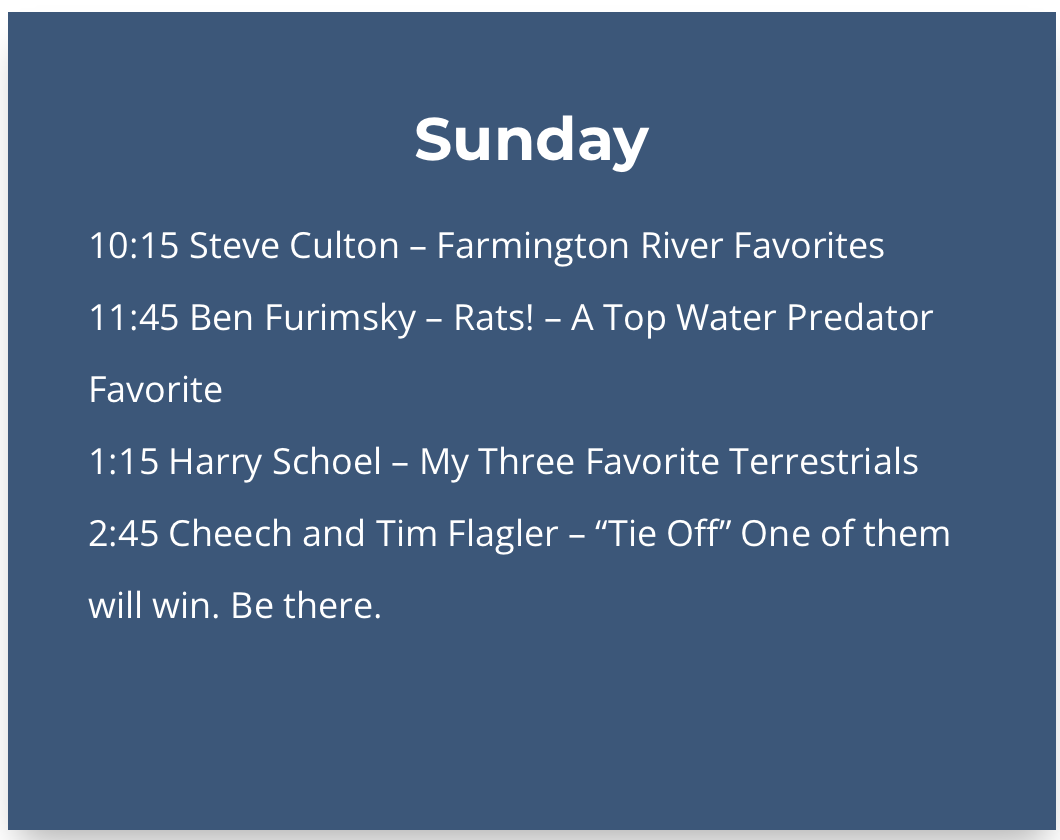
A reminder that the International Fly Tying Symposium is November 15-16, now just over two weeks away. I’m doing a wet fly seminar on Saturday and a Farmington River tying demo on Sunday. More on those coming soon.

Cover reveal for “Fly Fishing Guide to the Farmington River”!!!

Is this exciting, or what?!? At least, I’m excited. I hope it meets with your approval, if not favor. I’m continuing to plug away at the copy edit review, so this will likely be my only currentseams post this week. I hope some of you are getting out on the water. And we need rain — let’s see those rain dances!

Farmington last week and now, back to the book

I did two lessons last week on the Farmington. On Tuesday, I took Joe on a wet fly excursion. We stuck to the lower river; at 140cfs, it had the most water, and the weather was cool enough that the water temp never got higher than 66 (3pm). The fishing was predictably slow; we found success by moving around (we fished three different marks) and targeting the deepest, fastest-moving water we could get into. Joe was a strong wader, and sometimes that’s the difference between fishing and catching. Trout love to hang out in places that are difficult for land animals like humans to navigate. Joe stuck four and we put three in the hoop. In difficult low-water conditions, that was pretty darned good.

Joe having at it. As you can see, the clarity of the water was excellent, and when the flows are low, that usually works in favor of the fish. But Joe kept at it, was enthusiastic, and figured out where he needed to put his flies to catch fish. Great job, Joe!

Friday was a different story. We had rain Thursday night, which had me all fired up because it would mean higher flows and a little color in the water. While those conditions manifested, the fishing stunk out loud, which depressed me no end. I guided Dan and Sean, and we spent the bulk of our time nymphing. We stuck to water just below the PTMA; our reward was not another angler in sight. Although we bounced around — we fished four different marks — we could only manage two touches. Bah-phooey on those trout. The good news was that both Dan and Sean showed tremendous improvement over the course of four hours. When you actually see clients getting it, and making better casts, presentations, and mends, it’s very gratifying. Both deserved better than what the river gave them, but they’ll hit right in the future and reap the rewards of their lesson.

~

I’m back on the book, so this will be my only currentseams post this week. The publisher has sent me the galley copy, which is all of their edits in a document, paged format. My job is to read and review and comment. That’s over 300 pages of reading, so I need to hop to it. I’ve only made it through 20 pages, but it’s a happy feeling when you still like what you’ve written so many months ago, and the edits are generally light. AFAIK, The Fly Fishing Guide to the Farmington River is still on track for a June 1 2026 release. Natch’ , I’ll keep you updated with any news as it comes in.

Meanwhile, please do your best rain dance…

Mark your calendars: the International Fly Tying Symposium is Nov. 15 & 16 in Somerset, NJ

The International Fly Tying Symposium is the world’s largest show dedicated to fly tying. And what a show it is! Vendors with all kinds of good stuff (bring a shopping list — I always come away with some nifty items); some of the best-known fly tyers in the world (like Tim Cammissa, Tim Flagler, Barry Clarke, Cheech Pierce, and Son Tao, just to name a few) all ready to meet and greet and answer your questions; live tying demos (free with admission, and I’m doing one of them); seminars (ditto free and me); and tying classes led by experts (you must pre-register here).

My wet fly seminar on Saturday the 15th is unique to the Symposium, so there’s your reason to come. I’ll talk about materials, tying, wet fly styles, and when, where , and how to fish them. It’s the next best thing to a private lesson.
My Sunday 11/16 demo will do two things: show you how to tie four proven, high confidence patterns for this highly technical river, and get you home in time for Sunday afternoon football.

I’ve said it before and I’ll say it again: events like this are a tremendous opportunity learn new techniques, improve your skills, and catch more fish. Please stop by my tying table, or come see me talk, and be sure to say hello.

The Last Blast, Largemouth Style

A few weeks ago, I had one of my more meaningful fishing outings in recent memory. It was a reunion with one of my church youth group leaders, Mark Bieber, who, after my high school years, became a fishing buddy. At that point in my life, I was a spin-only angler, as was Mark. We’d sometimes fish from land, but most of the time it was from Mark’s rowboat or canoe. Our quarry ranged from carp to largemouth bass to pike to channel cats, and we fished in places like the coves of the Connecticut River and the old claypit ponds in Berlin. Life happened, and we eventually stopped fishing together. But we always kept in touch; Mark and his wife Sharyn came to our wedding. Both were strong influences on me.

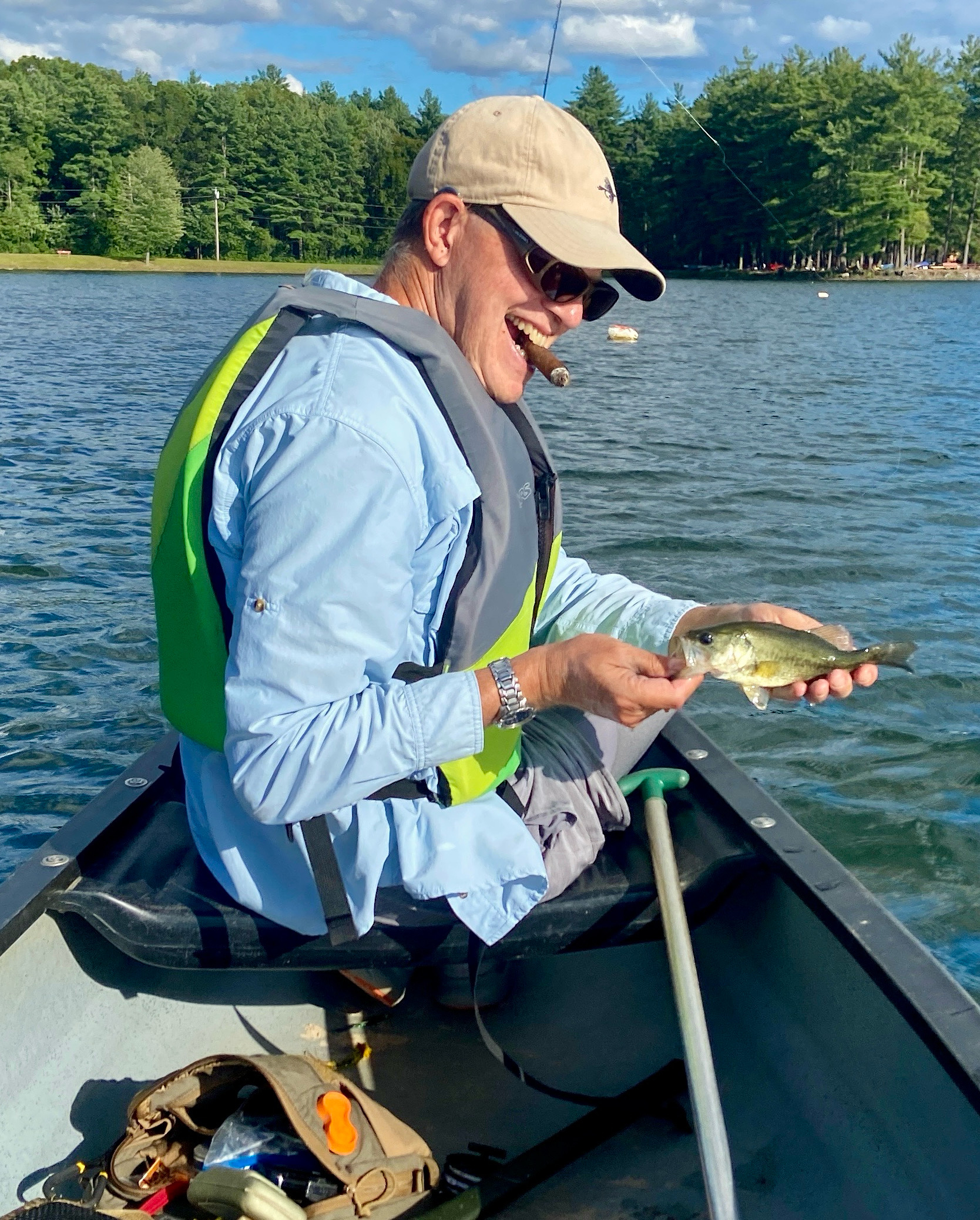
I think we can all agree that forty years is quite a long time to not fish together. So, dammit, we fixed that. Our happy fishing reunion/outing took place on a cool, sunny, breezy August afternoon, not the best conditions for largemouth bass fishing, but then again, catching fish was not the prime directive. We fished Dunning Lake at Winding Trails in Farmington, Mark with his spin rod and rubber worms, me with my fly rod and bass bugs. The conversation flowed, just like it did 40 years ago, from Bob Dylan to women to fishing to my book to retirement to getting older to more fishing, all while we both savored a wonderful cigar.

Mark got on the board first. Not a giant, but I have yet to meet a largemouth bass of any size that won’t eat a rubber worm.
Even if I held this critter out at arm’s length, it would still be small. I admired this guy’s spirit: he hunted down my crayfish, nipped at it twice, then ate it, cartwheeling out of the water when I set the hook. Old friends, smiles, cigars, and fishing. Yeah. That’s what I’m talking about. We declared the outing to have been most excellent, and agreed to do it again in the spring. I already have the cigars picked out.

Farmington River Report early September: a wet fly lesson, broodstock sampling, challenging conditions

I guided — we’ll call him “Bob” because he’s in incognito mode — last Thursday. We did a little dry fly and a lot of wet fly. The Farmington can be a highly technical dry fly arena, and sometimes it comes down a perfect drift and a little luck. But a good starting place is a long leader. I was happy to see that Bob was using a 13-foot minimum line-to-fly leader/tippet length. We added a couple more feet of 6x and had at it. Unfortunately, we missed the Trico spinner fall, but we did manage some practice, and by the time we made the decision to go to wets, Bobs drifts were noticeably better.

We spent the next six hours on classroom, then banging around the PTMA, as well as above and below it. Like many people who take a wet fly lesson with me, Bob had to learn to wait a few beats — “Are you still there?” — after the hit to let the trout hook itself. We missed a handful of strikes, but stuck four and landed three, which was pretty darned good under some tough conditions. Low water/seasonal hint: all of our hookup came in fast, bubbling water.

A lovely wild brown from the PTMA, taken by Bob on my Drowned Ant soft hackle. And on the first cast! At first, Bob thought he was hung up on a boulder. But boulders don’t shake their heads…

Which brings us to the conditions. We’re out of meteorological summer, and the water is running clear and low. Because of the drought, the trees are behaving like it’s fall, turning color and especially shedding leaves. On windy days from now until the trees are bare, expect organic matter to be blowing into the river. Leaves were a constant challenge for us on this gusty day. The trout and bugs are also in a transition. Most of what’s hatching is very small (there are exceptions, like Isonychia). The trout are getting into pre-spawn mode. This adds up to more frequent windows where fish are much harder to catch. Bob was the only angler I saw land a fish on Thursday, and we encountered multiple anglers who were astonished by our success. Well done, Bob!

But wait, there’s more. Normally, the slug of rain we received over the weekend would mix things up a bit. However, Tuesday through Thursday this week, the CT DEEP will be drawing down the dam release to do their annual broodstock sampling. You can still fish the river, but vast stretches will be rendered as rock gardens. If you do fish, please give the sampling crews a wide berth. Things should be back to normal by Friday.

However, that normal will still mean challenging fishing — which makes every trout you land even sweeter. Catch ’em up!

First week of September Potpourri: Speaking, Guiding, Book, Flows….

Just when you think you’re going to have more time to do writing…you don’t. I have to confess that I didn’t take into account that I would be this busy with non-fishing pursuits, but here we are. It’s mostly yard-home-garden-kitchen — ’tis the season for drying hot peppers, and making tomato and hot sauces — like the tides, ripe fruits wait for no one — and that’s the current situation. Still, I have much to talk about.

If you’re the person in charge of booking speakers for your fly fishing club, I have openings this fall and winter. You can find my presentation menu here. Be advised that when the Fly Fishing Guide to the Farmington River is published next year, I will want to come out and speak to your group about the book and the river. Something to look forward to!

I’m booked for the rest of the month with guide trips. Thanks to everyone who reached out! We are in rainfall deficit, so they’ve dropped the flow out of the Hogback gate to 165cfs. Note the release temperatures, and how they increase during the day (these readings are in Riverton, not at the gate). Be aware of water temps downstream. You should be OK through the PTMA, but carry and use your thermometer.

I’m supposed to get copy galleys for the book — this will be what the publisher has edited, in document form — mid-month. After I make comments, it goes back to them. It’s all very exciting. I’ll be locked away in my lonely writer’s garret that week, but if you see me on the river the other weeks, please say hello.

Next up will be the Montana trip, Part 2.

“Small Flies For Stripers” in the current issue (90) of Surfcaster’s Journal.

My latest and greatest (or at least moderately non-sucky) piece is now available for your reading pleasure. It boasts the clever title Small Flies for Striped Bass, or: Betcha the Bass Can’t Eat Just One. Like your favorite bowl of chips, you’ll want to enjoy this one over and over. As a bonus, I’ve included three of my favorite small striper patterns. Surfcaster’s Journal is an e-zine that is loaded with sage advice, even for fly fishers only. You can get a subscription for just 25 bucks a year right here.

In case you don’t recognize the names, this issue is packed with articles written by some of the best, most experienced surfcasters in the northeast.

Way Out West, Part 1: The Kootenai River

Years ago, when I first heard of the Kootenai River, my brain assumed that it was in Alaska. I mean, it sounds like it belongs in the 49th state, doesn’t it? Well, it’s in Montana, and the locals pronounce it “KOOT-en-ee,” not “nye.” So I was wrong on both counts.

Located in the extreme northwest corner of Montana, a ‘way up by Canada, the Kootenai is Montana’s largest tailwater fishery. This is a big, deep river with crystal clear waters that mask its depth; if you’re going to fish it effectively, you really need to be in a drift boat. When we first arrived at our cabin — located just a cast away from the back porch — I thought, “Maybe later I’ll just wade out to that deeper stretch along the opposite bank.” Wrong. The water would have been chest high just 20 feet from shore. Over the next tow days, we floated over pools that were well overhead deep, and you could still easily see the bottom.

This was just a few paces from the back porch of our cabin. Libby, MT, is so far north that on August 1, this is the light at 9:30pm. You can see that the immediate shoreline is wadeable, but then it drops off in a hurry. The Koonetai is wider than the Housatonic in many places, and consistently far deeper. When you’re fishing the Kootenai, you focus on the transition areas between depth and shallow — the “change of color,” as my guide Jeff put it. I did some wet fly fishing, but mostly dry-dropper, with the dropper being another dry or small nymph.
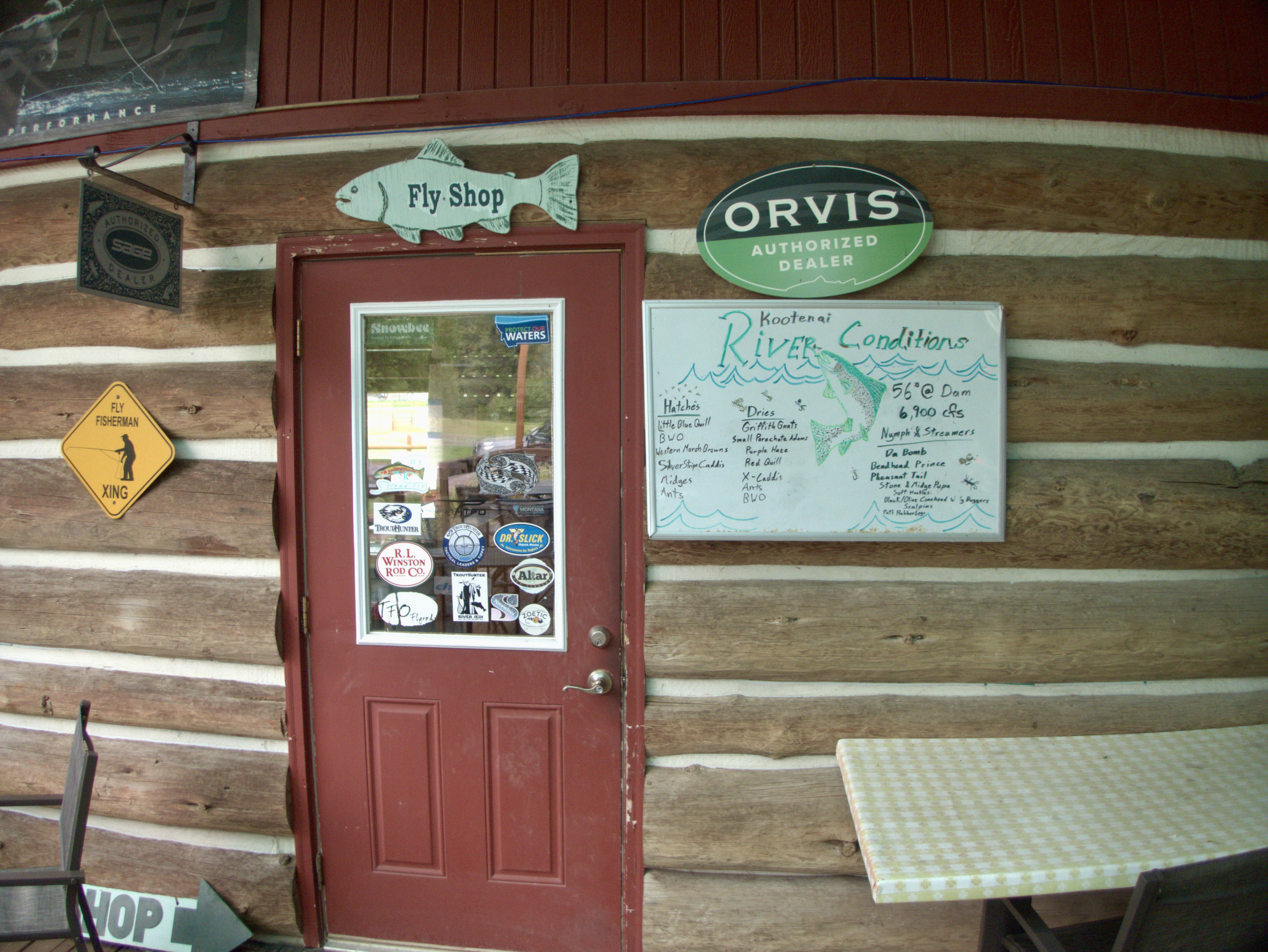
We stayed at the Kootenai Angler, run by Dave and Tammy Blackburn. There’s a fly shop on site, and full guide service available, which you’ll need. We rented their Betts Cabin, which was spacious and rustically elegant and wonderful. More than enough room for my me, my wife, and two sons. You can imagine how wide and deep the river must be for it to be flowing at 6,900cfs and still be low and clear!
There’s also a restaurant on site. We ate there two nights, and I think my favorite part (besides the good food and incredibly reasonable prices) was being able to buy a bottle of wine, drink half of it, then bring it back the next night to polish it off. I’ll also go on record with this: Tammy Blackburn makes the best sandwiches I’ve ever had on a guided trip. They bring plenty of water, and with my stash of snacks (I’m a growing boy) I was well-fueled both days. The town of Libby is just a 15-20 minute drive, so you can get a breakfast sandwich or sit-down breakfast at a number of locations.
The first day, we floated as a family in two boats; Karen and myself in one, the boys in the other. Neither Karen nor Gordon have done any real fly fishing, and both of them did a fantastic job with the learning curve — and yes, they both caught a good number of fish. The Kootenai is primarily a rainbow trout fishery, and they have the state’s only native strain on rainbows, the inland red band. While being out with the family and seeing everyone catch fish was a positive, I wasn’t thrilled with the water we floated over on the first day. Much of it was unremarkable, with flows that were in no rush to get to the ocean. But, I understand that is was good water for the beginners. I was also disappointed with the size of the fish on the first day. What you see here was typical of what we were getting into. Jeff explained that the feeder creeks had gotten too warm, and so much of the resident smaller fish had made their way into the bigger river in search of cold water relief.
Then, there were the whitefish. Some consider them to be a trash fish, but they are part of the salmonid family. And it’s a new species for the fly-fishing tally sheet.
Jeff Kalwara was my guide for two days. He did an excellent job teaching Karen, managing her rigs, releasing fish, and just being an all-around swell guy. Jeff and I went out solo the next day, but you’ll have to wait to read about that adventure…and more fish…and bigger fish.
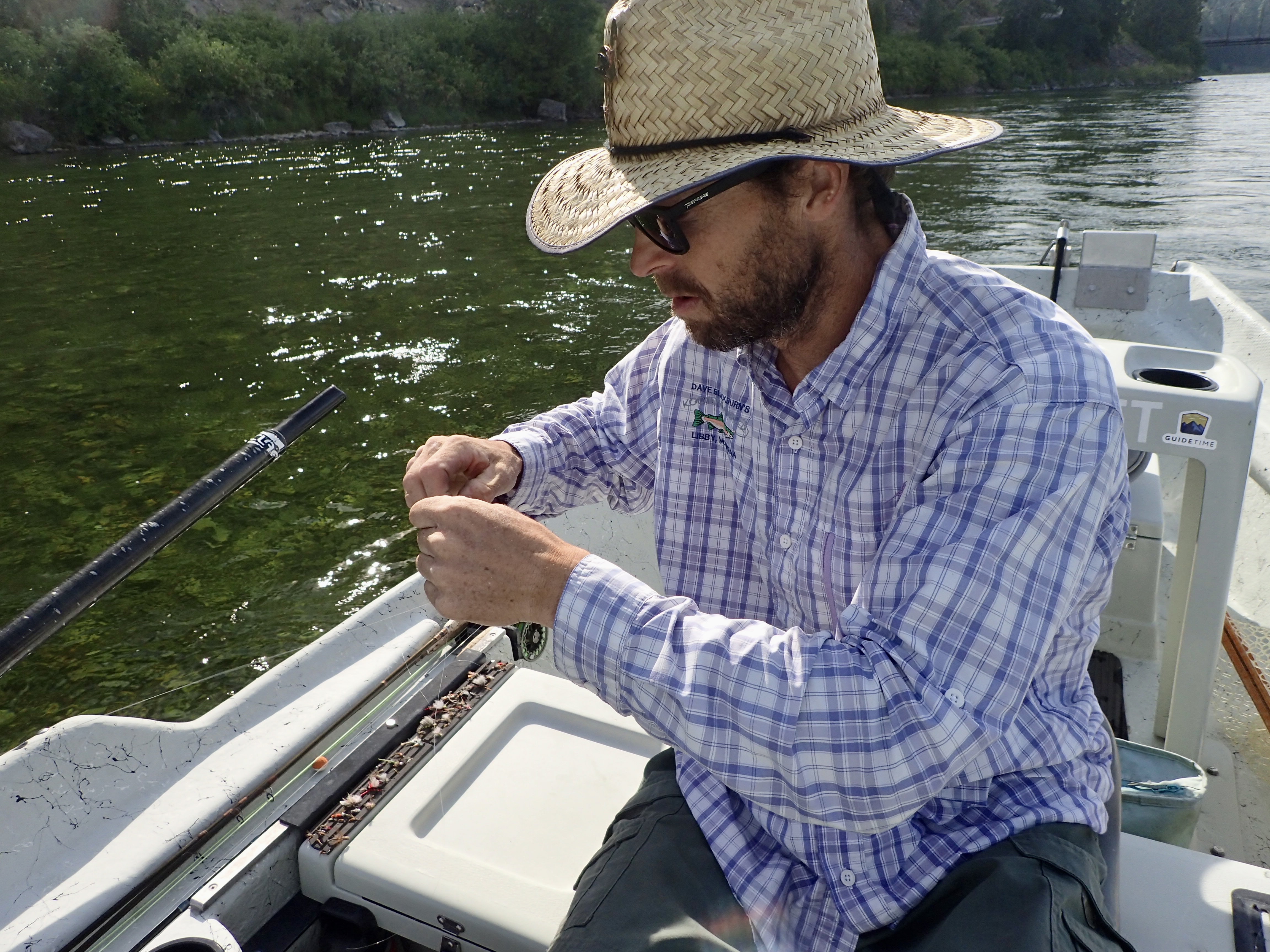
A guide’s work is never done. This is Jay, who guided Cam and Gordo. When we left Libby at 9am, he was busy in the shop replenishing his stock of guide flies. He also did a commendable job with Gordo, who really hasn’t fly fished proper before this. Well done, gentlemen!

If you’re not doing so already, you should be following me on Instagram

Long-time currentseamsers already know this, but for the newer folks — or for the procrastinators among us (of which I’m one!) — it bears repeating. I have an Instagram account, and on it you’ll find unique material that you won’t see here. For example, in the last couple weeks I’ve posted two how-to videos, one wet fly, and one nymphing, for smallmouth bass. (Now that the book is “done,” I’m hoping to be doing more videos.) Hop to it. You can find and follow me on Instagram at stevecultonflyfishing.

Come see what you’ve been missing on Instagram at stevecultonflyfishing.