Tip of the Week: When nymphing, set downstream!

A lot of anglers leave the river after a nymphing session wondering why they dropped so many fish. It’s the hook set, baby! This is such a simple principle. Adhering to it will result in a noticeable increase in your catch rate. Check out this diagram:

A proper nymphing hook set goes downstream, into the mouth and the mass of the fish.

If you accept the proposition — and I feel strongly about this — that most fish are won and lost at hook set — a good set is critical to nymphing success. Picture your fly moving downstream, a few inches off the bottom. The trout is facing upstream, sees the nymph, and decides to eat. You detect the strike (look for a reason to set the hook on every drift) and set the hook. Don’t set upstream. Doing so essentially takes the fly away from a fish that has said “yes” to your offering. Instead, drive the hook point home into the fish’s mouth — downstream — using the mass of the fish against itself. What if you’re indicator nymphing and your drift has the fly 30 feet below you? On the take, sweep set off to one side.

Do this every time and you’ll be netting a lot more fish. And of course, you’re constantly checking your hook points to make sure they’re sticky sharp…right?

Reminder: “The Little Things” public Zoom event, October 14 7:00pm

For those new to currentseams (or those who simply forgot or missed the original message) a reminder that I’ll be presenting “The Little Things 3.0” via Zoom on Wednesday, October 14, at 7:00pm. This Zoom is part of the Russell Library One Book series, and you need to pre-register through the library. The event is limited to 48 participants — at last count there were less than 20 spaces remaining — and you must pre-register here. You cannot register through me or this website, and this is not part of the Zoom series I conducted earlier this year. Hope to see you virtually there!

Rich rewards await those anglers who pay attention to the little things.

Striper Report 10/8/20: the beat goes on

The hunt for big bass continues…slowly. I’ll make this brief. I fished last night with Toby Lapinski for about two hours at mark in southeast CT. Toby was on spin gear, I had the big two-hander. Not a touch for me, and Toby managed a single hello tap from a smaller fish. And that’s about all I have to say about that, other than this: the more you put in your time, and the more you learn the particulars of a potential big bass spot, the more big bass you’re going to catch. Looking forward to round three.

The water was a little milky due to surf/sand/wind, but plenty of visibility; certainly enough to see a fly like this. Mmmmmm. Squidcicle.

Tip of the week: find the tiny BWO the trout will eat

It’s fall on the Farmington, and that means it’s time for tiny Blue-Winged Olives. Depending on your point-of-view, this hatch can be a blast or a scourge. The flies are small (20-26), but when conditions are right (frequently overcast, damp days), the trout will line up and sip them for hours.

So, what do you do when you’ve got the hatch matched, the right leader/tippet (12-15 feet is a good length to start), your presentation is spot on a feeding lane, drift is drag-free, and you get…nothing? Or worse, a refusal? It might be that you’ve got the wrong fly. Experience has taught me that sometimes the same size fly in a different style makes all the difference. So carry a bunch of different style dries, and enjoy the tiny BWOs of fall.

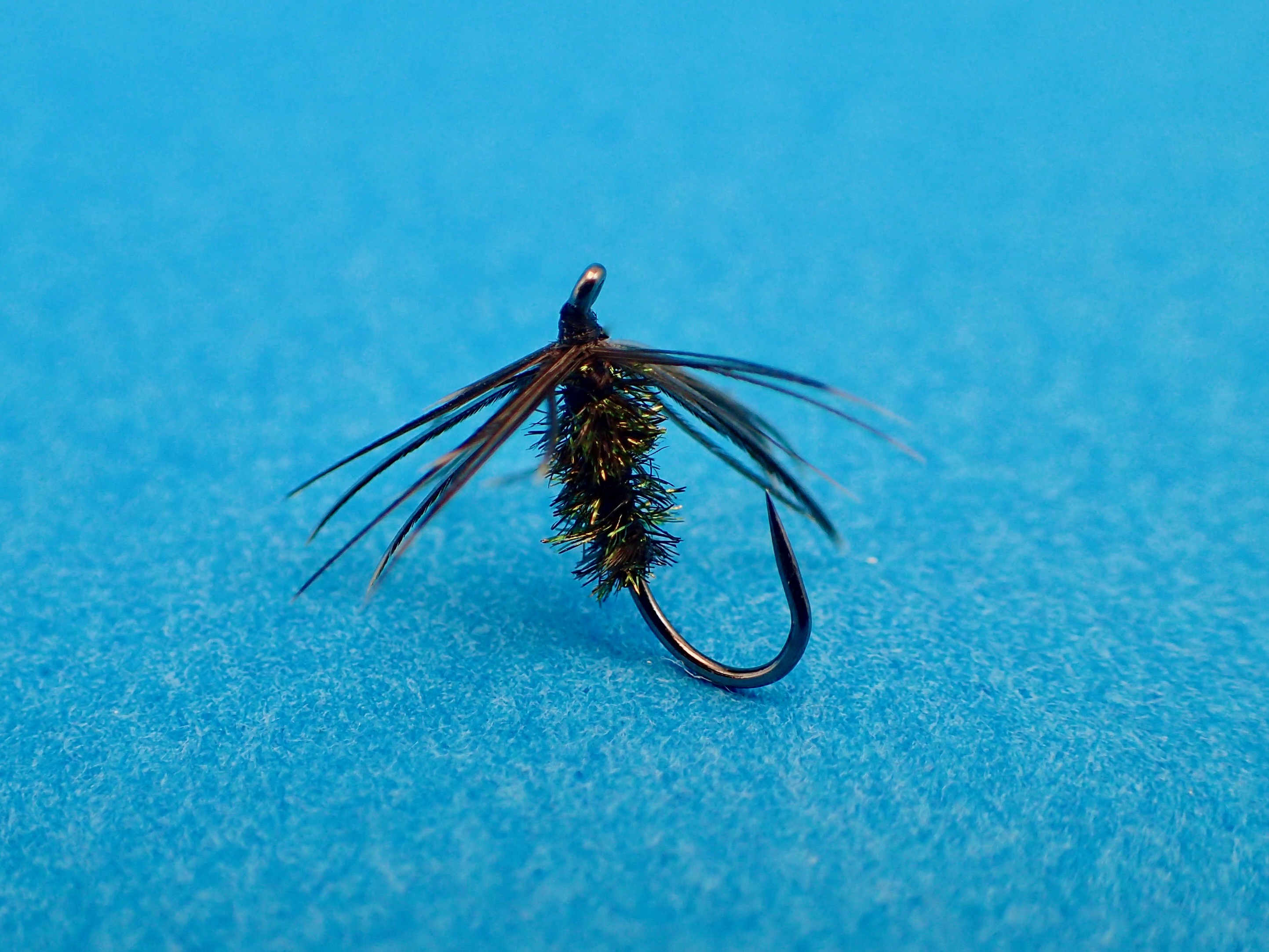
My tiny BWO dry fly arsenal includes, from left, comparadun, comparadun with Z-lon shuck, parachute, Pat Torrey’s Tiny BWO soft hackle, and foam wing. The trout sometimes favor one of these over another, and the only way to figure it out is to cycle through patterns. By the way, this concept applies to other tiny hatches, like midges.

Stuff I Use: Buff Eclipse Gloves

It’s said that for every problem, there is a solution. The problem: any nighttime session with my two-handed rod quickly produced a wet handle, wet line, and wet hands — not a good combination when you’re relying on a firm grip to operate. Compounding the situation was the thin running line (the one I’m currently using is .042″). You’re holding it against the rod handle when you cast, and with any hookup over 40 feet away, you’re stripping that running line during a fight.

Clearly, needed to get a grip. Enter Buff Eclipse gloves. Partially designed for UV protection (not an issue at 1am), these gloves also feature a combination silicone dot pattern and an abrasion-resistant film on the palm that “maximizes grip while minimizing wear.” I also liked that these have three-quarter length fingers, which leaves your fingertips free. Bonus: if you’re having one of those really good nights, the gloves also minimize the red badge of courage (AKA striper thumb). I used them extensively this summer and I’m happy to report that they performed as expected. I bought my pair from Orvis.

Buff Eclipse gloves keep you grippin’ so you can give stripers a whippin’ (with apologies to Timex watches).

Thank you, the Anglers’ Club of Philadelphia!

This evening I presented to the Anglers’ Club of Philadelphia via Zoom. Although it was a cocktail hour (5:00pm start), I remained steadfastly professional with my tall glass of lime seltzer. The topic was “Wet Flies 101,” and I had as much fun presenting it for the umpteenth time as I did the first! As many of you know, I’m passionate about wet flies, and especially teaching others this ancient and traditional art.

The Leisenring Spider, an homage to the Pennsylvanian roots of American wet fly fishing. An oldie, and a goodie. If you’re looking for speakers for your next club Zoom meeting, wet flies or otherwise, here I am.

Farmington River Report 10/2/20: A great day for olives

Yesterday was a spectacular day for the tiny blue winged olives of fall: overcast, cool, drizzly. The bugs were out in force, and they had neither avian nor aquatic predators to contend with.

I guided Matt and his son Theo from 10am to 2pm. I know the fishing has been slow, but yesterday was ridiculous given the conditions and the hatch activity. We hit three marks, and managed only one 11th-hour hookup (which went quickly south when the trout melted the 5x leader I had tied on). Ugh. We focused on nymphing, and I had Theo doing some wet fly swinging and dangling when we saw some all-too-brief surface action. They both did a great job working hard, covering water, persevering, and I hope they’ll come back for a chance at revenge in the spring. It’s great to see a young generation fly angler who’s so enthusiastic!

Theo’s indicator dipped, and he set the hook. Not a fish, but rather this rig. I’ll give the creator bonus points for ingenuity, but I must also deduct points for using braid. Oops! That’s also a barbed hook, verboten within the permanent TMA. Boo-hiss on you.

OLYMPUS DIGITAL CAMERA

Farmington River Report 10/1/20: low, slow, and still crowded

I did a series of lightning raids on three spots yesterday within the permanent TMA. (I only had 90 minutes to fish.) The method was nymphing, both indicator and tight line. I found one fish that wanted to jump on. The other two marks were blanks. Even in these low, slow conditions there were anglers everywhere. Usually this time of year, on a weekday, I might see three or four angler cars during my travels. I saw three or four cars in several dirt pulloffs, and multiple solo vehicles. Fishing the Hous the last couple months has clearly spoiled me, as I’ve become accustomed to sharing the water with herons only.

Good news is that the water was nice and cool and there were bugs about. Even with all those other anglers, this was the only trout I saw hooked all day. Lovely halos. She took the Frenchie Nymph variant. Leaves were an issue, and will continue to be with this early foliage drop.

800 Followers Contest winners, rain, Farmington River sampling, fly fishing Zooms for clubs

Yesterday, #3 son Gordo drew three names at random out of the proverbial hat (it was actually a small cloth laundry container). And the winners of the 800 Followers drawing are….drum roll…Alton, Tom M, and Chase M. The winners have already been notified by email. Congratulations! Thank you to everyone who entered, and thank you to everyone period for reading and subscribing. I literally couldn’t do it without you.

To the vise I go…

~

Last night’s rains were much needed, but don’t be mislead. The ground was so parched and the plants so thirsty that the river flows have only come up moderately. Still, we won’t complain. More, please. (And please stay off the thin blue lines. Remember, the stocking truck doesn’t visit wild trout streams.)

~

DEEP crews recently electrofished the Farmington and were able to cart off enough broodstock in a single day. These fish, chosen for their wild attributes and potential genetic elasticity, will be taken back to the hatchery, spawned, then re-released into the river in late fall. You can learn more about the Farmington River Survivor Strain here.

Farmington trutta tanks like this are captured, then placed into a live well until they can be transported back to the hatchery for breeding.

~

Finally, I’m continuing to get Zoom speaking requests from clubs everywhere. I appreciate both the interest and the business. If your group is out-of-state (and especially way out-of-state), this is the perfect time to see what this Steve Culton guy is all about. You can view my current presentation menu here.

If you love fishing small streams, now’s the time to prove it.

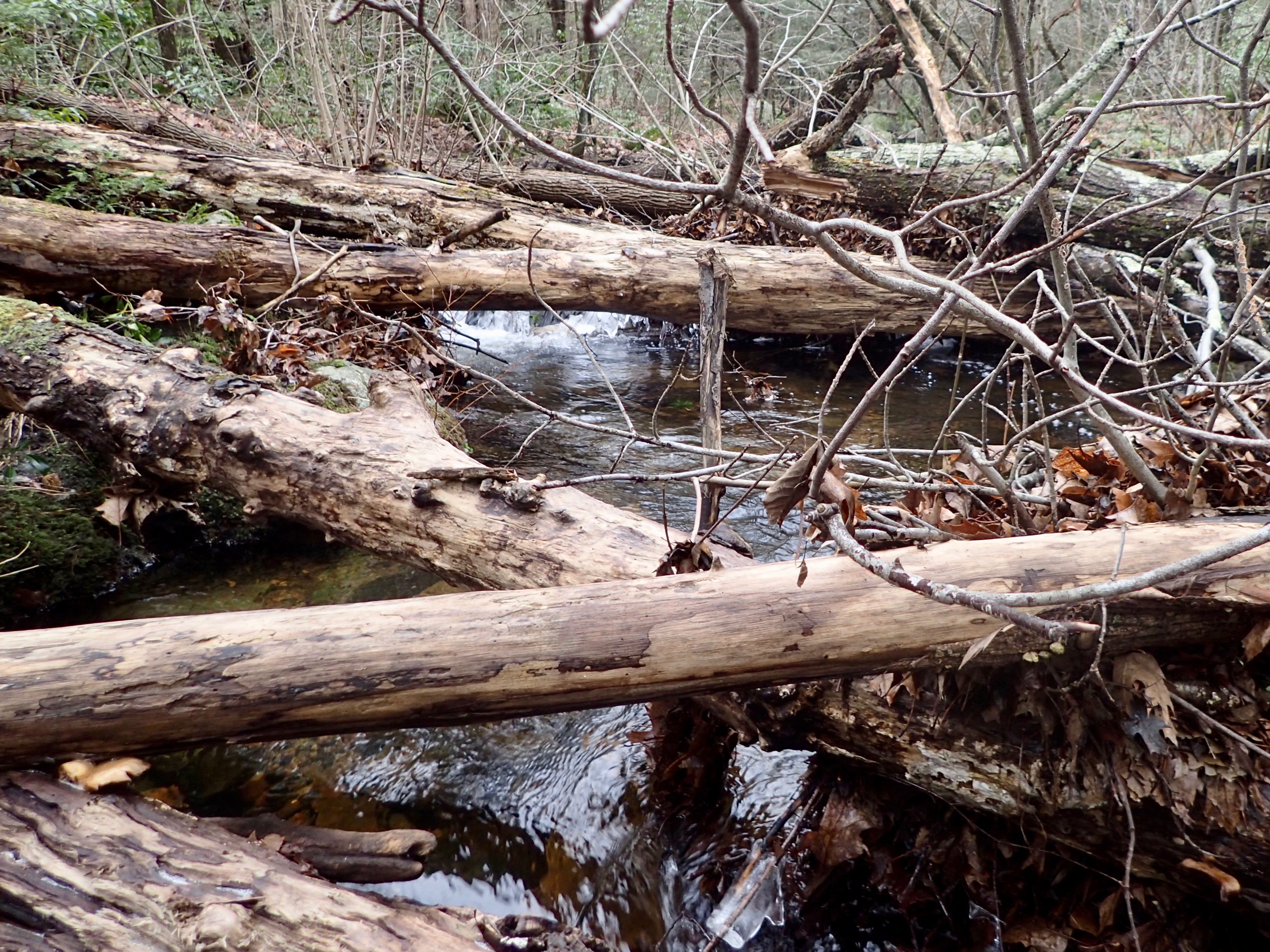
Mid-to-late September is traditionally the time I like to revisit my favorite thin blue lines to reacquaint myself with the wild things that live there. But not this year. Connecticut is in drought conditions ranging from abnormally dry to extreme. Many brooks have been reduced to a trickle; in some cases, entire sections have gone dry.

While I’m fond of the expression, “nature finds a way” — and it always does — now is not the time to be fishing small streams. Hopefully the fish have survived the heat and dry of summer by hunkering down under a cut bank or in a deep slot or a spring house. It’s been harsh conditions for months now, and the last thing they need is to have the life sucked out of them by doing battle with us. (And the spawn is coming, as if that weren’t stressful enough.) Don’t be fooled by cooler air and water temperatures or one rainstorm — these fish are in survival mode.

So please — if you really love small streams and the trout and char that live in them — put the small stream rods and the bushy flies away until flows get back to normal. Thank you.

It’s all bad news. This is already a week old. And the statewide streamflow table is even worse.