The importance of keeping a log

Although I’ve been fishing for over five decades, I didn’t start keeping a fishing log until the summer of 2004. At this point in my life, I was seriously devoted to fly fishing. Being an autodidact, I reckoned that I’d learn more, quicker, and retain more if I could journal and reference my outings. I wasn’t wrong.

Since then, I have logged every fishing trip and every lesson I’ve given. I’ve filled six 192-page books with all kinds of data: place, time, date, water and air conditions, and then a journal-style description of the outing: what worked, what didn’t, what I think I could have done better, etc. What were the hatches/bait, and how strong were they? How were other people doing? What did I do well?

My O.G. log entry about a Farmington River outing with old pal Paul Kingsford. I didn’t even know some of the proper names of the pools; that’s Hawes, aka Bikini Rock, that I called “the big rock boulders/cliffs.” I haven’t changed the format all that much in the last 20+ years.

About 10 years ago, when life seemed to get exponentially busier, I got into a good/bad habit: voice recording my outings, then transcribing them into the journal. It was good because I didn’t have to write it all down immediately; the recording was made minutes after getting off the water, so everything was fresh in my memory. Later, during transcription, I might remember additional details. The bad habit part began when I would get lazy and not fill the pages with reports for weeks. I beg to report that my sloth has gotten so profound that I am now two years — you read that right — behind on my transcriptions. I’ll be getting to that shortly after I post this.

Some of you may wonder why, with today’s e-tech, I even bother handwriting it. Fair point. But I’m an analog guy at heart, and there’s something about my own script that adds humanity to what would otherwise be a cold, antiseptic printed document. Besides, I like my leather-bound hardcover books.

These books are more than a nostalgic preservation of memories. They’re a detailed roadmap to success. I can watch my progression as a fly fisher. I can observe how my best practices evolve. Not everyone’s a writer, but my journals were an invaluable resource when I was writing my Farmington River book. And these journals serve as a bittersweet reminder of what we’ve lost: the epic blitzes on Block Island, the prodigious power of the W/S Caddis hatch, the 50 smallmouth nights on the Housatonic. I still have it all at my fingertips.

I like to say during a lesson or a presentation that I’m not right. But I’ll stand by this statement: if you want to become a better angler — and catch more fish — you should be keeping a log.

The summer pattern settles in

Here we are, already at the mid-point of July. Blink, and you might miss summer. We really don’t have much to complain about weather-wise — it’s standard-issue hot and humid, there have been rains (but nothing catastrophic [he said, knocking on wood]), and the reservoirs are full. The Farmington is running clear and cold — in the 50s coming out of the dam — and at a terrific summer height. Please be sure to carry and use a thermometer, and make your cutoff 67 degrees. You should be able to find ample cold water from the PTMA and points north. Tip of the week: ants, beetles, crickets, and small hoppers, fished in faster water and languid currents under trees and shade. Oh. And small nymphs. You can thank me next time you see me.

Try Stewart’s Black Spider fished as a dropper. Size 16-20, please.

I owe you a Block Island report, and spoiler alert: it’s not good. Locally, I know a few surfcasters who are doing OK. Things may pick up in another 30 days or so.

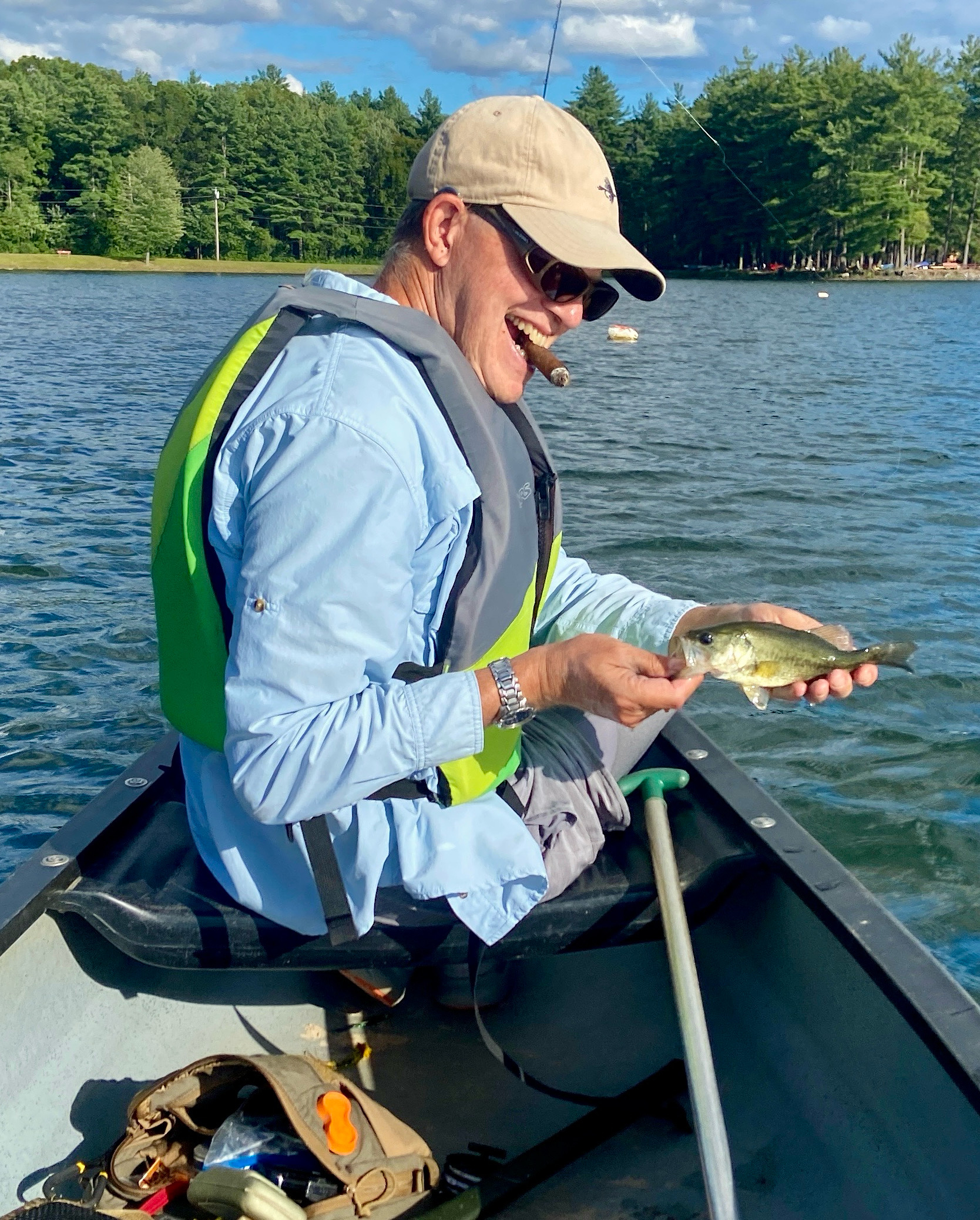
Meanwhile, I’m trying to play catch-up with my fishing. The yard work is settling down a bit, the garden’s in good shape, and the book is off with others. I think I’ll smoke a few cigars while I’m at it.

Stay cool and have fun.

Farmington River Report 7/8/25: Dodging thunderstorms, swinging wets, catching trout

John and Chris took a wet fly lesson with me on Tuesday, and we were having grand old time — a little streamside classroom action, a leader tying clinic, lots of fantastic Q&A (very inquisitive minds, these two, which I loved). When we finally got into the water, darkness fell across the land, and the thunder rumbles began.

This is good time to say this: get out of the water and seek shelter if there’s a threat of electrical storms. I am routinely astonished that some people still don’t do that. End of public service announcement.

We drove along the river trying in vain to find sunshine, which took about an hour. By then, the storm was over, and we had blue skies and hot weather. We headed north to fish above the PTMA. Finally able to wet a line, we got into some fish, although in the bright sunshine they didn’t come easy. It wasn’t until after the session ended that John and Chris were able to test their new wet fly skills. Both took multiple trout during the evening rise. Tremendous job, gentlemen. Your instructor couldn’t be prouder!

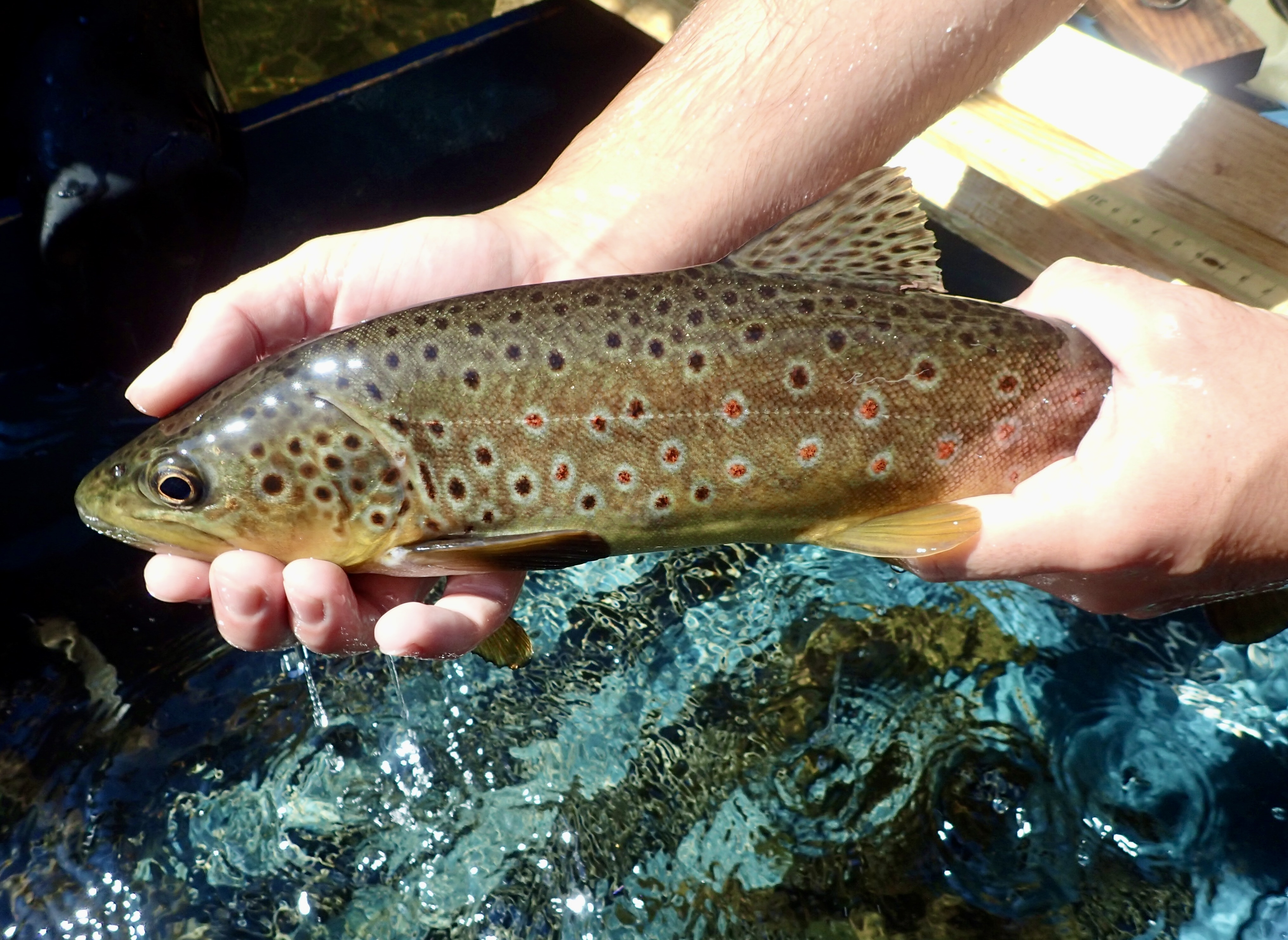
This brown fell for my Partridge and Light Cahill soft hackle. So simple and so effective! John Ryan photo

Sorry, sorry, sorry, or: Book duties keep calling

By now, I’d hoped to be back to my normal routine on these pages. But every time I think I’m in the clear, the book comes a callin’. So that’s why posts have been so spotty. All I can tell you is that when things do return to normal, you’ll be the first to know.

I just finished an article for Surcasters’ Journal. I’ll letcha know when it comes out.

It’s getting steamy out there. Time for the summer under-waders kit.

Fishing in brief: Block Island stunk again this year: slow, slower, slowest. Then there was last week on the Farmington. I gave Andrew a wet fly lesson, and it was likewise a non-action fest. We fished three marks, and it wasn’t until the last one that we found some fish. But Andrew was enthusiastic and persistent, and we ended up with two in the hoop for the win. Great job Andrew! I stayed to fish the evening rise. The location was above the PTMA, and the hatch and rise activity was one of the worst I’ve experienced in a decade. Very little hatching (mostly dorothea) and, almost impossibly, nothing on it except for a few small fish. Highly disappointing. I managed two small wild browns on wet flies and one stocker rainbow on the way out after I could no longer see my fly. Blech!

Of course, we hav the blank canvas of this week, upon which we may paint spectacular fishing images. Yeah. Let’s go with that.

Revisiting a simple, deadly striper soft hackle: the Grass Shrimp Solution

I can’t remember specifically when I came up with the Grass Shrimp Solution, but it was a long time ago, maybe decades. I do remember wanting to create a fast, simple-to-tie, impressionistic soft hackle that would mimic this tiny bait in size, color, and profile. Years later, this fly continues to be a favorite of other anglers who have discovered its deadly effectiveness. It’s one of my favorites, too.

In case you’ve missed it over the years, or are new to currentseams, here’s a crash course on the pattern. The Grass Shrimp Solution was first published in 2015 in my American Angler article “Soft Hackles for Striped Bass.” It was featured in On The Water’s “Guide Flies” Column. I frequently fish this pattern in estuaries when stripers are selectively feeding on small food items. Here’s an article that covers how to do that. This piece discusses the concepts behind the pattern’s bite triggers. Those four articles ought to keep you busy for while, after which, I would guess, you’ll be heading to your tying table — and then, to the closest tidal marsh or flat.

Currentseams.com again named to Feedspot Top 40 Fly Tying Blogs

Here we are again on the FeedSpot Top 40 Fly Tying Blogs list. This is our second time on the list, and for those of you keeping score at home, we are #17. But the ranking isn’t really what this is all about; rather, it’s the company we keep. AvidMax. Fly Tyer. MidCurrent. Gink and Gasoline. Orvis. Just to name a few. These are all quality sites, worthy of your attention, and I’m honored to be included in their company. So, yay us!

The summer striper box, from seasons past, raring to go. Those are Big Eelie variants on the right. I love the colors, although I’m not sure the stripers care all that much. Catching a big fish on fly you tied is one of the more rewarding aspects of our hobby/sport.

And, we’re back

TGIF! Sorry for the 1-week hiatus, but I was re-called to emergency book duties. I believe — fingers crossed — that I’m all set on that front for a while. I hope. Now I can take some time to do all the things I haven’t done in the last few months, like go fishing. And resume regular posts here. The yard work list is also impressive. And just in time for the heat wave.

This warm weather coupled with cold water should kick-start the hatches on the Farmington, which have generally been lagging. Please be aware of temperature spikes in the afternoon. Carry a thermometer, and if you get 67 degrees or higher, go fish farther upstream. There will be plenty of colder water near the dam –it’s releasing at 52 degrees. You can also fish first light to mid-morning, when water temps will be lowest. Catch ’em up, and have fun.

No. Not this week.

And just like that, I’m back on the book

No rest for the weary. The publisher has asked for more photos (that’s a good thing!) and captions for the Fly Fishing Guide to the Farmington River. So, instead of a report on my small stream outing this week, you get this update. Regular reports will be somewhat on hold until I get this book business finished.

The Farmington River continues to run high out of the gate. Hopefully they’ll reduce it by the weekend. I’m on the river giving a lesson tomorrow. Even the Hous is well over 1K cfs. I suppose a little too much water is better than the D-word.

Have fun, go fishing, and a pre-Happy Father’s Day to all you dads out there!

And I still haven’t gone striper fishing this year! I’m also working on a new piece for Surfcaster’s Journal. Details on that to come.

Back in the Small Stream Groove

What a treat to be able to fish a small stream again. It’s hard to believe that this was my first fishing-for-fun-only outing of 2025. Surfcaster extraordinaire Toby Lapinski and I spent a few hours last week exploring a woodland gem. Although we fished mid-afternoon, dense canopy blocked the sunlight and the water was surprisingly cold. Water height was on the low side of medium. Although I fished a dry dropper system, the local char showed a clear preference for the dry. Toby fished a size 10 hopper, and they attacked it with wanton ferocity. We pricked a bunch, landed several, and left feeling happy.

I could get used to this. I really, really could. Toby Lapinski photo

Given the daylight and shallower water, I found it curious that the fish weren’t that interested in subsurface offerings. Besides the dry/dropper, I also fished the Squirmy Jiggy Thingy. I felt many nips and tugs, but those were clearly generated by smaller fish. (By the way, we saw/spooked dozens of fingerlings, which portends for a bright next year.) The moment of the day, however, was when we witnessed a 3-foot long northern water snake capture and kill an 8″ brook trout. I’d never seen anything like it. The snake took the fish out of the water, and clamped down on its “neck” to suffocate it. There’s a theory which states that on small streams, terrestrials become a huge part of the trout’s summer diet. Apparently, the tables are sometimes turned.

Steve Culton’s Iso Soft Hackle featured in On The Water’s “Guide Flies” column

What’s this? Two posts in one week? Yessir, campers! As promised, we are trying to return to a regular posting schedule on currentseams.com. I want to thank everyone for their patience and loyalty over the past year. Let’s get to it.

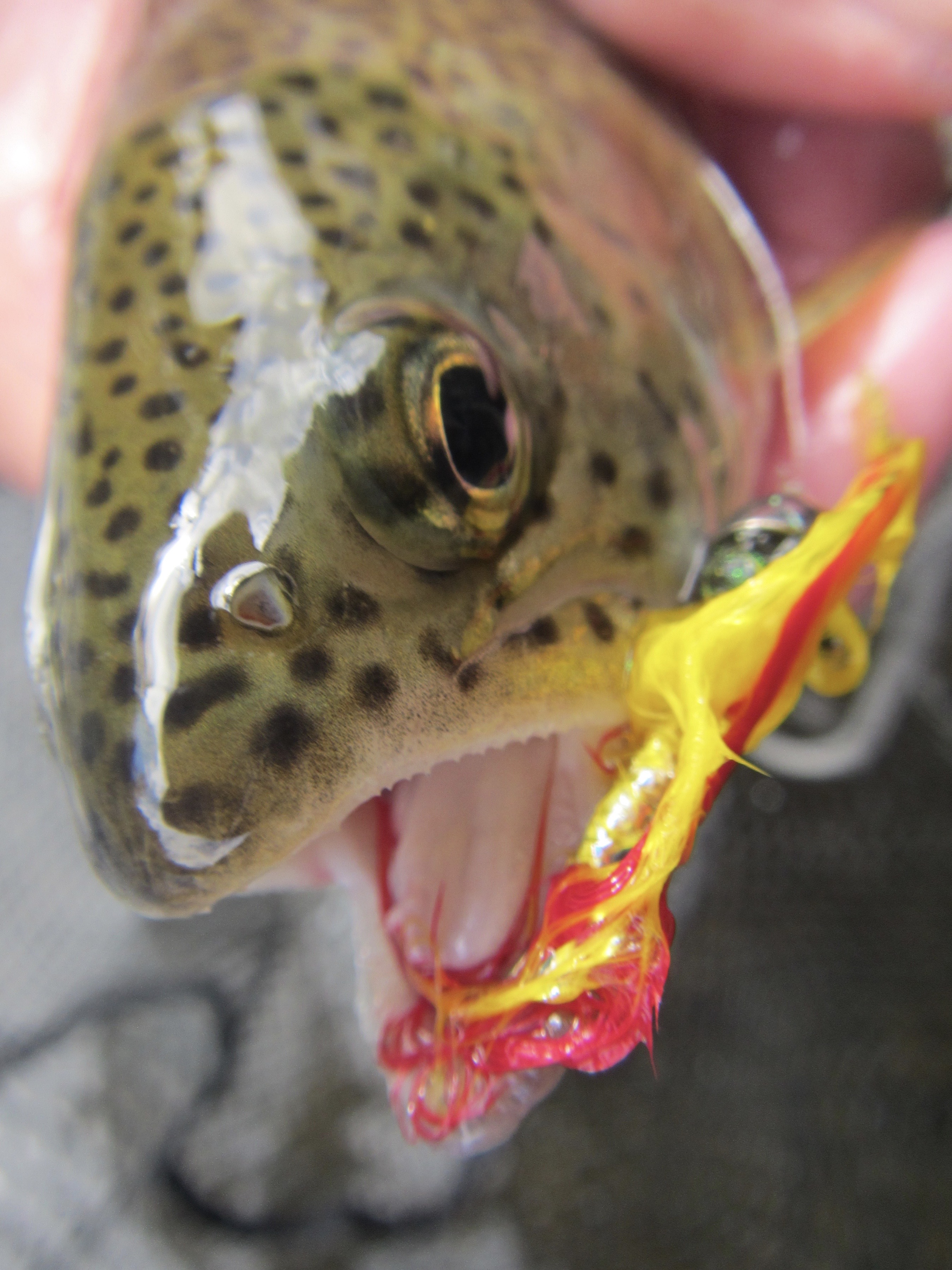
The Iso Soft Hackle is a wet fly I prototyped several years ago. Then, I test it on the river for months or years to prove its worthiness before I pass it along to you. This is an outstanding pattern (he said, modestly). The past two summers, it has accounted for some of my biggest trout taken on wet flies. It’s easy to tie, and the materials are readily available. Here’s the fly and the recipe as outlined by Tony Lolli in his outstanding Guide Flies column from On The Water. So what are you waiting for? Get to the vise. It’s Iso time!

A jpeg and pdf for your viewing pleasure.