Book review: 50 Best Tailwaters To Fly Fish

So one day in October I got an email from Robert D. Clouse, Publisher at Stonefly Press. He wanted to know if I would review Terry and Wendy Gunn’s new book, 50 Best Tailwaters to Fly Fish, what with currentseams being a website Stonefly follows and enjoys. Well, heck, Robb, flattery will get you everywhere. Besides, it’s good for writers to make nice with editors and publishers.

After I thought about it, I said sure. On one condition: it would have to be a totally honest review. Happily, we can all breathe easy now, because I really liked this book.

Image

Despite its name, there are 56 tailwaters within its covers. Bonus rivers, if you like. Cool! In case you didn’t know, tailwaters are rivers that flow out of dams. The dam regulates the flow, and the benefit is a consistent year-round supply of trout-friendly water. The authors divvied up the country into four geographic regions: West, Rockies, South, and East. Very logical. Most rivers get four pages of attention, starting with an easy-to-read full-page map of the river with turnouts and access points. There’s a basic overview of the fishery, followed by hatches, regulations, and tackle. Each chapter concludes with a handy listing of where-tos, like fly shops, outfitters/guides, campgrounds, hotels, and superlatives like “Best place to get a cold, stiff drink.”

How could the authors possibly know enough about all these rivers to write intelligently about them? Well, they couldn’t. So they’ve wisely called upon local guides and outfitters to present a topline view of their home waters. (I’m still getting over the sting of not being asked to write the Farmington River section, but since my good friend Grady Allen, owner of UpCountry Sportfishing, did the honors, it eases the pain a bit. Although – ouch – I also didn’t get a mention as a local guide. All good-natured kidding aside, Robb, perhaps in the second edition?) Naturally, with so many authors, the writing is a bit of a mixed bag. But this isn’t high literature. It’s how-to/where-to reference. Most everyone brings something to the party with their writing, and there are plenty of insightful tidbits sprinkled throughout:

“A good rule of thumb: If it looks like you are going to die climbing down to the river, that is likely a good spot to fish!” (Deschutes River)

“If you give the river permission to intimidate you, it will.” (Upper Delaware River)

“Here are two helpful hints: Pick one section of the river and get to know it. Bring a reasonable expectation.” (Madison River)

There are the requisite ooh-ahh streamscape photos, enchanting those of us who’ve never been to River X. Among the many shots that captivated me is one of the Madison wending through a golden valley. Threatening clouds loom overhead, and mountains majesty stand watch from a safe distance. I am so there in my head right now. Truth be told, I’m a homebody, and I don’t do a lot of traveling to fish. But some of these chapters have gotten the ramblin’ fishing dudes in my brain working overtime. Western road trip, anyone?

A few quibbles. Too many chapters are dependent on fish porn for visual support. I get it, everyone wants to catch a big trout. But several pages into the book, I’m already overloaded by grin-and-grab lunker imagery. What’s more, each chapter ends with a quarter page devoted to the guide who wrote it, often accompanied by a photo of them brandishing a big fish. Too much for this reader. While I recognize that perhaps this was the price of admission for the contribution, might that real estate have been used to give us a few more words on the fishery?

In the end, though, 50 Best Tailwaters To Fly Fish proves to be a tremendous resource for the traveling angler. (Or the dreaming-of-traveling-angler, for those of us with kids.) Its greatest strength is that it gives you enough information about a river to whet your appetite – then leaves you wanting more. Or at least, wanting to make a pilgrimage there.

That’s a good destination fishing book by anyone’s standards.

Here’s the url to the promo video: https://vimeo.com/69999267
December Dinks

The most difficult part of striper fishing in December isn’t the cold. It’s finding the fish. Once you do, you can pretty much get out the tally sheets.

So I headed south to see who might be out and about. Save for a multitude of sea birds and one other fly angler, I had the beach all to myself. This being a powerful moon tide, there was no shortage of sexy rips and seams to cast into. I was two-handing it with a floating line, a six-foot section of T-11, and a three-foot leader of 20-pound mono. A four-inch long September Night seemed like a fine choice of a fly, although I spent considerable time debating the merits of throwing a sparse bucktail like the Magog Smelt.

I fell into the meditative rhythm of cast, mend, mend, swing, slow retrieve. I was ready for the pull of a hungry fish.

The answer was no.  All I was catching was sea lettuce and marsh grass. The other angler across the way was likewise blanking. Then he got into a small striper. And another. I kept waiting for the hits that never came. Since I had a limited time slot — I was slagging off work — I reeled in and headed for another spot. The distance and brisk pace I kept made me sorry I had put on that extra layer of fleece.

New venue, same results. There comes a point in every skunking where you make peace with the fact that you’re not going to catch anything. So I reminded myself that while most of the world was working, I was fishing. The sun was out. I had the pleasure of a peppery, earthy Churchill. But, I asked, could I please get just one fish? I raised the question out loud, because I find that when you’re alone, that works a lot better than just thinking it. How else to explain the strident bap! at the end of the next swing?

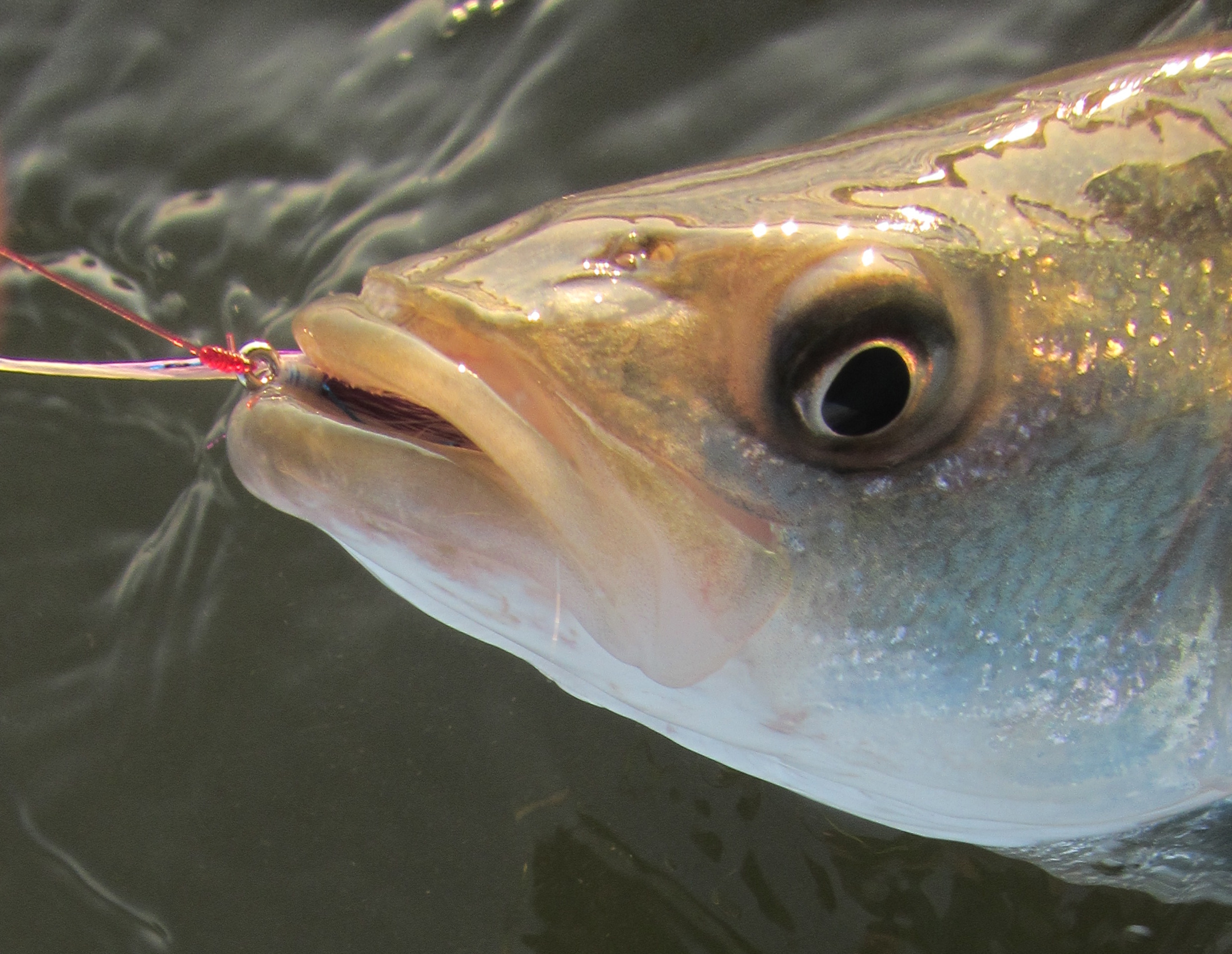
These stripers didn’t know there weren’t any mullet around. Not to worry, for the September Night worked quite nicely on this December afternoon.

Image

And that was the start of the Bass-o-Matic. All small fish, but each of them fresh from the ocean,  flawless and gleaming bright.

With great discipline, I peeled myself away from the frenzy five minutes before my hard stop. So much to do. So little time.

At least now I could cross “catch December stripers” off my list.

Happy Thanksgiving from Currentseams

Among the many blessings in my life is the opportunity to have an audience for my writing. So, thanks to all of you who subscribe to currentseams. Thanks to those of you who simply pop in now and then. I am truly grateful for your readership.

Thanks also for bearing with me during what has been a slow November post-wise. It’s been one of those busy-with-life months. After a very slow fall, my freelance writing business has ramped up again. Great for the ledger, not so much for fishing. On top of that, we’re in the middle of a big home improvement project where yours truly is the painting contractor. I did make two steelhead trips this November that I have yet to write about; those will be coming (hopefully) soon.

I’m looking forward to a winter filled with fly tying and fishing stories, so stay tuned.

Salmon River Steelhead November 2013

Just got back from four days on the Salmon River in New York, and I’m here to tell you, friends, that the fishing was off the charts. After a painfully slow 2012-13 season, the steelhead gods saw fit to shine their benevolent light upon me. (The entire group — there were four of us — got into an embarrassment of steelhead riches.) Still basking in the glory of over 50 steelhead hooked, and nearly half of them landed. Here’s a short film that my friend and co-conspirator Todd Kuhrt put together. Eventually I’ll write up a proper story, but until then, enjoy this little gem.

Baby, I’m howling’ for you indeed.

What am I gonna do with all those corks?

1) Drink wine

2) Save the cork

3) Tie flies for the next steelhead trip

4) Stick flies in cork as they roll off the production line

5) Catch steelhead

All kinds of eggs, egg masses, stoneflies, soft-hackles, leeches and a few odds and ends that defy description. Dinner, anyone?

Image

God, I hope #5 happens.

Steve Culton

The 60 Second Redhead

It’s easy to tie. It’s a fast tie. It catches steelhead. ‘Nuff said.

I found this fly a while back on Randy Jones’ Yankee Angler site and was intrigued by its simplicity. The fly got its name (Randy calls it “Tom’s 60 Second Red Head,” Tom being Tom Wilson) because you can supposedly crank them out at the rate of 60 per hour. I’m no speed tyer, but I can get pretty close to a minute on this one if I hustle. Part stone fly/nymph/larva buggy bug, part egg, the pattern certainly lends itself to all kinds of color variations.

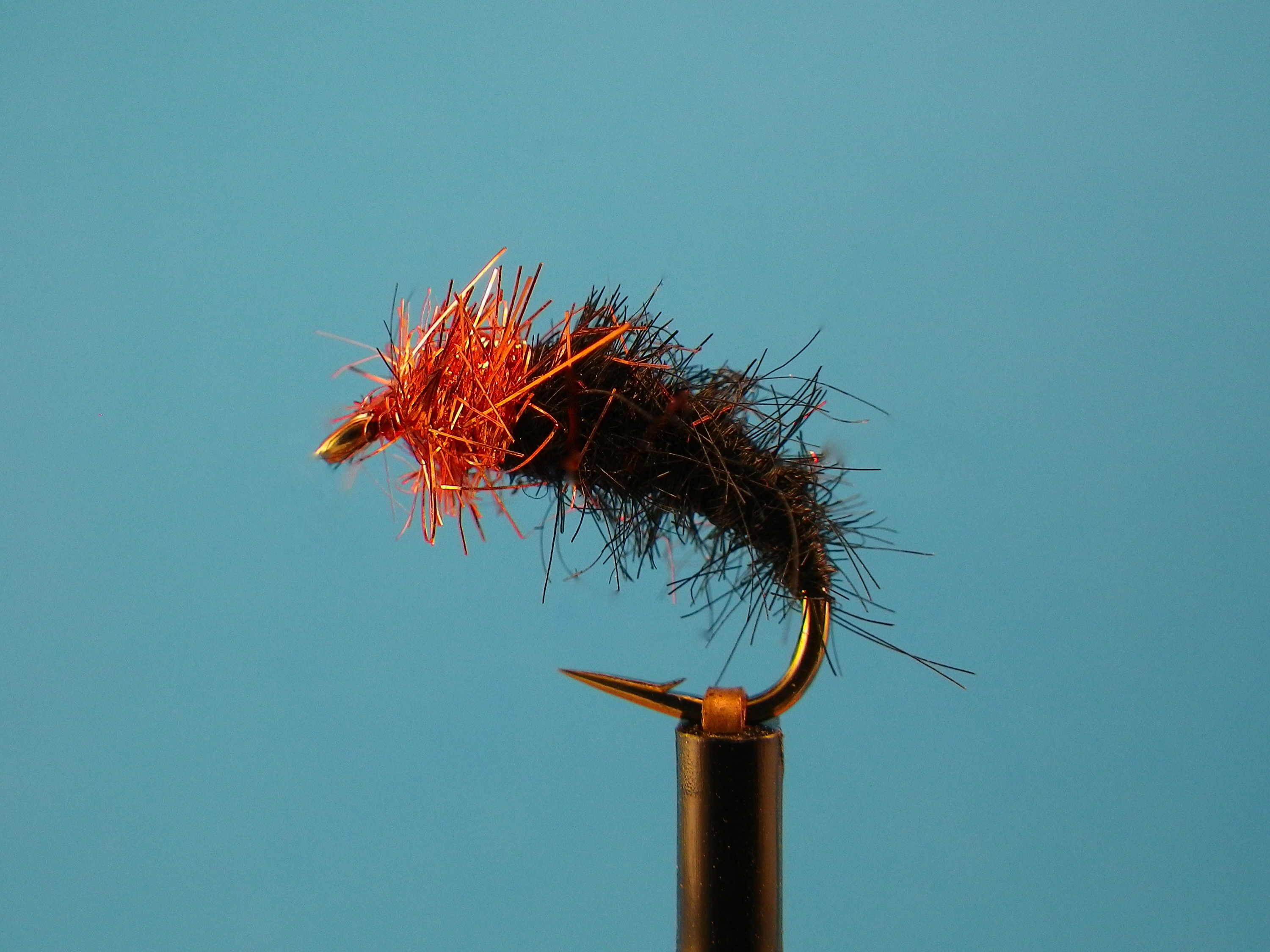
The 60 Second Redhead

Image

Hook: 2x strong scud/shrimp, sz 10-12
Thread: Red
Body: Black Krystal Dub
Head: Red Ice Dub

I tied up a bunch of these, and they sat in my box until one fine Saturday afternoon. On my very first cast with the 60 Second Redhead, I hooked a steelhead. That was years ago, and this fly is now a core pattern in my steelhead box.

Tying notes: The original recipe calls for medium red copper wire as the tying “thread.” This adds a tad more weight to the fly. I find the medium diameter difficult to work with, so I use small red copper wire when I’m not using thread. High-tack wax like Loon’s Swax ensures the dubbing sticks to the wire. The original also calls for a complex mixture of furs and flash: for the body, a mix of beaver, angora goat, and black flash. Since speed is in its name, I figured why not just be done with it and use black Krystal dub? Ditto the head, where the original calls for beaver, angora goat, and red flash. Buy a pack of red Ice Dub and you’re cooking with gas. Last year, I met Randy on the Salmon River at the Pineville Boat launch. We had a detailed conversation about the Red Head. I thanked him for introducing me to this fly, and told him it was now an old standby. Randy said to make sure not to tie it with a thick profile, but added if you’re catching fish on it, you’re doing something right. Wise words. What you see here is my standard issue tie.

Also, play around with other colors and materials. Here is the 60 Second Copperhead:

Image

Hook: 2x strong scud/shrimp, sz 10-12
Thread: Red
Body: Black angora goat
Head: Metallic copper Ice Dub

~

60-Second Copperhead Rogues’ Gallery:

Chrome hen, Salmon River, 11/9/14

Big Steel 11:14

Big Steelhead Spiders

I’ll admit it: I’m a fly nerd. I love poring through books, looking for new patterns, old patterns, and flashes of inspiration. Trey Combs’ Steelhead Fly Fishing is a terrific resource for the steelhead aficionado, with a significant number of pages devoted to flies. That’s where I found these first two spiders. A more elegant offering than the average steelhead fare, and doubtlessly just as yummy. Flies that can be drifted along the bottom, then left to swing up and hang in the current, tantalizing any nearby fish. Combs attributes the Gold Spider and the Purple Spider to Karl Hauffler. I like his use of multiple birds for the hackles. These flies are tied on Tiemco 7999 size 6 hooks with 6/0 Hot Orange thread, save for the Purple Spider which uses red. Of course, you could tie these as large as you like.
~
Gold Spider
Image
Butt: Peacock herl
Body: Rear half flat silver tinsel (I used Lagartun mini braid), front half golden yellow angora goat
Hackle: One wrap golden pheasant flank behind two wraps brown pheasant (I used Coq de Leon). Finish with one wrap lemon wood duck.
~
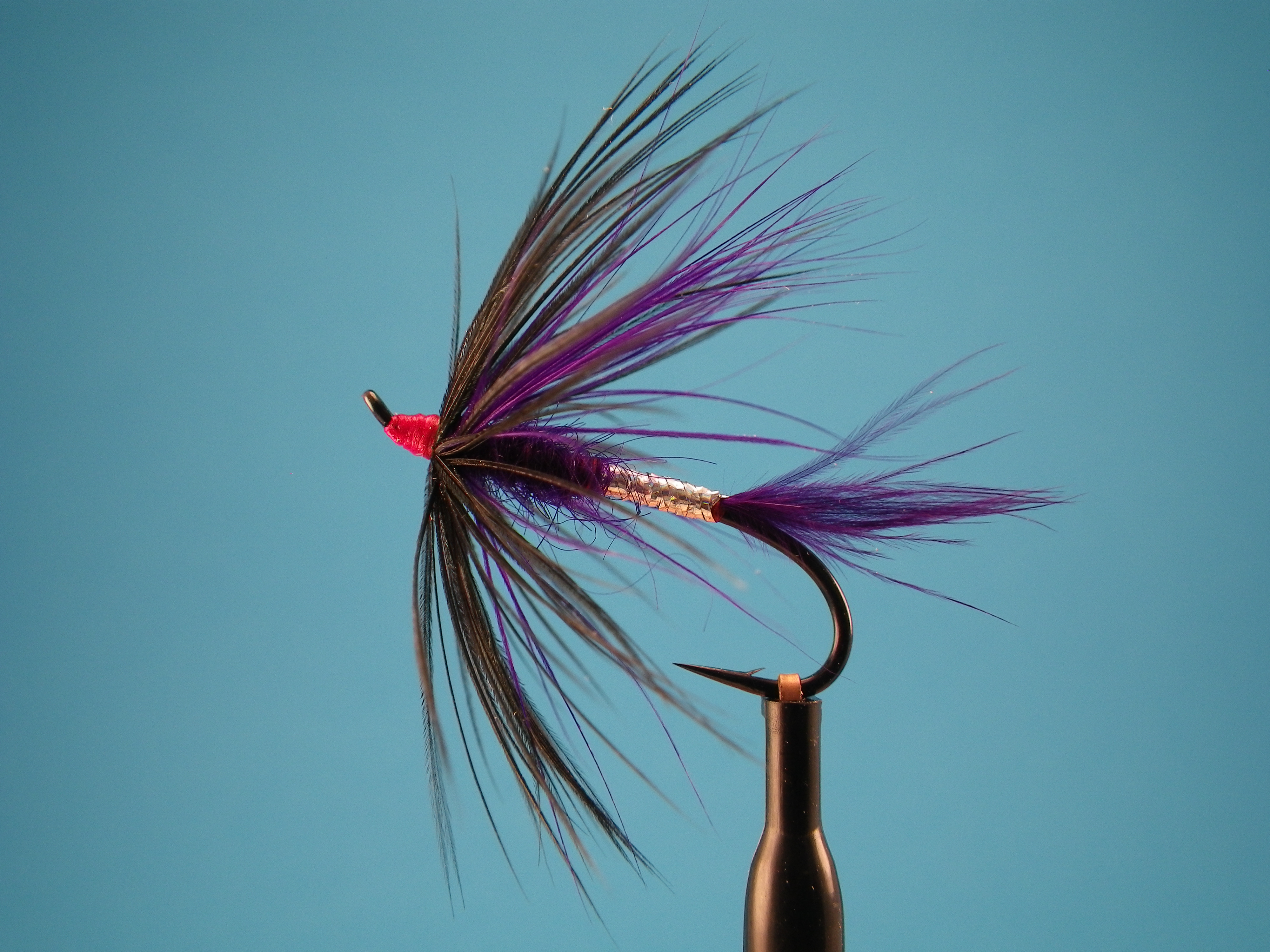
Purple Spider
 Image
Tail: Fuzzy purple hackle barbules
Body:
Rear half flat silver tinsel (I used Lagartun mini braid), front half purple angora goat
Hackle:
Two turns deep purple hackle followed by several turns black pheasant rump

Thus familiarized with the template, here’s my own creation:
~
Ginger Spider
Image
Tail: Hot Orange golden pheasant crest
Body: Rear half gold braid, front half ginger angora goat
Hackle: One turn golden pheasant flank behind two turns grouse behind two turns teal flank

Hudson River Striped Bass 101

Smile, oh big-mouthed Hudson River tribe member. 

Images

Bob Creeden recently made a detailed post about the Hudson River striper stock on the Stripers Online Fly Fishing forum. I found it so informative that I asked Bob for permission to share it with my readers. He graciously agreed (thanks, RJ). And here it is:

The Hudson River filling in was done mostly in the 19th Century. The Railroad did 80% of it. Especially on the eastern shore between Manhattan and Albany. It was polluted in the 19th and early 20th Century. And when the bass crashed in the mid 1980s it included the Hudson River strain.

There have been many changes in the past 45 years in the Hudson River and the 25,000 square Mile watershed that feeds it.

Today, the Hudson is clean. Clean enough to be recognized as a Class “A” swimming water from Albany to the NY City Line. The Hudson River striped bass stock was the quickest to recover from the over fishing of the 60s, 70s and early 80s. It is the best environment for healthy striped bass production. The 100 miles of freshwater tidal from Cornwall, NY (below Newburgh) to the first barrier dam North of Troy, NY, is consistently productive with no lack of water and no high water temperatures like the Chesapeake Bay Estuary has been experiencing for the past 20 years.

I was born on the banks of the Hudson. (Manhattan – Washington Heights) Grew up and maintained a boat on the Hudson from the age of 12 (docked a 1/4 mile up the Croton River at Crotonville) and lived most of my adult life on or near the Hudson in the Catskill Creek to Kinderhook Creek portion above the Rip Van Winkle Bridge. When I got out of the Marines in the 1960s, the upper Hudson from Catskill to Troy, NY was a dead sewer of a river. Since the mid 1960s, thanks to Nelson Rockefeller’s Clean Waters Act that had water filtration plants built in every village, town and city down the NY City line, the river is vibrant and alive. A birthing place and nursery for hundreds of fresh and saltwater species. I was appointed to the Hudson River Estuary Management Advisory Committee (HREMAC) during Cuomo’s administration and sat on it through two other Governor’s terms. George Pataki’s Environmental Bond Issue, voted by the majority of New York residents, built on the foundation supplied by the Clean Waters Act. It has gotten better and better from those great environmental steps.

We still have landings of 50 to 70 pound striped bass and a solid female contingent of 8+-year-old female striped bass producing a decent level of Young of the Year striped bass. Healthy 30 to 40 pound Hudson River DNA striped bass are counted, tagged and released every spring while they hang out in the freshwater tidal portion of the river. The spawning creates each year class, that are counted in September in that same clean freshwater tidal area of 100 miles as they come out of the bays and creeks along with YOY American Shad and YOY Blueback and Alewife Herring. The daily bag length should be reduced to a single fish and the length set at 35 inches. This would at least allow the females to have two full years of egg production with out being culled from the biomass before they can contribute to the stability of their species.

Another Hudson Riverling. Hard to imagine she was once smaller than a silverside.

Image

The Hudson River DNA Tribe is the second largest producer of migratory striped bass on the East Coast. The Chesapeake Bay DNA Tribe produces 60% to 70% of all YOY counted annually in September. The Delaware River DNA Tribe is the smallest producer, due to the shortness of its spawning range and its reliance on a strong spring run off of snow pack and spring rains to keep the salinity of Delaware Bay from Chester, PA to the C&D Canal just below New Castle. 2011-12, “The winter that wasn’t” failed to produce enough freshwater to allow for a minimal spawning effort. I’m not sure the runoff this past spring was much better.

The problems caused by human population explosions along the shores of the Chesapeake Bay’s western shoreline and the Chicken Broiler production of a billion chickens annually for meat consumption down the length of the Eastern Shore in DE, MD & VA has loaded the bay with a choking amount of nitrate’s and potassium that create algae blooms that have cut off the cool deep water refuges needed by juvenile striped bass. They are genetically programmed to spend almost three years in the Bay and its tributaries before migrating out into the clean and cold Atlantic. It is estimate that 70% of the YOY counted in the Chesapeake Bay the September after they are hatched will die before they are old enough to reproduce. That is were a huge loss is occurring. Millions of immature Chesapeake Bay striped bass are dying because they cannot seek the cool depths and are forced into the stress of living in 90 to 95 degree water in the summer months. These conditions are destroying the productivity of the Chesapeake Bay Striped Bass Tribe.

A fully mature female striped bass is 8 years old. She is between 31 and 32 inches and weighs 15 to 16.7 pounds when full of eggs. The Hudson River 8+ Female count is strong and steady. No great fluxuations over the past 15 to 17 years. I’d really like to see what the Female age 8+ is doing in DE, MD and VA. In 2011 VA or MD declared the greatest number of YOY striped bass in 50 years had been produced. in 2012 it declared it had the worst YOY count ever for striped bass.

We folks in NJ, CT, RI, MA, NH & ME benefit from the migration of striped bass from the Chesapeake Bay every spring, summer and fall. I believe the anglers in the areas north of Cape Cod in MA, NH and ME have seen a steady decline in the number of mature striped bass they are seeing in their waters. Most of the striped bass south of the Cape Cod beaches are Hudson River fish with a little bit of Delaware River SB mixed in. The Hudson River Tribe’s migration after spawning goes south to Cape May and North to the southern beaches of Cape Cod. We all should pay a little more attention to what is happening to the Chesapeake Bay Striped Bass tribe.

Striped bass, like shad and river herring, need freshwater to spawn in. The river herring tribes and the shad come out of the summer nurseries they grow in between May and September and they come down the fresh water rivers and make their way to the ocean.

The Hudson River YOY move down the river and travel to the rivers and bays that are salty. They move into the Hackensack, Passaic, Raritan, Shrewsbury, Navesink and Shark rivers of NJ. They make their way up the East River and out into Flushing Bay and the western end of LI Sound. From there they invest in all of the salty ends of the south flowing CT, RI and MA River. Plus the north and south flowing rivers and bays of Long Island, NY. They will spend the next two seasons growing and sharpening their predatory skills in those waters. When they reach their 3rd Spring (in March or April) they begin to migrate to the Atlantic Ocean and spend the next 5 or 6 years maturing. Then they return to the Hudson River starting in March of their 7th or 8th year. Some 7 year old females will produce eggs and spawn that spring. Others will produce eggs and fail to spawn at age 7. Those green eggs will be absorbed back into the flesh of the 7-year-old female as protein. A baby striped bass will hatch and the outer shell of its egg will remain attached to the tiny, perfect striped bass baby. That tiny fish will absorb the shell protein into its body and when that process is completed it will begin to prey on food too small for us to see. As it grows and needs more protein, it will begin targeting larger and large prey. The biologists believe that immature female striped bass use the egg absorption process they used as tiny YOY.

Young-of-year brook trout

I was bushwhacking past a bathtub-sized pool deep in the northeast woods when I saw dozens of dark forms scatter. So I sat at the water’s edge for a few minutes. Then stuck the camera underwater and started rolling. This is a good-sized school of young-of-year Salvelinus fontinalis — the eastern brook trout. Class of 2013. Can’t wait for them to put on a few ounces. Stay strong through the winter, my little friends!

Yorkshire, Meet Pulaski: Small Steelhead Soft-Hackles

In The Soft-Hackled Fly, Sylvester Nemes writes about fishing for — and catching — steelhead on traditional soft-hackles like the Partridge and Orange. Here’s my steelhead take on four classic patterns, clockwise from upper right: Tups Indispensable, Snipe and Purple, Partridge and Green and Orange, and Grouse and Orange.

Small Steelhead Soft-Hackles

Image

These are all tied on 2x stout, 1x short hooks. They’re a size 10, so effectively they’ll fish like a size 12. Construction should be fairly intuitive from looking at the photo. But, here are the complete recipes.

~

Tups
Thread: Yellow
Tail: Dun hen hackle fibers
Body: Fluorescent yellow floss
Thorax: Hot pink yarn
Hackle: Dun hen
~
Snipe and Purple
Thread: Pearsall’s Gossamer silk, purple
Rib: Gold oval tinsel
Hackle: Snipe
~
Partridge and Green and Orange
Thread: Fire Orange
Body: 1/2 fluorescent chartreuse yarn, 1/2 fluorescent orange yarn
Rib: Gold oval tinsel
Hackle: Grey partridge
~
Grouse and Orange
Thread: Fire Orange
Body: Fluorescent orange yarn
Rib: Gold oval tinsel
Hackle: Grouse

Two years ago, I hooked (and ultimately lost) what was easily the largest steelhead I’ve ever done battle with. He took in the deeper end of a swift run that becomes a shallow whitewater nightmare at its head. I saw him clearly during his cartwheeling histrionics, and he was massive. We finally parted ways when he found a submerged logjam my leader didn’t get along with.

The fly he took was the one at lower left.

~

Steelhead soft hackles Rogues’ Gallery:

Snipe and Purple, November 2016

sr11_10_16