A new flatwing from the Culton bench: The Bombardier

Long before I fished for stripers, I was aware of striper plugs. I’d see rows of them in gleaming packages in the local sporting goods store (remember those?) and think that some day I’d like to throw one and catch a big bass. I remember liking the blue and white glitter-flecked Atom plugs.

I also remember the Bomber. Something about that plug in basic black said badass cow catcher. Would that translate to a large flatwing? One way to find out.

Creating a striped bass fly that draws from the color and energy of a plug is not new. Ray Bondorew did it it in Stripers and Streamers with his Yellow Rebel. My goal was not to make a carbon copy of the Bomber Long A, but to capture its essence. So, lots of black saddles and bucktail. Some purple to jazz things up. A glowing core of light blue and chartreuse. High contrast jungle cock nails. And some seductive flash tied “Razzle Dazzle” (thanks, Ken!) style.

I like this fly 9″-12″ long. It shines when fished on the greased line swing. Cue up The Gap Band!

The Bombardier

Bombardiers

Hook: Eagle Claw 253
Thread: Black 6/0
Platform: 30 hairs light blue and chartreuse bucktail, mixed
Pillow: Black dubbing
Support: Black neck hackle, curve side up
Tail: First, 3 black saddles, second, 2 strands silver Flashabou, third, 1 black saddle, fourth, 2 strands light blue Flashabou, fifth, 1 black saddle, sixth, 2 strands red Flashabou, seventh, 1 black saddle, eighth, 2 strands purple Flashabou, ninth, 1 black saddle, tenth, 2 strands black Flashabou, all Flashabou to extend 1″ past longest saddle
Body: Purple braid
Collar: 2/3 black and 1/3 purple bucktail, mixed
Wing: 30 hairs black bucktail
Topping: 7 strands peacock herl
Eyes: Jungle cock
~
A more detailed look at the Bombardier’s explosive energy.

BombardierCU

~

You get the idea.

Bombardier&Plug

~

The Bombardier Rogues’ Gallery:

Twenty pounds, short line swing, 2017

OLYMPUS DIGITAL CAMERA

~

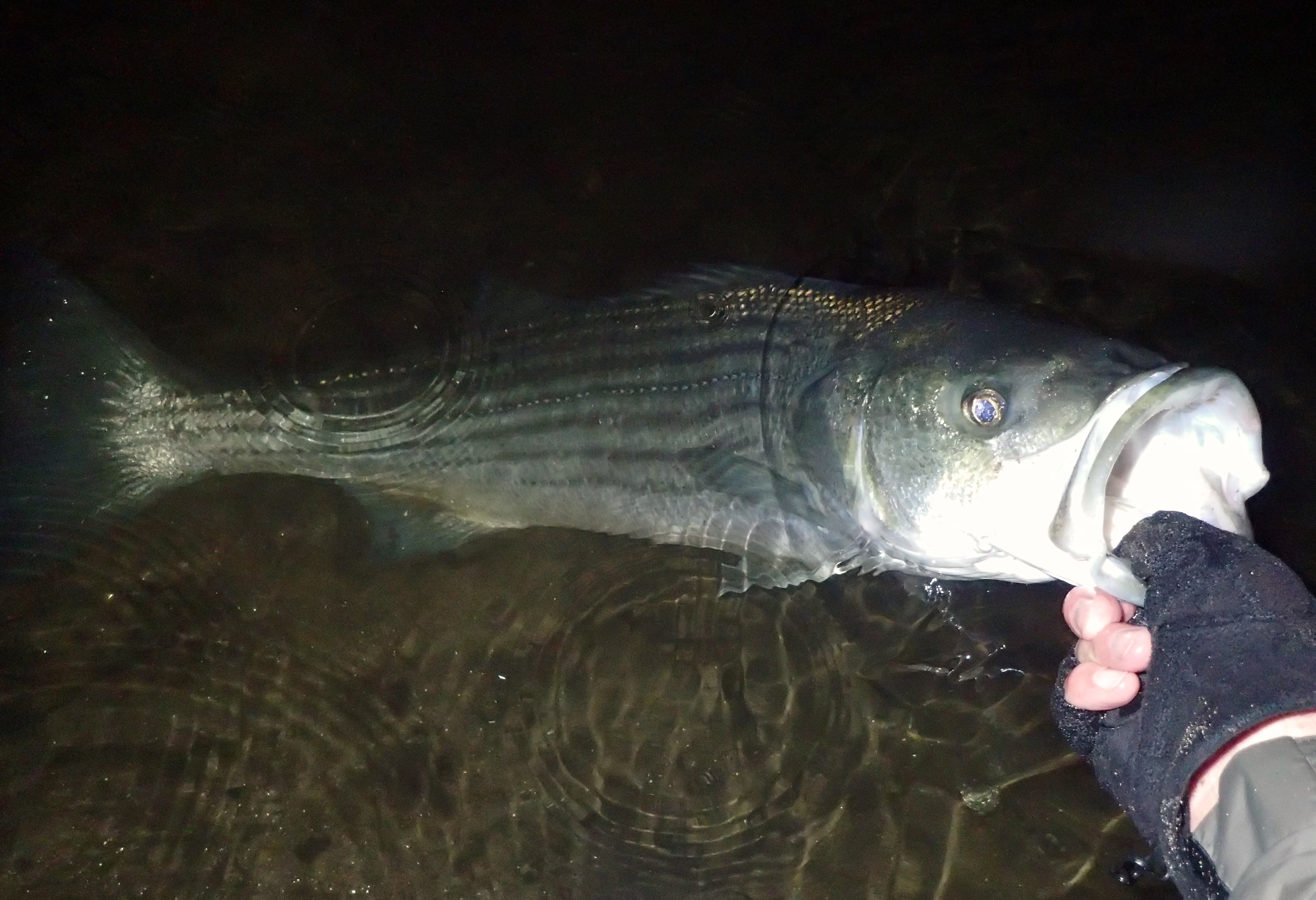
Fifteen pounds, greased line swing, 2017
OLYMPUS DIGITAL CAMERA


25 pounds, 39 inches, greased line swing, March 2024

The Big 6-0-0

Greetings on a very rainy, windy, squally (at least in Connecticut) Friday. I would not like to be riding on the Block Island ferry today.

Many of you will have no doubt noted that we’ve reached and surpassed the 600 subscribers mark. Yippee!!! Once that number stabilizes, we will have another giveaway. If you’re new to currentseams, I choose a few subscriber entrants at random to receive some spiffy flies tied by yours truly. I will announce that contest, probably in the next few weeks, here on currentseams.

Till then, stay dry and tight lines.

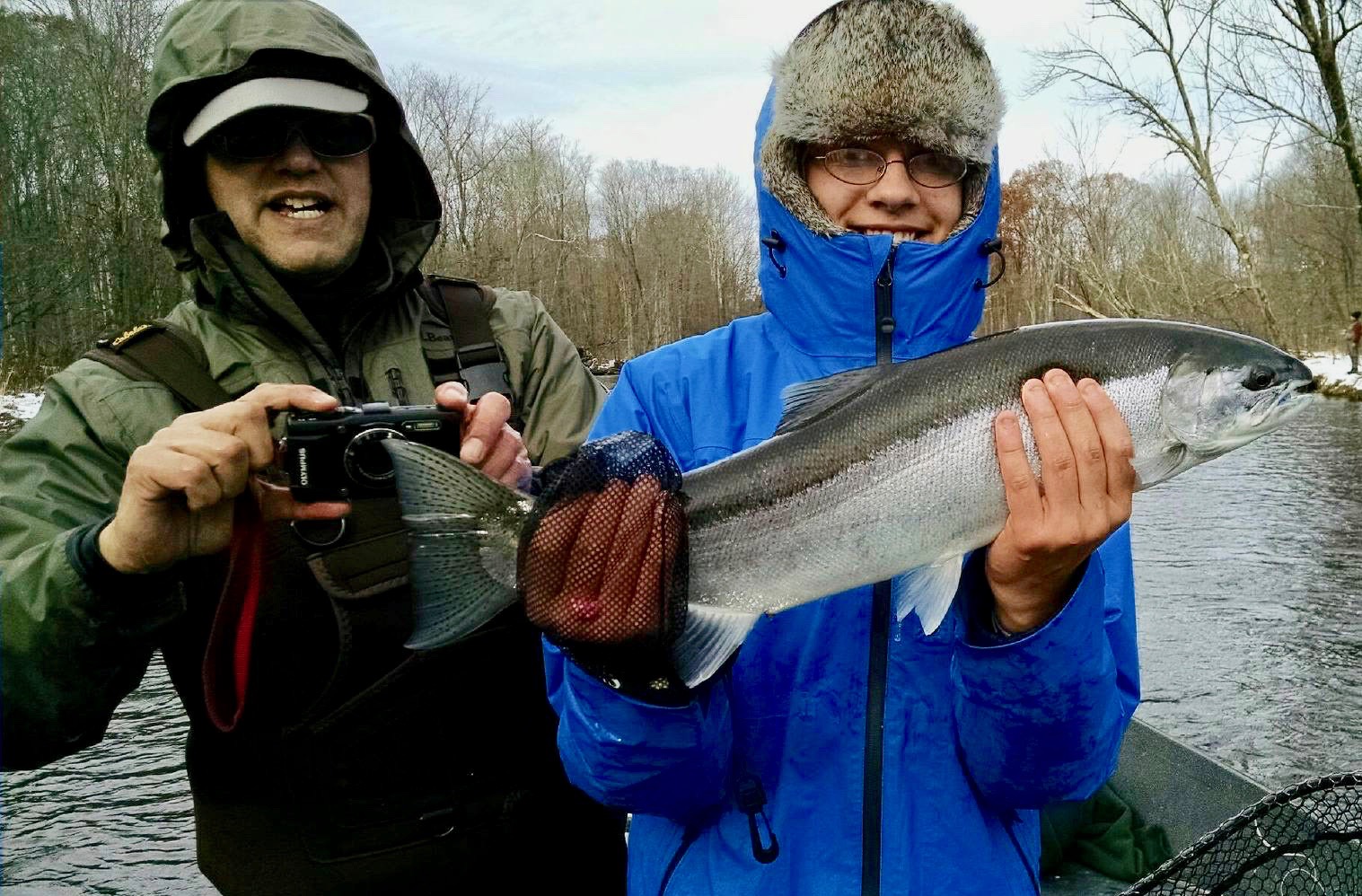
Set your eyes on the prize…something like this.

OLYMPUS DIGITAL CAMERA

~

Today also happens to be #2 son’s birthday. Cam is already a pretty darned good steelheader, and naturally I’m a proud papa.

MeCamSteel


Wet Flies 101 at Yale University

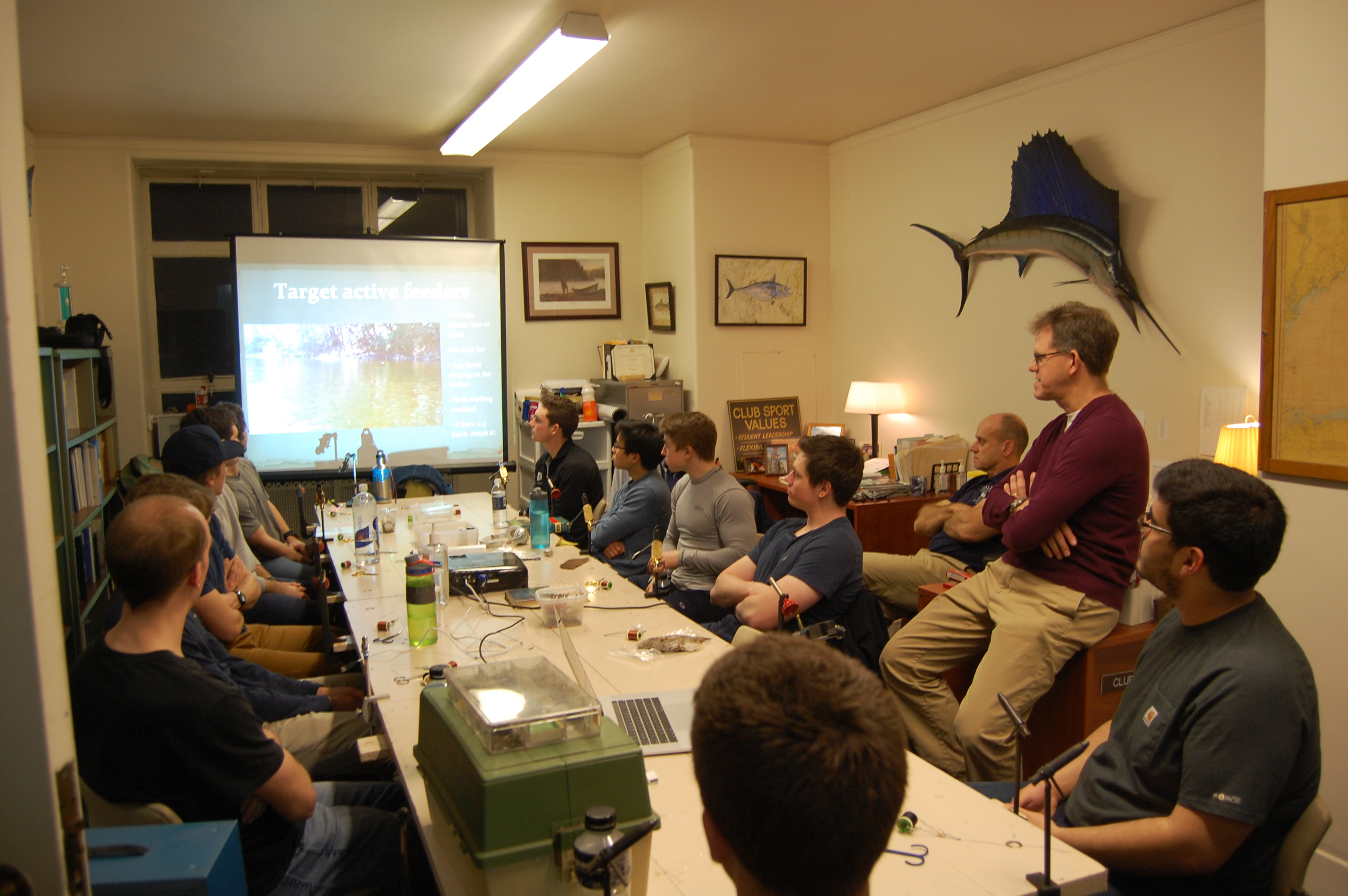
Much to Thurston Howell III’s dismay, I presented “Wet Flies 101” to the Yale Fly Fishing Club this past Monday. A little lecture, a little tying, a little Q&A, and a lot of fun. Many thanks to the students who attended, and to advisor Sean Callinan for the photos and invite!

Watching an epic April caddis emergence on the Farmington River.

Yale4

~

The answer is: yes.

Yale3

~

Casey at the vice, tying a Partridge and Light Cahill.

Yale2

~

My parting advice to the group: “If you have a choice between fishing and working, always choose fishing.”

Yale1

~

“Sounds like a marvelous time, even if it was with a bunch of Yale men…”

THIII

Small Stream Report: Dog Day Afternoon

I noticed as I was driving through my neighborhood that every dog owner seemed to be out with rover for walkies. Same deal in the other residential areas I passed through. Who could blame them? With the sun cheerfully sharing its warmth, it felt more like early April than late February. But would the fishing be for the dogs?

My original intention was to throw streamers on the Farmington. Time and space got in the way, so a quick shot to a local brook was the new plan. The water was high, clear, and very cold — I’d guess upper 30s. Any snow and shelf ice had long since made its way to the Connecticut River or maybe even Long Island Sound. The trout were still holding in their winter lies. I fished a bushy dry/dropper and a couple micro streamers. Pricked five, landed three, and all of them came on the subsurface fare. (This tells me that while we may be dreaming of spring, the char are still in winter mode.)

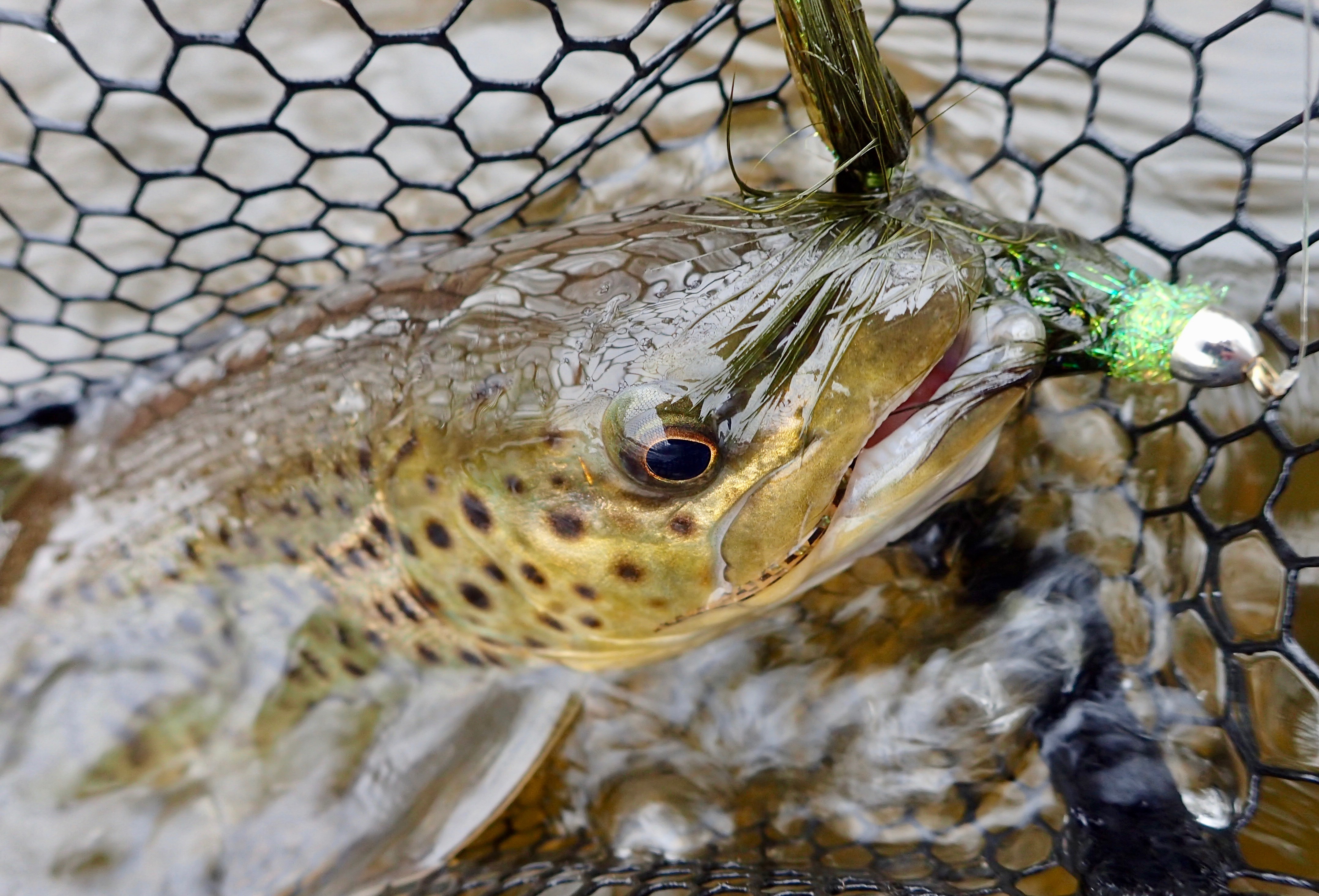
A fine example of local folk art. This handsome native took an ICU Sculpin that was swung and then jigged through a deep plunge pool.

OLYMPUS DIGITAL CAMERA

~

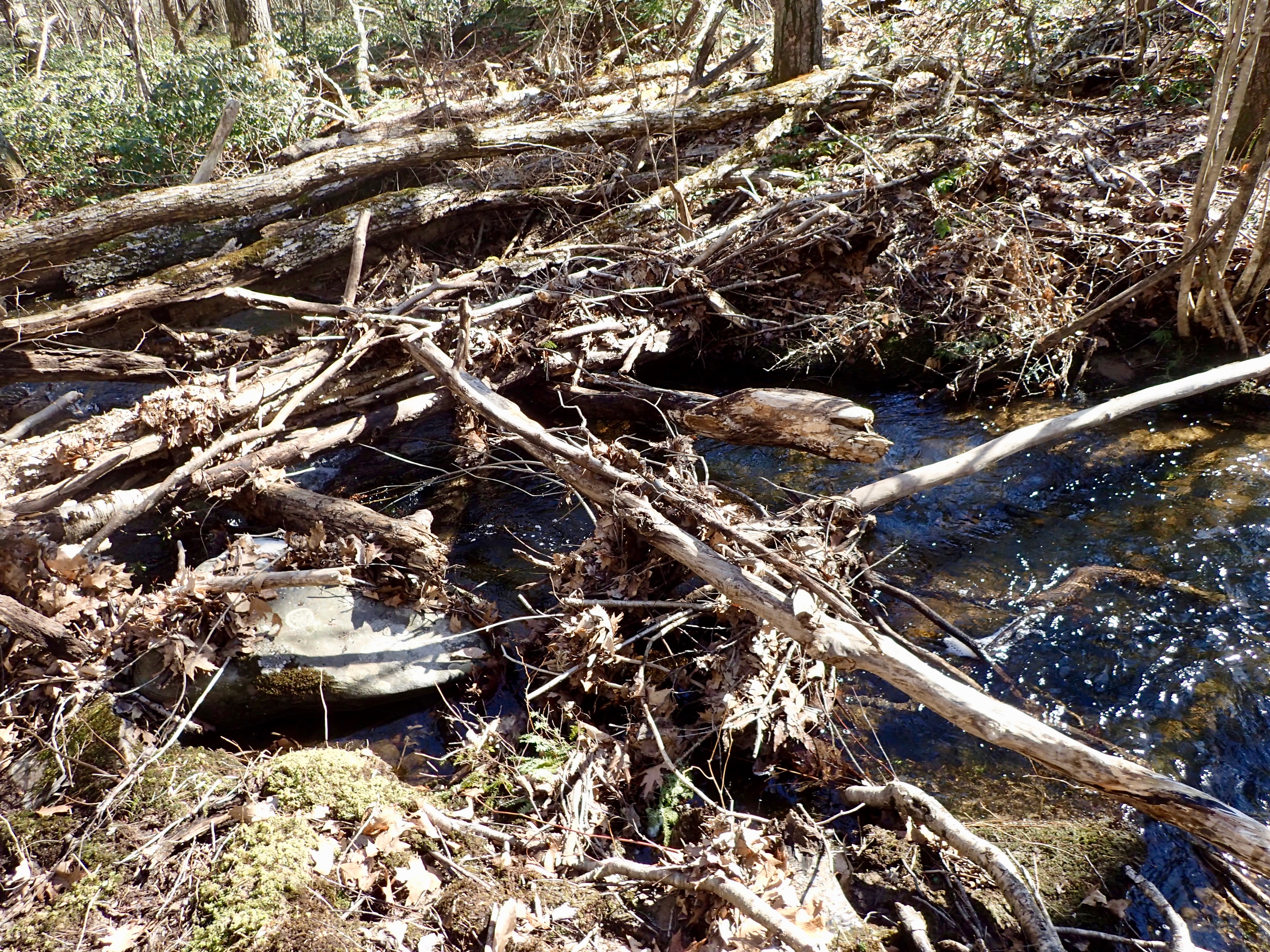
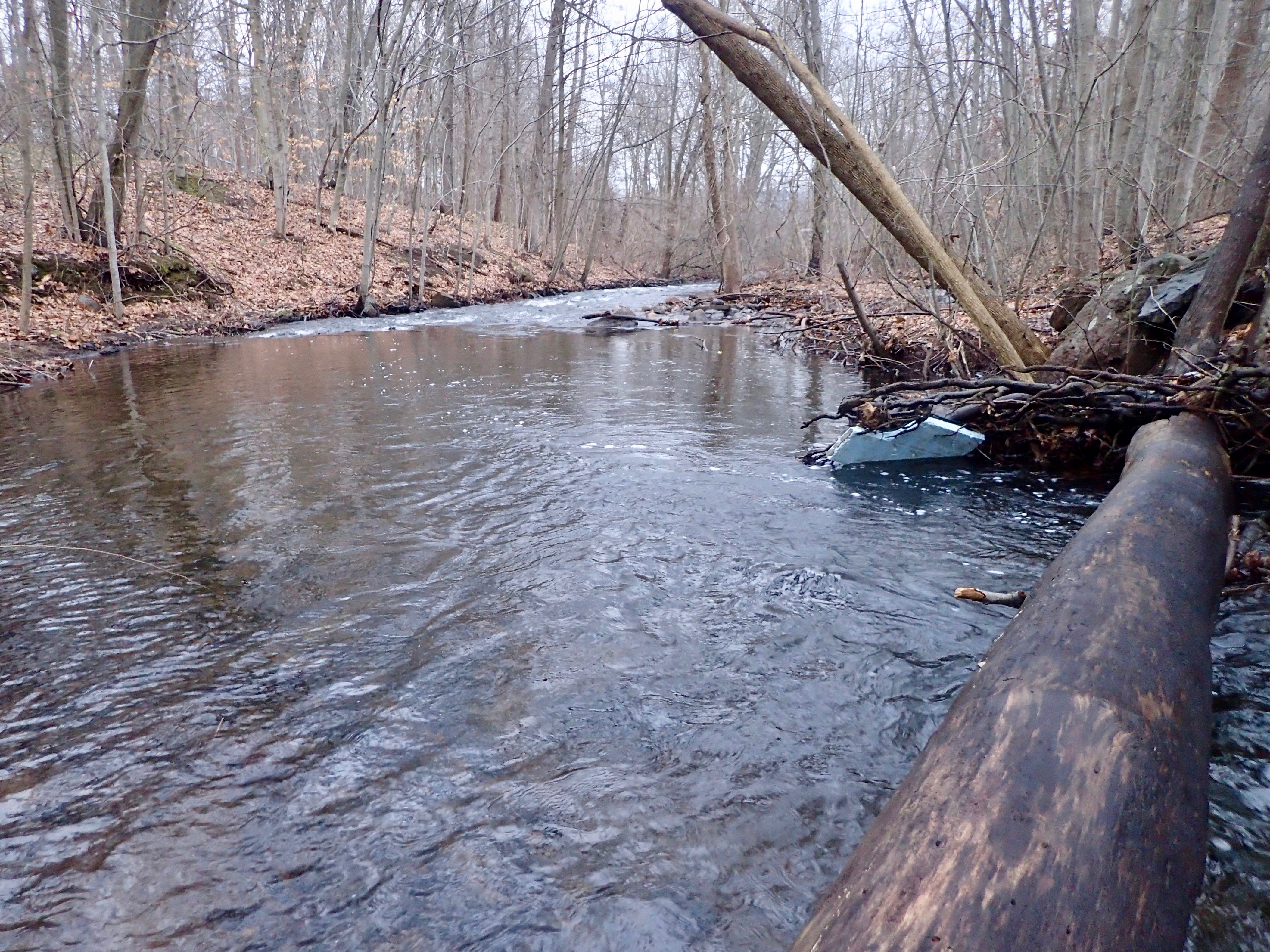
There are two ways to look at this mess. Both are emotional: Thanks, Mother Nature, for totally cocking up this neat little section of water. Or, what a great place for brookies to hang out! I feel that come spring, the intrepid angler who can figure out how to drift a bushy dry into this wooded Gordian Knot will be richly rewarded.

OLYMPUS DIGITAL CAMERA


February Stripers

Cold fronts and wind and snow and sleet be damned, I went striper fishing. This was virgin winter water for me; I looked at this place last year and wondered if any bass would care to stay though the cold months. I have my answer.

Only 20″, but a bass is a bass. Dagnabbit, now that I’ve done January and February, I guess I gotta go for 12 consecutive months with a striper on the fly.

OLYMPUS DIGITAL CAMERA

Rejecting the concept of the go-to fly

Are trout anglers smarter than striper anglers? I ask myself this question a lot. I don’t have a definitive answer, but I do know this: no other fly fishing endeavor gets by on a smaller corpus of knowledge than fly fishing for striped bass. As evidence, I offer the phenomenon of the go-to fly.

“What’s your go-to fly?”

You see it all the time on striper forums. It presupposes that there is a single fly solution for all saxatilus situations. Invariably, the usual suspects are rounded up. Now, the Clouser is a great fly (or jig, depending on your level of crustiness). In fact, there was a time when it was my favorite striper fly (really). But a Clouser is not going to serve you well when the bass are holding on station slurping grass shrimp. I go back to the night in Rhode Island when, after several hours of pounding up 10-15 pound bass on Big Eelies, another angler chased me down the beach to ask what fly I was using. He’d learned a hard lesson that sinking lines and weighted flies are a highly unproductive way to fish for bass crashing bait on the surface.

Now, ask a trout angler, “What’s your go-to fly?” If they’re any good, their answer will be, “For which hatch?” Or, “What time of year?” Or, “How am I fishing?” You get the idea. No trout angler worth his Catskills dries would ever approach the Trico spinner fall with a Woolly Bugger by rote.

If you want to catch less fish, fish the go-to fly.  If you want to catch more, go to the fly that best resembles what the fish are feeding on — and fish it how the naturals are behaving.

I love my Big Eelies. But they stay in the box when I’m fishing for bass that are feeding on herring.

Block Island All-Nighter Flies Big Eelies


Small streams on the brain

Last week I visited three local small streams, partially because I could; partially because the weather didn’t suck; partially because I was curious to see if anyone wanted to play; but mostly because I just plain love small streams.

I began Wednesday afternoon at Stream A. The air temp was just about freezing, and there was still a solid white shelf of ice framing this woodland brook. Didn’t see any bugs, and the action was slow. No love on a bushy dry/nymph dropper, so I switched over to an ICU Sculpin. I was jigging the fly in a plunge pool when I felt some weight. The next thing I saw was an open mouth rising from the depths. And then the char was gone. That was enough to keep me smiling, though.

Remnants from the last ice age. This stuff should pretty much be gone by the middle of this week. However, I’d still expect the water temperatures to be very cold.

OLYMPUS DIGITAL CAMERA

~

Streams B and C are in more urbanized locations. They’re not for everyone, especially if you desire the unspoiled by humans angling backdrop. So while they lack the classic beauty of the high-gradient mountain brook or lilting meadow stream, they are, nonetheless, charming in a “cool, I hooked a section of heater hose” kind of way. I went Friday, and I thought that with the heavy cloud cover and late afternoon timing, I might get an offer to buy with my white mini bugger sales pitch. Nothing doing. Although I did have a rather tasty cigar.

So much depends 
upon 
 
a brown tree 
trunk
 
glazed with rain
water
 
beside the white 
insulation.

OLYMPUS DIGITAL CAMERA


Farmington River Report 2/15/18: Two Hours of Fun with Streamers

Some days I get so ambivalent about how and where to fish that it annoys the hell out of me. Not today. In fact, I knew last night it would be the Permanent TMA and streamers. The water was receding but still up (550cfs) and that along with heavy cloud cover suggested to me that some big browns might be on the hunt.

Spot A was a blank. One other angler was there, nymphing. He reported a blank, too. Spot B produced two fish, although I dropped the second to an incredibly bad hookset. I should have known what to look for after the first fish: no dull thud or sharp tug, but rather the sensation that the fly was hung up on the bottom, with the bottom then moving. I assumed the second fish was a rock, set with the tip, and a few seconds later the trout was off.

While I had Spot B all to myself, Spot C was a regular angler’s convention. (There were a lot of people out in the Permanent TMA today.) Everyone blanked there.

Fished the full sink integrated line and a short (<3 foot) leader.

I don’t often fish articulated streamers, but the trout liked this olive Peanut Envy today. Here’s a nice mid-teens brown.

OLYMPUS DIGITAL CAMERA

~

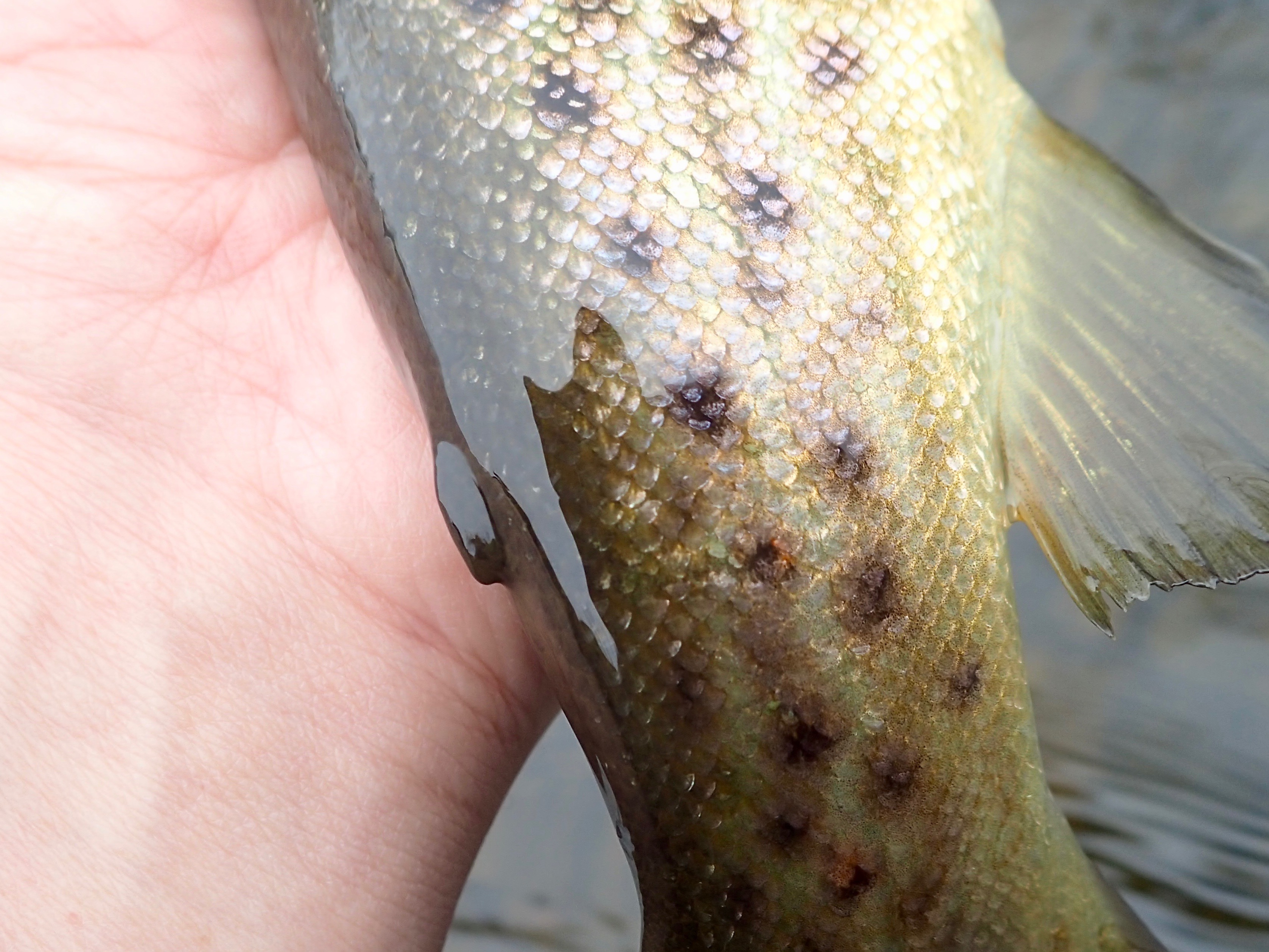
A classic Survivor Strain adipose bump.

OLYMPUS DIGITAL CAMERA


Some Mini and Micro Buggers for the Small Stream Box

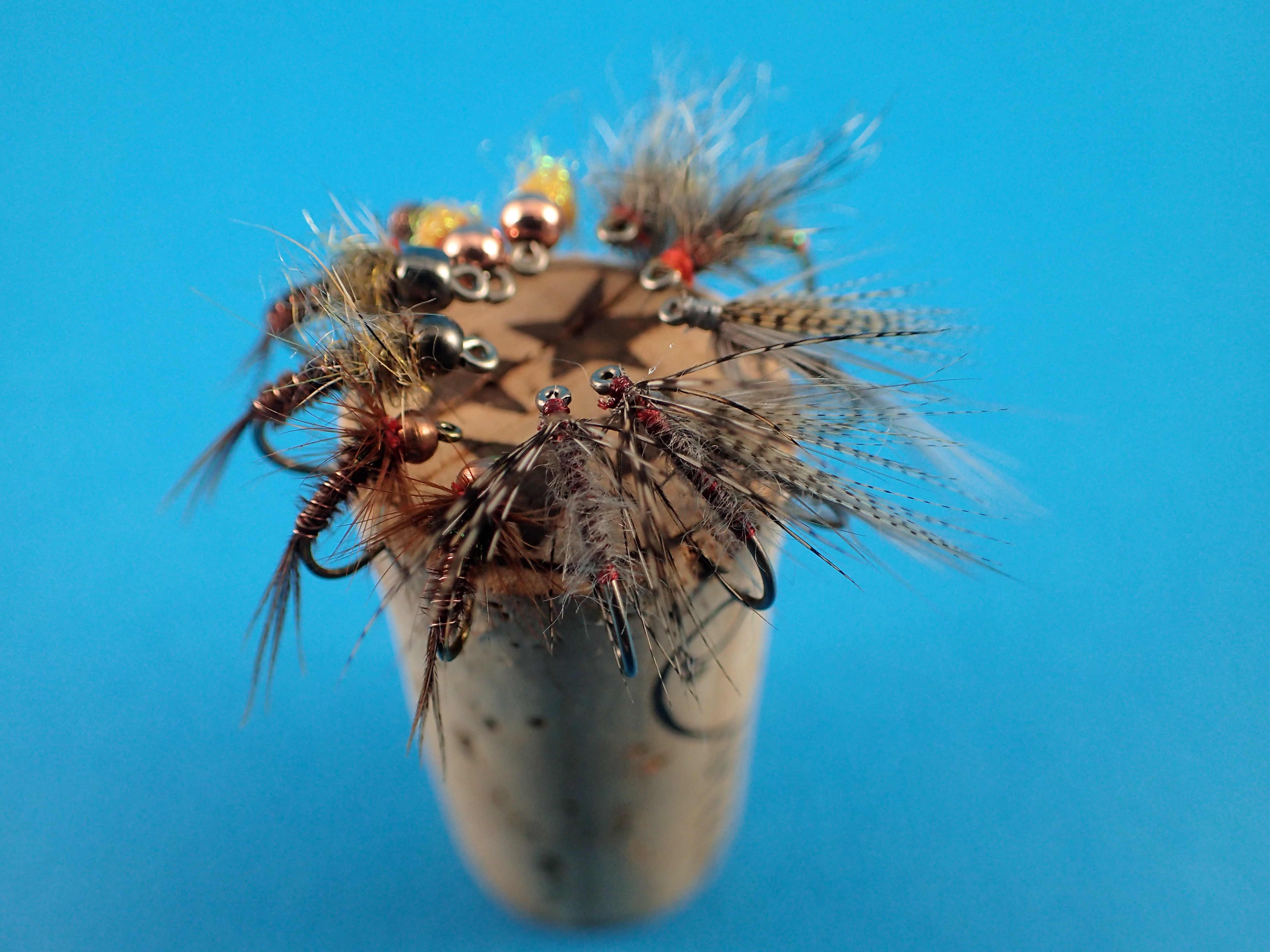
‘Tis the season for replenishing sections of the fly box that have been found wanting. The past few days I worked on streamers for my small stream box. While I like to try new flies, I’ve decided on a simple approach this year: proven patterns that will have me covered in variety of situations. So, here we have small Woolly Buggers and variants, sizes 8 and 12, with tungsten and brass beads (and some thread heads) in three basic colors.

OLYMPUS DIGITAL CAMERA

I’ve color-coded the tungsten beadhead flies with red thread — you can see that on the black bugger in the front right. It’s a simple way to keep track of what’s heavy and what’s not. I’ve also swapped out chenille for Ice Dub on the body. You can find the basic recipe for these small buggers here.

The olive flies on the left are Tim Flagler’s Squirrel and Herl Bugger. The original is un-beaded, but I added tungsten heads to two of them. Hopefully Tim is not too horrified. You can find a tying video for this buggy pattern here.


Mainly Misunderstood: five myths and realities about using floating lines for striped bass

No line application in fly fishing is more misunderstood than the floating line for striped bass. Well, maybe not. Maybe it’s the intermediate line. Tell you what — read this, then go forth with your floating line and be fruitful and multiply your striped bass catch. “Mainly Misunderstood: Five Myths and Realities About Using Floating Lines for Striped Bass” includes words of wisdom from striper grandmaster Ken Abrames. It first appeared in the May/June 2017 issue of American Angler.

Mainly Misunderstood-Five Myths and Realities About Using Floating Lines for Striped Bass

All good things to those who invest in the floating line. (Okay, we can add in the flatwing and the greased line swing.)

OLYMPUS DIGITAL CAMERA