W.C. Stewart’s spiders from “The Practical Angler,” in list form with photos

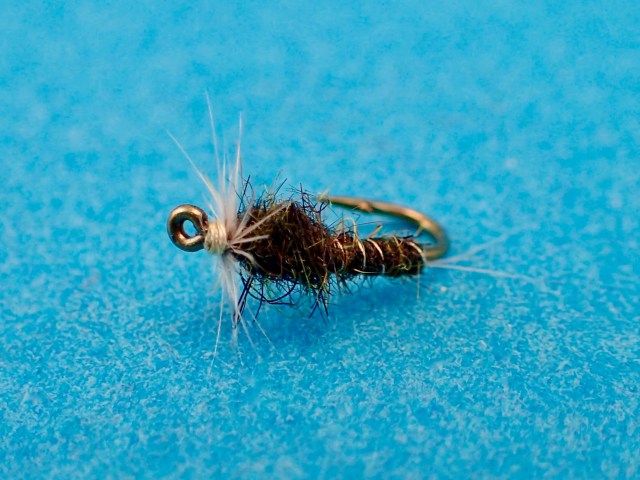
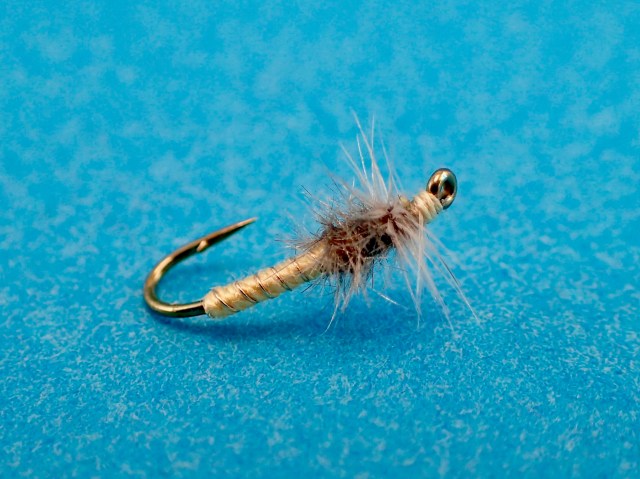
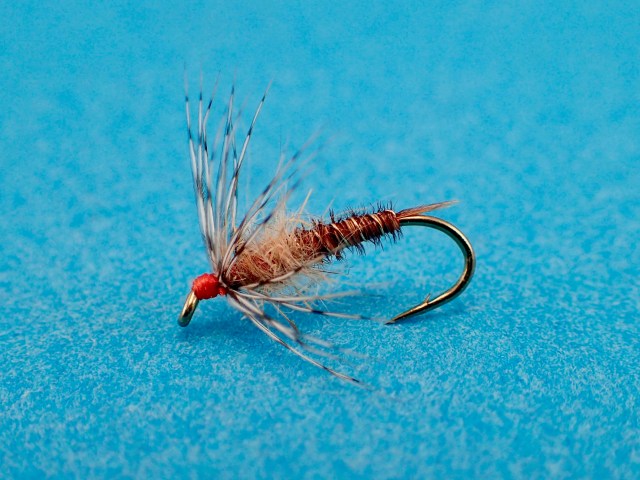
I recently published a short feature series on W.C. Stewart’s spiders, three ancient and traditional Scottish soft hackles. They first appeared in print in Stewart’s 1857 book “The Practical Angler or the Art of Trout Fishing, more Particularly Applied to Clear Water.” Here now is a single reference list of the trio: the Black Spider, Red Spider, and Dun Spider, a photo of each pattern, and a link to the original post with my comments and tying instructions. If you’re interested in reading an online copy of Stewart’s Book, you can find one here.

W.C. Stewart on the soft-hackled feather: “So soft are they, that when a spider is made of one of them and placed in the water, the least motion will agitate and impart a singularly life-like appearance to it.” — W.C. Stewart

W.C Stewart’s Black Spider

OLYMPUS DIGITAL CAMERA

~

W.C. Stewart’s Red Spider

OLYMPUS DIGITAL CAMERA

~

W.C. Stewart’s Dun Spider

OLYMPUS DIGITAL CAMERA

~

Apply these to clear water near you, and let your mind wander back a few centuries. Picture Stewart on a wee Scottish burn, fishing his beloved spiders upstream…


Leisenring’s Pale Watery Nymph

Big Jim loved his Pale Watery nymphs. We know this because he’s got two of them listed in his book. This is the first Pale Watery nymph, and it’s a simple, buggy tie. I’m picturing it as the point fly on a team of three; dropped off the bend of a Usual or Light Cahill dry; or below a dry with the dry on a tag. Speaking of Pale Watery, keen students of Leisenring’s fly patterns will remember the Pale Watery Dun Wingless — one of his “favorite twelve” — from last year’s series here on currentseams.

Leisenring’s Pale Watery Nymph

OLYMPUS DIGITAL CAMERA

Hook: 15, 16
Silk: Primrose yellow
Hackle: One or not more than two turns of a darkish-blue cockerel hackle only long enough to suggest wing cases.
Tail: None.
Rib: Fine gold wire halfway up the body.
Body: Cream colored fur (Chinese mole or Australian opossum) dubbed very thinly at the tail and heavily at the shoulder and thorax.
~
Tying notes: No gots cockerel, so I used a dark dun hen cape. For body fur, I chose Hareline Dubbin Light Cahill (HD1). It is here that find myself faced with a disturbing question. Leisenring specifies that the rib should go “halfway up the body.” Does this mean his other nymphs were meant to have a rib that continued over the thorax? It’s quite possible. I’m not a fan of ribbing over a heavily dubbed thorax — it kind of defeats the purpose of that buggy section — but Leisenring may have intended otherwise.

Leisenring’s Dark Olive Nymph

James Leisenring’s Dark Olive Nymph is sure to be popular among the finned set. For starters, it’s buggy as hell. Not only does it cover the pre-emergent Blue Winged Olive family, it’s also one of those flies that looks like lots of bugs in general, but not necessarily any one in particular.  That’s the good news. The flip side — if I may editorialize — is that I suspect a soft-hackled Pheasant Tail does the same duty, and is easier to tie. One way to find out!

Leisenring’s Dark Olive Nymph

OLYMPUS DIGITAL CAMERA

~

Hook: 14, 15
Silk: Primrose yellow
Hackle: One or not more than two turns of the tiniest blue dun hen’s hackle.
Tail: Two or three very short, soft blue dun cock fibers.
Rib: Fine gold wire.
Body: Dark green-olive seal’s fur mixed with a little dark-brown bear’s fur (found next to the skin) spun lightly at the tail and quite heavily at the shoulder or thorax.
~
Tying notes: It should take me a few minutes to bang out Leisenring’s Dark Olive Nymph; when it takes longer than that to tie in the bloody “very short” tail, I curse my lot in fly tying and pine for the simplicity of the soft-hackled pheasant tail nymph. At this size, Angora goat (my standard seal’s fur substitute) would be an unruly mess. And since I’m right out of bear, I made the command decision to use Squirrel SLF Spikey Dubbing, dark olive and dark brown. I’m pleased with the results. A single dubbing loop for both abdomen and thorax.


Leisenring’s Half Stone Nymph

Finally, Leisenring dispenses with those noseeum tails! (Not to worry. They’ll be back.)

I rather like the Half Stone Nymph. I know a small stream that gets a decent late spring hatch of yellow sallies. This pattern, dropped off the back of a bushy dry, will drive the char absolutely out of their minds. On the smaller side at 13-14, I can also see it supersized to an 8 or 10. Its grey and yellow palette reminds me of Ken Abrames’ R.L.S. Easterly (and the soft hackle I tie by the same name). Mole fur is underused in the modern fly, so it’s good to get reacquainted. Bonus: Mole skins are cheap and fairly easy to find. Look for one at Badger Creek.

Leisenring’s Half Stone Nymph

OLYMPUS DIGITAL CAMERA

Hook: 13, 14 (I’m using a 2x heavy, 1x long 14)
Silk: Primrose yellow
Hackle: Very short blue dun hen’s hackle, 2 turns or 3 turns at the most.
Tail: None.
Rib: Very fine gold or silver wire.
Body: Primrose yellow buttonhole twist.
Thorax: Mole’s fur dubbed fairly heavily.
~
Tying notes: Much easier of a tie without those infernal very small tails! As always, DMC embroidery floss #744 is my primrose yellow buttonhole twist substitute, one separated strand’s worth. I attach it just below the thorax, then wrap back up over the first layer. I think a dubbing loop makes for a buggier thorax.


Leisenring’s March Brown Nymph

James Leisenring’s nymph template takes some getting used to. At least it does for me. I get the short hackle (even though I do quite well, thank you, with nymphs using long hackle). But I’m still mystified by these “very short” tails. I’m skeptical that a trout will notice an almost-not-even-there tail in a gurgling 3-knot current. Not to mention they’re a pain to tie. But never mind. Who am I to argue with greatness?

Today we have the March Brown Nymph. A handsome creature, part Pheasant Tail, part Hare’s Ear, part soft hackle. Delicious! The menu has been set. Let our diners assemble.

Leisenring’s March Brown Nymph

OLYMPUS DIGITAL CAMERA

Hook: 13 (I’m using a 2x heavy, 1x long 12 or 14)
Silk: Orange (I’m slumming with UNI 6/0 thread)
Hackle: A short-fibered, light brown feather from the Hungarian partridge.
Tail: Three fibers from a cock pheasant tail feather tied very short.
Rib: Gold or silver wire.
Body: Three reddish fibers from a center feather of a cock pheasant tail. (As with peacock’s herl, tie in, twist with thread, and wind up body, twisting together as you go.)
Thorax: Hare’s ear fur dubbed fairly heavily.
~
Tying notes: Short-fibered light brown partridge hackles are hard to come by. Be prepared to do some hunting on your skin. Normally, I’d use the same pheasant tail fibers for the tail as I would for the body. But these tails are so short, I kept pulling them out when I tried to use the whole smash. So, separate sets of three for tail and body. I find Leisenring’s directive of twisting the fibers around the thread unnecessary for reinforcement purposes — the gold wire does that nicely. If he’s trying to get some extra orange in the abdomen, well, then, Jim, I’ve failed you. I think a dubbing loop makes for a buggier thorax. Two wraps of hackle are all you’ll need — or manage.

Leisenring’s Tups Nymph (Nymph)

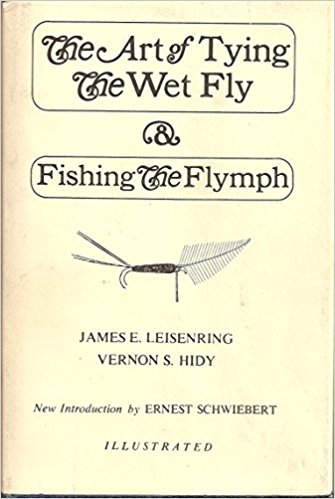
No, dear reader, you are not seeing double. In James Leisenring’s The Art of Tying the Wet Fly, he lists two Tup’s Nymph patterns. One’s a wingless wet, the other’s a nymph. (I covered the wet last year — in case you missed it, it’s here.)
LeisenringBook

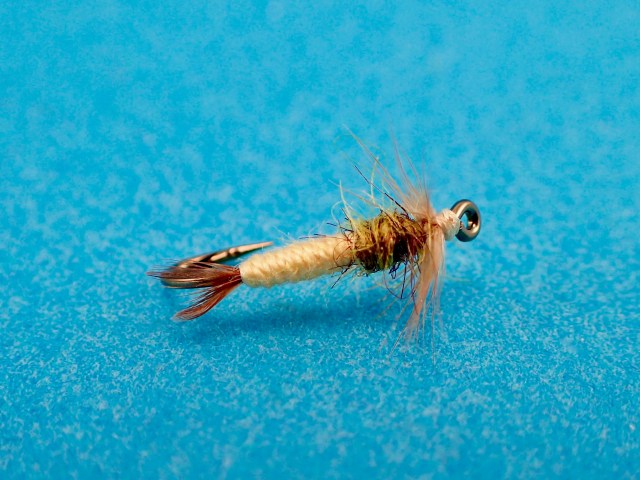
They seem to be the same pattern, but the nymph version calls for a tail of two honey dun hackle points; the wet (in the Leisenring’s Favorite Twelve section) does not. And while both patterns specify “very small” hackle, the photo of the wet in the book shows a hackle that extends well past the hook gap. There’s an illustrated S-B-S of the nymph, and it shows an ultra-short hackle that comes nowhere near the width of the hook gap. It’s all a little confusing.

Leisenring is very particular about his nymphs. He calls for heavy wire to help them sink, although he also mentions fishing them near the surface. He states he has “no use for a weighted nymph because they do not swim naturally.” Take that, Euro nymphers! And I love that he is a bear about “exceedingly sharp” hooks. That’s a man after my own heart.

I gotta tell you, though — this is one unattractive pattern. There’s precious little that sings to me, unless I were to be confronted by a hatch of sulphurs or golden stones. Still, Leisenring had a high enough opinion of this fly to make it the nymph tying example. Let the trout be the judge!

Leisenring’s Tups Nymph (Nymph)
OLYMPUS DIGITAL CAMERA

Hook: 13-14
Silk: Primrose yellow
Hackle: Very small light-blue hen hackle or medium-dark honey dun hen hackle
Body: Halved: rear half of primrose-yellow buttonhole twist; thorax or shoulder of yellow and claret seal fur mixed dubbing spun on primrose-yellow silk.
Tail: Two honey dun hackle points
~
Tying notes: The hackle length should be well short of the hook gap. You can take the hackle points from the very base of a hen neck. Leisenring wants you to tie in the hackle points with the buttonhole twist over a bare hook shank; that is, starting from eye part of the abdomen, down to the tail, then back. I found this to be a pain in the butt. As always, DMC embroidery floss #744 is my buttonhole twist substitute, one separated strand’s worth. The instructions say the body should be halved, but the illustrations in the book clearly show a 2:1 abdomen:thorax ratio. Seal substitute Angora goat is its usual difficult self; I recommend using high-tack wax like Loon Swax. Leisenring wants you to jam the hackle “almost into the dubbing.” Two or three wraps at the most. Then finish.

Stewart’s Dun Spider

I don’t know if W.C. Stewart had yellow sallies or sulphurs on his wee Scottish burns. But we have them here in the States, and Stewart’s Dun Spider does a bang-up job of imitating those hatches. Try fishing this on a small stream as a dropper off a bushy dry — or as a dry-wet tandem during a sulphur emergence. (You can thank me next time you see me.)

Every fly tier has a good supply of dotterel on hand…uh…hold on…dang! Turns out, not so much, even in Stewart’s time (mid-19th century). You can substitute with webby dun hen, or heed the sage advice of the man himself:

StewartDun

Stewart’s Dun Spider

OLYMPUS DIGITAL CAMERA

Hook: 14-15 (from Leisenring). I used a Partridge SUD2 #14.
Silk: Yellow
Hackle: Dotterel (I used a feather from the inside of a starling wing)
Body: Working silk
~
Tying Notes: The silk body should cover only the front half of the shank. Select a feather with fibers about as long as the shank. To make a more durable fly, Stewart suggested twisting the hackle around a silk tag before winding. Here’s how I did that: Start the silk at the head, winding rearward. Leave a 3″ tag about 3/4 of the way down the body. Continue winding the working silk. At the halfway point of the shank, proceed back toward the head. When you get to the silk tag, tie in the feather at its tip, and continue winding your working silk toward the head. Now, twist the feather around the silk tag, taking care not to break the spine (starling is fragile!). If you look closely at the photo, you can see the silk reinforcement around the spine of the feather. Wrap the feather toward the head, 3-4 turns, preening the fibers so they don’t get covered (a bodkin or needle may help). Tie down the feather and whip finish.

Stewart’s Red Spider

We know that Leisenring was a big fan of Stewart’s spiders. He called them, “a deadly combination on every stream I have ever fished.” That’s one of the things that still attracts me to soft hackles — that a pattern so lethal on small Scottish rivers is just as effective here in the States. Here’s the second in a series of three, Stewart’s Red Spider.

Fresh out of landrail? No worries (or as they’d say in Stewart’s homeland, “Nae fears!”). You could use a brownish-red hen hackle or other similarly colored game bird. I like this solution best: starling wings dyed burnt orange. I bought them a few years ago from Mike Hogue at Badger Creek. Says Mr. Stewart:

StewartRed~

Stewart’s Red Spider

OLYMPUS DIGITAL CAMERA

Hook: 14-15 (from Leisenring). I used a Partridge SUD2 #14.
Silk: Yellow
Hackle: Landrail wing feather (I used dyed starling)
Body: Working silk
~
Tying Notes: Like the Black Spider, this pattern is widely interpreted. The silk body should cover only the front half of the shank. Select a feather with fibers about as long as the shank. To make a more durable fly, Stewart suggested twisting the hackle around a silk tag before winding. Here’s how I did that: Start the silk at the head, winding rearward. Leave a 3″ tag about 3/4 of the way down the body. Continue winding the working silk. At the halfway point of the shank, proceed back toward the head. When you get to the silk tag, tie in the feather at its tip, and continue winding your working silk toward the head. Now, twist the feather around the silk tag, taking care not to break the spine (starling is fragile!). Wrap the feather toward the head, 3-4 turns, preening the fibers so they don’t get covered (a bodkin or needle may help). Tie down the feather and whip finish.

The Leisenring Spider

The Sports Illustrated Book of Wet-Fly Fishing came in the mail last week. I’ve wanted to track down a copy for years, and finally got round to it. It’s written by Leisenring’s disciple Vern Hidy, and it lists tying instructions for three patterns, one of which is Leisenring’s Spider.

They (very literally) don’t make ’em like this anymore. A little dog-eared but just as relevant today as it was in 1961.

OLYMPUS DIGITAL CAMERA

~

You don’t hear much about Leisenring’s Spider today. (I first encountered it in a Wingless Wets piece written by Mark Libertone almost 15 years ago.) It’s not listed in his book, which is strange considering it’s got fish magnet written all over it. Leisenring used his version of a dubbing loop to form the body, and I suspect buggier and nastier is better than perfect. A so-simple soft-hackle to help you clean up during the next caddis hatch. Hang on!

The Leisenring Spider

OLYMPUS DIGITAL CAMERA

~

Hook: Wet or dry fly 12-16 (this is a Partridge SUD2)
Silk: Primrose yellow
Hackle: Brown partridge
Body: Hare’s ear spun on thread
Rib: Fine gold wire


Stewart’s Black Spider

W.C. Stewart was a Scottish lawyer and soft hackle aficionado. In 1857 he published the highly popular fly fishing book The Practical Angler. Though long out of print, you can easily find an archival copy online, or even a dog-eared used volume.

Today, Stewart is most remembered for his three spiders. These sparse, impressionistic soft-hackles wouldn’t get a second look in the modern fly shop’s bins. That these patterns would wantonly be ignored is, of course, a huge mistake. Let’s see if we can remedy that.

In a recent column, George Will referenced a line from an Alan Bennett play: “Standards are always out of date — that’s why we call them standards.” Don’t be dismayed by the absence of tungsten beads or UV mega-super-duper-sparkle flash. This pattern has been fooling trout for centuries. And the fish aren’t getting any smarter. Three cheers for James Baillie!

W.C. Stewart’s Black Spider

Hook: 14-15 (from Leisenring). I used a Partridge SUD2 #14.
Silk: Brown
Hackle: Cock starling
Body: Working silk
~
Tying Notes: This pattern is widely interpreted, as evidenced by an image search. The good news is that the design is so simple, it’s probably hard to tie one “wrong.” Let’s start here: I’ve always found it curious that a pattern titled “Black Spider” doesn’t contain anything purely black; I suppose “Dark Spider” doesn’t have the same swagger. The silk body should cover only the front half of the shank. Select a purplish-black hackle from a starling skin, fibers about as long as the shank. To make a more durable fly, Stewart suggested twisting the hackle around a silk tag before winding. Here’s how I did that: Start the silk at the head, winding rearward. Leave a 3″ tag about 3/4 of the way down the body. Continue winding the working silk. At the halfway point of the shank, proceed back toward the head. When you get to the silk tag, tie in the feather at its tip, and continue winding your working silk toward the head. Now, twist the feather around the silk tag, taking care not to break the spine (starling is fragile!). Wrap the feather toward the head, 3-4 turns, preening the fibers so they don’t get covered (a bodkin or needle may help). Tie down the feather and whip finish.
~
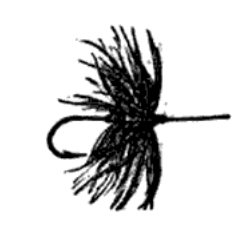
James Leisenring was a big fan of the style, writing, “I have found W.C.Stewart’s spiders to be a deadly combination on every stream I have ever fished.” Many iterations have the hackle wound along the length of the shaft, producing a hyper-sparse look, but as you can see from this drawing from The Practical Angler, the hackle is condensed and confined to the front half of the fly.