Striper report: all about adjustments

I fished for 90 minutes today at a very popular late fall spot. Lots of bass around — the spin guys were cleaning up — but I wasn’t getting my fly where it needed to be, which was down deep. Dagnabbit, I left my bag of 3/0 shot in the car. Two sections of T-11 (totaling 10 feet) and a leader shortened to 3 feet solved the problem, along with some upstream casts and active mending. When my fly was ticking bottom, the bottom often fought back. All shorts, but some of them put up a good fight in the current. Wow, the wind! Gusts over 20mph made me glad I was casting with/across it. The dredging is still going on, but any commotion caused by tugs and barges didn’t seem to bother the fish. A glorious day to wet a line and catch a few stripers (and a bonus shad).

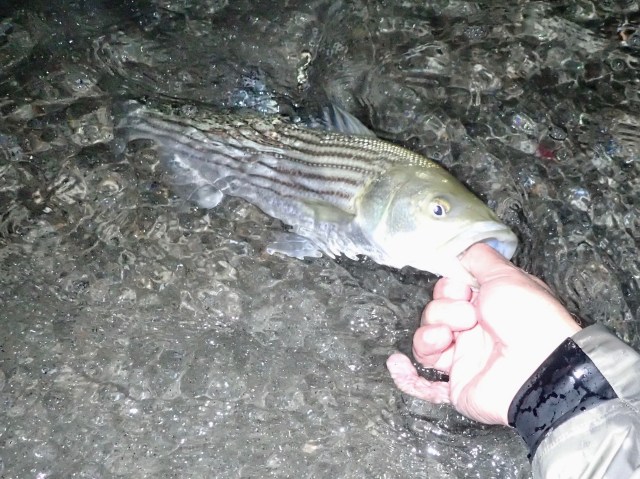
No photos, because you all know what a schoolie looks like. You’ll have to settle for a blast from the past on a warm summer night a few years ago…

ElectricSmoke

Salmon River steelhead report: Cruel to be kind

I do my best to understand, dear, but you still mystify — and I don’t think I’ll ever know why.

Why does a cold front always seem to come through on the day I booked months ago?

Why won’t the steelhead take the fly — any fly — on this particular day?

Why do steelhead glom onto only small black stones or only fluorescent orange eggs or…?

Why do I subject myself to this?

These are the questions I ponder at night over a glass of single malt. Finding the answers isn’t necessarily the goal — or even a realistic outcome. It’s just part of the Kabuki known as steelhead madness.

Monday: I call it “Salmon River Sunshine.” It refers to the snow, rain, sleet, and the more esoteric forms of lake-effect precipitation. Today it was white pellets and snow. It started around 7am — we’d launched at 6 — and it went full throttle pretty much all morning. The stuff stuck to the boat, our gear, hoods, gloves —  no horizontal surface was spared. Now, I’ve had plenty of good days fishing in crap weather, but this wasn’t one of them. Not a single touch the entire day. We were surely fishing over steelhead, because Cam hooked five, landing three. Okay, so he was using egg sacks. But shouldn’t I have gotten at least a courtesy tap?

I tend to view these situations as a half full/half empty dichotomy: I’m fishing well, my drifts are good, I’m alert and ready to set the hook, and I know there are steelhead below. But as much as I will it to be so, they just won’t take the fly. That’s more than a little frustrating when you’ve driven hours so you can shiver in your boots for the skunk while standing in five inches of slush in the bottom of a boat.

Of course, the salve for this day was how well Cam fished. (He hooked and landed more steelhead than any other angler we saw or spoke to.) Being a proud papa can do wonders for your spirits, so I went all in on that. And I reminded myself that in any multi-day trip, the fighting is in rounds.

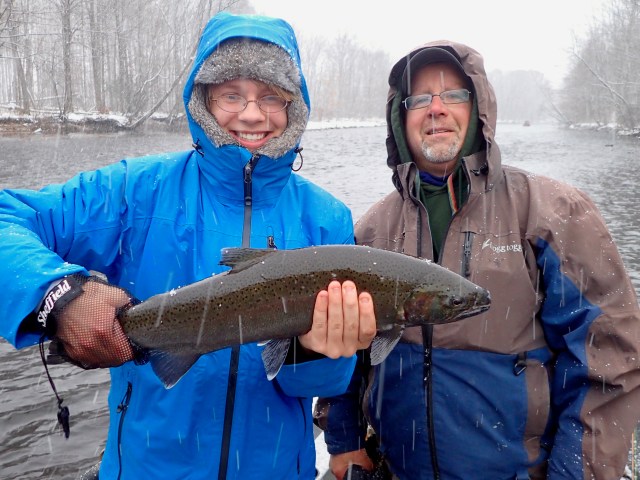
When I sent this photo to my wife, her comment was, “Even the fish looks cold.” That’s our guide, James Kirtland of Row Jimmy Guide Service.  I’ve become a much better steelhead angler because of him. Highly recommended.
OLYMPUS DIGITAL CAMERA

~

Tuesday: Having blanked on two of my four steelhead days this fall, I was ready to negotiate an agreement using my fly fishing soul as collateral. I’m talking, of course, about trout beads. Yes, they are proven steelhead catchers. No, they are not flies. But it’s my trip and I can do whatever the hell I want. Purists among you will be pleased to know that I blanked for the two hours I used them. (I have to confess that I wasn’t all that upset about it, either.)

I’d had some success the previous week on a pattern called a Breaking Skein Glitter Fly. It’s basically a Crystal Meth with a pearl Krystal Flash tail and some white Estaz ribbed between the fluorescent orange braid loops. Wasn’t I the happiest angler on the river when my indicator went under and the line thrummed with energy?

After 11 consecutive hours of skunk, that’ll put a smile on your face. I had to earn this one. It was a fresh, energetic fish, and after a couple line burning runs it decided that the boat was a cut bank and parked underneath it. Picture me leaning over the bow, rod tip in the water, trying to coax it out. Seconds became years, but we finally had our grip and grin.

OLYMPUS DIGITAL CAMERA

~

This year’s fishing was different for me in that all my steelhead came on bright, flashy patterns. I spent many hours presenting small black stones (Redheads, Copperheads, etc.) and any number of natural-toned soft-hackles to no avail. They wanted the bling. (I did hook and drop a fish on a 60-Second Copperhead). By the time ice in the rod tips was no longer a factor, Cam had boated three, and I’d taken my second on the Breaking Skein Glitter Fly.

It’s a very, very, very good sign.

OLYMPUS DIGITAL CAMERA

~

It was now early afternoon and time was a thief. I’d gotten a bump on a hot orange Salmon River Rajah fished under an indicator, so I rolled the dice, ditched the yarn, and embarked on a little swinging adventure. I gave it the better part of an hour, but in the end I went back to the Breaking Skein well. My last steelhead ate the fly with fierce conviction, but I whiffed on the set. We got a good look at it when it boiled, and we ruefully concurred that it was the biggest fish of the day. Oh, the cruelty! I kept pounding the slot the fish had been holding in, and ten minutes later the steelhead gods showed their kindness as the fish struck and I buried the hook in the corner of its mouth. Like my first fish, this buck cartwheeled down the pool, then made a beeline for the security of under the boat. At double digit pounds, this steelhead needed some firm pressure to get him to relinquish his position. In the end, the hoop of the net encircled him, and smiles decorated every face.

On Tuesday, November 21st, 2017, the steelhead loved this fly. On Monday, November 20th, 2017, they ignored it. Don’t ask me why.

OLYMPUS DIGITAL CAMERA

~

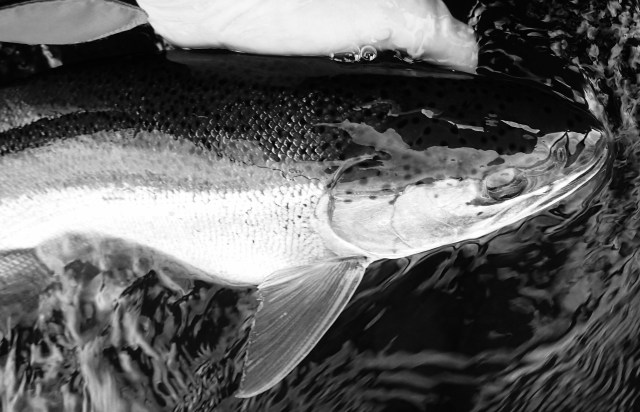
Cam was high hook both days and for the trip, with seven total steelhead, three of them in some nasty, difficult conditions. Dad was three-for-five. But as I tell Cam, if I can land just one steelhead, that’s a good day.

Lee Wulff was right. As was Nick Lowe. (In the right measure.) 
OLYMPUS DIGITAL CAMERA


Salmon River steelhead report: a little boating, a little hiking, and (finally) some catching

Tuesday: The Salmon can be tough on the fly at 1,650cfs. Then again, I’ve had some of my best days in four-digit flows. With all that water, the fish would have been on the move, then doing their best sardine impression once they reached their wintering destinations in the pools above Pineville. What’s more, a drift boat would give me access to places no fly rod could reach.

You can maintain a positive outlook, plan for the best — or if you’re superstitious, make burnt offerings to the steelhead gods. But in the end, they are in control. And today their answer was no. We saw five steelhead hooked all day from Altmar to Pineville. Four of them came in a 15 minute window, and three of them on plugs. My day’s excitement came when I fouled one below Ellis Cove. I don’t think that fish stopped until it reached Port Ontario.

I fished hard and I fished well, which is all any angler can do. But the best thing I can say about the day was that I got to sleep in. Getting up at 4am for the skunk would have been mortally depressing.

~

Wednesday: A-creeking I did go. I was on the water by 7am, my optimism unswayed by two discouraged anglers heading to their truck. They had been there since first light without a touch. I blanked as well, and then for good measure hiked a quarter mile downstream to blank again. I drove to Creek B and never got close to the water. A guide was making his way across a field with two weary clients in tow. The walk of shame is highly distinguishable from the march of victory, and I knew what their answer was before I asked the question. In fact, the guide reported, there were pinners using egg sacks who blanked. With a sigh I headed back to the Salmon.

This was supposed to be a picture of a steelhead. But since there were no willing subjects, I had to settle for an early morning still life.

OLYMPUS DIGITAL CAMERA

I gave two runs in the middle river an hour. It was still morning, so I headed for the LFZ lot in Altmar. I had enough wanderlust left in me to make the ridiculous decision to walk to the UFZ. It’s a proper haul by itself, never mind in 5mm boot foots. I hadn’t fished the top end of the UFZ in years, and while it was pleasant enough getting reacquainted, it was far too much work for the consolation prize of a single YOY steelhead.

I made it back to the truck by 4pm. I’d always avoided the LFZ — crowds are generally not my thing — but with the specter of another lousy trip ominously stalking me, I headed in. And that simple choice made all the difference.

Starting the transition from chrome to dark horse.

OLYMPUS DIGITAL CAMERA

~

Thursday: There are two things I’ll get up early for, and steelhead is one of them. I was awake without the alarm at 4:44am, first vehicle in the lot, and on the water before false dawn. I met up with UpCountry Sportfishing’s Torrey Collins and some of his friends, and everyone got into steelhead. Great bunch of guys to fish with. The sharing energy extended beyond hookups, from rotating the line to netting fish to passing out victory cigars.

My last fish of the day was a memorable one. I was telling Torrey about the fly I was using, the Salmon River Rajah, when I got snagged on the bottom. (I’d found the inspiration for it, The Rajah, in a book called Fly Patterns of Alaska. I didn’t like a lot of the materials the pattern called for, so I switched them out for ones that I thought moved and breathed and gave the fly an entirely different energy.) Two roll casts failed to free the fly, so I waded upstream and pulled until it came loose. As I was stripping the fly in to check the hook point, whack! Steelhead on. And soon, landed.

Grinning like a ‘possum eating a sweet potato. I caught my first steelhead in 2009, and while I don’t generally count fish, steelhead are different. I’ve been keeping track over the years, feast or famine, and this is the 75th steelhead I’ve landed.

OLYMPUS DIGITAL CAMERA

~

Steelhead can’t think, but if they could, that buck might have decided, “I want that!” Change bucktail to soft hackle fibers, tinsel to holographic braid, chenille to Estaz, and polar bear to Arctic fox, and you’ve got a Salmon River Rajah. More than once I’ve seen a steelhead go out of its way to eat this fly.

Culton_Rajah 1


Farmington River Report 11/3/17: more anglers than fish

Holy crowds, Batman! But what else could you expect on a 70 degree mostly sunny November Friday? Water was 300cfs in the permanent TMA and probably high 40s/low50s. Leaves were a minor issue today. Hatch activity was virtually nil and I didn’t see any risers. I visited two spots in the PTMA and found fish in both, although the action was slow. I carpet bombed Spot A with nymphs for two hours and produced only two hookups. Indicator nymphing was the method, and both takes were very subtle twitches rather than total submergence. Spot B was a quick in-and-out, one fish in about 20 minutes. Thanks to every who shared water and took the time to say hello. (A reminder that if you see me on the water, you’re not bothering me with questions or hellos. I rather enjoy it!)

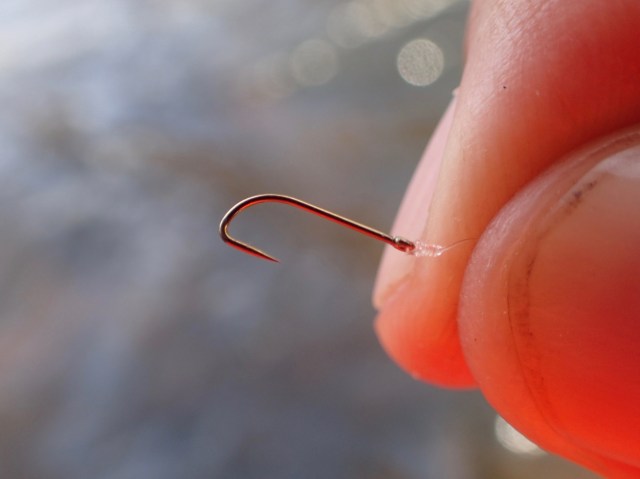
What the heck? This used to be a Snipe and Purple. I guess the bozo who tied it didn’t fully secure the silk. Out came the nippers and on went a Zebra Midge soft hackle.

OLYMPUS DIGITAL CAMERA

~

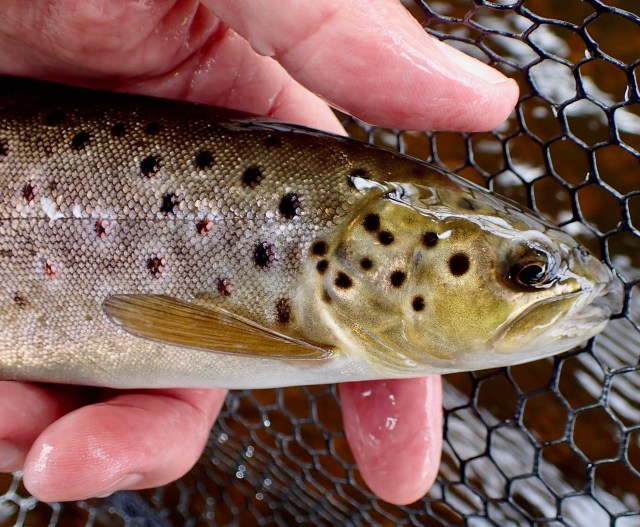
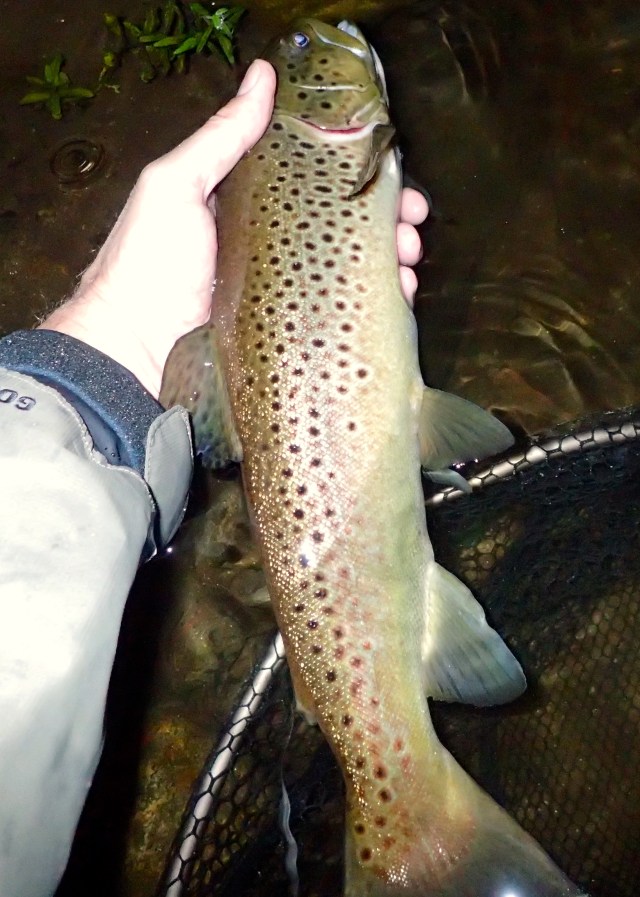
The ZMSH was a good choice. At least this lovely wild brown thought so.

OLYMPUS DIGITAL CAMERA

~

A batch o’ nymphs and wets for a client. I used a couple of these patterns today.

OLYMPUS DIGITAL CAMERA

Stripers from the surf

Better late than never goes the saying. So last night at 11pm I was walking with a skip in my step as I headed toward a jetty somewhere in SoCo. The SW breeze was light and warm coming off the water (it was much chillier in the interior of the salt pond I visited later) and I began casting into the pocket formed by beach and rocks.

I thought I felt a bit of odd pressure on a drift, but it wasn’t until I felt a sharp tug a few casts later that my suspicions were confirmed. Once I realized I’d left my Korkers in the car, I walked the bass along the rocks and landed it on the beach. I wasn’t up for doing that all night, so I waded into the surf proper and had at it, casting parallel to beach break and mending my line over the sets. Sure enough, there was a school of two-year olds in close. What they lacked in size they made up for in ferocity. I was fishing a three fly team of a clam worm on top dropper, a small sand eel in the middle, and a Magog Smelt soft hackle on point. They liked the two baitfish flies.

It would have been nice if they were a little bigger, but I hadn’t caught a striped bass in the surf in Rhode Island in years. So these schooligans were a treat.

OLYMPUS DIGITAL CAMERA

~

Why I like cheap (but good) cigars for fishing. Known among the cigar cognoscenti as canoeing, this is what happens when the wind is at an unfavorable angle to your stick. 

OLYMPUS DIGITAL CAMERA

~

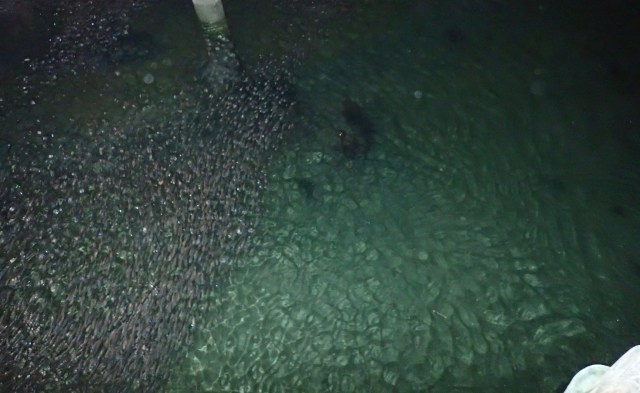
A lousy photo of a peanut bunker bait ball. Stripers were darting in and out of its shape-shifting mass, picking off strays at will.

OLYMPUS DIGITAL CAMERA

Farmington River Report 10/3/17: On the edge of fishable

Once again, they’ve lowered the flow from the dam, giving us (with the help of the Still River) 75cfs in the permanent TMA. The water is plenty cold and the trout are still there, but it makes for some challenging fishing. David was up to the task, and we attacked multiple locations above and within the PTMA. While we found fish and had a few bumps, we were unable to bring any trout to net. David did a great job keeping up his enthusiasm — perseverance is a powerful asset when the fishing is tough. Short line and indicator nymphing were the methods. We saw a fairly strong caddis hatch above the PTMA at 10am. Most of the risers we witnessed came in the afternoon. The river was mobbed for a Tuesday afternoon in October — surprising given the conditions.

David fighting the good fight. We had a momentary rush of glory in this run in about a foot-and-a-half of water.

OLYMPUS DIGITAL CAMERA

Farmington River Report 9/26/17: low and deep

I guided Ira and Dan yesterday. Hot, sunny, low flows (105 cfs above the permanent TMA), but the water was plenty cold. We spent the first half of the trip sifting through the pockets and seams of a 200 yard-long boulder field with a team of wets. After my success doing likewise on Monday, I was surprised that we didn’t get a touch. I was demoing a short line deep presentation in a deeper run when hook point connected with salmonid mouth. Armed with that new intel, we headed downstream and re-rigged for nymphing.

And that proved to be the difference between fishing and catching. We found fish in the hot water at the head of the run and just below in the front end. Both Dan and Ira proved themselves to be capable, thoughtful anglers, and it was rewarding to see their persistence pay off. The method was short line, no indicator, drop shot.

Ira probing current seams in the boulder field.

OLYMPUS DIGITAL CAMERA

~

A ray of light. Our first fish was this fine native, taken on a size 14 Frenchie variant.

OLYMPUS DIGITAL CAMERA

~

Dan being the man. He hooked a bunch of trout in this medium-sized pocket.

OLYMPUS DIGITAL CAMERA

Farmington River mini-report 9/25/17

A quick dash to the lower river to see if anyone was home. Water was low, 175cfs, about half of what it normally is this time of year, and felt like it was in the 60s. (Brief editorial: I must confess the logic behind water releases from the dam often escapes me. If periods of drought are the new norm, and September and October are traditionally low water periods, why run 300+cfs from the dam from April through July? Would we have more water now if they only ran 250 or even 200cfs all those months? What am I missing here?)

To the fishing: I swung wets in two runs for about 15 minutes each and came up with two customers, a nice 11″ wild brown and a much bigger, recently stocked rainbow. Both fish took the top dropper, a Squirrel and Ginger caddis. Lots of bug activity (caddis, midges) but nothing rising to it.


Trout fishing for stripers

Ben wanted to learn the mystical art of the floating line and traditional trout and salmon presentations for striped bass. So we braved the bluster and squalls of Jose and went exploring. We saw bunker in two of the tree locations we covered, but sadly no striped marauders. Ben did a great job with all the information I threw at him, and he’s going to be a dangerous striped bass catching machine.

Sometimes the cast is only a few feet. Ben covers a rip line where marsh grass meets flowing water.

OLYMPUS DIGITAL CAMERA

While I’ve gotten many requests for lessons like this, I have in the past resisted due to logistical (I don’t take people out at night) and practical (the day striper bite can be tough) considerations. Now that the seal has been broken, if this is something you’re excited about, we can try to make it happen. You’ll have to be agreeable to a shorter session (2 hours or so), the schedule of the tides (I can’t do anything to change them) and that the on-the-water lessons may not involve catching (see “day striper bite” above). Please don’t try to set something up though the comments section; rather, call or email me.

Bringing fly to fish. You too can learn the meditative art of the greased line swing. Here’s Ben throwing an upstream mend, keeping the fly broadside to the fish at the speed of the current.

OLYMPUS DIGITAL CAMERA

2017 Farmington River Broodstock Report

The collection for the next generation of Farmington River Survivor Strain broodstock was completed on Monday. The river is now back to a normal medium height (about 240cfs in the permanent TMA). Here are some details on the collection, conducted within the permanent TMA, from Fisheries Biologist extraordinaire Neal Hagstrom:

“We captured approximately 90 brown trout that we took to the Burlington Hatchery for broodstock. The largest was a 22+inch wild male. The state facebook page has some streaming video of the fish workups (visit the CT DEEP Facebook page and scroll down to September 11 — neat stuff!). We also took 15 other smaller or injured trout for general background health checks of diseases, something we do every year.”

Some of the broodstock are Survivor Strain from this year (left red elastomer) and last year (left yellow). About half of the older fish showed no signs of spawning and were returned to the river. The DEEP looks for genetic elasticity in their broodstock combinations, so there is a broad range of sizes, Survivor Strain and wild, and of course  both sexes in the sampling.

Neal commented that while there were plenty of fine specimens, there weren’t a lot of trophy trout. This dovetails with my experience this year: an abundance of high teens browns but not a lot of true brutes. He said the fish should be returned to the river in early December, “and no, we did not take everything. There are still plenty there.”

Thanks, Neal, and thanks to the DEEP for this amazing fishery and breeding program.

We grow ’em bigger than your net. A true 20″ Survivor Strain brown (clipped adipose) taken this summer. It’s hard to photograph a fish this big by yourself, but it’s surely a most wonderful dilemma.

OLYMPUS DIGITAL CAMERA