Where stripers come from

Just returned from a family reunion along the shores of the world’s greatest striped bass nursery, the Chesapeake Bay. I didn’t fish, but visiting the Chesapeake always makes me wonder how many of the stripers I’ve caught began their lives here.

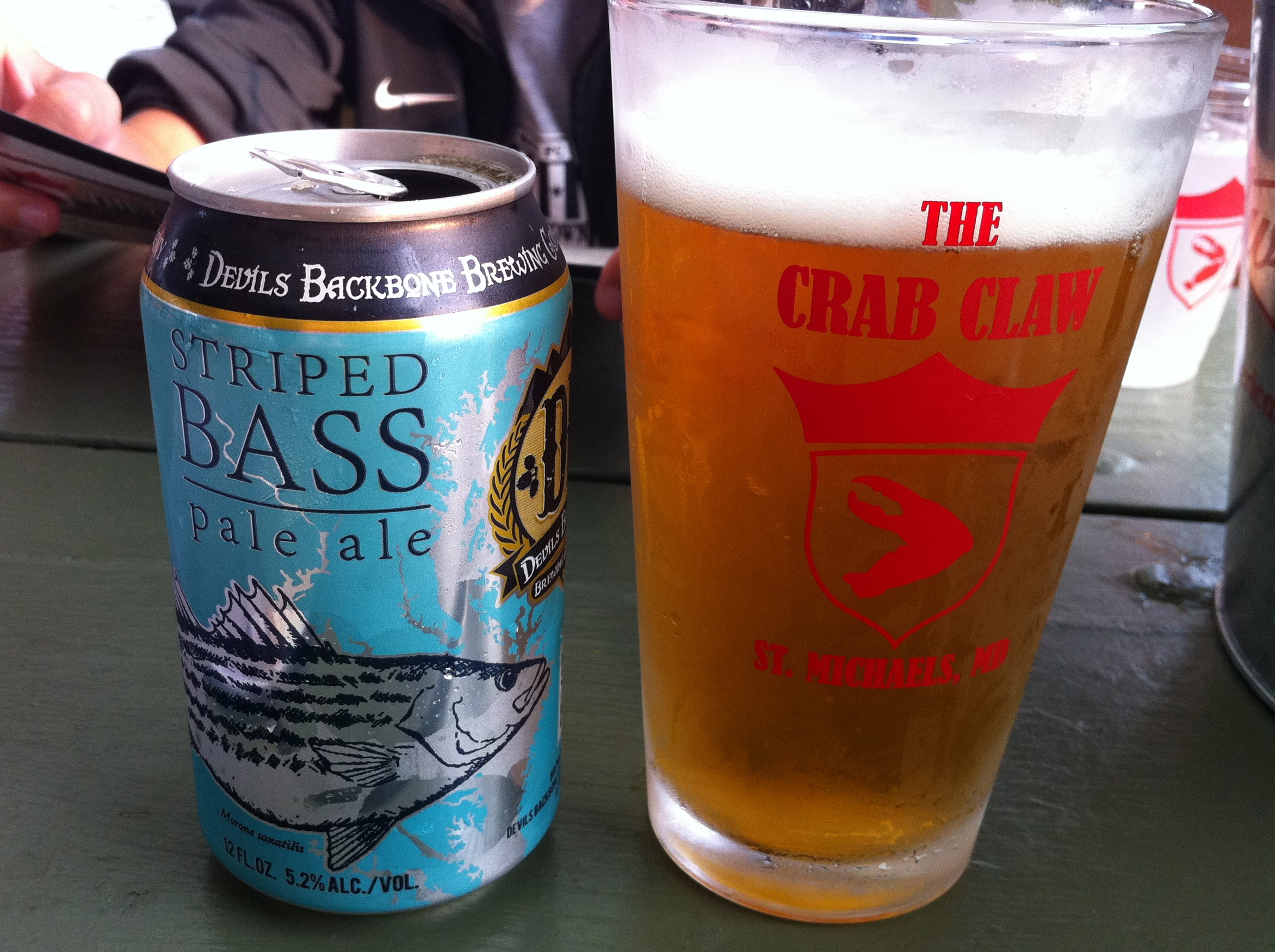
If you’re an old Block Island hand, you know Ballard’s is lobster. Welcome to Ballard’s mid-Atlantic cousin, The Crab Claw. They cover your table with heavy paper, then pile your steamed seasoned crabs in front of you along with a wooden mallet and a roll of paper towels. I also had some oysters on the half shell and this apropos of everything ale.

IMG_1548

~

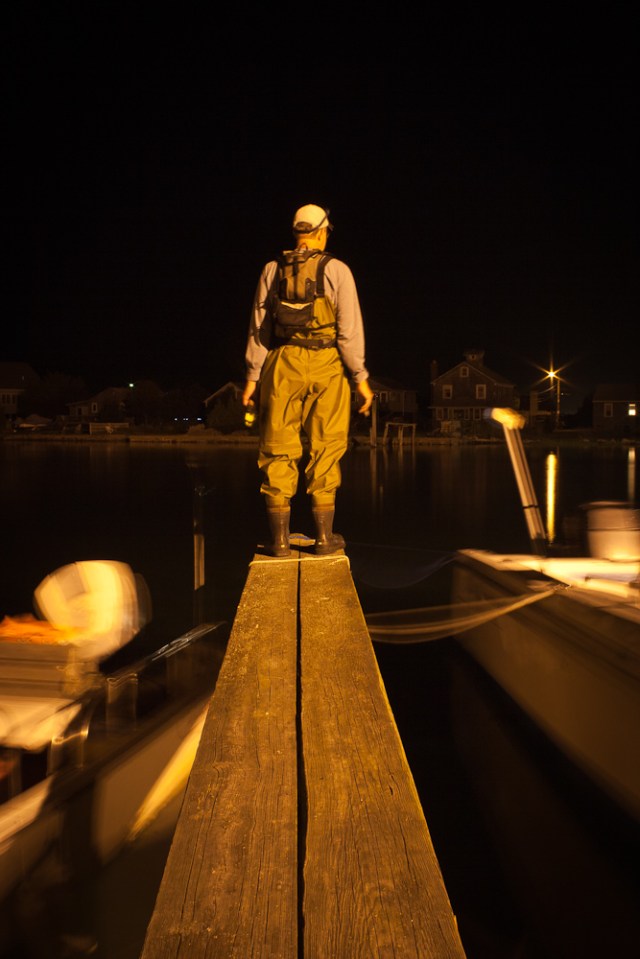
When he’s not catching fish, he’s piloting the boat. Cam at the helm of the Promotion, under the guidance of Rear Admiral George Ellis (Ret.), Annapolis Class of 1945, known to us simply as Uncle George.

IMG_1572


Conversations on a small stream with Gordon

Gordon: How much farther is the river?

Me: Not too far. It’s not really a river. It’s small, so we call it a stream or a brook.

~

Me: Stop for a minute. What do you hear?

Gordon: The brook?

Me: The brook.

Gordon: It’s coming from down there.

~

Gordon: The water is cold.

Me: Yes. Do you know why?

Gordon: I don’t know.

Me: Well, is the brook in the open sun?

Gordon: No, it’s in the dark woods.

~

Gordon: I don’t think I can jump over to that rock.

Me: I think you can. It’s OK if you get your feet a little wet.

Gordon: It was shallow. I only got a little wet.

~

Me: Look how flat and glassy that water is in that pool up there.

Gordon: Can we go up there?

Me: Absolutely.

~

Me: Do you remember what “the cafeteria line” is?

Gordon: Where that white stuff is on top of the water.

Me: The foam.

~

Me: Where did we hook all our fish today? In fast water or in the slow water?

Gordon: In the fast water.

~

Me: Are you hungry”

Gordon: Yes.

Me: I think we should get a burger at Five Guys. What do you think?

Gordon: I think that’s a good idea, daddy.

~

Gordon (no relation to Theodore) patiently presenting his dry fly over a pool. We didn’t bring any brookies to net today, but we pricked five. Not bad for one hour in the middle of a sunny day in July.

Gordo Small Stream


Fishing with my mind

The calendar said soccer tournament for the weekend, but I packed my gear anyway. We were staying in North Kingstown, RI. Any number of prime striper waters would be just a short drive. The only question was, would I have the energy — or the desire — to get out after a day of schlepping around soccer pitches in the hot sun?

The answer was yes. Saturday night, I headed to one of my favorite spots, My Father Le Bijou 1922 Belicoso in hand. I fished for about two-and-a-half hours. The thing was, I never wet a line.

I stood on a dock and searched for signs of life. There were horseshoe crabs, blue crabs, silversides, and jellyfish. But no stripers. I walked along a rock wall and watched the swirls and eddies formed by the last of the incoming tide. I peered over a bridge and marveled at the dessert-plate sized blue crabs swimming across the outgoing tide, faster than such seemingly un-aquadynamic creatures had a right to, as they hunted silversides.

When I returned to the dock, the stripers had moved in. I watched one fish for a half hour. He was about two feet long, and fat. He travelled in the same counter-clockwise circle, approaching from down current, sweeping along the bottom slowly and methodically, then cutting sharply to the left, accelerating, and disappearing into the void before materializing below a few minutes later. On rhythm. Perfectly.

It was magic.

A few of his friends made slashes on the surface, neither timed nor spaced.

I thought about getting out my rod. More than once. But I knew that was not the right thing on this night. I was doing what I was supposed to be doing. Just like the stripers.

The next time I go back, I’ll catch some. They will understand.

Dockofthebay


Block Island All-Nighter VIII: All by my(our)self

This year’s Block Island All-Nighter played out a little differently than in years past. Once I found out I would be flying solo, I decided to ask my 11 year-old, Cam, if he would like to go. He was all over it. I think he liked the idea of heading off for an overnight as much as he did the chance to go fishing. But I really didn’t care what his motivations were. It would be nice to have his company.

The last two BIANs were busts. My intel on the Island had warned me of epically slow fishing in the last week — “Be prepared to tour the Island to find fish” was the mandate. For a time, it looked like BIAN VIII would crap out. Then, a trickle of fish. And suddenly, the heavens opened and the light — hell, it was more of a beacon — of good bass fortune shined upon us. Here’s a little timeline and some photos from our adventure.

6pm-8:30pm: Take the six o’clock boat over to the Island. The surface is flat as a dinner plate. Speaking of dinner, no better way to start a BIAN off than with the fried scallop platter from Finn’s, washed down with an IPA draft.

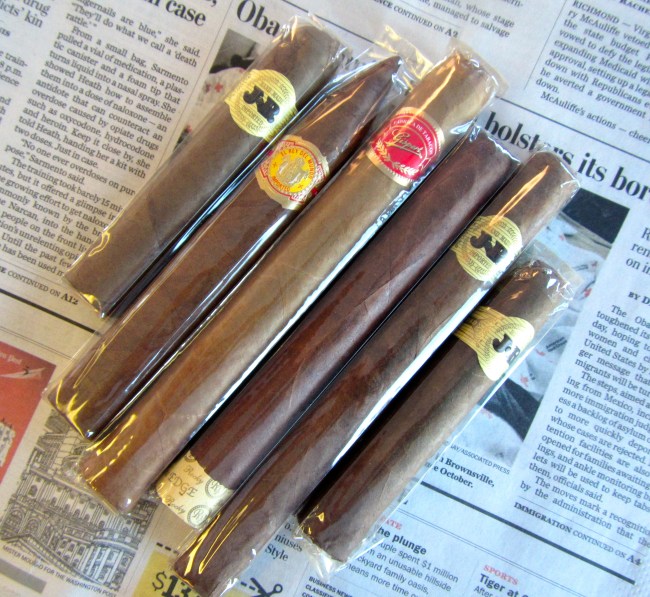
My stash for the evening. You’re thinking, “Steve, why would you bring so many cigars?” Just in case. Someone might ask for one. Someone might deserve one for sharing the water. Or, on a dead-calm night like this one, I might forget my bug spray and be inundated by millions of biting no-see-ums. There’s no mention of cigars as bug repellant in the Boy Scout Manual. But this ex-scout was indeed prepared.
Image


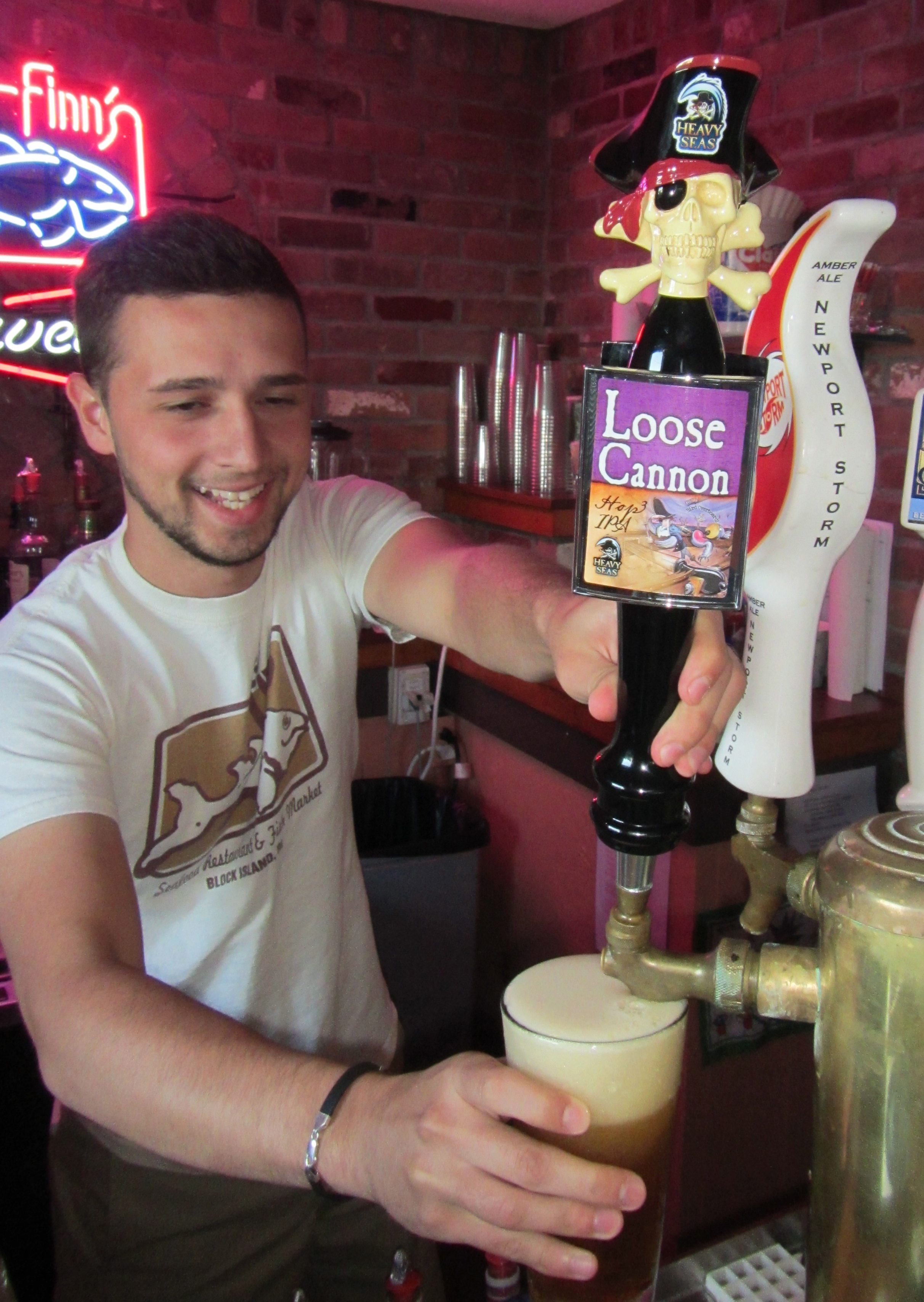
No Fisherman’s IPA this year, so we went with Loose Cannon. Another hop bomb with some nice fruity notes.

Image


8:30pm-11pm: We arrive at the spot. It is mobbed. Like, we get the last place to park mobbed. Not to worry, I tell Cam. It’ll empty out in short order. Witnessed: The largest, longest school of sand eels I’ve seen on the Block since 2007. The bait was smaller than normal for this time of year: matchstick to 2″ long. But scads of them. And then some. The water looked like it had a moving, breathing oil spill beneath its surface. Cam fishing with a 1/2 oz. bucktail jig bangs up some fluke. Dad goes touchless. We walk to another spot. Dad’s proven fish-producing spot. There, Cam, you see? A couple bass rising. We display our wares to them. Nothing. Hmm. Not usually how things play out on the Block. We borrowed some bug spray for Cam, but he’s still getting pummeled. Cam announces he’s tired and is ready for nap #1. We start the long walk back to the truck. Looks like it’s going to be one of those nights.

11pm-1am: The stars! What a galaxy we live in. The air so calm I can blow smoke rings. The ocean is still mirror flat. So flat that I can easily see those rise rings thirty feet off shore. Multiple active feeders. I tell Cam his nap plans have been placed in a holding pattern. I’m going to cast to some fish. They seem oblivious to my fly. No wonder. There are enough sand eels here to feed every striper in Rhode Island. I connect with a few, and let Cam reel in a couple. At midnight he decides to call it. I keep fishing and catch a half-dozen or so more. This is already better than most of the last two years.

And I have no idea what’s coming.

Tight lines with the long rod. Cam has a knack for getting stripers in quick. No wonder. Look at the angle of the rod. I may have reinforced fighting the fish off the reel and the butt, but he basically taught himself. 

Image


One of Cam’s prizes. Most of the bass from the first part of the evening were in the 18″-24″ range. Block Island remains the only place I’ll put a sub-double-digit pounds striper on the reel.

Image


1am-3am: I’m walking along the beach, trying to decide where to fish, when the decision is made for me. A squadron of seagulls are milling about the water’s edge, chattering excitedly. Bass have the sand eels trapped and are picking them off with gusto. The gulls are cleaning up the leftovers. All I need to do is choose a rise ring, lay my fly over it, then start stripping. Sometimes the fly barely has a chance to get wet before the glassy surface is shattered and I’m on. It is a school of good stripers, ten-to-fifteen pound range, and every one of them came tonight to eat. For the better part of 90 minutes, the action is non-stop. It’s like striper fantasy camp. It’s so intense that I wonder how much longer it — or I — can go on. One fish obliterates the fly — this one’s over 30 inches — and as it rolls on the surface it spooks what look like another dozen stripers the same size.

Best of all, what I predicted earlier has come to pass. There isn’t another soul on the beach.

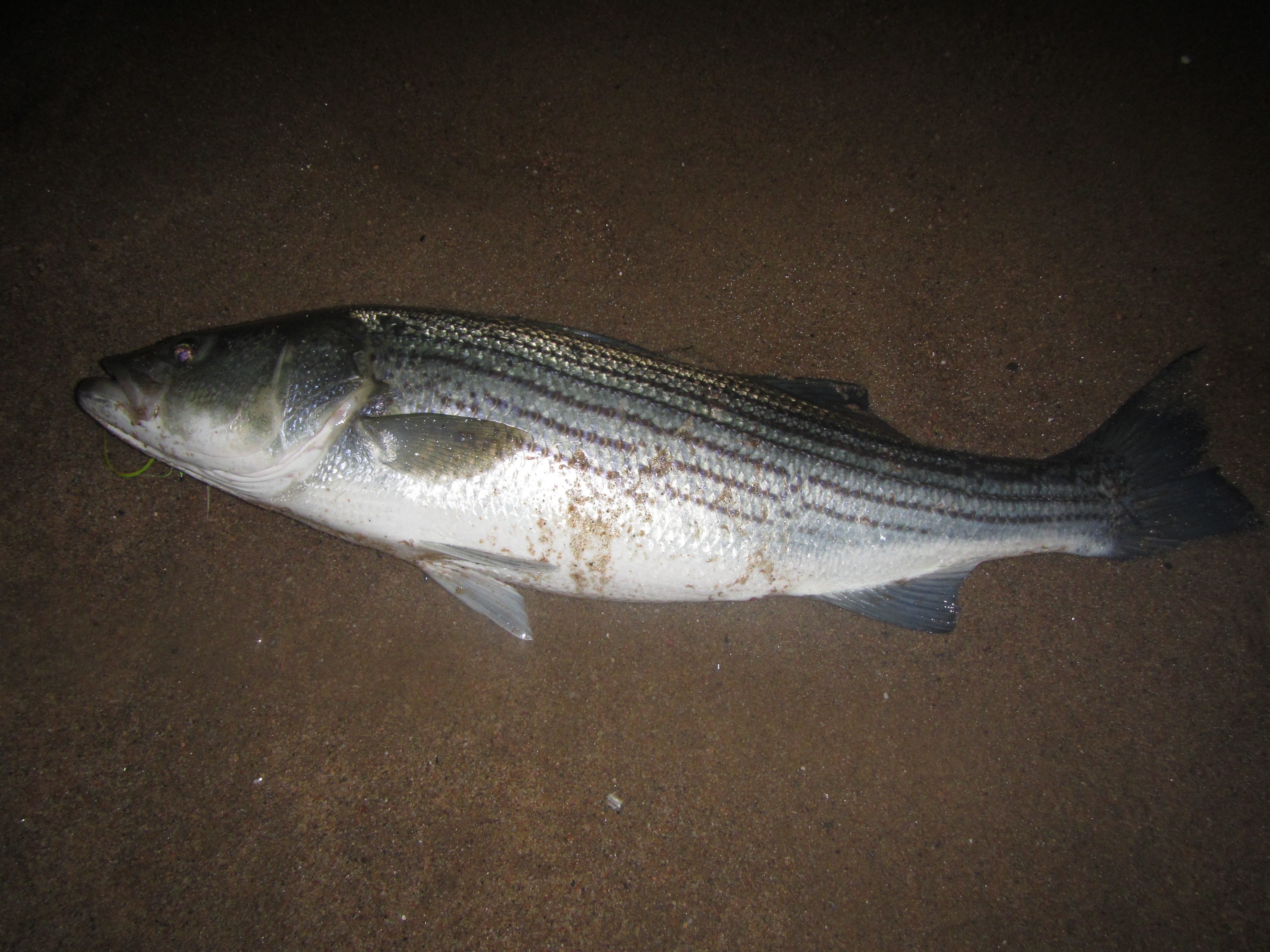
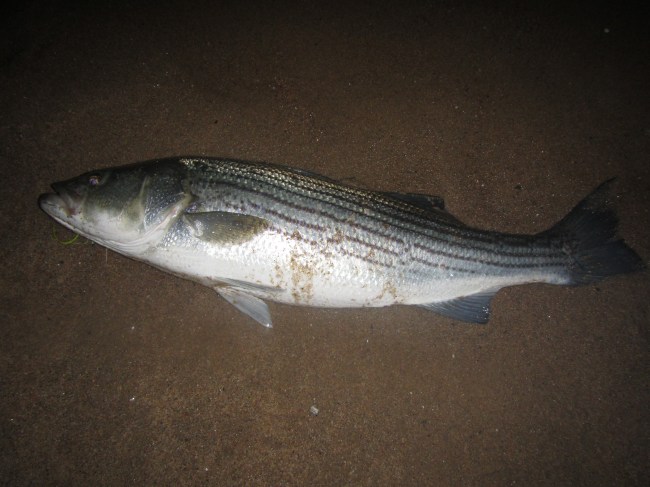
A 15 pound Block striper, classic big shoulders, belly full of bait. I know, fish on sand is not ideal. I risked this one for a photo; all her sisters were lipped and released within safe confines of the ocean.
Image


The white cavern, the last thing a sand eel sees before it disappears into the void.

Image


3am-6:30am: This time of year, the first glimmer of light appears in the east around 3:45am. I fished hard in those first forty-five minutes because I could sense I was running out of steam. I continued to walk along the beach, targeting active feeders. The bass seemed to get more aggressive as the sun’s disc neared the horizon; several times I had fish on as soon as the fly hit the water. By five I was done. I chatted up a a few anglers on the walk out, and presented a fly to a gentleman who proudly told me that today was his 81st birthday. After rinsing down our equipment, we headed into town to wait for Ernie’s to open. Breakfast is going to be glorious.

The pre-dawn crescent moon accompanied by the morning star. If you look closely just to the left of center, you can a see the remnants of a rise ring.

Image


Geez Louise. I gotta be more careful with that belt sander.

Striperthumb

6:30am-8am: Breakfast. Three pancakes for Cam. Pancakes and eggs for dad. Bacon for both. Off to the dock. Delirious from lack of sleep. Or all those stripers.

I can’t remember which.

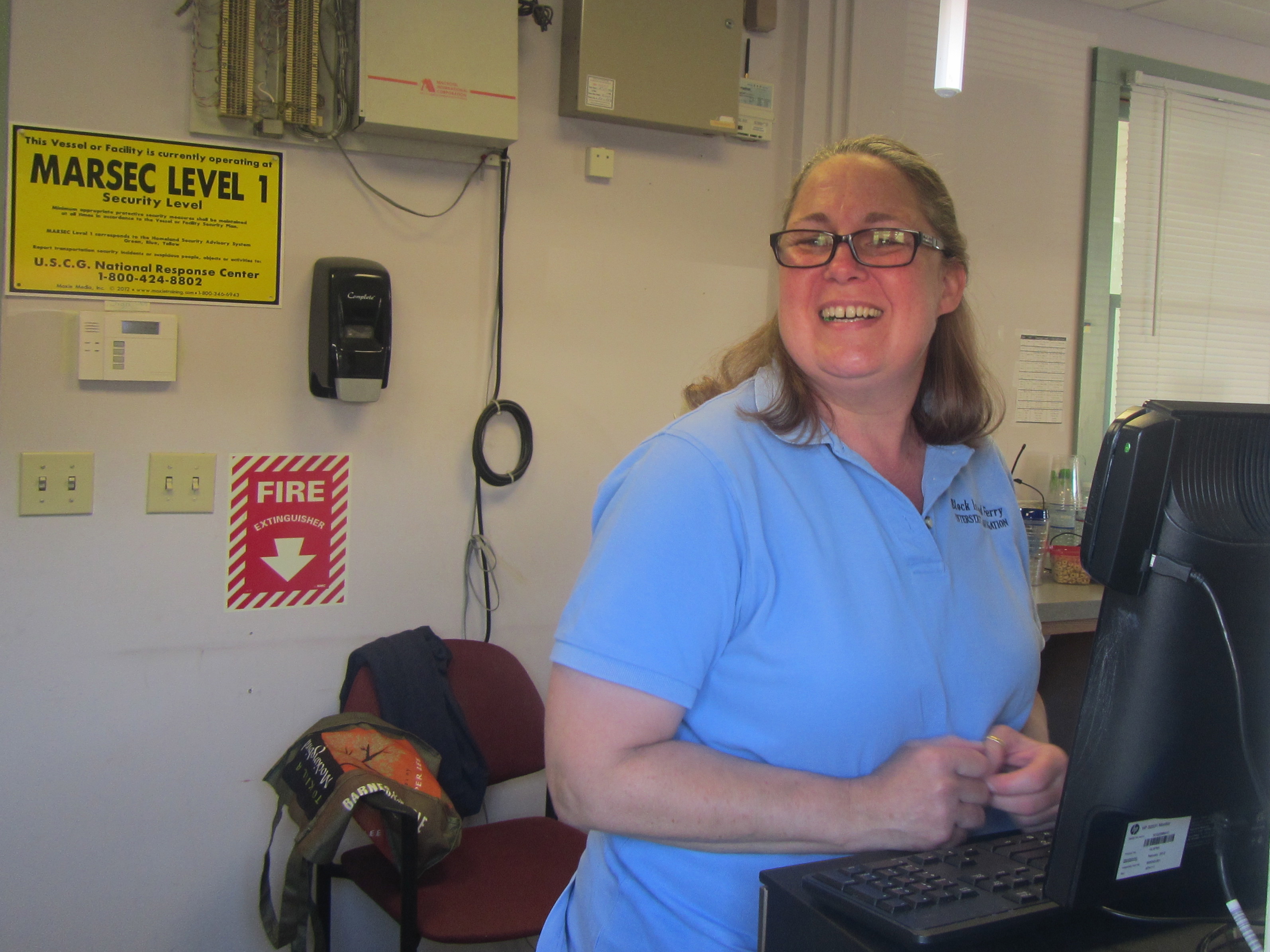
Cindy Loo-Who has been punching my car ticket for decades now. Our meetings are always bittersweet: “Hello, old friend,” combined with the melancholy of leaving my favorite Island.

Image


“A Team of Three Wets” in the current issue of Mid Atlantic Fly Fishing Guide

Calling all wet fly junkies! This article discusses the how and why of fishing a three-fly team of wet flies. It includes a diagram that shows you how to build a three-fly leader. MAFFG is distributed free in fly shops all over the — well, Mid-Atlanctic area. Who knew?

This magazine is an underrated gem.

Image

Happy Father’s Day from currentseams

I hope you had a good one. I certainly did. A little work this morning in the rose garden, then an afternoon watching Number Two son play in a soccer tournament, and finally off to my dad’s house for dinner. Grilled vegetables, a Caesar salad, and some succulent rib eye steaks (rare for me, please) paired with a delicious California cab with a little age on it (Atticus John 2007). After dinner, the traditional Culton men’s cigar (Flor de las Antillas Belicoso for me — outstanding smoke) and a wee drap (18 year old Macallan).

While we were sipping, dad retold the story of how he took me and my friends trout fishing on the Salmon River in the mid 1970s. There were four of us teenagers, and when we got to the river, dad asked us which way we were planning on fishing. We pointed upstream. Dad’s intent was to get some separation from us, and what with all our hormones, adolescent angst, and noise, can you blame him? He headed downstream. Five minutes later, he turned to see us all in a line, closely shadowing him. Can you blame us? We wanted to follow the master angler.

Happy Father’s Day, dad. Thanks for taking me fishing. And thanks for teaching me where trout like to hang out in a river.

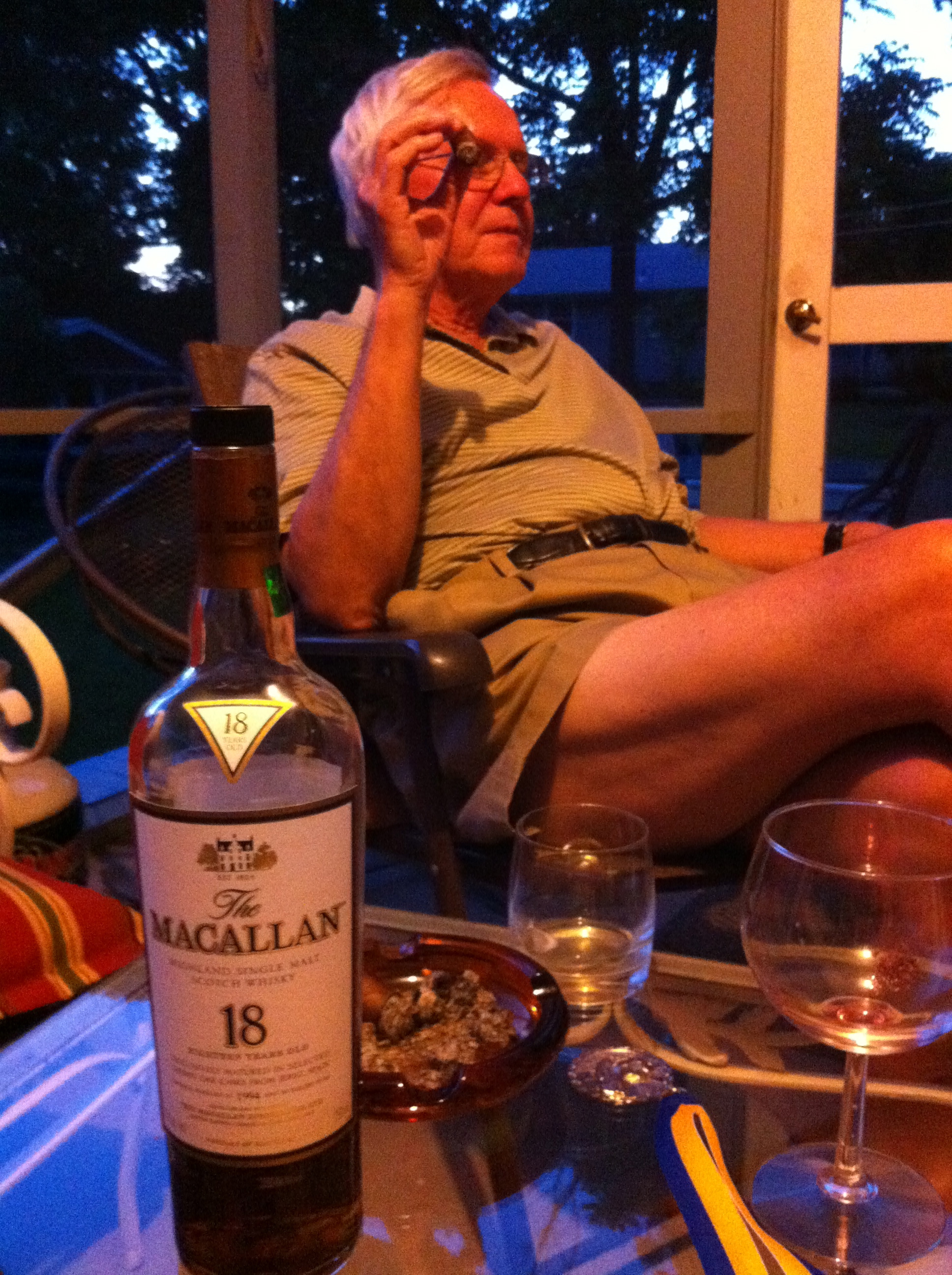
Both of these things are old, but in a good way. He who taught me how to fish, his cigar, and his whisky.Image


Farmington River under attack — again. Save Satan’s Kingdom!

Last year it was the jolly old yo-ho-ho University of Connecticut that wanted to divert millions of gallons of water from the reservoir.

Now, it’s a planned industrial park on the banks of the Farmington in the Satan’s Kingdom area. Here’s what I know: the proposed property borders a 2000-foot stretch of the river in Satan’s Kingdom Gorge. Even though the area holds a Wild and Scenic designation, the required setback is only 100 feet.

Image

How can you help?

1) Go to the New Hartford Zoning Commission meeting at the New Hartford Town Hall on Wednesday, May 28, 7:00pm and tell them we don’t need no steenking industrial park.

2) Like this group on Facebook: https://www.facebook.com/savesatanskingdom

We kicked UConn’s butt last year. We can do the same with this threat. Grassroots activism works!

Sunrise on a misty summer morning in the gorge. Do I really need to see an industrial park peeking through the trees?

Image

A kilo of salmon, please

Last week, I was guiding two clients on the upper TMA of the Farmington River when the bucket brigade swooped in. Not meat farmers — at least not in the harvesting sense — but rather, sowers. Their crop: Atlantic salmon fry. Love them (food for big browns) or hate them (annoying beasts that nip at your fly ad nauseum), Atlantic Salmon have been a part of the Farmington River watershed for years.

 Never-ending ringed walls and two alien beings peering in from above. Soon you’ll be free! Each bucket holds one kilo of fry.

Image


A closer look at the biomass. Will they lead prosperous lives and make it out to the sound? Or will they become so many croquettes for Mr. Lunker Brown?

Image

A few minutes with Ken Abrames (a currentseams exclusive)

The striper grandmaster talks about Tuesday Nights, the rhythms of earth and ocean, and love.

Ken Abrames is one of the most revered names in saltwater fly fishing. He is the creator of the modern flatwing streamer, presentation-style flies that can imitate everything from clamworms to menhaden. His books Striper Moon and A Perfect Fish belong on the shelves of anyone who is an aficionado of traditional New England striped bass fly tying and fishing methods. Besides being a world-class angler, Ken is also a rod designer, author, poet, and artist.

For me, though, the coolest thing about Ken isn’t that he’s supremely talented on so many levels, or his mystical insights into the natural order. It’s that you can go to Rhode Island on Tuesday nights and meet him. Talk to him. And fish. There’s no club, no membership dues, no fee, no appointment. You just check out the forum on his website to see where the group is meeting, show up and have fun. Tuesday Nights in 2014 start next week, April 22, in Matunuck, on the beach to the west of Carpenter’s Bar.

When Ken talks, you tend to listen. Tuesday Night, Quonny Breachway, September 2012.

Image

Currentseams: How long have you been doing Tuesday Nights?

Ken: Since 1984.


Currentseams: What made you decide to start them?

Ken: Around that time, I met a fellow named Armand Courchaine, and we started to fish together. We got the idea of starting Rhody Flyrodders back up again. Bang! The club started to grow – in less than a year we had over 100 members. One Saturday, I put together a fishing gathering in Newport. A bunch of people came, but I wasn’t satisfied. I began to ponder and imagine, what night of the week is most available to most people? I came up with Tuesday, because it’s a good, neutral night.


Currentseams: What was the fishing like in those days?

Ken: From the time I was a boy, to around 1984, shore fishing in Rhode Island had really fallen into a sad state. People didn’t know the places anymore. Very few people were walking the beaches. There were a lot of famous spots in Rhode Island that people didn’t know how to get to. But I knew the places, so Tuesday Night was a way to show people where to fish, and how to fish them, so they would have the wherewithal to go out on their own. Rights-of-ways had fallen into disrepair, and some of them had been encroached upon by landowners. So I had people going around and cleaning up these right-of-ways. And they weren’t just fishermen. All kinds of folks came. Everything we did was like seed to enhance access and fishing. People warmed right up to it.


Currentseams: People who don’t know about Tuesday Nights often ask, “Can anyone come?” And of course, the answer is yes.

Ken: Yeah, there is no membership, and there is no hierarchy.


Currentseams: And people want to know if it costs anything, and the answer is no.

Ken: No, of course not. Fact is, you probably end up going home with more than you came with.


Currentseams: How do you decide where to go?

Ken: I close my eyes…and feel. I don’t use any kind of science. Always go to inner silence when you need an answer. Then you’ll know.


Currentseams: What are your thoughts on the weather we’ve had this winter? It’s been pretty cold…

Ken: When I was a boy I used to always go ice skating on Thanksgiving. So tell me about how cold it is. Things have changed. I see different birds up here now that I never used to see.


Currentseams: Do you think things will be late this year?

Ken: When was the moon in relation to the equinox?


Currentseams: New moon is Sunday, March 30th.

Ken: It’s kind of like the first flower of spring. The first flower of spring comes before the second flower. That’s the order. So the first thing that shows up will tell you what the order of the year will be.


Currentseams: I keep track of things in my garden…

Ken: Yes, that’s right, that’s exactly what you were supposed to say. Is the skunk cabbage out yet?


Currentseams: Not here. I looked at my records, and in 2011 I had crocuses blooming on March 5. I don’t have any flowers yet (March 28).

Ken: So, there’s your answer. Everything happens in order. The ocean is the same as the land. So, you look for the first thing that shows up. And that will tell you what the second thing is going to be. You have to feel. It’s like dancing with a beautiful woman. You can’t do it out of the pages of a book. You have to just hold her, and move with the music. It’s the same thing with this world. It’s alive, and it has a pulse, and a rhythm, and an order. But it doesn’t tell you what those are ahead of time, because reason has no power over the earth. None.


Currentseams: So now, in 2014, what would you say Tuesday Night is all about?

Ken: It’s all about love. It’s that simple.


Currentseams: (laughs)

Ken: I love the earth, I love fishing, I love the people who come fishing. And that’s what they get when they come.

The Un-Dead of Winter

One from the archives. I wrote this several years ago to remind myself that Pete Seeger was right. Not to mention Paul.

The Un-Dead of Winter

By Steve Culton

© 2009. All rights reserved.

I was heading out of the office on a freezing January afternoon when the receptionist, noticing how I was dressed, asked me if I was going fishing. I told her yes, and she responded with an incredulous, “In the dead of winter?!?”

I smiled in affirmation, but on the way to the stream, her words got me thinking about the bum rap winter takes when it comes to natural rhythms  — and angling — especially if you plan on forsaking the homey comfort of the ice fishing hut in favor of wading. The reality is, fall is when things die. Winter is when life begins. And it truly is a wonderland, alive and well and overflowing with vitality.

Step into your backyard or some nearby woods. The trees and bushes are already covered with buds, nature’s amazing automated leaf and flower systems, full of life (in the dead of winter!) and waiting for the warmth of spring to pop. As I write this, the mercury is well below freezing, yet my forsythia is as green as a springtime lawn, stems so bud-laden I can only imagine the yellow riot that awaits me in April. Mountain laurel and rhododendrons proudly display the evergreen banner, and from my window I can see a cardinal and his mate searching for seeds in the compacted snow.

An exquisitely parr-marked Farmington River brown. Even on a cold January afternoon, she was more than happy to chase a swung fly.

Image

Even on the small stream I was fishing the day our receptionist questioned my sanity, there was life in the air and beneath the water. Though the high never made it past 30 degrees, size 14 charcoal grey midges flitted about. Wild trout were holding low on the river bottom, ready to gobble any food that came tumbling along. It started to snow, and as my cigar smoke drifted slowly into the windless air, creating a tapestry with the chunky flakes, I felt as alive and happy as I would be sipping lemonade a warm July afternoon.

A few weeks later, I was fishing a salt estuary in Rhode Island. The temperature had plummeted into the low twenties, and a bitter west wind tormented the exposed skin on my face. Yet, there were snails and grass shrimp and, as this was the new moon, perhaps even clam worms doing what they always do: living. (The stripers, sadly, were living somewhere out of casting range.)

What mysteries remain uncovered along the frozen banks of our rivers and shores? You don’t know if you don’t go.

Image

I used to view winter as a time to store the rods and gear and prepare for the reawakening rituals of spring. No longer. I’m out on our streams and rivers and in the salt, almost always gloriously alone, left to my thoughts, the wonders both seen and unseen, and the bounty of life that reminds me spring is on the way.