‘Tis the Season…for Steelhead. (And other musings on rigging for the Erie tribs)

I spent a few hours the last few days restocking my steelhead boxes, mostly egg patterns. But I did whip up a batch of White Death Zonkers as well. (What an appropriate name on Halloween!) I also tied a few new patterns, because I like to occasionally experiment with flies and steelhead and conditions. It’s a never-ending project, and while I’ve made huge strides in the last five years toward mastering that fish, steelhead remain wonderfully enigmatic and fickle and subject to the whims and caprices of nature.

First up this year will be the Erie tribs. On that fishery, I use a different leader system than I use in Ontario tribs. I learned it from steelhead guide extraordinaire Bob Packey. The butt of the leader is a 9-foot stepped down taper: 4′ of 20lb., 3′ of 17lb., then 2′ of 12lb., terminating in a power swivel. I use clear Stren nylon for the butt. From there, it’s tippet, typically 6lb. fluorocarbon, 12″-18″ to the first fly (you can fish two flies in PA and OH), then about 16″ of tippet tied from the bend of the top fly, terminating in the point fly. Steelhead fly fishing is one of the few instances where I’ll use fluorocarbon.

If you don’t have this book, you should.

Your shot goes on the butt section just above the power swivel. In normal-to-higher flows, the top fly is typically a brass bead head. In low-to-trickle flows, I may not use any weight, and both flies will be unweighted and sparse. I like wingless shot. I struggle with seeing white and certain shades of orange, so my indicator must be bright or fluorescent yellow. Missed takes are missed fish! If I can, I like to use my own yarn indicators. In base flows, conditions dictate that I use one of those foam tab indicators.

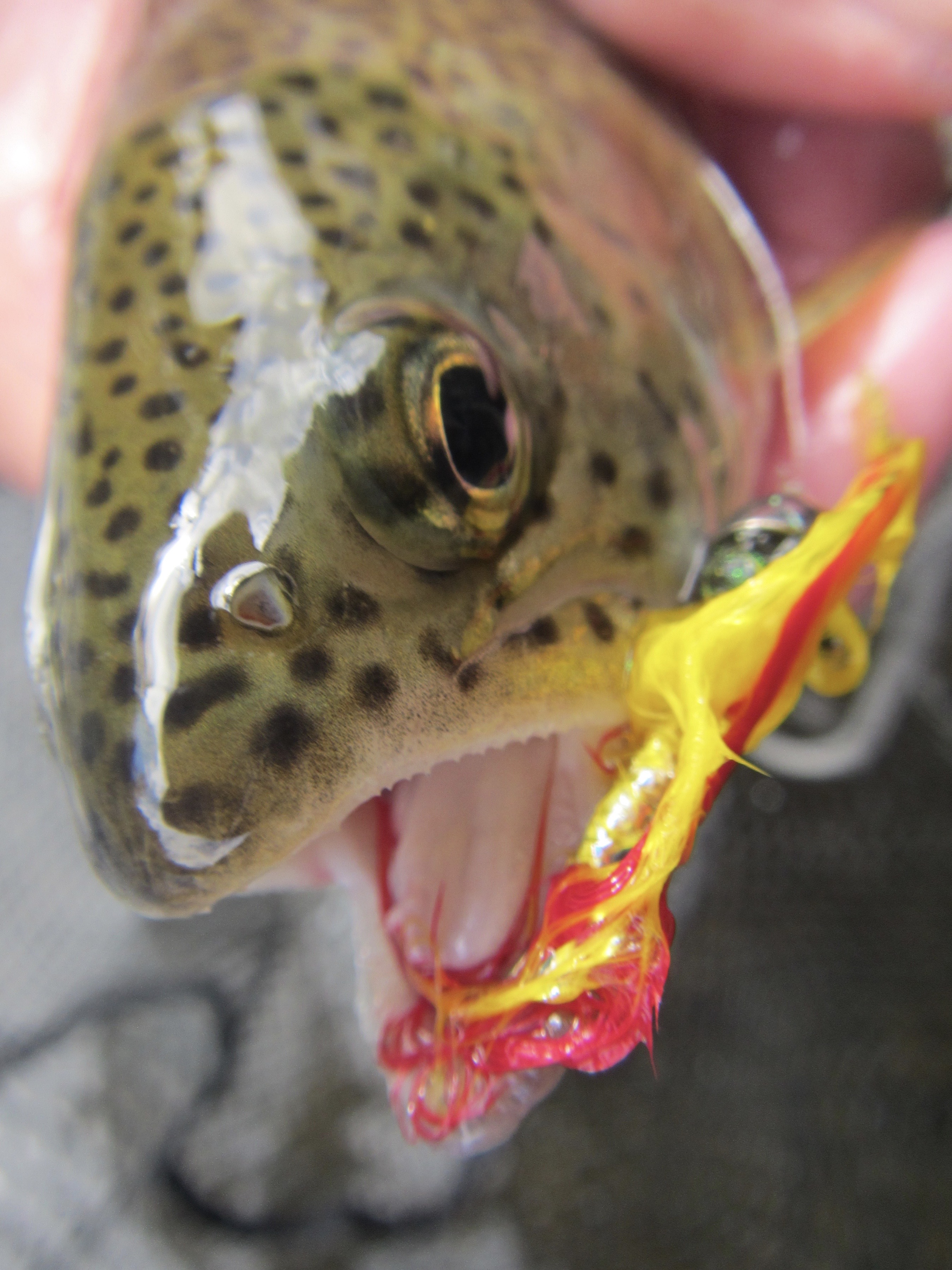
The vast majority of hookups come on the point fly, so that’s typically my high-confidence pattern of the moment. Blood Dot Eggs in egg with an apricot supreme dot are a favorite, along with White Death Zonkers if the flows are good. You can see more on “Building a more Erie tribs-Appropriate Fly Box.”

Steelhead fly fishing is one of those endeavors where you can do everything right and still have things go wrong. However, the more things you do right, the more you tend to have success. Confidence catches fish, and having a proven leader system takes rigging guesswork out of the equation. Fish on!

Just over two weeks away: International Fly Tying Symposium, Nov 15 &16

If you want to be a rock star, you can’t just hang out with Aerosmith for the weekend. But if you tie flies, and want to get better, here’s your chance to do the equivalent with some of the best tiers in the world. You know a lot of the names: Tim Cammisa; Barry Ord Clarke; Tim Flagler; Cheech Pierce; Jeff Rowley; Son Tao. Those are just six of the dozens of work-class tiers who will be there. There are tying demos, seminars, and tying classes. But in its best, purest form, IFTS lets you walk the show floor and meet and greet and watch and learn and talk with all of these people.

If you want to become a better tier — or just learn a few pro tips — go hang out with my buddies Lou DiGena and Bart Lombardo. They’re two of the nicest, most skilled tyers in the world, and they’ll both be at the IFTS this year.

I’ll be on the show floor tying — please come say hello — and I’m honored to be doing a Seminar and making a Featured Tier appearance. The seminar is Saturday, Nov 15 at 1:45pm — Tying and Fishing Wet Flies. It’s free with your show admission. Sunday Nov 16 at 10:15am, I’m Featured Tier presenting Farmington River Favorites. That’s also part of your admission. I don’t mind telling you that I’ll be giving away some flies to a few random attendees over the weekend, so there’s some more incentive for you to attend.

If you’re not fishing LaFontaine’s Diving Caddis, you’re missing the chance to rack up impressive numbers. I’ll show you how to tie this and other high-confidence patterns at this year’s IFTS!

And did I mention the vendors? Every year I come away from this show with some hard-to-find material (s). Bring a shopping list! Naturally, if you’re there, please come say hello. It’s always gratifying to place faces to names.

Housy Streamer Frustration

The Housatonic spiked at about 500cfs yesterday and was running with a light tea stain. Perfect streamer conditions, wouldn’t you say? I would, so I headed out with surfcaster extraordinaire Toby Lapinski, both of us dedicated to the streamer cause.

We started about 12:30pm, in the northern part of the TMA. I was fishing a Black Ghost soft-hackled streamer, and right away I was into a fish, the sharp tug of the strike and head shake sending an electric current of excitement through my body. The joy was short lived. Moments later, whatever was on came off, and this was to be the pattern fro the afternoon. At this first pool, we had ten (seemingly) quality hits between us, with zero conversions. I can’t remember that ever happening while streamer fishing.

Proof that I do, in fact, know what the hell I’m doing. Same streamer template, hook size, and river, from almost the exact same date 11 years ago.

I tried to figure it out. Stocked fish that hadn’t quite figured out how to eat a fleeing baitfish? Maybe, but they’ve been in the water for nearly a month. Streamer too large? I’ve been catching Housy trout for decades on a size 6 streamer hook. Dull hook point? Nope. I was all over that. Bad luck? Maybe, but we had well over a dozen hits each with no conversions.

We fished four marks and confirmed trout in three of them, so we never felt like we were wasting our time. I know where these fish live. And, as a famous cyborg once said, “I’ll be back.”

Menhaden action alert, Farmington River book, IFTS, and other fishy goings on

The first thing I’d like you to do after reading this opening paragraph is head over the ASGA website and sign their official letter calling for major reductions to the menhaden harvest. It will take you less than five minutes, and it’s an excellent use of your time. Long story short: Atlantic menhaden are a critical bait and ecosystem fish; they’ve been grossly over harvested; that needs to stop now. Please do this, even if you don’t fish for striped bass. We need all the voices we can get.

Galley copy for the Fly Fishing Guide to the Farmington River has been reviewed by yours truly and sent back to the editors. This was simply my review and comments on their edits. I was pleased to discover that the edits weren’t substantial, and book flowed from one subject to another like…a river? There. I’ve made my unfunny joke of the day. Maps were also reviewed, and I really like the artwork. If you don’t know the river, you’ll find them highly useful. Next steps: the whole shebang gets put into page layout, then reviewed. That should happen in November. We’re getting closer!

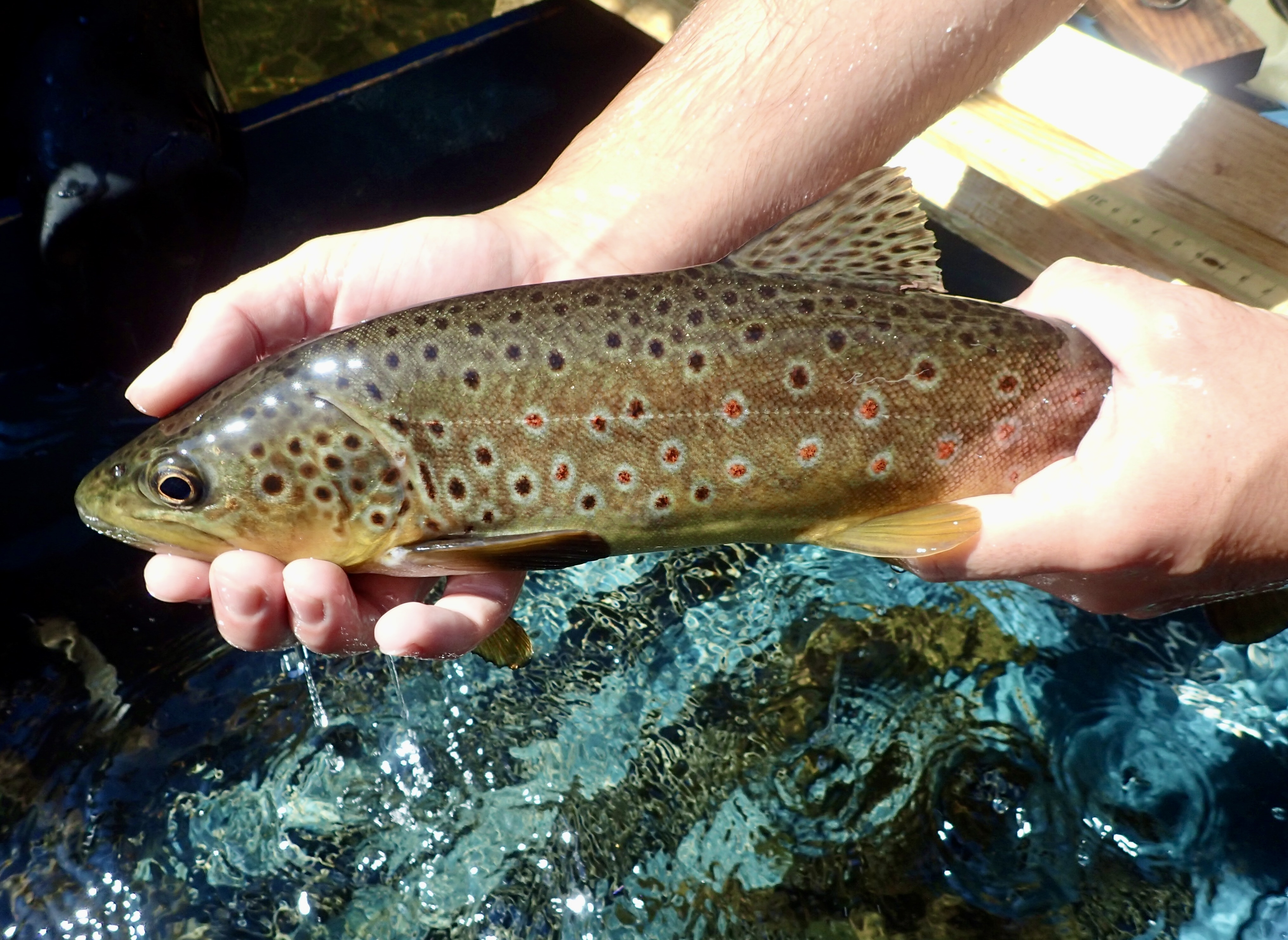
A successful spawn means more of these. This fish was sampled by DEEP last September during broodstock collection for the Survivor Strain program. If you see a redd and canoodling trout, be like The Beatles and let it be.

Speaking of the Farmington river, the spawn has begun. If you’re fishing, please be on the lookout for redds! They are generally lighter, oval-shaped patches surrounded by dark substrate. Keep a safe distance. And of course, never target spawning fish. That’s just bad form.

A reminder that the International Fly Tying Symposium is November 15-16, now just over two weeks away. I’m doing a wet fly seminar on Saturday and a Farmington River tying demo on Sunday. More on those coming soon.

Let’s give small stream wild fish a break

Right now is a good time to not go fishing for wild trout on small streams.

As you already know, most of the state is abnormally dry, and the northwest hills are officially in drought. Don’t let the recent rainfall kid you — our small streams are running at a CFS fraction of what they should be.

While nature finds a way, the stresses of summer heat and trickle flows no doubt took a toll. That alone would justify giving small streams a break. But right now is pre-spawn and spawn time. I ventured out yesterday and was stunned by the severity of the low water. The spawn is a stressful time for fish, exacerbated by the dire conditions of late summer. With so much of the stream bed exposed, wild fish will be challenged to find spawning gravel. I didn’t see any redds yesterday, and it may be that the fish are so stressed, and have so few gravel options, that on many small streams we won’t see a successful spawn this fall.

Learn how to identify a redd: typically oval in shape, small gravel, lighter in color than surrounding bottom. There may or may not be fish nearby. It goes without saying, never target fish on a redd!

You don’t have to be a fisheries biologist to reckon that if that is in fact the case, it does not bode well for future wild fish populations.

So here’s how you can help: for the time being, don’t fish small streams. Give the trout a break. Once we get back to normal flows, enjoy — but please be on the lookout for redds and spawning gravel (dime and pea-sized substrate). Most of all, stay out of the stream bed — no wading! — until late March. It’s good for fish. And good for everyone who loves fishing small streams.

Cover reveal for “Fly Fishing Guide to the Farmington River”!!!

Is this exciting, or what?!? At least, I’m excited. I hope it meets with your approval, if not favor. I’m continuing to plug away at the copy edit review, so this will likely be my only currentseams post this week. I hope some of you are getting out on the water. And we need rain — let’s see those rain dances!