IFTS 2025 redux, Regal Pro Staff, page proofs for the book are in!

Much to talk about today. I’m currently recovering from last weekend’s International Fly Tying Symposium. That is, I’ve unpacked everything, gotten back to my regular sleep and eating (and coffee!) schedule, and here I am, clacking away at my keyboard on currentseams.com.

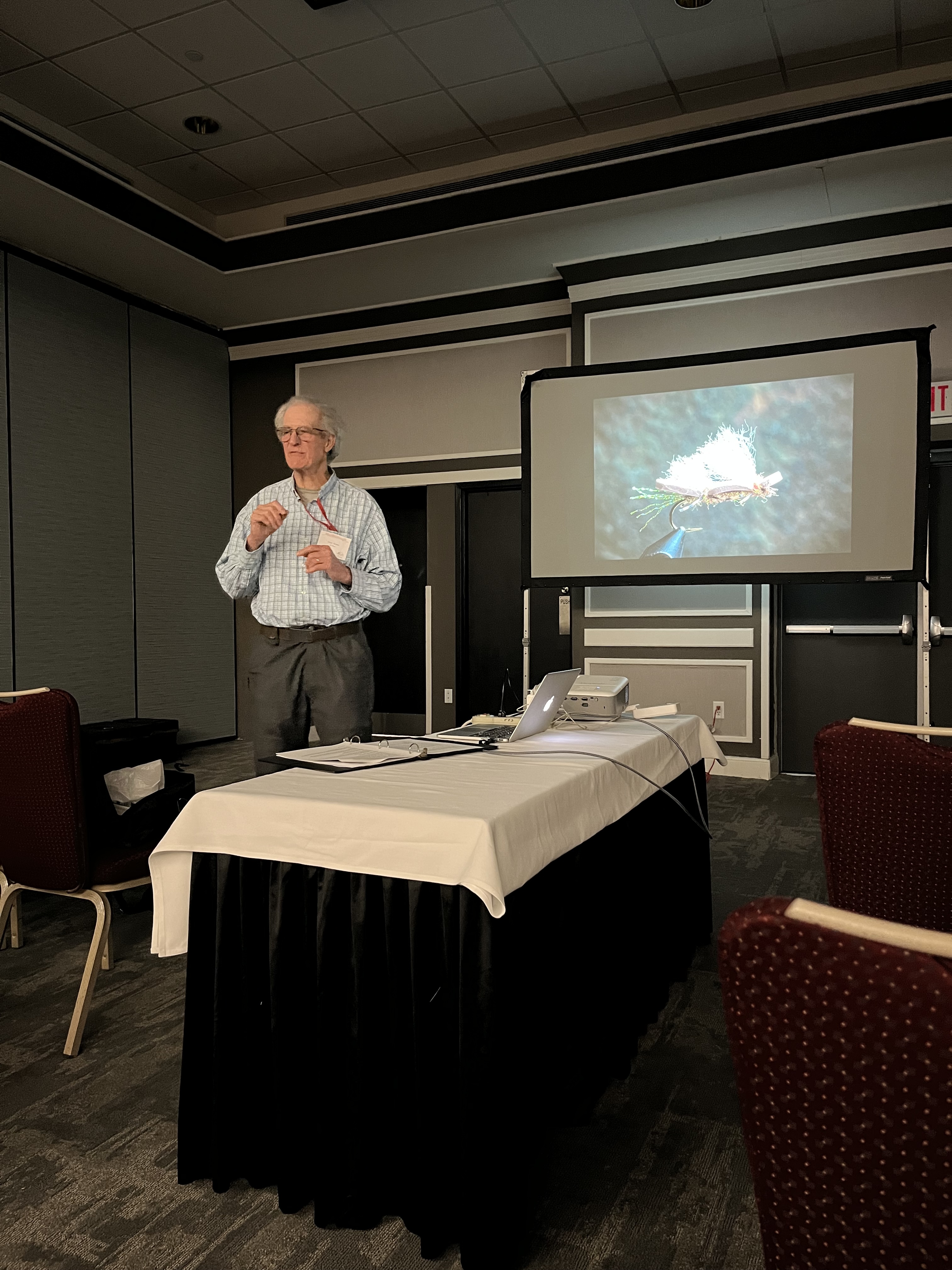
While this is the largest fly tying show in the world, there’s a sense of intimacy about IFTS that resonates with me. (If Goldilocks tied flies, she’d be all over this show.) I behaved myself wallet-wise, coming away only with a pack of size 14 Ahrex North Country Spider hooks (LE810). My Saturday seminar on Tying and Fishing Wet Flies was very well-attended, and I want to thank everyone for showing up and for asking so many thoughtful questions. I couldn’t have asked for a better tying bench mate than Peter Simonson, who specializes in classic Carrie Stevens-style streamers. I spent the rest of the day tying wet flies and soft hackles and socializing and answering questions about the Farmington River book.

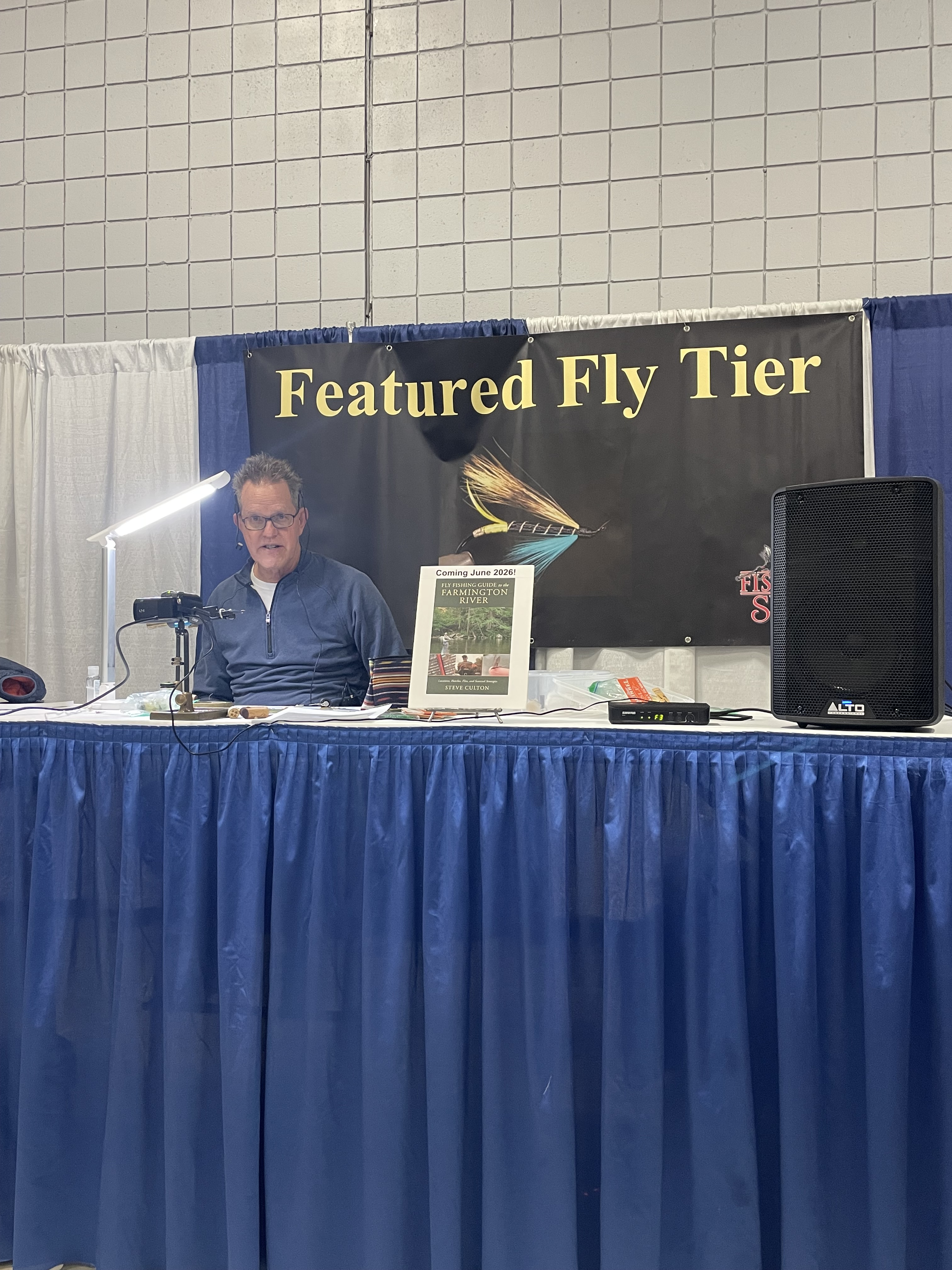
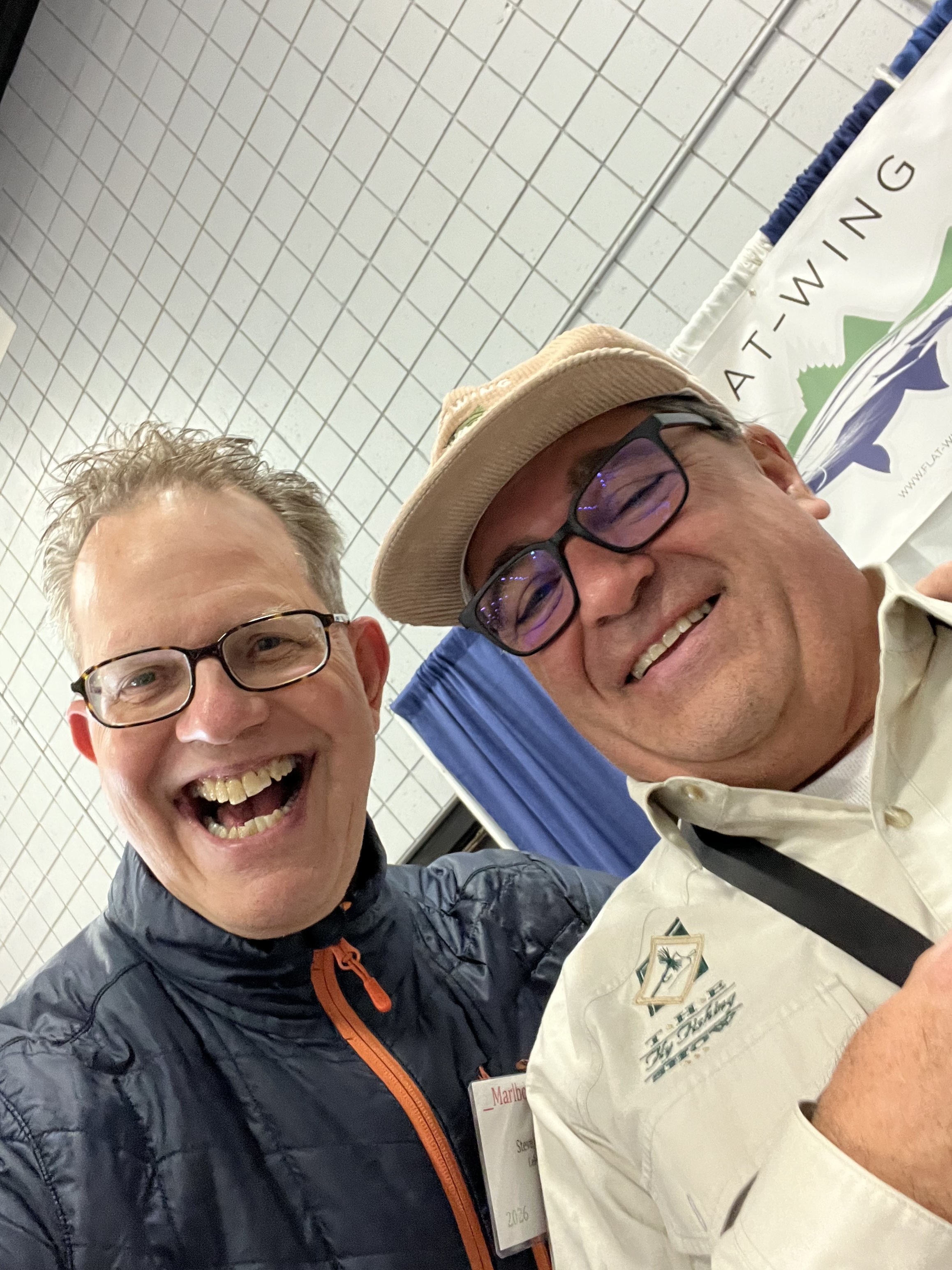
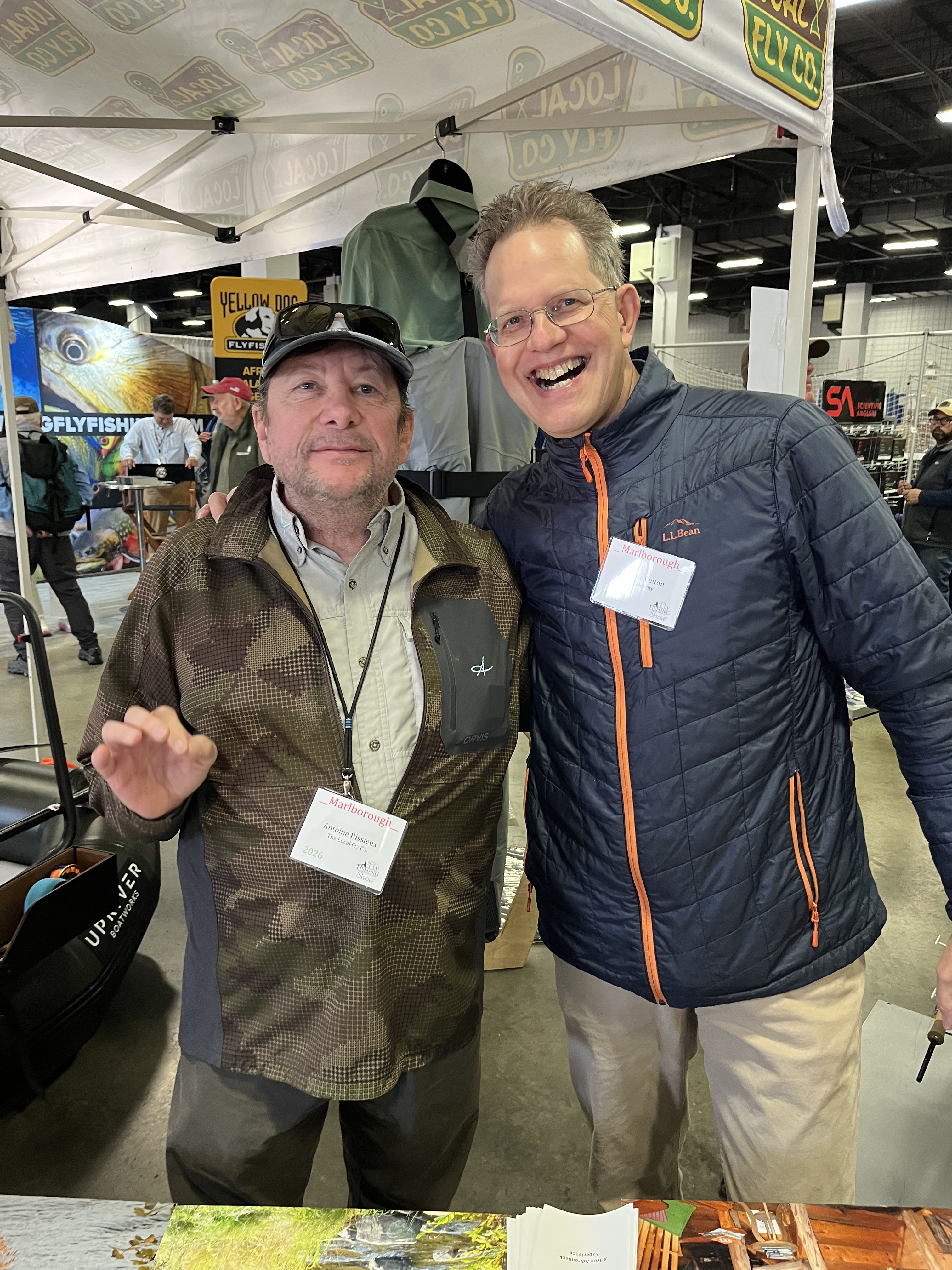
The view from my bench Saturday morning. What a treat to reconnect with so many old and newer friends, and to put faces to names of currentseams subscribers.

After a delicious banquet Saturday evening — complete with a wonderful fly tying swag bag from show sponsor J.Stockard — I was featured fly tier Sunday morning. The subject was Farmington River Favorites, and we managed to get through each of the four food groups (nymph, wet, dry, streamer). Again, many thanks to everyone who attended. I truly appreciate your support.

But the highlight of the show for me was formally becoming a member of the Regal Pro Staff. I’ve been tying on a custom Regal Revolution for years, so this was particularly gratifying. Those of you who know me know that I don’t endorse anything on these pages that I don’t use and love, and I’ll be talking more about my Regal vise in future posts.

And now, me too! There are so many incredibly talented tiers in this group, and I’m honored to be a part of the team.

Finally, I’m back on the book for a bit: page proofs are in! These are basically an e-version of the layout of the book, complete with photos and other visual reference. I go through it, make minor corrections as needed, send it back to the publisher, and the whole shebang goes to press early next year. Exciting times! People stopping by the table showed a lot of interest in the book, and even if you don’t fish the Farmington a lot, I’m comfortable telling you that much of it — fly patterns, how to, hatches — is applicable to southern New England trout streams.

And now, I’m off to read.

Farmington last week and now, back to the book

I did two lessons last week on the Farmington. On Tuesday, I took Joe on a wet fly excursion. We stuck to the lower river; at 140cfs, it had the most water, and the weather was cool enough that the water temp never got higher than 66 (3pm). The fishing was predictably slow; we found success by moving around (we fished three different marks) and targeting the deepest, fastest-moving water we could get into. Joe was a strong wader, and sometimes that’s the difference between fishing and catching. Trout love to hang out in places that are difficult for land animals like humans to navigate. Joe stuck four and we put three in the hoop. In difficult low-water conditions, that was pretty darned good.

Joe having at it. As you can see, the clarity of the water was excellent, and when the flows are low, that usually works in favor of the fish. But Joe kept at it, was enthusiastic, and figured out where he needed to put his flies to catch fish. Great job, Joe!

Friday was a different story. We had rain Thursday night, which had me all fired up because it would mean higher flows and a little color in the water. While those conditions manifested, the fishing stunk out loud, which depressed me no end. I guided Dan and Sean, and we spent the bulk of our time nymphing. We stuck to water just below the PTMA; our reward was not another angler in sight. Although we bounced around — we fished four different marks — we could only manage two touches. Bah-phooey on those trout. The good news was that both Dan and Sean showed tremendous improvement over the course of four hours. When you actually see clients getting it, and making better casts, presentations, and mends, it’s very gratifying. Both deserved better than what the river gave them, but they’ll hit right in the future and reap the rewards of their lesson.

~

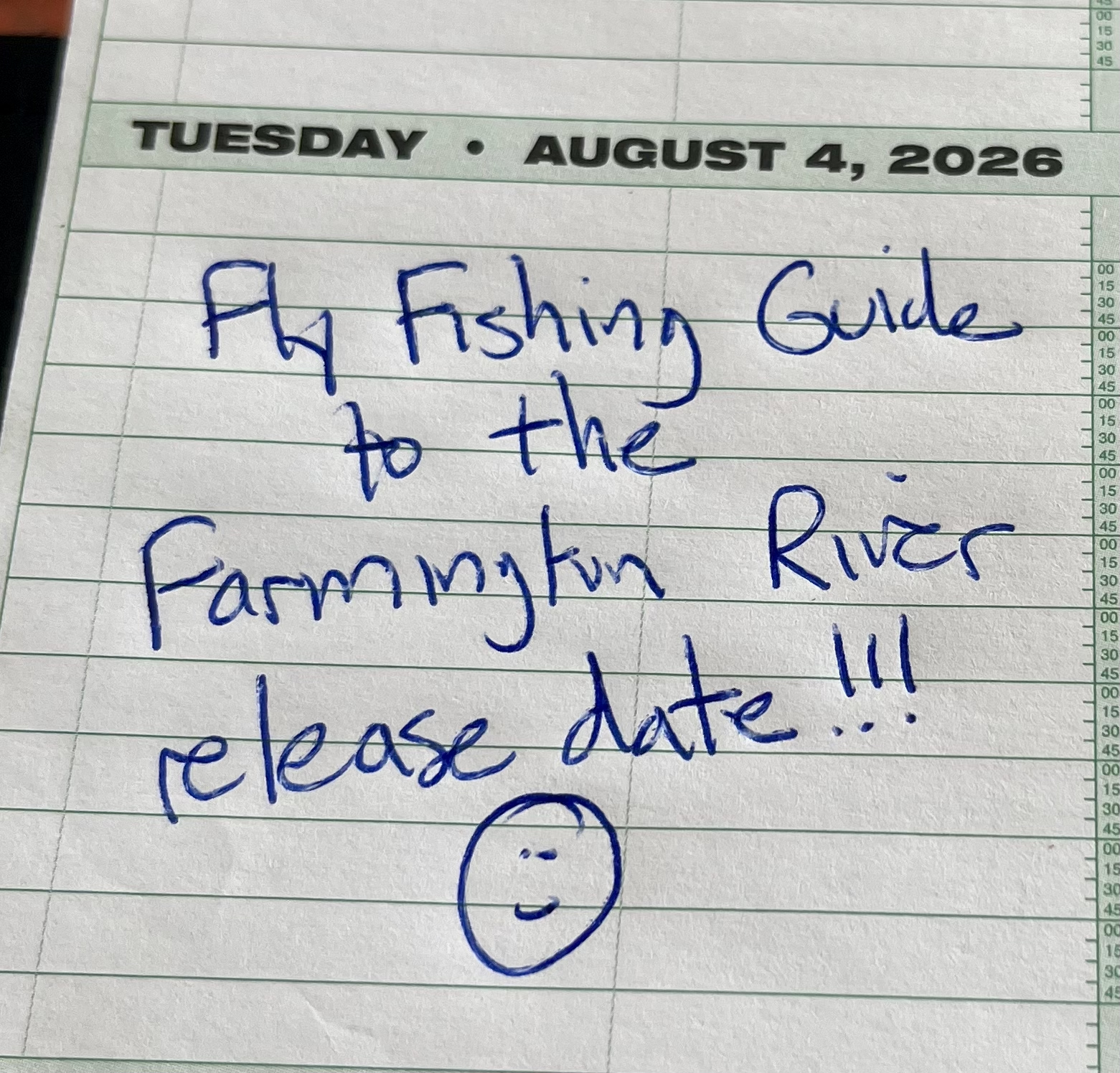
I’m back on the book, so this will be my only currentseams post this week. The publisher has sent me the galley copy, which is all of their edits in a document, paged format. My job is to read and review and comment. That’s over 300 pages of reading, so I need to hop to it. I’ve only made it through 20 pages, but it’s a happy feeling when you still like what you’ve written so many months ago, and the edits are generally light. AFAIK, The Fly Fishing Guide to the Farmington River is still on track for a June 1 2026 release. Natch’ , I’ll keep you updated with any news as it comes in.

Meanwhile, please do your best rain dance…

The importance of keeping a log

Although I’ve been fishing for over five decades, I didn’t start keeping a fishing log until the summer of 2004. At this point in my life, I was seriously devoted to fly fishing. Being an autodidact, I reckoned that I’d learn more, quicker, and retain more if I could journal and reference my outings. I wasn’t wrong.

Since then, I have logged every fishing trip and every lesson I’ve given. I’ve filled six 192-page books with all kinds of data: place, time, date, water and air conditions, and then a journal-style description of the outing: what worked, what didn’t, what I think I could have done better, etc. What were the hatches/bait, and how strong were they? How were other people doing? What did I do well?

My O.G. log entry about a Farmington River outing with old pal Paul Kingsford. I didn’t even know some of the proper names of the pools; that’s Hawes, aka Bikini Rock, that I called “the big rock boulders/cliffs.” I haven’t changed the format all that much in the last 20+ years.

About 10 years ago, when life seemed to get exponentially busier, I got into a good/bad habit: voice recording my outings, then transcribing them into the journal. It was good because I didn’t have to write it all down immediately; the recording was made minutes after getting off the water, so everything was fresh in my memory. Later, during transcription, I might remember additional details. The bad habit part began when I would get lazy and not fill the pages with reports for weeks. I beg to report that my sloth has gotten so profound that I am now two years — you read that right — behind on my transcriptions. I’ll be getting to that shortly after I post this.

Some of you may wonder why, with today’s e-tech, I even bother handwriting it. Fair point. But I’m an analog guy at heart, and there’s something about my own script that adds humanity to what would otherwise be a cold, antiseptic printed document. Besides, I like my leather-bound hardcover books.

These books are more than a nostalgic preservation of memories. They’re a detailed roadmap to success. I can watch my progression as a fly fisher. I can observe how my best practices evolve. Not everyone’s a writer, but my journals were an invaluable resource when I was writing my Farmington River book. And these journals serve as a bittersweet reminder of what we’ve lost: the epic blitzes on Block Island, the prodigious power of the W/S Caddis hatch, the 50 smallmouth nights on the Housatonic. I still have it all at my fingertips.

I like to say during a lesson or a presentation that I’m not right. But I’ll stand by this statement: if you want to become a better angler — and catch more fish — you should be keeping a log.

The Last Steelhead Blast from 2024

For the last three years, I’ve driven out to Ohio in December to pick up Number Two Son Cam from school for winter break. Oh! That’s right. There are steelhead creeks out that way. So let’s fish a couple days before we make the trek home to Connecticut.

It was somewhat miraculous that we even got to fish this year. After months of relentless drought, Steelhead Alley got bombed by lake effect snow in mid November. Then, it rained and the snow melted. Creeks were impossibly up and the color of chocolate milk. By the second weekend in December, there was a short window that we lucked into.

The price of admission was bitter cold and slush-filled, shelf ice-choked creeks. These are the times that try men’s souls (or at least those men who steelhead). Still, I’ll take time on the water in adverse conditions over not going at all — especially since Cam’s a senior.

Saturday morning was the third coldest temperature I’ve ever fished in. We slept in and went to a diner for a proper, civilized breakfast and coffee. We hiked through snow down to the river at 10am. Fishing was difficult due to slush conditions; you can’t catch steelhead if your fly isn’t getting down to them. Even though there had been some recent higher flows, the numbers weren’t up to the level we’re used to. What was there was in very cold temperature mode; getting them to eat was a matter of persistence, precision, and plain old fine fortune.
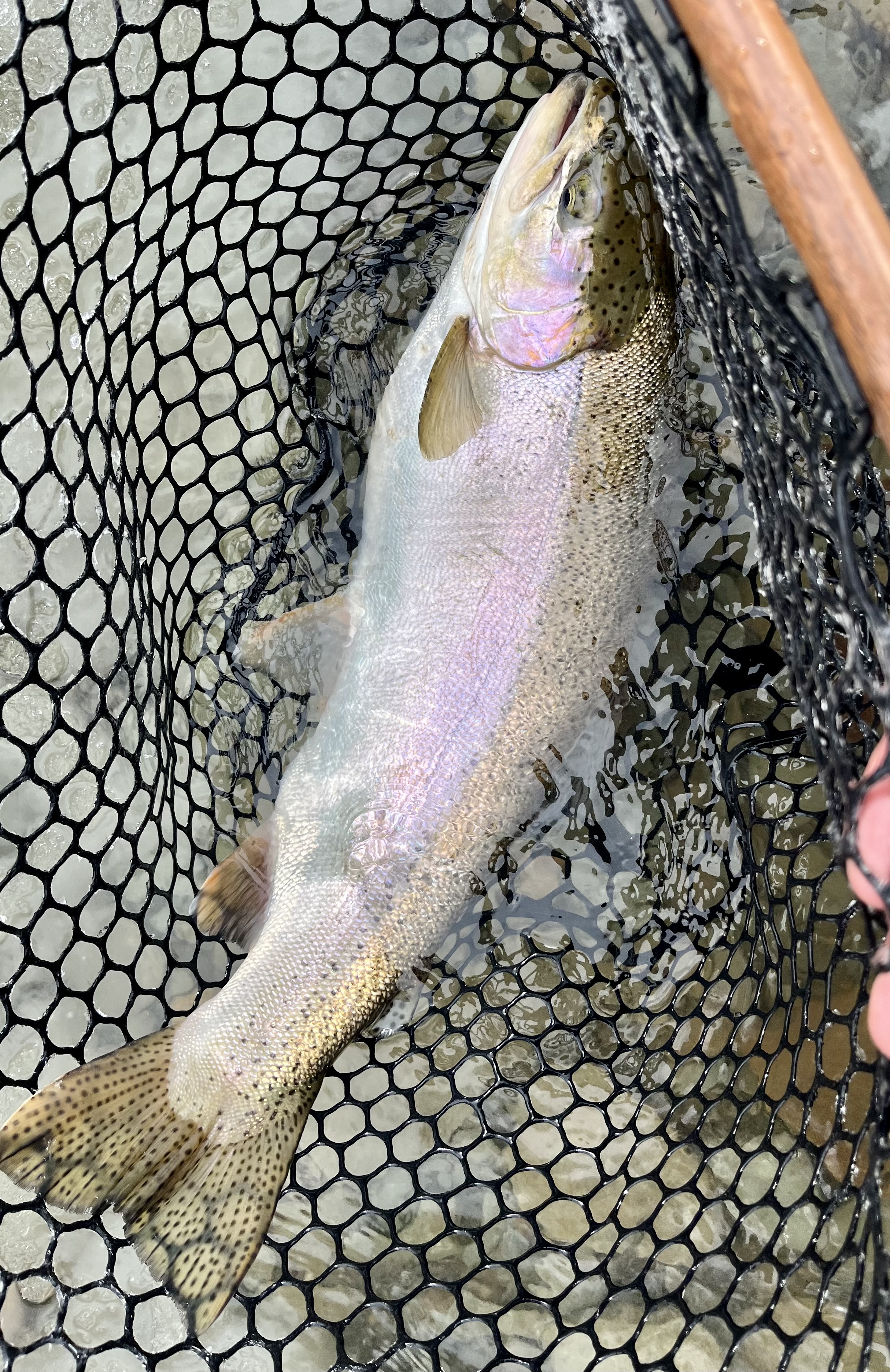
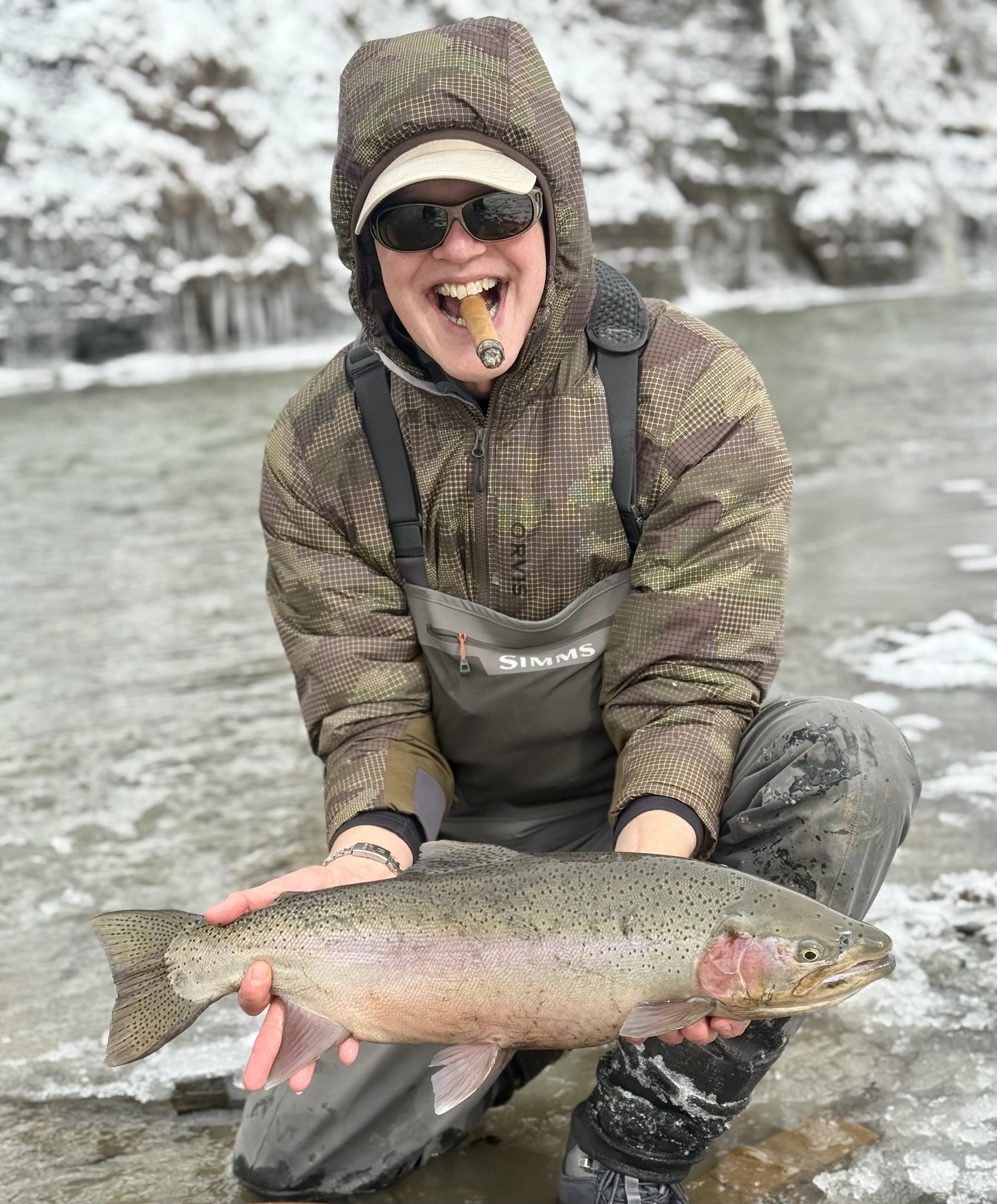
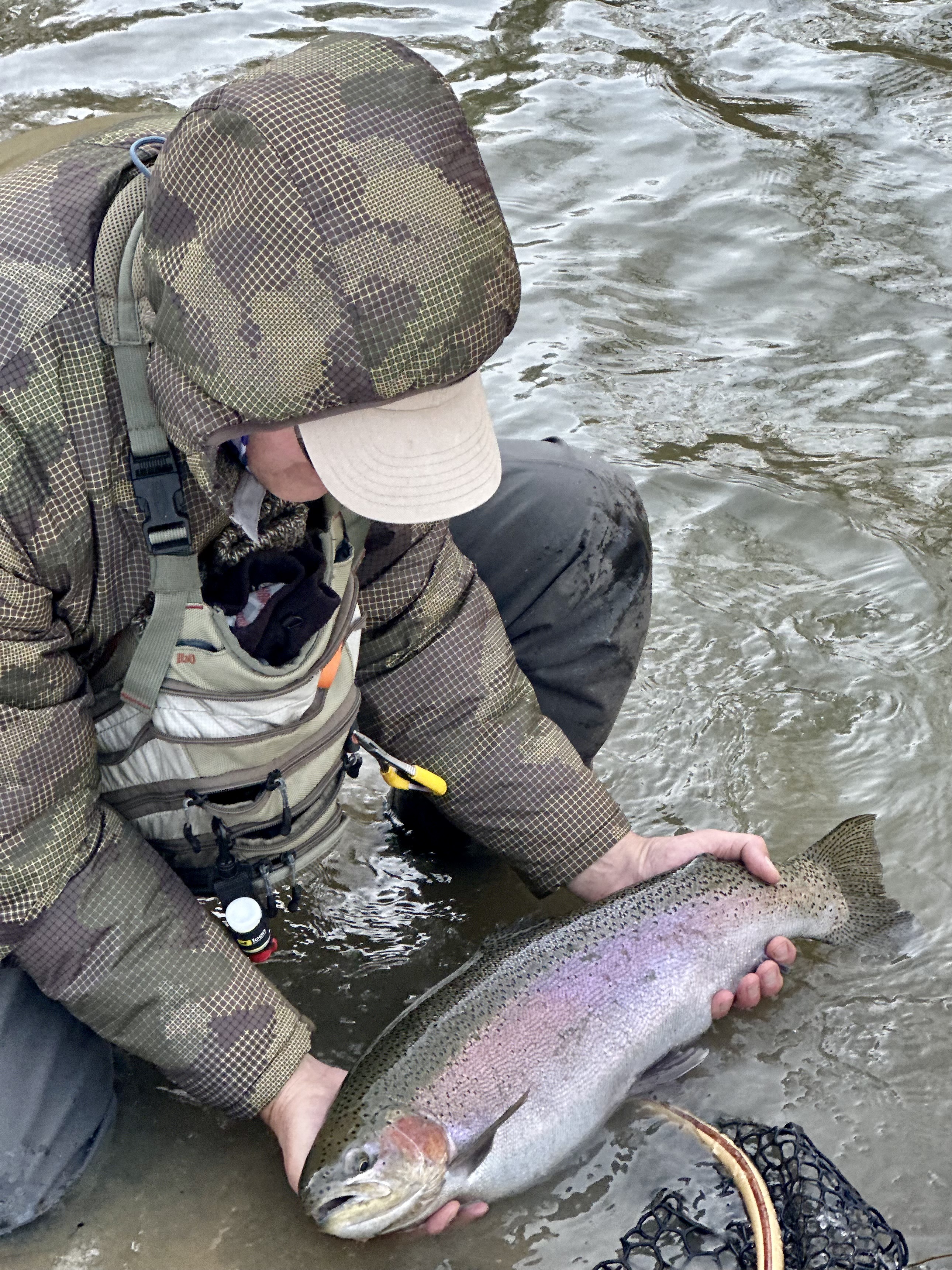
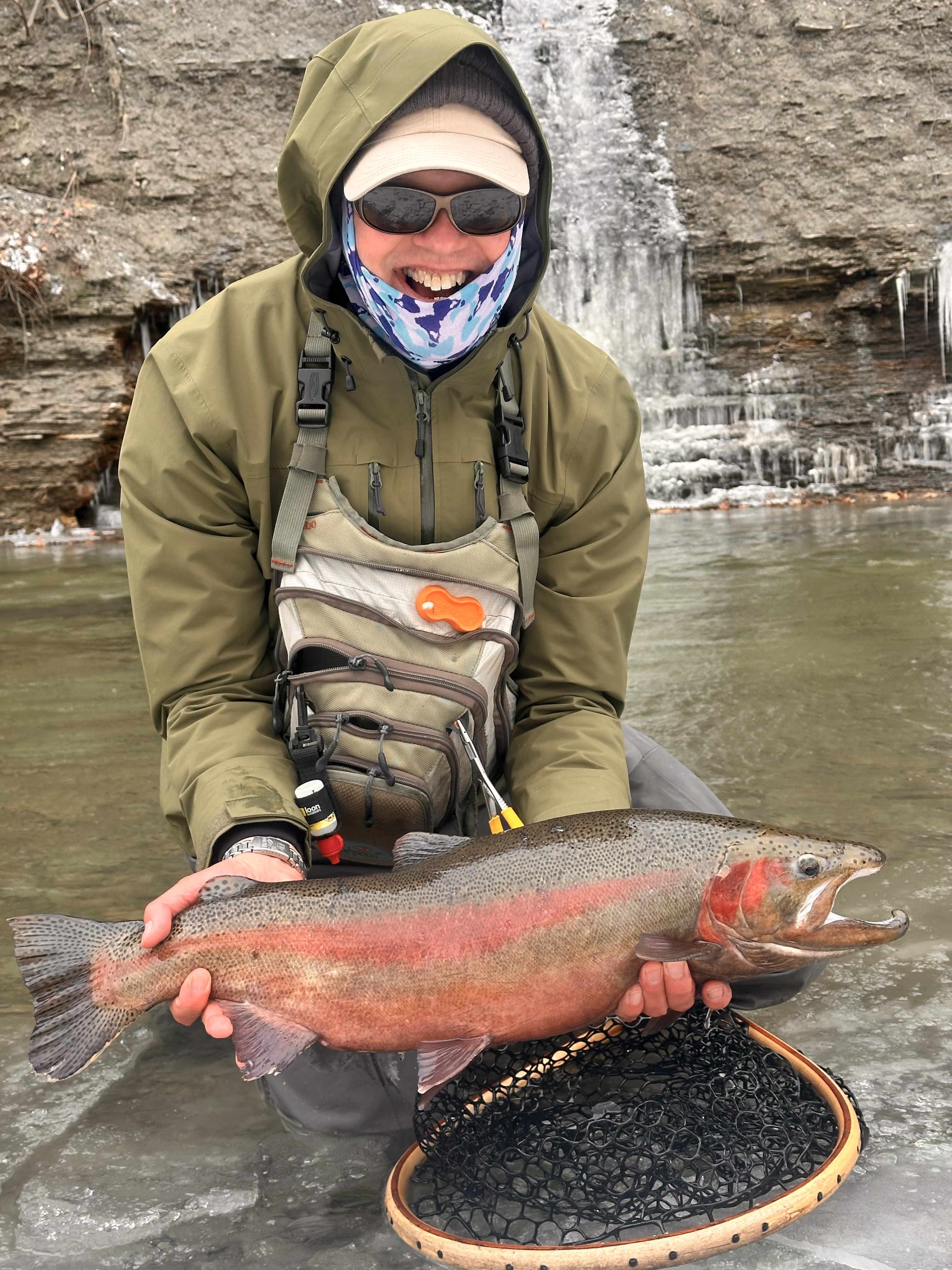
A chunky, pre-spawn hen, just beginning to color up. At the first mark, it took me hundreds of casts to get two fish to eat. I was targeting a pod made up of several fresher hens and a fish we dubbed “Old Blackie,” a very dark horse buck who was not the slightest bit interested in eating while he guarded his harem. At a second spot downstream, I fouled six fish; they simply would not eat. Finally, after pecking away, we found a hole that held a good number of steelhead that did not have lockjaw. The fish pictured here came from that group. Despite the non-optimal conditions, I had myself a day: sixteen steelhead fair hooked and in the hoop. I was so excited, I almost had a third cigar.
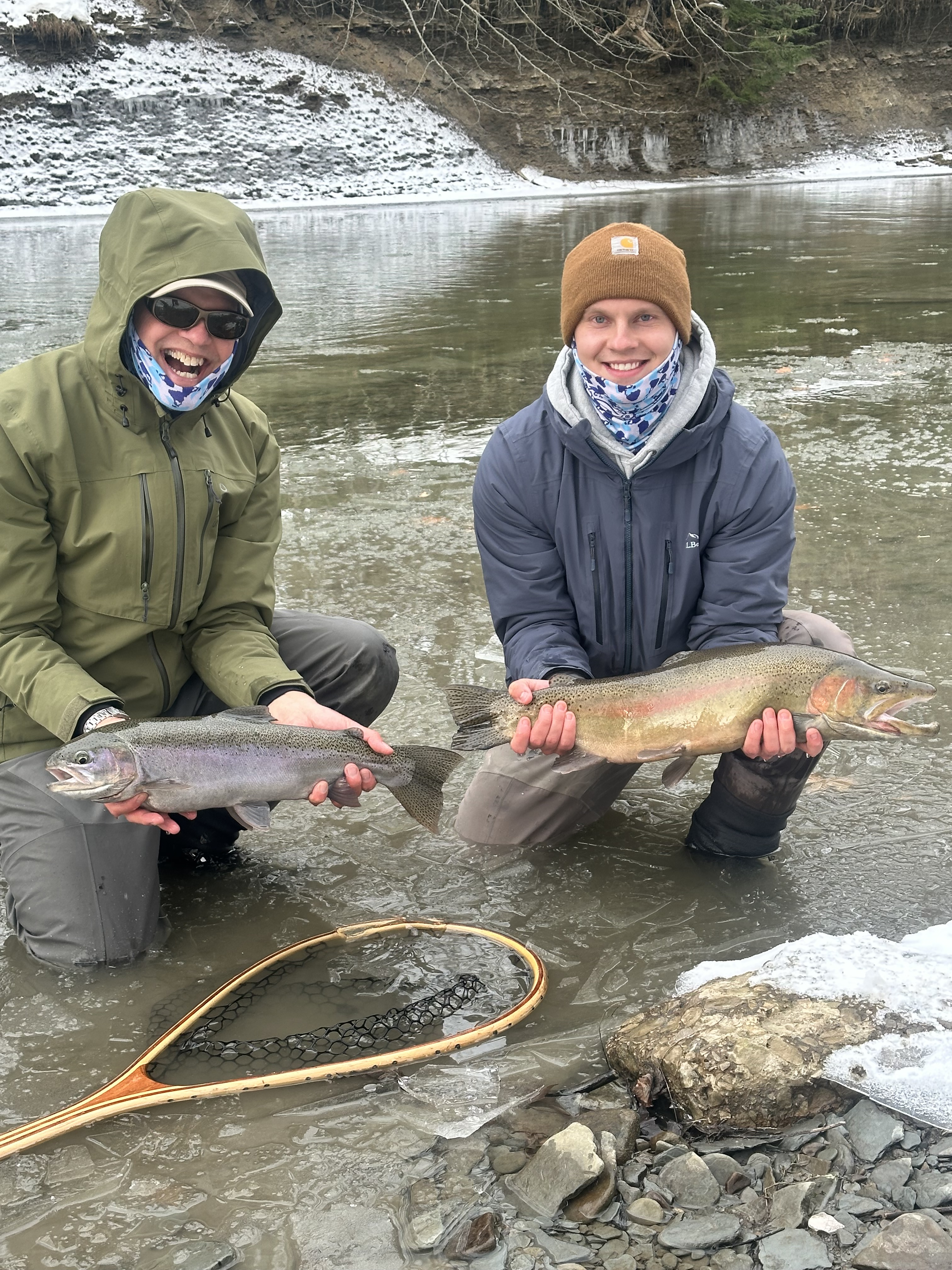
Cam had a tough go on the first day, mostly because he doesn’t really fly fish, and the conditions demanded flawless presentations. By the second day, he was nailing it, and tripled the number of fish he put in the hoop. This is from day one. Pro tip: apples are a great way to get some quality calories and a wee bit of hydration. I carry several in my pack on every steelhead trip.
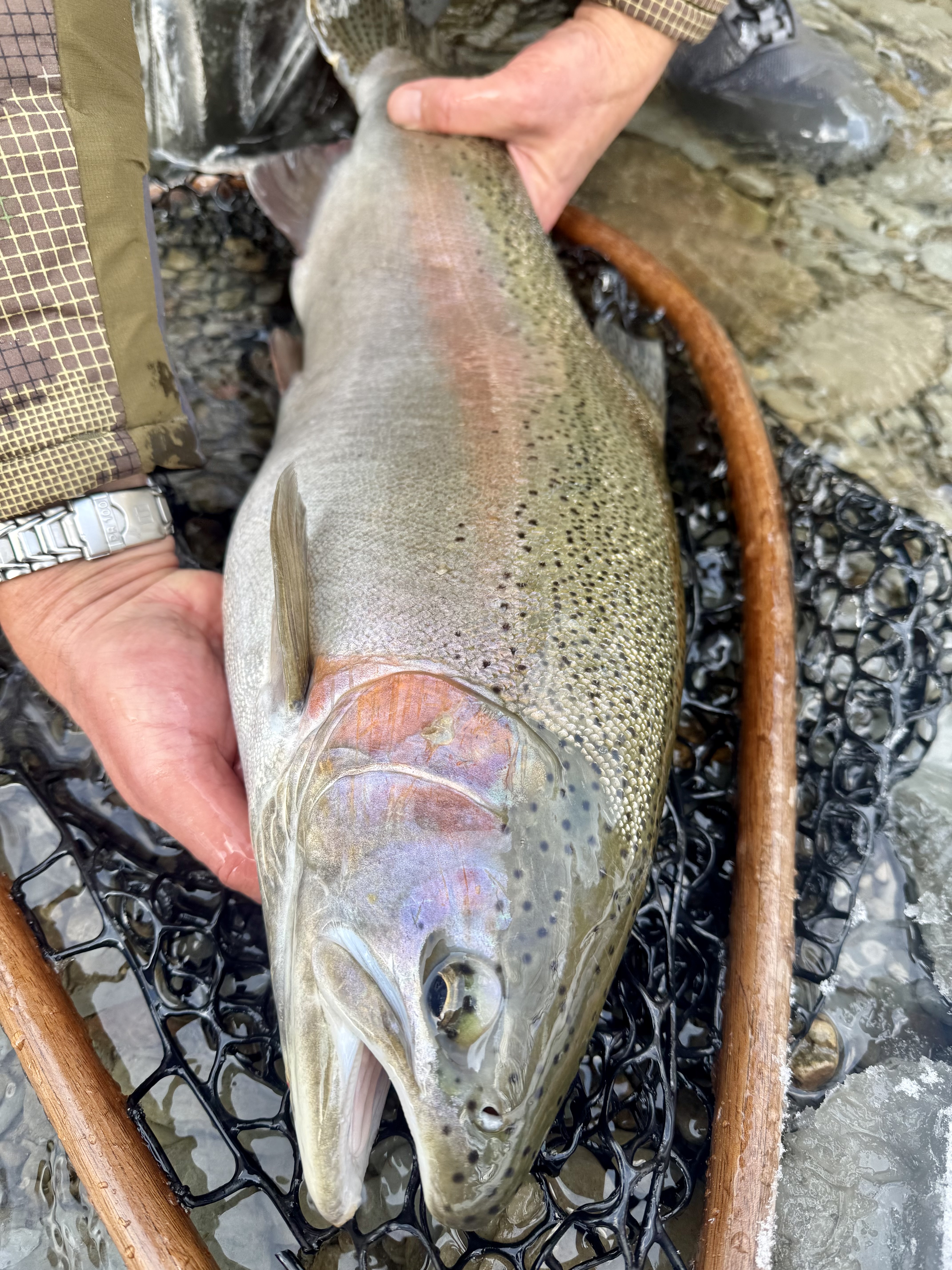
Sunday presented an entirely different form of winter fishing misery: temperatures just above freezing and rain. We thought the fishing would be better. It wasn’t. The steelhead had lockjaw like I’ve never seen. The creeks remained slushy and ice shelf challenged, and that certainly didn’t help. This guy would not eat, would not eat, would not eat, and then on one drift he did. No backing sighted, but he took me for a good hike along the creek bank, out of the pool, down a long, shallow shelf, down a riffle, then into another pool. Fantastic color, impressive shoulders, and a worthy opponent. And yes, it’s as cold as it looks.
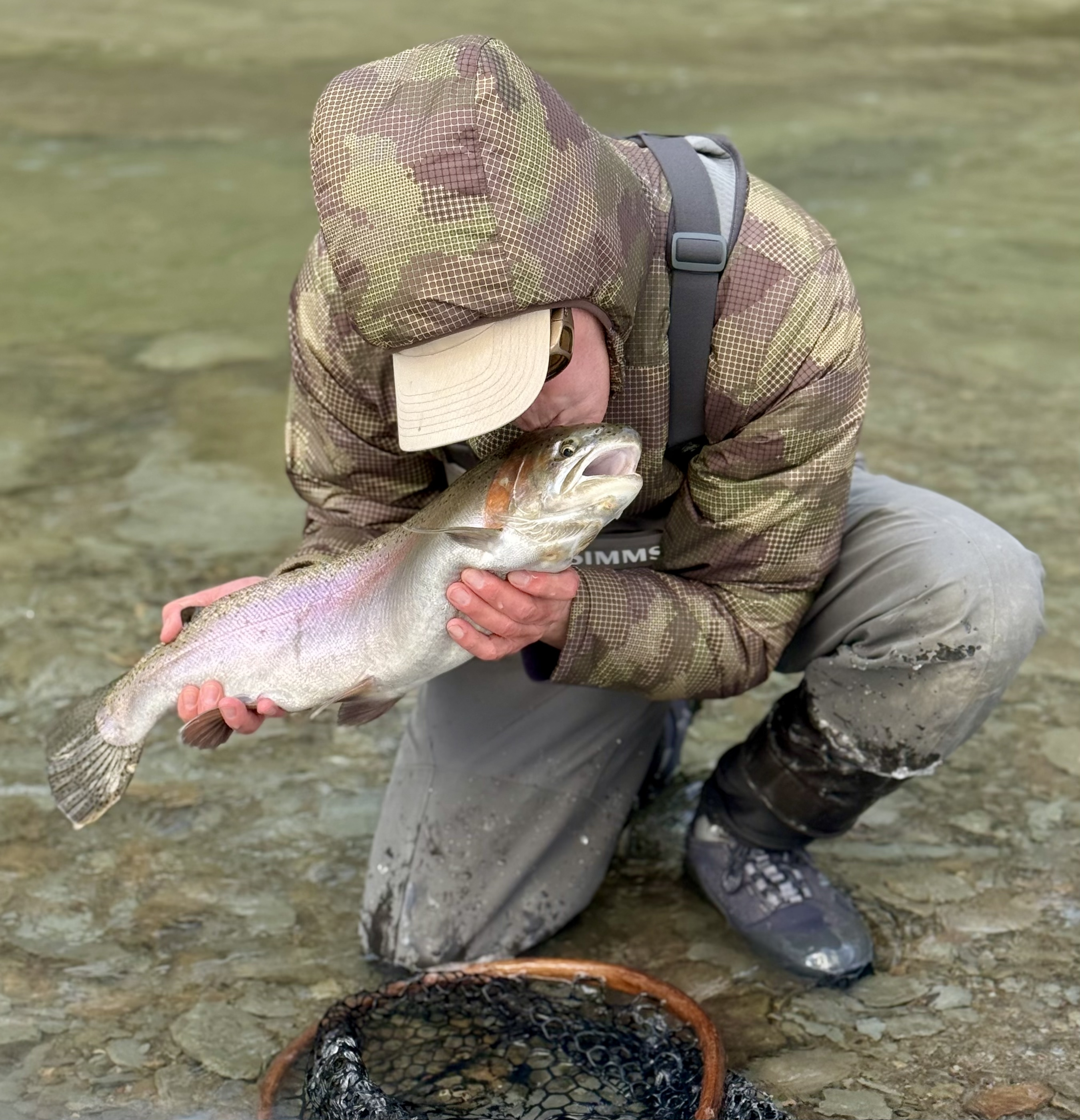
We could see the fish, but when they’re not eating that can prove to be highly frustrating. Late morning, the bite suddenly turned on. After hours of lethargy, we actually witnessed a fish move to take my fly. Instead of repeated rejection, we had the jollity of our only double of the trip. But what we thought was the start of better fishing was merely a short bite window that snapped shut with cruel finality. The rest of the day was grind for every fish. My last steelhead of 2024 was a good one, though. We returned to the scene of our first stop on Saturday. Old Blackie’s harem was now one. Expecting only to maybe, possibly, hopefully getting the hen to eat, my first cast was, instead, stomped on by none other than Old Blackie. Poor guy was worse for the wear during his extensive time in the system: missing one eye, and he had foul hook scars all over his back. We removed a couple hooks from his flank and fins, then sent him back to make the next generation of Erie steelhead this spring. A shout out to our guide extraordinaire, Bob Packey of Solitude Steelhead Guide Service. Well done!

2024 IFTS Redux

The 2024 International Fly Tying Symposium has come and gone, leaving in its wake many fond memories, new tying swag, and new acquaintances made. The event runs from Saturday to Sunday; Saturday is typically the busy day, with crowds dwindling by Sunday afternoon (it’s hard to compete with the NFL). If you’ve never been, you should, because it’s a tremendous opportunity to watch some of the best tyers in the world in action. You can meet them, watch them, talk to them, ask questions — I do all of that when I take a break and walk the room. There are private classes where you can receive personalized instruction. There are seminars that are included in the price of your ticket. And four times a day, featured fly tyers who tie and present to a small audience.

On Saturday night there’s a banquet, and everyone who attends gets a goody bag of fly tying swag. Thread, tools, materials…it’s all good stuff. Post-dinner, I hosted a little wine party attended by several luminaries in the fly tying world. Properly hydrated, Sunday went off without a hitch. Here’s some of the weekend in photos. Check out my Instagram @stevecultonflyfishing for more, soon.

The first thing I did Saturday morning was put on my fanboy hat and go meet Jeff Blood. Jeff’s the originator of the Blood Dot Egg, my favorite steelhead egg pattern. Jeff was warm and welcoming and it was invaluable to be able to discuss steelheading and Lake Erie trib fly fishing with him. Jeff gave me some braid we use to tie the White Death Zonker, another favorite pattern of his. Later, I returned to my tying station to find two dozen Blood Dots and another package of White Death braid on my chair. Wow! Thank you, Jeff!
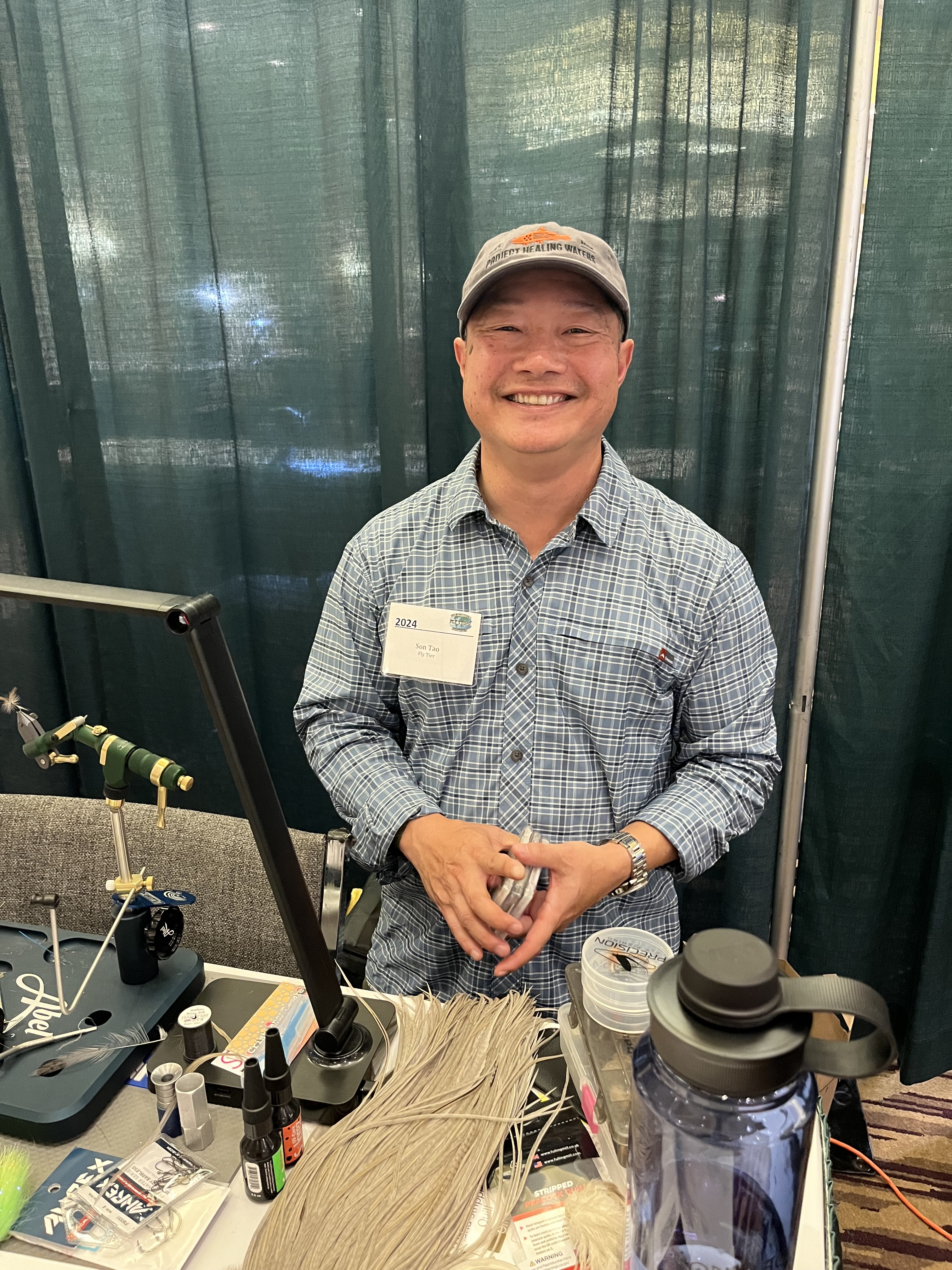
I’ve also wanted to meet Son Tao since I read about his Caddis Emerger pattern in Pat Dorsey’s book Favorite Flies for Colorado. I shared a table with Bob Lindquist, Delaware River guide extraordinaire (and contributing photographer for my upcoming Farmington River book). Son was one table down the aisle, so it was easy to chat. He is one heckuva skilled tier. Also a shout out to David White who sat at the table next to me. Great to meet you!
Not too shabby company! I was so honored to be included in this roster. This was my first time as Featured Tier in the Symposium, and my session was very well attended. If you were in the group, thank you for participating. Thank you also to everyone who stopped by my table to watch and ask questions and talk fly fishing.
Tying LaFontaine’s Diving Caddis. Thanks, Phil, for the wonderful photos.
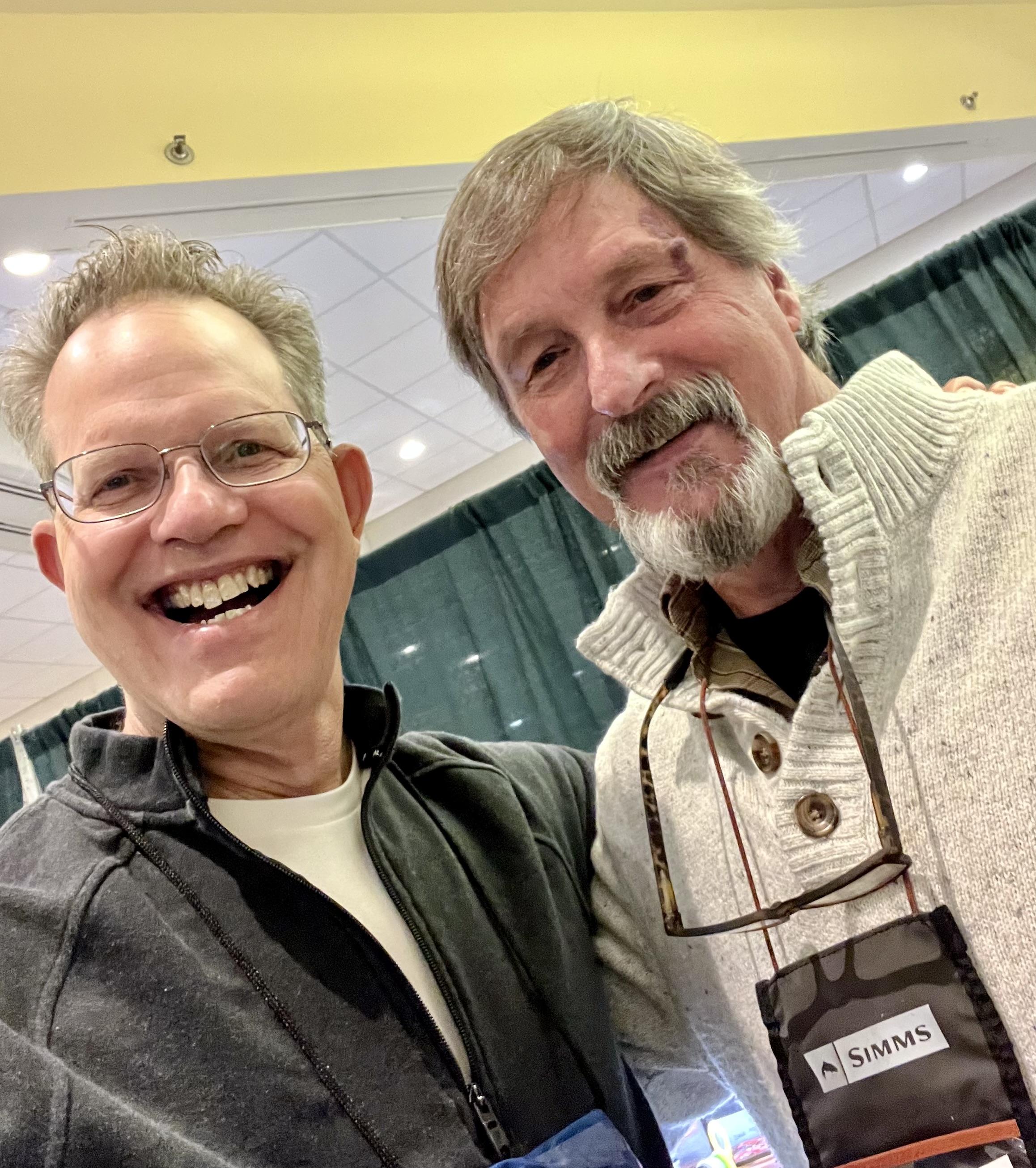
It’s hard to believe that I’d never met Bob Clouser before this weekend. Bob was FFT just before me, so that seemed like a natural time to say hello. Whether you’re a presenter like me, a vendor, or an attendee, Bob’s kind nature is typical of the overwhelmingly positive energy you’ll get from everyone at the show. You’re with your tribe. People want to talk to you. So…you’re coming next year. Right? Or to the Marlborough and Edison Fly Fishing Shows in January. Right?