If you’re looking for a gift for the fly fisher in your life — even if that’s you! — look no further. Whether you’re buying for yourself (or showing this post to your significant other — hint hint) I got you covered.
A Half-Day Guide Trip/Lesson with Steve Culton. If you’re planning on heading out with me next year, this locks you in at the 2022 rate. I highly recommend the four-hour slot. To purchase, please call 860-918-0228 or email me at swculton@yahoo.com.
My client Jake with a lovely wild Farmington River brown from last April.
Classes with the Experts at the January 2023 Marlborough Fly Fishing Show. There are two options. The first is Saturday, January 21 8:30am-11am, Tying and Fishing Wet Flies with Steve Culton. This is mostly a tying class, but we will also cover some fishing aspects. You must pre-register with the Fly Fishing Show. Here’s the link. The second is Sunday, January 22, 8:30am-11am, Presentation Flies For Striped Bass with Steve Culton. This is mostly a tying class, but we will also cover some fishing aspects. You must pre-register with the Fly Fishing Show. Here’s the link. The cost is $90 per session.
Or, for a great stocking stuffer, you can buy Marlborough show tickets in advance direct from the show. Here’s that link. Note that I will also be appearing in Edison, NJ, the last weekend in January on Friday and Saturday, but I do not yet have my schedule.
Happy gift giving, and have a safe and wonderful holiday season.
Earlier this month, I had the pleasure of attending my first International Fly Tying Symposium. I’d always wanted to go, but my annual steelheading trip with Cam got in the way — until this year, when they moved the Symposium to a different weekend. So off to Somerset I went, vise and scissors and other implements of destruction in tow.
Getting there wasn’t without its challenges. That Friday night, we had a major rainstorm in the tri-state area. At one point my nav app said a four hour drive. Not fancying the idea of slogging through Manhattan at rush hour, I delayed. I didn’t get to my hotel room until shortly before midnight.
I’d been invited as a celebrity tier and presenter, so no pressure…no, really, it was all good, and it was wonderful to be wanted. I found my tying space first thing Saturday morning, sharing the table with Chester Rosocha. I’d never met Chester before, but I won the table-mate lottery as he was as nice and matey and friendly a soul as you could hope for. Tim Flagler and and Tim Cammisa were the next table down, but you can’t win them all…of course I’m joking. Tim and Tim are both swell guys, not to mention exceptional tiers, and we shared plenty of laughs over the course of two days.
Every show, I tell myself, “This time I’m going to take more photos and some videos of me and others in action to share on my website.” Then stuff gets in the way. And it doesn’t get done. But here are a few shots from the weekend.
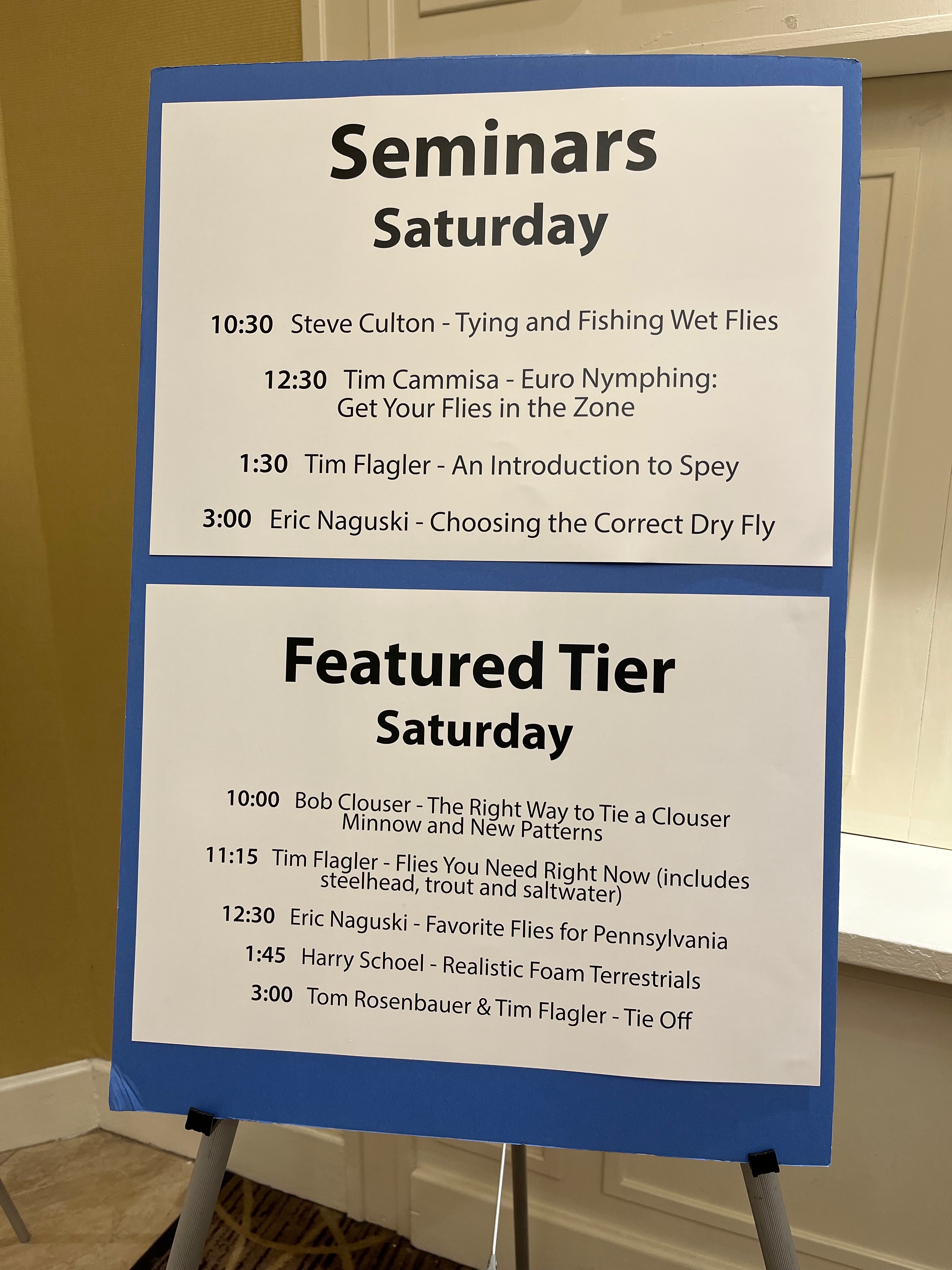
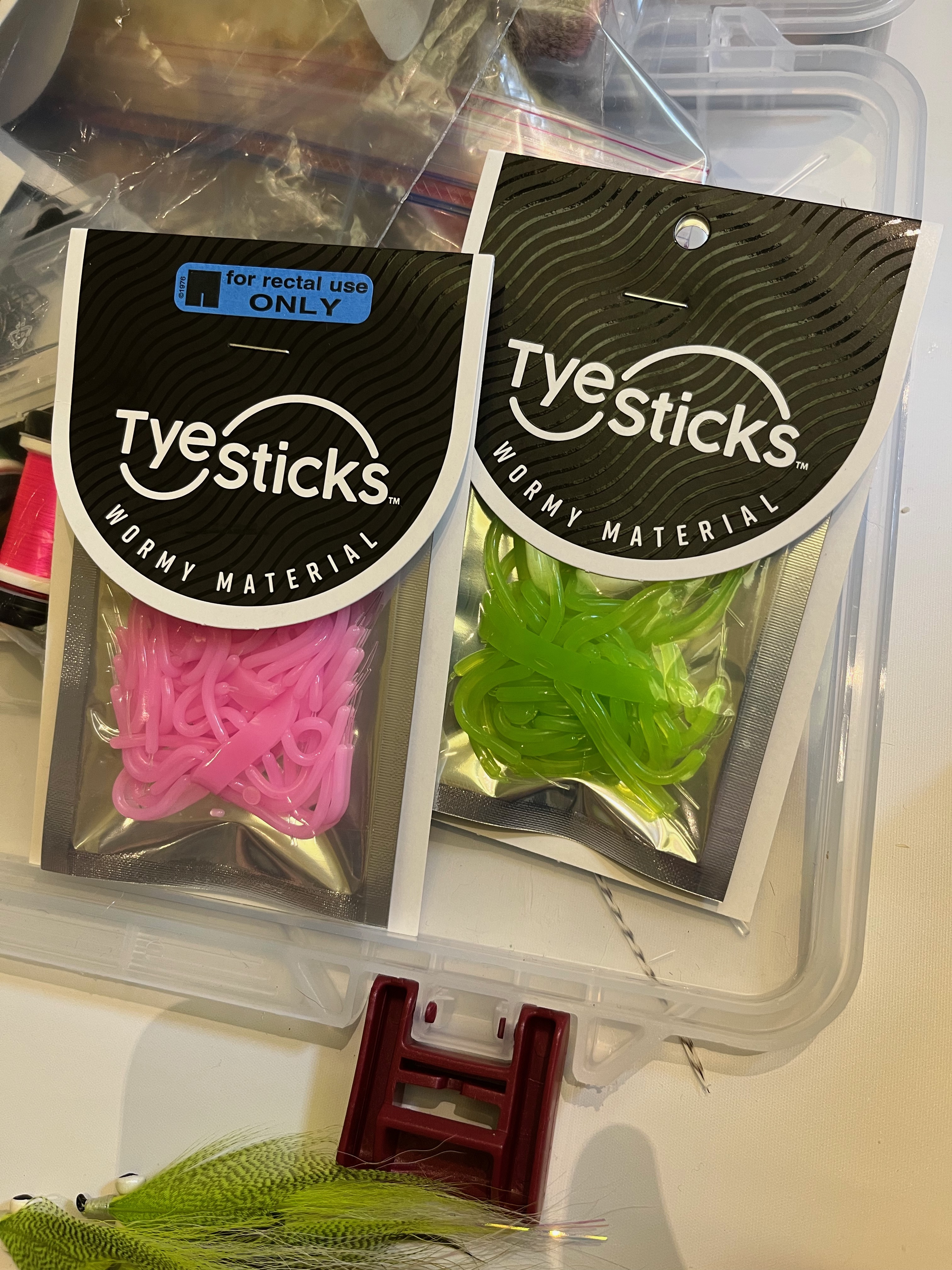
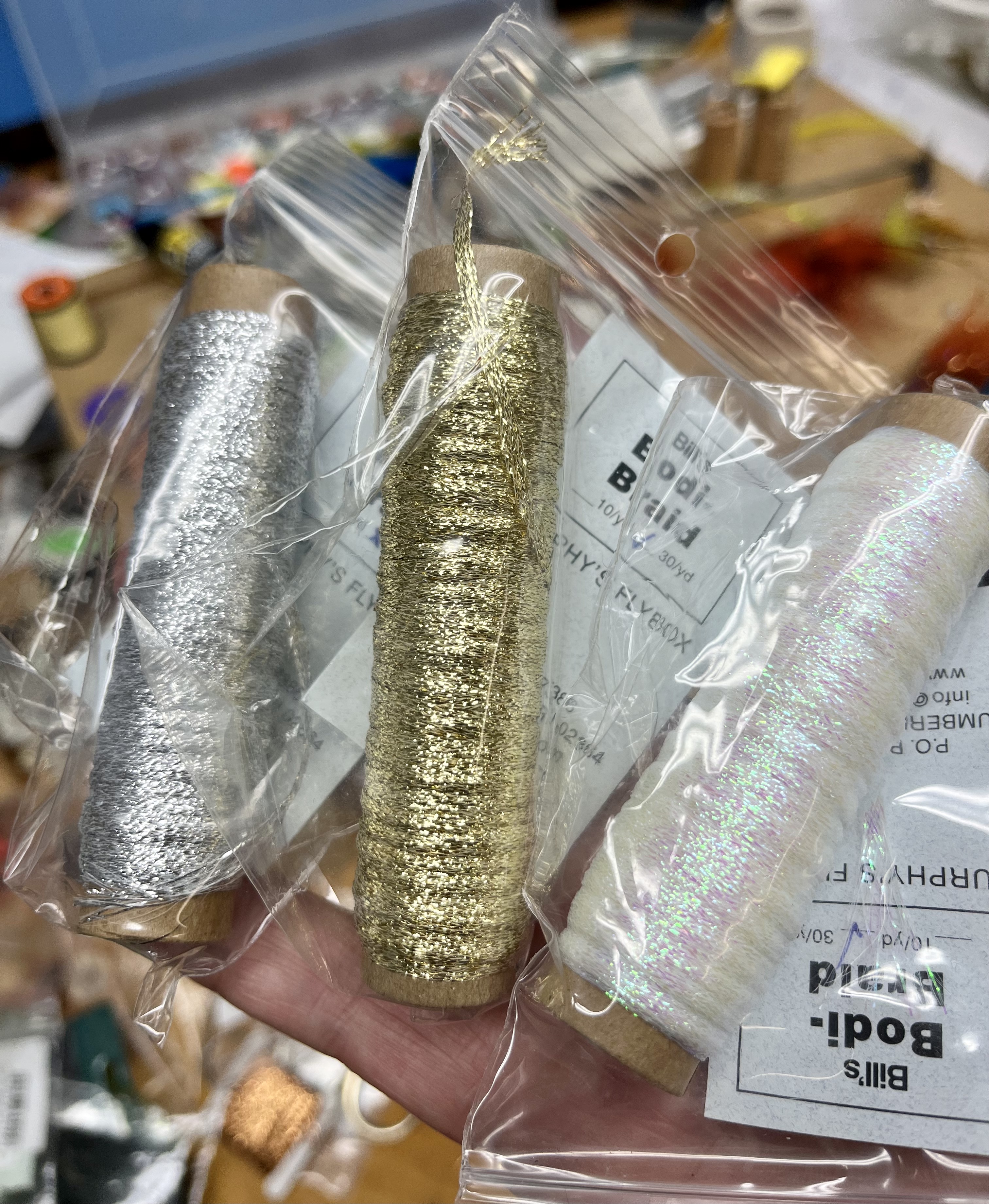
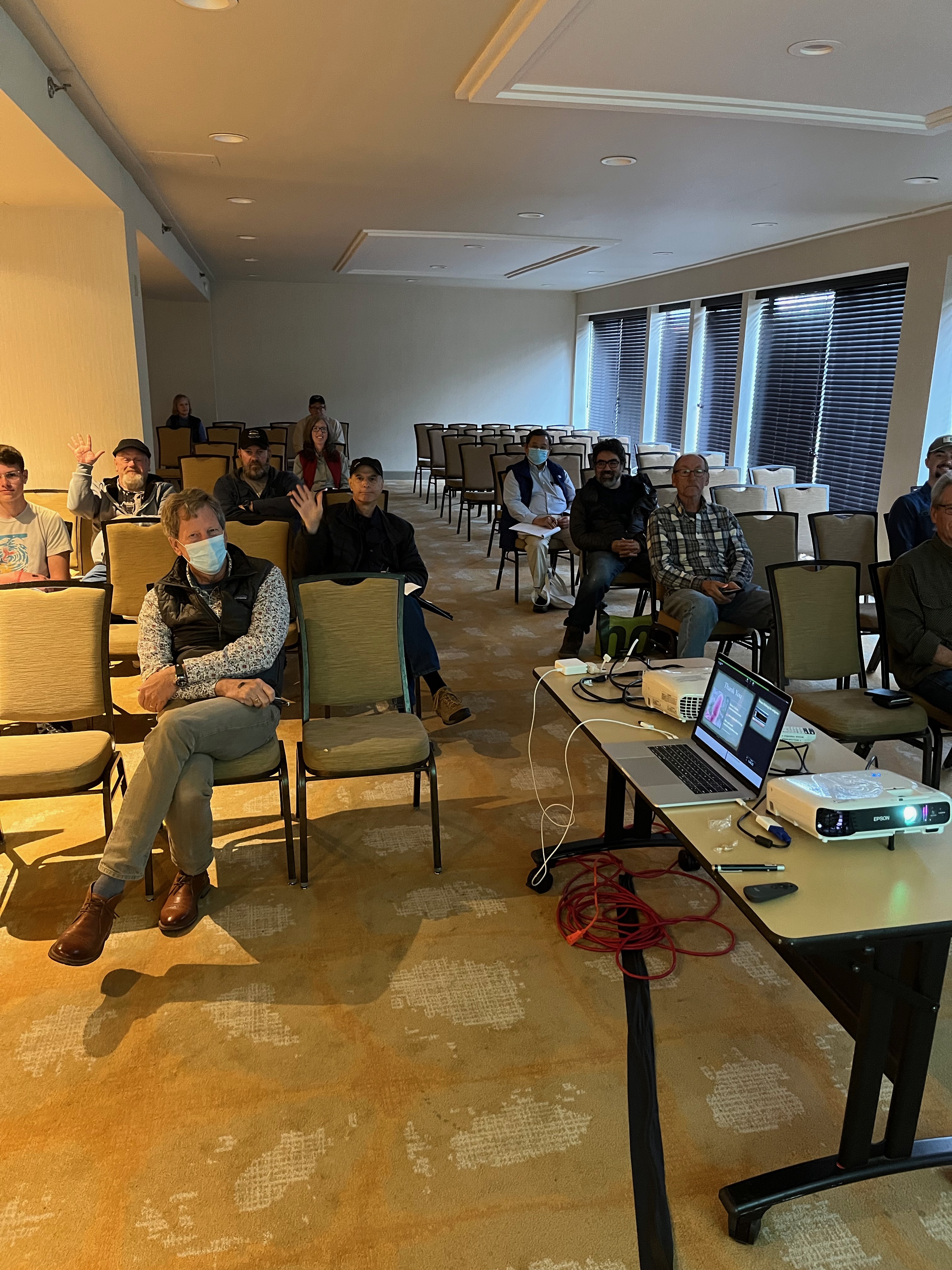
So much to do and see, so little time! And this is just Saturday. Plus classes, plus the show floor (tiers and marketplace) — it all makes for a busy weekend. This was a new wet fly presentation, which drew an excellent crowd for its debut. In the afternoon, I conducted a wet fly tying class which also went very well. Six very enthusiastic students who made their instructor’s job easy. We covered the basics of soft hackles, wingless, and winged wets. One of the best parts about big shows like this is the possibility that you’ll run across some new materials you didn’t know you needed. I saw these at Tim Flagler’s table and had to have some.Look closely at the packaging and you can see that someone has a potty mind (albeit in good fun). The USP of Tye Sticks is that they have a monofilament core that extends past the material butt end, making them a breeze to attach to a hook. You can find these online using the company name. (I have no affiliation with the brand.) I also scored some nice bucktails from Brad Buzzi, and some 30-yard spools of Bill’s Bodi Braid. I’ve had enough of buying those cards with a measly 3 or 4 yards of material, so I stocked up on these three staple colors and left happy.My Sunday seminar, Beyond Cast & Strip: Presentation Flies for Striped Bass, starting to fill up. This was another great group, and we stayed out past curfew for a long and engaging Q&A session. Another debut presentation. I want to thank everyone who took the time to come hear me speak, attended my class, or just say hello. You made my first IFTS highly enjoyable!My crowning achievement of the weekend took place Saturday night at the banquet. (Did I mention that if you attended the banquet, you received a gift bag loaded with fly tying materials, tools, hooks, beads…all good quality, highly useful stuff. I’ll try to remember to take a photo of the bounty for a future post.) I sat at the table with the Italian contingent– this was, after all, the International Fly Tying Symposium — who spoke varying degrees of English ranging from a little to virtually none. They had brought along a couple bottles from the old country, and were eager to share. My kind of crowd! Then, a gentleman from the hotel materialized and tried to explain that we could not bring our own booze and open it in the dining room. Seizing the opportunity, I explained the situation, focusing mostly on the fact that this wine came special all the way from Italy, and our colleagues were most eager to share in the spirit of international goodwill, and that if you, Mr. Hotel Man, can figure out how to tell them in Italian — OK, so maybe I exaggerated a wee bit on their total lack of command of the English language — that they can’t have their wine, please do so. Next thing I know, he’s saying never mind, and he’ll be right back with some wine glasses for the table. Salute!
Last night I did my second international Zoom presentation with the Ottawa Fly Fishers. They are a small but very enthusiastic group, and it’s been a pleasure getting to know them. The subject was “Wet Flies 101.” I don’t need to tell you about my passion for tying and fishing wet flies, so spreading the word is kind of like getting extra frosting with your cake. Thank you again, Ottawa Fly Fishers, for being such swell hosts!
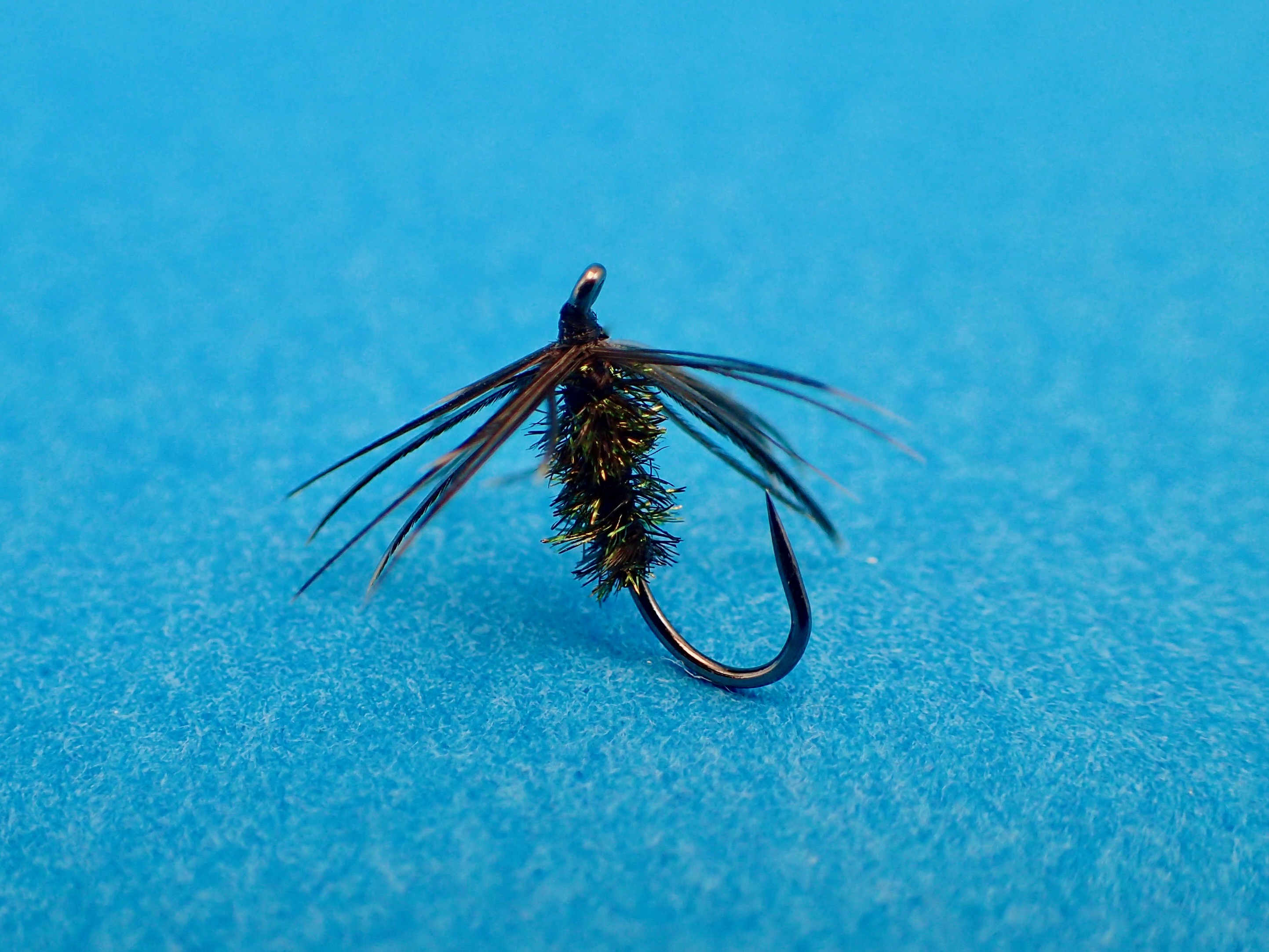
One afternoon, many years ago, this fly saved my bacon. I was guiding Matt, and it had been a slow, disappointing day. All of sudden, for no apparent reason, trout started eating the middle dropper, a size 16 Starling and Herl. Whatever was hatching unseen underwater, it was small and dark and the fish wanted it. Remember Ken’s sage advice: droppers are the fastest way to find out what the fish want.
In case you’ve been wondering where currentseams has been, I’ve been working on the presentation railroad, and getting ready for this weekend’s International Fly Tying Symposium in Somerset, NJ. Just finished: Tying and Fishing Wet Flies: A Modern Take On The Ancient And Traditional Methods. This is a brand new look at tying and fishing wet flies, with an emphasis on the tying aspect. You can be one of the first to see it at the International Fly Tying Symposium, this Saturday, Nov 12 at 10:30am. Still need more wet flies stuff? Join me for my tying class at 1pm, Tying Soft Hackles, Winged and Wingless Wets. Sunday, Nov 13 at 11am is another brand new presentation called Beyond Cast & Strip: Presentation Flies For Striped Bass. Both seminars are included in the price of admission to the Symposium(the class is extra). Holy smokes, I still gotta pack. See you there!
Steve Culton will be making his first appearance at the 2022 International Fly Tying Symposium, November 12-13 in Somerset, NJ. (I know, sounds like a press release, but this kind of is.) In case you haven’t visited, and are looking for more information, the Symposium site is live. There was a glitch yesterday in the class registration link; that has been fixed. So, if you want to attend my class, Tying Soft Hackles, Winged and Wingless Wets, Saturday Nov 12 from 1pm-3:30pm, you can register here.
I’m currently working on two new seminars that will debut at the Symposium. The first, on Saturday at 10:30, is Tying and Fishing Wet Flies. This will cover some basic wet fly construction, theory, and how to present and fish wet flies — and you’ll also get to see some of my favorite patterns. On Sunday at 11am, it’s Beyond Cast and Strip: Presentation Flies for Stripers. I’ll be covering fly design, use of natural materials, sparseness in design, and — drum roll — presentations other than cast and strip. If you want to attend either or both, you just show up, and I’m hoping for a good turnout from currentseams followers. And of course, I’ll be at a tying table when I’m not teaching and presenting.
If you’re just casting and stripping, a spinning rod is a much better tool for that job. Find out why I tie striper flies the way I do, the secret ingredient in all my patterns, and how to present them — at this year’s International Fly Tying Symposium.
A late but hearty and heartfelt thank you to the Basil Woods TU chapter from central New Hampshire for hosting me via Zoom last Thursday! I presented my original “The Little Things” to a very enthusiastic group. More and more fly fishing clubs and TU chapters are taking advantage of technologies like Zoom to hire guest speakers like me. If you’re outside reasonable driving distance, you can do the same. For more information on programs, visit my Presentation Menu page here.
Here’s a brief Q&A segment from post-show. Q: Do you arrive at the river rigged for streamers or do you start with emergers? A: It depends. Sometimes I make up my mind well in advance that I’m going to fish a specific method, consequences be damned. For example, there are days in the winter when I’ve decided that I’m going to fish streamers solely because I’m willing to risk catching one large trout — I hope — rather than a bunch of smaller ones. Or maybe I just don’t feel like nymphing. There are times in the spring and summer when I’ll plan to swing wets, and then, as the hatch moves out of the emerger stage, switch to dries. Other times I’ll get on a nymphing kick, and that’s how I’m going to fish — simply because that’s what I feel like doing. So, fish the method that pleases you most. And know that if you want to catch more fish, you’ll need to be fluid in your choice of methods as conditions and time of day/year dictate.
Happy angler syndrome occurs when you a) Fish the way you like; b) Fish the method that is most productive for the conditions; or c) ideally, both.
Happy Monday to all. It’s hard to believe that Labor Day Weekend is nearly upon us, but that’s a fact. I’ve got stripers on my brain, an itch I’m looking forward to scratching in the next few months…plus trout…and steelhead…and can we please get some meaningful rain?
Fall also means this road warrior will be out and about, hopefully at a club or event near you! My first gig will be next Tuesday, September 6, at the Long Island Flyrodders in Levitttown, NY. Despite what the website says, I go on at 7:30pm, with the group’s social festivities/casting lessons beginning at 6:30. Meetings are held at the Levittown VFW, 55 Hickory Lane. The group tells me that all are welcome. My subject is “Wet Flies 101” which is a gateway to wet flies, soft hackles, and how to fish them. You too, can become a skilled practitioner of this deadly art. Hope to see you there, and as always, please come say hello.
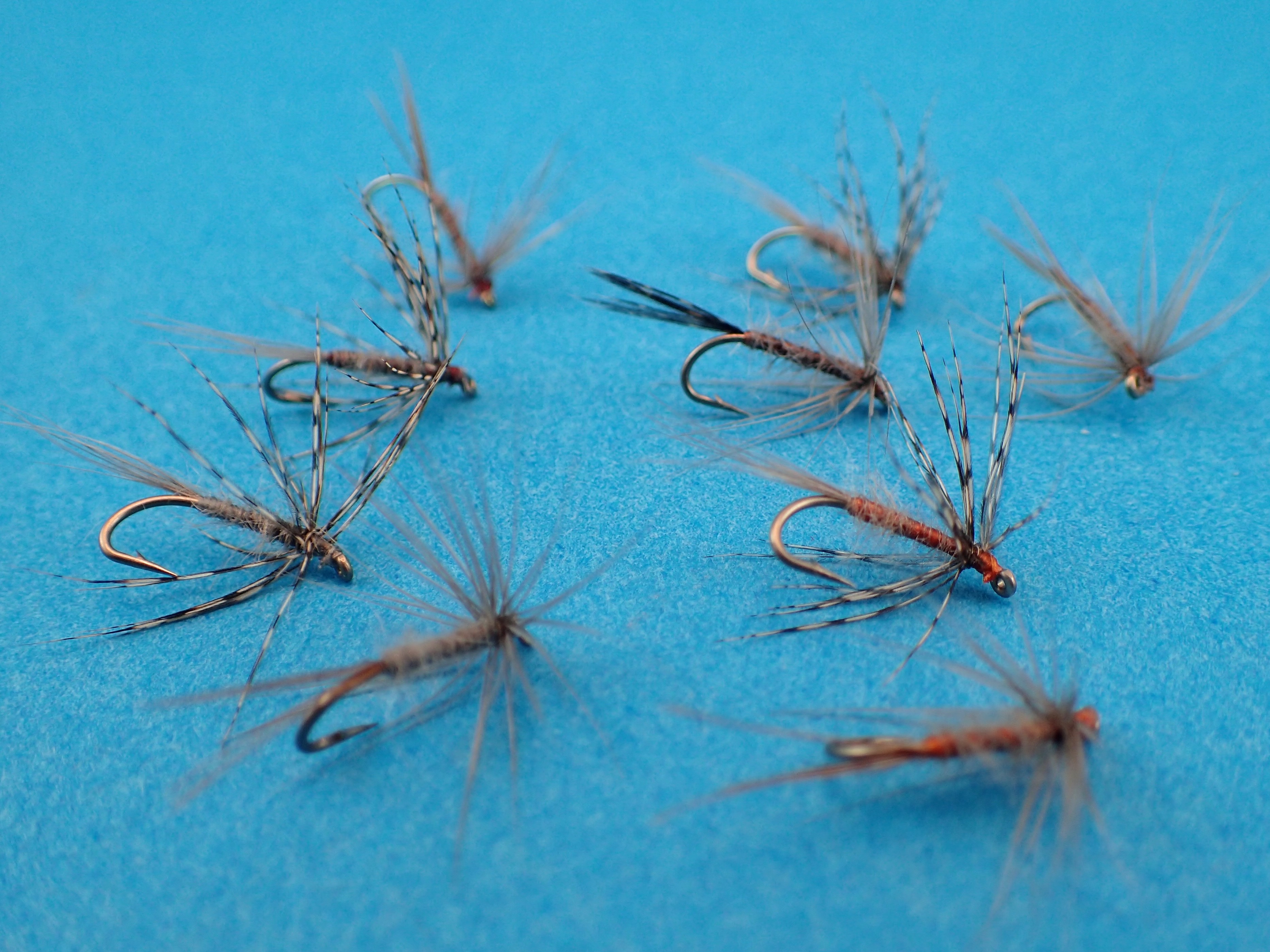
So simple, just like a trout’s brain. Wet flies like these soft hackles have been catching trout for hundreds of years, and the fish aren’t getting any smarter. Come learn more at “Wet Flies 101” next week at the LIFR meeting.
The Hous is low (175cfs in Falls Village) and getting dangerously warm. I’ve recently taken readings over 80 degrees in the late afternoon; 78 degrees is the threshold where smallmouth begin to stress, so if you must fish, pre-dawn to a few hours after sunrise is best, with evening/night the second choice. You should carry a thermometer and use good judgement. (The bite stinks in full sun, anyway, so you’re not missing much.)
Overall, the fishing continues to be generally poor, with the bass in numbers so small (compared to, say, 2016) it’s hard to realize it’s the same river. The fish are scattered in isolated pockets, so if you do find a bronze crew, please don’t fish it (literally) to death. I’ve been doing best with low, slow presentations and smaller (about 2″) jig hook/bead head mini-streamers in rusty crayfish colors.
The white fly hatch has started and in some areas is already winding down. I have experienced two hatches this summer that were an easy 10 out of 10, with so many flies whizzing upstream that leaving the river without eating/breathing in/wearing them was next to impossible — and spinner falls so heavy it looked like the surface of the river was paved with spent white carcasses. Ironically, these mega hatches don’t offer the best fishing; there’s so much protein in the water that it’s hard to get your fly noticed.
For now, I’m giving the bass and the river a break. I encourage you to do likewise.
This is what I’m talking about. Madness!I’ve found the August White, swung on a team of two, to be its usual wonderful self. I use it during the emergence and the spinner fall. One night I had to cut one fly off after my second double. Wet fly hook size 8-10, white hackle fibers for the tail, white silk or thread for the body, white hen cape soft hackle.
I guided Mike and his son Deven yesterday from late morning to mid-afternoon. We had a gorgeous sunny summer day. Although flows are low — 90cfs from the dam plus 40 from the Still — the water was delightfully cold (I got 60 degrees mid-day at the upper end of the PTMA). That’s great news for both anglers and the fish. As always, I urge you to aware of water temps in low, summer flows. If you don’t have a stream thermometer, please get one.
We started off in the PTMA. Mike, who’s an intermediate level fly fisher, decided to tight line nymph. Deven, who’s just getting started, spent a little time with me working on his casting; I then rigged him up with a two-fly wet team and we had at it. The action was slow, but, yes, Deven stuck a trout in a swift little slot under some overhanging branches. Well done, young man! Meanwhile, Mike got into a fish downstream. The action was very slow, however, and we decided to move on. (Many thanks to the very courteous and chill anglers who so graciously shared water with us.)
Next stop was a riffle near the top of the PTMA. Sadly, goose eggs. On to a mark above the PTMA. Deven and I concentrated on swinging wets in some faster water, then on using an indicator in some slower, deeper water with a large drowned hopper and a nymph dropper. We blanked, but Mike, who was now dry fly fishing, stuck one more fish on a tiny caddis emerger before we called it a day. A pleasure, gentlemen, and you both did well under some very challenging conditions.
Thankfully, what’s coming out of the bottom of Hogback is cold and clear and very trout-friendly.
Every day is different. For proof, I offer yesterday. Yesterday was my worst wet fly fishing outing of 2022. If you had shown me the conditions, the mark, the number of actively feeding fish, the time of day, then offered a bet that would not catch a fish, I would have taken your money without another thought, Then, for over 90 minutes, I would have been frustrated to the point of incredulity. I would have eventually won the bet, as I managed one 11th hour trout, but the lack of wet fly hookups was a mystery that I pondered as I re-rigged for dry fly.
My best guess as to what was happening was that the fish were keyed on really small stuff — and they wanted the fly delivered on an absolute dead drift. Over the course of two hours, I had two bumps, both coming when I raised the rod tip to cast. This kind of reaction strike that doesn’t result in a hook set is clearly the result of a fish not committed to the take. I was fishing with Toby Lapinski, and he was working some slower water below me. Toby had a good dozen bumps on his team of three wets, but no hookups. Clearly, these trout were feeding on something other than what we were throwing, and how we were throwing it. Still, I’d expect at least a few accidents — trout being the small-brained-wired-to feed-opportunistic creatures that they are. The final piece to the puzzle that clued me in to the fact that they would only eat on the dead drift (rather than the mended swing or dangle) was that each of our wet fly trout came on an upstream dead-drift presentation.
A hefty mid-teens rainbow taken by Toby on one of my size 12 soft-hackled Hendricksons, which is a fair stand-in for an Isonychia. The late afternoon Iso hatch was pretty good — I’d give it a 7 out of 10 — and yet the trout were not keyed on that bug. That’s too bad, because if they were I have no doubt we would have caught far more trout on wets. We never heard any of the loud splashy takes that are so typical of trout feeding on Isos. The sulphur hatch was disappointing — that gets a 2 or 3 — but hatches progress and evolve and it up to you to crack the code. Which, as it turns out, I did once the pattern changed. (Photo by Toby Lapinski.)
I often talk about making adjustments to increase your fishing success. But sometimes you’ve got to be prepared to fail, and fail miserably, in order to figure things out. To wit: I kept fishing wets on mended swings and dangles to prove that the trout were keyed on small bugs on a dead drift. I was also fascinated by the prospect that they would not hit any of my wet flies (Squirrel and Ginger, Partridge and Light Cahill, Hackled March Brown) even when presented directly over their lie. It’s all more useful data for the fishing experience bank.
But I’d had enough experiments. By 7:20 I was in position and rigged for dry fly. I started with a size 20 because the rise forms were textbook smutting trout. Remember last week when I told you that I stuck fish on seven consecutive casts? On this night, I rose nine consecutive fish before I could rack up a hook set. By then, it was after 8pm and I’d made the command decision to go with a bigger fly. Our Lady of Blessed Magic Fly (size 16) don’t fail me now! And she didn’t.
Any misgivings I may have had about catching fish during this session were gleefully crushed by the last half-hour of dusk into darkness. Using a mix of Usuals, the Magic Fly, and Catskills Light Cahills, I took a good number of trout on the surface. We stayed until dark; my last two customers came when I could no longer see my fly. One was bucket method hook set, the other a sharp tug as the trout, Mykiss the Leaper, came tight to my reel. Toby was still casting to rising fish as he slowly made his way out of the pool in the indigo darkness.






 currentseams.com