Farmington River Report 7/8/25: Dodging thunderstorms, swinging wets, catching trout

John and Chris took a wet fly lesson with me on Tuesday, and we were having grand old time — a little streamside classroom action, a leader tying clinic, lots of fantastic Q&A (very inquisitive minds, these two, which I loved). When we finally got into the water, darkness fell across the land, and the thunder rumbles began.

This is good time to say this: get out of the water and seek shelter if there’s a threat of electrical storms. I am routinely astonished that some people still don’t do that. End of public service announcement.

We drove along the river trying in vain to find sunshine, which took about an hour. By then, the storm was over, and we had blue skies and hot weather. We headed north to fish above the PTMA. Finally able to wet a line, we got into some fish, although in the bright sunshine they didn’t come easy. It wasn’t until after the session ended that John and Chris were able to test their new wet fly skills. Both took multiple trout during the evening rise. Tremendous job, gentlemen. Your instructor couldn’t be prouder!

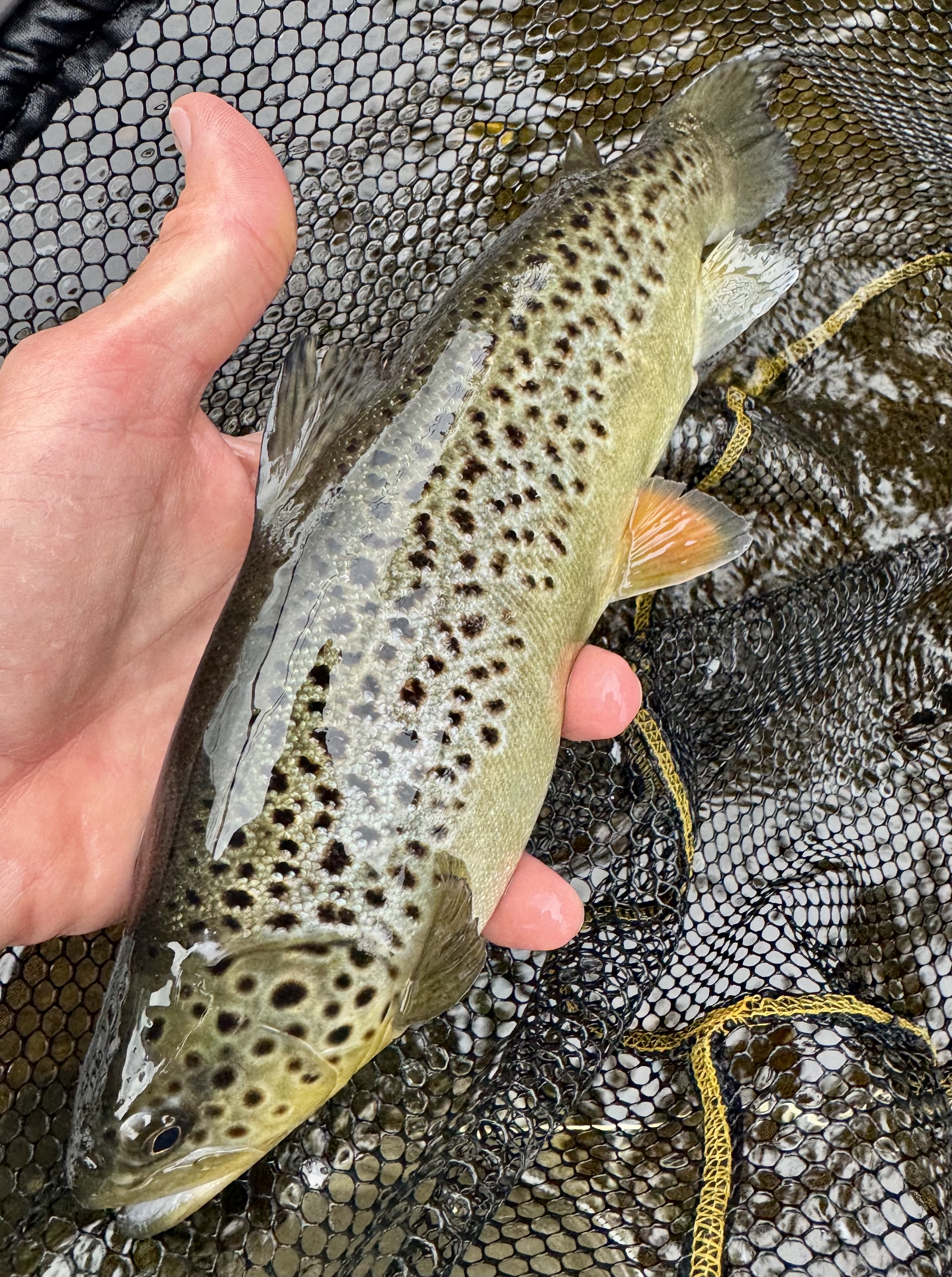
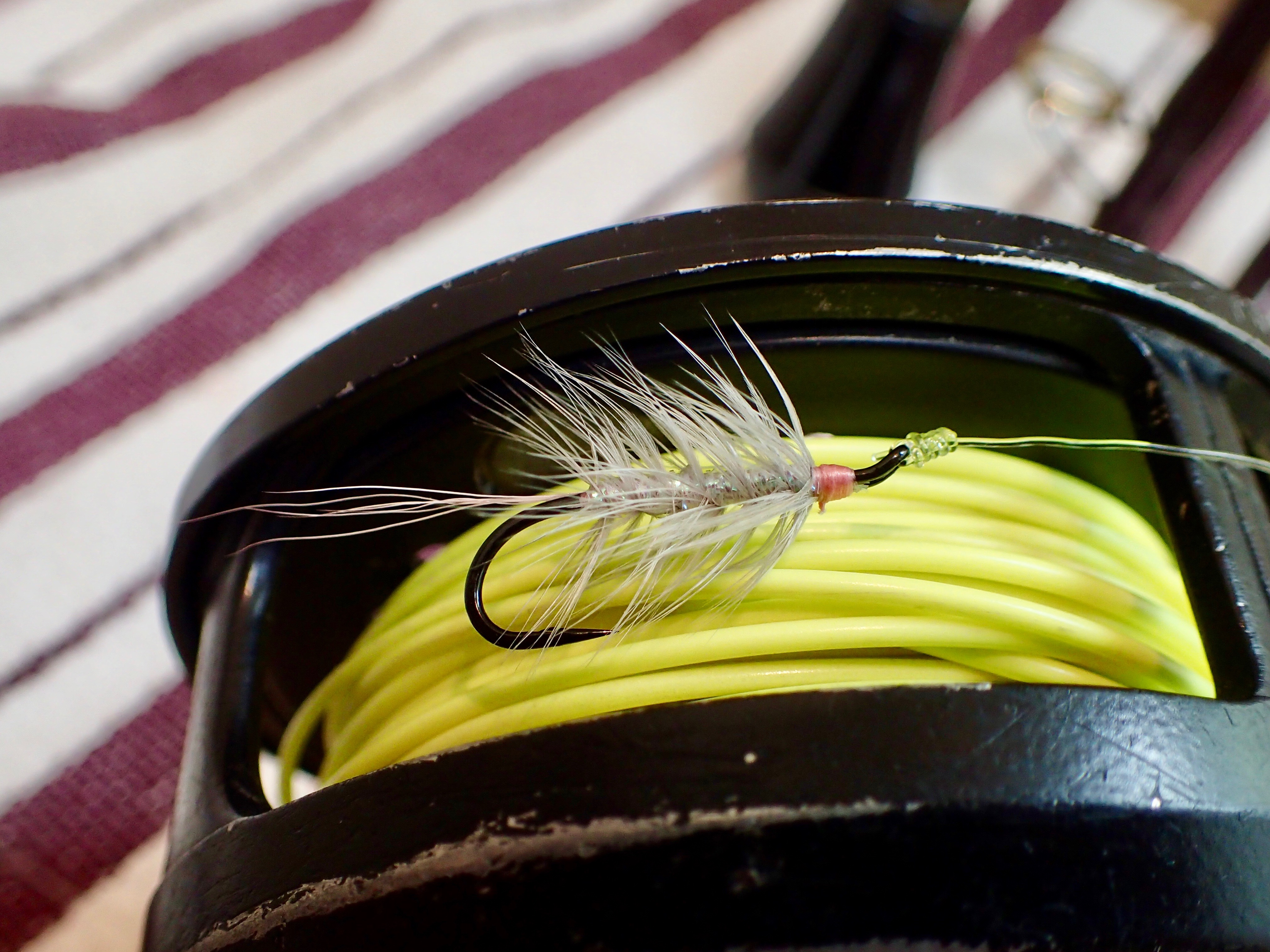
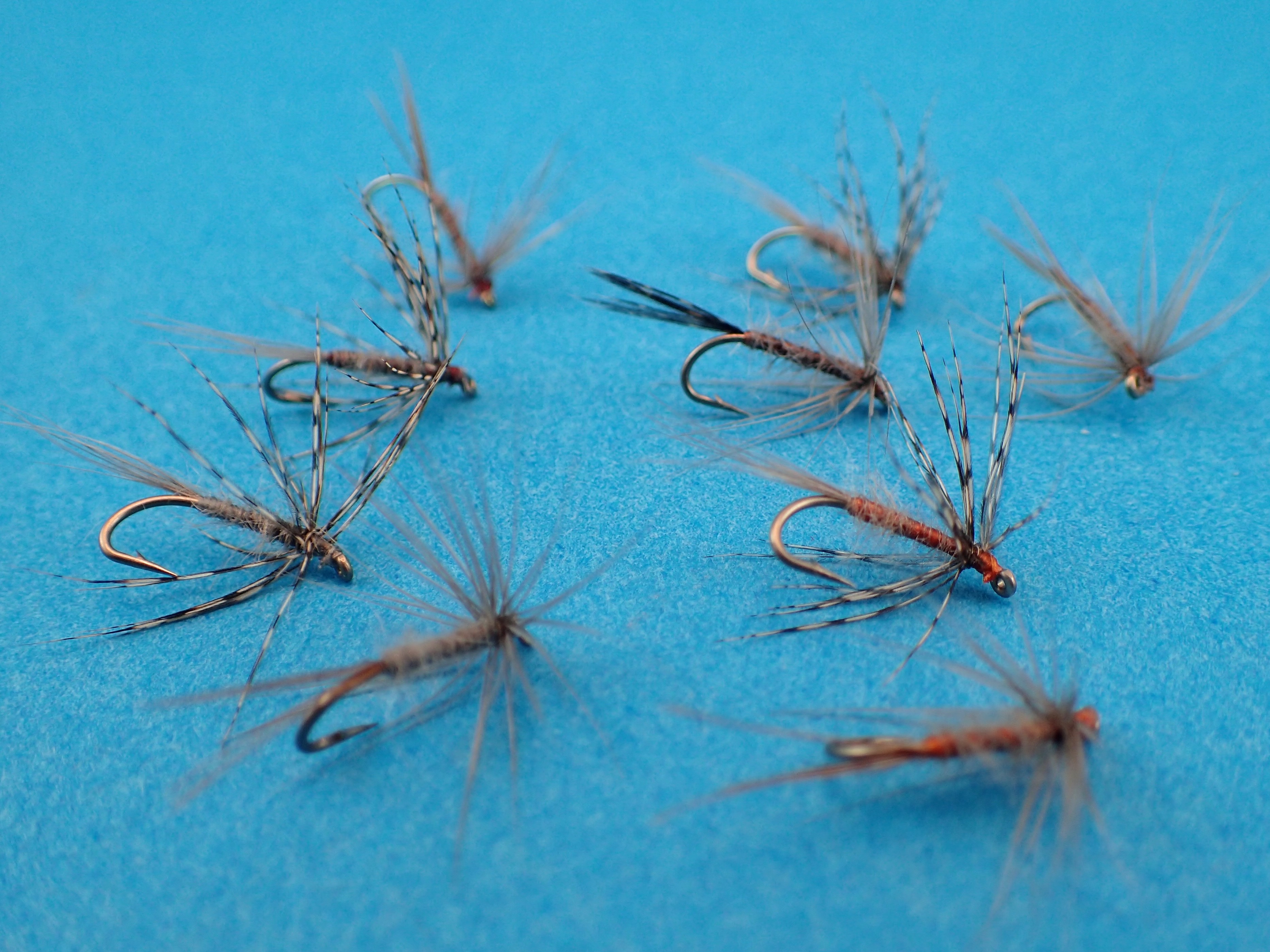
This brown fell for my Partridge and Light Cahill soft hackle. So simple and so effective! John Ryan photo

Sorry, sorry, sorry, or: Book duties keep calling

By now, I’d hoped to be back to my normal routine on these pages. But every time I think I’m in the clear, the book comes a callin’. So that’s why posts have been so spotty. All I can tell you is that when things do return to normal, you’ll be the first to know.

I just finished an article for Surcasters’ Journal. I’ll letcha know when it comes out.

It’s getting steamy out there. Time for the summer under-waders kit.

Fishing in brief: Block Island stunk again this year: slow, slower, slowest. Then there was last week on the Farmington. I gave Andrew a wet fly lesson, and it was likewise a non-action fest. We fished three marks, and it wasn’t until the last one that we found some fish. But Andrew was enthusiastic and persistent, and we ended up with two in the hoop for the win. Great job Andrew! I stayed to fish the evening rise. The location was above the PTMA, and the hatch and rise activity was one of the worst I’ve experienced in a decade. Very little hatching (mostly dorothea) and, almost impossibly, nothing on it except for a few small fish. Highly disappointing. I managed two small wild browns on wet flies and one stocker rainbow on the way out after I could no longer see my fly. Blech!

Of course, we hav the blank canvas of this week, upon which we may paint spectacular fishing images. Yeah. Let’s go with that.

Revisiting a simple, deadly striper soft hackle: the Grass Shrimp Solution

I can’t remember specifically when I came up with the Grass Shrimp Solution, but it was a long time ago, maybe decades. I do remember wanting to create a fast, simple-to-tie, impressionistic soft hackle that would mimic this tiny bait in size, color, and profile. Years later, this fly continues to be a favorite of other anglers who have discovered its deadly effectiveness. It’s one of my favorites, too.

In case you’ve missed it over the years, or are new to currentseams, here’s a crash course on the pattern. The Grass Shrimp Solution was first published in 2015 in my American Angler article “Soft Hackles for Striped Bass.” It was featured in On The Water’s “Guide Flies” Column. I frequently fish this pattern in estuaries when stripers are selectively feeding on small food items. Here’s an article that covers how to do that. This piece discusses the concepts behind the pattern’s bite triggers. Those four articles ought to keep you busy for while, after which, I would guess, you’ll be heading to your tying table — and then, to the closest tidal marsh or flat.

Currentseams.com again named to Feedspot Top 40 Fly Tying Blogs

Here we are again on the FeedSpot Top 40 Fly Tying Blogs list. This is our second time on the list, and for those of you keeping score at home, we are #17. But the ranking isn’t really what this is all about; rather, it’s the company we keep. AvidMax. Fly Tyer. MidCurrent. Gink and Gasoline. Orvis. Just to name a few. These are all quality sites, worthy of your attention, and I’m honored to be included in their company. So, yay us!

The summer striper box, from seasons past, raring to go. Those are Big Eelie variants on the right. I love the colors, although I’m not sure the stripers care all that much. Catching a big fish on fly you tied is one of the more rewarding aspects of our hobby/sport.

Steve Culton’s Iso Soft Hackle featured in On The Water’s “Guide Flies” column

What’s this? Two posts in one week? Yessir, campers! As promised, we are trying to return to a regular posting schedule on currentseams.com. I want to thank everyone for their patience and loyalty over the past year. Let’s get to it.

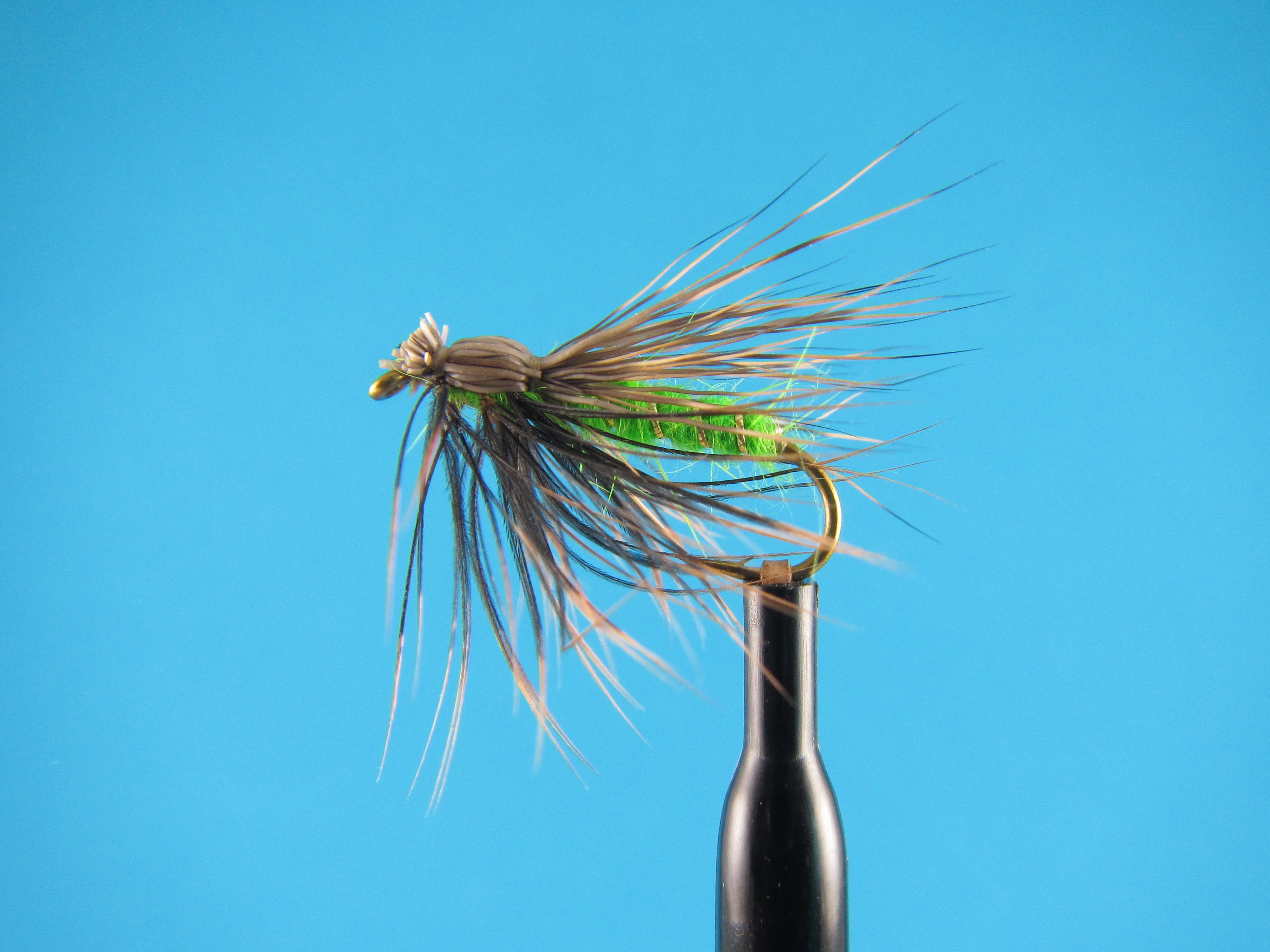
The Iso Soft Hackle is a wet fly I prototyped several years ago. Then, I test it on the river for months or years to prove its worthiness before I pass it along to you. This is an outstanding pattern (he said, modestly). The past two summers, it has accounted for some of my biggest trout taken on wet flies. It’s easy to tie, and the materials are readily available. Here’s the fly and the recipe as outlined by Tony Lolli in his outstanding Guide Flies column from On The Water. So what are you waiting for? Get to the vise. It’s Iso time!

A jpeg and pdf for your viewing pleasure.

We’re in the home stretch! And a word about caddisflies.

Happy Hump Day to all. Sorry about missing a post last week, but I have a really good excuse (besides the book): #2 Son Cam’s graduation from the College of Wooster in Ohio. And now, we’re back. Except I spent the last two days planting over 50 cucumbers, chili peppers, and tomatoes. (Advil, anyone?) Now that those are in the ground, I’m back at the book, fast and furious, as my June 1 deadline approaches rapidly from the east.

That means no fishing for me, but I hope you’re picking up the slack. We’re supposed to get dumped on Thursday, so that will no doubt jack up the rivers. Hopefully the waters will recede somewhat by the weekend. Connecticut needs the rain, and we’ll be grateful for the influx into the reservoirs.

Two years ago, May 30, LaFontaine’s Diving Caddis.

While this has been a crappy, cool month so far, I have been thinking about caddisflies. The warmer days tend to really get them going. May is typically prime time for caddis on the Farmington, and when the book comes out, I hope you’ll pay particular attention to the section devoted to this highly underrated bug. If I were nymphing or swinging wets today, you can be sure I’d have at least one caddis pattern in the mix.

Must go write. And I’m really looking forward to finishing.

Tip of the Week: Beware (or at least be aware of) the shadow hatch

Who knows why the trout aren’t eating your Hendrickson fly? The Shadow Hatch knows. Shadow hatches are so named because they are concurrent with — and less glamorous than — the hatch you think the trout are eating. In the case of the Hendricksons, the shadow hatches are likely to be tan caddis and BWOs, although in early afternoon, the tan caddis are the likely culprits. This phenomenon manifested last week during my lone outing. I was fishing a team of three flies: Hare’s Lug and Plover (caddis) top dropper, with two Hendricksons below. Hendricksons were in the air and there were rising trout. Yet all of my fish came on the Hare’s Lug and Plover. This is the strongest argument for fishing a team of three: droppers are always the fastest way to find out what the fish want.

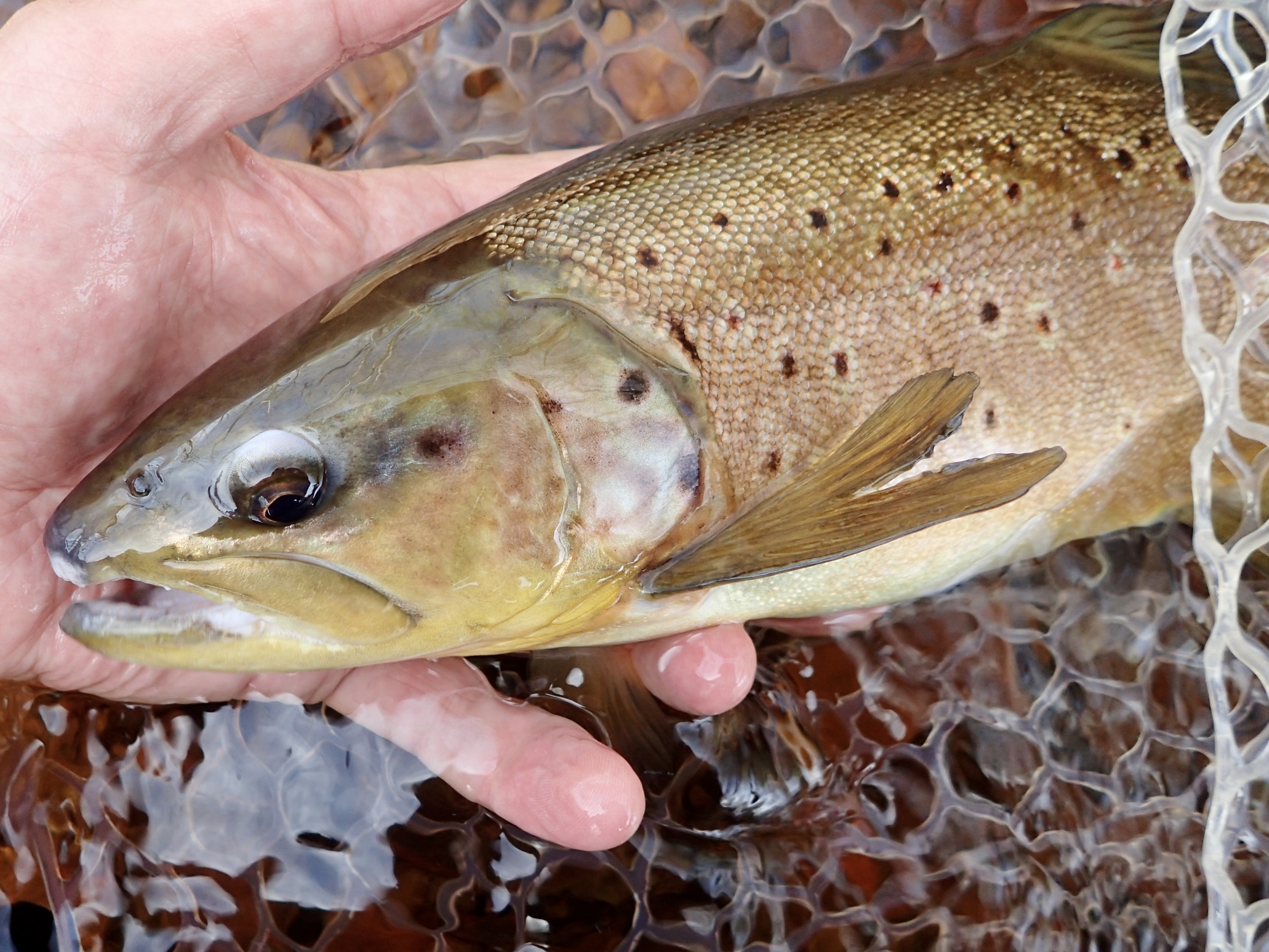
This magnificent brown might not have eaten had I not given it the choice of a caddis. You can get a better view of the fish’s weight and size on my Instagram @stevecultonflyfishing — and while you’re at it, please follow me there.

Hendricksons are here!

We all could use a good Hendrickson hatch, and now we don’t have to wait. Well, you might have to get to the river early enough to secure a spot, and then wait for the bugs to pop — usually early afternoon — but the hatch is on and moving upriver. I guided James and his daughter Charlotte last Friday on the lower river, and the hatch was just getting started. With favorable air temps forecast for the entire week, now’s the time to jump on it. it should be on in the PTMA this week.

Pick an active feeder during the first phase of the Hendrickson hatch, place one of these soft-hackled Hendricksons over its lie, then hang on.

Hendricksons are one of the mayflies that will be featured in my book. They’ll be part of a general chapter on mayflies (caddisflies, stoneflies, midges, and other food sources are the other four categories) which then breaks down into some of the more popular/important specific hatches. The intent is not create an in-depth, Latin-heavy, scientific bug-biology geek white paper; rather, it’s to give you meaningful, useful information. The better you understand the hatch, the more fish you’ll catch.

Here’s this again in case you missed it: The best soft hackles and wet flies for fishing the Hendrickson hatch.

Monday Potpourri: media, book, fishing, best Hendrickson soft hackles and wet flies

Happy Monday. It’s finally not stupid cold and snowing/raining. And yet, here I am, sitting in my lonely writer’s garret, writing this, then back to writing the book. Sunshine beckons. On the other hand, writing about fishing as a job doesn’t suck.

If you read yesterday’s Courant, you saw the front-page article about the propose hatchery budget cuts. Yours truly is quoted often.

I’m getting toward the home stretch in the book writing. I alternate days when I think I’m in good shape with those when I project abject terror. Ok, that’s a little strong, but I’ll be happy when I’m finally done. I’m still loving what I’ve written so far, and that counts for something.

I will be getting out to the river this week to do a little more location scouting, and then hopefully an hour or so of fishing. Won’t that be wondrous? Can you believe that I have not caught a trout yet this year?

If you’re thinking about taking a lesson with me, please wait until June. I’m doing only one this month, which is unheard of for me, and I may be doing only one in May, also unheard of.

I’ve said it before, but I appreciate everyone’s patience as I throw my energies into the book. Since it’s almost Hendrickson time, here’s one from the archives for all you soft-hackled fly lovers: The Best Hendrickson Soft Hackles and Wet Flies.

Fishing with Joe, trout stocking, and finally a weather break!

I gave Joe a wet fly lesson last week — a little early to expect action on a swung fly, but that’s when we had a window. The rain held off, and we enjoyed having vast stretches of the river all to ourselves. The bite was predictably slow, but Joe did a great job with his presentations. I have the highest confidence that he will be a deadly wet fly machine this spring once the Hendricksons begin to pop. Sadly, I saw very little bug activity — not even some courtesy winter stones — only a couple lonely midges.

How Pipeline Pool got its name. I’m working hard on researching accurate information on river access, including parking. Of course, each of you is ultimately responsible for where you park and fish. Pipeline is one of those places where there is plenty of easy access and parking.

The next day, I spent a few hours on river recon for the book — it was blustery and cold and we even had a few sun snow showers to add to the wintry ambiance. But today, it’s warm, and it looks like a decent week to get out and fish. I’ve got more recon time scheduled tomorrow, and hopefully I’ll be able to play a little hooky and wet a line. The river got blasted by that rain last Wednesday/Thursday, but has dropped nicely. What’s more, the state has stocked the Farmington (and a lot of other rivers) — not within the PTMA, but from Hogback Dam down to Whittemore; below the 219 bridge down through Canton; and from Collinsville dam down to Unionville. Enjoy the fresh fish while they last.