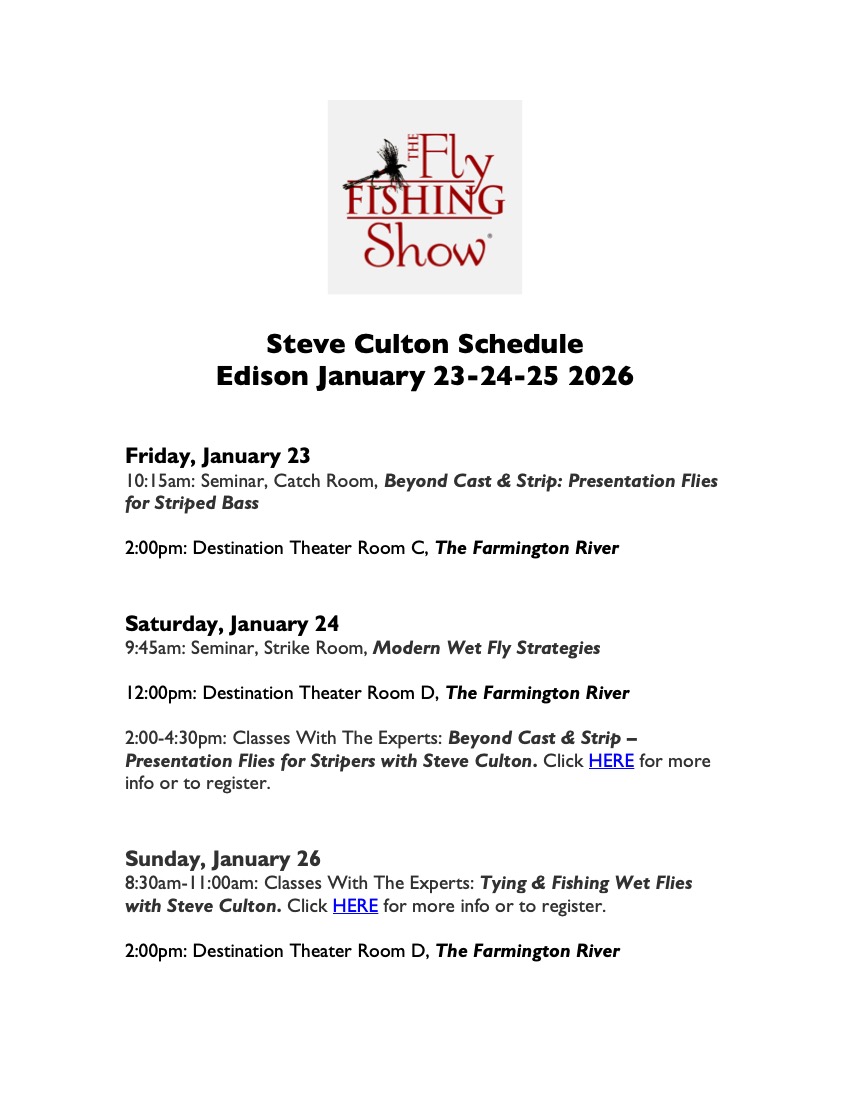
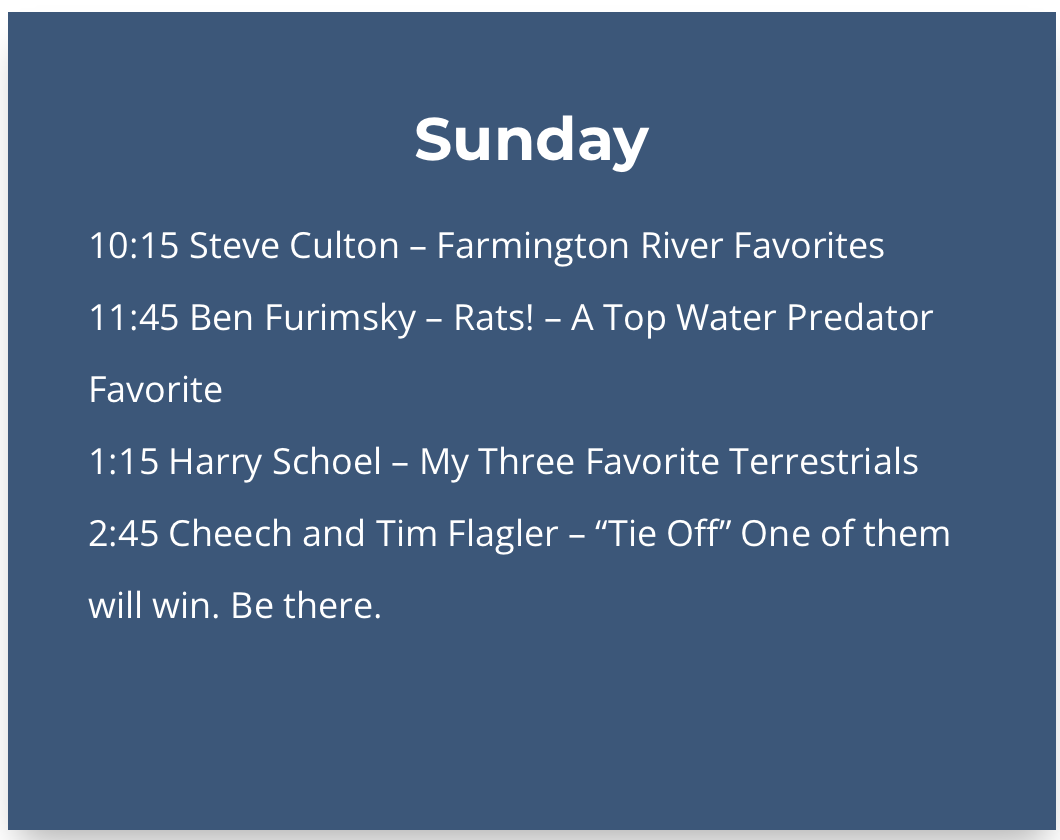
IFTS Featured Tier Sunday, Nov 16 at 10:15am: “Farmington River Favorites”

I’m thrilled and honored to again be named as a Featured Tier at the International Fly Tying Symposium. This year’s IFTS is Nov. 15-16, and I’ll be Featured Tier on Sunday at 10:15am. The subject is “Farmington River Favorites,” but the patterns I’ll be tying will work throughout the northeast. The morning slot gives you plenty of time to see me, hit the show floor, grab some swag, and be back in time for the second half of the 1pm NFL games!

I’m humbled to be a part of this lineup. But you can also see any of the dozens of other master fly tyers on the show floor any time over the weekend.

“Farmington River Favorites” will detail four patterns — more if time allows — that cover major hatches and fly styles. You’ll get a wet fly, a dry, a nymph, and a streamer. All are high-confidence, proven guide flies, fairly simple to tie, and staples in my box. As I mentioned, there’s an excellent chance these patterns will shine on your home waters. I’m looking forward to seeing you, so please be sure to come say hello.

You can see me live, and on the big screen! We’ll do Q&A, and if you want to hear about my new book, “Fly Fishing Guide to the Farmington River,” we can do that, too.

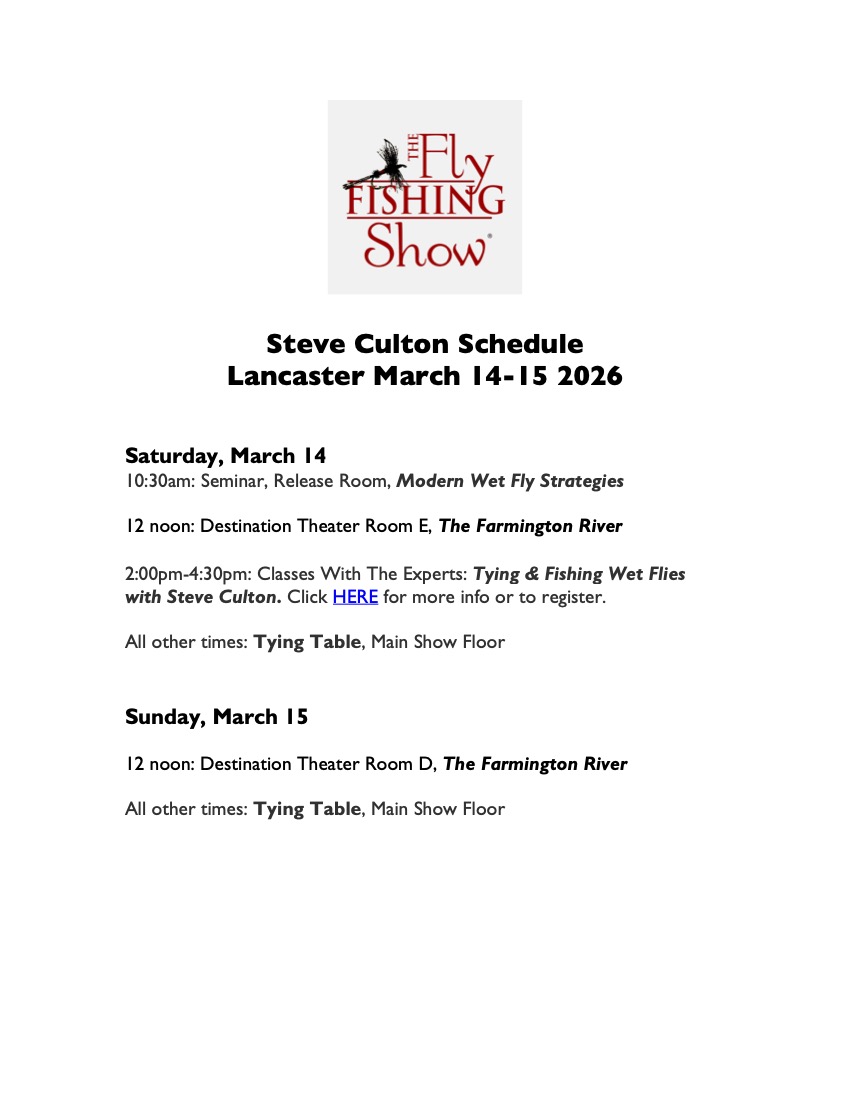
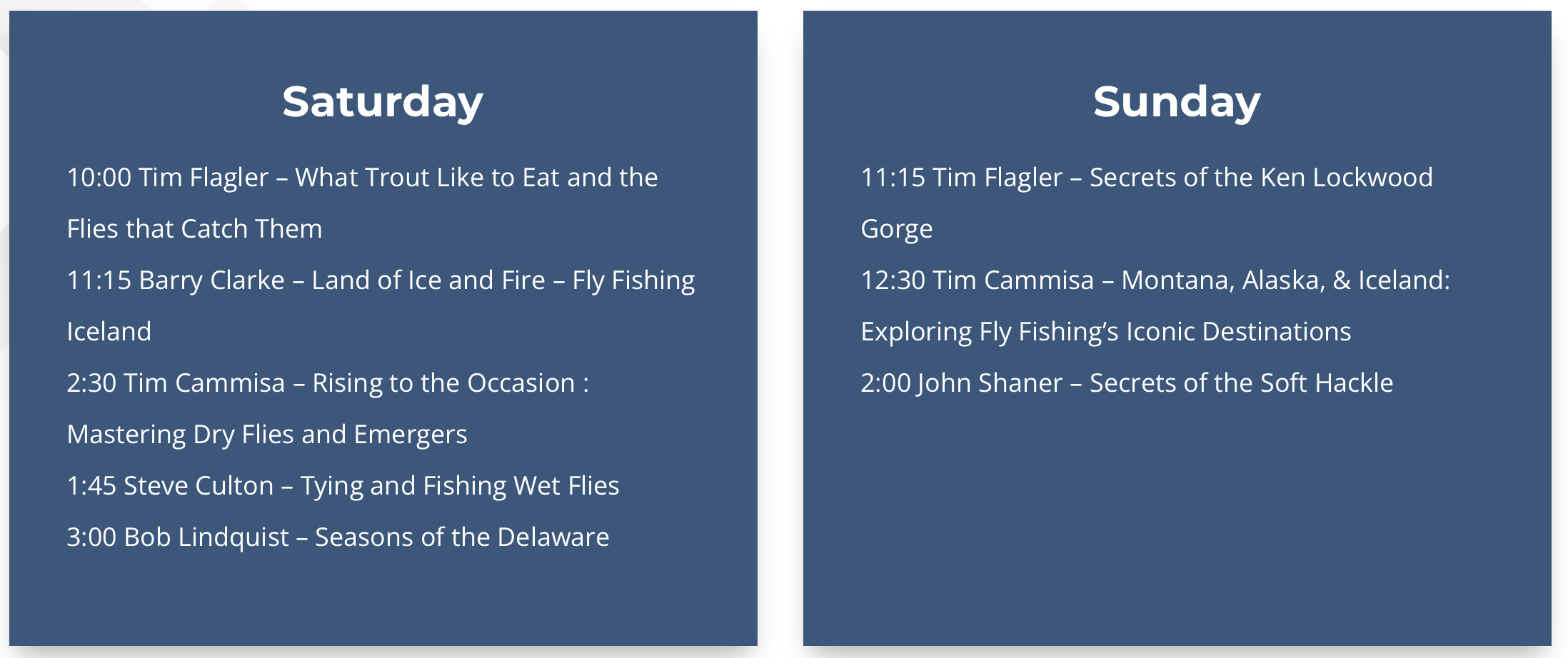
IFTS Seminar: “Tying and Fishing Wet Flies,” Saturday, Nov. 15 at 1:45pm

One of the better values in fly fishing is the admission price you pay at the Fly Fishing Show — and in this case, its sister show, the International Fly Tying Symposium. IFTS is Nov. 15-16 in Somerset, NJ. For just 20 bucks –15 on Sunday — you get the chance to learn how to tie and fish from some of the best fly anglers around. In addition to formal tying demos, you can walk the show floor and see so many masters of the craft spinning up wondrous creations. And then, there are the seminars, which are included in your admission price.

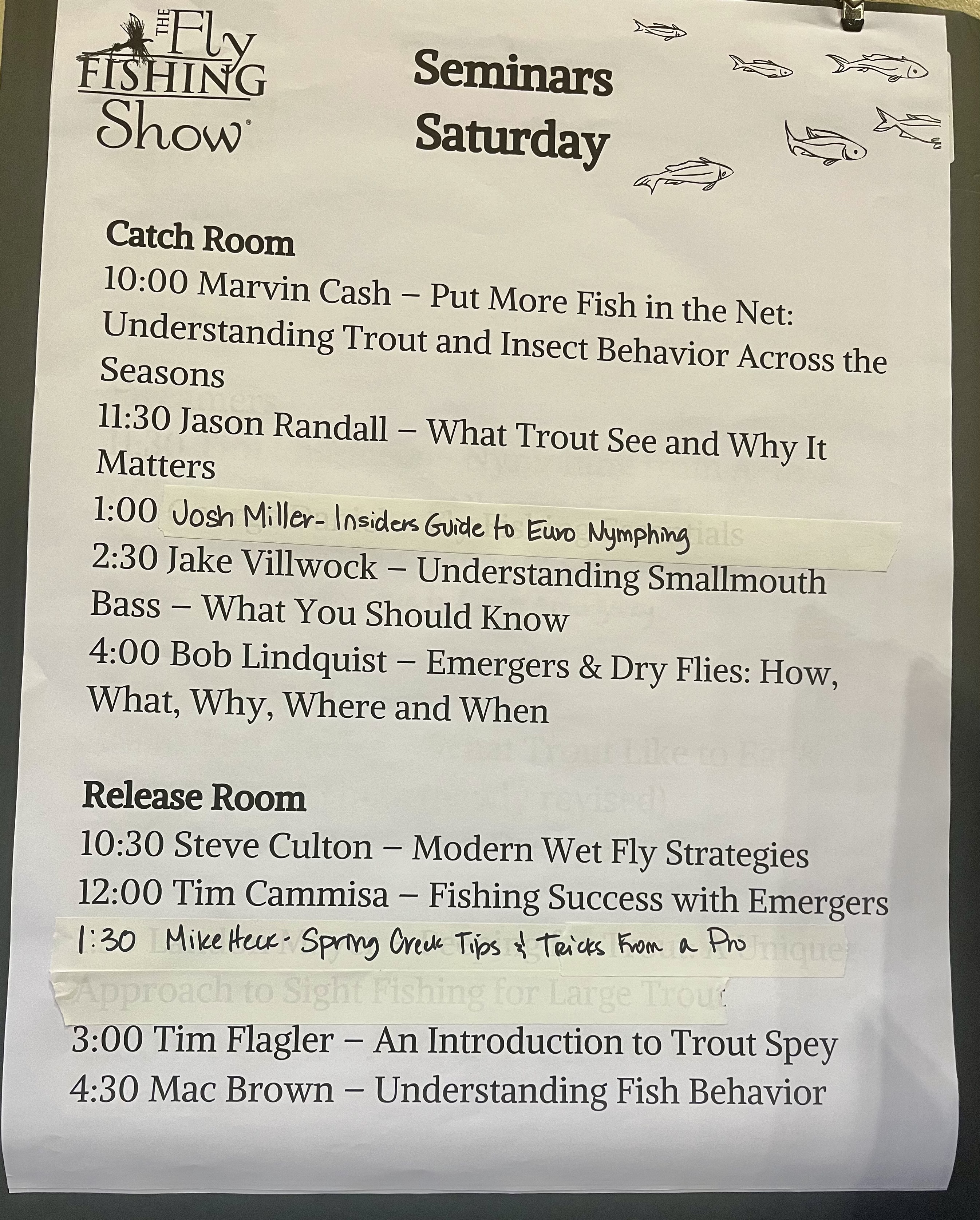
Not a bad lineup. Think you could learn something from these people? Although, I’d watch out for that Culton guy….

On Saturday, Nov. 15 at 1:45pm, I’ll be presenting “Tying and Fishing Wet Flies.” This seminar is exactly what its title suggests. I’ll teach you about wet fly types, and the kinds of feathers, furs, and materials you’ll need to tie them (and where you can find them on the show floor). Then, we’ll do the next best thing to going on a stream, as I take you through some basic wet fly presentations, strategies, and tactics. You’ll want to know how to build a wet fly team leader, and I’ve got you covered. And of course, we’ll do Q&A after.

If you’re not fishing wet flies, you’re not catching nearly as many fish as you could be. Even if you currently tie and fish wet flies, I guarantee you’ll learn something new. See you there!

Just over two weeks away: International Fly Tying Symposium, Nov 15 &16

If you want to be a rock star, you can’t just hang out with Aerosmith for the weekend. But if you tie flies, and want to get better, here’s your chance to do the equivalent with some of the best tiers in the world. You know a lot of the names: Tim Cammisa; Barry Ord Clarke; Tim Flagler; Cheech Pierce; Jeff Rowley; Son Tao. Those are just six of the dozens of work-class tiers who will be there. There are tying demos, seminars, and tying classes. But in its best, purest form, IFTS lets you walk the show floor and meet and greet and watch and learn and talk with all of these people.

If you want to become a better tier — or just learn a few pro tips — go hang out with my buddies Lou DiGena and Bart Lombardo. They’re two of the nicest, most skilled tyers in the world, and they’ll both be at the IFTS this year.

I’ll be on the show floor tying — please come say hello — and I’m honored to be doing a Seminar and making a Featured Tier appearance. The seminar is Saturday, Nov 15 at 1:45pm — Tying and Fishing Wet Flies. It’s free with your show admission. Sunday Nov 16 at 10:15am, I’m Featured Tier presenting Farmington River Favorites. That’s also part of your admission. I don’t mind telling you that I’ll be giving away some flies to a few random attendees over the weekend, so there’s some more incentive for you to attend.

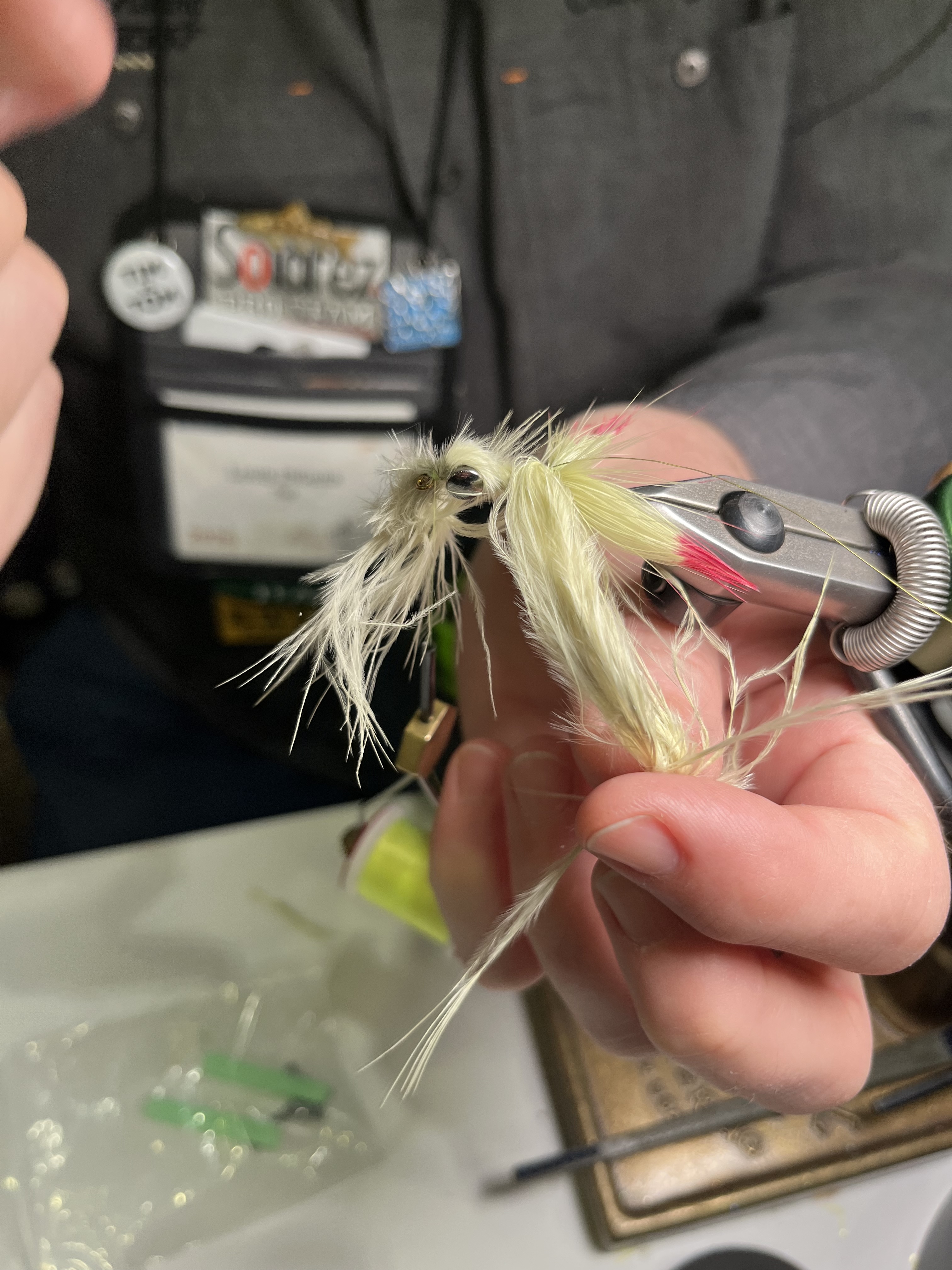
If you’re not fishing LaFontaine’s Diving Caddis, you’re missing the chance to rack up impressive numbers. I’ll show you how to tie this and other high-confidence patterns at this year’s IFTS!

And did I mention the vendors? Every year I come away from this show with some hard-to-find material (s). Bring a shopping list! Naturally, if you’re there, please come say hello. It’s always gratifying to place faces to names.

Mark your calendars: the International Fly Tying Symposium is Nov. 15 & 16 in Somerset, NJ

The International Fly Tying Symposium is the world’s largest show dedicated to fly tying. And what a show it is! Vendors with all kinds of good stuff (bring a shopping list — I always come away with some nifty items); some of the best-known fly tyers in the world (like Tim Cammissa, Tim Flagler, Barry Clarke, Cheech Pierce, and Son Tao, just to name a few) all ready to meet and greet and answer your questions; live tying demos (free with admission, and I’m doing one of them); seminars (ditto free and me); and tying classes led by experts (you must pre-register here).

My wet fly seminar on Saturday the 15th is unique to the Symposium, so there’s your reason to come. I’ll talk about materials, tying, wet fly styles, and when, where , and how to fish them. It’s the next best thing to a private lesson.
My Sunday 11/16 demo will do two things: show you how to tie four proven, high confidence patterns for this highly technical river, and get you home in time for Sunday afternoon football.

I’ve said it before and I’ll say it again: events like this are a tremendous opportunity learn new techniques, improve your skills, and catch more fish. Please stop by my tying table, or come see me talk, and be sure to say hello.

Farmington River Report early September: a wet fly lesson, broodstock sampling, challenging conditions

I guided — we’ll call him “Bob” because he’s in incognito mode — last Thursday. We did a little dry fly and a lot of wet fly. The Farmington can be a highly technical dry fly arena, and sometimes it comes down a perfect drift and a little luck. But a good starting place is a long leader. I was happy to see that Bob was using a 13-foot minimum line-to-fly leader/tippet length. We added a couple more feet of 6x and had at it. Unfortunately, we missed the Trico spinner fall, but we did manage some practice, and by the time we made the decision to go to wets, Bobs drifts were noticeably better.

We spent the next six hours on classroom, then banging around the PTMA, as well as above and below it. Like many people who take a wet fly lesson with me, Bob had to learn to wait a few beats — “Are you still there?” — after the hit to let the trout hook itself. We missed a handful of strikes, but stuck four and landed three, which was pretty darned good under some tough conditions. Low water/seasonal hint: all of our hookup came in fast, bubbling water.

A lovely wild brown from the PTMA, taken by Bob on my Drowned Ant soft hackle. And on the first cast! At first, Bob thought he was hung up on a boulder. But boulders don’t shake their heads…

Which brings us to the conditions. We’re out of meteorological summer, and the water is running clear and low. Because of the drought, the trees are behaving like it’s fall, turning color and especially shedding leaves. On windy days from now until the trees are bare, expect organic matter to be blowing into the river. Leaves were a constant challenge for us on this gusty day. The trout and bugs are also in a transition. Most of what’s hatching is very small (there are exceptions, like Isonychia). The trout are getting into pre-spawn mode. This adds up to more frequent windows where fish are much harder to catch. Bob was the only angler I saw land a fish on Thursday, and we encountered multiple anglers who were astonished by our success. Well done, Bob!

But wait, there’s more. Normally, the slug of rain we received over the weekend would mix things up a bit. However, Tuesday through Thursday this week, the CT DEEP will be drawing down the dam release to do their annual broodstock sampling. You can still fish the river, but vast stretches will be rendered as rock gardens. If you do fish, please give the sampling crews a wide berth. Things should be back to normal by Friday.

However, that normal will still mean challenging fishing — which makes every trout you land even sweeter. Catch ’em up!

The best wet fly dropper material continues to be old reliable: Maxima Ultragreen

Part of my wet fly lessons includes leader construction. As we’re building a team of three flies, I tell students that the single best material I’ve found for dropper rigs is 4-lb. Maxima Ultragreen. In fact, I tell them, it’s the only stuff I use. But every once in a while, I try to cheat the process and make the tag with some other stuff, thinking it will be OK. And it usually isn’t.

The most recent incident came last week when I tied a simple two-fly wet fly team for smallmouth. I lazily decided to attach a piece of Maxima Ultragreen to the end of the tapered 3x leader. A few casts into my fishing, the non-Maxima tag section was already tangling. What do you know? I re-rigged the leader with Maxima Ultragreen 4lb for the dropper tag and point fly, and suddenly all was right with the world.

The one, the only. Accept no subsitutes.

How much do I love and use this stuff? I buy it in the One Shot spool size, which gets you 280 yards of glorious green dropper goodness. I just wrap 30 yards of it around a smaller spool, and it fits easily into my pack or on my tippet holder. It’s so true: confidence catches fish.

Extra! Extra! Read all about Terrestrials!

Holy mixed metaphors, Batman! Or would that be idioms? Either way, I wanted to talk about terrestrials today, specifically wet or sunken flies.

It’s prime terrestrial season in these parts. Hoppers, Stimulators, beetles, crickets, ants, flying ants — they’re all fair game. I believe most anglers think of terrestrials as dry flies, and that’s not surprising. Watching a trout stomp a hopper or sip an ant from the surface is one of the big bonuses of summer fishing. Terrestrials also make great floaters for dry-dropper combos, whether it’s a single wet or nymph dropped off a hook bend, or a classic three-fly rig like the hopper-copper-dropper. I like to wander the Farmington’s riffles, runs, and glides on a breezy summer afternoon and prospect with a terrestrial dry and dropper.

But sometimes, I’ll do my terrestrial fishing subsurface. Consider this: what happens to all those hapless land insects that fall into the river? They struggle, and some get eaten. I think most don’t — get eaten — at least not on the surface. All that unconsumed biomass eventually sinks, and becomes a new item on the subsurface menu. Drowned bugs are easier to eat, and require less risk for the trout to dine. Winner: you.

Was a big golden stone. Now, it’s a hapless hopper.

Here are a couple wet flies to get you started on your summer terrestrial wetstravaganza. The Drowned Ant is an old favorite, not too hard to tie, and can be completed with very easy-to get materials. It’s been one of my most consistent producers since I created it. If you’re a fan of the oddball and obscure, try the Hopper Hammerdown, which is based on a steelhead stonefly by Dave Hall. The hits are electric.

Just make sure you have plenty of 4lb. Maxima Ultragreen.

The summer pattern settles in

Here we are, already at the mid-point of July. Blink, and you might miss summer. We really don’t have much to complain about weather-wise — it’s standard-issue hot and humid, there have been rains (but nothing catastrophic [he said, knocking on wood]), and the reservoirs are full. The Farmington is running clear and cold — in the 50s coming out of the dam — and at a terrific summer height. Please be sure to carry and use a thermometer, and make your cutoff 67 degrees. You should be able to find ample cold water from the PTMA and points north. Tip of the week: ants, beetles, crickets, and small hoppers, fished in faster water and languid currents under trees and shade. Oh. And small nymphs. You can thank me next time you see me.

Try Stewart’s Black Spider fished as a dropper. Size 16-20, please.

I owe you a Block Island report, and spoiler alert: it’s not good. Locally, I know a few surfcasters who are doing OK. Things may pick up in another 30 days or so.

Meanwhile, I’m trying to play catch-up with my fishing. The yard work is settling down a bit, the garden’s in good shape, and the book is off with others. I think I’ll smoke a few cigars while I’m at it.

Stay cool and have fun.

Farmington River Report 7/8/25: Dodging thunderstorms, swinging wets, catching trout

John and Chris took a wet fly lesson with me on Tuesday, and we were having grand old time — a little streamside classroom action, a leader tying clinic, lots of fantastic Q&A (very inquisitive minds, these two, which I loved). When we finally got into the water, darkness fell across the land, and the thunder rumbles began.

This is good time to say this: get out of the water and seek shelter if there’s a threat of electrical storms. I am routinely astonished that some people still don’t do that. End of public service announcement.

We drove along the river trying in vain to find sunshine, which took about an hour. By then, the storm was over, and we had blue skies and hot weather. We headed north to fish above the PTMA. Finally able to wet a line, we got into some fish, although in the bright sunshine they didn’t come easy. It wasn’t until after the session ended that John and Chris were able to test their new wet fly skills. Both took multiple trout during the evening rise. Tremendous job, gentlemen. Your instructor couldn’t be prouder!

This brown fell for my Partridge and Light Cahill soft hackle. So simple and so effective! John Ryan photo

Sorry, sorry, sorry, or: Book duties keep calling

By now, I’d hoped to be back to my normal routine on these pages. But every time I think I’m in the clear, the book comes a callin’. So that’s why posts have been so spotty. All I can tell you is that when things do return to normal, you’ll be the first to know.

I just finished an article for Surcasters’ Journal. I’ll letcha know when it comes out.

It’s getting steamy out there. Time for the summer under-waders kit.

Fishing in brief: Block Island stunk again this year: slow, slower, slowest. Then there was last week on the Farmington. I gave Andrew a wet fly lesson, and it was likewise a non-action fest. We fished three marks, and it wasn’t until the last one that we found some fish. But Andrew was enthusiastic and persistent, and we ended up with two in the hoop for the win. Great job Andrew! I stayed to fish the evening rise. The location was above the PTMA, and the hatch and rise activity was one of the worst I’ve experienced in a decade. Very little hatching (mostly dorothea) and, almost impossibly, nothing on it except for a few small fish. Highly disappointing. I managed two small wild browns on wet flies and one stocker rainbow on the way out after I could no longer see my fly. Blech!

Of course, we hav the blank canvas of this week, upon which we may paint spectacular fishing images. Yeah. Let’s go with that.