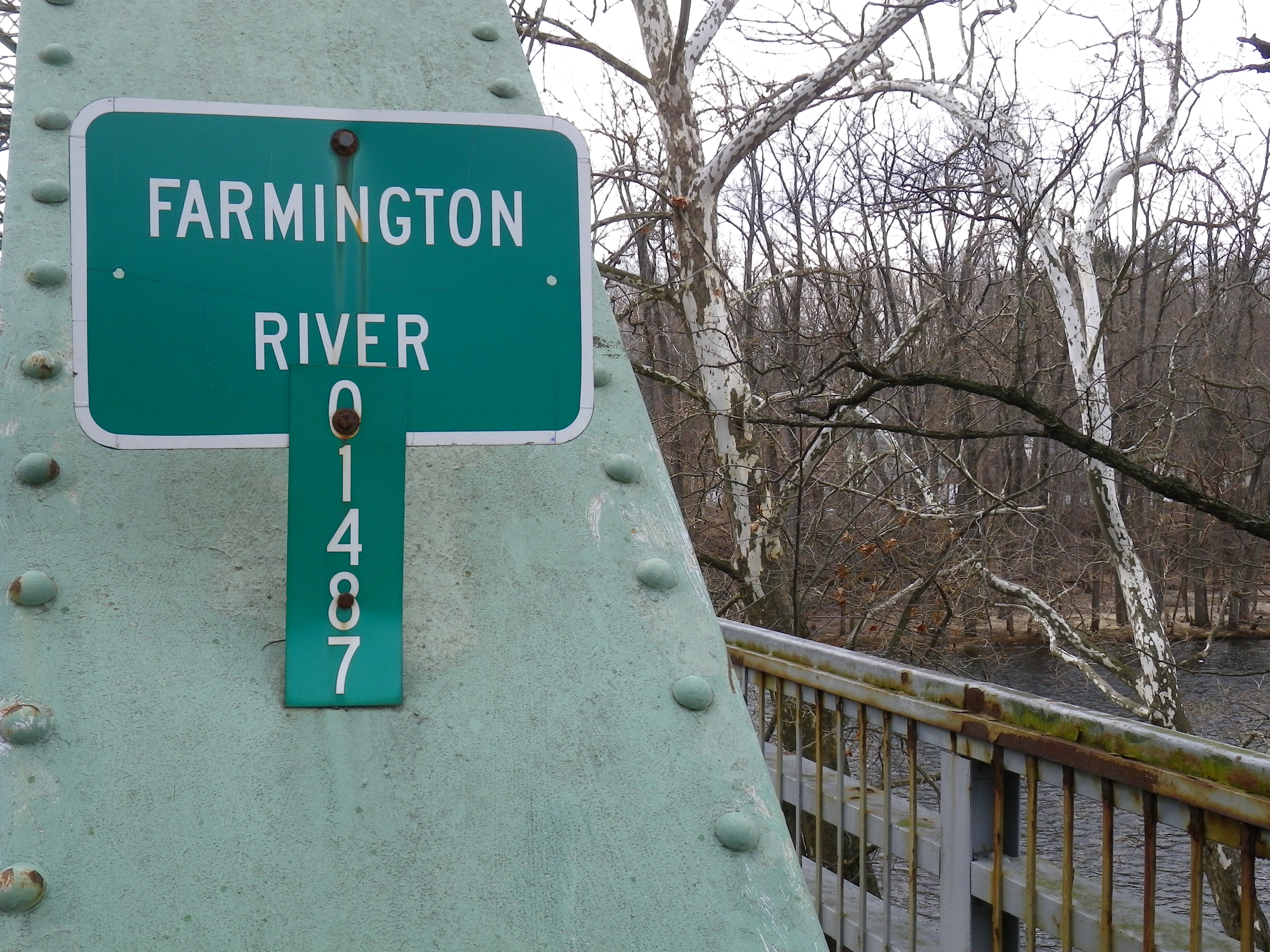
No Hendricksons Monday on the Lower TMA of the Farmington River. At least not in the two spots I fished. It could have been the cool, overcast day (there were small olives). Or, perhaps things are simply winding down. One of the nice things about the Farmington is that the hatches move upstream; two friends that fished Monday just below the upper TMA reported good Hendrickson action. I swung a team of wets (Squirrel & Ginger caddis on top of two Dark Hendricksons) and 2/3 of the fish I caught took the caddis.
Back to work and family responsibilities for the afternoon and early evening. Then off to find some stripers at night with Dr. Griswold. There were some signs of herring, and while there were no bangs and pops on the surface, we did find some hungry fish. Bob brought his two-hander, and I went with the five-weight. We didn’t get anything super big, but there were some legal sized fish in the mix. I fished my Rock Island flatwing, which the bass again found to their liking.
Dr. Griswold with a nice 31-incher on the two-hander. Smile, Bob.
Can’t let Bob have all the fun. A nice keeper bass on the five-weight for me.
All five weights are not created equal. I should know. I’ve got four of them. You may ask why I need four of the same rod. The answer is that while they’re all five-weights in name, they could not be more different. Each is a specialist in its field. The two I want to talk about here are my 6’ Fenwick glass rod and my 9’ TFO TiCr.
This all started with a steelhead trip I had planned with my ten year-old. We had to cancel due to weather, and we were were both a little bummed about it. But I told Cam that since we weren’t making the drive to Pulaski, we could spend the day fishing closer to home. I gave him options: trout on the Farmington, stripers on the Hous, or wild brook trout over the hills and far away. Cam decided on brookies. I thought that was a fine choice.
I’ve had the Fenwick for many years now. It’s a sweet 2-½ ounce stick that flexes down to the handle. A five-weight line works just fine on it, and like bamboo it’s an exceptionally easy rod to cast. Cam told me he wanted to do a little more of his own fly casting this year, and this would be a good starter setup for him. Unfortunately, the first stream we hit was turbid with runoff. So we hopped in the truck and took a little drive north. The second stream was in fine fettle, medium high, and clear as an aquarium.
It took us several tries to hook this fish. She kept whacking the microbugger, but we couldn’t seem to get a good hookset. Classic haloes and Fontinalis fin.
Cam got to work with on the surface with a size 14 Improved Sofa Pillow, but we had no takers, even over some confidence-is-high pools and runs. Undeterred, I tied on a blackish micro-bugger with a chartreuse bead head. That did the trick. Whereas the brookies were bashful about showing themselves on the surface, they were more than happy to nip and tug as soon as the fly settled beneath the surface. We landed four nice brook trout with glowing blue haloes and dropped a bunch more. It was a tired and hungry but happy hike out of the mid-April woods.
Eight hours later, I was swinging flatwings for stripers with my TFO TiCr five-weight. Where the Fenwick is a flexible birch sapling, the TFO is one of those redwoods you could drive your car through. I mate this rod with a 9-weight Rio Outbound floating line, and even with that night’s ten mile-per-hour crosswind, casting an eight inch fly was effortless – provided I found that sweet spot where the shooting head met the running line. Not easy on a moonless night.
I was mostly greased-line swinging, my favorite presentation with bigger flatwings. Sometimes the takes are nearly subliminal – instead of a tug, you feel a minute change in pressure that exponentially accelerates into mayhem. On this night it was different. The fish were taking the fly moments after I had completed my mends (I was fishing a narrows that only allowed two) and the takes were an adrenaline-produced amalgam of pull, boil, and surface thrash. I took three stripers on the greased-line swing; two of them in the double-digits pound class.
31″ of pure pleasure on the five-weight. She fell for my Rock Island flatwing, tied about 8″ long.
Both of those larger fish were quickly played and landed. Both tried to run upstream when I attempted to coax them onto the sandbar I was standing on, and the side pressure I applied with the butt of the rod easily dissuaded both.
Miss Cow never showed up. But she’s out there, somewhere. And one night, on a moon tide, she and I and one of my trusty five-weights are going to go for one hell of a ride.
It’s getting to be that time of year: herring moving upriver with plenty of cow bass along for the ride…or at least a meal or twenty. A floating line, a greased line swing, a Herr Blue flatwing swimming broadside or just hanging there, hackles undulating in the current — I can almost feel the sensation of the strike.
To the fly: my nine-feather flatwing translation of the R.L.S. Herr Blue bucktail, tied about 11 inches long. I really like the colors on this one.
The Herr Blue Flatwing, nearly a foot long.
Hook: Eagle Claw 253 4/0 Thread: White Platform: Ginger bucktail Pillow: White Support: White neck hackle Body: Silver braid Tail: 2 white saddles under 1 pink saddle under 2 strands pearl flash under 1 violet saddle under 2 strands silver flash under 1 pink saddle under 1 blue saddle under 2 strands light green flash under 1 orange saddle under 2 strands purple flash under 1 olive saddle under 1 blue saddle. Collar: White and ginger bucktail, mixed Wing: 20 hairs dark blue bucktail, 15 hairs olive green, 15 hairs grey, 15 hairs orange, mixed.
Cheeks: 3 hairs each of orange, chartreuse, pink, turquoise bucktail, mixed Topping: 7 strands peacock herl Eyes: Jungle cock
A closer look:
And a proven performer. Not quite a cow, but easily into double-digit pounds. The fly is same as the one in the top picture. This striper was taken last spring on a greased-line swing.
I stole that phrase from Grady Allen, who used it to describe fishing on the Farmington after the stocking trucks had done their work. For a shining hour or two, it’s a fish on every cast. You can do no wrong. You savant, you.
It’s kind of the same with early season stripers. The water temp shoots up 10-15 degrees in the course of a month. The fish are on the move. And they’re hungry. All you need to do to catch bass is find them and put a fly in their area code. Find a big enough school, and your arm can get tired right quick. And the thumb on your landing hand looks like someone took a belt sander to it.
Like casting to freshly stocked trout, the fishing isn’t very technical. But for the first few trips, Lord is it fun.
Friend Todd with one of his 400,000 stripers. Dusk can be a magic time.
Six of us ventured out to an old stomping ground to catch the bottom of the tide, which conveniently fell at dusk. We quickly found stripers, and the fishing was stupid good for several hours. I was using my 10 and 1/2-foot switch rod with a floating line and a 4-foot T-11 tip. Fly selection was irrelevant. I fished a Ray’s Fly-like bucktail till it was ground to kibble and a September Night. Everyone else used their own favorites. I caught them on the strip, the swing, and the dangle. Wonderfully easy to please, this lot. The only negative was a 10-15mph wind out of the northwest. But that’s the price of admission along the shore, isn’t it?
My original plan was to fish until full ebb, then seek my striper pleasures elsewhere. But the wind had picked up. And I had had my fill.
There was nothing miraculous about it. I simply switched liquids. Let me explain.
I had an invite to a casual gentlemen’s (gentlemen being used in only the broadest terms) dinner at my brother-in-law’s Friday night. He was baching it for the weekend, and a few of us were gathering to enjoy the pleasures of food and wine. Since Ye Olde Striper Spot was on the way, I figured I’ve give it an hour before I made my way to Kevin’s house.
A cold front had moved through, bringing with it torrential rains and a biting easterly wind. The water was the aforementioned colors, stained, high, and chopped to pieces by the broadside gusts. To make a long story short, I saw one striper landed in 55 minutes of fishing, and that by a spin angler who was bombing casts a ‘way out there.
So, I decided, if I cannot catch stripers this evening, I shall now drink spectacular wine.
First, you need a brief introduction to Kevin. Kevin is passionate about wine the way I’m passionate about fishing. Which is to say it rules his life. I am likewise vino-infected, but only fractionally compared to Kevin. He has a stupid good wine cellar, and the only thing Kevin loves more than his wines is sharing them. Luckily, I am on the A-List.
The first wine we made love to was a 1999 Opus One. I certainly can’t afford it, but it is opulence in a bottle. If you’ve had it, my next sentence will blow you away: It was my least favorite wine of the evening. Of course, that’s like saying Giselle Bundchen isn’t as attractive as Brooklyn Decker. It’s all a matter of personal taste.
Next on the decadence docket was a 1997 Niebaum-Coppola (yes, as in Francis Ford) Rubicon. Utterly spectacular. We all thought that there was just a little more there-there than the Opus. Sorry, Bob and Phillipe.
I have to tell you at this point that I make a Tuscan-style steak that most definitely doesn’t suck. How much does it not suck? One of the guests had told Kevin that he wasn’t coming unless I was going to be manning the grill. (Isn’t that right, Joe?) It’s a simple combination of NY strip and flame and garlic and salt and pepper and olive oil and fresh rosemary and lemon juice. The wine we drank with it was a 2001 Fontodi Flaccianello. Wine Spectator only gave this bottle a 97 — churls — but if there is a more perfect bottle-to-food pairing, I have yet to experience it. The bite of the lemon and the rosemary and the texture of the beef melt seamlessly into the wine as it fills your mouth. I have goose bumps just thinking about it now. Absolutely stunning wine. My favorite of the evening.
Last but not least, a humble little 1998 Ornellaia to go with our pasta and sausage and veal. Since I can’t afford this bottle either, it was wonderful to create the illusion between sips that I was independently wealthy and dining in a private little restaurant in Bolgheri.
I don’t recommend that you drink several glasses of fine red wine and then go fishing. But the other way around — now that’s something I can heartily endorse.
You don’t know if you don’t go, so this morning I headed to Ye Olde Spring Striper Spot to see what the outgoing would bring.
I can’t remember the last time I saw ice in saltwater, but there it was, a hoary reminder of last night’s unseasonable cold. Water was slightly off-color and a sparkling 41 degrees. A most unbenevolent 10-15mph wind lashed at my face, turning the water into a frenzied chop that made riplines hard to see. The four fly anglers who had been fishing were retiring for the day, and the two spin guys weren’t very far behind.
Yup. Didn’t look like it was going to be my day.
On the plus side, I got to re-acquaint myself with my old friend the sea. My morning cigar was splendid, though the wind made short work of it. And I got to shake some of the rust off my two-handed casting (to be fair, there was enough oxidation there to want a wire brush). I test-drove the four-foot T11 sink tip I made over the weekend, and discovered that I could easily get my fly to the bottom in current with some strategic mends. Best of all, I had the whole place to myself.
So, not yet. But soon. And, like Ah-nold, I’ll be back.
I usually fish for stripers twelve month a year, but somehow January and February escaped me in 2013. March nearly got away, too. But I took care of that last night.
Met old fishing buddy Dr. Griswold to catch the bottom of the tide at one of our old haunts. The conditions were certainly favorable. A strong moon tide, good water level, and a water temp of 46. But alas, no stripers for either of us. I swung. I greased lined. I nymphed. I stripped. I jigged. I fished deep, on top, and all points in between. But, you can’t catch what isn’t there.
On a positive note, Bob didn’t lose his Christmas gift. Every year I tie some flatwings for friends as a present, and every year Bob loses his fly on the bottom or in a tree within the first five minutes of fishing it. Not last night. Well done, Bobber.
What Santa brought this year: the Rock Island flatwing
I was also able to coax ninety minutes out of an E.P. Carillo Golossos while on the water. Terrific cigar.
And when I got home, the choir was singing. Spring peepers. Their first performance signals that the over-wintering bass in my local rivers are getting ready to move.
Long before breathable waders and UV-cured resins, fly anglers began fishing the salt for stripers. They brought with them their corpus of freshwater knowledge – and also their flies. Saltwater fly fishing (and therefore saltwater fly tying) was in its infancy. So it only makes sense that they would borrow tackle and tactics and flies from whence they came.
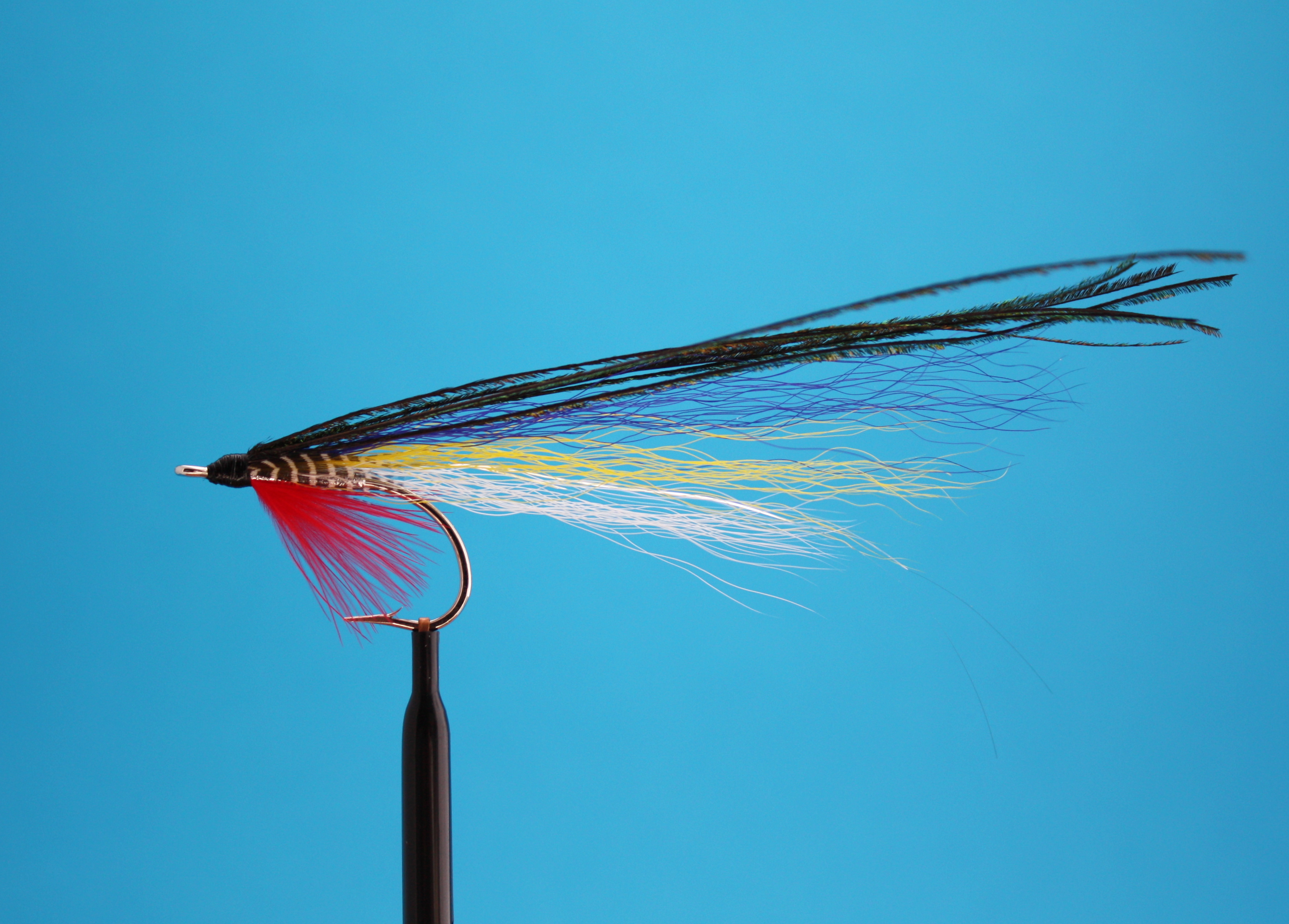
I have a particular interest in traditional fly fishing and tying methods, whether for trout or stripers. For several years now I’ve been tying and fishing these legacy striper patterns, and I’d like to share one of my favorites with you: the Magog Smelt Bucktail.
The Magog Smelt Striper Bucktail
The Magog Smelt is an old landlocked salmon fly. It takes its name from Lake Memphremagog, located between Vermont and Quebec. It was the favorite striper fly of an old Rhode Island sharpie named John Abrames, who taught his son, Ken (you may have heard of him) to fish for striped bass with it. Ken in turn told me about the Magog Smelt, and now it’s one of my favorite bucktails and color schemes.
Hook: Eagle Claw 253 1/0
Thread: Black
Body: Silver braid
Throat: Red marabou
Wing: 30 hairs white bucktail, under 2 strips silver flash, under 30 longer hairs yellow bucktail, under 25 hairs longer purple bucktail, under 5-7 strands peacock herl
Cheeks: Teal flank tip
Tying notes: I tie the Magog Smelt Bucktail the Ray’s Fly format, from three to five inches long. The fly here is about 3 ½ inches. Keep each group of bucktail nice and sparse, and make each progressively longer. I treat the teal almost as a veil over the body braid. Back in the day, the old-timers painted white eyes with a black pupil on the head, but you could use jungle cock or leave it blank as I did here. I’ve never tied this fly with eyes, and the stripers love it au natural.
In a vast Sargasso Sea of opaque, doll-eyed baitfish patterns, the R.L.S. Herr Blue shines as an understated alternative. This is my favorite fly when the bait is juvenile herring.
Sparse construction and impressionistic design are hallmarks of the R.L.S. bucktails, outlined by Ken Abrames in Chapter 2 of A Perfect Fish. There are 14 flies listed. You’re probably familiar with the most famous of them, the Ray Bondorew classic, Ray’s Fly. There are enough color combinations among the R.L.S. Bucktails to match many of the baitfish stripers favor – or match or contrast the color of the sea and sky on any given day. (Think I’m crazy on that last one? Tie up an R.L.S. Easterly on a grey, foul day when the wind is blowing 20 knots out of the east and see what happens.) Size-wise, you’re only limited by the length of the bucktail you have on hand.
Like Ray’s Fly, the Herr Blue embraces the philosophy that less is more – with only 66 total bucktail hairs, you can easily read the newspaper through its body. It’s also a fascinating exercise in color blending, with no less than nine different bucktail colors that create all kinds of secondary and tertiary hues.
Herr Blue is the kind of fly that doesn’t get a lot of attention on internet forums or in flyshop bins. That’s easy to understand. When it comes to popular perception of saltwater patterns, impressionism always takes a back set to realism. That’s a shame, because flies like this reveal to you just how low on the intelligence scale fish really are.
But now, you’re in on the secret. And you’re going to love the look on other people’s faces when you show them the fly you’ve been catching all those stripers on.
Ich bin ein Herr Blue (click on image to enlarge)
Thread: White
Hook: Eagle Claw 253 or Mustad 3407 (this is the EC 253 size 1/0)
Body: Silver mylar braid
Wing: Bucktail, 15 hairs white, 5 ginger 1.5x hook length, mixed, under 8 violet, 4 pink, 10 light blue mixed 2x hook length, under 2 strips silver and 2 strips purple flash (I only use one of each for the smaller versions) under 10 dark blue, 4 emerald green, 6 smoky blue/grey, 4 orange mixed 3x hook length.
Topping: 5-7 strands peacock herl a half inch longer than the longest bucktail
Eyes: Jungle cock (optional)
Tying notes: This fly is 3½” long. I usually tie it from 2½” to 6”. In the smaller sizes, I use only one strand of flash per color. You don’t have to make yourself crazy trying to calculate bucktail lengths for different sizes; sometimes I just make each section about a half-inch to an inch longer than the previous one. The jungle cock eyes are a nice touch, but most of the time I fish this fly neat – no eyes. One question I get a lot is, “Do I have to actually count the bucktail hairs?” Today, my answer is yes. Two reasons. One, I’d like you to see just how few 66 bucktail hairs really is. Two, you are embarking on adventure in controlled color blending. Think of it as a custom color you order in a paint store. They take the base and add precise shots of pigment to it to create the same color over and over. Same thing here. This fly was created by a painter with an exceptional eye for color. I trust his judgment, and I want to try to see what he envisioned when he specified this blend. Having said that, the universe will not implode if you use 12 violet, 6 pink, or 15 light blue bucktail hairs. So, do it by the book, then improvise to your heart’s desire. Try to keep things sparse, though. A little bucktail goes a long way.
My name is Steve Culton, and I’ve been fishing Connecticut’s Farmington and Salmon Rivers for nearly 50 years. My areas of specialization include wet fly fishing, dry fly fishing, streamer fishing (fresh and salt), and indicator nymph fishing. Small streams are also a passion, as they give us an opportunity to catch wild trout in a natural, more intimate setting. And let’s not forget those cantankerous Housatonic River smallmouth bass. My approach to fly fishing for striped bass is quite different from most other anglers’: I use a floating line, traditional trout and salmon presentation methods, and sparse, impressionistic flies like flatwings and soft hackles.
I am a teaching guide. (I have had many clients ask me if I am a teacher for my regular job. The answer is no, but I am flattered by the question.) We all like to catch fish, but if your immediate goal is sheer numbers you’ll probably be happier with another guide. If you’re interested in learning new methods, building your skill sets, fishing new flies, expanding your general knowledge, or exploring a river, small stream, or salt pond, I might be the right guide for you. Of course, I will do my best to put you onto fish. I think you learn more when you’re catching.
My teaching philosophy is pretty straightforward. There are no experts — we all have something to learn. I’m really just a guy who loves to fly fish. I’ve done a lot of it, read a lot about it, written a lot about it, and I’m very enthusiastic about sharing what I’ve learned with others. I sometimes take a spiritual, zen approach to the lessons of the day. Fly fishing has a soul, and I encourage my clients to explore and expand upon whatever that means to them. There are many, many ways to catch fish on a fly rod. People fish best when they use methods and flies they have confidence in. Since I am a self-taught fly fisherman, I know the struggles of learning the game. When you’re fishing with me, there are no such things as dumb questions – or for that matter, too many questions.
Above all, we’re out to have fun. James Leisenring wrote, “We fish for pleasure; I for mine, you for yours.” It is important to me that you enjoy yourself during our time on the water. Before any outing, I like to talk to my clients so I have a clear understanding of what their goals and expectations are.
So – let’s go fishing. You can reach me at 860-918-0228 or at swculton (at) yahoo.com.
For information on striped bass guiding and lessons, click here.
Due to other commitments, my weekends are almost always booked. The good news is that weekdays usually mean far fewer anglers.
2026 Rate Schedule(Subject to change. Does not include gratuity.) Rates may vary for non-Farmington River outings. Clients are responsible for their own gear (rod, reel, leaders, waders, boots, etc.), food, and drink. For lessons, I strongly suggest half-day sessions.
Half day (4 hours) Full day (7 hours)
One person $350 $450
Two persons $400 $500
For client testimonials, click on the comments button below.






 currentseams.com