Fishing with my mind

The calendar said soccer tournament for the weekend, but I packed my gear anyway. We were staying in North Kingstown, RI. Any number of prime striper waters would be just a short drive. The only question was, would I have the energy — or the desire — to get out after a day of schlepping around soccer pitches in the hot sun?

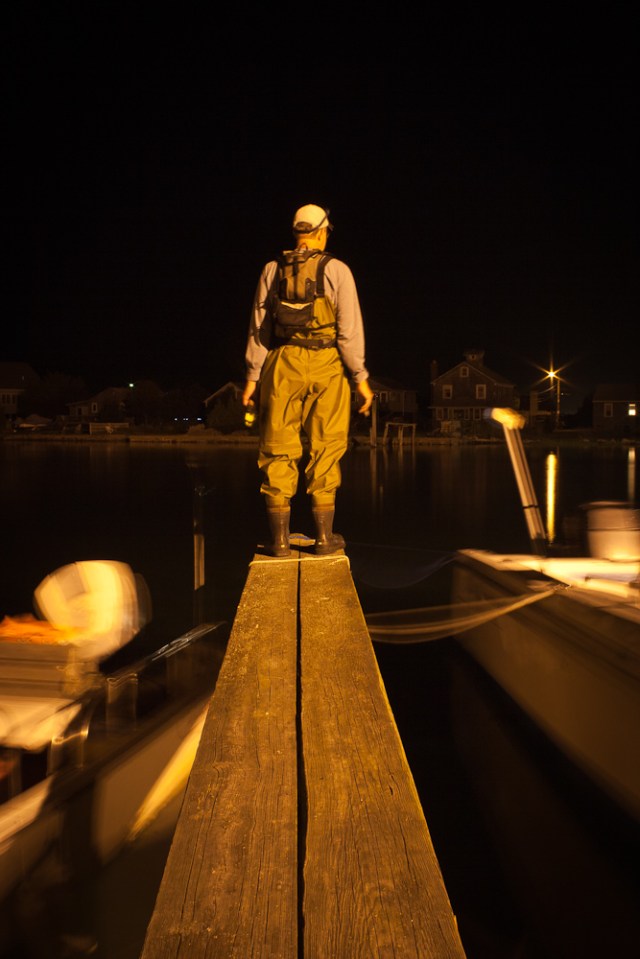
The answer was yes. Saturday night, I headed to one of my favorite spots, My Father Le Bijou 1922 Belicoso in hand. I fished for about two-and-a-half hours. The thing was, I never wet a line.

I stood on a dock and searched for signs of life. There were horseshoe crabs, blue crabs, silversides, and jellyfish. But no stripers. I walked along a rock wall and watched the swirls and eddies formed by the last of the incoming tide. I peered over a bridge and marveled at the dessert-plate sized blue crabs swimming across the outgoing tide, faster than such seemingly un-aquadynamic creatures had a right to, as they hunted silversides.

When I returned to the dock, the stripers had moved in. I watched one fish for a half hour. He was about two feet long, and fat. He travelled in the same counter-clockwise circle, approaching from down current, sweeping along the bottom slowly and methodically, then cutting sharply to the left, accelerating, and disappearing into the void before materializing below a few minutes later. On rhythm. Perfectly.

It was magic.

A few of his friends made slashes on the surface, neither timed nor spaced.

I thought about getting out my rod. More than once. But I knew that was not the right thing on this night. I was doing what I was supposed to be doing. Just like the stripers.

The next time I go back, I’ll catch some. They will understand.

Dockofthebay


Block Island All-Nighter VIII: All by my(our)self

This year’s Block Island All-Nighter played out a little differently than in years past. Once I found out I would be flying solo, I decided to ask my 11 year-old, Cam, if he would like to go. He was all over it. I think he liked the idea of heading off for an overnight as much as he did the chance to go fishing. But I really didn’t care what his motivations were. It would be nice to have his company.

The last two BIANs were busts. My intel on the Island had warned me of epically slow fishing in the last week — “Be prepared to tour the Island to find fish” was the mandate. For a time, it looked like BIAN VIII would crap out. Then, a trickle of fish. And suddenly, the heavens opened and the light — hell, it was more of a beacon — of good bass fortune shined upon us. Here’s a little timeline and some photos from our adventure.

6pm-8:30pm: Take the six o’clock boat over to the Island. The surface is flat as a dinner plate. Speaking of dinner, no better way to start a BIAN off than with the fried scallop platter from Finn’s, washed down with an IPA draft.

My stash for the evening. You’re thinking, “Steve, why would you bring so many cigars?” Just in case. Someone might ask for one. Someone might deserve one for sharing the water. Or, on a dead-calm night like this one, I might forget my bug spray and be inundated by millions of biting no-see-ums. There’s no mention of cigars as bug repellant in the Boy Scout Manual. But this ex-scout was indeed prepared.

Image


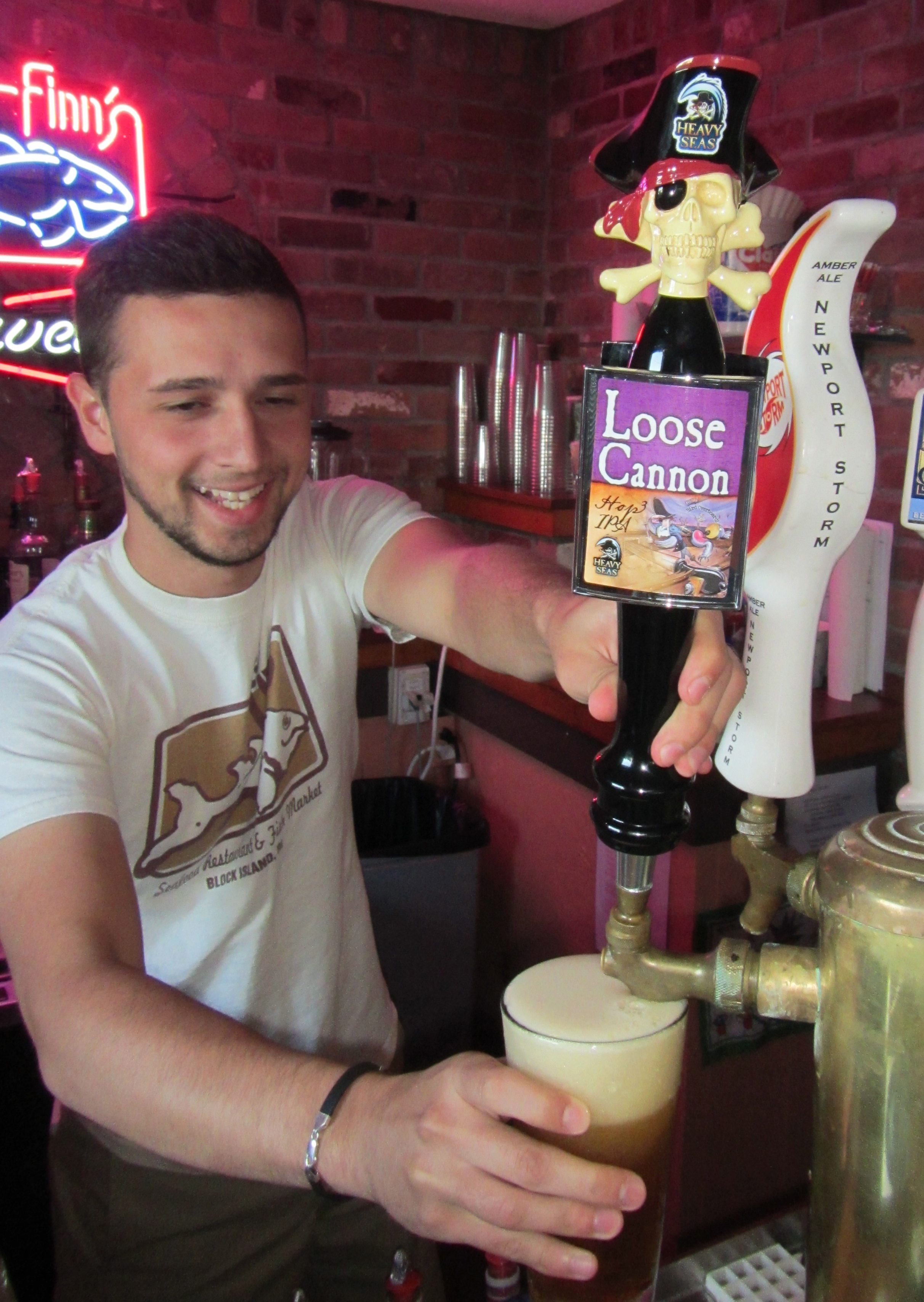
No Fisherman’s IPA this year, so we went with Loose Cannon. Another hop bomb with some nice fruity notes.

Image


8:30pm-11pm: We arrive at the spot. It is mobbed. Like, we get the last place to park mobbed. Not to worry, I tell Cam. It’ll empty out in short order. Witnessed: The largest, longest school of sand eels I’ve seen on the Block since 2007. The bait was smaller than normal for this time of year: matchstick to 2″ long. But scads of them. And then some. The water looked like it had a moving, breathing oil spill beneath its surface. Cam fishing with a 1/2 oz. bucktail jig bangs up some fluke. Dad goes touchless. We walk to another spot. Dad’s proven fish-producing spot. There, Cam, you see? A couple bass rising. We display our wares to them. Nothing. Hmm. Not usually how things play out on the Block. We borrowed some bug spray for Cam, but he’s still getting pummeled. Cam announces he’s tired and is ready for nap #1. We start the long walk back to the truck. Looks like it’s going to be one of those nights.

11pm-1am: The stars! What a galaxy we live in. The air so calm I can blow smoke rings. The ocean is still mirror flat. So flat that I can easily see those rise rings thirty feet off shore. Multiple active feeders. I tell Cam his nap plans have been placed in a holding pattern. I’m going to cast to some fish. They seem oblivious to my fly. No wonder. There are enough sand eels here to feed every striper in Rhode Island. I connect with a few, and let Cam reel in a couple. At midnight he decides to call it. I keep fishing and catch a half-dozen or so more. This is already better than most of the last two years.

And I have no idea what’s coming.

Tight lines with the long rod. Cam has a knack for getting stripers in quick. No wonder. Look at the angle of the rod. I may have reinforced fighting the fish off the reel and the butt, but he basically taught himself. 

Image


One of Cam’s prizes. Most of the bass from the first part of the evening were in the 18″-24″ range. Block Island remains the only place I’ll put a sub-double-digit pounds striper on the reel.

Image


1am-3am: I’m walking along the beach, trying to decide where to fish, when the decision is made for me. A squadron of seagulls are milling about the water’s edge, chattering excitedly. Bass have the sand eels trapped and are picking them off with gusto. The gulls are cleaning up the leftovers. All I need to do is choose a rise ring, lay my fly over it, then start stripping. Sometimes the fly barely has a chance to get wet before the glassy surface is shattered and I’m on. It is a school of good stripers, ten-to-fifteen pound range, and every one of them came tonight to eat. For the better part of 90 minutes, the action is non-stop. It’s like striper fantasy camp. It’s so intense that I wonder how much longer it — or I — can go on. One fish obliterates the fly — this one’s over 30 inches — and as it rolls on the surface it spooks what look like another dozen stripers the same size.

Best of all, what I predicted earlier has come to pass. There isn’t another soul on the beach.

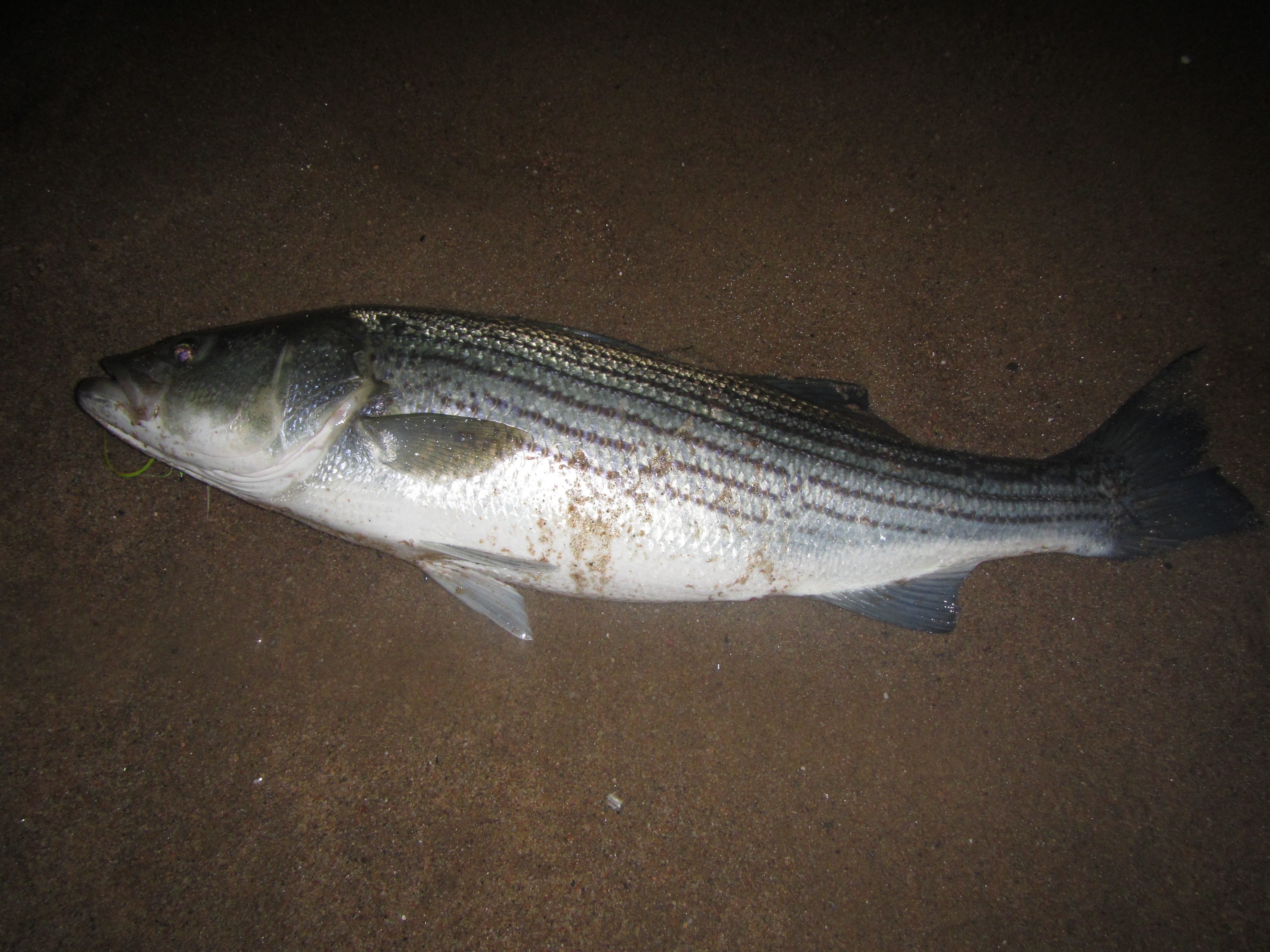
A 15 pound Block striper, classic big shoulders, belly full of bait. I know, fish on sand is not ideal. I risked this one for a photo; all her sisters were lipped and released within safe confines of the ocean.

Image


The white cavern, the last thing a sand eel sees before it disappears into the void.

Image


3am-6:30am: This time of year, the first glimmer of light appears in the east around 3:45am. I fished hard in those first forty-five minutes because I could sense I was running out of steam. I continued to walk along the beach, targeting active feeders. The bass seemed to get more aggressive as the sun’s disc neared the horizon; several times I had fish on as soon as the fly hit the water. By five I was done. I chatted up a a few anglers on the walk out, and presented a fly to a gentleman who proudly told me that today was his 81st birthday. After rinsing down our equipment, we headed into town to wait for Ernie’s to open. Breakfast is going to be glorious.

The pre-dawn crescent moon accompanied by the morning star. If you look closely just to the left of center, you can a see the remnants of a rise ring.

Image


Geez Louise. I gotta be more careful with that belt sander.

Striperthumb

6:30am-8am: Breakfast. Three pancakes for Cam. Pancakes and eggs for dad. Bacon for both. Off to the dock. Delirious from lack of sleep. Or all those stripers.

I can’t remember which.

Cindy Loo-Who has been punching my car ticket for decades now. Our meetings are always bittersweet: “Hello, old friend,” combined with the melancholy of leaving my favorite Island.

Image


The Greased Line, The Sparse Flatwing, and the Big Three-Oh.

This was a weird spring. It was cold. Rainy. I suffered from a debilitating case of tennis elbow. Without my switch rod, there’s no way I could have even fished for stripers. Things started late – I didn’t get my first bass till well into April. Most of what I was catching was in the sub-twenty-inch class. While that bodes well for the future, April and May of 2014 will go down as a complete vexation for courting the big girls. Two of my traditional big fish spots were depressingly unproductive. It was weeks into May before I even had a legal sized striped bass. But, oh, what a bass. Here’s how it went down.

I was fishing a new location that had big bass written all over it: current, structure, and the presence of herring. Attached to my floating line was a seven-foot length of twenty-five pound test mono. The fly was one I’d tied several years ago: Ken Abrames’ Razzle Dazzle. This particular fly was a veteran many striper campaigns. Its top two saddles were long gone, and over the course of the seasons, some of the bucktail had likewise gone AWOL.

For two-and-a-half hours, I fought the good fight: cast. Upstream mend. Another mend. Another. Swing. Pulsing strip. Let the fly fall back. Retrieve. Repeat. If nothing else, greased line for striped bass is meditative, so absent any hits, the routine was comforting and pleasant.

But, it was time to leave. A walk down-current to a different section, then ten more minutes.

The takes on the greased line presentation are usually either a sensation of building pressure, or a sharp pull. Hers was neither. Suddenly, she was simply there, rolling on the fly, taking line downstream. I had dropped a substantial fish the week before when I couldn’t get a good hook set. With that wound still festering, I drove the point home. Hard. She felt strong. But I didn’t have a idea yet of what I was dealing with.

Every big bass fight presents a unique set of challenges. As expected, her first run was downstream. She peeled line off the drag, but I was surprised by how little it was – probably about thirty feet. I pointed the rod at her and set the hook again.

She turned abruptly, and headed upstream. I was simultaneously delighted and horrified; the former because in this heavy current she’d be burning a tremendous amount of oxygen in her flight, the later because of the memories of all those steelhead who shattered my heart with relentless upstream runs and hook-spitting leaps. The challenge was to re-gather line as fast as possible, staying tight to the fish. She was faster than my hands, though, and I was sure I was going to lose her. I raised the rod tip. Still there. I lowered the tip and re-set the hook.

Now, she sounded. I’ve heard that big bass will try to rub their cheeks against the bottom to rid themselves of a fly. I don’t know if that’s true, but I do know that the bottoms of rivers and oceans and estuaries are vast depositories for nature’s junk. Who knows what multiple opportunities for snag hell awaited below? I pulled on the line. It didn’t move an inch.

Unbelievable. Stuck on the bottom. Another good striper lost.

But wait. Did the bottom budge? Yes. A little. I moved the rod tip back and forth in a 180-degree arc over the water, trying to stir the fish. It worked. Instead of ripping down-current, she ran uptide. Paused. I re-set the hook. Again. I decided it was time to try and get her out of the abyss and onto the gravel bar. She would have none of that. “Down goes Frazier!” Or, as I imagined it in my head, Cosell shouting “Down goes Culton!” She sounded a second time.

Again, I couldn’t budge her with a straight pull. The rod wagging thing worked once before, so I tried it again. Now she came up a little faster. I could sense she was tiring. Once I coaxed her out of the depths, she took advantage of the shallows, ripping off a series of short runs. But all that sprinting was taking its toll. I still didn’t know what I had. I was hoping for twenty-five pounds. I decided to try to land her on the beach.

I put the rod over my shoulder and walked her in close, then pulled her to the water’s edge. Now I could see the fish. My mouth fell open, searching for words. My pulse rate skyrocketed. After lipping twenty-inchers all spring, her mouth felt like that of some alien creature. Its opening dwarfed my hand. The flesh between my thumb and forefinger was substantial. I could easily see a small dog disappearing down that gaping maw.

I held my rod against her length. Her gill plates came about to the first guide on my two-hander, thirty-four inches away from the butt. This was a striper over forty inches. The big three-oh in pounds. A new personal best on the fly from the shore. She certainly had been eating well, with a distended belly that gave her a perch-like shape.

Wouldn’t you know that this was the one night all spring I left my camera at home? Fortunately, I had my phone in my pack. I took a couple hurried shots, and felt guilty about it, because I really wanted this fish to live. I took hold of her – good Lord, what an impressive mass – and guided her into the shallows. I was expecting a lengthy revival. But no. Almost immediately she felt ready to go. Just to be sure, I held on a few more seconds. As I was re-adjusting my grip, she thrust from my hands.

She slipped away into the darkness, leaving a gentle wake.

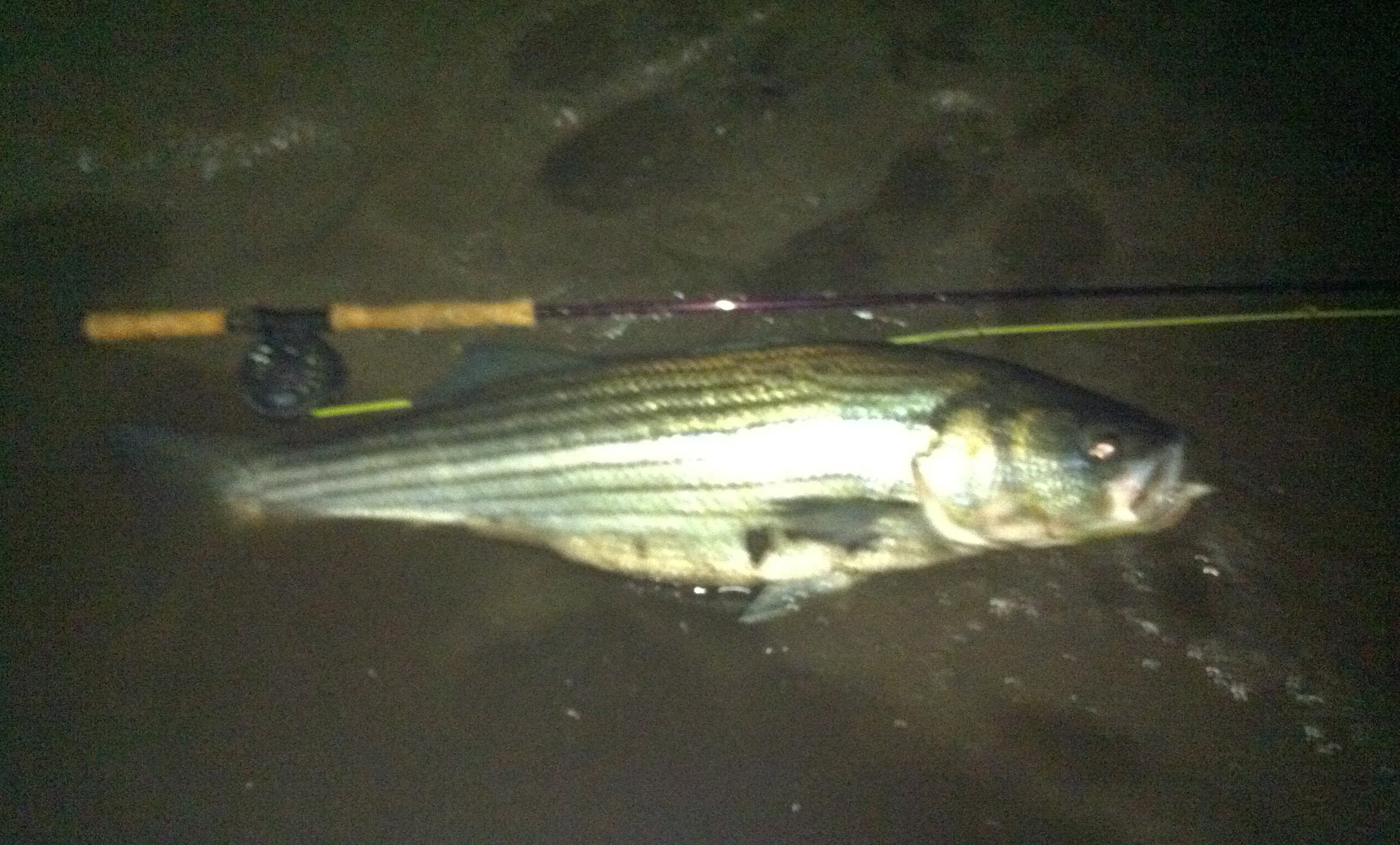
Miss Piggy. A thousand apologies for the sub-par photography. This is what happens when you forget your good camera and are reduced to using an iPhone wrapped in a ziploc baggie. But, you can get a good sense of the sheer mass of the fish. The bottom guide is 34″ from the butt, and her tail extends farther than you can see. Look at that belly full of herring.

Image


A better shot in terms of detail, but you don’t get the full length effect.

Image


The winning fly. An old Razzle Dazzle, missing two saddles and a fair amount of bucktail. Here we make the case for sparse and impressionistic. This fly is now retired. I may put it out to stud.

Image


A shrimping I did go

It’s hard to improve on Ecclesiastes — let alone the Byrds — so I won’t even make the attempt. To every thing there is a season. And this is time of year I like to fish for stripers who are feeding on grass shrimp.

The grass shrimp swarm to the surface in brackish waters by the tens of thousands. Diminutive (about an inch, inch-and-a-half long) translucent creatures with eyes that reflect ambient light. From a distance, their mating dance looks like so many tiny raindrops. Then the surface boils from below, followed by a resounding pop! I get goose bumps just thinking about it.

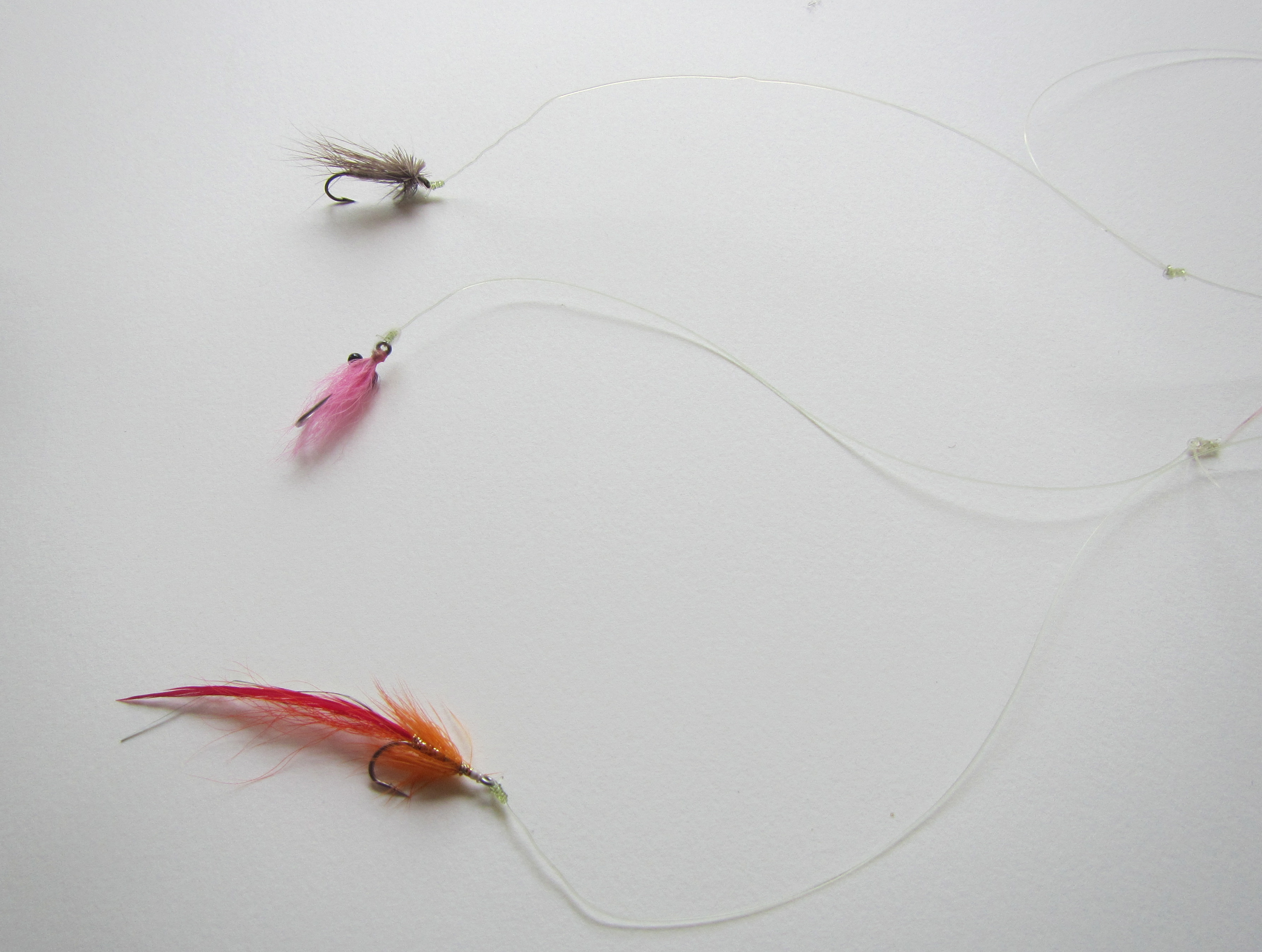
Because there’s so much bait in the water, I like to up my odds by fishing a team of flies. Not only will I be presenting the bass with more targets, I will also be giving them a choice of patterns. Stripers never lie. They always tell you what they do — or don’t like. This weekend, I fished a three fly team consisting of Grease Liner variant on the top dropper, a pink Crazy Charlie on the middle dropper, and an Orange Ruthless clam worm on point. Of course, I am using a floating line should I need to throw a series of mends to fish the flies on a cross-stream dead drift.

Shrimp. It’s what’s for dinner. This fly is a variant of Harry Lemire’s classic steelhead fly, the Grease Liner. A little rabbit fur, a little deer hair, and you’re fooling fish.

Image

I made two trips this weekend under the cover of darkness. The tides were in that weak quarter moon netherworld, but what the place lacked in current, it made up for in splendid isolation. Not another soul in sight, both nights. It amazes me the things you notice when you’re sitting alone on a rock in the dark and the air is completely still. You see the reflections of an airplane’s lights in the water long before you hear the distant drone of its engine. The sound of the building tide seems to increase exponentially. And the reports of feeding bass travel quite well over water.

Friday night was the slower of the two; instead of bass, I hooked and landed several hickory shad. After an hour, I moved upstream to see if creatures were stirring at a bottleneck; they were, but out of casting range. Resigned to trespassing, I did so with the rationale that what goes unseen remains harmless. I can’t tell you exactly where  I was fishing, but let’s just say that between structure and trees, any form of traditional casting was out of the question. I could, however, dangle my flies in the current a rod’s length away. You can get really close to a fish that is holding on station, feeding as the current brings food to his waiting mouth, as long as you exercise caution and keep movement to a minimum. Twice, I hooked the striper that was chowing down ten feet away from me. Twice, I was unable to set the hook.

As I drove home in the wee hours, I was already plotting my return.

Saturday night, the tide hadn’t quite topped out when I reached the spot. I was pleasantly surprised to see the place was empty. The shrimp were already doing their dance, but otherwise it was quiet. Once the tide turned, the game was afoot. I saw a delicate swirl forty feet out. A few casts and a mended swing were ignored. Then, off in the distance, I began to hear the pops of feeding bass. Since the fish were in spinning rod range, I switched tactics and started dumping fly line into the current, all they way to the backing, and then some. Let the flies come tight, plane up, and swing around. Whap! Fish on. I could tell from the way it was fighting that it was another shad, until I brought it into the murky shallows and saw it was a foot-long striper. That made me happy.

I caught a bunch more in the 12 to 16-inch range, most on the dangle and swing, a few while stripping the whole smash back in. It wasn’t easy fishing; far more presentations were refused than taken, which is the way it should be when you’re fishing the grass shrimp hatch. But, now I had to return to the scene of Friday night’s robbery. By the time I got there, the current was just beginning to crawl toward the Sound. I lit a new cigar to keep the mosquitos at bay. I waited. Nothing. No micro swirls or dots painted on the surface by the bait. No earth-shattering pops. I decided to get my flies in the water anyway. You know, just in case.

Finally, a pop, though it was well out of casting range. To combat the boredom — and to create some wakes on the surface — I began manipulating the rod upstream and side-to-side. Still, nothing. And then, with the flies just sitting there, a building pressure on the line, then a series of sharp tugs. Seemingly out of nowhere, I was on. Bass for sure. Yes. Eighteen inches, the king of the weekend’s haul, taken on the clam worm.

By the time I got back to the truck, I still had enough cigar to keep me busy all the way home. But I decided to extinguish it. I kept the windows rolled down, and the air on this warm summer night tasted sweet as it coursed through my mouth and filled my lungs.

Droppers are the fastest way to find out what the fish want. I tied this one using 20 pound test World Wide Sportsman Camo mono.  I learned a few things on this trip. Top to bottom: 1) Harry Lemire’s Grease Liner is a darn good striper fly, even if it was created for steelhead. 2) Charlie Smith’s Crazy Charlie is a darn good northeast grass shrimp imitation, even if it was intended for bonefish in the Bahamas. 3) It is almost never a bad idea to include Ken Abrames’ Orange Ruthless clam worm fly on your team of flies, even if clam worms aren’t the predominant bait.

Image


The wicked witch of the east

The old saw goes, “Wind from the east, catch fish the least.” But ever since I fished my first easterly, I’ve had a hard-on for them. Especially the ones that always seem to roar through this time of year. Not only do they they keep the meatballs away, I also find the fishing is often surprisingly good.

Yesterday was overcast with an unrelenting easterly blow of 20-30mph. This was comic book casting wind. Into its teeth would have been impossible with a thick floating line. With the wind behind me, back casts were an exercise in do-your-best, and my strategy was basically to loft the line into the banshee and let her deliver the goods.

Seinfeld had the puffy shirt. I had to settle for the puffy rain jacket, billowing Gore-Tex courtesy of the bitch of April.

Image

About ten casts in I took my first striper. Then, save for a couple follows, nothing for an hour. That’s an eternity in these conditions: strong moon tide current in an exposed estuary. Windblown water pouring in from the ocean over a sand bar, colored that odd yellow-grey/sea green you get with an easterly. Frosty whitecaps and chop, and some perilous looking rips. Seaweed and organic  flotsam everywhere. Forty-eight degree air temperature, but with the wind chill off the ocean, I could barely feel my fingertips. Windblown rain showers that felt like BBs against my jacket.

Even though it was the middle of the afternoon, I was certain there were fish around. Yet I wasn’t getting any action on my smaller (3.5″) soft-hackle. I thought that maybe it was getting lost in the maelstrom. Let’s break this down. The one hookup I had was at the surface. Perhaps something bigger and easier to see might work? The best solution I had in my box was a 7″ long, all black deer hair head fly. On it went. And on they went. I lost count of how many stripers I caught in the next half-hour. It wasn’t a fish on every cast, but it was a follow, a nip, or a hookup on every cast. Tremendously exciting to see the takes right near the surface amidst the storm surge. The spray from the hit would sail into the air, get captured by the wind, and shower the surface with a liquid blast radius.

In the end, it was as simple as this: In rough water, make it easier for the fish to find your fly.

Under Cover of the Night

Drew from the new spot well last night. Every day is different, so they say, and last night we had consistent action for the first hour of the mid-tide drop. Then came a lull. In hopes of attracting something bigger, I fished an 8″ flatwing/soft-hackle, a September Night variant. While it did keep the dinks away, all I could manage were cookie-cutters in the 18-24″ range. The fish-on-the-reel eludes me. The takes were similar to yesterday’s, a sensation of building pressure on the greased line swing or the dangle. A thrusting hook set, and you’re on.

Bob wanted to stick the tide out a little more, but I had wanderlust. We both made the wrong call. Bob had a couple more nondescript fish, and I drew a blank. Stayed out much later than I wanted to, especially with no action, and finally dragged into bed at 3:30am.

But, she’s coming. I can feel it.

After a slow start, the bassing has picked up. So far, I’d give this spring one striper thumbs up.

Image

Night Tides

And so we mark the official beginning of the year’s Zero-Dark-Thirty adventures. We kicked off 2014 with something a little different; instead of our usual haunts, we rolled the dice at a new location and were rewarded with fairly consistent action. Most of the fish were in the 20″ class, but there were a few that stretched the tape to 24″. And one big momma.

Dr. Griswold with the best fish of the night, first cast into a new hole. I have yet to put a fish on the reel this year. Soon, Steven. Soon.

Image

A few minutes with Ken Abrames (a currentseams exclusive)

The striper grandmaster talks about Tuesday Nights, the rhythms of earth and ocean, and love.

Ken Abrames is one of the most revered names in saltwater fly fishing. He is the creator of the modern flatwing streamer, presentation-style flies that can imitate everything from clamworms to menhaden. His books Striper Moon and A Perfect Fish belong on the shelves of anyone who is an aficionado of traditional New England striped bass fly tying and fishing methods. Besides being a world-class angler, Ken is also a rod designer, author, poet, and artist.

For me, though, the coolest thing about Ken isn’t that he’s supremely talented on so many levels, or his mystical insights into the natural order. It’s that you can go to Rhode Island on Tuesday nights and meet him. Talk to him. And fish. There’s no club, no membership dues, no fee, no appointment. You just check out the forum on his website to see where the group is meeting, show up and have fun. Tuesday Nights in 2014 start next week, April 22, in Matunuck, on the beach to the west of Carpenter’s Bar.

When Ken talks, you tend to listen. Tuesday Night, Quonny Breachway, September 2012.

Image

Currentseams: How long have you been doing Tuesday Nights?

Ken: Since 1984.


Currentseams: What made you decide to start them?

Ken: Around that time, I met a fellow named Armand Courchaine, and we started to fish together. We got the idea of starting Rhody Flyrodders back up again. Bang! The club started to grow – in less than a year we had over 100 members. One Saturday, I put together a fishing gathering in Newport. A bunch of people came, but I wasn’t satisfied. I began to ponder and imagine, what night of the week is most available to most people? I came up with Tuesday, because it’s a good, neutral night.


Currentseams: What was the fishing like in those days?

Ken: From the time I was a boy, to around 1984, shore fishing in Rhode Island had really fallen into a sad state. People didn’t know the places anymore. Very few people were walking the beaches. There were a lot of famous spots in Rhode Island that people didn’t know how to get to. But I knew the places, so Tuesday Night was a way to show people where to fish, and how to fish them, so they would have the wherewithal to go out on their own. Rights-of-ways had fallen into disrepair, and some of them had been encroached upon by landowners. So I had people going around and cleaning up these right-of-ways. And they weren’t just fishermen. All kinds of folks came. Everything we did was like seed to enhance access and fishing. People warmed right up to it.


Currentseams: People who don’t know about Tuesday Nights often ask, “Can anyone come?” And of course, the answer is yes.

Ken: Yeah, there is no membership, and there is no hierarchy.


Currentseams: And people want to know if it costs anything, and the answer is no.

Ken: No, of course not. Fact is, you probably end up going home with more than you came with.


Currentseams: How do you decide where to go?

Ken: I close my eyes…and feel. I don’t use any kind of science. Always go to inner silence when you need an answer. Then you’ll know.


Currentseams: What are your thoughts on the weather we’ve had this winter? It’s been pretty cold…

Ken: When I was a boy I used to always go ice skating on Thanksgiving. So tell me about how cold it is. Things have changed. I see different birds up here now that I never used to see.


Currentseams: Do you think things will be late this year?

Ken: When was the moon in relation to the equinox?


Currentseams: New moon is Sunday, March 30th.

Ken: It’s kind of like the first flower of spring. The first flower of spring comes before the second flower. That’s the order. So the first thing that shows up will tell you what the order of the year will be.


Currentseams: I keep track of things in my garden…

Ken: Yes, that’s right, that’s exactly what you were supposed to say. Is the skunk cabbage out yet?


Currentseams: Not here. I looked at my records, and in 2011 I had crocuses blooming on March 5. I don’t have any flowers yet (March 28).

Ken: So, there’s your answer. Everything happens in order. The ocean is the same as the land. So, you look for the first thing that shows up. And that will tell you what the second thing is going to be. You have to feel. It’s like dancing with a beautiful woman. You can’t do it out of the pages of a book. You have to just hold her, and move with the music. It’s the same thing with this world. It’s alive, and it has a pulse, and a rhythm, and an order. But it doesn’t tell you what those are ahead of time, because reason has no power over the earth. None.


Currentseams: So now, in 2014, what would you say Tuesday Night is all about?

Ken: It’s all about love. It’s that simple.


Currentseams: (laughs)

Ken: I love the earth, I love fishing, I love the people who come fishing. And that’s what they get when they come.
No. Not yet.

Just when Mother Nature gives you permission to believe the stripers might be there (peepers for several days now, first daffodil showing some yellow, temperatures actually in the low 60s) she slams the door with cruel finality. I mean, mean-like. See ya, sucker.

You know it’s bad when the all the spin guys leave before you do.

Here’s what I can tell you: bright, sunny day. Water with good visibility, albeit still well below normal (ten lashes for me for forgetting my thermometer) temperature. Wind honking in my face at 15 mph (with gusts up to 20) that made casting a large diameter floating line difficult. Not a touch for me or any of the other four guys who wisely packed it in before I did.

Everything is late this spring, and the stripers are no exception. April 10 is the farthest I’ve gone into April without a bass. But, there’s good news.  It’s got to start sometime.

It’s like the birds are saying, “Follow the arrows to find the stripers.” If it were only that easy.

Image


The Crazy Menhaden Big Eelie Variant

It happens, if you’re lucky, once a season. It does not define you as angler. It makes no promise of future success. Like all glory, it is fleeting. But oh, does it make you feel like the king of the world. It is the moment after a wildly successful session when someone breathlessly approaches you with the words, “Excuse me, I’ve got to ask. What fly were you using?”

The first time I fished the Crazy Menhaden Big Eelie was a humid, overcast June night on Block Island. A substantial school of bass in the ten-to-fifteen pound range was feeding on sand eels near the surface. They had the bait pinned in a three-foot deep trough between the beach and a sand bar that dropped off into deeper water. For the better part of three hours, I took bass after well-fed, rotund bass. They relished the fly, even after it was reduced to two saddles and some frayed bucktail. As I began the walk to my Jeep, the angler to my right hurriedly reeled in his line and chased me down the beach, eager to pop the question.

Image

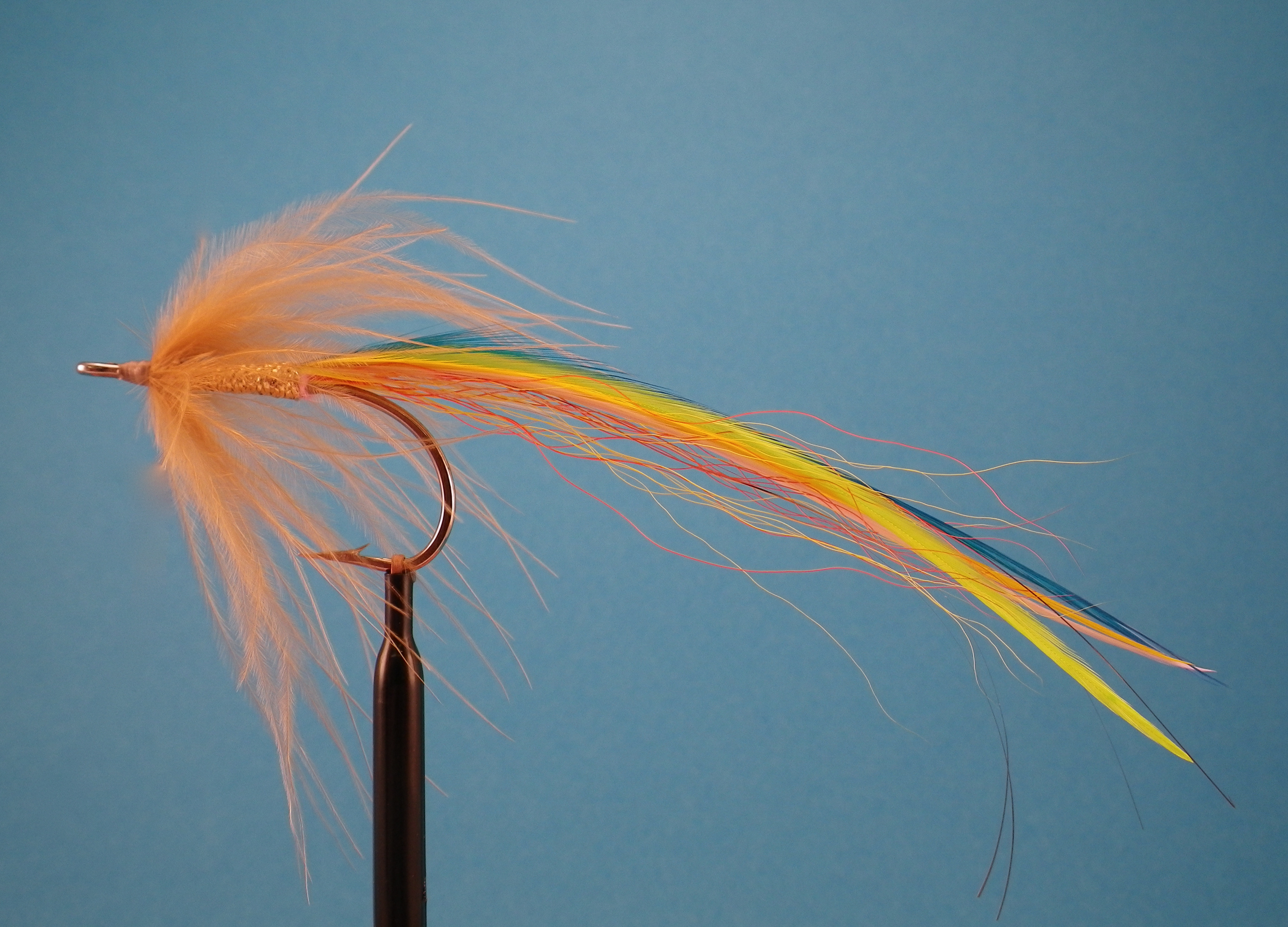
As its name suggests, this fly takes the color scheme of Ken Abrames’ Crazy Menhaden and applies it to the template of the Big Eelie. Together, they create an insanely potent brew of form and function.

Hook: Eagle Claw 253 3/0
Thread: Tan
Platform: Orange and yellow bucktail, 30 total hairs, mixed
Tail: (All saddles pencil thin) Pink saddle, under two strands each of red and copper flash, under yellow saddle, under chartreuse saddle, under blue saddle
Body: Gold braid
Collar: 2-3 turns ginger marabou, tied in by the tip

Tying notes: As with all Big Eelies, make the saddles thin. Tie them in flat. I like this fly about four and one-half inches long. Treat the marabou as a veil, not an opaque blob.

Crazy Menhaden Big Eelie Rogues’ Gallery:

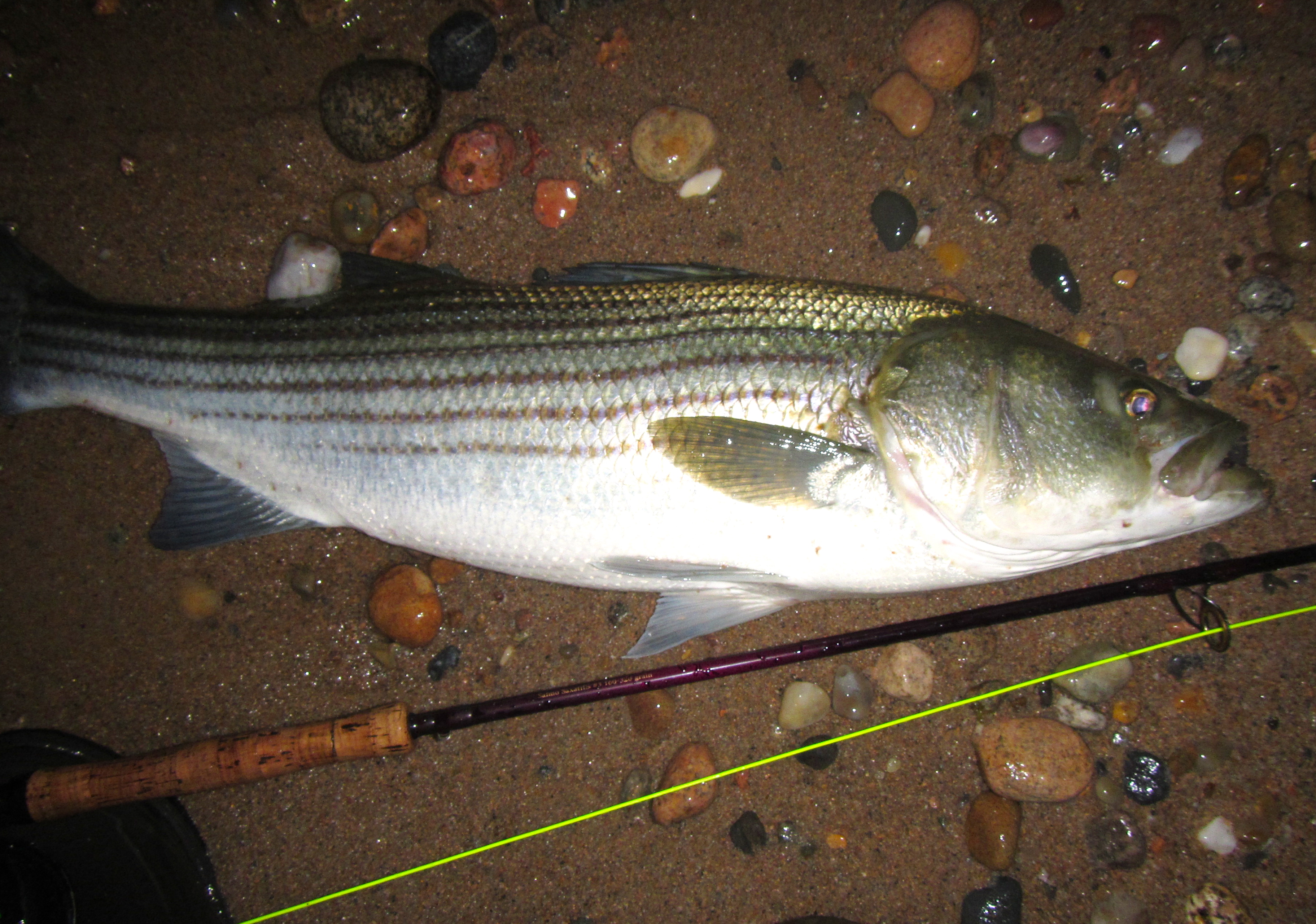
(Please forgive the fish-unfriendly photo. This was the only striper I beached to shoot. I lipped the rest).

SatBIBass