Fly Tying Class Sunday 2/8/15: Wet Flies and Fuzzy Nymphs for the Farmington River

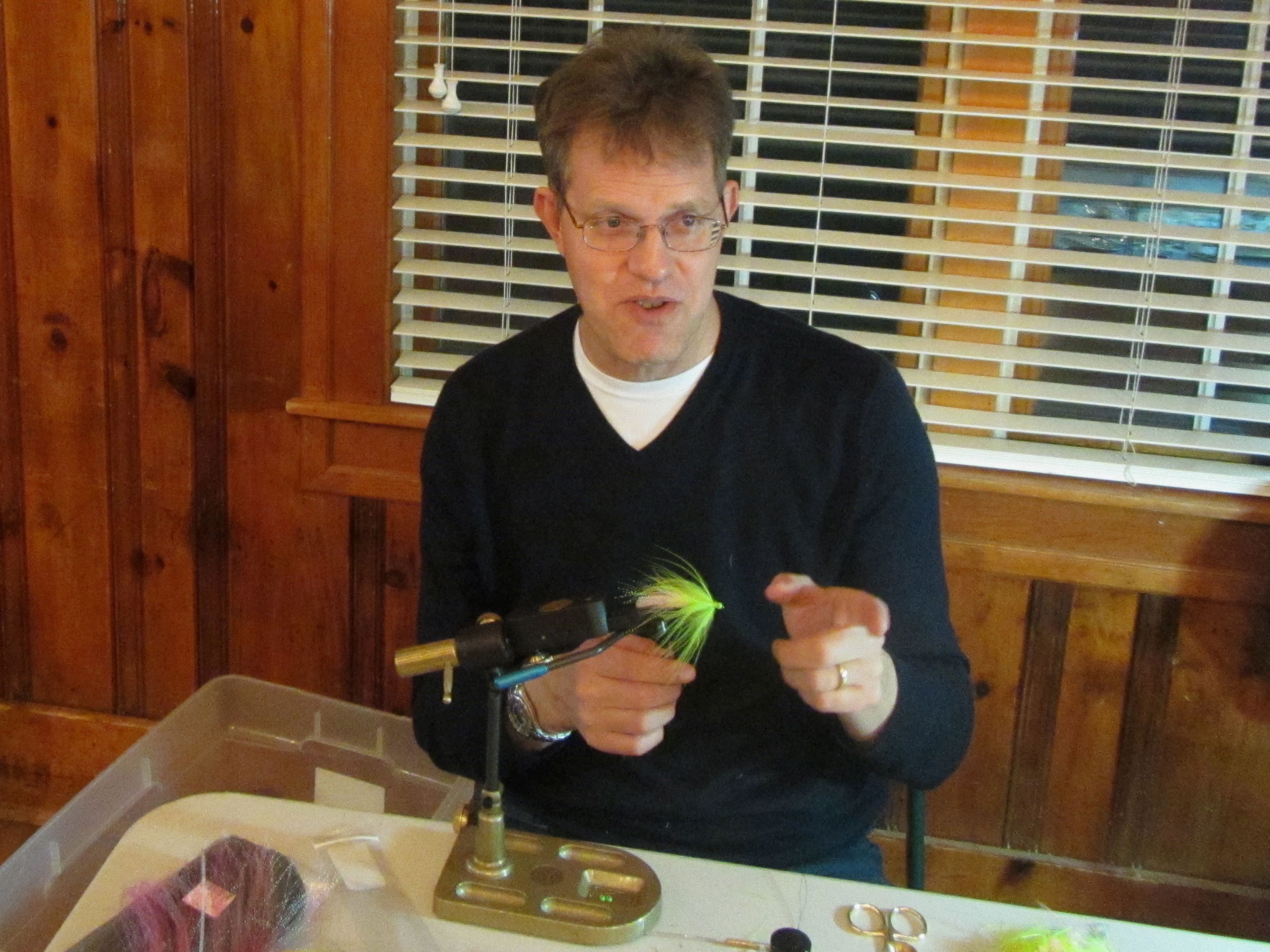
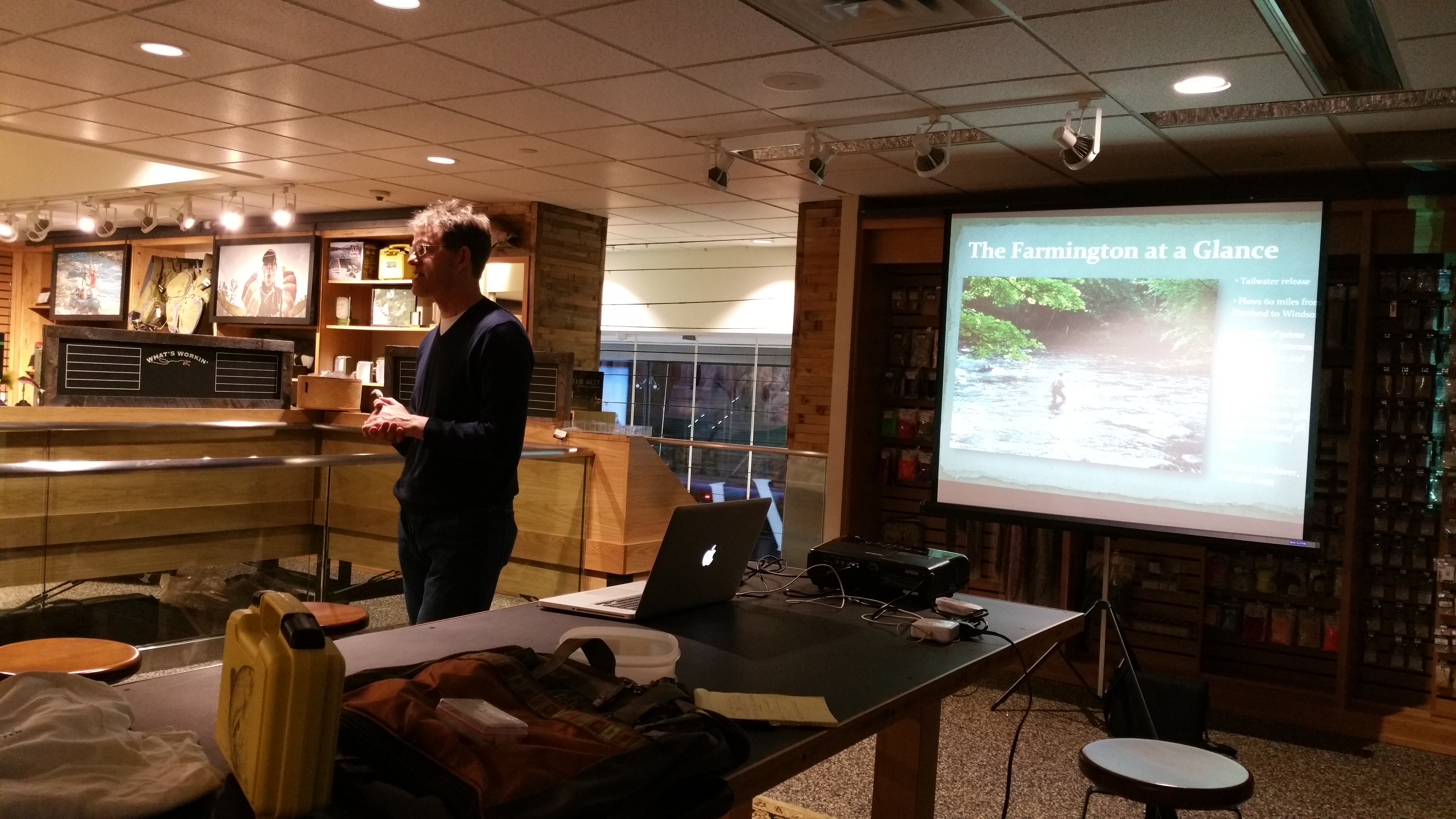
This class will by led by yours truly at UpCountry Sportfishing in New Hartford, CT, Sunday, February 8. Here is the blurb from the UpCountry website:

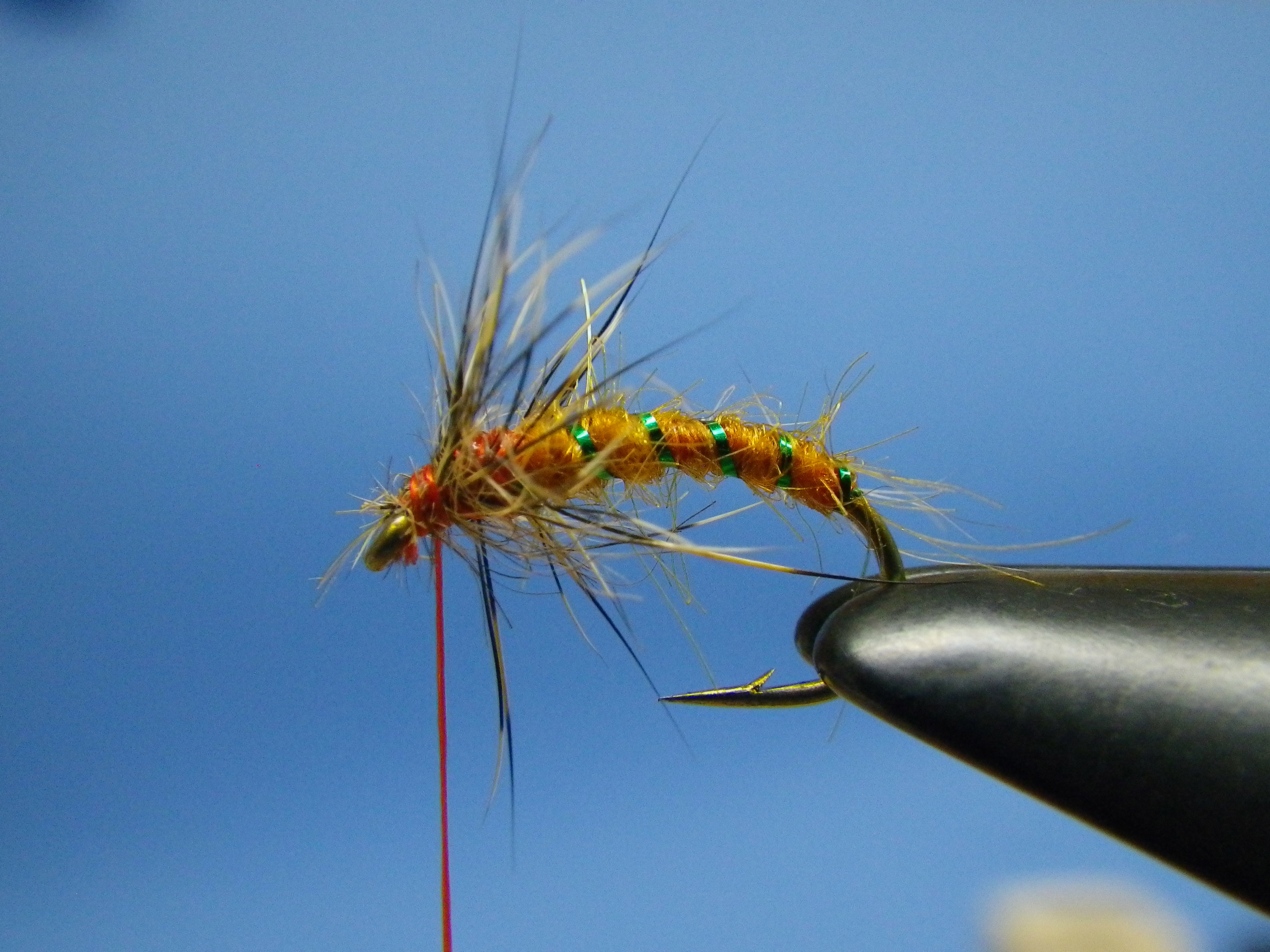
“Join outdoor writer and Farmington River guide Steve Culton as we explore tying buggy, impressionistic wets and nymphs geared toward fishing the Farmington. The class will place an emphasis on using natural materials to create flies for specific hatches, as well as attractor patterns. From classic North-Country spiders to some of Steve’s own creations, you’ll learn to tie high-confidence patterns that have been battle-tested and proven on the Farmington. Steve will also discuss wet fly methods for each pattern. Participants will need a vise, thread and tools. All other materials will be provided, including a pattern recipe sheet. The class starts at 9am and will run between four and five hours. Space is limited to six people. Tuition is $75.”

Please do not contact me to register for this class. You must enroll by calling UpCountry at 860-379-1952. Hope to see some of you there.

North-Country spiders. You betcha we’ll be tying some.

Soft-hackles

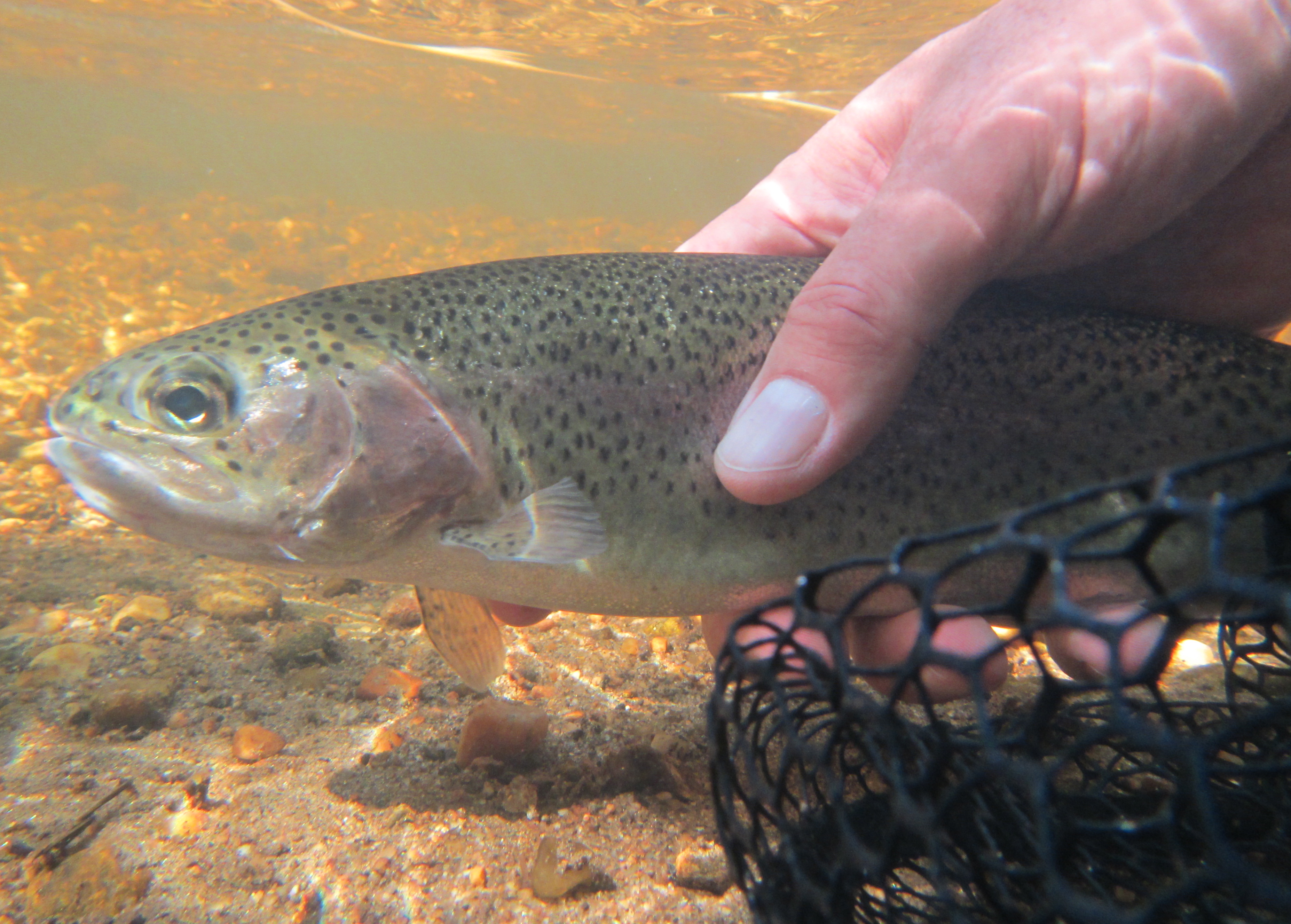
What can you catch on wet flies? Trout like this. (Hackled March Brown, size 12)

20%22Brown8:18:13

Fly Fishing for Striped Bass on Lighter Tackle, or: A Good Night For The Five-Weight

This article originally appeared in the July 2013 issue of the Mid Atlantic Fly Fishing Guide under the title “A Good Night For The Five-Weight.” Many thanks to MAFFG for allowing me to share it here. Those of you who are familiar with how I fly fish for stripers know that I often fish like other people don’t — or won’t. Fewer things get my adrenaline pumping stronger than the thought of using my five-weight to present a ten inch-long herring flatwing to striped bass that might be best measured in pounds.

When I tell people I like to fish for stripers with a five-weight rod, I get a lot of strange looks. Some of their comments are even more pointed.

“Oh, your poor rod!”

“Doesn’t that void your warranty?”

“You’re only stressing the fish and adding to the mortality rate.”

I can’t say I blame them. Ours is the culture of the nine-weight rod for stripers, and deviations from that norm are looked at with jaundiced eyes. Their reactions stem from fear – and the unknown. I know, because when I first thought about using my five-weight for stripers, I was terrified that I would break my rod. And that I wouldn’t have the first clue about how to play and land a big striper on such tackle. As it turns out, our 32nd President was right. The only thing I had to fear was fear itself.

All five-weights are not created equal.

Before you head out, make sure you’re using the right tool for the job. My striper five-weight is a nine-foot, fast-action blank, flexible in the tip and stiff in the butt. It is a beautiful beast of a five-weight. I can upline the rod, and easily cast larger flies up to 12 inches long – as well as dropper rigs of three flies. The stout butt section gives me the power to battle bigger bass (I’ve taken fish up to 33 inches) and turn them, even in swift moon-tide currents. I never feel under-gunned, and my only complaint with the rod is that it doesn’t have a fighting butt. Many rod makers put fighting butts on their six-weight models, so you may want to look into one of those.

You could use a lower weight rod – I know an angler in Rhode Island who loves his three-weight for stripers – or a slower action stick if that’s your preference. Many things are possible with unconventional tackle for the adventurous angler. And it’s not limited to striped bass. Do an internet search for the short film, “Salar, The Leaper” to see Lee Wulff land a 12-pound Atlantic salmon on a 6-foot, 1 ¾-ounce midge rod.

Don’t be afraid to upline.

If you’re going to catch stripers on lighter tackle, you’re going to have to break a few rules. One of them involves uplining, also known as overlining. When you upline, you use a line weight that is greater than the one specified for the rod. This is often the source of great consternation among purists on internet forums, but have no fear: the casting police have no real power over you. Besides, stripers don’t care what line you use with what rod.

Why upline? In two words: Comfort. Necessity. I use a line that allows me to effortlessly load the rod with one false cast, and to overcome the air resistance of a large flatwing or dropper rig of three flies. The line that mates perfectly with my rod and slower casting style is a nine-weight, weight forward integrated shooting taper. The head length is 37.5 feet, and it sports a hefty weight of 375 grains.

As an angler who puts a premium on presentation, my preference is for floating lines. But you should use whatever kind of line works best for you. If you can, it’s a good idea to try different lines with your rod before you buy. When you find the one that makes your rod sing, you’ll know it.

When I upline my five-weight, even long flies like this 11-inch Herr Blue flatwing are easy to cast.

IMG_0316

The beauty of a good reel and a stout leader.

School bass in the 12 to 20 inch range are terrific fun on a five-weight rod, especially in current. You can easily hand-strip those fish in. However, once you get into keeper-size territory (28 inches in my home state of Connecticut), you’ll appreciate having a reel with a reliable drag. That’s because you fight those bigger fish with the butt of the rod and the reel – not the tip.

That’s where a strong leader system comes into play. My typical leader is 7 ½ feet of 30-pound monofilament – more than enough to handle any striper I’m likely to hook from the shore. If you consider striped bass to be a precious resource, you want to make sure you don’t overplay the fish. Once you hook a striper, the combination of a 30-pound leader and your reel puts you squarely in charge of the situation.

Fighting bigger bass on lighter tackle.

Many anglers wax poetic about how a powerful striper took them into their backing. It makes for good storytelling, but I’d rather not have the fish take that much line. I like to ratchet the drag down tight, especially when I’m fishing with my five-weight. In fact, I’ve never seen my backing with that rod, even on chubby, well-fed bass up to 15 pounds.

Here’s a typical fight scenario. I’m presenting a big flatwing on the greased line swing. Suddenly, I feel a build of pressure – the bass taking the fly into its mouth – then the water erupts as the fish turns and realizes it is hooked. I can tell it’s a bass over 28 inches from the size of the boil and the power of the initial thrashing. I come tight to the fish by quickly reeling in the slack from my shooting basket, or letting the fish take the line through my fingers.

At that point, the striper may begin its first run. But sometimes there’s a quick grace period where the bass will sulk in the current. I use that time to my advantage by re-setting the hook. I point the rod and line straight at the fish, and, with my arms outstretched, give one or two hard thrusts straight back toward my gut (now you see why I like 30-pound test). That fish is now well hooked. From this point on, she’ll be fighting a losing battle.

There’s another good reason for re-setting the hook. Stripers have tough, rubbery mouths. Many years ago, I lost several substantial fish due to poor hook sets. Since I added this simple arrow to my quiver, I have not lost a single fish over 28 inches.

Once I’ve re-set the hook, I’ll play the fish with my rod held somewhere between a 30 and 45-degree angle. Remember, on lighter tackle your power comes from the bottom one-third of your rod. You want to feel the fight not at the rod tip, but down in your hands. There is absolutely no loss of sport with this technique. A good fish in current will put a tremendous bend in your five-weight. The battles are exhilarating, and will test your tactical know-how as well as your physical abilities.

If the bass is holding in the current, I’ll start to reel. When the fish wants to run, I’ll let her, because she’s not going very far with that tight drag. What’s more, her runs will burn a tremendous amount of oxygen, tiring her out and making her easier to land. Most of the bigger stripers I’ve caught are good for a couple long runs, maybe another shorter one once I bring the fish into the shallows. But by then, the fish is beaten, and my goal is to get the striper to hand, remove the fly, and send her off on her merry way.

This keeper striper fell for the charms of a Rock Island flatwing, fished on a greased line swing.

IMG_0255

Those who practice catch-and-release – and I’m one of them – have a responsibility to land the fish as quickly as possible, regardless of tackle. I’ve seen plenty of anglers with traditional striper rods overplay sub-legal bass to the point of near death. If it’s taking you more than a few seconds to revive a striper you’ve just fought on lighter tackle, you need to work on getting that fish to hand quicker. A.H.E. Wood wrote that he expected his rod to earn its keep. Do likewise. Don’t be afraid to push your five-weight. It’s a lot stronger than you think.

When and where to use lighter tackle for stripers.

Of course, you can fish your five-weight any time you like. But there are certain places where lighter tackle shines, like sheltered estuaries and salt marshes; back bays; salt ponds; and harbors. For me, the determining factors are: How far do I need to cast? Do I have limited room behind me? What’s the wind doing? Are waves an issue? It helps to look at these not as independent variables, but rather in conjunction with one another.

For example, if the wind is blowing at 15 knots in my face, I might still take the five-weight if I’m heading to a well-lit dock where the bass will literally be right at my feet. If my destination is a wide river mouth where I will be making casts well over 50 feet, I’ll be taking my big two-hander instead. Same call if my plans include the outside of a breachway or a beachfront with surf over three feet. Fishing is supposed to be fun, and fishing with the wrong tackle for the conditions is a sure path toward a miserable outing.

If you upline your rod with a weight-forward shooting taper, you can still cast a fair distance with just a little line in the air. This makes your five-weight a great choice for fishing in areas loaded with obstructions. One of my favorite spots for the five-weight is dock that is cluttered with overhead wires, light poles, and assorted wooden structures. There’s no room to get off a big back cast – but it’s not an issue because I can load my rod with less than thirty feet of line. Similarly, I fish a breachway between two salt ponds where a standard back cast would hit the rock seawall directly behind me. My setup allows me to easily get my fly out where it needs to be.

Consider bringing a landing net if you’ll be fishing off a dock. School bass under 18 inches are easy to heft out of the water. A twelve pounder, not so much. Some docks are several feet above the waterline, especially on an ebb tide. A landing net will make life easier for you – and your fish.

Sheltered estuaries like this one coursing through a marsh are ideal places for lighter tackle.

IMG_0336

Tripping the light fantastic.

The best way to learn the nuances of any fly fishing setup is to go out and fish with it. Nothing beats time on the water. Start with smaller school bass until you get your sea legs. In time, you’ll have the confidence to take on stripers you never dreamed were possible on lighter tackle. And the time will come when you’ll land a bass that will be measured in pounds, not inches.

That’s when a good night for the five-weight becomes a great one.

Steelhead Report 12/5/14: Neither here nor there

You get two kinds of steelhead reports.

The first is celebratory. The bite was on, the hookups plentiful, and the giddy recollections make you wish it was you who had written them. Such reports are usually accompanied by multiple grip-and-grins, or artistic renderings of gleaming flanks, spotted tails, and hook-and-Estaz neatly secured in mouth.

The second focuses on the friends you fished with, or the solitude you basked in, but most of all the glory of just being there. Umm, the fishing was slow. What else is there to write about?

No matter which end of the spectrum your trip falls into, the truth always lies somewhere between the two. Yes, there is no other rush in fishing that compares to the knowledge that the bellicose, cartwheeling silver machine you’ve been dancing with is going to be in your hands in a matter of moments. And yes, it is glorious just to be there. (You cannot, after all, catch a steelhead in Connecticut.)

Here’s my somewhere-in-the-middle from Friday.

Morning. I had planned to fish one of the nearby creeks, but the water was falling too fast for my liking. So I explored some of the diversions below Altmar. Friends, I covered water to the point of excessive thoroughness. I moved around. I gave the steelhead a choice. Nothing. Whatever was there, it wasn’t eating what I was throwing. I spent the first three hours picking ice out of my guides and trying to coax my fingertips into a functional setting. At least I had my pick of spots. By 11am, though, I’d had enough.

It wasn’t cold by Pulaski standards, but it was cold enough to make crystal lily pads. IMG_2619

Afternoon. From the start, I viewed this as a bonus trip. After my wildly successful November, I was playing with house money. So I decided to head downriver, instead of up to where the heavier concentrations of steelhead (and anglers) would likely be. If I had to do it over again, I probably would have chosen both.

I learned that some of the places I can cross the river at 1,000cfs are far more challenging at 1,400cfs — even with a wading staff — and still others are plain impassable. That limited my choices here. Run A was a blank. Run B produced my only steelhead action of the day. I kicked it. Asleep at the switch. By the time I realized the bottom was a steelhead, it was  swimming indifferently downstream, never to be seen again. (I am working on an algebraic proof that states: after the 499 good drifts you make, eyes keenly focused on the indicator, reaction potential equal to a cobra’s, looking for an excuse to set the hook, the one take you get will come on the 500th when your senses are taking a nap.)

Run C was dark and deep and surely held a few fish fresh from the lake. Or not. Run D was formed by a perilous conglomeration of deadfall. I waded out between logs, stripping out line, trying to decide where to cast. I was already a little annoyed by the missed opportunity (and lack of others). So when my fly got snagged on one of the submerged logs before I could even make a cast, I angrily tried to snatch it back. Thrummm! Asleep at the switch again, only this time the fish was hooked. Not a steelhead — that was abundantly clear from the non-hysterical headshakes. Good thing, too, because with all the barriers and overhangs, there was zero chance of landing something chrome. But I will take a 20″ brown trout over the skunk any time.

Lousy picture. Decent brown. Incredible luck. IMG_2642

Run E appeared to have potential, but after 45 minutes it remained unrealized. So I went back to the dropped steelhead location well, in hopes of a repeat. Hopes were dashed. At 3:15pm, with over eight hours of hard fishing in the books and lake-effect sleet bouncing off my hood, I began the hike back to the truck.

I tell you, it was really great just being there.

Christmas tree, Pulaski style. IMG_2628

Of steelhead and stoneflies

Steelhead Stones

Front cork: 60 Second Redheads and 60 Second Copperheads.

Rear left cork: Copperhead Stones and BHSHPTs

Rear right cork: North Country Steelhead Spiders (purple and black), Spider (originated by Clyde Murray) variant

Mindset: Fresh chrome. Uncorked.

Tying the 60 Second Redhead

I’m not sure this really needs a how-to video, but the 60 Second Redhead is such an amazingly productive steelhead fly that I had to share it.

Happy Thanksgiving from currentseams

I hope everyone had as nice a Thanksgiving Day as I did.

Among my many blessings are all of you who read and follow currentseams. Thanks so much for taking the time to read and comment on the site. Thanks to those of you who travel to see me speak. And thanks to those of you who have taken a class with me or let me be your guide. I truly appreciate it.

And of course, thanks for being fortunate enough to catch and release amazing fish like this.

Big Steel 11:14

Salmon River Steelhead 11/24/14: Fishing With Joe Friday

Where: We floated from Altmar to 2A

Duration of trip: About eight hours and thirty minutes

Number of spots we fished: Two

Water level and color when we started: 475cfs and clear

Water level below Orwell and Trout Brooks: 800cfs and rising, color somewhere between tea and chocolate milk with a splash of leaves

Weather: Cloudy and cool to sunny and in the 60s(!). Two brief showers. Windy.

Number of steelhead we hooked: 12, plus one foul we broke off (got the fly back)

Number of steelhead we landed: 9

Number of times I handed the fly rod off to Cam after hook set: 3

Number of steelhead Cam landed: 3, including one hyperactive jumper

Cam’s first steelhead landed on a fly rod. He’s a natural.

Steel Cam 11-24-214

Number of steelhead Cam has played on a fly rod before this year: Zero

Cam’s batting average in his three-year steelhead career: 1.000 (Five for five. Proud papa.)

Kind of flies I caught them on upriver in the clear water: small stones and soft-hackled nymphs, size 10 and 12

Pattern I caught them on in the dirty swill water: size 8 Bead Head Lifter, Pink/Chartreuse and Blue/Chartreuse

Downriver, I figured I’d need a hi-vis pattern to get the fish’s attention. I hemmed and hawed, considered an Egg-Sucking Leech or other streamer, then tried an Estaz Egg/San Juan Worm pattern. No. Tied on the Bead Head Lifter, got the answer I was looking for, and kept it on for the rest of the afternoon.

BH LIfter

Number of steelhead I thought we’d catch in the dirty swill water: Zero

Number of steelhead we caught: 6

Ugh. Miles of dirty water. Scores of beleaguered anglers lining the shores. At least they could have gotten into their trucks and driven upriver. But we were bound by the confines of the boat, gravity, and what nature had thrown at us. As the saying goes, you don’t know if you don’t go. Six steelhead landed is a damn good afternoon, any day. In swollen mucky runoff, it’s lottery lucky. Wow. We’ll take it.

Steel Cam and Me

Guide rating: Highest marks. Jim Kirtland has what you’d call deep domain knowledge of the Salmon. His netting skills are exceptional. Very recommended.

Number of steelhead we landed on our two previous floats with Jim: 3 (I guess we were due.)

Number of steelhead I landed in 2012: 1 (sometimes the bear eats you).

Number of steelhead I’ve landed in the last 13 months: 41 (sometimes you eat the bear).

On a scale of 1-10, energy I felt from being out on the river on a spring-like November day with my son catching steelhead: C’mon.

Dispatches from the word front

Hello, fellow fly fishing reader. Get your eyeballs ready for a couple articles from yours truly.

Soft-Hackles for Winter Steelhead will be in the next (Jan/Feb) issue of American Angler, which should be out in early December. It takes a look at some of my favorite patterns for Great Lakes winter steelhead, and of course includes a few fishing stories into the bargain.

Winter on the Farmington will be out early next year in the Mid Atlantic Fly Fishing Guide. One guess as to the subject matter. Gadzooks, I have yet to write this. And my deadline approaches rapidly from the east.

On the noncommercial front, I still owe you my Block Island Diary 2014 and a report from my recent steelhead trip. I ask for your patience while I restock my pens.

As always, thanks for your readership. And thanks to those of you who follow currentseams.

Winter. Steelhead. Smile.

IMG_1353

Striper mini-report: Our Blessed Lady of the 3/0 Shot

A quick zip in, zip out striper mission yesterday to see if anyone was around. They were, for a brief window. I missed the first 45 minutes (according to the other angler I spoke to — I didn’t get your name, but thanks for sharing the water). But for a half hour, it was nearly a Bass-O-Matic.

Hellooooooo down there.

Little guy big mouth


While the fishing wasn’t very technical, there was a key to success: getting the fly to the bottom where the bass were hanging out. I was fishing a floating line with a four-foot section of T-11 sink tip and a weightless soft-hackle about three-to-four inches long. Not deep enough. Once I added a 3/0 shot to the leader and threw some mends, it was bottom — and striper — city.

And then, like that, they were gone. I tried a few other rips (not easy to find with a 10-20mph SW wind disturbing the surface) but decided that when the local who fishes this spot all the time left, he knew something I didn’t. And off I went.

The tide comes in. The tide goes out. Leaving lovely sculptures in its wake.

Outgoing

Currentseams Q&A: streamer fishing for trout

Today we have two questions about streamer fishing.

Q: I am not strong on streamer fishing. Do you have any quick hints on how to improve?

A: It’s hard to offer suggestions when I can’t see where you’re “not strong.” Here are some observations that may help.

 When you’re streamer fishing, you’re targeting aggressive fish. If you’re not catching, and you know there’s a candidate nearby, change flies, change presentations – say, from fast strips to slow strips, or to a swing and dangle – and if that fails, move on. Cover water. Cover water. Cover water. The spot on the Hous where I caught a bazillion trout on streamers last month is a submerged rock field that stretches about seventy-five yards. I got nothing in the upstream fifty yards. The lower twenty-five was loaded with trout. Sometimes it’s as simple as that.

Fish will move as the seasons change. As winter approaches, trout often transition from faster water to slower, deeper pools. Having said that, I have caught Farmington River trout in January in brisk currents as well as languid black water.

 Bigger streamers often mean bigger fish, and fewer smaller fish.

Don’t get caught up in streamer hype and jaunty names. Many of the streamers I fish are semi-haphazard creations I make up as I’m tying them. Articulated streamers are all the rage right now. They work. So do unarticulated streamers. A lot of people get amped up about streamers that “push water.” Those streamers work. So do ones with slim, non-water-pushing profiles. Find your own truths.

This streamer doesn’t have a name like “The Dominatrix” or “The Skull Crusher.” It’s just a cone-head soft-hackled streamer in Mickey Finn colors. Trout don’t read magazines or hang out in fly shops, but they still manage to find plenty of things in the water that look good to eat regardless of nomenclature.

10:14 Housy Raindow

When the bite is on, I have yet to find a color (or colors) that the trout won’t hit.

 Know where your fly is. Does it need to be deep? Or near the surface? This is a good segue into question two:

~

Q: I wondered if you had some streamer fishing tips i.e.: weight /sinking line?

 A: Let’s start with some more questions. What do you want your streamer to do? Do you want it to sink to the bottom of the river and stay there? How fast is the current? How deep is the water? Are you performing a strip retrieve? Answers to questions like these will help determine your setup and presentation.

I have a traditional saltwater/striped bass streamer background. I draw upon those roots when I fish streamers for trout. Many anglers mistakenly think a sinking line is the big answer to presenting deep. Not so fast. We need to take into account the effects of current.

 Even with a full sink line and a weighted fly, the fly will plane up near the surface at the end of a drift on a strong moon tide current. I can see the splash of the striper’s take before I feel the tug. So while part of the drift is deep, not all of it is.

 I have a Jim Teeny integrated sinking line – I lost the box, so I don’t know its name or model number – that I use on the Farmington, mostly in the winter, sometimes in the summer when the river is high. It has, say, thirty feet of full sink (7.0ips sink rate?) at the head, then a floating running line. That is significant, because you can mend a floating line. And mends help to sink your fly, and keep it deeper longer.

 My fondness for traditional streamer presentations – mending to sink the fly, mending to perform a greased line swing – is why I use a floating line for the majority of my streamer fishing. Even at 1,000cfs, I was scraping the bottom of the Hous after a few strategic mends with my floater. (I was streamer fishing for stripers today with a floating line in a fast-moving estuary. Moon tide. The fish were hugging the bottom. So was my fly. A beautiful thing, mending.)

 I usually incorporate weight into my trout streamers, whether with brass or tungsten cone heads, heavy wire along the shank, or dumbbell or bead chain eyes. How much weight depends on when and where I’ll be fishing. Faster winter water means a heavier fly. Summer, maybe it’s just a brass cone.

 If you’re using a sink tip or a full sink line, make your leader short. Two to three feet is plenty. Otherwise you’ll negate the effects of the sinking line. Conversely, use a longer leader with your floating line to sink the fly. I think my leader this fall was between six and seven feet.

 Hope that helps.