I was bushwhacking past a bathtub-sized pool deep in the northeast woods when I saw dozens of dark forms scatter. So I sat at the water’s edge for a few minutes. Then stuck the camera underwater and started rolling. This is a good-sized school of young-of-year Salvelinus fontinalis — the eastern brook trout. Class of 2013. Can’t wait for them to put on a few ounces. Stay strong through the winter, my little friends!
Tag Archives: nature
Somewhere out there. (Thataway.)
Middletown isn’t actually in the middle of Connecticut. It’s more like the mid-point between New York and Boston. Being centrally located has its benefits. I’m 45 minutes from Housatonic stripers. Just over an hour to Rhode Island. The Farmington River is as close as 35 minutes. But to get where I was going Thursday, I needed about two-and-a-half hours. One way.
In addition to drive time, the price of admission includes a hike that sends your heart rate soaring. (And, if you like to detour off the trail to get to those feeder streamlets that tumble down the sides of mountains as much as I do, some semi-treacherous bushwhacking.) It’s definitely not for everyone. But for the adventurous soul, rich rewards await in the form of magnificent solitude. Seductively clear water. And armies of obliging brookies.
~
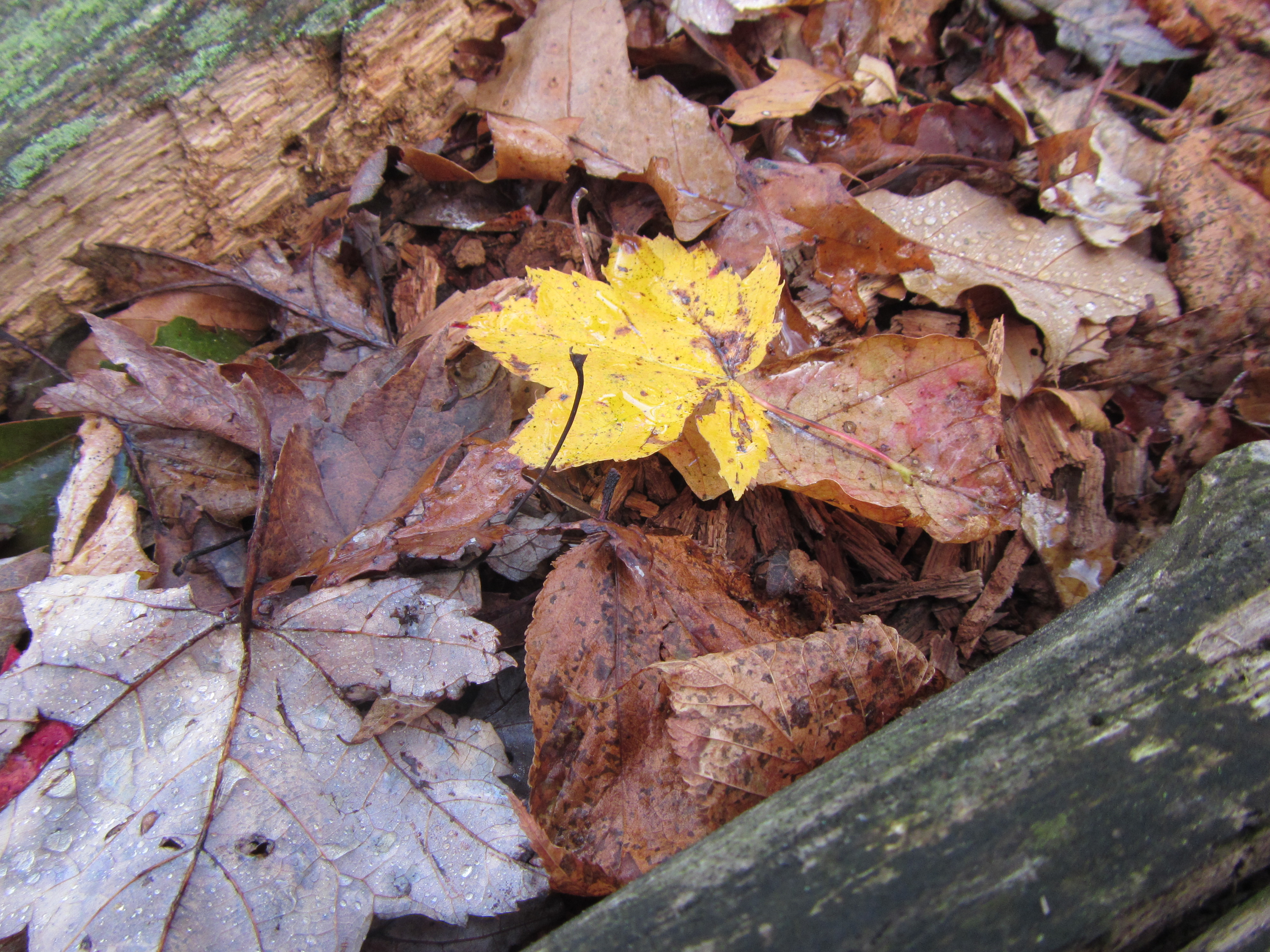
The day began grey with dense fog banks and light drizzle. My energy on the way into the woods was the typical I-can’t-wait-to-get-my-line wet rush. It usually takes a lot to distract me when I’m in hurry-up fishing mode. But I was captured by this splash of color against muted brown. Sitting here at home now, I’m glad I stopped.
~
We haven’t had much rain in the northeast during the last month. The brooks were way down compared to last fall. (And nice and cold at 50 degrees.) But even the feeders were teeming with char. Nature finds a way. Like this hemlock, growing hard against a rocky outcrop, roots searching for precious water, splayed out like the tentacles of a beached squid.

~
I began fishing downstream, dry, with a size 16 Improved Sofa Pillow. When streams are this low and clear, the bite is often better if you go subsurface. It’s easy to figure why. The fish are feeling vulnerable in the lower flows. Whereas they’re bashful about showing themselves on top, they remain undisciplined gluttons below. Once I made the change to weighted beadhead soft-hackles, I saw an exponential increase in strikes. The nips began the moment the fly settled beneath the surface. One of the flies I used — as yet unnamed — was a soft-hackle with a hot chartreuse bead head I tied up a few weeks ago. I could easily track the fly in the water, as well as the dark forms that would materialize out of nowhere to attack the intruder.

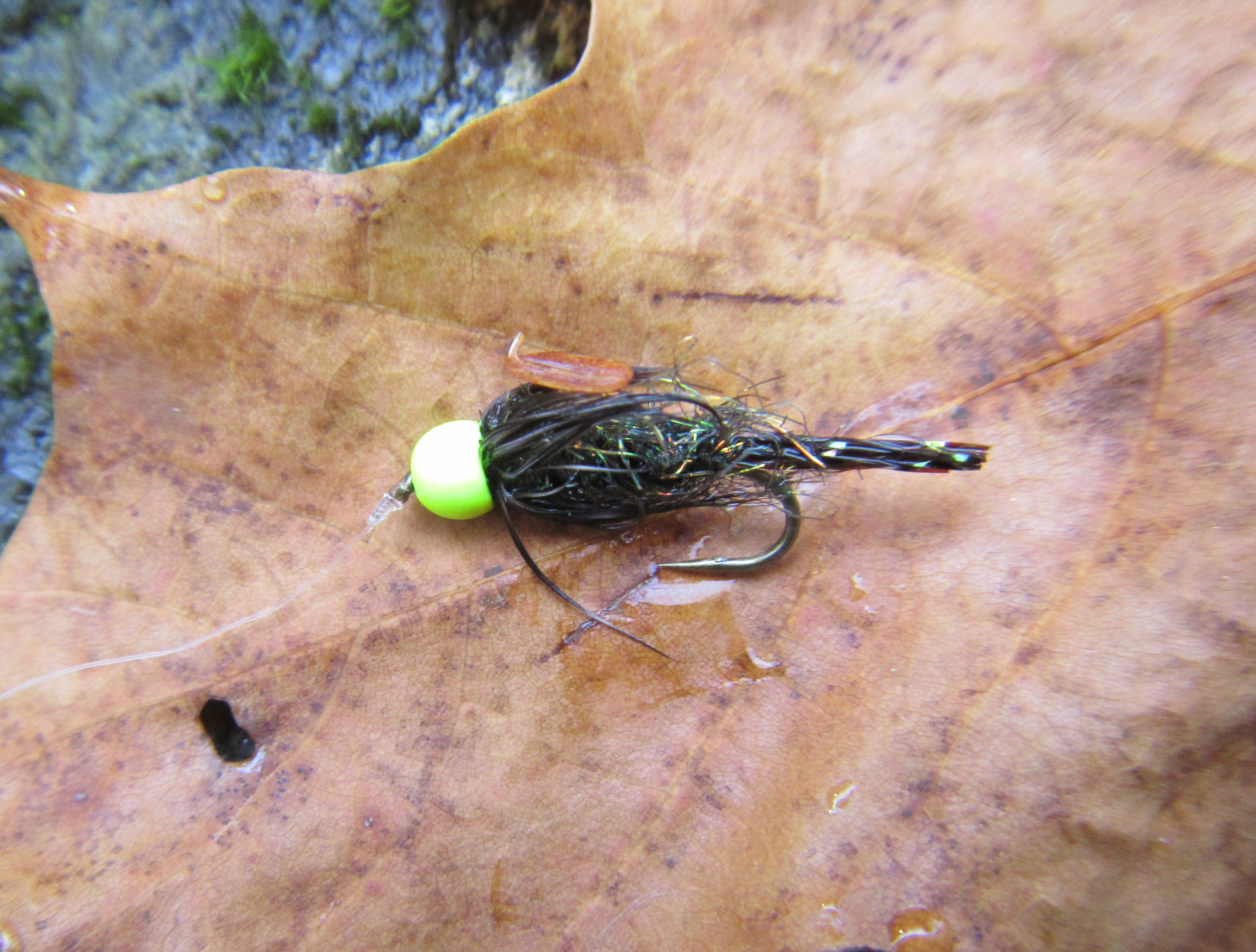
“Unnamed”
Hook: 2x stout, 3x long, size 14
Thread: Black
Bead: Tungsten, chartreuse
Tail: Black Krystal flash
Body: Peacock Ice dub
Hackle: Grizzly hen
~
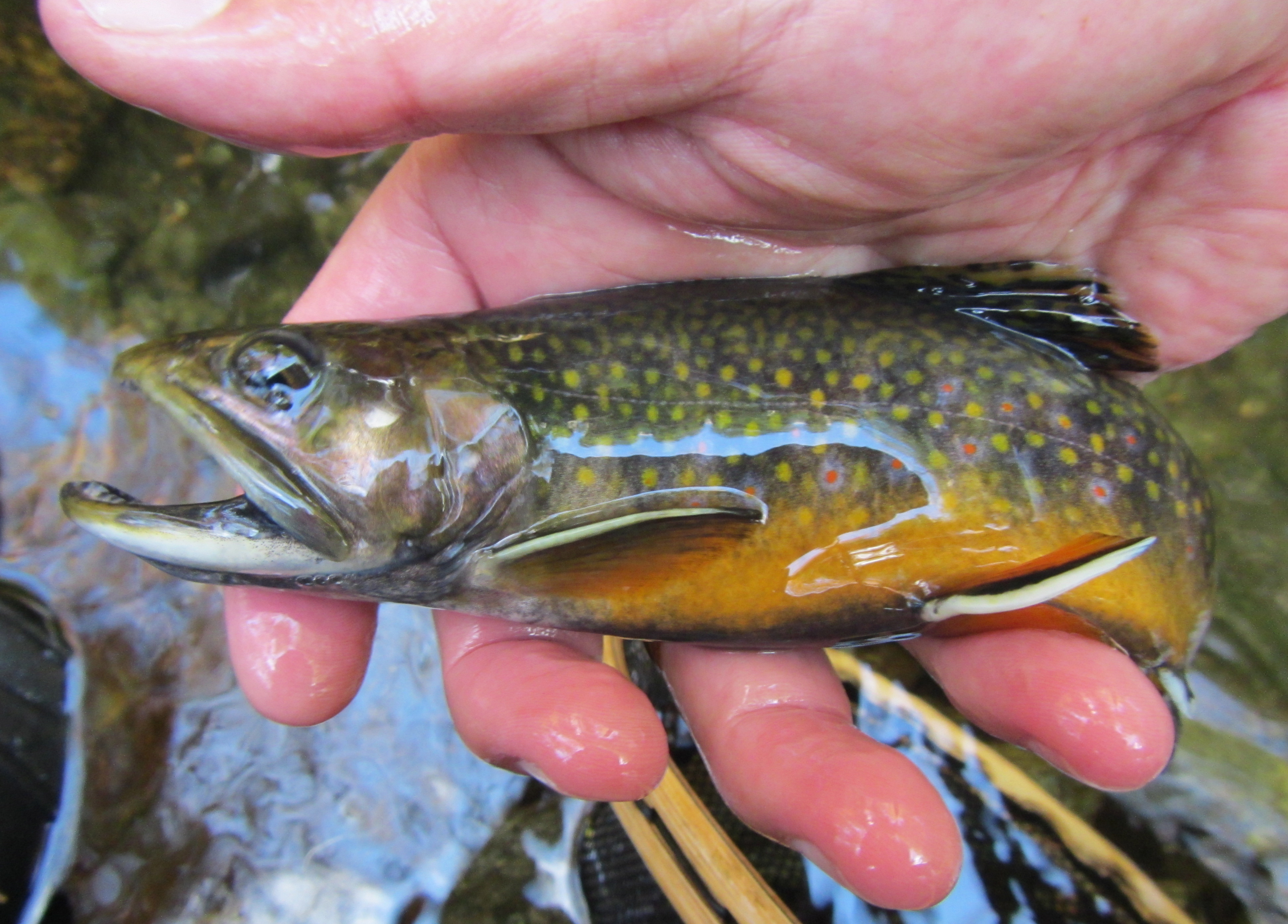
Most of the brookies I pricked and brought to hand were in the 3-6″ class. But there were a few more substantial fish in the mix, like this handsome buck, ablaze in fall spawning colors. A proper Brobdingnagian, he’s been in the brook for quite a few years.
~
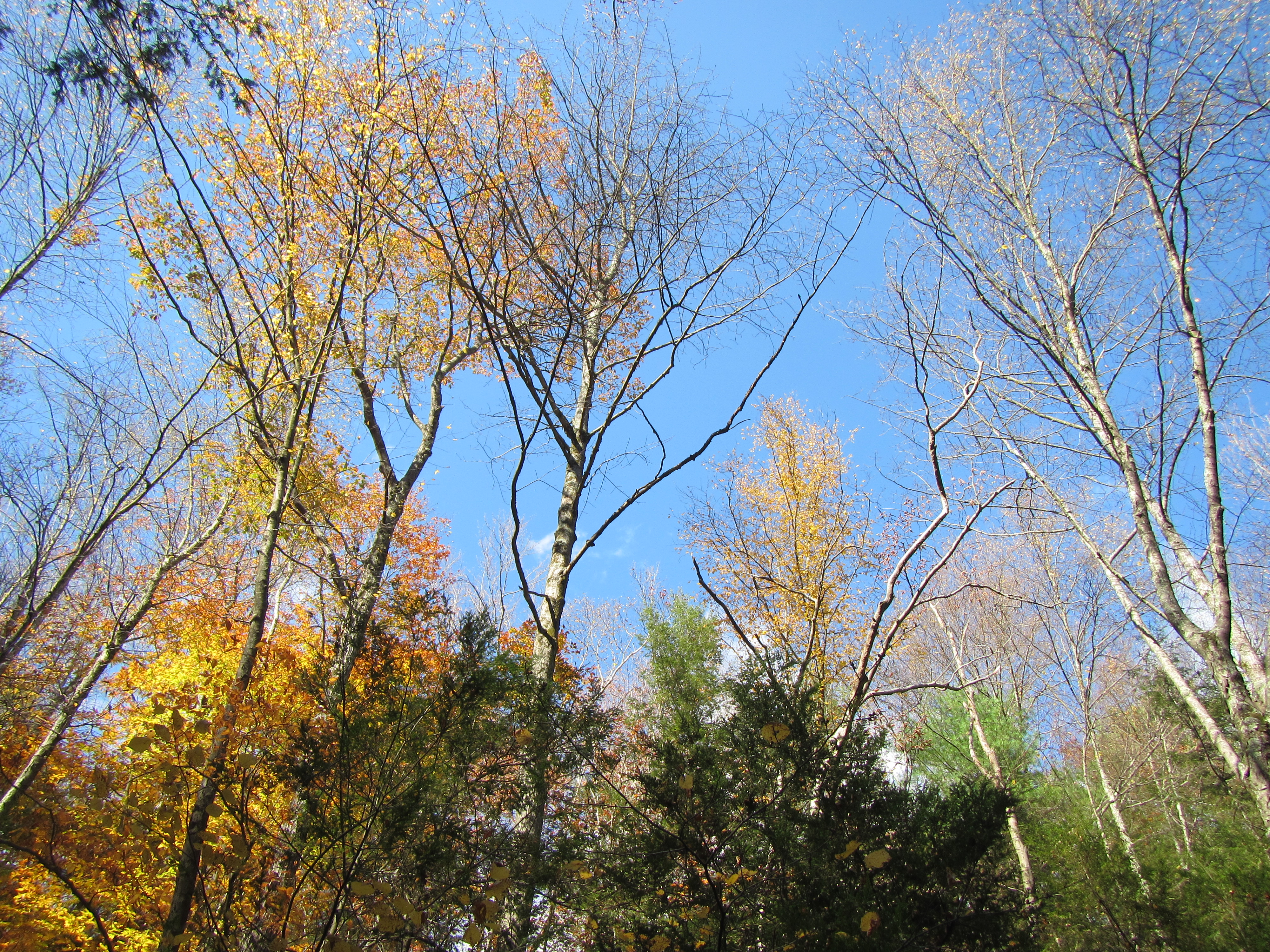
Turned out nice again. It’s hard to manage the thought of the coming snow and shelf ice when the mercury’s pushing 65 and the sun is dancing off the tree tops.
~
Can you stand to look at one more picture of a brook trout in blazing fall technicolor? If we must. I could wax poetic about the Fontinalis fin, the haloed spots, and the vibrant belly. But the camo pattern on the dorsal fin is inspired.

~
Like fishing trips, all fishing reports regrettably must end. This is the fish from the photo above just at the moment of release. Till we meet again.

So, this guy walks into the woods carrying a fly rod…
We haven’t had rain in a while; the brook was low and the forest floor dry as tinder. Still, I found a spirited rivulet of groundwater that wended down the fall line before tumbling over a mossy ledge. When the water is this clear and low, the brookies tend to stay in the darker, deeper sections — or in the whitewater just below that miniature waterfall next to the moss-covered boulder.

~
Vibrant red spots ringed by blue halos adorn an eastern brook trout. Brookies are the only trout (technically, they are char) native to much of the eastern United States.

~
Fall is living up to its name. The deluge of soon-to-be-ex-flora has already begun in the hills. Fishing-wise, the leaves weren’t really an issue; I only hooked a few here and there. I was looking for photo ops when I glanced down at my feet. I was struck by contrast of these two leaves against the rock, but what really captured my fancy was how, in that swift current, did they manage to find a toehold — and how are they able to so stubbornly cling to their perch?

~
A lot of people don’t know this, but Vincent Van Gogh was an avid fly fisherman. He used to jet from his estate in Holland to his cabin in the Appalachian foothills, where he could pursue his passion: fishing for Salvelinus fontinalis. The flank of the brook trout is said to have been Vincent’s inspiration for his masterwork Starry Night.
Well, at least that’s what I heard.

Fishing notes: Water was 56 degrees. Not surprisingly, most of the fish I pricked came from deeper holes, dark runs, and plunge pools. I found one abyss where there was a bona fide lunker (for this size stream) of about 11-12 inches. Pricked him twice, but couldn’t get a good enough hookset to close the deal. I tried for over a half hour, and in the end decided that that fish might be responsible for populating hundreds of yards of brook — and with spawning season so close, would be better left uncaught. I fished mostly downstream. Dry fly was a size 16 Improved Sofa Pillow; wets were a cornucopia of bead head soft-hackles. Cigar was an Aroma de Cuba Reserve maduro Churchill.
Block Island Diary 2013: Hey! I Remember You. (Kindof.)
If you’ve followed my previous Block Island Diaries, you know that the last two years of fly fishing from the shore have been – ahem – underwhelming. Used to be, a good night on the Block was a dozen stripers. An off night, two or three, with an odd visit from the skunk tossed in to keep you honest. But in 2011, I took only six bass in seven nights. Last year, a measly four bass. Buoyed by a strong 2012 fall run in Rhode Island and an equally impressive 2013 spring migration here in Connecticut, I ventured once again to the magical land of the Manisses.
Saturday: Red Right Return
There’s a reason Luke Skywalker doesn’t blow up the Death Star at the beginning of Star Wars. Unfortunately, you don’t have the luxury of manufactured drama in non-fiction. You get what the fates throw at you. And what I got tonight was a good old-fashioned summer blockbuster climax. It was so humid it felt like you could grab handfuls of air. Low clouds and fog banks whipped past, accentuating an already mysterious setting. Five casts in, and I had my first bass of the trip, a porcine twenty-one-incher that went immediately on the reel. Twenty minutes later, I’d already caught more stripers here than I did all last year. Halleluiah! These bass were gathered for one purpose: to eat with extreme prejudice. Sand eels were the entree, and I could hear them plink-ploinking through the water as I waded. There were stripers everywhere, and they attacked my fly, a Big Eelie in a Crazy Menhaden color scheme, with undisciplined fury. Missed strikes were frequently followed by punishing returns. Without a sealed drag, the moisture in the air and an occasional dip in the water reduced my reel to a shadow of its locked-down-tight self. Once hooked, the bass were off to the races, and I did my best to palm the reel. My knuckles took a beating as the handle repeatedly whacked them, but it was a good hurt, and I laughed at my clumsiness. The commotion I created sent several spin and fly anglers scurrying over to join the fray. By some perverse twist they all caught few or no fish. Some muttered as they left, and others departed with a palpably grim silence. Twice I told myself I would give the spot a rest and seek my pleasures elsewhere. Twice a fifteen-pound fish talked me out of it. The action slowed only when Mr. Boating Dipstick 2013 set a course for the wrong side of the channel marker – despite his blazing, brilliant spotlight – and momentarily hit the sandbar. But that was the only wrinkle in an otherwise flawless night. When it was over, my thumb looked like a pound of ground chuck under cellophane. My fly had been surgically reduced to a couple hackles and some forlorn strands of bucktail. Even when I tried to stop fishing, I couldn’t. I caught a legal fish just reeling in my line. One of the stalwart souls still on the beach called out to me. “Are you leaving?” Yep, I’ve had enough. “How many did you get?” I don’t really know. I stopped counting after fifteen. “You had some big fish there.” At least a half dozen in the 15-pound range. “Can I see what fly you were using?” Absolutely. “Wow. That’s it? It doesn’t even have eyes” Nope. Here, take this fly, and this one too. Color doesn’t matter. Good luck to you! Then I began the long walk back to the truck. As I trudged through the sand, I switched on my headlamp, and basked in the warm red glow of an absolutely righteous return.
Any night filled with ten to fifteen pound stripers doesn’t suck. I know, I know, it’s not the most fish-friendly photo. If it makes anyone feel better, I lipped the rest.
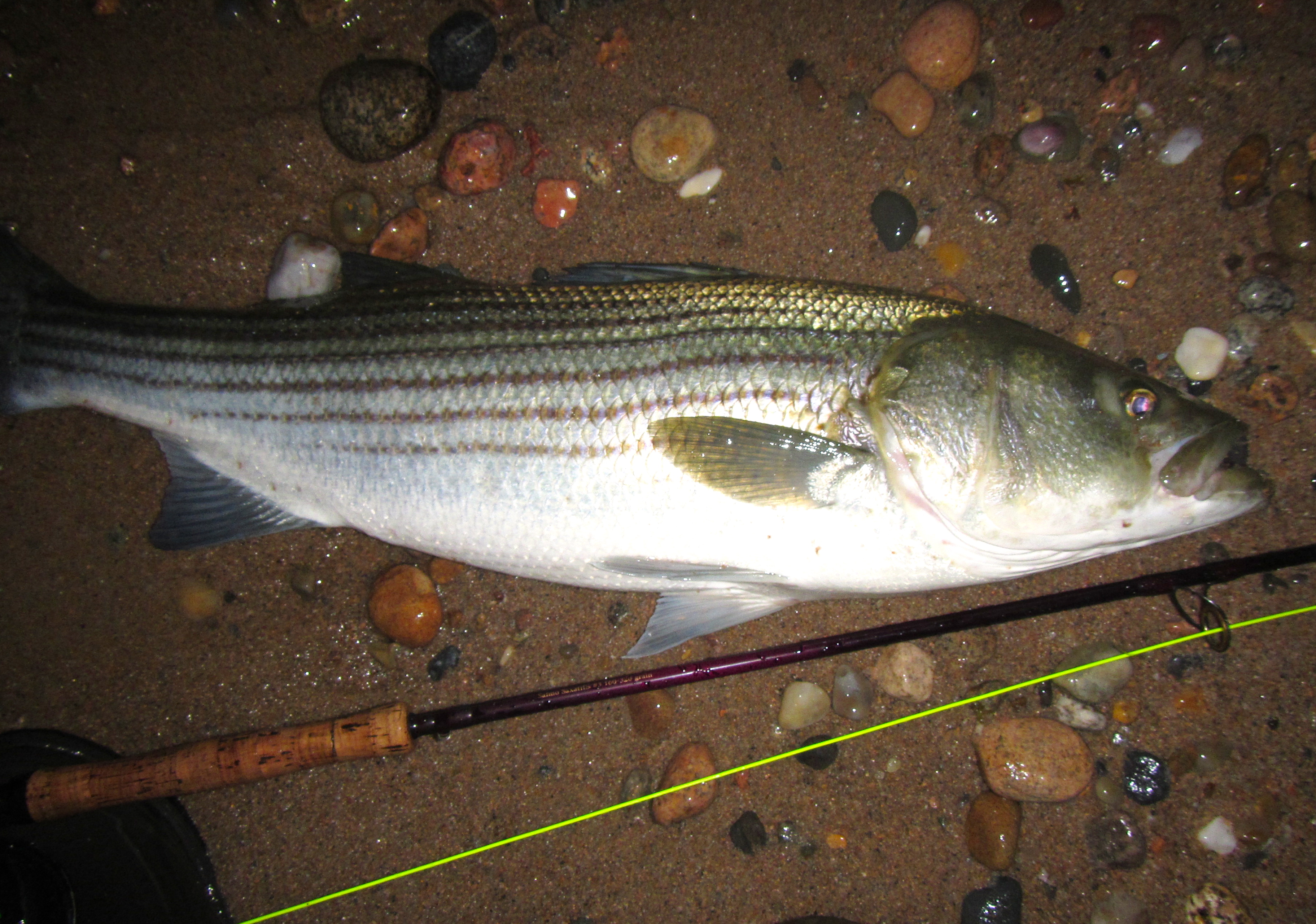
That’s gonna leave a mark. The price of admission for a dozens-of-bass outing.

Sunday: The five most feared words in fly fishing
My friend Bill arrived on the Island today, and I’ve been regaling him with tales of gluttonous bass, buckets of bait and thumb-wrecking action. Word travels fast about a good bite, and the parking lot is mobbed. The weather and the wind are a carbon copy of last night. All we have to do is wait for dark and a little more of that flood tide. Unfortunately, there are more anglers than bait. Or stripers. Plenty of skates, though, in thick and beaching themselves, wings flailing away, frantically slapping against the sand. The wind picks up in intensity, and brings with it brief tropical downpours. I can see a light grey band in the skies over Block Island sound, then a foreboding line of India inkiness over the mainland. In the end, the bite never materialized. I managed a single bass by moving around and fan casting with a black, blue, and purple Big Eelie I call the Bruiser. I couldn’t blame Bill when he bailed after the second squall came through. As he walked off I called out to him, “You shoulda been here yesterday!”
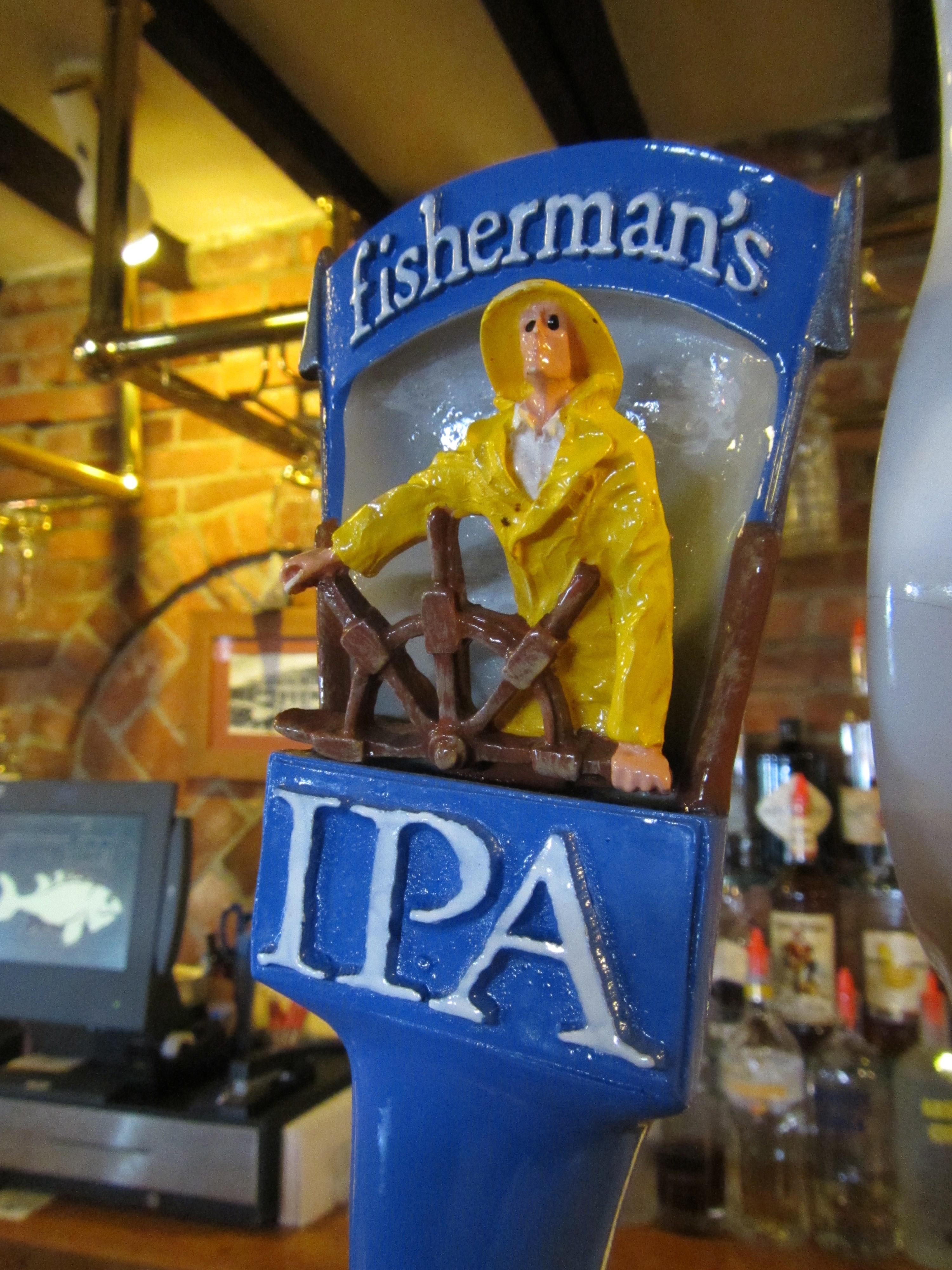
Until someone brews up Silver Stoat Stout, Todd’s Norway Ale, or Flyrodder Lager, I’m still the only dude in my crew with his own label. (“The Fisherman” is my internet forum nom de voyage.)
Monday: Gettin’ jiggy wid it
The wind is banshee bitch, even more so than the previous two outings. The fishing’s about the same as last night, possibly a degree less of suckiness: three fluke in about 90 minutes of fan casting over an expansive flat. Einstein’s definition of insanity being what it is, I decided to go for a wade along some shallows that border rocky structure. I spooked a fluke, then saw some suspicious upheaval on the surface about 50 feet away. I climbed up onto a rock to investigate. Three casts and two bass later, I had my answer. The fish were standard-issue Block Island mid-twenties schoolies, which is to say that they were rotund, powerful swimmers that went on the reel. Not much else going on, and I was in bed by 2am. While I was sleeping, Ravi, who works at the Block Island Fishworks, was jigging for squid in New Harbor. At 3:30am, he hooked a squid, which moments later was swallowed by a 31-pound cow. He said her stomach was full of calamari, from 2” to over a foot long. Now, which box do I keep those Banana Squid flies in?
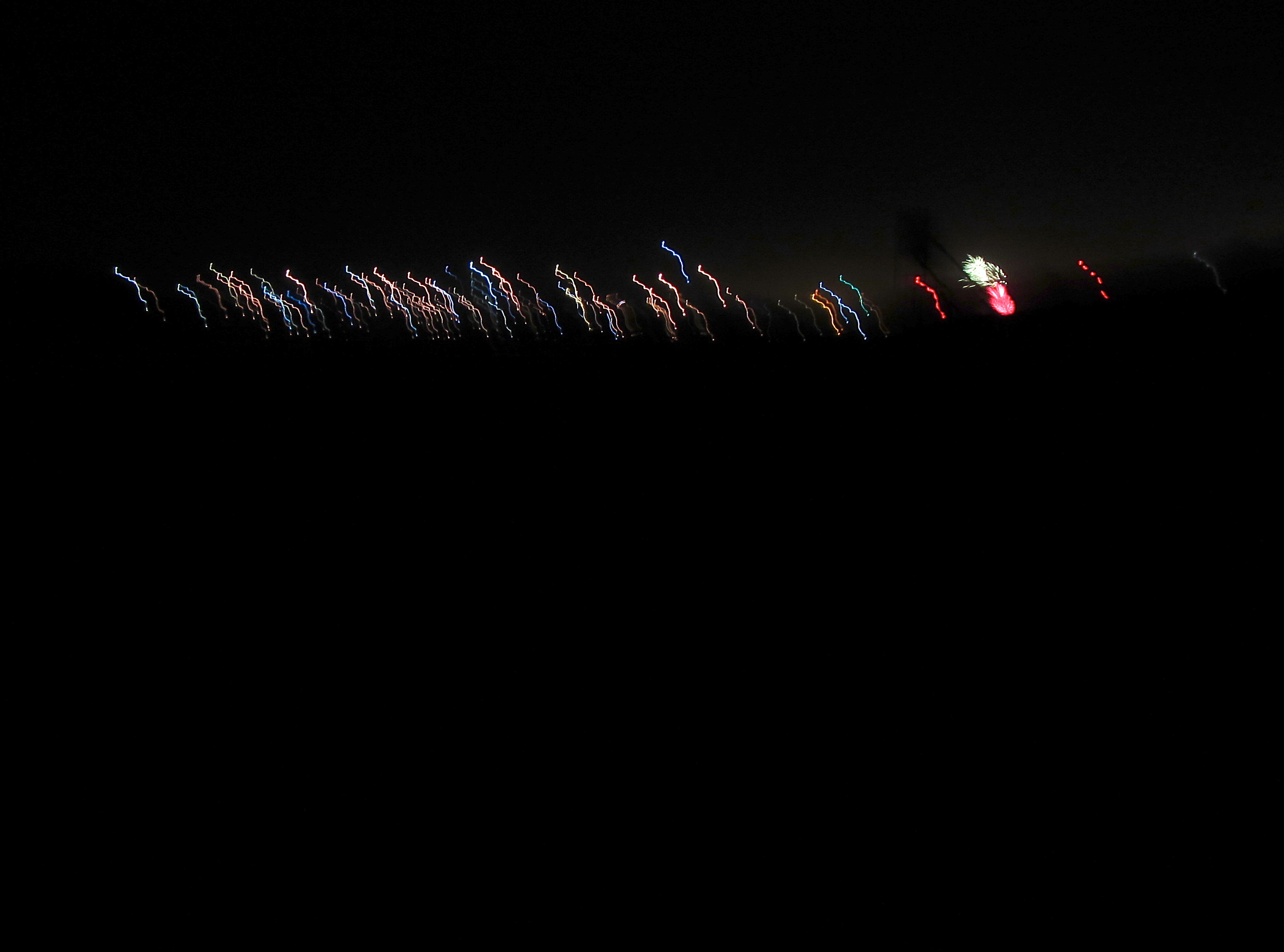
When the fishing’s slow, you look for ways to amuse yourself. Here’s my attempt at an abstract: a long exposure of boat masts swaying in the wind, accentuated by a rogue fireworks shell burst.
Tuesday: A very deep trough
Nothing. I fished the snot out this Island tonight, and nothing. Nothing at the Saturday night heroics spot. Nothing at my favorite jetty. Nothing at Charlestown Beach. (Not that five minutes of beleaguered casting in hellacious 20mph crosswinds counts for much.) Bill came back out tonight, and I talked him into trying a spot on the west side I’d never fished before. We were sheltered from the wind by a kindly bluff, but it’s generally a bad idea to wade out into unknown waters at night, even if you scouted them from the shore in the daylight hours. Bill gave it 15 minutes, but he just wasn’t feeling it, and after he left I got the standing-in-the-ocean-at-night-by-myself-catching-nothing blues. The visibility was so poor that I couldn’t even make out the horizon. All it took was one good gut-high wave to knock me off the rock I was standing on. Off to more clement waters, where, of course, I caught nothing. There was the mystery of the glow-in-the dark shooting basket to keep me entertained, though. I noticed that at odd intervals, the inside of my basket would glow a dull red. It was a puzzlement until I realized it coincided exactly with each draw I took on my cigar.
Yup. That about sums it up.
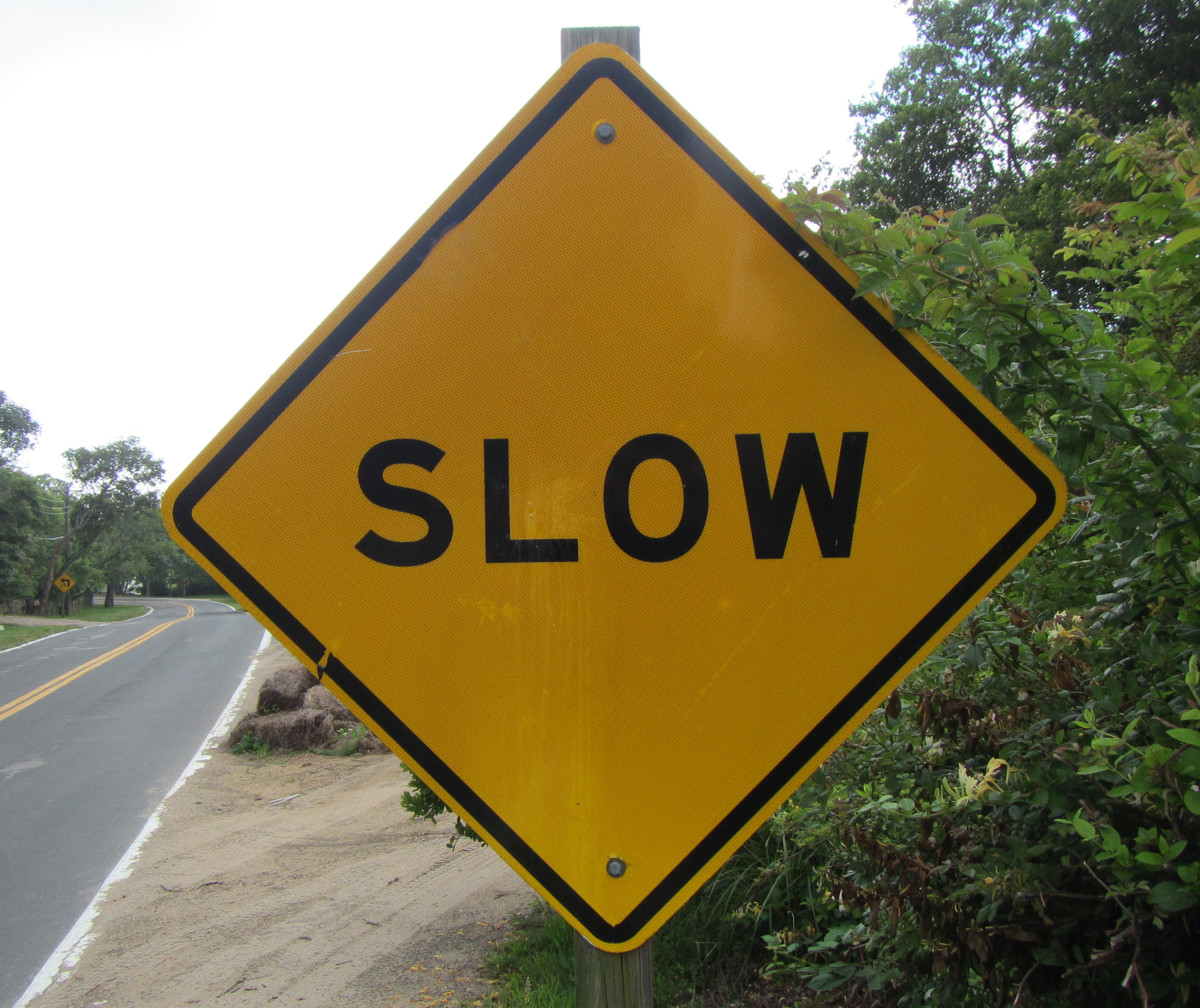
Follow the fish. If only finding stripers was this easy.
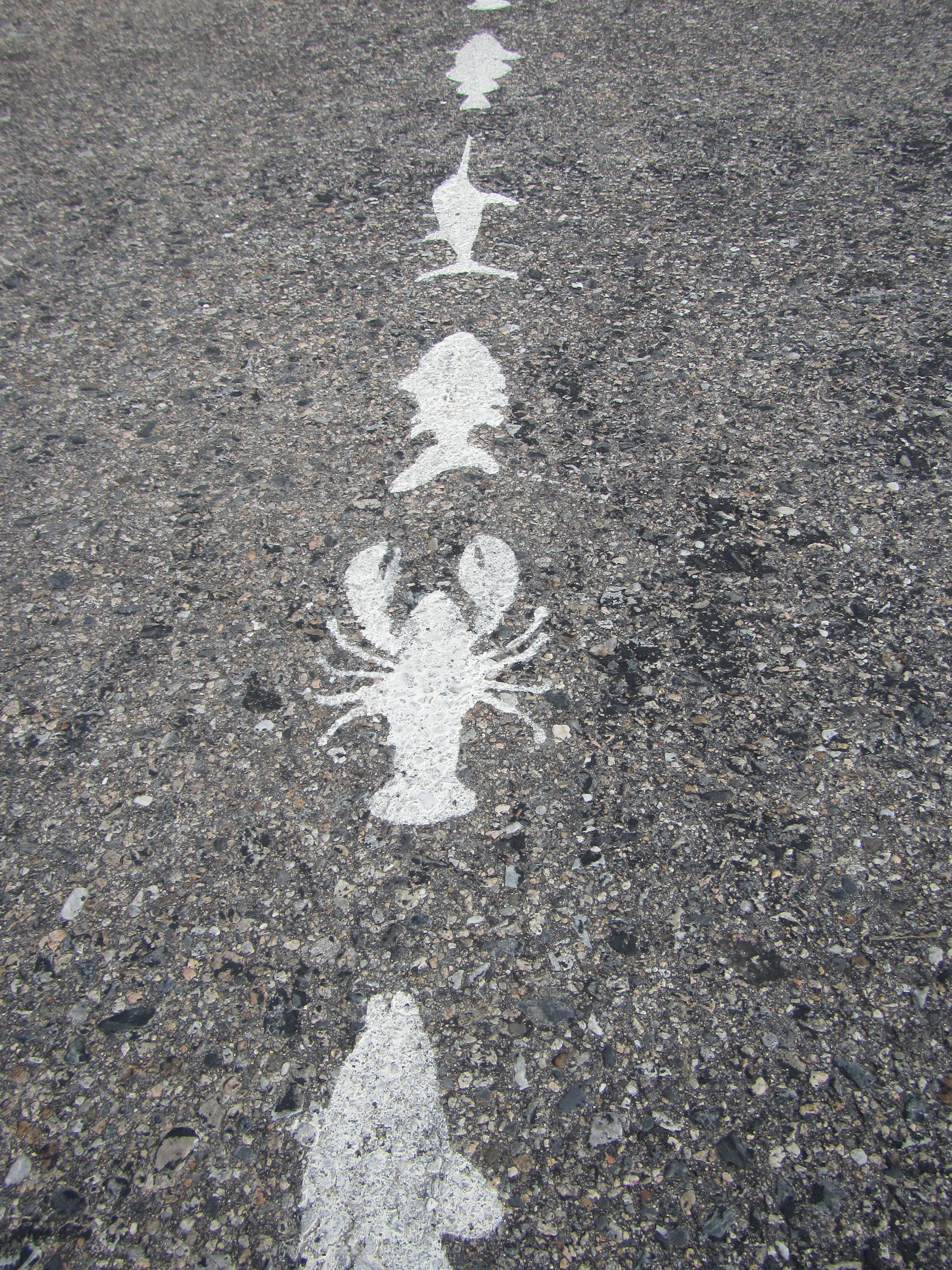
Wednesday: The natural
Tonight I’m taking my 10 year-old out with me. Last year was Cam’s first time night fishing for stripers, and although we didn’t catch any bass, he aced the outing. Whether it’s because I’m with my new fishing buddy or I’m attuned to some angling sixth-sense, I feel like we’re going to see some saxitillus tonight. Cam is fishing a 4” jig-head Sluggo, and lands a fluke in short order. We move to a different spot where Dad hooks a bass. It’s a standard-issue schoolie, but Cam is more than happy to land it on the fly rod in the misty twilight. Our last stop is the jetty. We experience our first double, although it is curiously strange that we have both hooked skates, Cam’s from the bottom and mine on the surface. We go out in a blaze of glory when I tie into a keeper bass about 70 feet away. I set the hook, and hand the rod over to Cam, who’s never fought a striper that large before, let alone on a fly rod. I take a quick picture, then clamor down the weed-covered rocks, telling Cam to let the fish run when it wants, reel it in when he doesn’t, and take his time until I can get down into the water. I’m standing at the bottom of the jetty, about to tell Cam to start getting the fish in, when I see a splash at my feet. Cam’s already beaten the striper, and there it is, waiting to be lipped. I got goose bumps when I realized that he’d landed his first keeper bass a lot quicker than his old man did.
A portrait of the artist as a young man, focusing on the job at hand and doing his father proud.

Thursday: Fireworks cancelled due to fog
And the bass followed suit. At least for me they did. We all put our waders on one leg at a time, and tonight I’m living proof. Everything that could go wrong did. Everyone caught a striper but me. It’s not much fun when you’re going through it. At least afterward you have the comfort of humorous remembrance. Things started poorly when I drove a spot on the east side that was on lockdown – and they were catching fish. No room at the inn, so I drove to the west side where my line repeatedly insisted on wrapping itself around my rod. Literally sprinted a hundred yards down the beach after an angler reported blitzing fish on a sand bar – and found nothing. To make matters worse, I was wearing my stubborn hat tonight. I stayed out way too late. At least the birds weren’t singing by the time I drifted off into the fog of sleep.
Fortunately, there’s nothing in Chapter 10, Section 9 about carrying a cold one out on a jetty.

Friday: Right where he’s supposed to be
It’s good practice for any serious striper angler to know a spot – and know it cold. I’ve fished the Island long enough now to have a certain level of competency. I have a mental index of where to fish at what tide, wind direction, moon, etc. Tonight I had my heart set on catching a striper at X. There were a few problems with my plan. X is generally a two-hours-either-side-of-the-flood spot. Tonight was fireworks night with the family. That would put me there well into the third hour of the dropping tide. The best I could do would be to have the truck pre-loaded so I could make tracks even as the finale’s last boom! was echoing across the hills. There was enough bait in the water to keep me hopeful, even after a fruitless fifteen minutes of casting. Then, bump! Missed him. Mortal depression. This being such a mercurial week, that might be my only touch of the night. But somewhere out there, in the rapidly fading twilight, I could hear the mischief of a bass feeding. I couldn’t quite place him; there was enough wind chop to make sighting the rise rings impossible. Bump! He hit it again. I let the fly sit there. Gave it a short strip. Bump! What gives? Must be a small fish. Another strip. Whack! Got him now, a silvery ten-pound striper that was the perfect fish in a perfect place at a perfect time. As I’ve gotten older, I’ve tried to embrace the concept of, “I don’t need to be right.” But oh my goodness, sometimes it feels so damn good when I am.
A perfect fish. Just what I needed to close out the week. As tradition dictates, taken on a Big Eelie in the original colors.

8/14/13 Farmington River Mini-Report
It was a slow day on the river for most of the anglers I spoke to. We were likely done in by the sudden shift in weather and the noon spike of the dam flow (the Upper TMA jumped from 370 to 480cfs; water was lightly stained and 65 degrees). Still, my friend Pete and his brother got into some very nice larger browns in the Upper TMA. As for your humble scribe, I had to be content with a mob of juvenile Atlantic salmon and one lonely rainbow trout. I was committed to the wet fly cause today — I just got an article assignment from American Angler on wets and was hoping to get some good fly-in-trout-mouth shots. Instead, you’ll have to settle for this simple flora-at-dusk portrait:

Farmington River 1, UConn 0
Those of us who love the Farmington River spoke out — and our voices were heard. UConn will be using the CT Water Company, rather than the MDC, to fulfill their future water needs.
The following is a quote from last Tuesday’s Hartford Courant: “The selection eliminates a controversial $51 million plan by the Metropolitan District Commission to build a 20-mile pipeline from East Hartford that would have drawn water from the Barkhamsted and Nepaug reservoirs. Opponents assailed the plan, saying it would draw down the watershed of the Farmington River, a popular recreation spot.”
Yeah, baby. That’s us. Opponents. Assailants. Righteous defenders of natural resources. Thanks to everyone who spoke up, signed the petition, wrote letters, and sent emails.
Grassroots activism is so underrated.
Winner.

And, winner.
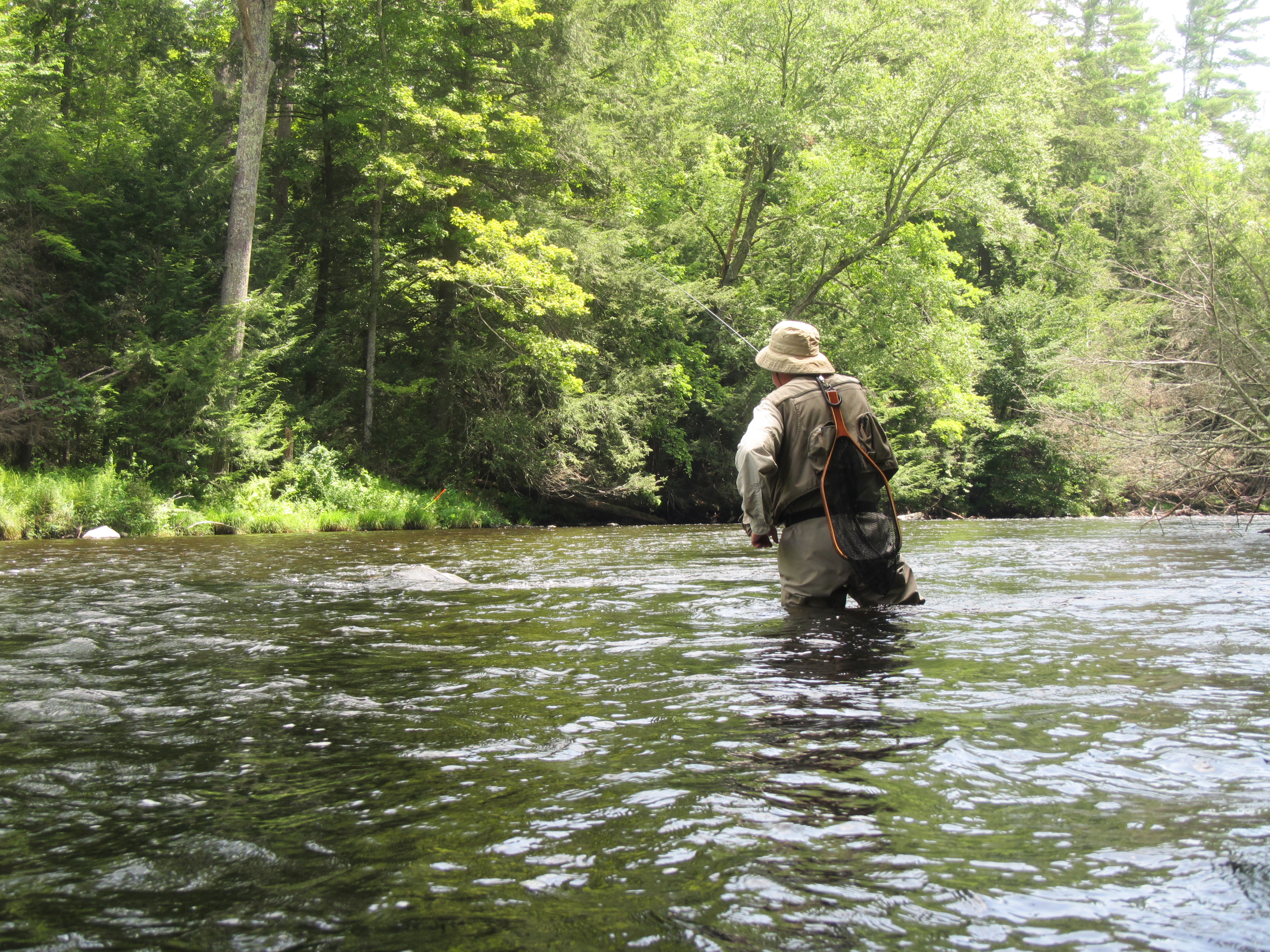
Cheeseburger after paradise
There are 365 or so days every year when you can fish the Farmington. I manage, on a good year, to do it about 40 times. But of all those days, none is more important than July 21.
I’ve made a pilgrimage to the Farmington on that day for four consecutive years now. It’s not by accident. July 21 is the day the Summer Stenos come out. Whether they appear earlier or later isn’t important; the Stenonema have their schedule, and I have mine. There’s a certain place I go to greet them, and since it’s an evening hatch, a certain time I like to be there. Admittedly, I have an unhealthy relationship with Summer Stenos. At times I hold them in starry-eyed adoration. Others, I view them with extreme disgust and intolerance. No other hatch on the Farmington so charms me that I have the date burned into my mental calendar months in advance. No other hatch baffles me with its rise-to-hookup ratio that frequently exceeds 10:1 – even though I’ve found the perfect fly for fooling the trout.
On Sunday night I got my first three trout of the year on Summer Stenos. But first, there was some swinging to be done.
I hadn’t fished with Jon in almost two months, and for our reunion outing we agreed that wet flies and riffly pocket water were in order. At 630cfs the run was quite wadeable. Jon took the first fish, a smallmouth bass, but after 45 minutes all we had to show for our efforts was a couple of juvenile Atlantic salmon. While it’s nearly impossible to get down on the bite when you’re swinging wets with an old friend on a delightful sunny day in July, I suggested we move to another spot, upstream. I guaranteed Jon he’d catch a trout there.
Such predictions are a minefield. I had second thoughts about opening my big mouth from the time we piled into our vehicles until he took his first trout a half-hour later. I was still swinging wets, working below Jon, while he had switched over to short-line nymphing. Just as my three-fly team made the transition from swing to dangle, I felt a herky-jerky tug. The fish made two quick micro-runs, peeling a small amount of line off the reel. I thought nothing of it at the time, as the take came in the heaviest section of current. No need to get this fish on the reel.
A big ol’ wild Farmington brown. These fish with a scarcity of spots are intriguing. Check out that tummy. Someone’s been eating well. He took a size 14 Drowned Ant soft-hackle.
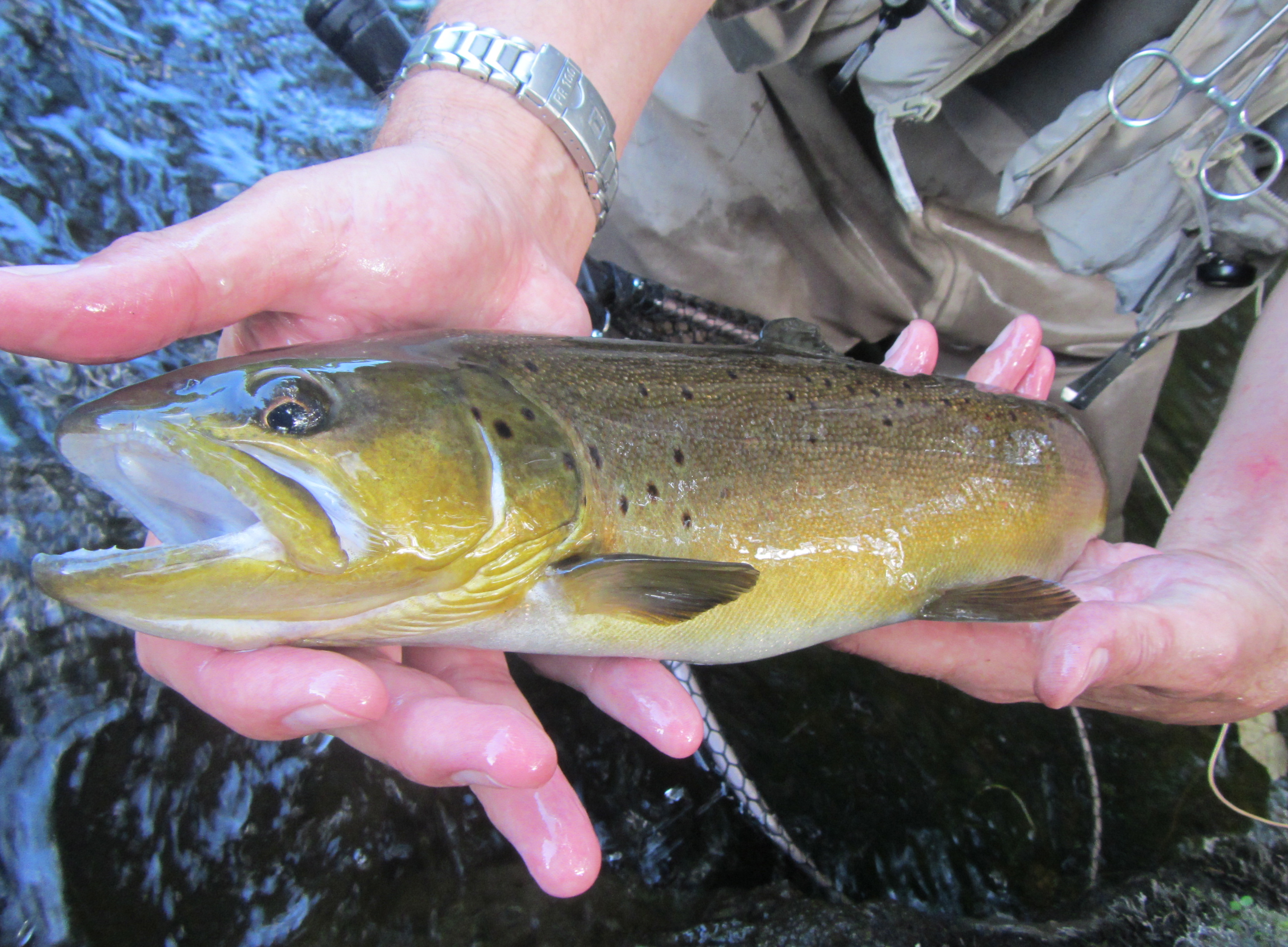
Each fight has the potential for comedy, drama, or tragedy – sometimes all three – but this one quickly declared itself a drama. The trout is usually a good one when you never see it during the encounter. Big fish have a way of hugging the bottom and using the current against you. By the time I had negotiated the trout into calmer waters, I could see that I had underestimated its size. A wild brown with an odd scarcity of spots and, despite his length, only the suggestion of the beginning of a kype.
How can you tell that you should buy a lottery ticket that day? You’re just standing in the water, savoring the moment, line dangling harmlessly beneath you, and you hook another trout. Moments later, a Cedar Waxwing lands on your rod as you hold it over the water like some conjurer’s wand. He waits there. Eyeballs you. Looks as if he’s about flee. Then stays long enough for you to call out to your friend to be your witness.
This rainbow looks like it’s been in the river a while. Jon took him short-line nymphing not too far from where he was standing.

But, lest you think we have forgotten about the Summer Stenos, rest assured. We have not.
Shortly before 7pm, we were wading into a pool where friend Todd was already fishing. Jon spotted a trout rising against the far bank. Since I was already rigged for dry, he suggested I have a go at it. As I began my false casting, Jon predicted that I would stick him on the first drift. I was thinking the same thing almost as he said the words. After all, it was a day where I could do no wrong. But, after my sixth cast, we agreed I had most expertly put the trout down. There’s nothing like fly fishing to keep a man grounded.
While the hatch hadn’t gained any steam, there were a few trout feeding sporadically on the edge of a pocket. The current seam they were rising in demanded a precision cast perilously close to an obstruction. Then a rapid series of mends to keep the fly from looking like it was on the Scrambler carnival ride. I saw a few size 18 creamy mayflies come off, and switched over to my Pale Watery wingless wet variant that I fish as a dry. With a twelve-foot leader that tapers down to 6x, the line hits the water well before the fly. I was beginning to mend even as the fly was slowly settling onto the surface.
I rose trout several times, but came away with nothing but air. Then, in a glassy plate of water three feet from the shore, I saw another active feeder. This trout obliged on the first cast. A fine Farmington brown, probably not stocked. My first Summer Steno trout of the year. July 21st. The universe is in balance. A half hour later, another beauty, lower in the pool, again on the first cast.
Time races when you’re dry fly fishing. Probably because you’re so keenly attuned to the rhythm of the rises, and the limited opportunities presented by a waning hatch. Evenings, there’s also the looming specter of darkness. Can’t see your fly, can’t dry fly fish. Or at least, not easily. Dusk was just crossing the no-man’s-land into night when I hooked my last trout. I had been repeatedly casting to a small riser – or so I thought. The splashy feeding tells were slight enough to suggest a juvenile salmon. But like that big brown, I underestimated the size of this brute, a well filled out rainbow that ignored several entreaties to come to net.
A good day on the river longs for a happy ending. So I am pleased to report that if you leave the Upper TMA, waders off, rod broken down, gear stored, by 9:20, you can make it to Five Guys in Farmington before their 10pm closing. With several minutes to spare.
Block Island All-Nighter VII: Ode To A Sleepless Night (with apologies to Robert Frost et al)
Every year in June, we head out to Block Island for the annual all-nighter. Small posse this year, consisting of a skeleton crew of your humble scribe and Dr. Griswold. Staying up all night striper fishing can be challenging, even when the bass are on. When the bite is off, like this year, it can be downright excruciating. Perhaps a little poetry will help ease the pain. And so, without further ado…
On Father’s Day it was decreed
That Bob and Steve would do this deed:
A journey to the Island Block
To fish for stripers ‘round the clock.
~
At 8pm our trip begins
With deep fried scallops fresh from Finns
Steaming hot, and by the way
Most tasty with an IPA.
~
Thus fortified, we hit the beach
To see if stripers were in reach
On my third cast I felt a chew
Alas! Fly gone. A freakin’ blue.
~
With toothies out I thought it wise
To tie on last year’s game-used flies
At 10pm right on the dot
I moved to fish another spot.
~
The hit was solid, hard and strong
The big bass’ run was nice and long
She tugged and pulled, I ‘bout fell back
In horror when my line went slack.
~
I reeled in to have a look:
You’re kidding, right? She broke my hook!
That’s what I get, such foolish settle
On older, tarnished, fragile metal.
~
Another bass took in a trough,
But moments later, he was off
‘Twas then I had but just one wish
Dear Lord, can I please land a fish?
~
Finally, there’s a striper hit –
Missed, but he came back (the git)
Reeled him in right near my feet
But he jumped off ‘fore we could greet.
~
Meanwhile Bob, my friend, poor sap
Had not even got a single tap
I wondered to myself, what’s worse?
No bites or losing fish (then curse)?
~
At half past one we made the call
To roll the dice, nothing or all
A place that surely would produce
Striped bass instead of eggs de goose.
~
But once again, the going’s rough
At 2am Bob says that’s enough
An hour later I did agree
Besides, I was cold and had to pee.
~
Bob awakened from his rest
And off we went with little zest
Depression, desperation near
Another crappy fishing year?
~
Bob’s lone striper came at five
And plus two fluke, now he’s alive
Meantime I was catching weeds
Just one more bass! I so did plead.
~
Sunup – 5:30 – and that is it
Time for us to call it, quit.
Coffee, pancakes, eggs and bacon
To fill an empty stomach’s quakin’.
~
And so dear friends we close this rhyme
Be back next year, same place, same time
This lousy fishing’s got to end
The only question now is – when?
Before: Unhappy Coaster.

After: Coaster and friend, a pint of Fisherman’s IPA. Delicious, and a total hop bomb.

Being a night owl, I usually miss sunup. Darn pretty, this one. You’ve been officially warned, sailor.
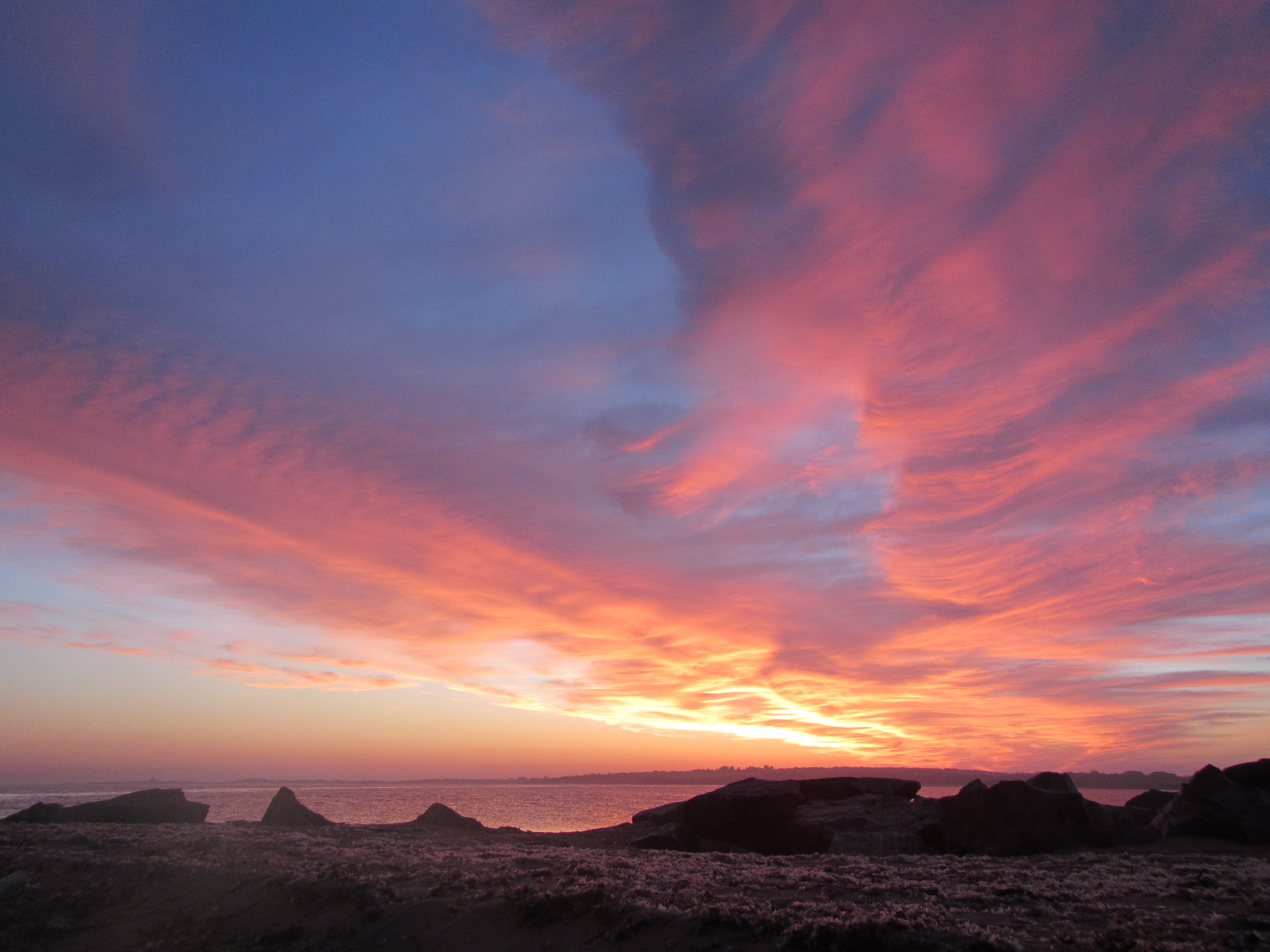
So much water the stream was on fire
I had taken about six steps into the brook when I fell in. A poor foothold, a little water ballet in a desperate attempt to regain my balance, then flat on my seat, left forearm soaked and a shot glass-worth of water into my waders.
Well, I thought, things could only get better.
They did. The creek was up, but at a perfect medium-high level, almost imperceptibly tinged, and running at a cool 63 degrees. What’s more, the skies were a grey block of granite. Rain was coming. But for now, it was just me, the woods, the brook, and the trout.
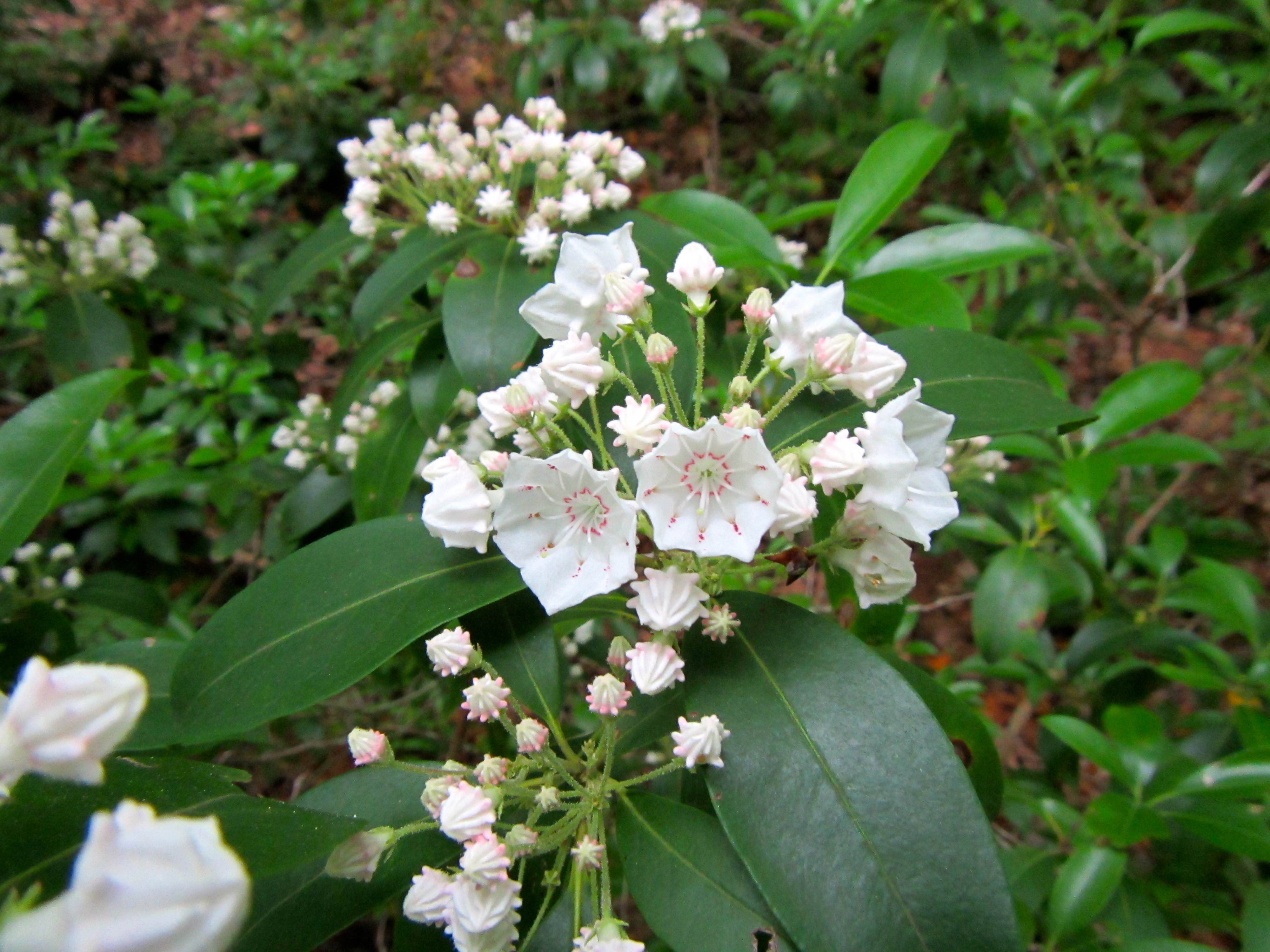
How you can tell it’s mid-June in the Connecticut woods. Our state flower, the mountain laurel, grows wild anywhere there’s shade. Some of the shrubs don’t produce flowers, but plenty of them were decked out in their white streamside finery.
I spent the better part of the morning committed to the dry upstream cause, even though I knew it was costing me fish in some of the deeper pools. Most of the trout I raised were small — three inches or less — and very few of them were actually hooked. That was OK with me, though. Just to know they’re there tells me the brook is in fine shape, and those fish will be seven-inch lunkers in a few years.
My best brookie of the day took a dry presented upstream in a dappled seam that rushed along the side of a large boulder. She ran all the way into the bottom of the next pool. Terrific little fighter, this one.

One product of receding high waters is that the fish are spread out in the brook. I found trout almost everywhere I went, including some places where I usually don’t. Many times I could see them bull-rush the fly (a size 16 Improved Sofa Pillow) as soon as it hit the water. When the water’s up like this, I like to plop the fly in the middle of a glassy micro-pond at the edge of a plunge pool or current seam. The brookies suddenly materialize from beneath the maelstrom, or the inky protective edge of underwater structure. I had a lot of first cast hits today.
Not much going on hatch-wise: midges, mosquitos, and a few stay caddis.
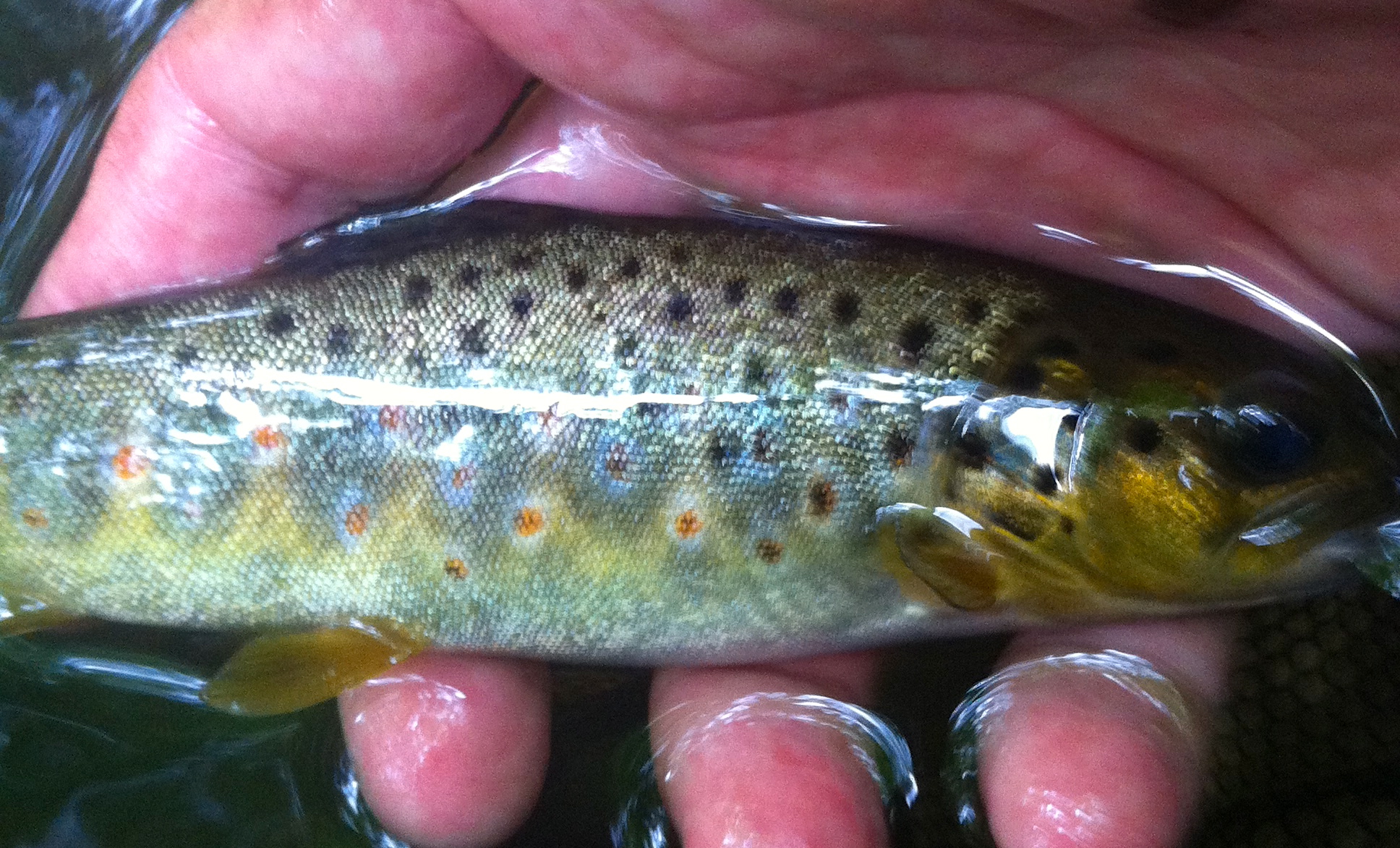
On the way out, I decided to take a page from my recent Upstream, Downstream, Small Stream article and fish a few of the deeper pools with a downstream weighted wet. The fly was a beadhead Grey Hackle Peacock, and among the trout that found it to their liking was a spiffy brown, who tracked the fly on the retrieve before striking.
Halo, I love you. Nice brown, lousy photo. This is what happens when your good camera runs out of battery and you’re forced to go with a quickie from the phone.
I was able to coax the better part of two hours out of this morning’s cigar, a Gispert Churchill. The air was still enough to blow smoke rings over dark waters, where the fishing was incendiary.
Small Stream 101: Fishing the outgoing tide.
The brook was dozens of miles from the sea. Yet there I was, fishing the outgoing tide. At least that’s what I started calling it several years ago. Let me explain.
What I mean is, I’m fishing a small stream in the day or days after a heavy rain. As with an ebbing tide, the water level is dropping. It’s a great time to fish. Here’s why. The waters have gone from raging and murky to some semblance of normal. They may still have a light tea stain to them, which makes it a little harder for the fish to see you, but not your fly. Most of all, the trout have transitioned from hunker-down survival mode to dinner bell-ready. That was certainly the case today.
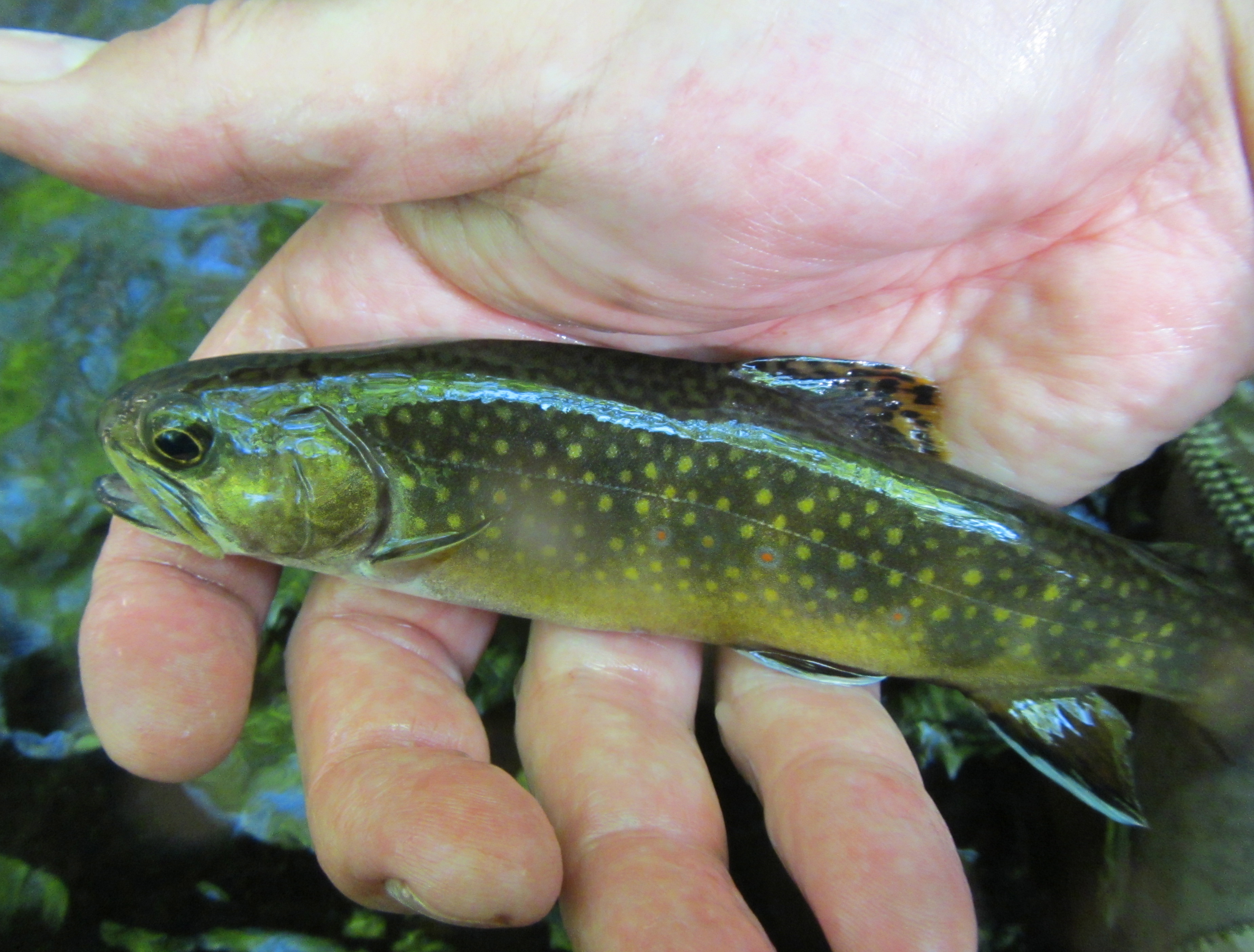
I would crawl on my hands and knees through a skunk cabbage-filled boggy mess to catch a wild brookie like this. Oh, wait. I did.
The lovely woodland stream I visited today is one I haven’t fished in many months. I usually make a pilgrimage in April, but the time-space fishing continuum conspired against me. The woods are only starting to display a vague suggestion of green in April, but on May 31st they were lush. It was already too hot and humid to be bushwhacking in waders at 8am, and non-biting midges swarmed me. Such was the price of admission for the wild troutstavaganza.
There were fish everywhere, with plenty of young-of-year brookies in the mix. This is always a good sign, as 2012’s new recruits will be 2015’s lunkers. It’s especially gratifying to see nature finding a way after last year’s terrible late summer drought and heat wave.
This blindingly beautiful wild brown hit the dry like a ton of bricks. Excuse me for a minute. I’ve got to wipe away the drool I got while gazing longingly at those parr marks.

The fish were particularly active today. I witnessed three good-sized (for this stream — it’s small enought to jump across in more than one spot) trout feeding on the surface. Two were noisily slashing at emergers; the third was clearing the surface as he chased caddis. All of them were camera shy. Every time I tried to shoot some video, they suddenly stopped feeding. Little bastards.
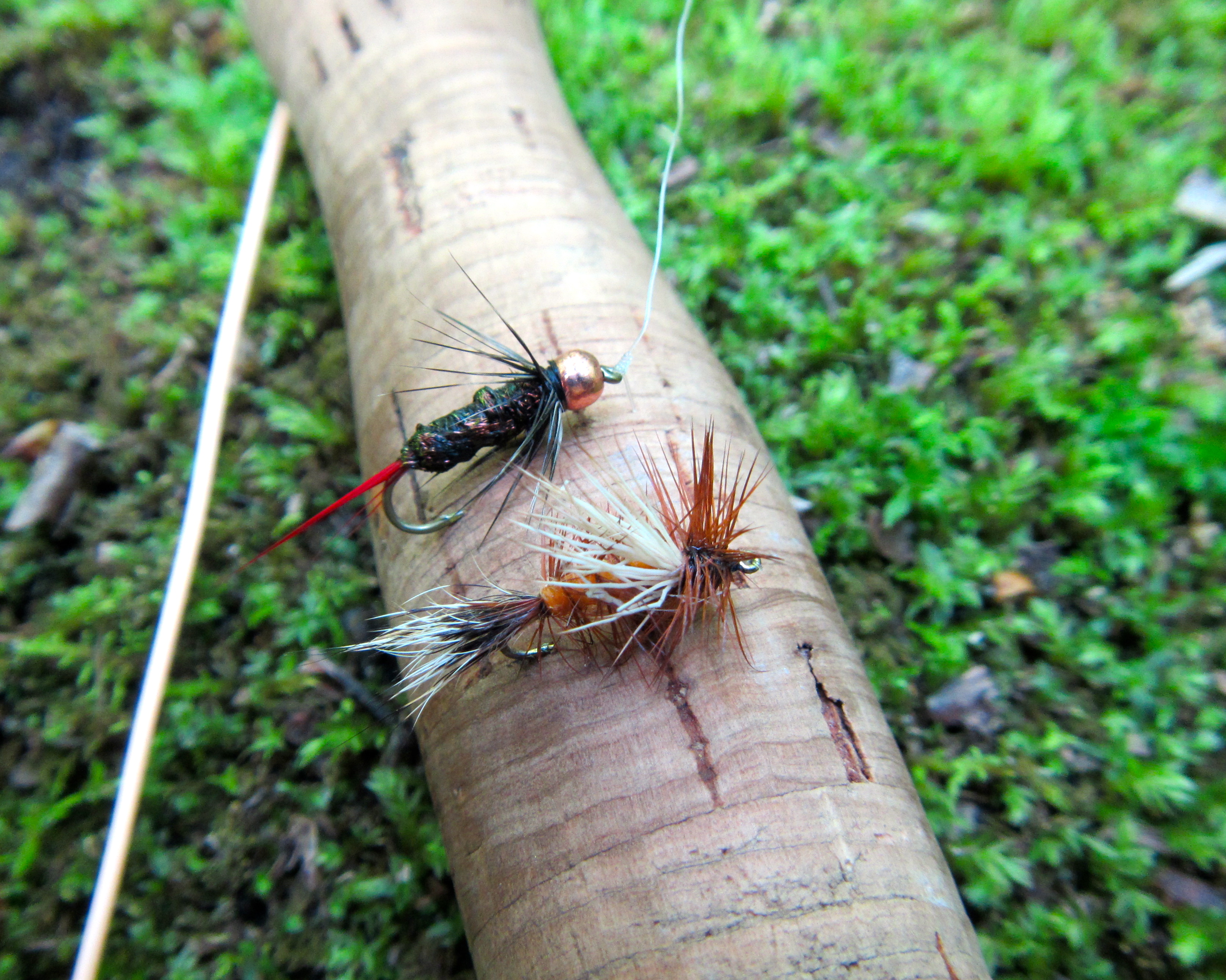
Fished a new dry today, the (Improved) Sofa Pillow in a size 16, along with a bead head Grey Hackle Peacock. The dry got the lion’s share of the action, fished mostly upstream. Pricked a good couple dozen trout, and lost many of them when the hookee ran into the omnipresent underwater stick pile. These twig and branch masses were everywhere. One of the pitfalls of fishing right after a big storm.
Today’s implements of destruction: A bead head version of the classic wet, the Grey Hackle Peacock, and the (Improved) Sofa Pillow.
I held out on the cigar for as long as possible, but eventually the midges tipped the scales. Nonetheless, I declared victory as they scattered. Thank you, Romeo & Julieta Havoc Magnum. Besides, I managed to ignore work for the entire morning while catching wild trout. Clearly, that makes me the winner.
How does a stream stay cool in piss-stinking hot weather like today’s? Canopy. This photo was taken at high noon, yet virtually the entire stream is covered in shade. Nature finds a way.

 currentseams.com