The wicked witch of the east

The old saw goes, “Wind from the east, catch fish the least.” But ever since I fished my first easterly, I’ve had a hard-on for them. Especially the ones that always seem to roar through this time of year. Not only do they they keep the meatballs away, I also find the fishing is often surprisingly good.

Yesterday was overcast with an unrelenting easterly blow of 20-30mph. This was comic book casting wind. Into its teeth would have been impossible with a thick floating line. With the wind behind me, back casts were an exercise in do-your-best, and my strategy was basically to loft the line into the banshee and let her deliver the goods.

Seinfeld had the puffy shirt. I had to settle for the puffy rain jacket, billowing Gore-Tex courtesy of the bitch of April.

Image

About ten casts in I took my first striper. Then, save for a couple follows, nothing for an hour. That’s an eternity in these conditions: strong moon tide current in an exposed estuary. Windblown water pouring in from the ocean over a sand bar, colored that odd yellow-grey/sea green you get with an easterly. Frosty whitecaps and chop, and some perilous looking rips. Seaweed and organic  flotsam everywhere. Forty-eight degree air temperature, but with the wind chill off the ocean, I could barely feel my fingertips. Windblown rain showers that felt like BBs against my jacket.

Even though it was the middle of the afternoon, I was certain there were fish around. Yet I wasn’t getting any action on my smaller (3.5″) soft-hackle. I thought that maybe it was getting lost in the maelstrom. Let’s break this down. The one hookup I had was at the surface. Perhaps something bigger and easier to see might work? The best solution I had in my box was a 7″ long, all black deer hair head fly. On it went. And on they went. I lost count of how many stripers I caught in the next half-hour. It wasn’t a fish on every cast, but it was a follow, a nip, or a hookup on every cast. Tremendously exciting to see the takes right near the surface amidst the storm surge. The spray from the hit would sail into the air, get captured by the wind, and shower the surface with a liquid blast radius.

In the end, it was as simple as this: In rough water, make it easier for the fish to find your fly.

A few minutes with Ken Abrames (a currentseams exclusive)

The striper grandmaster talks about Tuesday Nights, the rhythms of earth and ocean, and love.

Ken Abrames is one of the most revered names in saltwater fly fishing. He is the creator of the modern flatwing streamer, presentation-style flies that can imitate everything from clamworms to menhaden. His books Striper Moon and A Perfect Fish belong on the shelves of anyone who is an aficionado of traditional New England striped bass fly tying and fishing methods. Besides being a world-class angler, Ken is also a rod designer, author, poet, and artist.

For me, though, the coolest thing about Ken isn’t that he’s supremely talented on so many levels, or his mystical insights into the natural order. It’s that you can go to Rhode Island on Tuesday nights and meet him. Talk to him. And fish. There’s no club, no membership dues, no fee, no appointment. You just check out the forum on his website to see where the group is meeting, show up and have fun. Tuesday Nights in 2014 start next week, April 22, in Matunuck, on the beach to the west of Carpenter’s Bar.

When Ken talks, you tend to listen. Tuesday Night, Quonny Breachway, September 2012.

Image

Currentseams: How long have you been doing Tuesday Nights?

Ken: Since 1984.


Currentseams: What made you decide to start them?

Ken: Around that time, I met a fellow named Armand Courchaine, and we started to fish together. We got the idea of starting Rhody Flyrodders back up again. Bang! The club started to grow – in less than a year we had over 100 members. One Saturday, I put together a fishing gathering in Newport. A bunch of people came, but I wasn’t satisfied. I began to ponder and imagine, what night of the week is most available to most people? I came up with Tuesday, because it’s a good, neutral night.


Currentseams: What was the fishing like in those days?

Ken: From the time I was a boy, to around 1984, shore fishing in Rhode Island had really fallen into a sad state. People didn’t know the places anymore. Very few people were walking the beaches. There were a lot of famous spots in Rhode Island that people didn’t know how to get to. But I knew the places, so Tuesday Night was a way to show people where to fish, and how to fish them, so they would have the wherewithal to go out on their own. Rights-of-ways had fallen into disrepair, and some of them had been encroached upon by landowners. So I had people going around and cleaning up these right-of-ways. And they weren’t just fishermen. All kinds of folks came. Everything we did was like seed to enhance access and fishing. People warmed right up to it.


Currentseams: People who don’t know about Tuesday Nights often ask, “Can anyone come?” And of course, the answer is yes.

Ken: Yeah, there is no membership, and there is no hierarchy.


Currentseams: And people want to know if it costs anything, and the answer is no.

Ken: No, of course not. Fact is, you probably end up going home with more than you came with.


Currentseams: How do you decide where to go?

Ken: I close my eyes…and feel. I don’t use any kind of science. Always go to inner silence when you need an answer. Then you’ll know.


Currentseams: What are your thoughts on the weather we’ve had this winter? It’s been pretty cold…

Ken: When I was a boy I used to always go ice skating on Thanksgiving. So tell me about how cold it is. Things have changed. I see different birds up here now that I never used to see.


Currentseams: Do you think things will be late this year?

Ken: When was the moon in relation to the equinox?


Currentseams: New moon is Sunday, March 30th.

Ken: It’s kind of like the first flower of spring. The first flower of spring comes before the second flower. That’s the order. So the first thing that shows up will tell you what the order of the year will be.


Currentseams: I keep track of things in my garden…

Ken: Yes, that’s right, that’s exactly what you were supposed to say. Is the skunk cabbage out yet?


Currentseams: Not here. I looked at my records, and in 2011 I had crocuses blooming on March 5. I don’t have any flowers yet (March 28).

Ken: So, there’s your answer. Everything happens in order. The ocean is the same as the land. So, you look for the first thing that shows up. And that will tell you what the second thing is going to be. You have to feel. It’s like dancing with a beautiful woman. You can’t do it out of the pages of a book. You have to just hold her, and move with the music. It’s the same thing with this world. It’s alive, and it has a pulse, and a rhythm, and an order. But it doesn’t tell you what those are ahead of time, because reason has no power over the earth. None.


Currentseams: So now, in 2014, what would you say Tuesday Night is all about?

Ken: It’s all about love. It’s that simple.


Currentseams: (laughs)

Ken: I love the earth, I love fishing, I love the people who come fishing. And that’s what they get when they come.

There’s cold in them thar hills

You get a day like today and it’s easy to think that finally, winter is over. But last week when Grady Allen — owner of UpCountry Sportfishing — and I ventured over the hills and far away, there were constant reminders that winter’s grip can be tenacious.

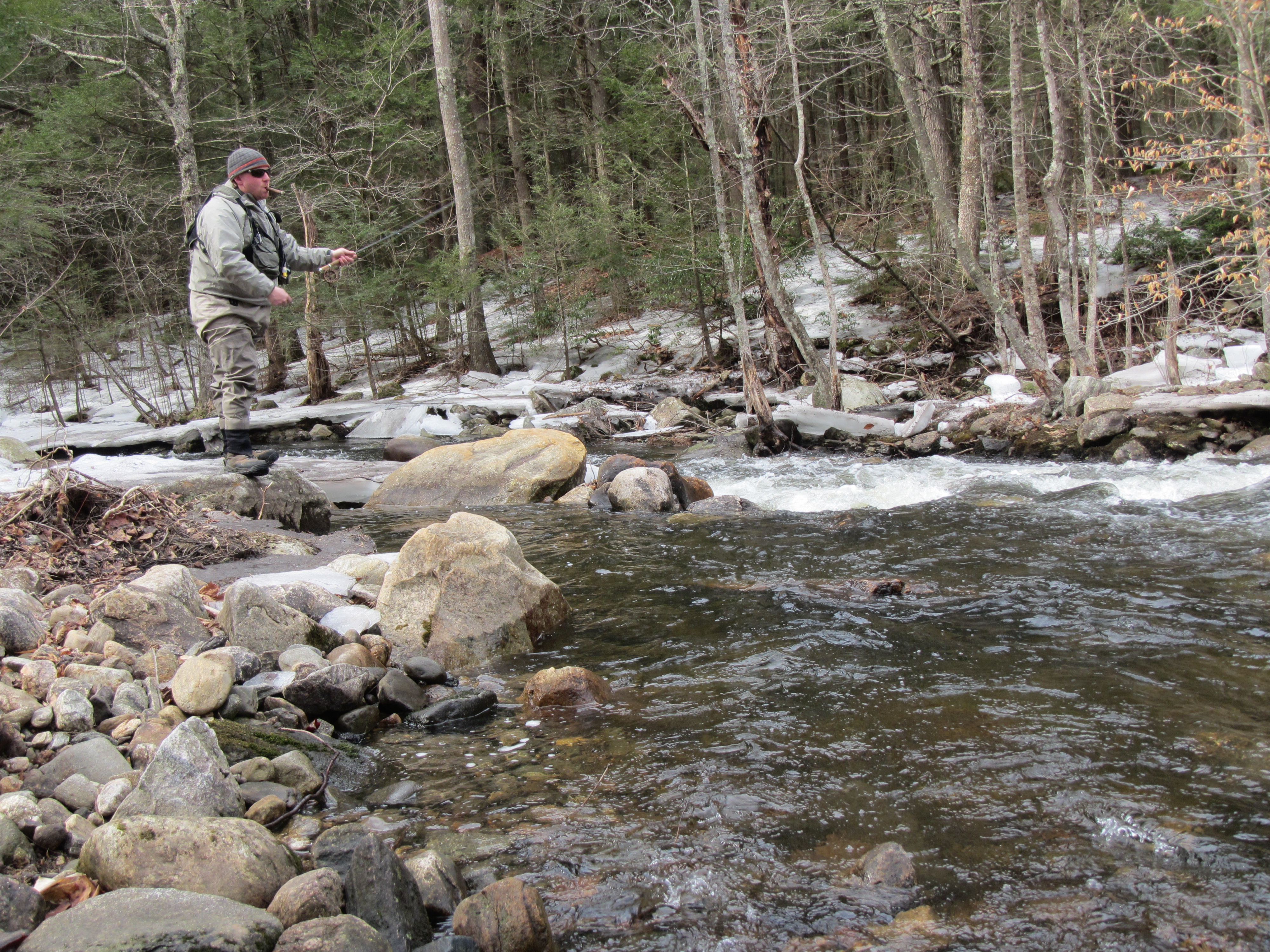
We fished River X in the Berkshires. I had never been before, and the first thing I noticed on the drive up was that there was still white stuff on the ground. The banks of the river were a patchwork of earth, snow, and ice. Frozen shelves still extended from the shore, and while clear, the water was high from runoff. Even more telling, its temperature was a bracing 34 degrees. In April. Not so good for the fishing. Grady took one lonely brookie on an ICU Sculpin, and your humble scribe wore the collar. Here are a few photos from our adventure.

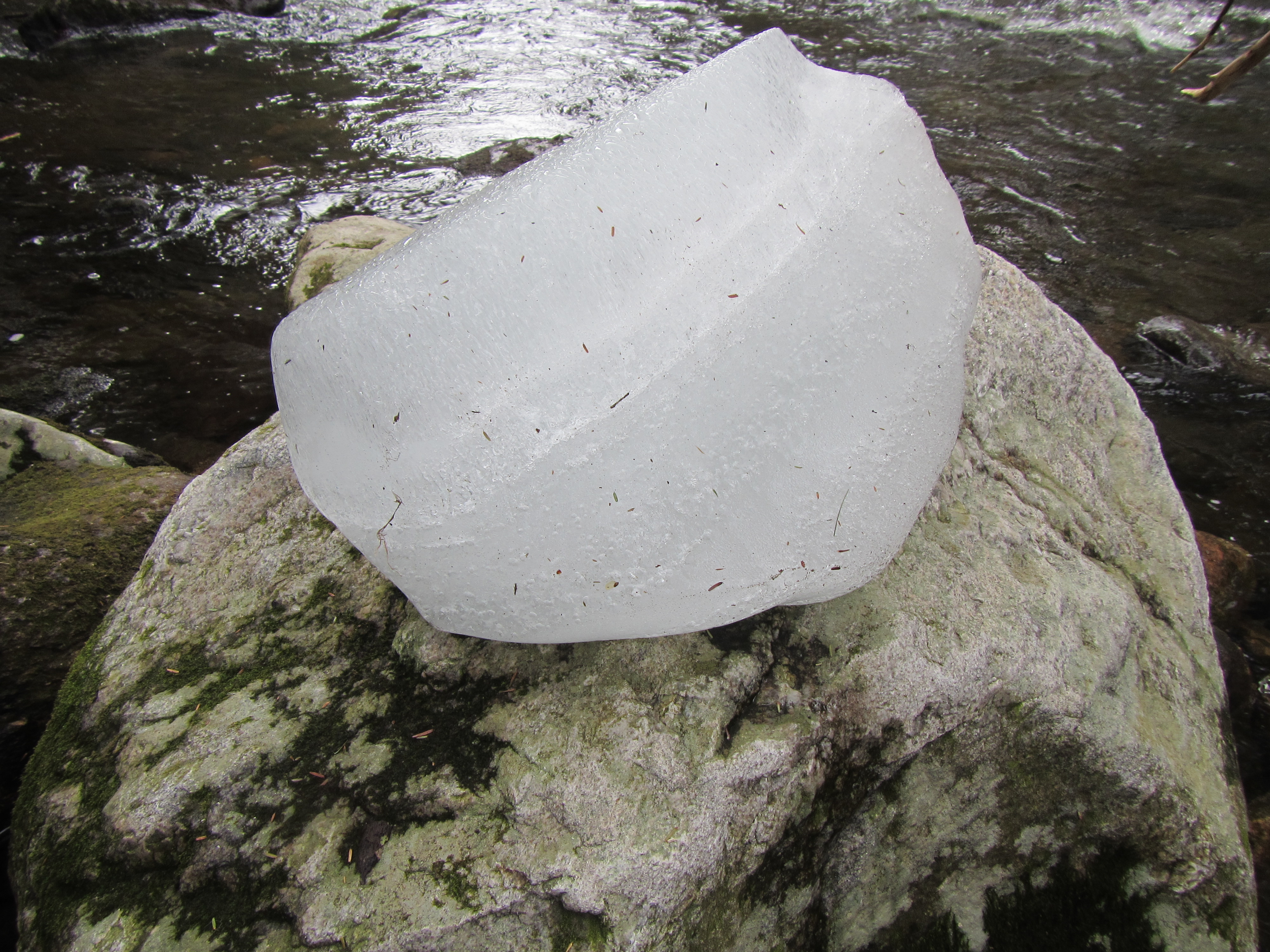
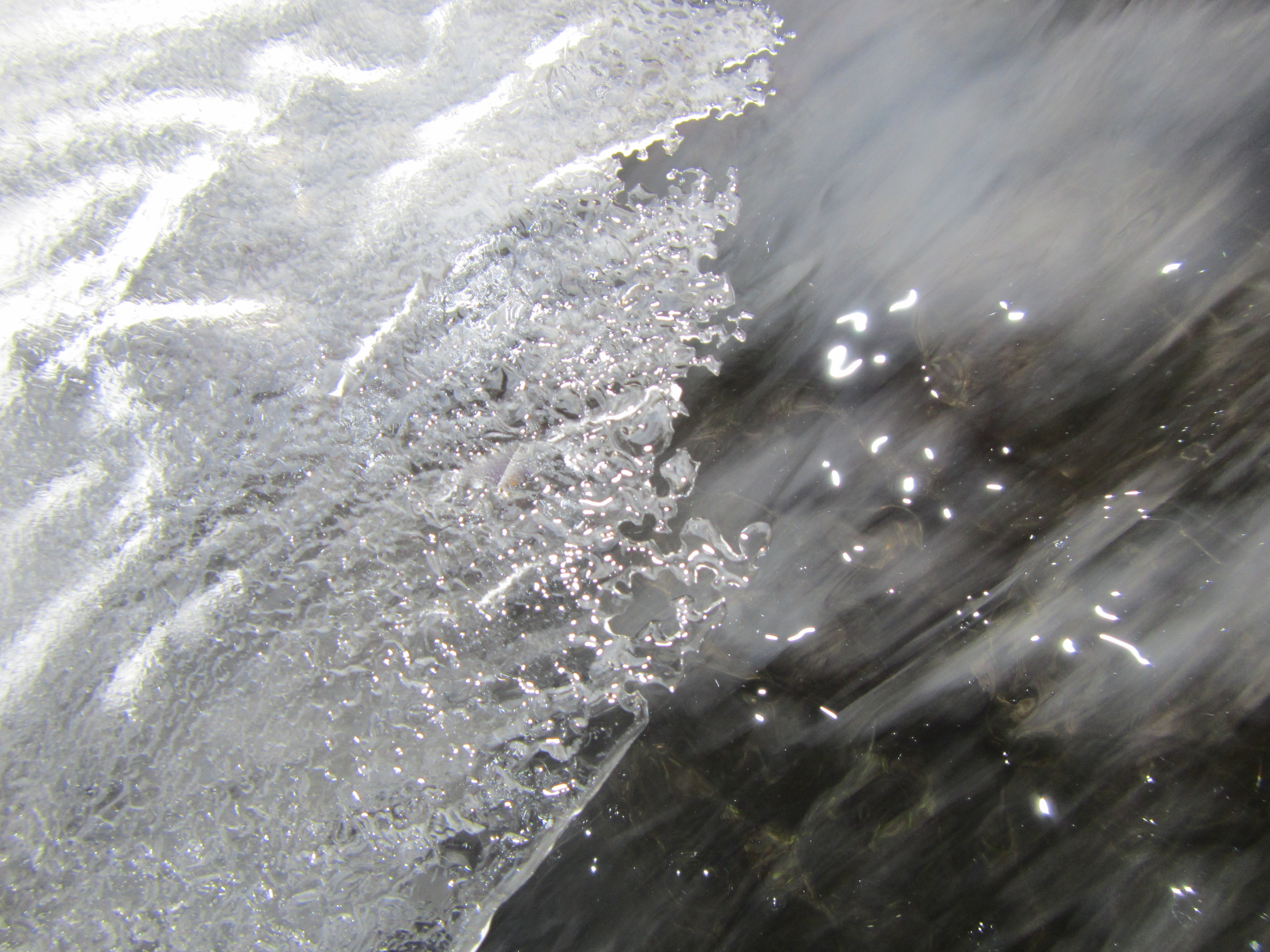
“I’ll have a block of ice with my boulder, please.” Must have been some winter up here.

Image

Grady working an upstream seam. We only managed one cigar each this morning; we cut the trip short for lack of a bite. (I always like to fish with people I consider to be better anglers than me. That way, if we both blank, I don’t feel like such a loser.)

Image


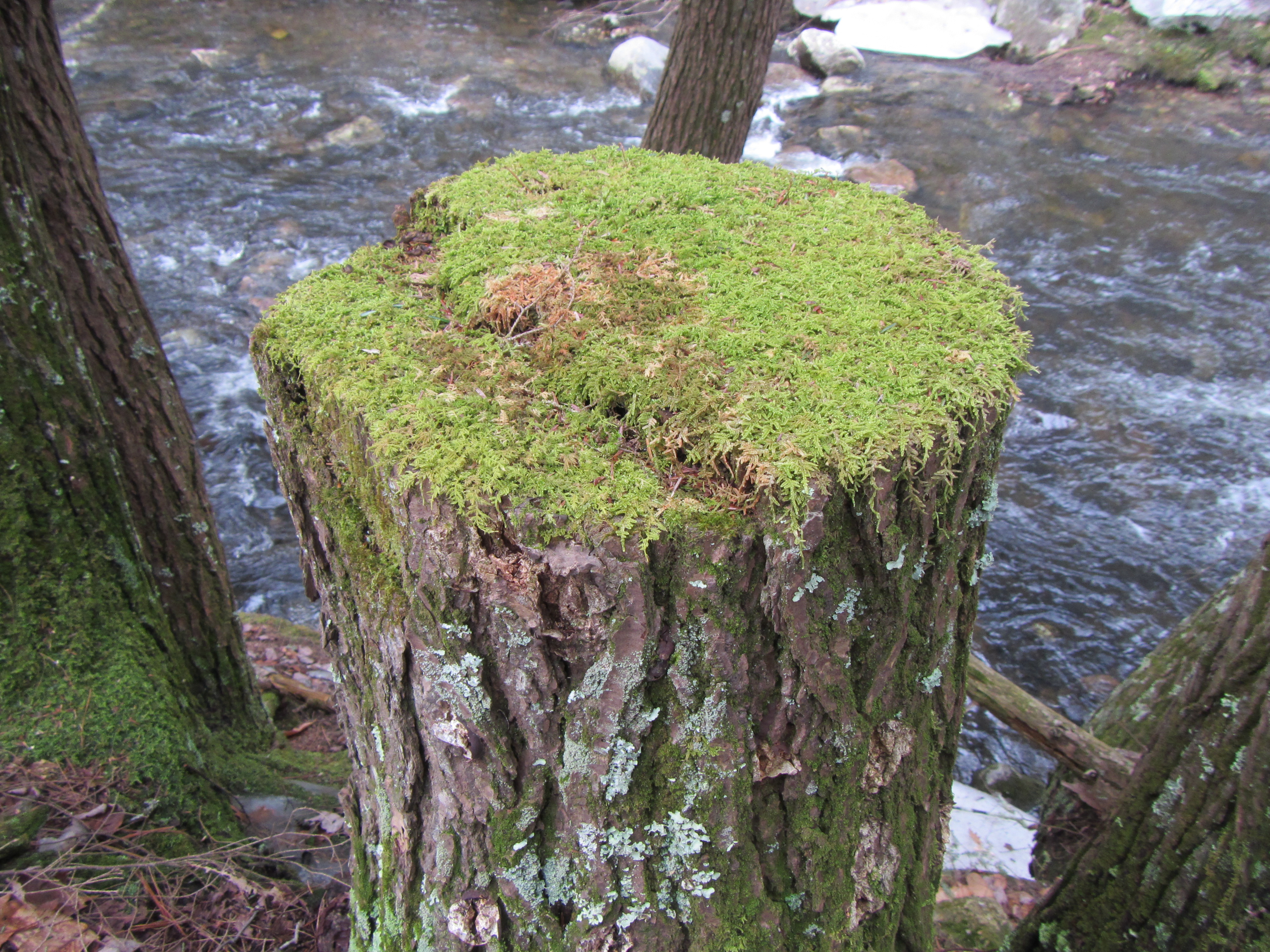
Amidst the hoary streamscape, a green totem of spring.

Image


Farmington River report 3/21/14: It didn’t feel like spring

A sunny day  in late March can be misleading. On Friday, any warmth generated by the sun was fleeting, captured and quickly dispatched by a chilly, gusting wind. The water was only 34 degrees, well below normal for this time of year, lightly stained, and running at 450cfs in the upper TMA. There’s still plenty of snow on the ground that has to melt and become part of the ocean; until that happens, expect cold water.

So, to the fishing. Well, it was what we in the trade call a slow day. Even the guys I spoke to who were fishing shiners were having a tough go of it. I jumped around the river, dedicated to the streamer cause, and the only trout I managed came by accident. I was messing around with the streamer, an articulated white and chartreuse bunny/bugger thing, to see how it looked in the water. Right in front of me, about ten feet away, and this brown rose from the depths and stomped it. Rather lucky than good, but we’ll take it.

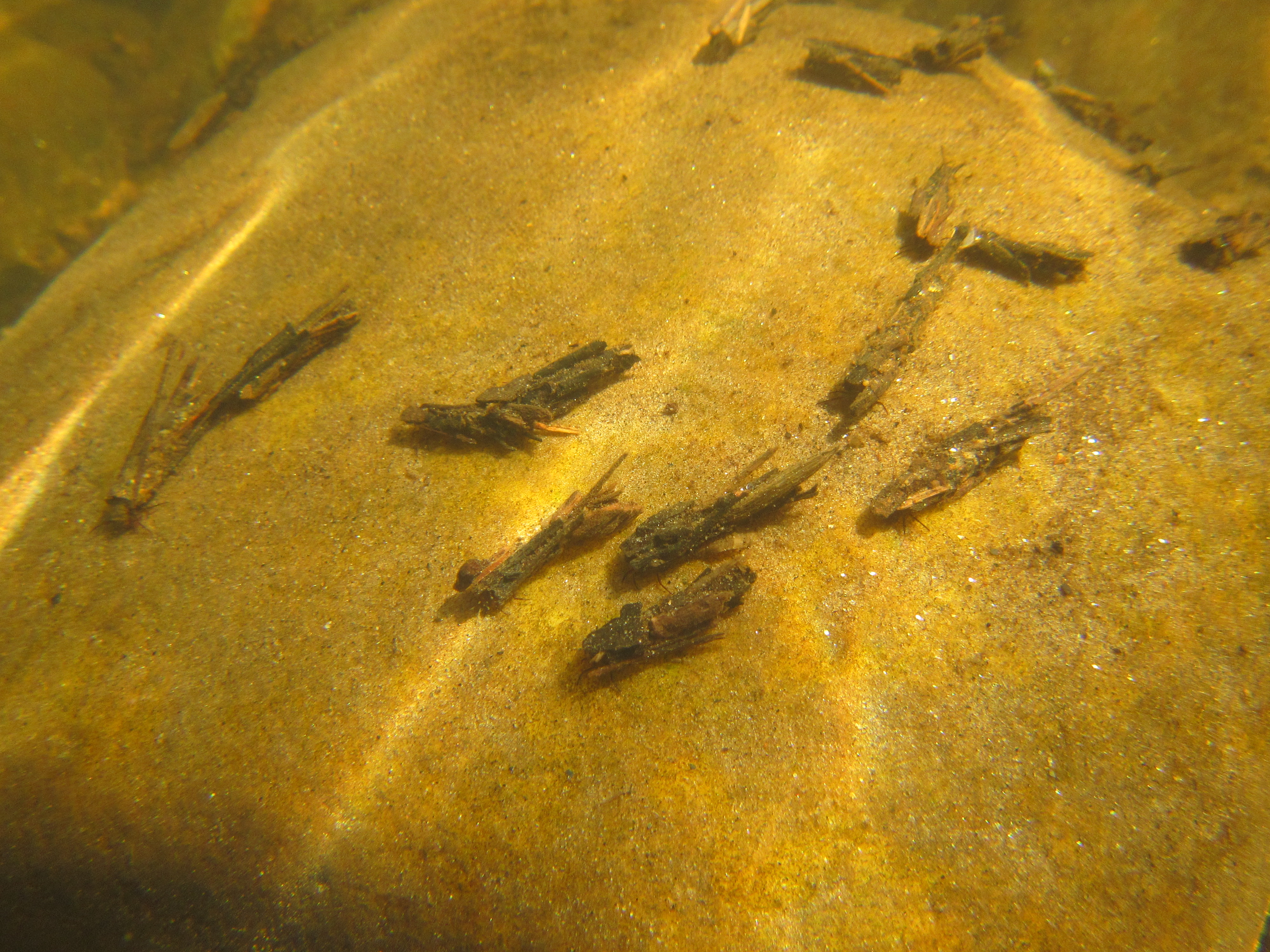
Cased caddis everywhere in the last spot I fished. I’m still amazed that a little wormy thing can build a house out of sticks. Please appreciate this photo. My hands and forearms were still cold about a half hour after I took it.

Image

An occupant. Sorry, little guy, for putting you out on the street. 

Image

Thanks to the Compleat Angler for hosting “Small Stream Flies”

No shaky hands. (Last year there were so many people at my wet fly demo — I had never tied before such a crowd — that my hands were shaking for the first couple hours. I am pleased to report that we’re past that.) But plenty of hand shaking. Thanks to everyone who came out to watch, ask questions, and chat. And thanks the Compleat Angler for hosting me. If you’re anywhere near Fairfield County, the Compleat Angler is a terrific fly shop. Lots of good stuff.

Two of the flies I tied, the bead head Grey Hackle Peacock and the Improved Sofa Pillow.

ImageC

The Un-Dead of Winter

One from the archives. I wrote this several years ago to remind myself that Pete Seeger was right. Not to mention Paul.

The Un-Dead of Winter

By Steve Culton

© 2009. All rights reserved.

I was heading out of the office on a freezing January afternoon when the receptionist, noticing how I was dressed, asked me if I was going fishing. I told her yes, and she responded with an incredulous, “In the dead of winter?!?”

I smiled in affirmation, but on the way to the stream, her words got me thinking about the bum rap winter takes when it comes to natural rhythms  — and angling — especially if you plan on forsaking the homey comfort of the ice fishing hut in favor of wading. The reality is, fall is when things die. Winter is when life begins. And it truly is a wonderland, alive and well and overflowing with vitality.

Step into your backyard or some nearby woods. The trees and bushes are already covered with buds, nature’s amazing automated leaf and flower systems, full of life (in the dead of winter!) and waiting for the warmth of spring to pop. As I write this, the mercury is well below freezing, yet my forsythia is as green as a springtime lawn, stems so bud-laden I can only imagine the yellow riot that awaits me in April. Mountain laurel and rhododendrons proudly display the evergreen banner, and from my window I can see a cardinal and his mate searching for seeds in the compacted snow.

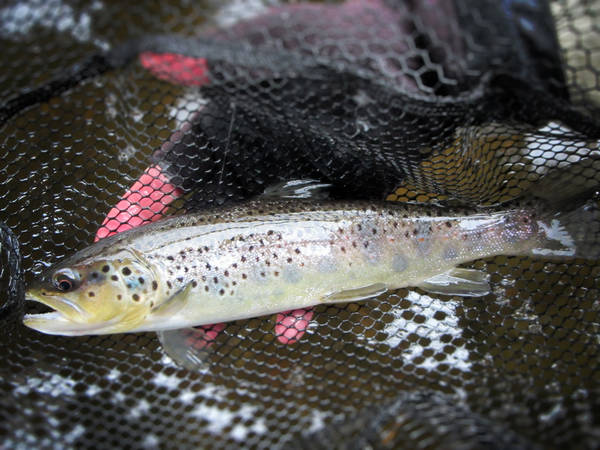
An exquisitely parr-marked Farmington River brown. Even on a cold January afternoon, she was more than happy to chase a swung fly.

Image

Even on the small stream I was fishing the day our receptionist questioned my sanity, there was life in the air and beneath the water. Though the high never made it past 30 degrees, size 14 charcoal grey midges flitted about. Wild trout were holding low on the river bottom, ready to gobble any food that came tumbling along. It started to snow, and as my cigar smoke drifted slowly into the windless air, creating a tapestry with the chunky flakes, I felt as alive and happy as I would be sipping lemonade a warm July afternoon.

A few weeks later, I was fishing a salt estuary in Rhode Island. The temperature had plummeted into the low twenties, and a bitter west wind tormented the exposed skin on my face. Yet, there were snails and grass shrimp and, as this was the new moon, perhaps even clam worms doing what they always do: living. (The stripers, sadly, were living somewhere out of casting range.)

What mysteries remain uncovered along the frozen banks of our rivers and shores? You don’t know if you don’t go.

Image

I used to view winter as a time to store the rods and gear and prepare for the reawakening rituals of spring. No longer. I’m out on our streams and rivers and in the salt, almost always gloriously alone, left to my thoughts, the wonders both seen and unseen, and the bounty of life that reminds me spring is on the way.

January thaw on a small stream

I broke one of my cardinal rules today: never go into the woods if you’ve recently watched Deliverance.  There were no mountain men bent on buggery — and sadly, precious few bugs. I was hoping a near 50-degree day and some sunshine would trigger a hatch, but all I saw was one lonely grey big midge/small stonefly thingy flitting over the water. Although the creek was up due to yesterday’s rains, the water had cleared nicely by the time I threw my first cast, around 1pm.

I did the upstream dry thing, then the downstream subsurface thing. No takers on the dry. I wasn’t surprised, given the height of the water and its temperature. (I forgot my thermometer, but I experienced the sting when I had to go up to my elbow to liberate a fly from the bottom.)

A satellite image of the Chesapeake Bay’s frozen tributaries. Well, it could be.

Image

More fun with photography. See if you can find the duck’s head and the hawk’s head.

Image

My only strike of the day came on a downstream presentation with a weighted wet/streamer. A fine brown hen, long and lean, a good size for a brook this small. She was hiding in a deep pool that courses between two boulders. One touch was all I needed, and releasing her was almost as gratifying as catching her.

Your first trout of the year should be a memorable one. What a staggering array of colors on her gill plate. Also note the blemish on her nose. I couldn’t tell if it was an old wound or just a cosmetic oddity. I had not caught her before today.

Image

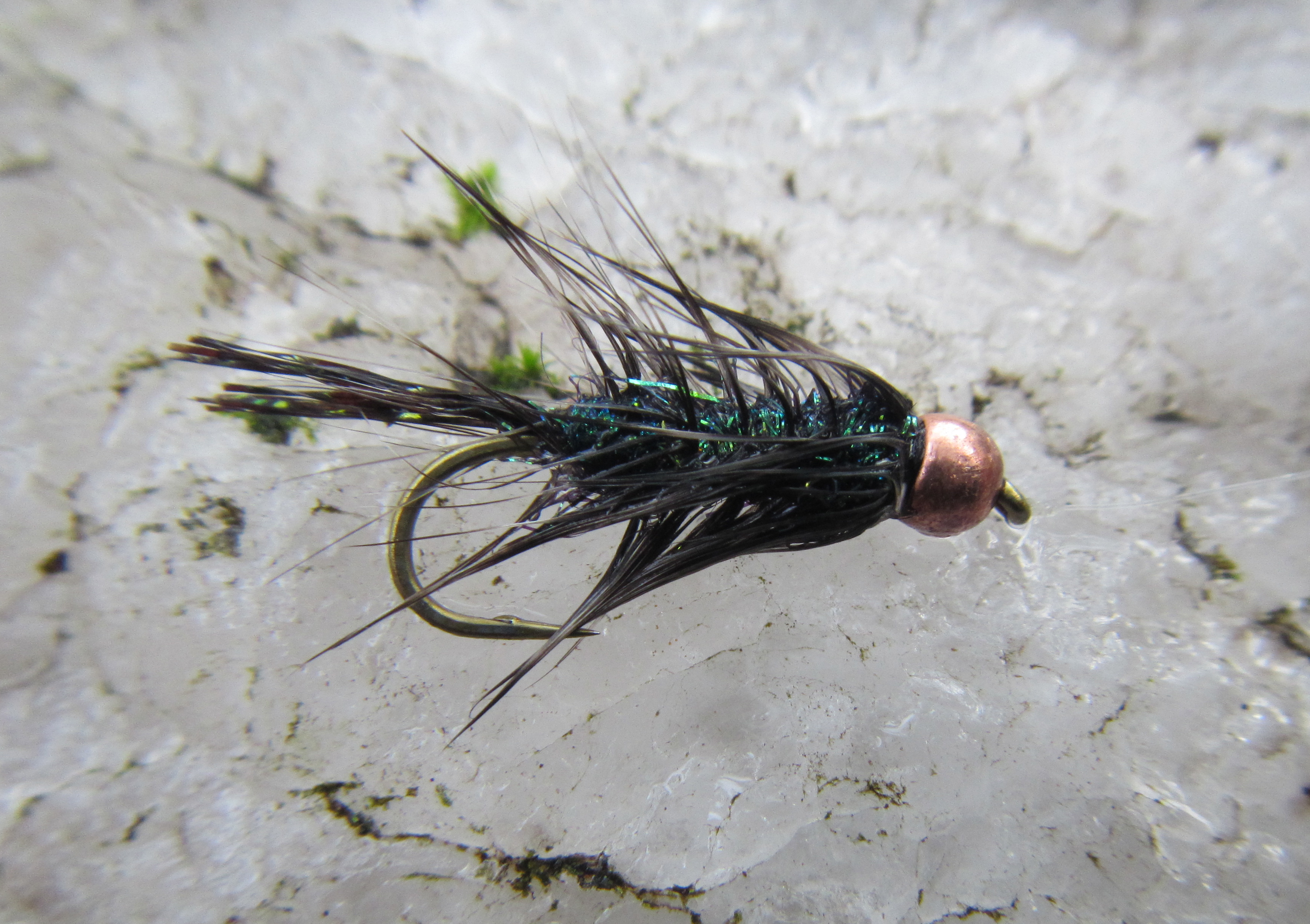
The winning fly. I like to fish small hybrid wet/streamers with tungsten heads on small streams. It’s a simple fly, easy to tie, and it uses a mix of natural and synthetic materials: A copper tungsten head, some weighted wire on the hook shank, black Krystal Flash tail, black Ice Dub body, palmered then hackled with grizzly hen. This fly is unnamed. (For you detail-oriented folks, that’s not ice. It’s a big chunk of stream side quartz.)

Image

November 2013 Steelhead: Fishing with Robert Zimmerman

Day One: Stuck inside of Altmar with the Pineville blues again.

Right from the start, I knew this trip was going to be a bust.

The river was pumping at 2000cfs. That’s high by anyone’s standards, and at that level vast stretches would be transformed into featureless aqua super highways. The weather was supposed to be bad. But the kicker was Bob and Bill. They had just returned from four days on the Salmon. Zero steelhead landed. Days between strikes.

There is a technical term for all this. “Sucks,” I think.

Then, there was last season. Six days of fishing from November through January. Only two steelhead to hand. Two days without a single touch. Yes, it would be fair to say that I was not stoked about this trip. But you don’t know if you don’t go. Maybe by some incongruous twist, my luck would change.

Five hours in, there was no sign that it would. We had left Connecticut before sunup and were on the water by 10am. A motion was made to focus on one of the Salmon’s diversions – small streams under normal conditions, but at 2K proper rivers. Jon was into steelhead right away, tussling with three in the first hour. Tommy and Todd decided to seek their fortunes downstream. I settled in on a 200-foot section that had a corner bend, riffles, and a mysterious dark hole. But nothing. It’s terrible when you’re wishing you were back home on the first day.

“Dang. I knew this was a stupid place to build a nest.”

Image

Finally, at 3pm, I hooked up. Not a steelhead, but a king salmon. I figured this would be me versus dead meat, but the fish treated me to some whale-like surface rolls and an earnest attempt at going airborne. With precious little action coming my way, I really wanted to land him. Fellow flyaddict Gary, who was downstream from me, went above and beyond trying to help me get it to shore. After a long walk, he and Jon were able to corral it. It wasn’t very attractive, and it was foul-hooked, but at least a skunk of some sorts was off.

I had one more take about an hour later. A steelhead, eight or nine pounds, fresh from the lake. As it performed its initial cartwheel, Gary wished aloud, “Stay on.” Seconds later, it was off. The new normal.

It was beginning to look like a long four days.

~

Day Two: They’ll stone you when you’re floating in a boat.

I hemmed and hawed about floating the river solo. Before we left home, I had called Jim Kirtland (aka Row Jimmy, an excellent guide, and a fun person to spend a day with) to see if he had any open dates, and as luck would have it, he had a cancellation on Sunday. The rest of my group decided to wade, so I’d be going it alone. If I were lucky, I would not only catch steelhead, but also  gather intel on where they were hiding out.

We launched just before 7am. If you’ve never been, the Altmar boat launch is the upstate New York version of Burning Man. Instead of a towering tinder structure in human form, there’s the monolithic cement bridge. Replacing semi-nude hippy art chicks in furry leggings are porcine middle-aged men with near-ZZ Top facial hair, mad bomber hats, and camo hunting bibs. Not a fair trade, I’ll grant you. But it is an experience. Crowded. Chaotic. Carnival-like.

And of course, there is the jamoke factor, to which I contributed mightily. We had just passed under the bridge, and I put my second backcast over another angler’s line. To deflect my embarrassment, I announced to him that I was, in fact, a douche bag. And, if he ran into my friends later on the river, he should tell them what I douche bag I was. He laughed it off good-naturedly, and there were no further casting incidents. But the fishing was slow. One dropped steelhead in the first two hours.

We slipped down into some very promising water that I’d never fished before and anchored center stream. Egg patterns were getting me nowhere. So I announced that I was going to try little black stones. Every once in a while, you make an adjustment upon which the entire day turns. On my first cast, the bright yellow yarn indicator suddenly disappeared. I raised the rod tip and was greeted by a substantial pull at the other end. I lost the fish, but this was encouraging. Another take soon followed, and I began hooking steelhead in earnest. Whether it was a Copperhead Stone or a 60 Second Redhead or any of the many stonefly variants I tie, there was something going on down below hatch-wise that had the steelhead acting like winos at a Night Train open house. It certainly wasn’t the anecdotal fish on every cast, but it was as close to hooking an unreasonable number of steelhead in a brief period as I’ve ever experienced.

So much depends on a little black stonefly, nestled inside a steelhead’s mouth. The flies I was fishing were all tied on 2x strong, 2x short size 10 scud hooks. As Jim says, it’s hard to go wrong with black and copper on this river.

.Image 
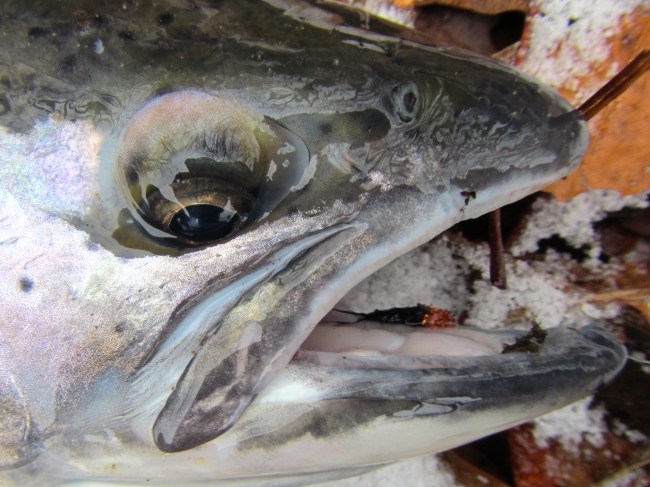
The bite was so good that I hardly even noticed the wind-whipped downpour that parked over us for nearly an hour. All the while I kept telling Jim, “We’re staying here a little bit longer.” Damn right we are. In the midst of this embarrassment of riches, though, I began to feel self-conscious. What if Jon, Todd, and Tommy weren’t having any luck?

After two hours and close to fifteen steelhead, it was time to move on. We ran into the guys about a thousand yards downstream. Not to worry. They had found their own little paradise and were into a bounty of chrome, many of their steelhead in double-digit pounds. When Jim and I pulled out in Pineville, I shelved the idea of hiking over to meet them. I sat in the cabin at Fox Hollow and let the day’s events wash over me. A truly sensational steelhead buzz is hard to come by. I was going to savor this one, ably assisted by Mr. Adams and Mr. Fuente.

~

Day Three: You want hard-boiled eggs.

I’ve known about trout beads for many years and I always poo-pooed them. But the winds of change were swirling. I told Jim yesterday that I’d even use that fluorocarbon tippet of his (Drennan 6-pound. I still hate knotting fluoro, but I’ll be damned if that stuff wasn’t so impressive at holding big fish that I went right out and bought a spool). So today, with vast reserves of steelhead currency safely banked, I decided to see what this bead thing was all about.

We were now a party of three. Todd and Jon decided to focus their efforts on a riffle downstream where Jim and I had observed scores of steelhead the day before. I was captivated by a lovely little pool upstream, and set up shop there. It wasn’t long before the indicator dipped, and my rod thrummed with energy. It was a steelhead – a small one, freshly minted, highly spirited. Since I was playing around with new things, I thought I should hand-strip a steelhead in for the first time. A substantial pod of skippers was passing through, so I got to do it again and again. They were all sub 16-inch fish, but perfect in their own guileless way. Some of them even displayed the fading parr marks. Original artwork suitable for framing.

Meanwhile, Todd and Jon had been waging war with some significantly bigger fish. They were fifty yards downstream, and I could hear their cackles over the chatter of the river and see the deep bends in their rods. I considered joining them, but I figured with steelhead, what is downstream must soon come up. Besides, this pool was my idea of perfection. It had a clearly defined center seam that held fish along its entire length. There was enough bottom structure to entice the steelhead to pause on their journey, but not enough to cause repeated snags. The current moved at casual walking pace, making line management a breeze. (I was focused on improving my line management on  this trip. Less slack line on the water meant a better hook set, and a better hook set meant less heartbreak.) And because I had it all to myself, I could work the pool at my leisure. Surely the moment I vacated it, someone would materialize out of the woods to claim the prize. I would be a fool to leave it now.

Why beads work. The shores of the pool were littered with naturals. Inquiring minds will want to know, so here it is: 8mm Glow Roe by Troutbeads. I know, I know, it’s not fly fishing. But it sure is fun.Image
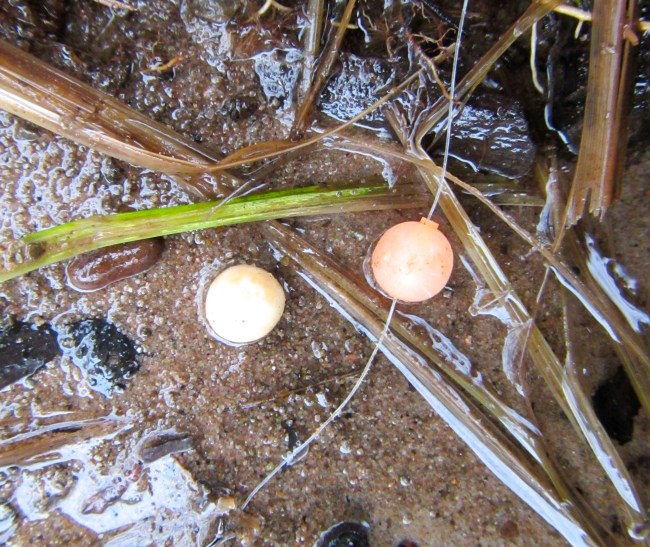
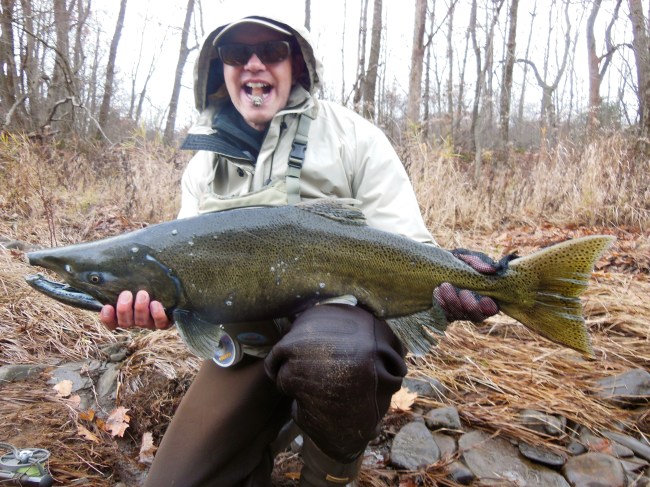
Bigger fish started to move through, and they found my peach-hued plastic spheres to their liking. I could do no wrong. Even when I fair hooked a king salmon – certainly a late traveler, as he had a translucent tail and not a suggestion of rot on his body – he was landed despite the fact that I was using six-pound for tippet. (Not to be ignored was some brilliant net work from Jon. Using a landing net without a handle, both he and Todd had perfected their technique, and I am grateful to them for helping me bring so many good steelhead to hand.)

Not bad for 6-pound tippet. I’ve never seen a king in this good condition this far into the season. Note that his head is bigger than mine — not an easy feat any time of year. 
Image

As I reached the quarter-century mark of steelhead hooked, the enormity of the day began to sink in. If there is such a thing as good steelhead karma, it was truly directed at me. The bitter memories of last year’s fishless outings and numb fingers  seemed impossible now to recall, let alone understand. And that’s when I decided to swing.

You hear stories of people who do nothing but swing flies for steelhead. They are content to go days without a strike if it means the opportunity to hook a single fish with this purest of methods. I admire their conviction; clearly their spiritual resolve is stronger than mine.  Armed with the confidence of a constant stream of fresh steelhead, I pulled from my box a streamer I had tied specifically for this trip: the Grapefruithead Leech. It’s basically an oversized egg-sucking leech with a contrasting head of fuchsia and chartreuse. On it went, and off I went to the other side of the pool where the fast water met the edge of the sod bank.

The take was not what I expected. I was hoping for an earth-shattering kaboom. But instead it was a dull thud, albeit a sizeable one. “Are you in?” asked Jon from the opposite bank? “Yes!” I shouted back, and we were off to the races. The steelhead quickly found the riffles below me, and so began an extended dance of silver, spray, and prayer. At one point I thought the fish was foul hooked; but as she move into more clement waters, I could see that the leader had wrapped around one of her pectoral fins during one of her flurries of leaping madness. The tippet came free with the sound of a plucked guitar string, and I was afraid I would lose her. In the fading light, I directed her between two downed trees along the bank hundreds of feet below where I had hooked her.

She sped off before I could take her picture, kissing my face with a spray of water.

~

Day Four: I didn’t feel so cold then.

The bargaining phase works in reverse. That is, you can have beyond-wildest-dreams fortune, and negotiate downward: “I’ve caught far more steelhead in the last two days than I have in the last two years. So if you make the fishing lousy today, I won’t mind.” Lousy fishing seemed inevitable. Even reasonable, given the cold front and snow showers that were supposed to come through today.

Not a chance. On my first cast I hooked a sixteen-inch steelhead that made a laborious tour of the run, complete with several aerials, taking far more time than any sixteen-inch fish had a right to before coming to hand. A creature of routine and habit, I was back in the same pool, with Todd and Jon once again downstream. Within the first hour, I had landed three, the last two about eight pounds each, gleaming with the metallic brilliance of Lake Ontario. Without a landing posse, I had to steer both fish away from the swift water at the tailout and beach them in the shallows. But steelhead of eight pounds or less are usually manageable, even if they are obstreperous. Besides, I was fishing with newfound confidence, and I did not fear losing them.

Three steelhead were enough for me on beads, and I happily returned to the fly. My fourth came on a Copperhead Stone, neatly planted in ivory mouth. I stalked that fish with the utmost care after I noticed him porpoise in some glassy water near the head of the pool. My presentation was upstream, as delicate as I would have made it to a trout sipping spinners. I felt great satisfaction when I hooked and landed that fish.

But, the nature of steelheading is that you will lose fish. As skilled an angler as you may be, it only takes a little bad decision-making or a little bad luck. I managed both with my largest steelhead of the trip. A buck with shoulders, well into double-digit pounds took my purple Steelhead Hammer. Down the run he went, tail-dancing and cavitating before sulking on the bottom. I had re-learned from Jim the concept of not letting the fish breathe: that is, after an exhausting run, the steelhead will pause to regroup. The angler should not. This is the time to press the fish; kick him when he’s down; take unfair advantage of his oxygen deficit. I began to reel, the butt of my rod pointed upstream, a deep flex in the blank.

This merely annoyed the fish. Big steelhead aren’t like their smaller brethren. You simply cannot dictate terms to them. At least not early in the fight. He burst upstream with an almost otherworldly power, over the riffles at the head and into the pool above. This was worrisome, but I was still confident I’d land him. I had a good initial hookset, and I had hit the fish again when he was down below me. I’d be holding this one in my hands soon.

And just like that, things went south. Downstream came the fish, barreling over the riffles and streaking past me with frightening speed. To keep tight to him, I had to decide instantly: strip the line or crank the reel like a maniac. I have done both and landed fish. Today I chose wrong. As I frantically reeled, the tip of the rod wobbled like an antenna in a windstorm. I was so focused on the fish, I didn’t notice the line curling around the tip of the rod. I came tight to the steelhead. Too late, I saw the imminent danger. He ran farther downstream. The coiled line tightened around the rod. Tippet strained. In an instant, he was gone.

I stood in the river, alone and fishless.

The cold front arrived around noon, bringing lake effect snow. I could still see steelhead coming through the run, but the bite was over. And at three o’clock, we decided, so was our trip.

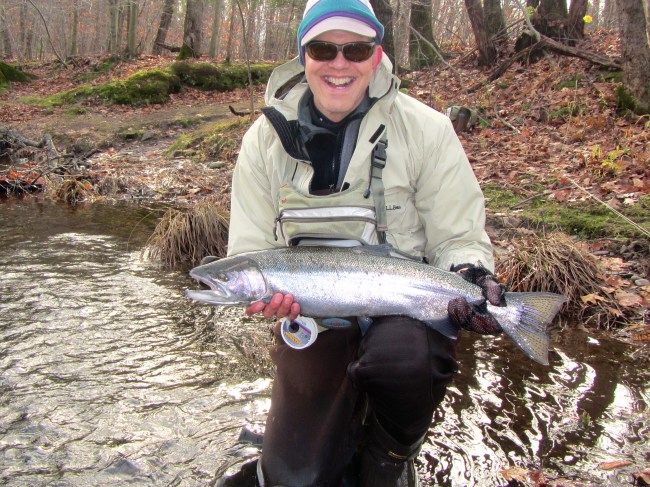
The obligatory grip-and-grin. This was our trip in microcosm: plentiful fresh fish. Lots of smiles.
Image

Out with a shiver

The last blast of 2013 was a late afternoon excursion to a small brook a few miles from my home. The temperature never got above freezing, and there were some snow flurries to embellish the wintery streamscape. Despite a generous pre-outing application of Stanley’s, ice in the guides and on the leader were a constant problem for the 90 minutes I fished. Shelf ice was everywhere, but it was easy to break through with a well-placed, forceful step of the boot.

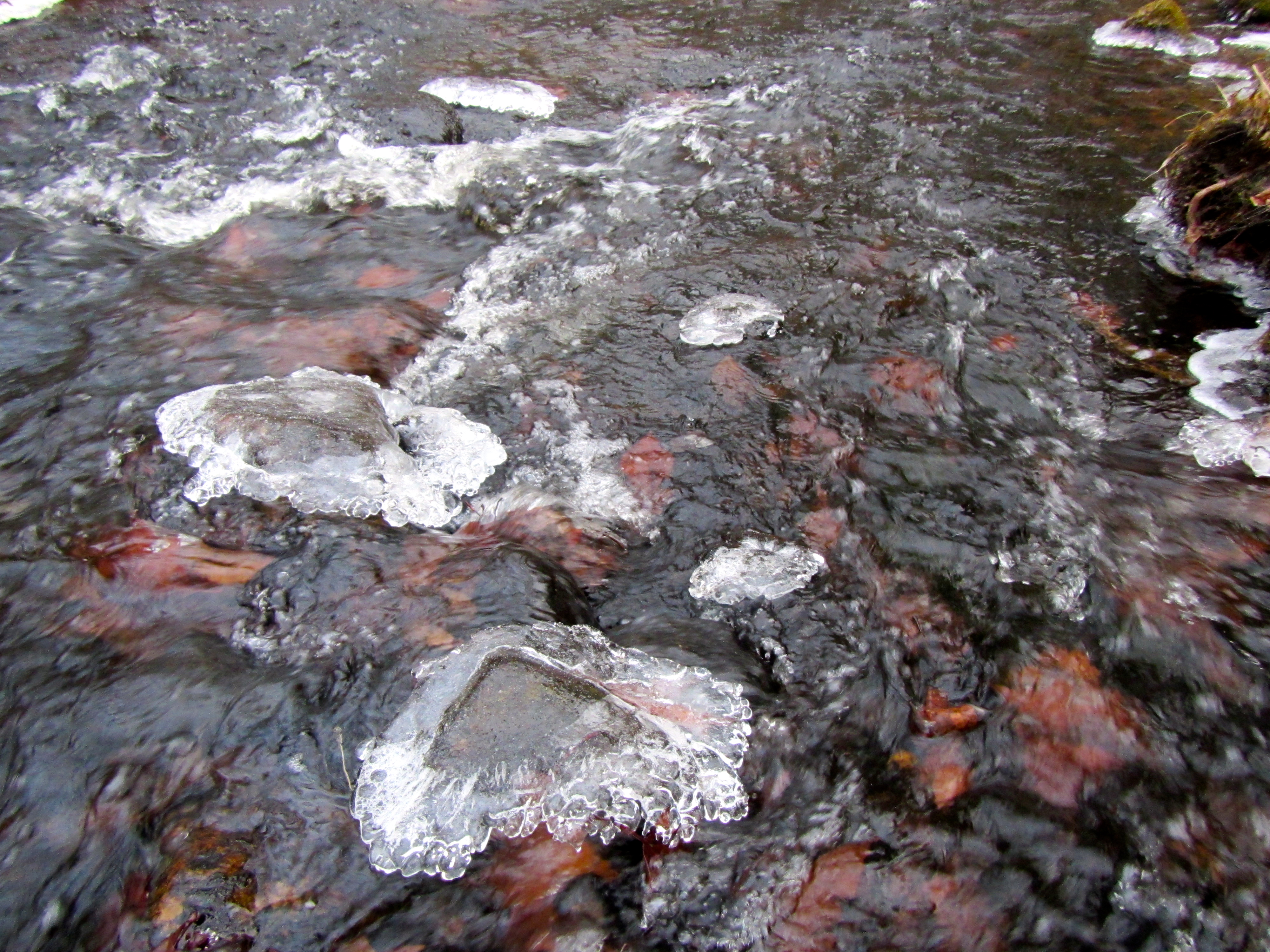
The brook was running cold today. Black ice on some of the rocks gave them the illusion of being wet. It almost cost me a swim or two (three cheers for studded boots). This ice halo just looked pretty. I liked its contrast against the green moss.

Image

To the fishing. There was plenty of that. Catching, not so much. I decided to cast my lot in the subsurface direction, swinging and stripping a small streamer (or a very large wet, depending on your point of view) without finding a favorable response. The last ten minutes, I fished dry. No dice. On a positive note, I got to be blissfully alone in the woods and the snow with a Casa Magna Extraordinaire diadema.

I probably won’t go back to this brook until April. The fish will want to play then. I’ll be about ready, too.

I didn’t get a water temperature, but it must have been in the low 30s. We’re in for a cold snap, so these mushroom caps won’t go away any time soon.

Image

Hudson River Striped Bass 101

Smile, oh big-mouthed Hudson River tribe member. 

Images

Bob Creeden recently made a detailed post about the Hudson River striper stock on the Stripers Online Fly Fishing forum. I found it so informative that I asked Bob for permission to share it with my readers. He graciously agreed (thanks, RJ). And here it is:

The Hudson River filling in was done mostly in the 19th Century. The Railroad did 80% of it. Especially on the eastern shore between Manhattan and Albany. It was polluted in the 19th and early 20th Century. And when the bass crashed in the mid 1980s it included the Hudson River strain.

There have been many changes in the past 45 years in the Hudson River and the 25,000 square Mile watershed that feeds it.

Today, the Hudson is clean. Clean enough to be recognized as a Class “A” swimming water from Albany to the NY City Line. The Hudson River striped bass stock was the quickest to recover from the over fishing of the 60s, 70s and early 80s. It is the best environment for healthy striped bass production. The 100 miles of freshwater tidal from Cornwall, NY (below Newburgh) to the first barrier dam North of Troy, NY, is consistently productive with no lack of water and no high water temperatures like the Chesapeake Bay Estuary has been experiencing for the past 20 years.

I was born on the banks of the Hudson. (Manhattan – Washington Heights) Grew up and maintained a boat on the Hudson from the age of 12 (docked a 1/4 mile up the Croton River at Crotonville) and lived most of my adult life on or near the Hudson in the Catskill Creek to Kinderhook Creek portion above the Rip Van Winkle Bridge. When I got out of the Marines in the 1960s, the upper Hudson from Catskill to Troy, NY was a dead sewer of a river. Since the mid 1960s, thanks to Nelson Rockefeller’s Clean Waters Act that had water filtration plants built in every village, town and city down the NY City line, the river is vibrant and alive. A birthing place and nursery for hundreds of fresh and saltwater species. I was appointed to the Hudson River Estuary Management Advisory Committee (HREMAC) during Cuomo’s administration and sat on it through two other Governor’s terms. George Pataki’s Environmental Bond Issue, voted by the majority of New York residents, built on the foundation supplied by the Clean Waters Act. It has gotten better and better from those great environmental steps.

We still have landings of 50 to 70 pound striped bass and a solid female contingent of 8+-year-old female striped bass producing a decent level of Young of the Year striped bass. Healthy 30 to 40 pound Hudson River DNA striped bass are counted, tagged and released every spring while they hang out in the freshwater tidal portion of the river. The spawning creates each year class, that are counted in September in that same clean freshwater tidal area of 100 miles as they come out of the bays and creeks along with YOY American Shad and YOY Blueback and Alewife Herring. The daily bag length should be reduced to a single fish and the length set at 35 inches. This would at least allow the females to have two full years of egg production with out being culled from the biomass before they can contribute to the stability of their species.

Another Hudson Riverling. Hard to imagine she was once smaller than a silverside.

Image

The Hudson River DNA Tribe is the second largest producer of migratory striped bass on the East Coast. The Chesapeake Bay DNA Tribe produces 60% to 70% of all YOY counted annually in September. The Delaware River DNA Tribe is the smallest producer, due to the shortness of its spawning range and its reliance on a strong spring run off of snow pack and spring rains to keep the salinity of Delaware Bay from Chester, PA to the C&D Canal just below New Castle. 2011-12, “The winter that wasn’t” failed to produce enough freshwater to allow for a minimal spawning effort. I’m not sure the runoff this past spring was much better.

The problems caused by human population explosions along the shores of the Chesapeake Bay’s western shoreline and the Chicken Broiler production of a billion chickens annually for meat consumption down the length of the Eastern Shore in DE, MD & VA has loaded the bay with a choking amount of nitrate’s and potassium that create algae blooms that have cut off the cool deep water refuges needed by juvenile striped bass. They are genetically programmed to spend almost three years in the Bay and its tributaries before migrating out into the clean and cold Atlantic. It is estimate that 70% of the YOY counted in the Chesapeake Bay the September after they are hatched will die before they are old enough to reproduce. That is were a huge loss is occurring. Millions of immature Chesapeake Bay striped bass are dying because they cannot seek the cool depths and are forced into the stress of living in 90 to 95 degree water in the summer months. These conditions are destroying the productivity of the Chesapeake Bay Striped Bass Tribe.

A fully mature female striped bass is 8 years old. She is between 31 and 32 inches and weighs 15 to 16.7 pounds when full of eggs. The Hudson River 8+ Female count is strong and steady. No great fluxuations over the past 15 to 17 years. I’d really like to see what the Female age 8+ is doing in DE, MD and VA. In 2011 VA or MD declared the greatest number of YOY striped bass in 50 years had been produced. in 2012 it declared it had the worst YOY count ever for striped bass.

We folks in NJ, CT, RI, MA, NH & ME benefit from the migration of striped bass from the Chesapeake Bay every spring, summer and fall. I believe the anglers in the areas north of Cape Cod in MA, NH and ME have seen a steady decline in the number of mature striped bass they are seeing in their waters. Most of the striped bass south of the Cape Cod beaches are Hudson River fish with a little bit of Delaware River SB mixed in. The Hudson River Tribe’s migration after spawning goes south to Cape May and North to the southern beaches of Cape Cod. We all should pay a little more attention to what is happening to the Chesapeake Bay Striped Bass tribe.

Striped bass, like shad and river herring, need freshwater to spawn in. The river herring tribes and the shad come out of the summer nurseries they grow in between May and September and they come down the fresh water rivers and make their way to the ocean.

The Hudson River YOY move down the river and travel to the rivers and bays that are salty. They move into the Hackensack, Passaic, Raritan, Shrewsbury, Navesink and Shark rivers of NJ. They make their way up the East River and out into Flushing Bay and the western end of LI Sound. From there they invest in all of the salty ends of the south flowing CT, RI and MA River. Plus the north and south flowing rivers and bays of Long Island, NY. They will spend the next two seasons growing and sharpening their predatory skills in those waters. When they reach their 3rd Spring (in March or April) they begin to migrate to the Atlantic Ocean and spend the next 5 or 6 years maturing. Then they return to the Hudson River starting in March of their 7th or 8th year. Some 7 year old females will produce eggs and spawn that spring. Others will produce eggs and fail to spawn at age 7. Those green eggs will be absorbed back into the flesh of the 7-year-old female as protein. A baby striped bass will hatch and the outer shell of its egg will remain attached to the tiny, perfect striped bass baby. That tiny fish will absorb the shell protein into its body and when that process is completed it will begin to prey on food too small for us to see. As it grows and needs more protein, it will begin targeting larger and large prey. The biologists believe that immature female striped bass use the egg absorption process they used as tiny YOY.