Even if you don’t fly fish for stripers, you should read this

Ken Abrames taught me how to fly fish for stripers. (He taught me a lot more than that, but those are stories for another day.) He would tell you that it all came from within me, but clearly the striper angler I am today was formed by Ken’s hand. That stuff I post about striper fishing with five weight rods and three-fly teams and flies that are not much more than a few strands of bucktail and the hint of a suggestion of what the bait might look like? That’s all Ken’s influence. He recently wrote something on his website (stripermoon.com) that I liked so much, I wanted to share it with you. Even if you don’t fish for stripers, there are many pearls within. So, enough from me. Here it is:

“The tiny crabs are coming down the rivers
One-eighth to three-sixteenths across
They are translucent gold
And Fish eat them one at a time
no matter what you may have heard, they do not take them in mouthfulls
even though our reason says they must.
They are not burdened by reason as we are.
Size sixteen hooks and tiny goldish flies work
trout tackle

Also:
Isopods, tiny crustaceans that look like fresh water shrimp are swarming on the rock bars in the open ocean
The bass gorge on them
again, about a half- to three-quarters of an inch long
Dont be afraid of trout tackle.
Heavy leaders wont go throuugh the eyes of the trout hooks.
and
There is a major clam worm hatch going on in the open ocean too
These worms are of several kinds
One is yellow another is red
and another is red and yellow
They are thin from three quarter to two inches long and move like speed boats
and the squid and the bass are feeding on them.

So now you know
There are other ways to fish in the ocean than with standard gear…
it is always good to think outside of the box that marketing presents.
It doesn’t ever know how to lead
It follows
and when it leads it likes to control opinion
sales
that is business
but it is not fishing.
Fish do not read magazines or blogs.
Fishing is discovery not formula.”

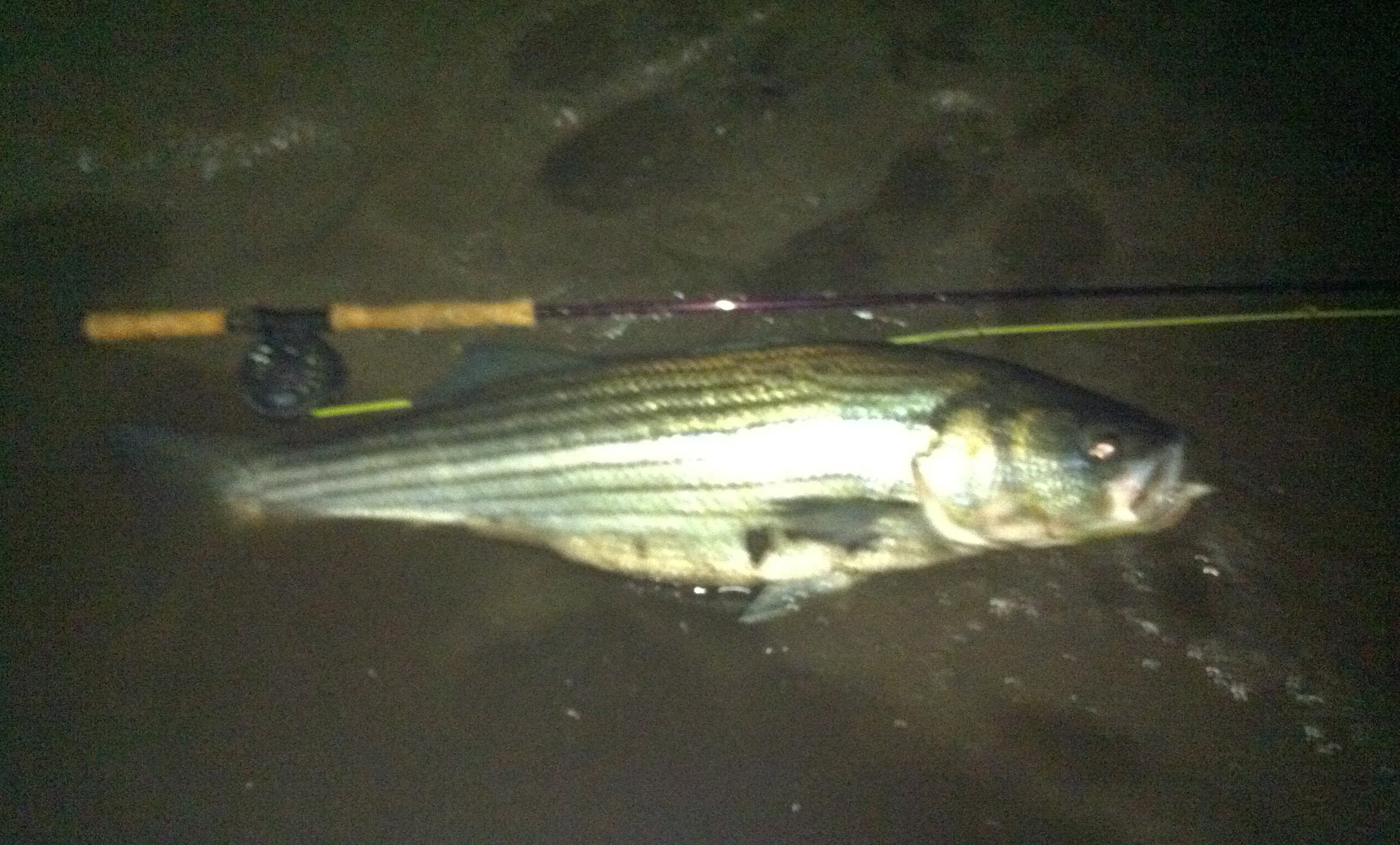
Thirty-pounder on the fly. All because someone took the time to teach me how present a flatwing on a greased line swing.

Thirty pounder

Ken Abrames Catches a Big One (a Currentseams exclusive)

The striper grandmaster talks about setting the hook, playing big fish, the effects of pressure, and fear.

Ken Abrames is one of the most revered names in saltwater fly fishing. He is the creator of the modern flatwing streamer, presentation-style flies that can imitate everything from clamworms to menhaden. His books Striper Moon and A Perfect Fish belong on the shelves of anyone who is an aficionado of traditional New England striped bass fly tying and fishing methods. Besides being a world-class angler, Ken is also a rod designer, author, poet, and artist.

I have the good fortune to be able to talk fishing with Ken on a regular basis. He is funny, candid, a good storyteller, and highly experienced. Here is an excerpt from one of our conversations.

Ken Quonny

Currentseams: I remember you once telling me the story of how your father taught you, “You gotta set the hook.”

Ken: I was a little kid, eight or nine years old. We were fishing off Poppasquash Point in Bristol (RI). There were a lot of fish in those days, and very few fishermen. It was a hazy day in May. We were fishing with plugs. I was reeling and popping, and all of a sudden a big fish exploded on my plug. It was like someone had thrown a Volkswagen in the water. And the fish started running like crazy, the rod was bent over, and the reel was screaming. It was like heaven. And the fish just ran and ran and ran – and then he turned to the right and the plug popped out. It was devastating to me. So I started to reel in, and my father looked over at me and said, “You gotta set the hook.”

Currentseams: (laughter)

Ken: It’s so hard to set the hook when a fish is screaming off line. People think they’re hooked up. But the fact of the matter is, you need to set the hook. And if you don’t, as soon as he makes his first turn, it’s over.

Currentseams: That is exactly what happened to me this spring. I had a big striper blow up on a flatwing and I didn’t set the hook. So if you don’t get a good initial hookset, you have nothing to lose by trying to reset during that first run.

Ken: That’s right.

Currentseams: When you first started teaching me, you drilled into me, as a fundamental part of fly fishing for stripers, the practice of hitting that fish multiple times.

Ken: If you hit him three times, sometimes you still lose him. If you hit him four times, sometimes you lose him. If you hit him five times, you won’t lose him.

Currentseams: Tell us what you mean by “hit him.”

Ken: You grab your line, and you punch him. And then you punch him. Even though you think everything is going to come apart, you want to punch him, and punch him, and punch him. You’ve got to hit him at least five times with a very, very sharp hook. And if you have a dull hook, it doesn’t matter how many times you hit him. Because you’re not going to catch him. (laughs)

Currentseams: Talk about a sharp hook being the single most important thing in fishing.

Ken: Well, it is the single most important thing. Because all those things you hear – the fish struck short, the fish were playing, there’s too much bait in the water, those little taps are small fish – those are just excuses people make up because they don’t understand why they’re not hooking up. And the only thing that is necessary is a needle sharp hook. Once you have that, once you feel the pressure of the fish, the hook has already started in.

Currentseams: You’ve also used the phrase, “sticky sharp.”

Ken: Think of the inside of a striper’s mouth as your fingernail. You take a hook and you run it across the back of your thumbnail. If it doesn’t stick in, or stick to your nail like a piece of scotch tape, it’s not sticky sharp. And the same thing will happen inside a fish’s mouth. A hook that isn’t sticky sharp will slide right out.

Currentseams: Let’s talk about those little taps.

Ken: When you feel that little tap, that’s a fish. He just sucked in your fly. If you’re used to casting and retrieving, like with a spinning rod, you expect a big yank. But the fact of the matter is that it is often just a tiny little touch, or even just a change in pressure. And to be aware of that is one of the most important things you can learn. You have to develop it as a skill.

Currentseams: If you’re taking a simple cast-and-retrieve approach to fly fishing, when you feel those little blip hits, and miss the fish, are you just simply pulling the fly out of the fish’s mouth?

Ken: Yep. You are. Fish don’t make mistakes.

Currentseams: Fighting a 30-pound bass is different from fighting a 10-pound bass. Let’s talk about that.

Ken: The first thing is to not be afraid that you’re going to lose the fish. The other thing is to not try to stop him when he runs. Say you’re a sprinter, and you’re running the 100-yard dash. What’s the first thing your body does when the race is over?

Currentseams: You’re exhausted, you hunch over, go limp…

Ken: That’s what the fish does, too. At that moment when the fish reaches the end of his run, that fish is exhausted. Now I know this is true because I have caught so many fish in my life, it’s ridiculous. When I fished commercially for stripers, I would hook a fish, and he would run, and I would run my boat right after him. At the end of the run, the fish would come up near the surface on his side. He was exhausted. It would only take about three minutes. Didn’t make any difference if he was thirty pounds or fifty pounds. You understand?

Currentseams: Yes.

Ken: OK, so now a guy hooks a big fish, it runs like hell, and he wants to stop the fish. And he puts pressure on the fish, and he thinks he’s going to turn it. That’s ridiculous. Take the pressure off the fish and it will stop (laughs knowingly). You have to learn this. Fish don’t read books about what they’re supposed to do and not do. They do all kinds of things besides what I’m saying. When the fish stops running, you reel in nice and steady, keeping the pressure the same, and the fish will come in like a dog on a leash. It’s like you hypnotize him with that steady pressure. If he wants to run again, back off the handle and let him.

Currentseams: Some anglers overplay stripers.

Ken: They don’t put any pressure on the fish because they’re afraid something bad is going to happen. Fear is the deciding factor. As long as you’re afraid, you’re not going to learn anything, and you’re going to make the same mistakes over and over again.

Currentseams: So some things that help you be less afraid are sharp hooks and, would you say, strong leader?

Ken: Oh, absolutely. Throw away all these ideas about fish seeing leaders and all that crap. Some people think I’m speaking heresy, but it’s not heresy. It’s the truth.

Currentseams: I haven’t used anything other than thirty, twenty-five, and twenty-pound Worldwide Sportsman mono for years now.

Ken: Of course. If you’re worried about leaders, you’re going to have a built-in handicap. You’re going to catch a hell of a lot more stripers on thirty pound than you are on eight.

Currentseams: I’ve found very few situations where I felt my leader color or size was the reason I wasn’t catching.

Ken: The leader isn’t an invisible connection. It leads the fly. You’ve got to match the size of the leader to your fly so it will swim right. You want the fly to be presented in a certain way. The leader is about the mechanics of presentation, not invisibility. You know that mono you’re using? That’s the original mono. The first one that was ever made. Do you get it?

Currentseams: I think so.

Ken: They haven’t improved it. But they’ve found millions of ways to sell other different kinds.

Currentseams: Do you keep your drag ratcheted down tight?

Ken: I use my hands. My hands are my drag. I don’t want anything between me and the fish. I just keep my drag tight enough so that the reel doesn’t over spin.

Currentseams: Too many anglers let stripers take them into their backing. I’ve only gone backing with three or four stripers in my life.

Ken: This is a true story. And it was witnessed by two people. I was fishing off Watch Hill in a boat for false albacore with a seven-weight rod and a fifteen pound leader. I hooked a fish, let him run, then held him and held him until the leader popped. So I said, oh, okay. I tied on another fly. Then I caught forty-two albacore. And not one of them got into my backing. Not one. Because I knew exactly how hard to push.

Currentseams: That’s impressive.

Ken: I kept ten of them, and told people they were good to eat – even though everyone says they’re not – and I lied, because I wanted to find out if they were good to eat. Everyone was disappointed (laughs).

Currentseams: (laughter)

Ken: I don’t care about the rules, and about what everybody else does. I always want to find out for myself. I also caught a couple of false albacore that day on my spinning rod. Know what I caught them on?

Currentseams: No, tell me.

Ken: Plastic crawfish with blue claws (laughs).

Currentseams: I have this theory…

Ken: I have no theories. I’m just talking about experience.

Currentseams: …the more line or backing that’s out, the more things can go wrong.

Ken: Well, yeah. The only thing you want to do is break the fish’s spirit.

Currentseams: What about swinging your bent rod from horizon to horizon to keep the fish off balance? I’ve done that with steelhead, and sometimes stripers.

Ken: You can absolutely change the direction of a fish by moving your rod. If you put your rod down close to the water, you let the line cushion your leader. You can change a fish’s direction by backing right off the pressure. If the fish runs downstream, you can dump line into the current, and let it get below the fish. Then all of a sudden the fish feels the pull from downstream, and he’ll start swimming up, dragging that line right behind him. I’ve done that hundreds of times.

Currentseams: That seems counterintuitive: if you take the pressure off the fish, you’ll lose the fish.

Ken: The line in the water will keep it tight.

Currentseams: I get it now, but I worry when a fish runs downstream, then makes an abrupt turn and speeds upstream.

Ken: A fish running upstream means somehow the drag of the line got below him. The fish always goes against the pull. Mmm-hmm.

Currentseams: What are some of the bigger stripers you’ve caught on a fly rod?

Ken: Oh God…I’ve caught a lot of big fish. A lot of people have caught a lot of really big fish on flatwings, because they really are a big fish fly. And they’re castable, and they can imitate anything.

Currentseams: Are there any kind of basic strategies for targeting big fish?

Ken: Well yeah, there are, but you have to learn those things over time. And you can’t be listening to other people.

Currentseams: How about how to fight a big fish?

Ken: You fight the fish from the first guide closest to the reel. The rest of the rod is not important. That angle from that guide is the most power you’re going to get. And you use the rod to dampen that power – if you raise the rod, it lessens the drag and reduces the pressure. Reason can’t fish. You fight the fish with your gut – you don’t play it from your head. Most people have fear in their gut. And fear always comes from an idea.

Currentseams: I still have a certain amount of fear with any big fish, but it doesn’t inhibit me. Since I started resetting the hook like you taught me, I have not lost a striper over 28”.

Ken: Yep.

Currentseams: Sometimes people say to me, “Well, how do you know you haven’t lost one over 28?”

Ken: (laughs) I know what a big one feels like.

Currentseams: Yeah.

Ken: And that’s the truth. Some people just refuse to give up their reason. Everything has to have a cause and an effect. The fact of the matter is that the future is unwritten. You can’t get there by figuring out the past. It’s always now.
A few minutes with Ken Abrames (a currentseams exclusive)

The striper grandmaster talks about Tuesday Nights, the rhythms of earth and ocean, and love.

Ken Abrames is one of the most revered names in saltwater fly fishing. He is the creator of the modern flatwing streamer, presentation-style flies that can imitate everything from clamworms to menhaden. His books Striper Moon and A Perfect Fish belong on the shelves of anyone who is an aficionado of traditional New England striped bass fly tying and fishing methods. Besides being a world-class angler, Ken is also a rod designer, author, poet, and artist.

For me, though, the coolest thing about Ken isn’t that he’s supremely talented on so many levels, or his mystical insights into the natural order. It’s that you can go to Rhode Island on Tuesday nights and meet him. Talk to him. And fish. There’s no club, no membership dues, no fee, no appointment. You just check out the forum on his website to see where the group is meeting, show up and have fun. Tuesday Nights in 2014 start next week, April 22, in Matunuck, on the beach to the west of Carpenter’s Bar.

When Ken talks, you tend to listen. Tuesday Night, Quonny Breachway, September 2012.

Image

Currentseams: How long have you been doing Tuesday Nights?

Ken: Since 1984.


Currentseams: What made you decide to start them?

Ken: Around that time, I met a fellow named Armand Courchaine, and we started to fish together. We got the idea of starting Rhody Flyrodders back up again. Bang! The club started to grow – in less than a year we had over 100 members. One Saturday, I put together a fishing gathering in Newport. A bunch of people came, but I wasn’t satisfied. I began to ponder and imagine, what night of the week is most available to most people? I came up with Tuesday, because it’s a good, neutral night.


Currentseams: What was the fishing like in those days?

Ken: From the time I was a boy, to around 1984, shore fishing in Rhode Island had really fallen into a sad state. People didn’t know the places anymore. Very few people were walking the beaches. There were a lot of famous spots in Rhode Island that people didn’t know how to get to. But I knew the places, so Tuesday Night was a way to show people where to fish, and how to fish them, so they would have the wherewithal to go out on their own. Rights-of-ways had fallen into disrepair, and some of them had been encroached upon by landowners. So I had people going around and cleaning up these right-of-ways. And they weren’t just fishermen. All kinds of folks came. Everything we did was like seed to enhance access and fishing. People warmed right up to it.


Currentseams: People who don’t know about Tuesday Nights often ask, “Can anyone come?” And of course, the answer is yes.

Ken: Yeah, there is no membership, and there is no hierarchy.


Currentseams: And people want to know if it costs anything, and the answer is no.

Ken: No, of course not. Fact is, you probably end up going home with more than you came with.


Currentseams: How do you decide where to go?

Ken: I close my eyes…and feel. I don’t use any kind of science. Always go to inner silence when you need an answer. Then you’ll know.


Currentseams: What are your thoughts on the weather we’ve had this winter? It’s been pretty cold…

Ken: When I was a boy I used to always go ice skating on Thanksgiving. So tell me about how cold it is. Things have changed. I see different birds up here now that I never used to see.


Currentseams: Do you think things will be late this year?

Ken: When was the moon in relation to the equinox?


Currentseams: New moon is Sunday, March 30th.

Ken: It’s kind of like the first flower of spring. The first flower of spring comes before the second flower. That’s the order. So the first thing that shows up will tell you what the order of the year will be.


Currentseams: I keep track of things in my garden…

Ken: Yes, that’s right, that’s exactly what you were supposed to say. Is the skunk cabbage out yet?


Currentseams: Not here. I looked at my records, and in 2011 I had crocuses blooming on March 5. I don’t have any flowers yet (March 28).

Ken: So, there’s your answer. Everything happens in order. The ocean is the same as the land. So, you look for the first thing that shows up. And that will tell you what the second thing is going to be. You have to feel. It’s like dancing with a beautiful woman. You can’t do it out of the pages of a book. You have to just hold her, and move with the music. It’s the same thing with this world. It’s alive, and it has a pulse, and a rhythm, and an order. But it doesn’t tell you what those are ahead of time, because reason has no power over the earth. None.


Currentseams: So now, in 2014, what would you say Tuesday Night is all about?

Ken: It’s all about love. It’s that simple.


Currentseams: (laughs)

Ken: I love the earth, I love fishing, I love the people who come fishing. And that’s what they get when they come.

The Crazy Menhaden Big Eelie Variant

It happens, if you’re lucky, once a season. It does not define you as angler. It makes no promise of future success. Like all glory, it is fleeting. But oh, does it make you feel like the king of the world. It is the moment after a wildly successful session when someone breathlessly approaches you with the words, “Excuse me, I’ve got to ask. What fly were you using?”

The first time I fished the Crazy Menhaden Big Eelie was a humid, overcast June night on Block Island. A substantial school of bass in the ten-to-fifteen pound range was feeding on sand eels near the surface. They had the bait pinned in a three-foot deep trough between the beach and a sand bar that dropped off into deeper water. For the better part of three hours, I took bass after well-fed, rotund bass. They relished the fly, even after it was reduced to two saddles and some frayed bucktail. As I began the walk to my Jeep, the angler to my right hurriedly reeled in his line and chased me down the beach, eager to pop the question.

Image

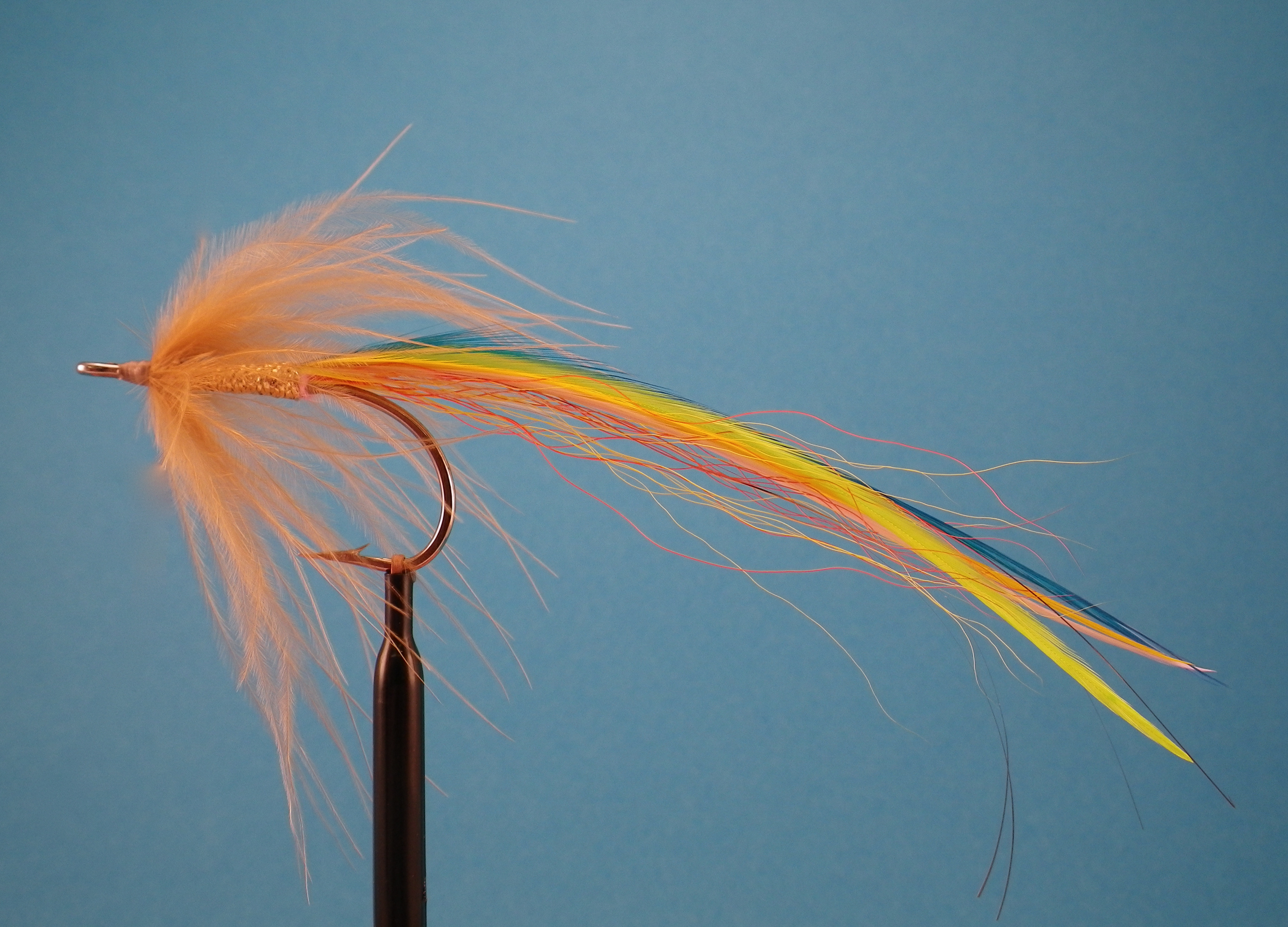
As its name suggests, this fly takes the color scheme of Ken Abrames’ Crazy Menhaden and applies it to the template of the Big Eelie. Together, they create an insanely potent brew of form and function.

Hook: Eagle Claw 253 3/0
Thread: Tan
Platform: Orange and yellow bucktail, 30 total hairs, mixed
Tail: (All saddles pencil thin) Pink saddle, under two strands each of red and copper flash, under yellow saddle, under chartreuse saddle, under blue saddle
Body: Gold braid
Collar: 2-3 turns ginger marabou, tied in by the tip

Tying notes: As with all Big Eelies, make the saddles thin. Tie them in flat. I like this fly about four and one-half inches long. Treat the marabou as a veil, not an opaque blob.

Crazy Menhaden Big Eelie Rogues’ Gallery:

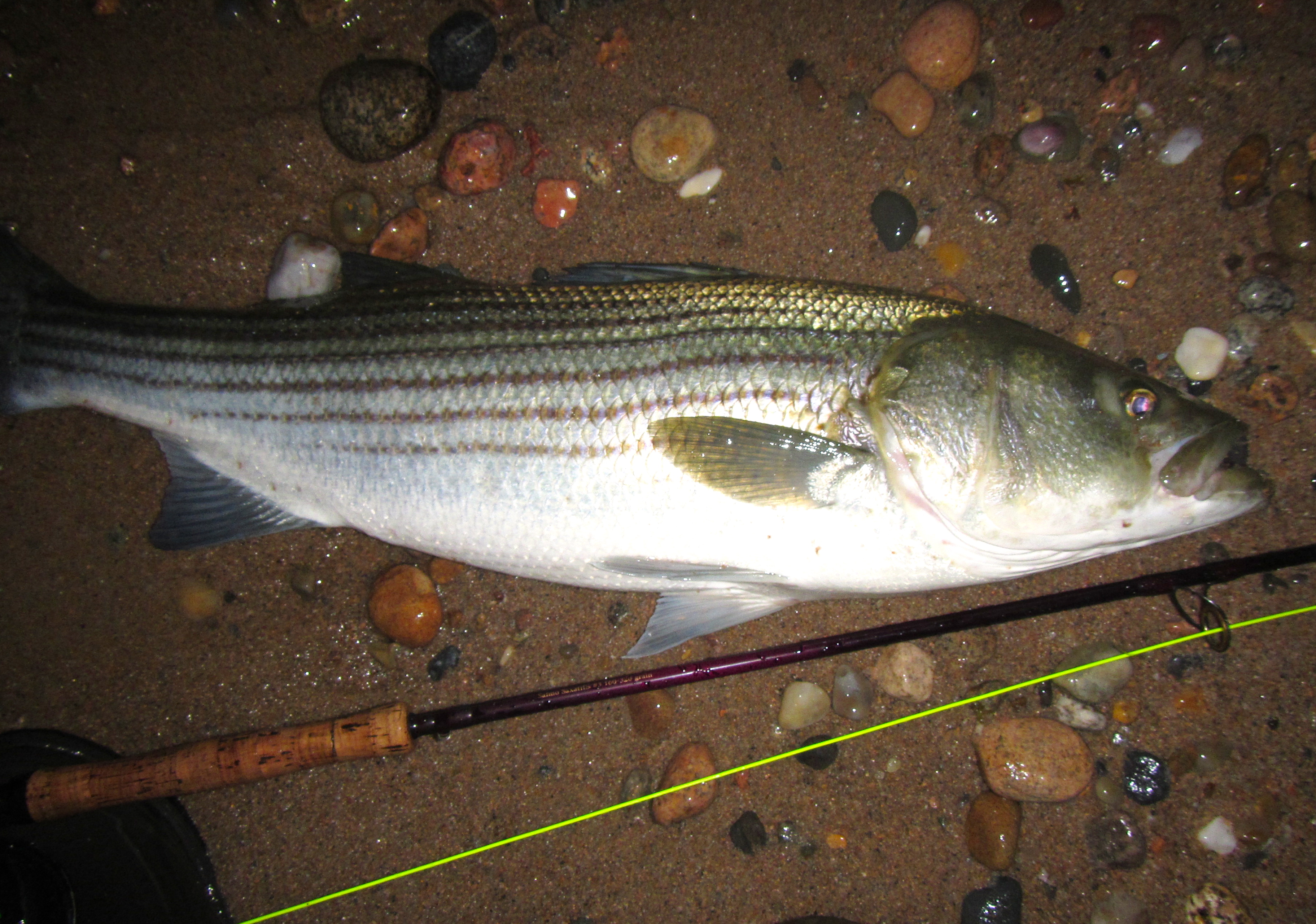
(Please forgive the fish-unfriendly photo. This was the only striper I beached to shoot. I lipped the rest).

SatBIBass

Big Eelie Variant: The L&L

While I am loathe to use the phrase “go-to-pattern,” I beg to report that whenever there are large sand eels around, Ken Abrames’ Big Eelie is my go-to pattern.

The Big Eelie differs from 95% of other sand eel flies in that it is not an attempt to carbon copy the bait. Those legions of epoxy- and tube-bodied flies with eyes certainly work, but you can get away quite nicely with something far more impressionistic (if that’s your fancy) like the Big Eelie or Ray Bondorew’s Marabou Sand Eel.

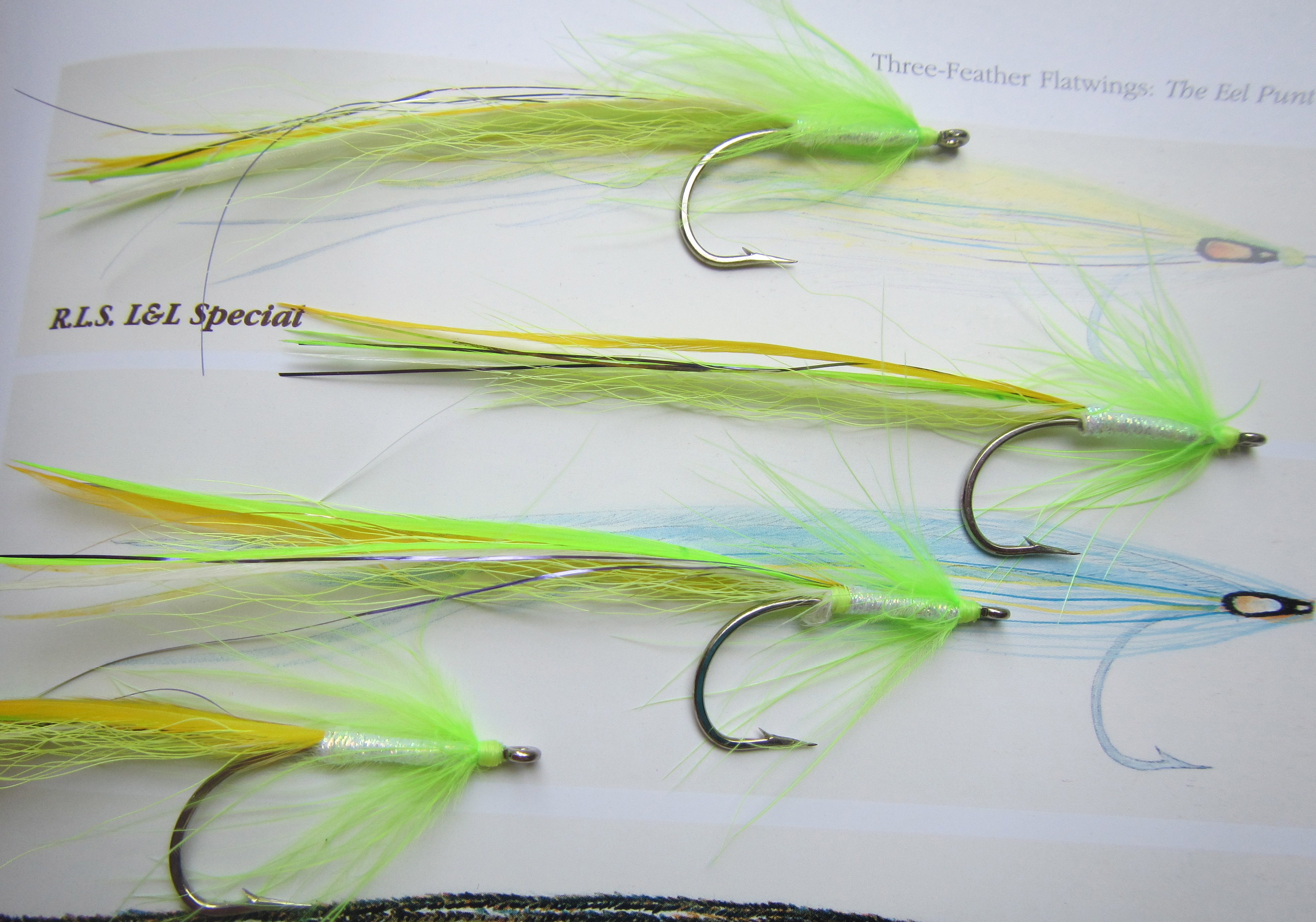
The classic Big Eelie is a four-feather flatwing/soft-hackle hybrid; it’s colors are white, yellow, olive, and blue. I’ve discovered over the years that the Big Eelie works in all kinds of color schemes. One of my favorites is taken from Ken’s three-feather flatwing, the L&L Special. This tart mix of yellow, fluorescent yellow, white, and chartreuse shines on sand flats, day or night.

The L&L Big Eelie

Image

Hook: Eagle Claw 253 3/0
Thread: Chartreuse 6/0
Platform: 30 hairs fluorescent yellow bucktail
Tail: A white saddle, under one strand each of gold and silver flash, under two chartreuse saddles, under two strands purple flash, under a yellow saddle.
Body: Pearl braid
Collar: 2-3 turns chartreuse marabou, tied in by the tip.

Tying notes: Sand eels are a slender bait, so make your saddles about the width of a pencil. You don’t want a flaring broom shape for the platform, so likewise make it slim, and take the bucktail from near the tip of the tail. All the saddles are tied in flat. The marabou adds the magic here, as it veils the body when wet, creating movement and an almost glowing effect. Feel free to play around with different colors on this pattern; some of my favorites are blue/black/purple and white/pink/olive. Stripers love them all. I like to tie this fly about 4  1/2 inches long.

Guten tag cows mit der Herr Blue flatwing

It’s getting to be that time of year: herring moving upriver with plenty of cow bass along for the ride…or at least a meal or twenty. A floating line, a greased line swing, a Herr Blue flatwing swimming broadside or just hanging there, hackles undulating in the current — I can almost feel the sensation of the strike.

To the fly: my nine-feather flatwing translation of the R.L.S. Herr Blue bucktail, tied about 11 inches long. I really like the colors on this one.

The Herr Blue Flatwing, nearly a foot long.

Hook: Eagle Claw 253 4/0
Thread: White
Platform: Ginger bucktail
Pillow: White
Support: White neck hackle
Body: Silver braid
Tail: 2 white saddles under 1 pink saddle under 2 strands pearl flash under 1 violet saddle under 2 strands silver flash under 1 pink saddle under 1 blue saddle under 2 strands light green flash under 1 orange saddle under 2 strands purple flash under 1 olive saddle under 1 blue saddle.
Collar: White and ginger bucktail, mixed
Wing: 20 hairs dark blue bucktail, 15 hairs olive green, 15 hairs grey, 15 hairs orange, mixed.
Cheeks: 3 hairs each of orange, chartreuse, pink, turquoise bucktail, mixed
Topping: 7 strands peacock herl
Eyes: Jungle cock

A closer look:

Image

And a proven performer. Not quite a cow, but easily into double-digit pounds. The fly is same as the one in the top picture. This striper was taken last spring on a greased-line swing.

Image

Steve Culton

The Magog Smelt Striper Bucktail

Long before breathable waders and UV-cured resins, fly anglers began fishing the salt for stripers. They brought with them their corpus of freshwater knowledge – and also their flies. Saltwater fly fishing (and therefore saltwater fly tying) was in its infancy. So it only makes sense that they would borrow tackle and tactics and flies from whence they came.

I have a particular interest in traditional fly fishing and tying methods, whether for trout or stripers. For several years now I’ve been tying and fishing these legacy striper patterns, and I’d like to share one of my favorites with you: the Magog Smelt Bucktail.

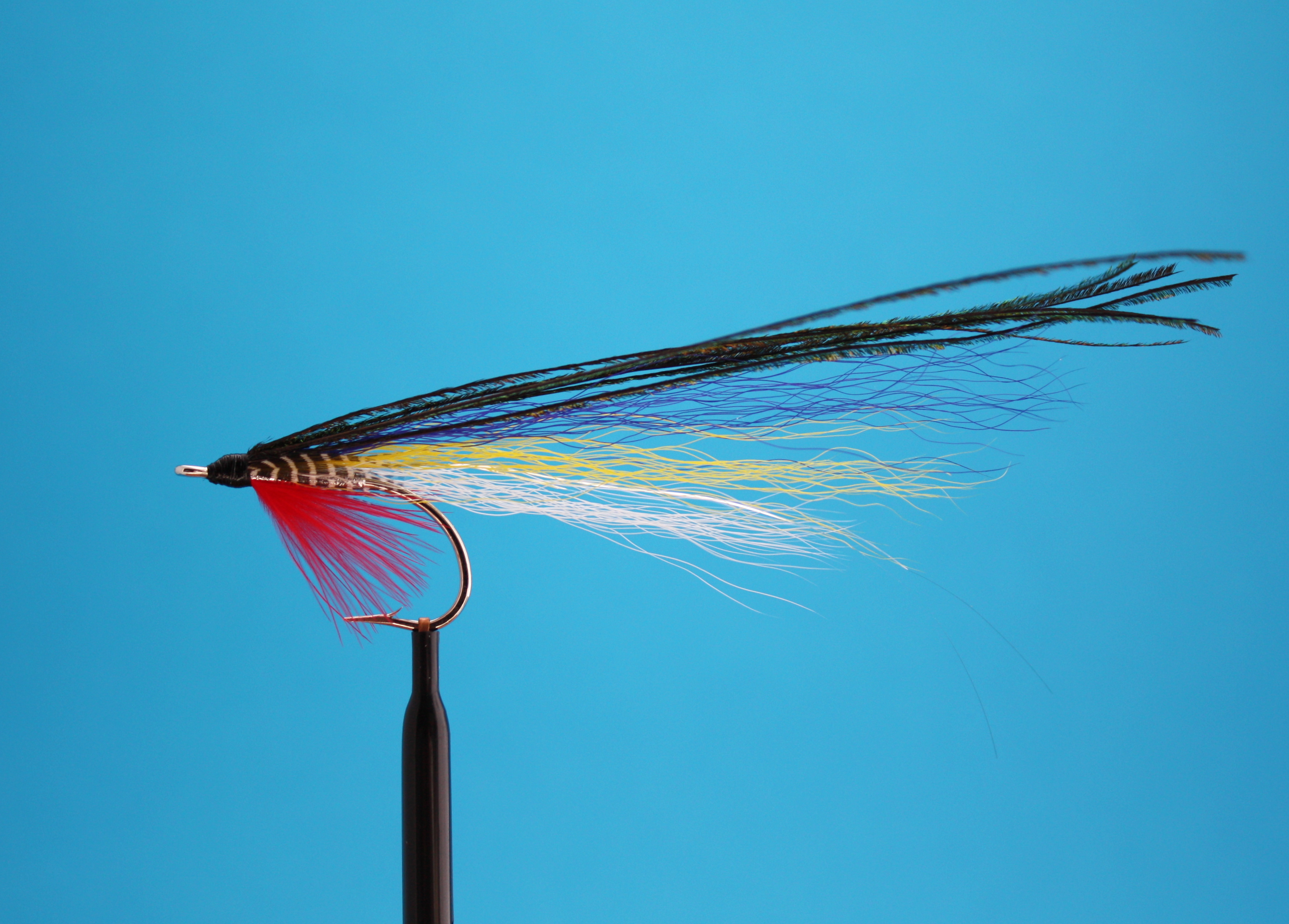
The Magog Smelt Striper Bucktail

Image

The Magog Smelt is an old landlocked salmon fly. It takes its name from Lake Memphremagog, located between Vermont and Quebec. It was the favorite striper fly of an old Rhode Island sharpie named John Abrames, who taught his son, Ken (you may have heard of him) to fish for striped bass with it. Ken in turn told me about the Magog Smelt, and now it’s one of my favorite bucktails and color schemes.

Hook: Eagle Claw 253 1/0
Thread: Black
Body: Silver braid
Throat: Red marabou
Wing: 30 hairs white bucktail, under 2 strips silver flash, under 30 longer hairs yellow bucktail, under 25 hairs longer purple bucktail, under 5-7 strands peacock herl
Cheeks: Teal flank tip

Tying notes: I tie the Magog Smelt Bucktail the Ray’s Fly format, from three to five inches long. The fly here is about 3 ½ inches. Keep each group of bucktail nice and sparse, and make each progressively longer. I treat the teal almost as a veil over the body braid. Back in the day, the old-timers painted white eyes with a black pupil on the head, but you could use jungle cock or leave it blank as I did here. I’ve never tied this fly with eyes, and the stripers love it au natural.

The R.L.S. Herr Blue

In a vast Sargasso Sea of opaque, doll-eyed baitfish patterns, the R.L.S. Herr Blue shines as an understated alternative. This is my favorite fly when the bait is juvenile herring.

Sparse construction and impressionistic design are hallmarks of the R.L.S. bucktails, outlined by Ken Abrames in Chapter 2 of A Perfect Fish. There are 14 flies listed. You’re probably familiar with the most famous of them, the Ray Bondorew classic, Ray’s Fly. There are enough color combinations among the R.L.S. Bucktails to match many of the baitfish stripers favor – or match or contrast the color of the sea and sky on any given day. (Think I’m crazy on that last one? Tie up an R.L.S. Easterly on a grey, foul day when the wind is blowing 20 knots out of the east and see what happens.) Size-wise, you’re only limited by the length of the bucktail you have on hand.

Like Ray’s Fly, the Herr Blue embraces the philosophy that less is more – with only 66 total bucktail hairs, you can easily read the newspaper through its body. It’s also a fascinating exercise in color blending, with no less than nine different bucktail colors that create all kinds of secondary and tertiary hues.

Herr Blue is the kind of fly that doesn’t get a lot of attention on internet forums or in flyshop bins. That’s easy to understand. When it comes to popular perception of saltwater patterns, impressionism always takes a back set to realism. That’s a shame, because flies like this reveal to you just how low on the intelligence scale fish really are.

But now, you’re in on the secret. And you’re going to love the look on other people’s faces when you show them the fly you’ve been catching all those stripers on.

Ich bin ein Herr Blue (click on image to enlarge)

Image

Thread: White
Hook: Eagle Claw 253 or Mustad 3407 (this is the EC 253 size 1/0)
Body: Silver mylar braid
Wing: Bucktail, 15 hairs white, 5 ginger 1.5x hook length, mixed, under 8 violet, 4 pink, 10 light blue mixed 2x hook length, under 2 strips silver and 2 strips purple flash (I only use one of each for the smaller versions) under 10 dark blue, 4 emerald green, 6 smoky blue/grey, 4 orange mixed 3x hook length.
Topping: 5-7 strands peacock herl a half inch longer than the longest bucktail
Eyes: Jungle cock (optional)

Tying notes: This fly is 3½” long. I usually tie it from 2½” to 6”. In the smaller sizes, I use only one strand of flash per color. You don’t have to make yourself crazy trying to calculate bucktail lengths for different sizes; sometimes I just make each section about a half-inch to an inch longer than the previous one. The jungle cock eyes are a nice touch, but most of the time I fish this fly neat – no eyes. One question I get a lot is, “Do I have to actually count the bucktail hairs?” Today, my answer is yes. Two reasons. One, I’d like you to see just how few 66 bucktail hairs really is. Two, you are embarking on adventure in controlled color blending. Think of it as a custom color you order in a paint store. They take the base and add precise shots of pigment to it to create the same color over and over. Same thing here. This fly was created by a painter with an exceptional eye for color. I trust his judgment, and I want to try to see what he envisioned when he specified this blend. Having said that, the universe will not implode if you use 12 violet, 6 pink, or 15 light blue bucktail hairs. So, do it by the book, then improvise to your heart’s desire. Try to keep things sparse, though. A little bucktail goes a long way.

The (Super-Sized) Magog Smelt Flatwing

It would be pretty fair to say that I’ve got a jones for the Magog Smelt. The Magog Smelt is a classic landlocked salmon streamer that originated in Maine. It sports a striking color palette: white, yellow, and purple bucktail. Silver flash accents. Flowing red marabou, offset with barred teal flank and iridescent peacock herl.

Up until a few years ago, I’d never heard of the Magog Smelt. Then one day I was having a conversation with Ken Abrames about old time striper flies, and he told me the Magog Smelt was his father’s favorite fly for Rhode Island bass. So I looked up the pattern and tied a version based on the Ray’s Fly design. The first time I fished that that fly was at night in a breachway, and when I caught a striper on it, I could almost picture Ken’s dad standing on the shore, nodding in approval.

I started playing around with the color scheme of the Magog Smelt in different formats, from soft-hackle to single feather flatwing. They all worked in the salt. Then I got ambitious and tied up a 10” long, nine-feather flatwing. A substantial morsel to tempt the stripers when the big bait is in. Bold. Daring. More of a caricature of a herring than a formal portrait.

And here it is.

The Super-Sized Magog Smelt

Hook: Eagle Claw 253 3/0
Thread: Black
Platform: White bucktail
Support: White neck hackle
Tail: 3 white saddles, under 2 strands pearl flash, under one yellow saddle, under 2 strands pearl flash, under 2 yellow saddles, under 2 strands silver flash, under one lavender saddle under 2 strands silver flash, under one lavender saddle under 2 strands red flash, under one lavender saddle under 2 strands purple flash.
Body: Silver braid
Collar: a 2/3 veil of long white bucktail one hair thick
Throat: Full tip of red marabou
Wing: 30 strands purple bucktail
Topping: 7 long peacock herl strands
Cheek: Teal flank feather tip
Eyes: Jungle cock

A closer look at a fly that fishes big, casts small.

Tying notes: Since I didn’t have the darker purple the original calls for, I used lavender saddles and some deep purple bucktail in the wing. There’s something magical about the effect created by placing the jungle cock over the teal flank cheeks. This fly is tied Razzle-Dazzle style with the flash about an inch longer than the saddles.

You can see the stiff, white neck hackle I’m using for a support along the arm of the vise. A properly constructed big flatwing like this will not be prone to fouling.

Thanks to the Saltwater Edge for tonight’s flatwing class

I spent a very enjoyable two hours tonight at the Saltwater Edge tying flatwings. We kept it simple with single-feather and two-feather patterns, like the Morning Glory and the September Night. Another great group, very enthusiastic, with lots of good questions. It is a privilege and a pleasure to be able to teach tying these magnificent flies. Thanks to Peter Jenkins and his gracious crew for having me. And thanks to Ken Abrames for leading the way.

Some flatwing-bucktail hybrids. Even at rest, they have a palpable energy.

Image