Farmington River Report 12/1/15: Close, so I provided my own cigar

I spent three hours on the river today with mixed results. I spoke to one centerpinner who said he took over a dozen trout, some in the 20″ class, on trout beads. Another bait angler report a single fish in the first five minutes, then nothing for two hours.

So, what about us fly guys? I threw a mix of streamers on floating and full-sink lines for two hours. Two sharp bumps that felt like smaller fish, then a chase on the mended swing from a good-sized brown that was hiding behind a boulder; sadly, no hookup, and I could not entice him to play again.

Then, I switched to indicator nymphing, and used a small egg pattern as the bottom fly. And there he was, my only hookup of the day. Nothing to shout about, so no picture. However (and this is significant as winter and very cold water temperatures are nearly upon us) the take was not a full drop of the indicator, but rather a series of quick shudders; I set the hook, and the bottom fought back.

Tiny dark midges were out in force, and there were a couple fish rising haphazardly around 1pm. River was clear and running at 280cfs. A damp, drizzly, raw day, but nonetheless beautiful in the eyes of this angler. (And for those who care about my post titles, it was a Gispert Churchill.)

Why trout beads work. That’s a real egg on the left. This photo is from a steelheading trip in November 2013.
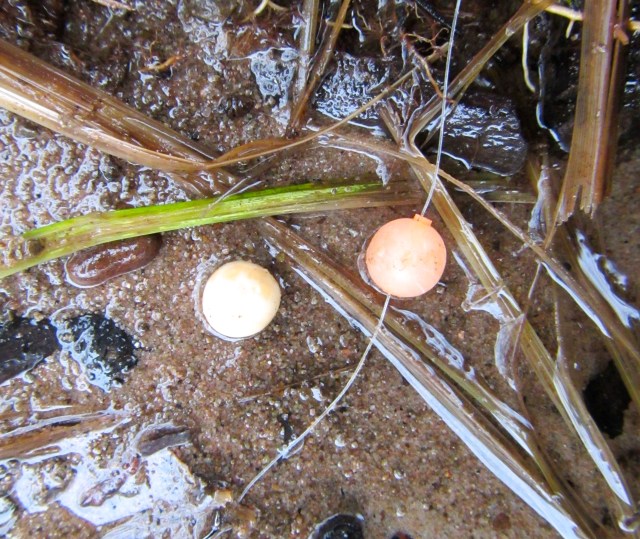
Bead&Egg 11-13

Farmington River Report 11/18/15: Old Reliable

I had the pleasure of guiding Mark for a half day on Wednesday. Mark is just getting back into fly fishing for trout, and we spent most of our time indicator nymphing, with a half hour dedicated to streamers. The river was low (250cfs in the Permanent TMA), clear, and cold (sorry, no temp.) Not much in the way of hatch activity, but there were fish feeding subsurface. We witnessed several trout taken, among them a healthy, fat buck rainbow that Mark nymphed up on a bead head Pheasant Tail.

Old reliable produces again. We hit two spots within the Permanent TMA, and found fish willing to take a nymph in both of them. Well done, Mark!

OLYMPUS DIGITAL CAMERA


Farmington River Report: A Steelhead Warm-Up

A quick session to tune up the old indicator nymphing skills. Water was 255cfs, low for this time of year, and leaves (mostly oak) were a factor. Only fished for 90 minutes, and managed a big, fat rainbow with a wide pink band that, in true steelhead fashion, refused to come quietly to net. Taken on a Hare’s Ear and SLF bead head fuzzy nymph, size 12.

Baron von Chunkenstein. The indicator goes down, the rod tip goes up, and madness ensues.

November Farmy Rainbow

Farmington River Report: A little bit of this, a little bit of that

Since I couldn’t make up my mind yesterday whether to stay home and work or go fishing, I decided to do both. Fishing first. A man must, after all, set his priorities.

The first hour I did a little exploring on the lower river. This was a section I’d never fished before. It was either impressively deep or painfully shallow. Lots of holes and oxygenated riffles and other things trout like. I’m filing this spot away for future reference.

In the course of my travels, I came across old friend BRK TRT. Alan was casting to some delicate risers in some slow-moving water. We chatted about small streams for a bit (if you haven’t, check out Alan’s site Smallstreamreflections), then I went off to swing some streamers and do a little nymphing. The sun was warm. The air crisp. The river cool.

It most definitely did not suck.

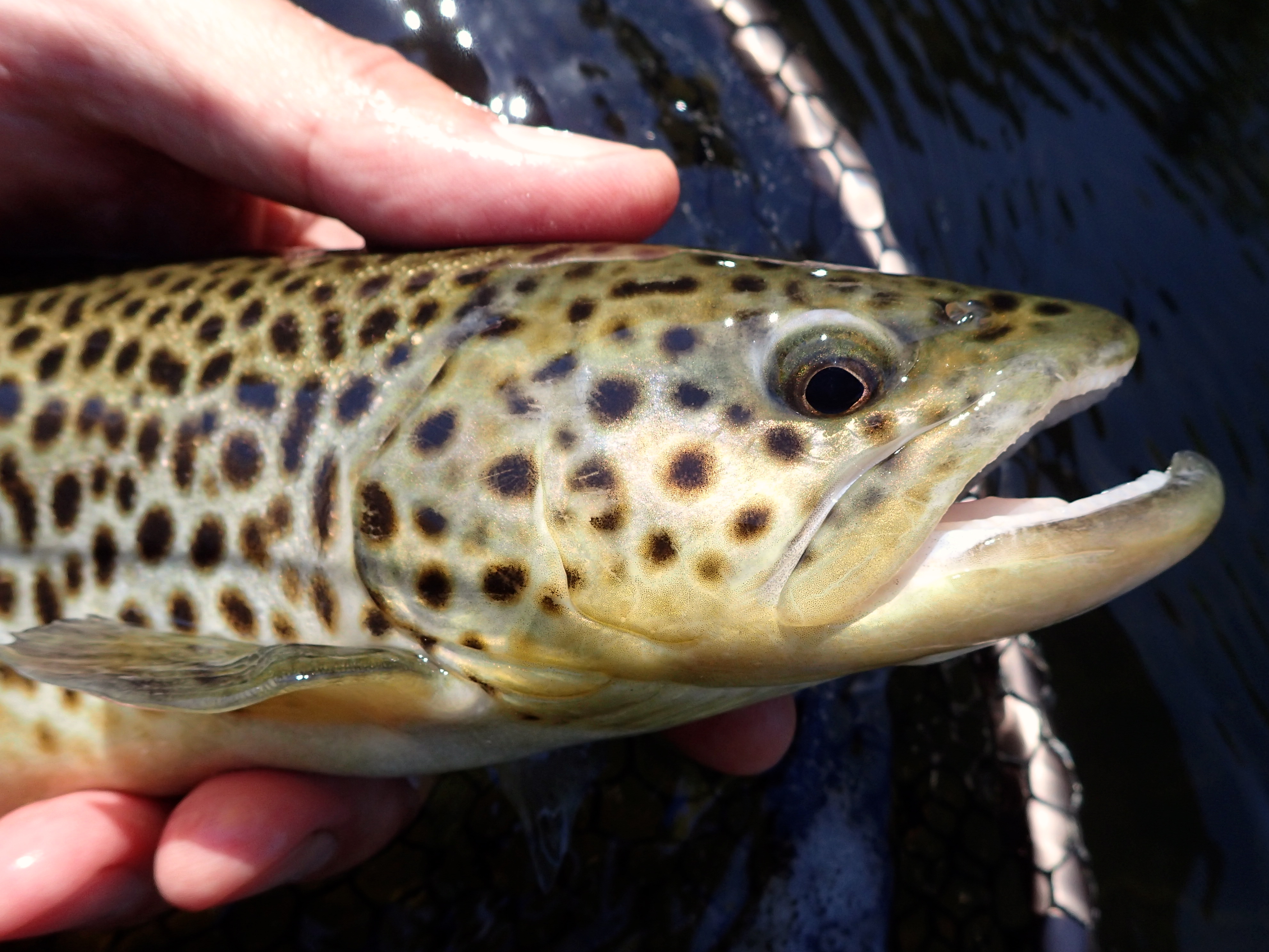
A recent ward of the state that found an olive Zoo Cougar (fished with a floating line and a BB shot at the head of the fly) to his liking. Not bad for a hatchery brown. His spots almost look airbrushed.

Stocked Farmy brown

~

Alan declares his passion in no uncertain terms.

BRK TRT

Farmington River Report: Low and slow

That would describe both the river and the fishing. I was on the water yesterday from 9am-2pm. I skipped the permanent TMA and visited the Lower River and some water up in New Hartford and then Riverton way.

Nymphed in five locations. Blank. A mix of deep runs and swift riffles. Tried big (sz 8 stonefly in a run whose stream side rocks were covered with shucks) and small (tiny SHPTs) and in-between. I did catch a very nice stick.

It wasn’t until I switched over to a bright yellow streamer that I saw any action. And even that was spotty as I blanked in two of the three pools I fished.

Current conditions: water is 135cfs in the permanent TMA and barely 200 in the lower river. The water was slightly off-color yesterday, although it felt cold enough everywhere I went.

If you have plans to head out this weekend, this report should not discourage you; I was very likely fishing at the wrong time (middle of the day, bright sun, hot air, low flows) and simply had bad luck with the nymphing. The trout should be gathered in the deeper pools and faster, oxygenated water. I did see some fish rising in some classic dry fly water, but I was too lazy to switch out leaders. Caddis, midges, and a few stray Light Cahill-type mayflies.

If I had to do it all over again, I would have swung wets — and followed my own advice about crickets. 🙂

Not yesterday. 

Icy guide

Tag Team Nymphing

I’ve been teaching Rob how to fly fish, and Friday afternoon we met for a quick indicator nymphing lesson. Even though Rob is completely new to the fly game, he landed a juvenile Atlantic salmon his first time out. Friday was our second session, and it was slow going. There wasn’t much (if any) visible hatch activity, and the water was slightly stained from the day’s earlier rains. Rob did great job casting, mending, and presenting.

Everyone learns differently, and after an hour Rob said he wanted to watch me fish. We were targeting a riffle that dumps into some deeper water, and as the two-fly rig completed the dead-drift phase, the flies began to swing up. The indicator went under, and I handed the rod off to Rob, who landed this fine wild brown.

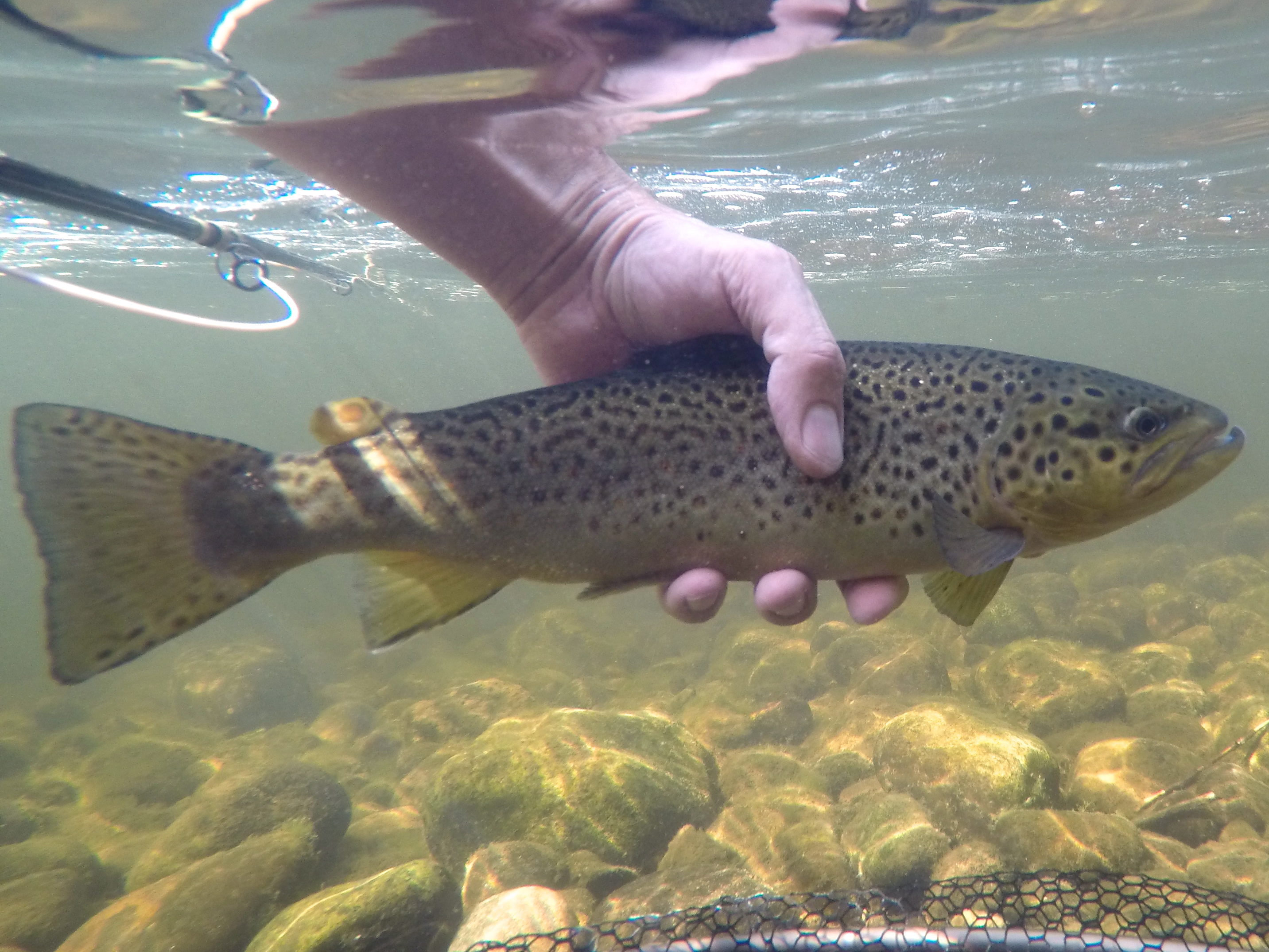
Some substantial shoulders on this wild Farmington brown. You can just make out the faint parr remnants, and those haloed spots speak volumes about how lovely these fish can be. Taken on the bottom fly of a two-fly rig, a size 14 olive Iron Lotus.

wild Farmington River brown

Tip of the week: look for a reason to set the hook on every drift

This is one of my favorite nymphing maxims. It is one of those abstract truths that proves itself worthy of consideration many times over the course of a season — especially if you like to nymph with an indicator. Sure, false positives mean you also end up wearing your line, leader, and nymph rig around your head more than you’d care to. But those comical moments are quickly forgotten whenever hook point finds fishy mouth.

A few days ago, I set the hook for no reason other than my yarn indicator deviated ever so slightly from its course downriver. It didn’t go under. It didn’t stall. It didn’t shudder like it does when the rig is bumping along the rocky bottom. Nope, it just started to move in a way that neither current nor structure could account for. So I set the hook. And there he was, the best trout of the day, a mid-teens wild brown.

The guide I float with on the Salmon River, Jim Kirtland, likes to say, “It doesn’t cost anything to set the hook.” Make an investment in watching your sighter or indicator like a hawk — and watch the dividends roll in.

There was no mistaking the take of this fish, but I’ve had plenty of hookups with steelhead this size and bigger that began without the indicator going under. Once you think you know what you’re looking for — anything that looks like a remotely suspicious move by your indicator — the fun begins. Remember the sage advice of Ken Abrames: “It’s a fish until proven otherwise.”

Steel Cam and Me

Farmington River Mini Report 7/29/15: If only the fishing were this hot

You know it’s hot when you’re standing up to your waist in sixty-degree water and there’s sweat streaming down your face — and it’s only 10am.

I fished from 9am to 1pm today. My focus was on prospecting for bigger trout by nymphing the fast water. No bigguns’, but I did get into an assortment of lovely wild browns, one in the mid teens. I used the drop shot rig under a yarn indicator, with a size 14 olive Iron Lotus on the bottom and a size 16 soft-hackled Pheasant Tail as the top dropper. I adjusted between one and two BB shot, depending on the depth of the water and the speed of the current.

Now that is one impressive tail. Full adipose, nice little kype — this buck is a surely a wild thang. Taken on the SHPT. Why I like indicator nymphing: the indicator never went under with this guy. It was the slightest of takes, almost imperceptible. The indicator just suddenly slowed and twitched. Remember, it doesn’t cost anything to set the hook.

Wild Farmy Brown 7/29/15

Maybe it was the heat. Maybe it was the full sun. Maybe it was the lack of hatch activity. But I blanked in three runs today that I was certain held fish. The other three I hit all produced. Go figure — I did better outside of the permanent TMA. The river was surprisingly busy for a mid-weekday.

If you are heading out in this heat, please don’t forget to hydrate. And while the water is still plenty cold, let’s do our best to get those fish in and released quickly.

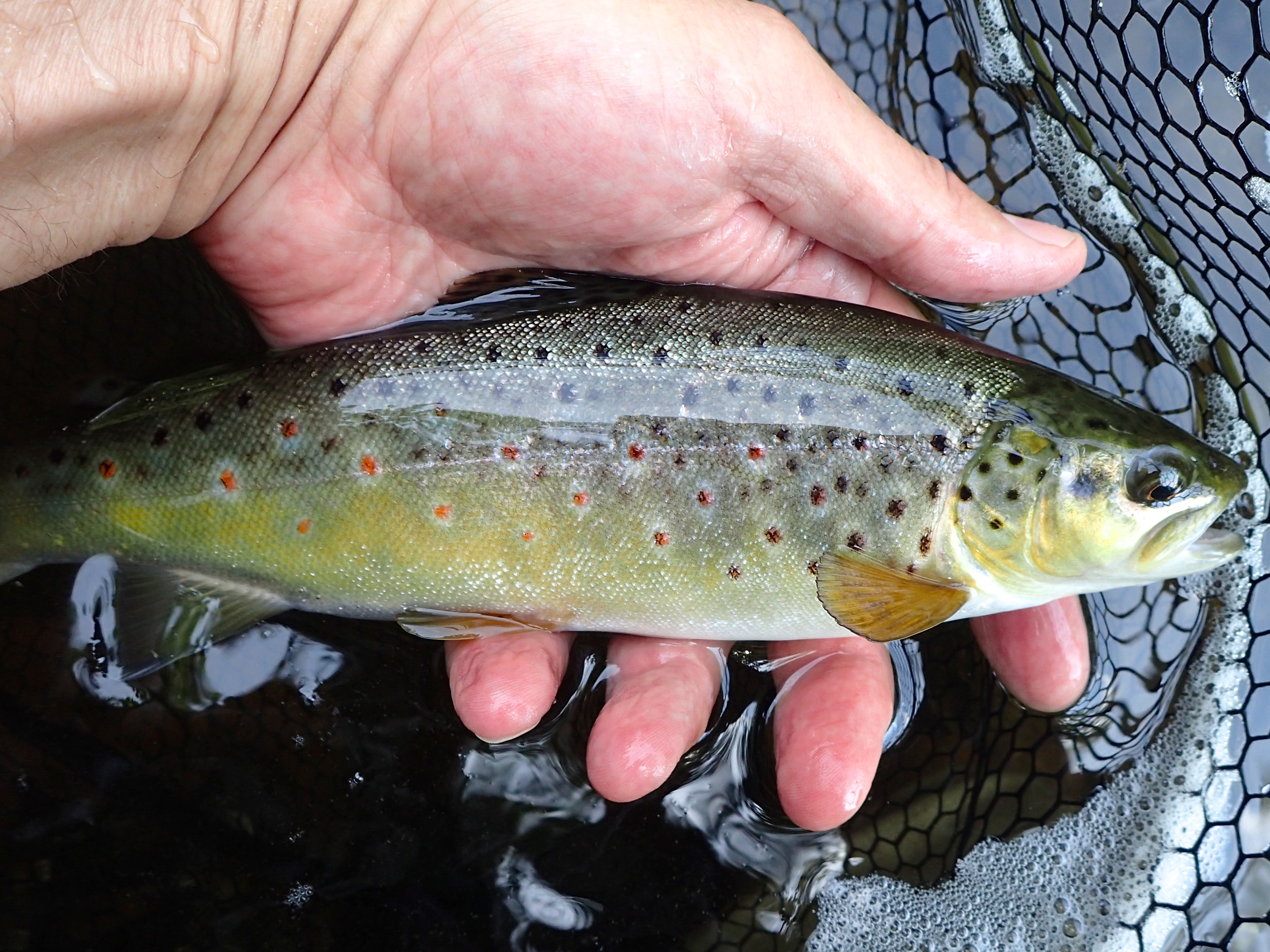
A jewel of a mid-summer Farmington brown. I can’t decide what I like better: the halos around the spots, the golden belly, or the parr mark remnants.

Wild Farmy Brown 2 7/29/15

Farmington River Report 6/9/15: Lessons learned (and re-learned)

Learned: If you lose your Cocoons on Sunday night in two feet of water because you were stupid enough to try to wedge them over your cap on top of your headlamp, you can return on Tuesday morning to the scene of the bumbling and recover them. (This might have been the highlight of my day.)

Re-Learned: You can follow a nymphing session where you drop nearly every fish with one where you land nearly every fish.

Learned: When caddis are hatching and you’re dedicated to the nymphing cause, a Squirrel and Ginger makes a damn good top dropper on a two-fly drop-shot rig. (Every trout I took today while nymphing came on that top dropper. First time I used that fur-hackled wet in that position, and it won’t be the last.)

Re-Learned: If you want to fish alone, stay outside the permanent TMA.

Re-Learned: When fish start taking emergers, it’s almost never a bad idea to swing a team of wet flies.

Water was medium height, clear, and cold. Midges and a few creamy mayflies (size 12), but mostly caddis (size 14-16).

Off you go. Didn’t think that caddis emerger was going to bite back, didja?

Farmington River Mini Report 6/4/15: Butterhook

Those of you with more than a passing familiarity with Roger Moore’s first turn as James Bond will recognize the reference. For my purposes, it was simply one of those days. Sharp hooks, but some decidedly obtuse hook setting.

Tee Hee does his thing. Now, if only I could do mine.

live-and-let-die-271

I dropped so many trout it was comical. OK, so most of what I lost was moments away from being netted, so I got my money’s worth of play time — like that rainbow that twice erupted from the depths like a Polaris missile — but this was ridiculous. Bad hook sets, bad luck, or a combination of both, but I suspect mostly the former. Well. Now we have something to aspire to next outing.

I’ve been on a nymphing kick, and I started in Spot A somewhere below the permanent TMA. Three fish, and one unidentified monster. The indicator dipped, I set the hook, and felt the bottom. Then the bottom started vibrating. And moving upstream. With the sensation of substantial mass. Suddenly, the hook pulled free. This came in some water I had never fished before, so I consoled myself with the knowledge that now I know where it lives. Till next time.

After I lost my nymph rig, I tied on a Hi-Liter streamer. Yes, you can catch a nice low teens wild brown on a day-glow streamer in the middle of the day in June in water three feet deep. This guy whacked it once, missed, then charged after the fly like a striper on a Gurgler. Funny to watch, and even more fun to catch.

Spot B was above the permanent TMA. Blanked.

Spot C was within the permanent TMA. What a dork I am. Not only did I drop a nice some-teen inch brown, I did it twice. The first time I was just about to slip him into the net when he popped. Male, big black spots, paddle tail. I could taste that fish. Fifteen minutes later, I hooked him again. Same spot, same fly, only he came undone after he thrashed about on the surface ten seconds into the fight. Like the beastie from earlier in the day, I know where he lives. As I was leaving, I muttered, “The fighting is in rounds. This is round one.” (Anyone get that movie reference?)

Water was ever-so-slightly stained, 350cfs, 52 degrees.