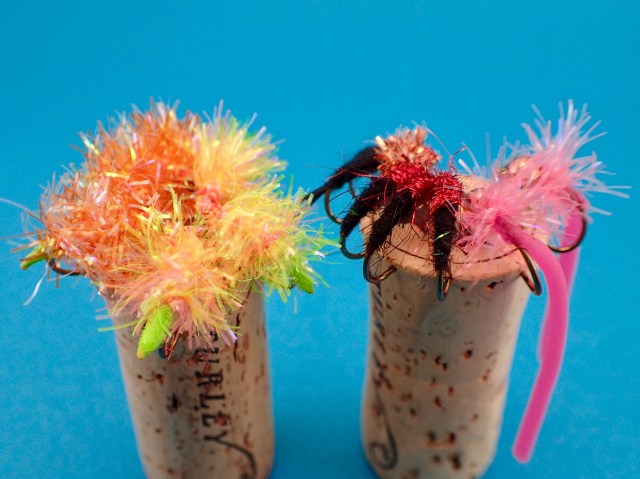
Amidst some usual suspects (Clyde Murray’s Spider, left, and simple flashback stones, right/rear) a few midge/buzzer experiments. We’ll see how the steelhead respond.

Amidst some usual suspects (Clyde Murray’s Spider, left, and simple flashback stones, right/rear) a few midge/buzzer experiments. We’ll see how the steelhead respond.
Regrettably, I’ve spent far too little time this fall at the steelhead bench. To be fair, part of that’s due to a well-stocked box. Here are a few old reliables, and some eggy/junky stuff the steelhead might like.
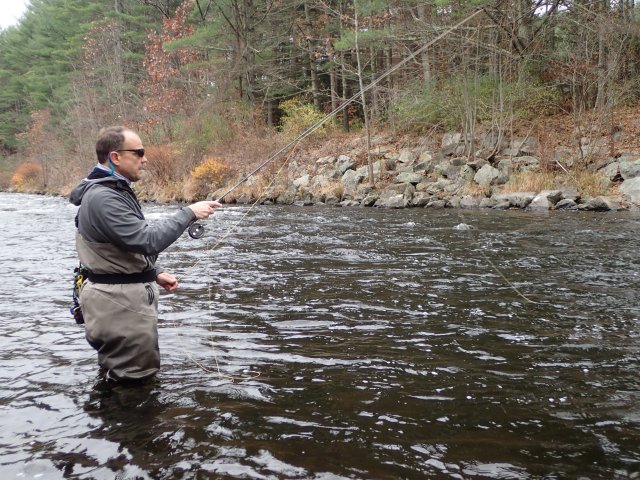
I guided Drew today, and to celebrate Guy Fawkes’ Day we started off with a bang: two trout on two casts! Drew is new to the Farmington and relatively new to trout fishing, so given the time of year and conditions (cold, 310cfs) our task was to cover some water and work on the nymphing game. The specific method was indicator nymphing, drop shot rig, and we went with a sz 14 Frenchie Variant and a sz 18 SHPT. The trout liked both, the Frenchie being the favorite.
First cast, the indicator merely twitched. Look for a reason to set the hook on every drift!

~
Second cast. At this point it was proposed that we quit and go get coffee and doughnuts. The motion failed.

~
Angler traffic was light, and we did not see any other fish hooked today. (Thanks to the one gentleman who offered to share the water!) We hit four marks and found fish in two of them. Four trout to net, a few more lost at hookset, and we called it a very good day. Nice job, Drew!
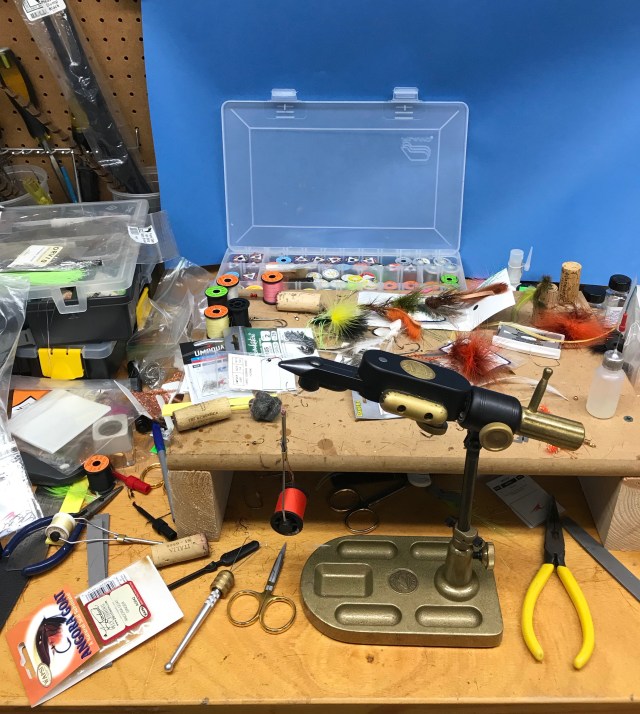
There comes a time every year when I declare my tying bench a disaster area. I’ve been busy churning out flies for clients and myself all summer, and there’s never any time to put things back where they belong — let alone sweep up that mountain of shaved deer hair. OK, if you’re one of those few who keeps things neat and tidy, I humbly bow before your uncluttered presence. For me, a clean tying area is going to have to be a winter project.
Live and in the studio. No edits!
~
Oscar Madison bench, Felix Unger results. Some bugs for the Farmington this week.

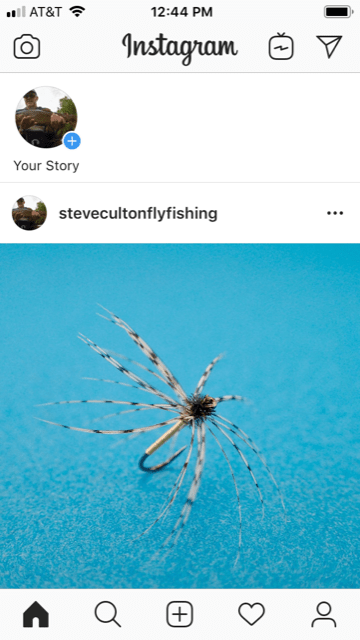
My goodness, sometimes I move at a glacial pace. (Remember glaciers? We used to have them everywhere it was cold…) But never mind. You can now find me on Instagram at stevecultonflyfishing. This location will be more quick hit copy and visual reference than the detailed articles you find on currentseams. And on the flip side, more situational shots from fishing trips or events in near real time.
While I’m hoping to cultivate new audiences, I encourage all my loyal readers to follow me on Instagram. There will certainly be material there that doesn’t make it to currentseams. Thanks, and I’ll see you on the river or at an event soon.
Yeah. That’s me.
Three days, three presentations, all of them different: the first freshly updated, the second an oldie but goodie, and the third making its debut! Here’s where you can find me this week:
Tuesday, October 15, 7:00pm, “West Branch Farmington River,” Thames Valley TU, North Franklin Fire House, 5 Tyler Drive, North Franklin, CT. This presentation has been updated with new photos, video, and content that reflects current regulations and trends. For more information, here’s the TVTU website.
Wednesday, October 16, “Wet Flies 101,” Capital District Fly Fishers, Colonie VFW Post 8692, 140 VFW Road, Colonie, NY. This is my intro to the wonderful world of wet flies. Wet flies have been fooling trout for centuries — and the fish aren’t getting any smarter. The link to the CDFF Facebook page is here.
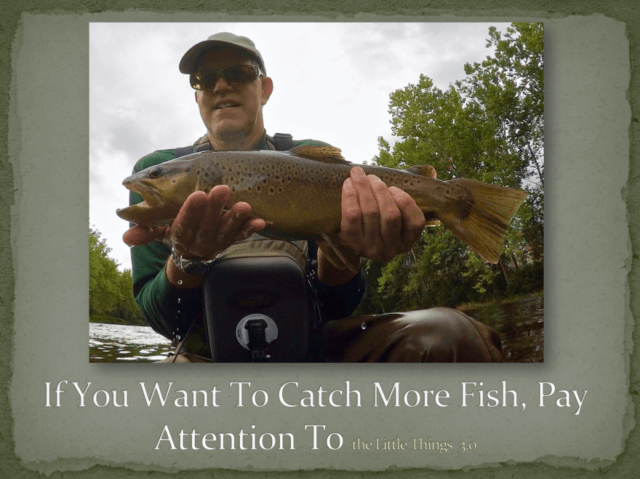
Thursday, October 17, “The Little Things 3.0,” Farmington Valley TU, Whinstone Tavern, Stanley Golf Course, New Britain, CT. The world premier of The Little Things 3.0! Pay attention to the seemingly insignificant details, and you’ll catch more fish. You can find their website here.
Hope to see you, and if you’re a currentseams follower, please be sure to tell me.
A very good-natured reminder: C-O-L-T-O-N makes reels. C-U-L-T-O-N is me. Just sayin’. 🙂
If you’re tying big bugs like the Zoo Cougar or the Countermeasure — any larger pattern with a deer hair fan collar or spun head — the Renzetti R-Evolution Magnum Hair Stacker is a godsend. It’s got an extra wide mouth for those pencil-plus sized clumps; no more struggling to get the hair into the opening. And with four flat-side grips, the base is easy to handle. This is one of those tools that makes you wonder how ever managed without it. While you’re at it, check out this great primer from Kelly Galloup on spinning and setting deer hair.
The Renzetti R-Evolution Magnum Hair Stacker. Support your local fly shop by buying one there.

Gadzooks! I had not fished the Farmington since mid-July. Today’s remedy was a bounce around, state-of-the-river fact finding mission. I visited five marks from Burlington up to New Hartford, and although the water was low, it was plenty cold. So rest assured: the fish are healthy if not happy. I was dedicated to the nymphing cause today, and despite my best efforts I blanked. (Although one run I visited was on lockdown, and — surprise — the anglers there were getting into fish.) The last run had some active feeders, but I ran out of time and space and couldn’t switch over to wets. Observed: tiny BWOs, small un-IDed creamy mayflies, and some size 16-18 light-colored caddis.
Flood-like conditions in the permanent TMA after Thursday’s rain (he said sarcastically).

It was fairly crowded for a weekday in September in very low flows, and as these conditions require what I call “real estate fishing” — location, location, location — you would be wise to have a backup plan in case your favorite run is occupied. As always, please say hi if you see me — it’s always a pleasure meeting a currentseams follower, and you never know when you might be gifted with some flies.
Today’s instant winner freebie was Pat Torrey’s Tiny BWO soft hackle. Dust it up with some Frog’s Fanny, fish it like a dry, and let the trout do the rest.

You’d think I would have learned by now. But no. I still make stupid mistakes when it comes to buying fly tying materials online. Latest failure: ordering a Hareline Premo Deer Hair strip sight unseen.
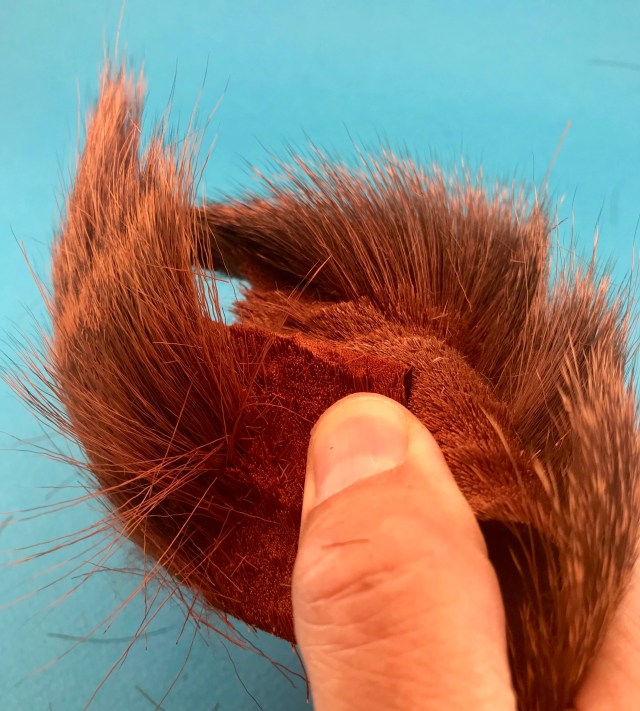
Wrong. The hair is short, stiff, and coarse, totally unsuited for my needs. If I’d seen this item in a shop I would have quickly rejected it. Oh sure, I’ll find a use for it some day, but for now it only serves as a reminder to never buy large fur patches sight unseen unless you have a reliable description and a trusted source.
This is not to say that Hareline products are lousy: I have dozens and dozens of great Hareline items in my bins, and the replacement deer hair patch I found — which is spectacular — is from Hareline.
Two deer hair patches from Hareline. The one on the left is gorgeous — beautiful, long hair fibers. The one on the right is garbage. When it comes to buying fur, saddles, feathers, and skins online, sight unseen, caveat emptor.
A quick zip-in, zip-out smallie mission the other night to get reacquainted with an old friend. Or is that old friends, with an emphasis on the plural? Regardless of whether the subject is the river (242cfs, 76 degrees, clear) or the smallmouth (many of them, mostly in the 8″-12″ class with a couple at a foot-plus), a splendid time was had. Fished from 7:30-9pm, down Kent way. The bass liked the Gurgler, TeQueely, and of course the Countermeasure. Best action was from 8pm-8:30pm — as night fell, the bigger fish action tapered off and the smaller guys came out to sip bugs in earnest.
I test drove a new line on my 5-weight 10′ Hardy Marksman2 — or should I say a new weight line. It’s same line I’ve been using for several seasons, the Scientific Anglers Mastery Anadro. I like its long WF taper for mending. I had been using the 7 weight (225 grains) but wasn’t thrilled with it on that rod for throwing bigger flies longer distances. So I upped it to the 8-weight (260 grains). Casting was easier, but it made the rod feel a little noodly. I’ll give it another shot, but perhaps I need to rethink in terms of a bigger rod. More on this as it develops.
Why I went fishing. A pretty fair Housy smallie that crushed a grey and chartreuse Gurgler a few strips after it splashed down. After a nice aerial display by the bass (that bastard judge from East Germany only scored it a 5.4) we had this Kodak — er, GoPro — moment.

 currentseams.com