The 2024 International Fly Tying Symposium has come and gone, leaving in its wake many fond memories, new tying swag, and new acquaintances made. The event runs from Saturday to Sunday; Saturday is typically the busy day, with crowds dwindling by Sunday afternoon (it’s hard to compete with the NFL). If you’ve never been, you should, because it’s a tremendous opportunity to watch some of the best tyers in the world in action. You can meet them, watch them, talk to them, ask questions — I do all of that when I take a break and walk the room. There are private classes where you can receive personalized instruction. There are seminars that are included in the price of your ticket. And four times a day, featured fly tyers who tie and present to a small audience.
On Saturday night there’s a banquet, and everyone who attends gets a goody bag of fly tying swag. Thread, tools, materials…it’s all good stuff. Post-dinner, I hosted a little wine party attended by several luminaries in the fly tying world. Properly hydrated, Sunday went off without a hitch. Here’s some of the weekend in photos. Check out my Instagram @stevecultonflyfishing for more, soon.
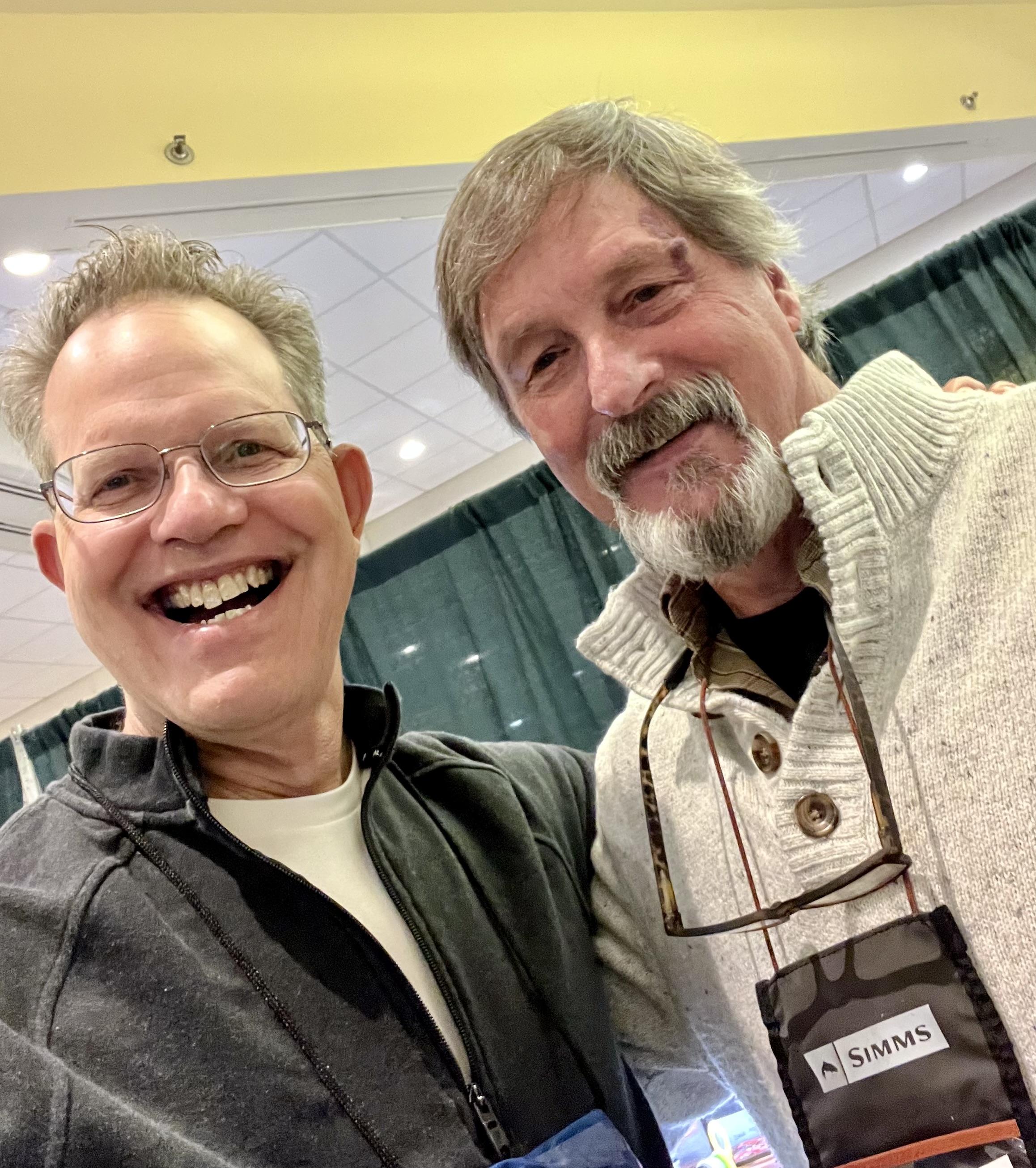
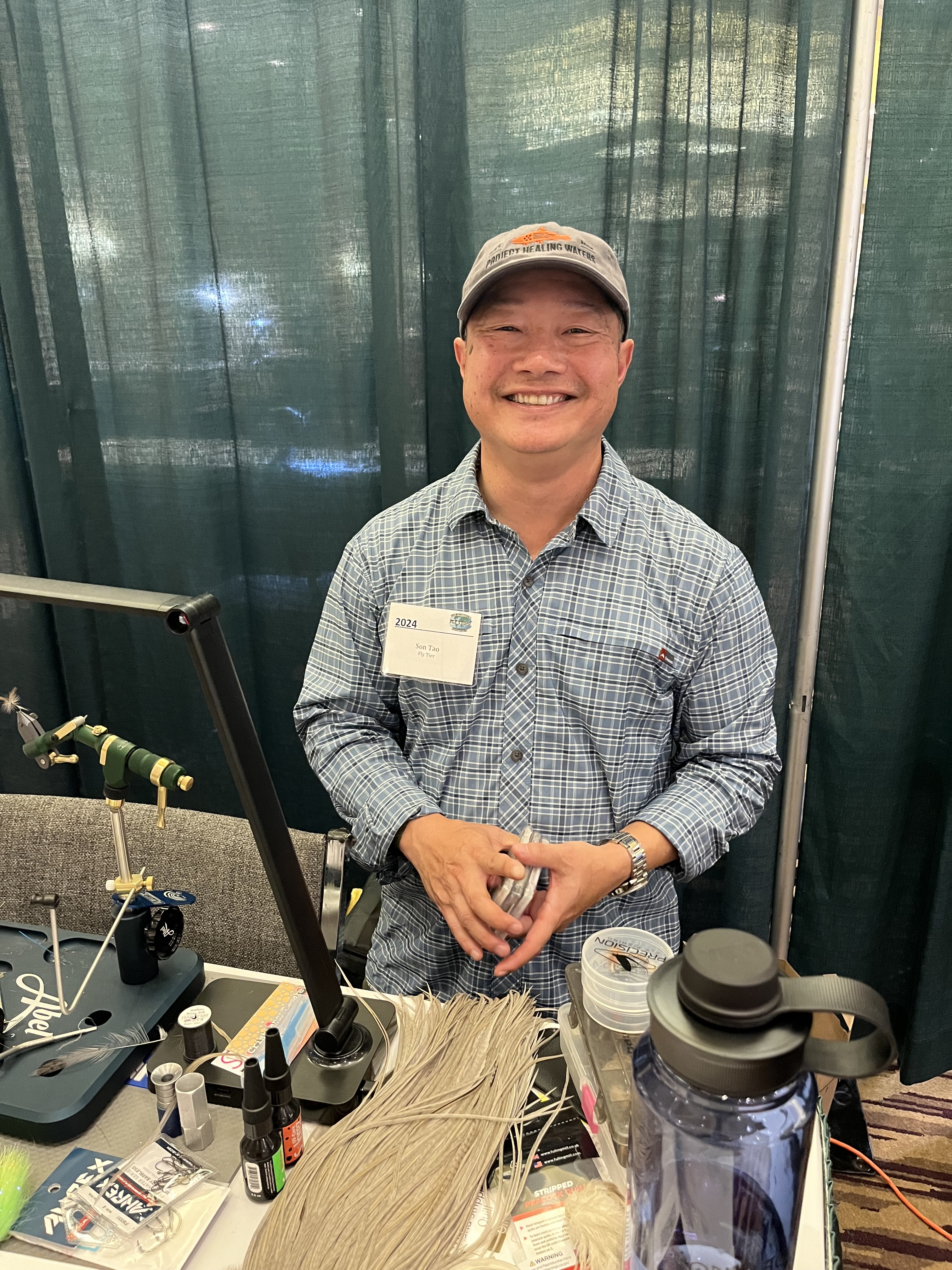
The first thing I did Saturday morning was put on my fanboy hat and go meet Jeff Blood. Jeff’s the originator of the Blood Dot Egg, my favorite steelhead egg pattern. Jeff was warm and welcoming and it was invaluable to be able to discuss steelheading and Lake Erie trib fly fishing with him. Jeff gave me some braid we use to tie the White Death Zonker, another favorite pattern of his. Later, I returned to my tying station to find two dozen Blood Dots and another package of White Death braid on my chair. Wow! Thank you, Jeff! I’ve also wanted to meet Son Tao since I read about his Caddis Emerger pattern in Pat Dorsey’s book Favorite Flies for Colorado. I shared a table with Bob Lindquist, Delaware River guide extraordinaire (and contributing photographer for my upcoming Farmington River book). Son was one table down the aisle, so it was easy to chat. He is one heckuva skilled tier. Also a shout out to David White who sat at the table next to me. Great to meet you!Not too shabby company! I was so honored to be included in this roster. This was my first time as Featured Tier in the Symposium, and my session was very well attended. If you were in the group, thank you for participating. Thank you also to everyone who stopped by my table to watch and ask questions and talk fly fishing. Tying LaFontaine’s Diving Caddis. Thanks, Phil, for the wonderful photos. It’s hard to believe that I’d never met Bob Clouser before this weekend. Bob was FFT just before me, so that seemed like a natural time to say hello. Whether you’re a presenter like me, a vendor, or an attendee, Bob’s kind nature is typical of the overwhelmingly positive energy you’ll get from everyone at the show. You’re with your tribe. People want to talk to you. So…you’re coming next year. Right? Or to the Marlborough and Edison Fly Fishing Shows in January. Right?
Hot off the e-presses comes issue 86 of Surfcaster’s Journal. Within, you’ll find the latest from yours truly. It’s about a big striper I landed this year and the skill? — or luck? — maybe both? — that went into it from hook to landing. Surfcaster’s Journal is an e-zine that is worthy of your support. It’s only 20 bucks a year, and for that you get to read stuff written by some of the best striper anglers on the east coast. You can subscribe here.
The article is called “Fishing at the Intersection of Lucky and Good.” I think it’s one of the better things I’ve written.
Last week, I reached my first manuscript milestone, which included 50% of the text, maps, and a couple dozen photos with captions. Off it went to the publisher, and here I sit with a satisfied smile on my face. So, this seems like a good time to give you a detailed update on the work.
Let’s start here: I’m really excited about what I’ve written so far. I don’t do anything halfway, so it’s particularly gratifying to be able to work on a project that I’m so passionate about. I think I’ve found a nice balance between dispensing facts, being conversational, and mixing in both anecdotes and even a little humor.
In terms of content, the template of Fly Fishing Guide to the Farmington River will generally reflect the other books in the Stackpole line of “Fly Fishing Guide To…” books. In my book, you’ll get a little history of the river; general information about the trout that live there; maps of the STMA that point out pools and major parking areas; descriptions of the major pools and the river in general; and outlines of the most productive fishing methods.
After reading the book, you’ll know that tying a big Isonychia soft hackle on point in August and swinging it through snotty pocket water is a very good idea.
But the truly useful part of the book will be the sections on hatches, seasonal conditions, and fly patterns. My goal for the work is that you’ll be able to read it and have a pretty good idea of where you should fish on December 2, with which method, and what flies to tie on. The book will feature over a dozen local patterns that are proven producers.
Even if you think you know the river, I guarantee there will be lots of information that will be new and useful to you. I’ve been fishing this river since the 1970s, I’m writing the damn thing — and I cannot tell you how much I’ve learned while writing this book.
A book like this cannot be written by one person without the help from others. I’ve been fortunate enough to be able to get input from guides and local experts; their knowledge, experience, and wisdom has been invaluable. My final deadline is June 1, 2025. My hope is that next year at this time, we’ll have a book ready for you to read!
Thank you so much for continuing to follow currentseams during this busy time. I’ll try to get you caught up a bit this month on other happenings. Up next, in this order: the IFTS redux, western PA steelhead, and SR steelhead reports. Also, the Fly Fishing Show in January. I’ll be at Marlborough and Edison.
Hot on the heels of the International Fly Tying Symposium, I went to fish Lake Erie tribs for a couple days. I plan and writing about both, just not today as soon I’m heading up to Pulaski with Number One Son Bill for more steelheading. Then it’s Thanksgiving. So, I’m busy, and I’m sure you’re busy, too. Rather than write a half-assed report on the Symposium and the Erie trip, I’m going to wait until I can do them justice.
Here’s what I can tell you: my first deadline for the Farmington River book is December 1. I’m going to take a wee break from writing then, and I’m hoping to be able to give you some better (and more) content here, if only for a short time. I’ll also have a Salmon River report for you. Plus, I have my Fly Fishing Show Marlborough schedule for January 17-19 — Edison to come soon as well.
I’ll give you all an early Thanksgiving shout-out: I’m very thankful for everyone’s patience as I write the book, and I’m grateful that so many of you have told me how much you enjoy Currentseams. So, thank you all!
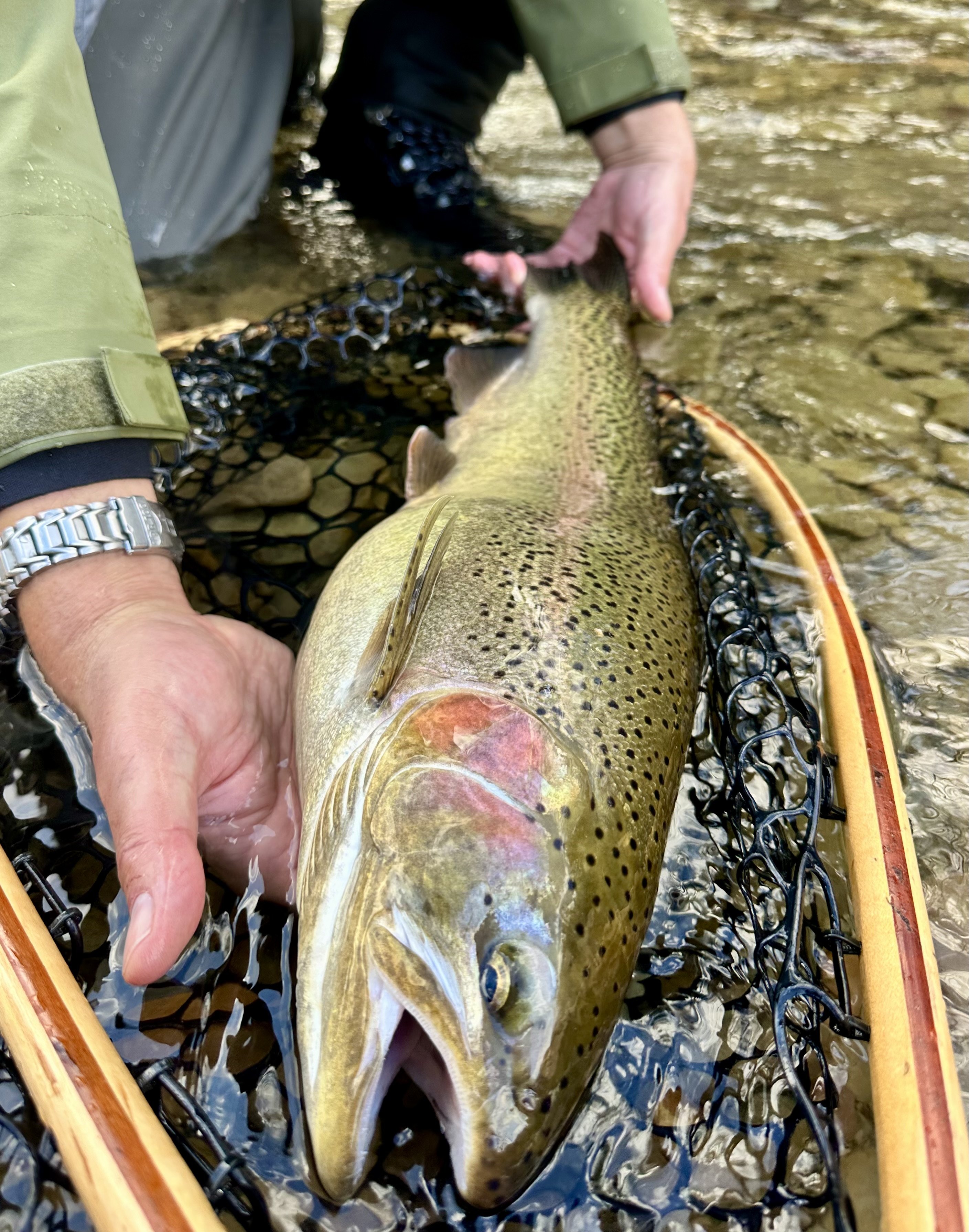
All work and no play etc., so I played hooky for a few days this week, and I’m going to do it again in short order. Here’s a fine, fat, egg-laden hen from Wednesday.
“Matching The Hatch With Wet Flies.” That’s the title of my Featured Tier demo this Sunday at 11:45am at the International Fly Tying Symposium in Somerset, NJ. As I prepare for the demo, I had a few thoughts I wanted to share.
When you’re fishing wet flies, matching the hatch doesn’t matter — until it does. And then, you’d best be prepared. What I mean is, there will be times when fish will eat a wet fly simply because it looks alive and like something good to eat. The bug that wet fly is supposed to represent may not be hatching at that moment. It may be entirely out of season. It may be the wrong color or size. But nonetheless, it gets stomped.
However, the more you fish with a team of three wet flies, the more you will encounter situations where the trout will only have what’s hatching, presented in the water column exactly where they are feeding on the naturals. They may pick out one fly on the three fly team to the ruthless exclusion of the other flies. That’s when matching the hatch pays dividends. You’ll be the person leaving the pool, trailed by other anglers who will want to know, “What fly were you using?”
So: know your hatch windows. Understand what food is most likely to be in the water. Understand how those bugs behave. Specific patterns aren’t as important as matching size, color, and profile. Give the trout a choice. They will always tell you when you get it right.
See you this weekend!
LaFontaine’s Diving Caddis is a good choice for a late afternoon-into evening pattern — because that’s when the trout are most likely to be seeing egg-laying female caddisflies. One memorable evening, I landed two dozen trout in two hours — sixteen on the Diving Caddis.
Time flies when you’re writing a book, and I can’t believe we’re only one weekend away from the 2024 International Fly Tying Symposium. That’s right, next weekend, November 16-17 in Somerset, NJ. They will be vendors galore with all kinds of hard-to-find-stuff, along with some of the best fly tyers in the world. There are classes, seminars (free with admission) and featured fly tyers (like yours truly!) Check out the seminar schedule:
And the featured tier list! (Note the slot on Sunday at 11:45, which of course will be of particular interest and importance.)
I’m looking forward to seeing you there. Please come say hello!
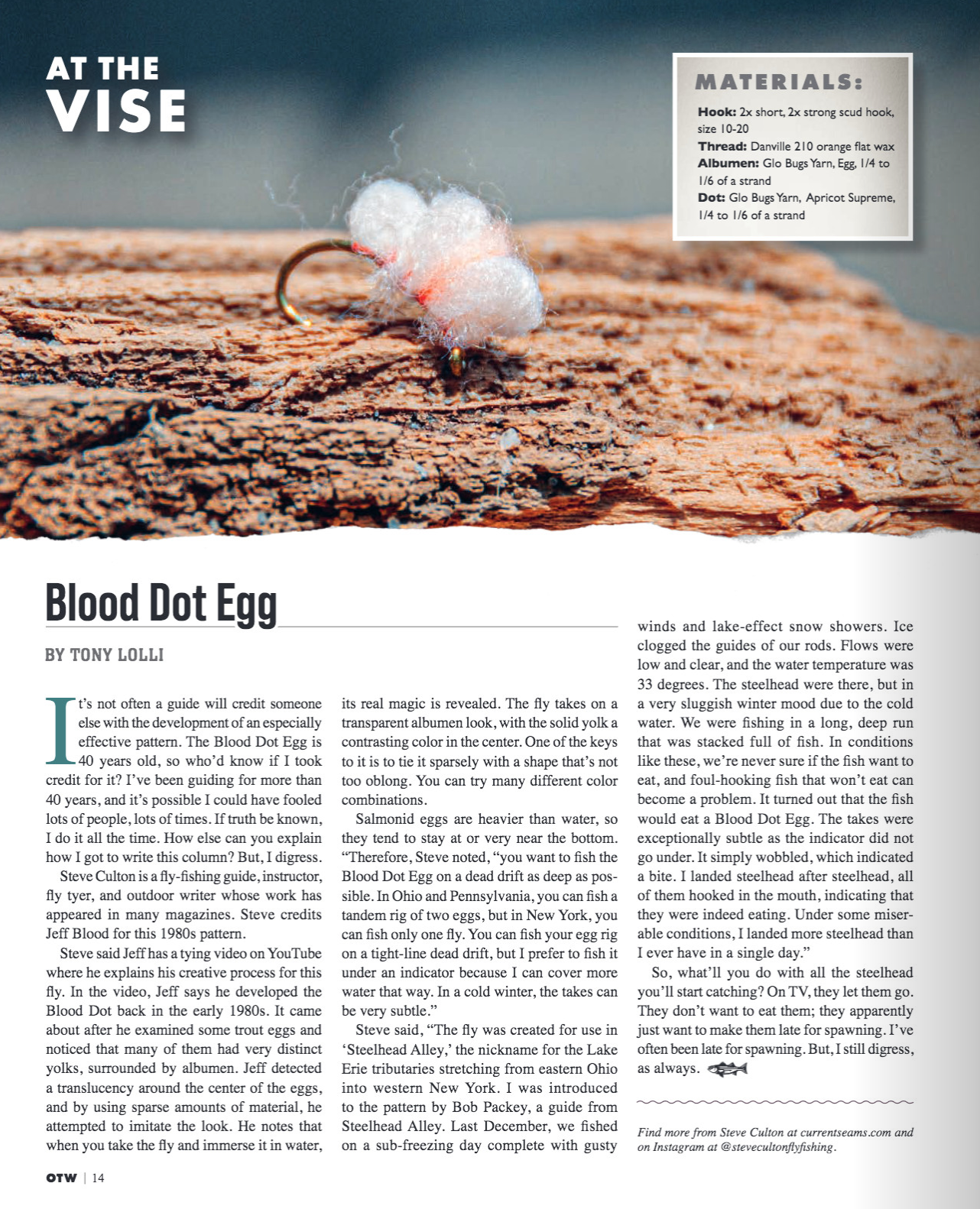
Ok, so it’s not my pattern — it’s Jeff Blood’s pattern. But the Blood Dot Egg is a classic guide fly, and I was delighted to share it with the readers of On The Water magazine‘s “Guide Flies” column, written by Tony Lolli. (Thanks again, Tony, for letting me play!) This is the single best egg pattern out there, and it’s so ridiculously easy to tie that you won’t fret when you sacrifice one or three or a dozen to the bottom gods. Steelhead season is upon us. Now, if we can only get some rain.
Hello, fellow fly fishers and readers! I ‘ve been on an intense writing jag this week, trying to finish up the bug and food forage sections of the book. I think it’s going to be very helpful. It’s divided into mayflies, caddisflies, stoneflies, midges, and other stuff trout like to eat. There will be some hatch details (although it’s not meant to be a biology or Latin names monograph). And then, for you fly tyers, there will be photos and recipes of some essential, proven fly patterns, mostly from local experts, guides, and anglers.
Current situation…add the sfx of fingers on keyboard…
To the Farmington we go! Water remains low, but fishable. It’s plenty cold and that’s the good news. Caddis is the main hatch right now, soon to be joined by Tiny BWOs. We’re getting near spawning time, so if you see a redd — a light oval shaped patch is gravelly riffles — keep your distance. Mark its location in your memory so you don’t walk through it in the winter and accidentally wipe out the next generation of wild browns. Please do not target trout on redds — it’s bad form.
Two more notes: as we get deeper into fall, streamers will increasingly come into play as a primary fishing method, as will egg patterns. Try an egg this winter as an attractor on a two fly nymph rig, and make the top dropper something small and match-the-hatch. And remember that the entire river from the dam down to the steel bridge in Unionville is catch-and-release. If you see poaching, please call the TIP line: 800-424-HELP. Program it into your phone so you’ll have it ready when you need it.
Shorter days, longer nights, cooler weather…I’m definitely in the mood, baby! We do need some rain, but as you read this, Great Lakes Steelhead are staging at the mouths of rivers and creeks. I think this thought train all started when I saw that Jeff Blood was going to be one of the tyers at the International Fly Tying Symposium (you’re going right?) on November 16-17. Jeff’s Blood Dot Egg has been my new favorite egg pattern since steelhead guide extraordinaire Bob Packey introduced me to it three years ago. It works on both Erie and Ontario steelhead (not to mention trout in CT). I’ll stand by the title of the article linked here: The best egg pattern for steelhead might be Jeff Blood’s Blood Dot.
Give that man (Jeff Blood) a ceegar! This is a Salmon River fish from last November taken on Jeff’s fly.
Once again, I’ll be appearing at the International Fly Tying Symposium this November 16-17, 2024, at the Hilton Doubletree in Somerset, NJ. This is great opportunity to mingle, mix, and see some of the best fly tiers on planet earth: Thomas Baltz. Jeff Blood. Bob Clouser. Tim Cammisa. Tim Flagler. And that’s just one partial alphabetical column. Oh! There’s also a well-stocked marketplace that always has common and hard-to-find items. There are classes, seminars, and featured tying demos. The last two are free with your admission, and I’ll be one of the featured tiers on Sunday at 11:45, which will get you home in time for football. The demo is “Matching the Hatch with Wet Flies.” I hope to see you there!