Unless you’re a setback player, you’re very likely puzzled by the author’s intriguing choice of a headline. For you non-card-types, a smudge is a bid where you declare that you will not only make all four points, but also win every trick (when each player reveals a card they’re holding). Smudges are rare, and if you’re lucky to make one, you get five points.
So, if catching three different species of fish is a hat trick and four is a grand slam, what’s a five different species? Pentachamacallit? So smudge it is. And on my second day of fishing the Kootenai (pronounced KOOT-en-ee by the locals), I scored a smudge.
This was a day that I fished solo, under the capable guidance of my guide Jeff from Dave Blackburn’s Kootenai Angler. We floated a different section of river, starting below the town of Libby. While the river is still wide and overhead-deep in many areas, there’s a lot more gravelly structure, pocket water, and whitewater pools. I far preferred it over the section we’d fished the day before. We did a little bit of everything: wet flies, dry-dropper, nymphing, streamers. It turned out to be a smudge-tastic day.
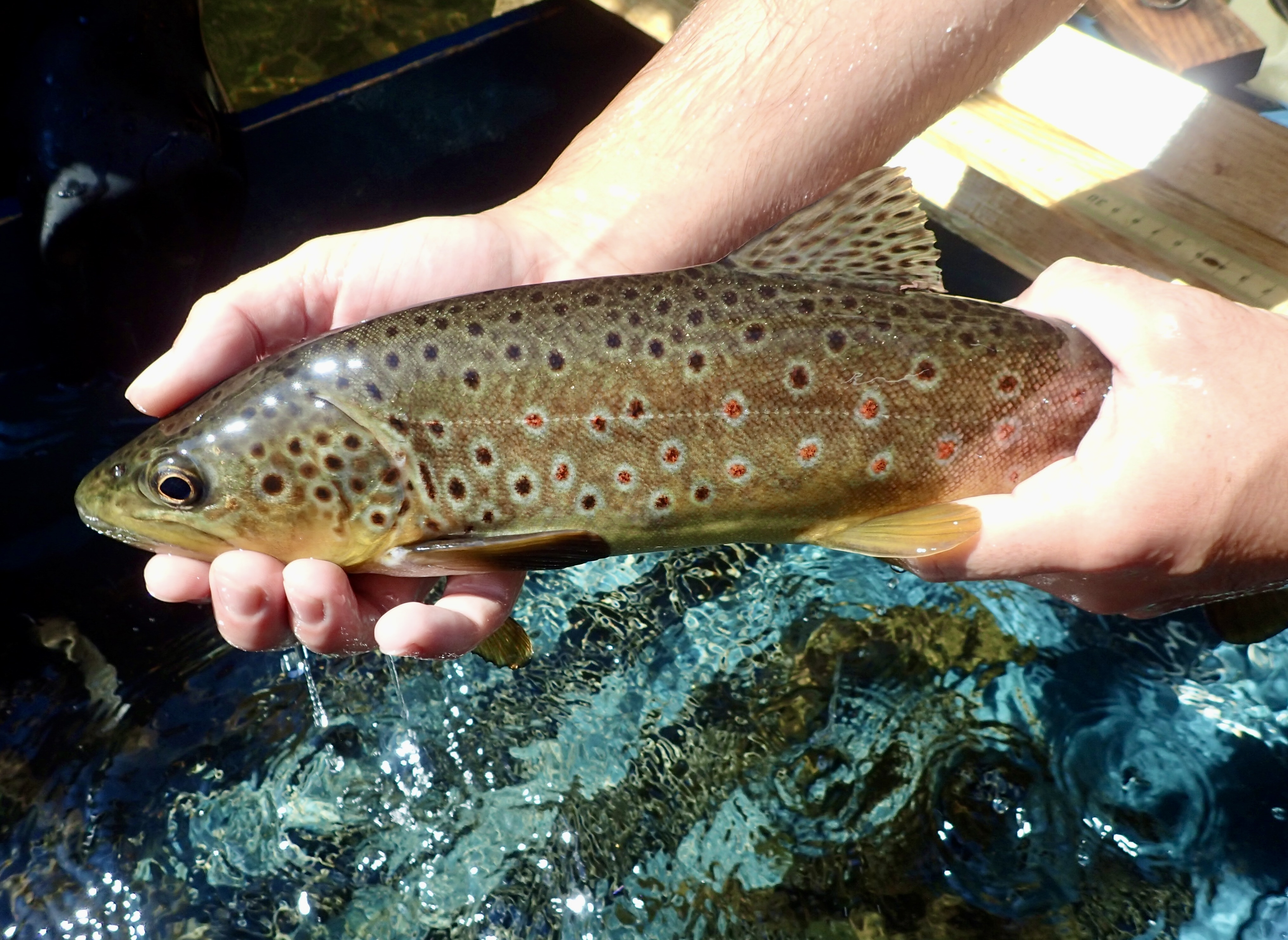
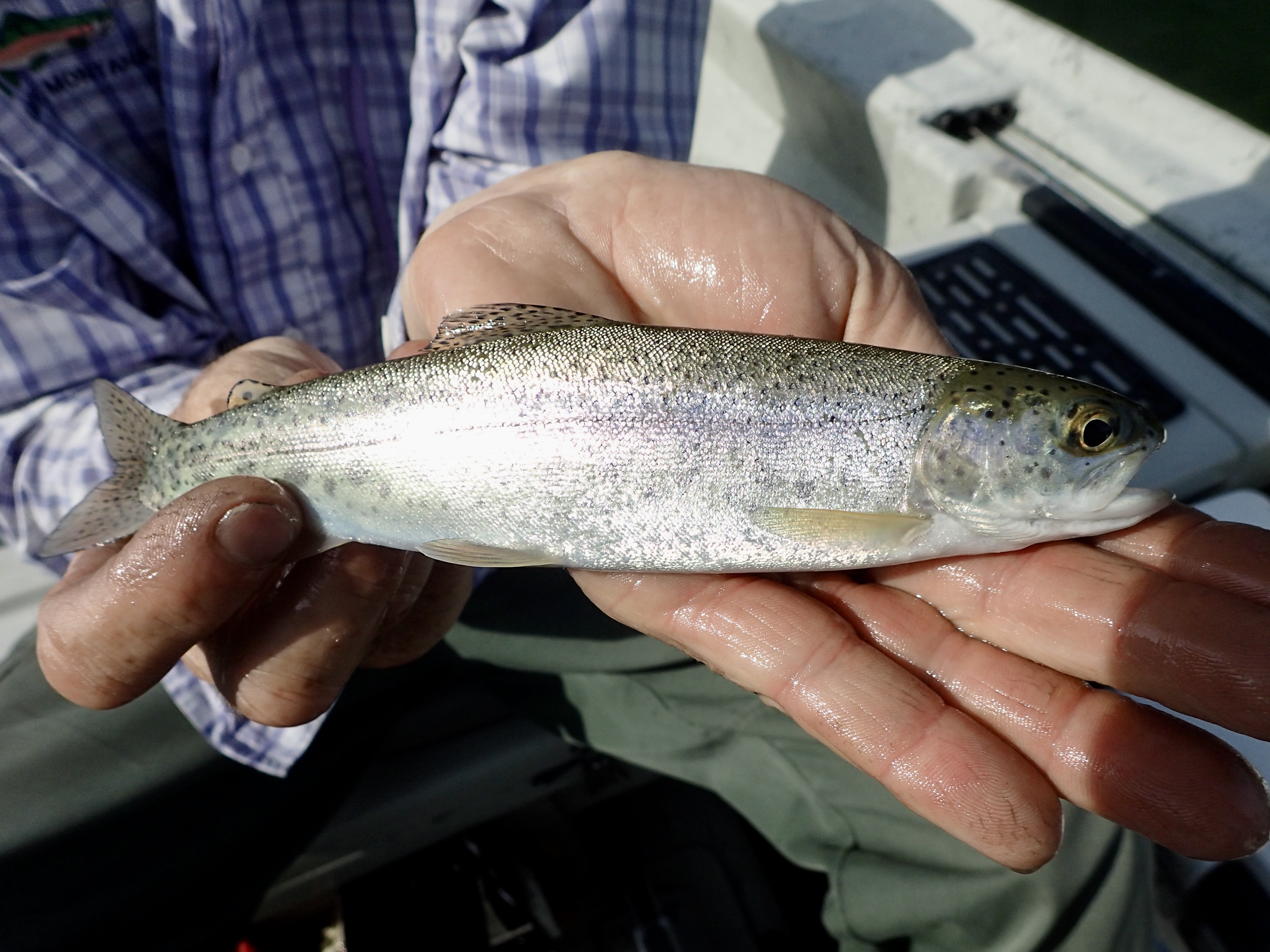
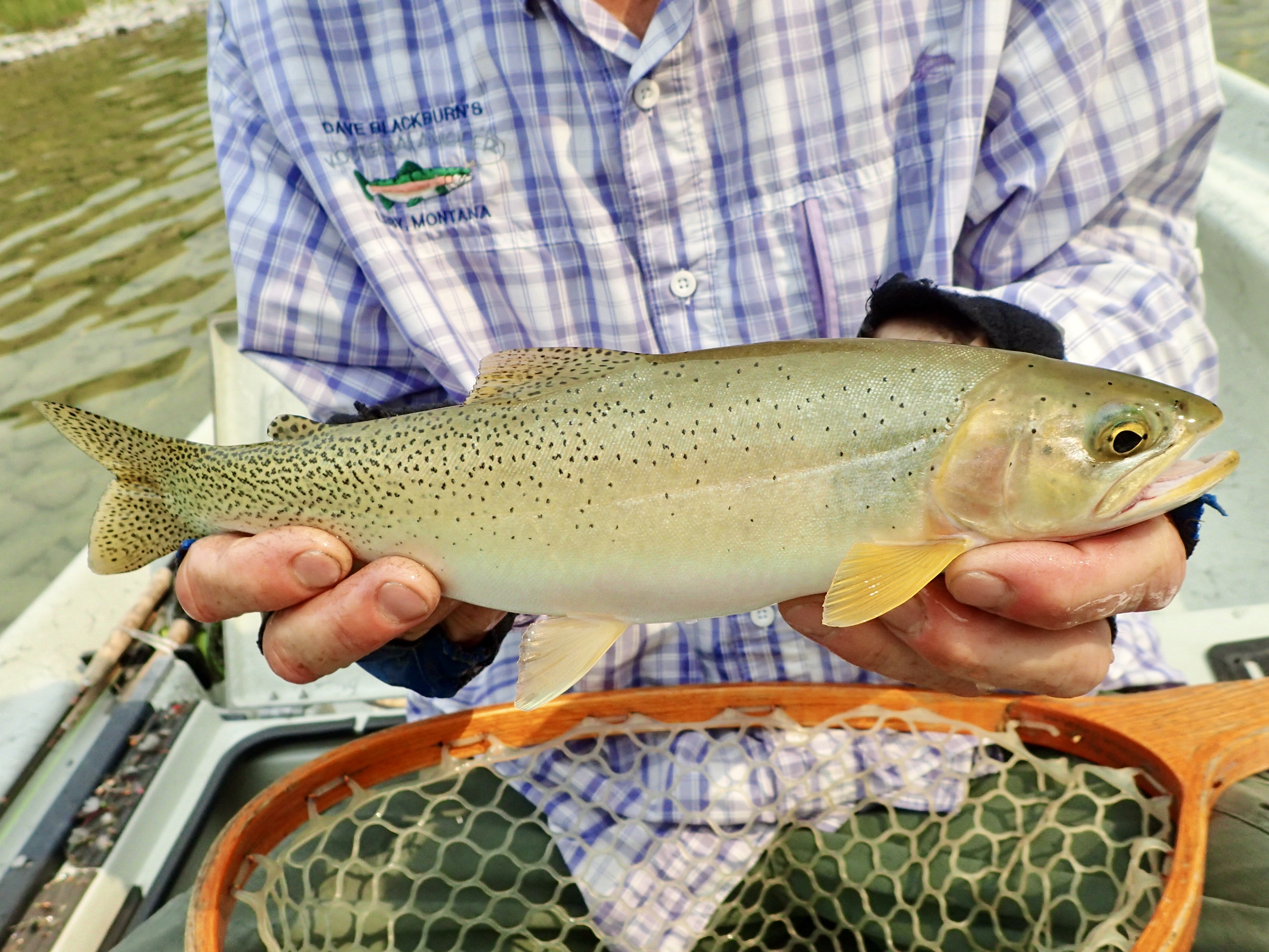
Let’s start with our new old buddy, the Kootenai Redband Rainbow trout. The ones I connected with — and they were plentiful — were generally under a foot long. Nonetheless, they were spunky and frantic when hooked, and I can’t even begin to describe their breathtakingly beautiful flanks adorned with delicate parr marks.It’s a sucker! It’s a bonefish! No, wait. It’s a northern whitefish, native to these parts. Despite their appearance, whitefish are a salmonid. Every one I hooked was taken on a nymph. This was the biggest one by far, and she gave me a good tussle. Two down.On this day, I hooked and landed my first cutthroat trout. Consider me a fan. Another native fish, these are beautifully colored and look like someone took a fine point black Sharpie to their sides as an exercise in minimalism. This fish was an epic eat. We were fishing western style, pounding the banks with a hopper-dropper, when we approached a grove of trees with overhanging branches that nearly touched the waterline. Naturally, the sweet spot of the run was beneath the branches. I made a cast, and began mending, dropping my rod tip nearly into the water so the floating line would clear the branches. Three…two…one…and whack! She ate the hopper right where we thought she’d be. That’s one take I wish I had on film.A few minutes later, I asked Jeff what that green thing in the water was. As we got closer, we could see it was a hopper going for a swim. We fished him out of the water and put him on the oar to dry off. We were going to use him for a science experiment, but before we could send him on his way, he decided to go for another swim. I haven’t seen many hoppers in the water, but this was proof that it does happen — and the way this thing was struggling, it’s not surprising that they get eaten. My fourth species was a pikeminnow. Sadly, no photo. But before you laugh at the noun “minnow,” you should know that they grow over two feet long! Mine was about 18″. Pikeminnow are a member of the dace family.If you look under the maxillary, you can see the reddish band that gives the cutthroat trout its name.Ooh. Ahh. Ohh. To complete the smudge, I offer you the cutbow. As its name suggests, it’s a cross between a rainbow trout and a cutthroat trout, with characteristics of each. I was fortunate to be able to tangle with a half dozen of these gorgeous creatures. Is it time to go back to Montana yet?
I guided — we’ll call him “Bob” because he’s in incognito mode — last Thursday. We did a little dry fly and a lot of wet fly. The Farmington can be a highly technical dry fly arena, and sometimes it comes down a perfect drift and a little luck. But a good starting place is a long leader. I was happy to see that Bob was using a 13-foot minimum line-to-fly leader/tippet length. We added a couple more feet of 6x and had at it. Unfortunately, we missed the Trico spinner fall, but we did manage some practice, and by the time we made the decision to go to wets, Bobs drifts were noticeably better.
We spent the next six hours on classroom, then banging around the PTMA, as well as above and below it. Like many people who take a wet fly lesson with me, Bob had to learn to wait a few beats — “Are you still there?” — after the hit to let the trout hook itself. We missed a handful of strikes, but stuck four and landed three, which was pretty darned good under some tough conditions. Low water/seasonal hint: all of our hookup came in fast, bubbling water.
A lovely wild brown from the PTMA, taken by Bob on my Drowned Ant soft hackle. And on the first cast! At first, Bob thought he was hung up on a boulder. But boulders don’t shake their heads…
Which brings us to the conditions. We’re out of meteorological summer, and the water is running clear and low. Because of the drought, the trees are behaving like it’s fall, turning color and especially shedding leaves. On windy days from now until the trees are bare, expect organic matter to be blowing into the river. Leaves were a constant challenge for us on this gusty day. The trout and bugs are also in a transition. Most of what’s hatching is very small (there are exceptions, like Isonychia). The trout are getting into pre-spawn mode. This adds up to more frequent windows where fish are much harder to catch. Bob was the only angler I saw land a fish on Thursday, and we encountered multiple anglers who were astonished by our success. Well done, Bob!
But wait, there’s more. Normally, the slug of rain we received over the weekend would mix things up a bit. However, Tuesday through Thursday this week, the CT DEEP will be drawing down the dam release to do their annual broodstock sampling. You can still fish the river, but vast stretches will be rendered as rock gardens. If you do fish, please give the sampling crews a wide berth. Things should be back to normal by Friday.
However, that normal will still mean challenging fishing — which makes every trout you land even sweeter. Catch ’em up!
Hopefully, you noticed I didn’t post last week. Maybe you even missed me a little. I was way out west — Montana, Idaho, Wyoming — on a family vacation. Oh, you betcha there was fishing. I’ll get to that in greater detail later this week, but for now, I fished the Kootenay in NW Montana, Hebgen Lake in southern Montana, and the Madison and Henry’s Fork rivers in Montana and Idaho. We drove around Yellowstone and Grand Teton for a couple days, but (sadly) no fishing in either location for me.
I’ve never been to this part of the country, let alone fished it, so it was all new and wondrous. The water I fished was unlike anything we have back here.
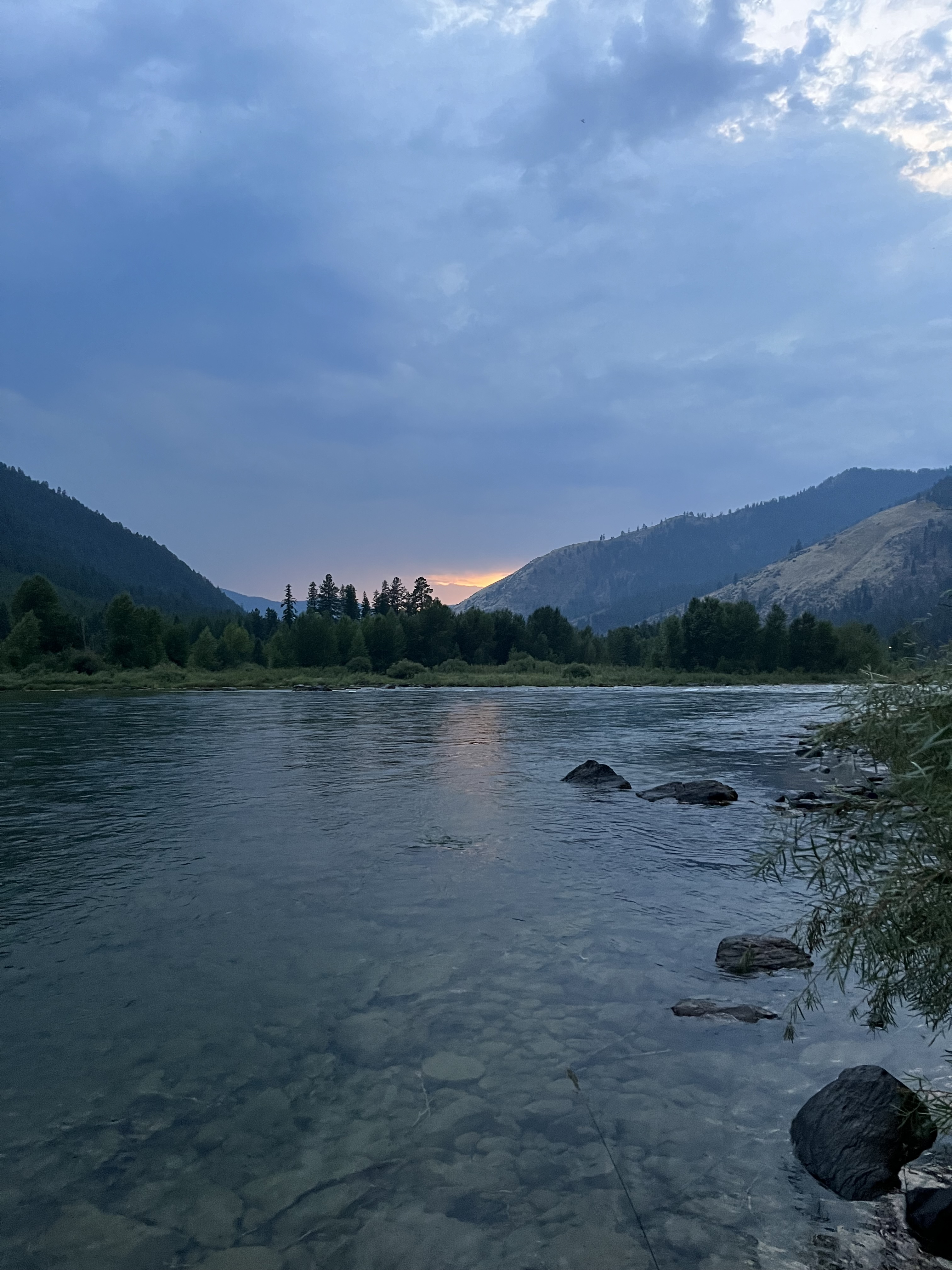
You’re kidding, right? We stayed in a private cabin on the banks — really, as this is the view just a few feet from the back porch — of the Kootenay River in northwestern Montana, a ‘way up near Canada. That far north, and at the western edge of the Mountain Time Zone, it gets dark late. This photo was taken at 9:24PM!
~
Before I left, I finished a piece for Surfcaster’s Journal on fishing small flies for striped bass. This will be essential reading for anyone who’s interested in fishing a three-fly team in marshes with small bait-imitating flies, or sight fishing with smaller patterns on beach fronts or flats. I’ll let you know when it comes out.
~
I just received the first pass on rendered maps for the Farmington River book, and I think they look great! My goal was to have a graphically simple, eye-to-brain-friendly design for you, dear reader, and the artist hit it out of the park. There’s a large overview map, and then five detail maps that focus on the 22-mile stretch from Hogback to Farmington.
~
On the home front, the Farmington is running at a fantastic, cool, trout-friendly summer level, reminiscent of yesteryear when the MDC wasn’t toying with the flows. Tricos are the big little hatch right now, which horrifies night owls like me. Get on it, early birds, while you can.
~
Finally, I have some availability the rest of this month and through September for guide trips/lessons. If you’ve been hemming and hawing about getting out with me, this is best time to do it for the rest of the year. I used guides on my trip out west, and even I learned a ton — I’m a better angler than before I left. You know where to find me.
Although I’ve been fishing for over five decades, I didn’t start keeping a fishing log until the summer of 2004. At this point in my life, I was seriously devoted to fly fishing. Being an autodidact, I reckoned that I’d learn more, quicker, and retain more if I could journal and reference my outings. I wasn’t wrong.
Since then, I have logged every fishing trip and every lesson I’ve given. I’ve filled six 192-page books with all kinds of data: place, time, date, water and air conditions, and then a journal-style description of the outing: what worked, what didn’t, what I think I could have done better, etc. What were the hatches/bait, and how strong were they? How were other people doing? What did I do well?
My O.G. log entry about a Farmington River outing with old pal Paul Kingsford. I didn’t even know some of the proper names of the pools; that’s Hawes, aka Bikini Rock, that I called “the big rock boulders/cliffs.” I haven’t changed the format all that much in the last 20+ years.
About 10 years ago, when life seemed to get exponentially busier, I got into a good/bad habit: voice recording my outings, then transcribing them into the journal. It was good because I didn’t have to write it all down immediately; the recording was made minutes after getting off the water, so everything was fresh in my memory. Later, during transcription, I might remember additional details. The bad habit part began when I would get lazy and not fill the pages with reports for weeks. I beg to report that my sloth has gotten so profound that I am now two years — you read that right — behind on my transcriptions. I’ll be getting to that shortly after I post this.
Some of you may wonder why, with today’s e-tech, I even bother handwriting it. Fair point. But I’m an analog guy at heart, and there’s something about my own script that adds humanity to what would otherwise be a cold, antiseptic printed document. Besides, I like my leather-bound hardcover books.
These books are more than a nostalgic preservation of memories. They’re a detailed roadmap to success. I can watch my progression as a fly fisher. I can observe how my best practices evolve. Not everyone’s a writer, but my journals were an invaluable resource when I was writing my Farmington River book. And these journals serve as a bittersweet reminder of what we’ve lost: the epic blitzes on Block Island, the prodigious power of the W/S Caddis hatch, the 50 smallmouth nights on the Housatonic. I still have it all at my fingertips.
I like to say during a lesson or a presentation that I’m not right. But I’ll stand by this statement: if you want to become a better angler — and catch more fish — you should be keeping a log.
For the last three years, I’ve driven out to Ohio in December to pick up Number Two Son Cam from school for winter break. Oh! That’s right. There are steelhead creeks out that way. So let’s fish a couple days before we make the trek home to Connecticut.
It was somewhat miraculous that we even got to fish this year. After months of relentless drought, Steelhead Alley got bombed by lake effect snow in mid November. Then, it rained and the snow melted. Creeks were impossibly up and the color of chocolate milk. By the second weekend in December, there was a short window that we lucked into.
The price of admission was bitter cold and slush-filled, shelf ice-choked creeks. These are the times that try men’s souls (or at least those men who steelhead). Still, I’ll take time on the water in adverse conditions over not going at all — especially since Cam’s a senior.
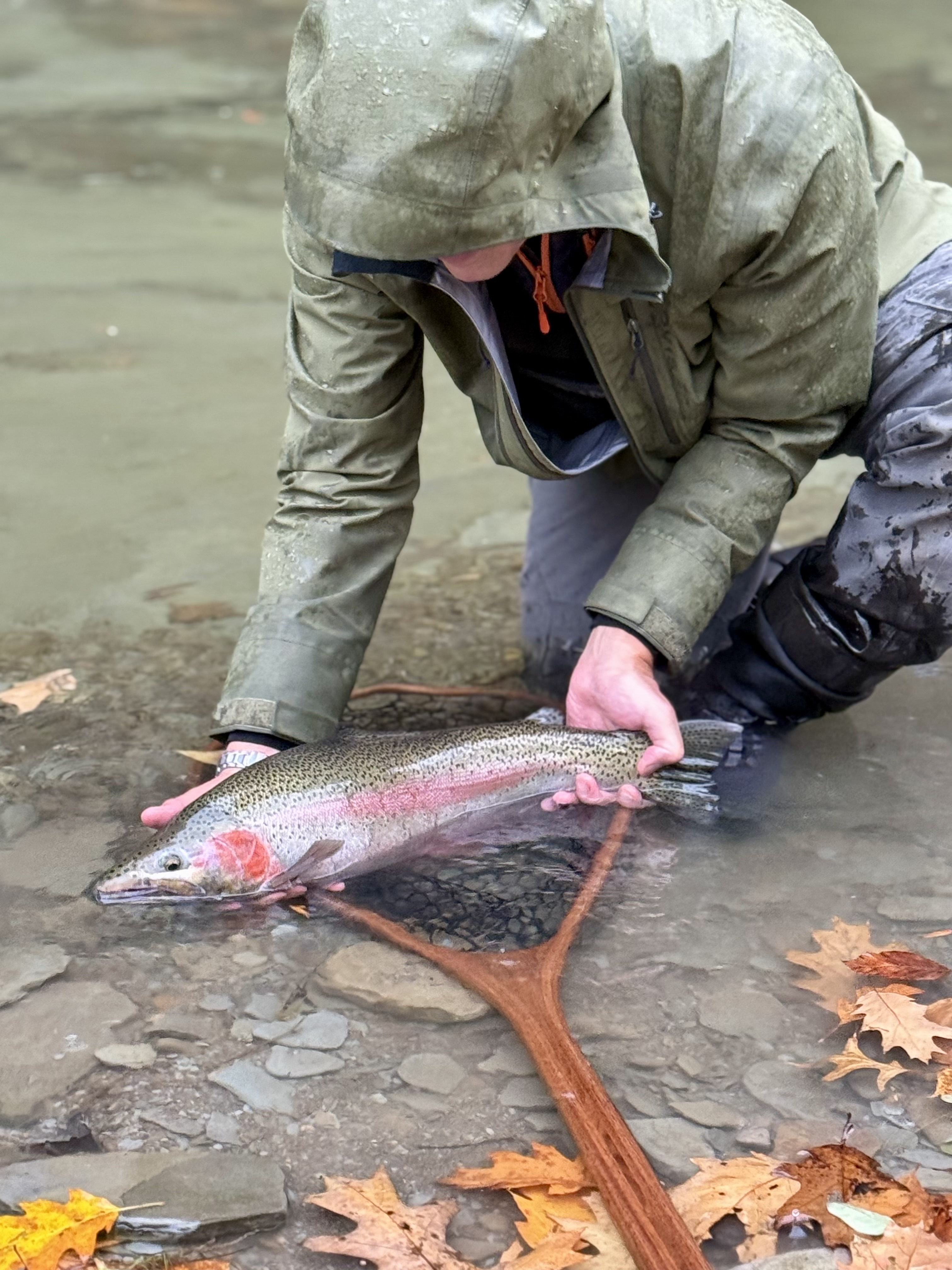
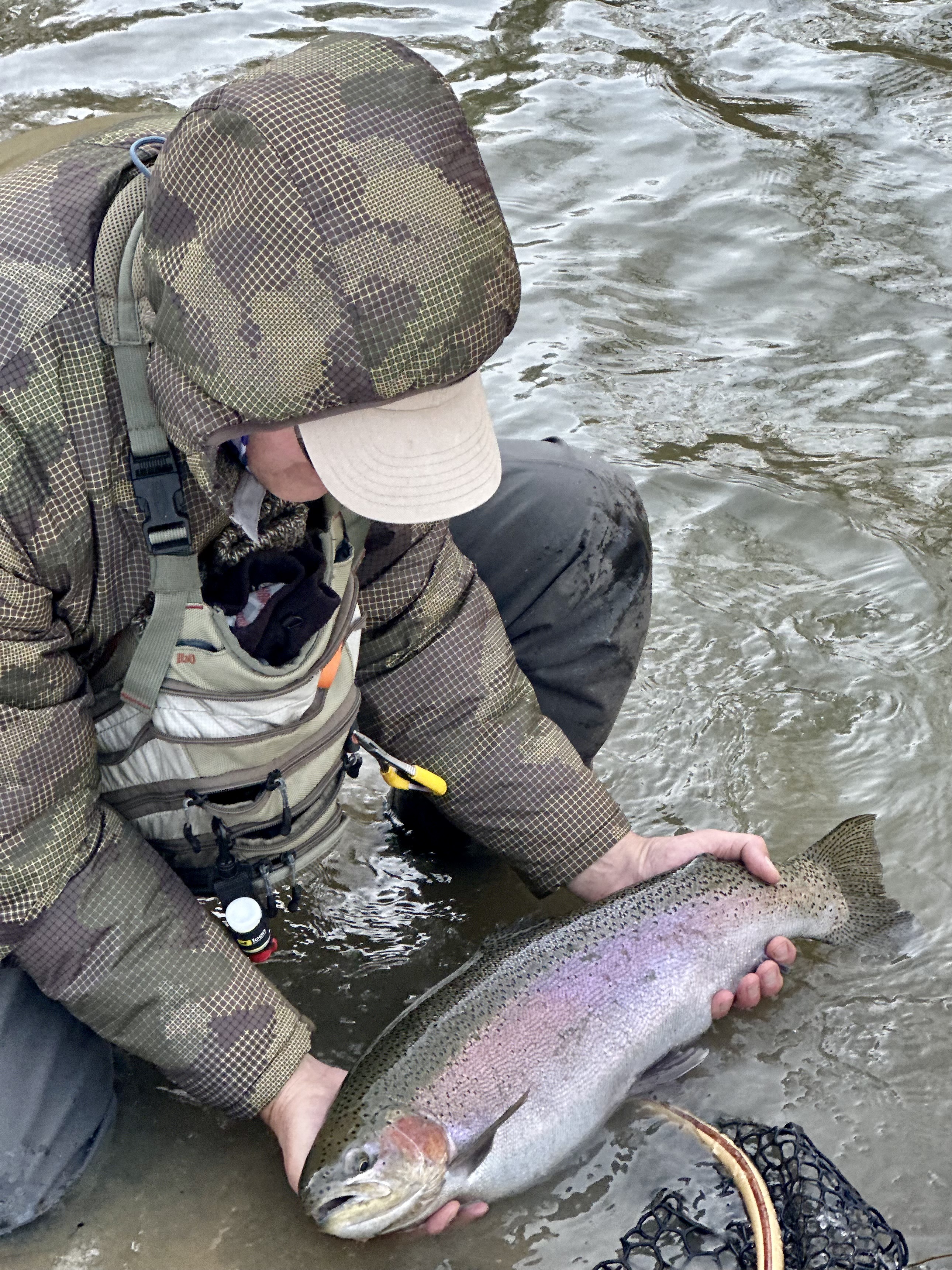
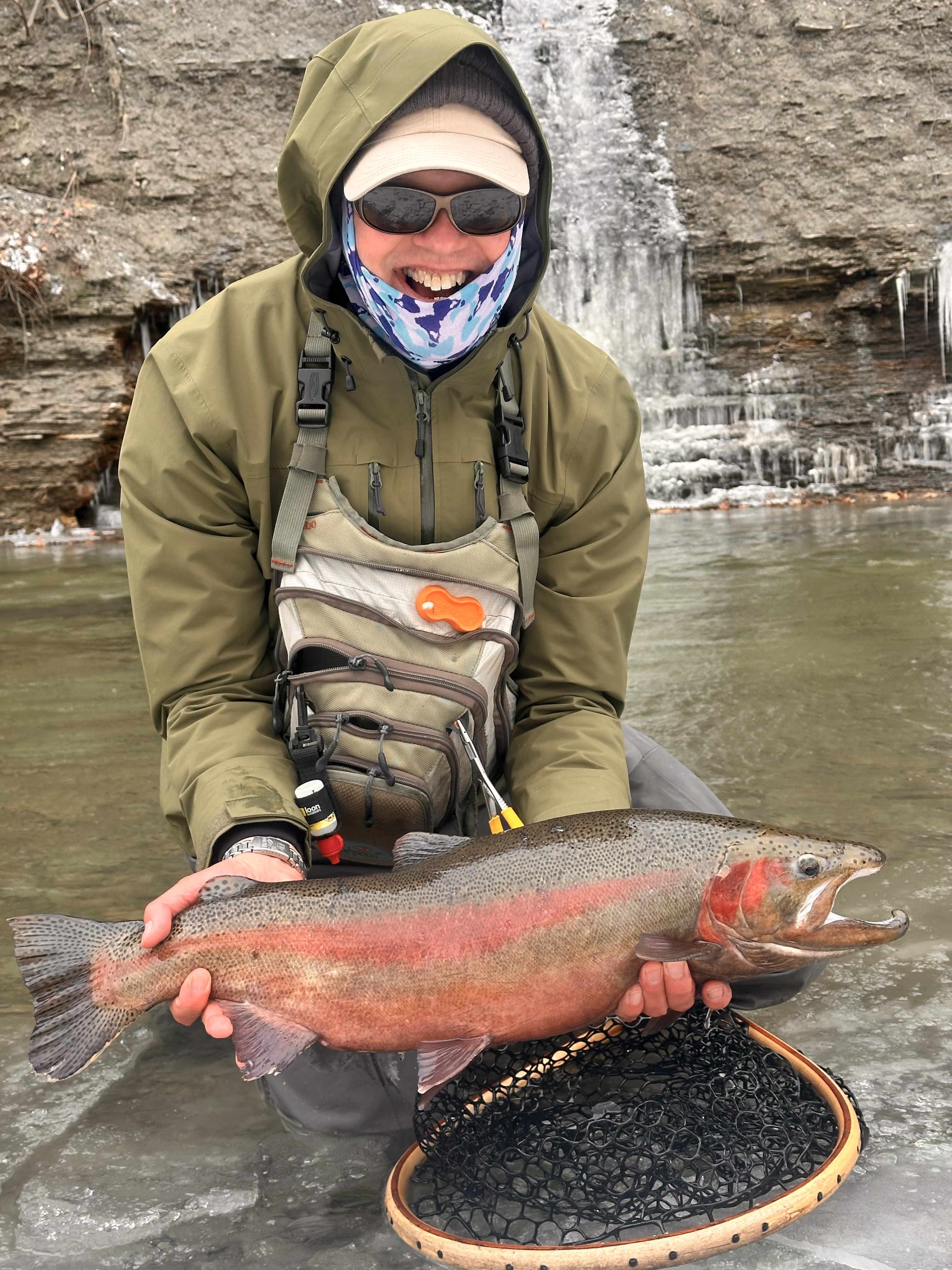
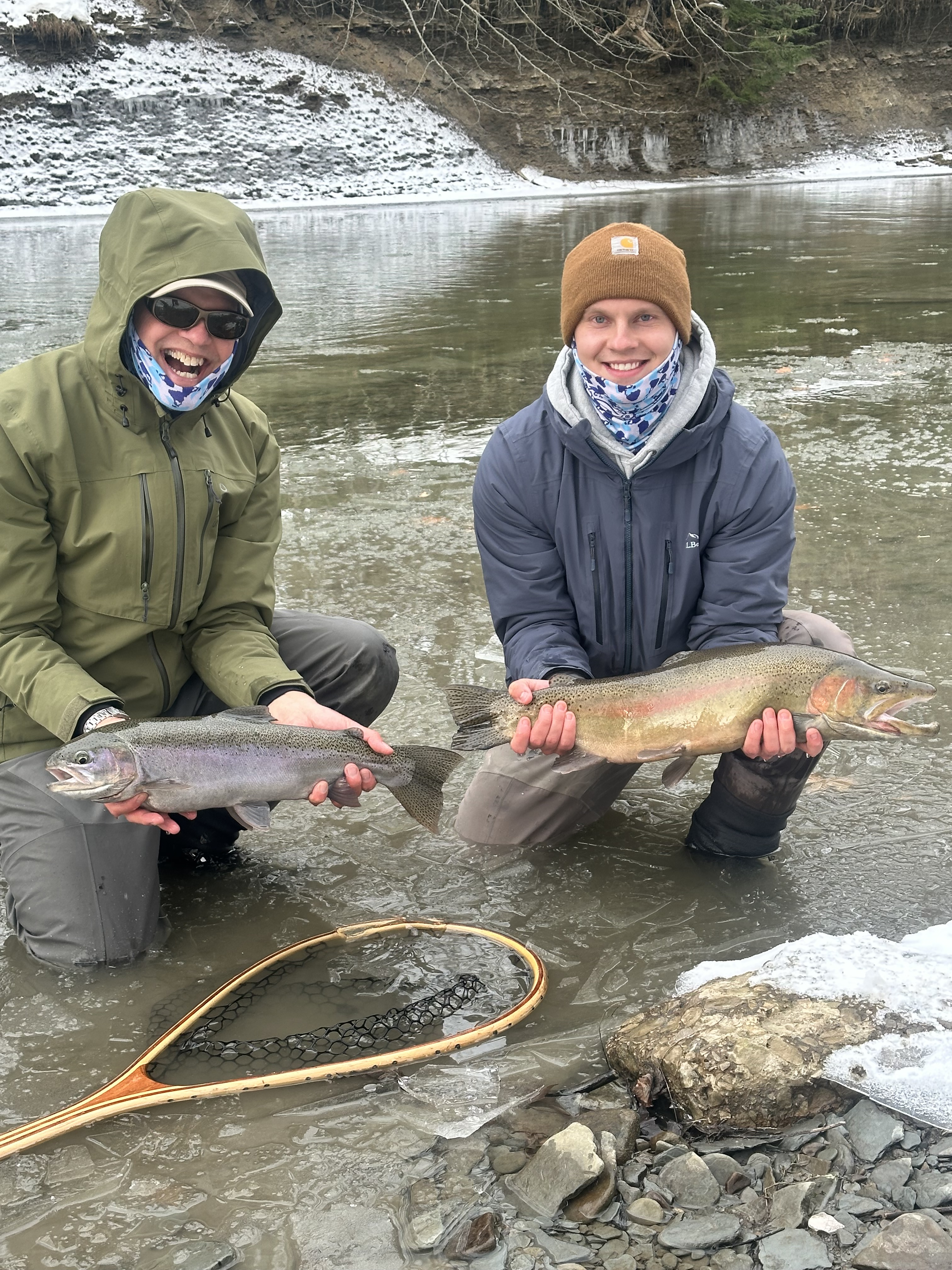
Saturday morning was the third coldest temperature I’ve ever fished in. We slept in and went to a diner for a proper, civilized breakfast and coffee. We hiked through snow down to the river at 10am. Fishing was difficult due to slush conditions; you can’t catch steelhead if your fly isn’t getting down to them. Even though there had been some recent higher flows, the numbers weren’t up to the level we’re used to. What was there was in very cold temperature mode; getting them to eat was a matter of persistence, precision, and plain old fine fortune.A chunky, pre-spawn hen, just beginning to color up. At the first mark, it took me hundreds of casts to get two fish to eat. I was targeting a pod made up of several fresher hens and a fish we dubbed “Old Blackie,” a very dark horse buck who was not the slightest bit interested in eating while he guarded his harem. At a second spot downstream, I fouled six fish; they simply would not eat. Finally, after pecking away, we found a hole that held a good number of steelhead that did not have lockjaw. The fish pictured here came from that group. Despite the non-optimal conditions, I had myself a day: sixteen steelhead fair hooked and in the hoop. I was so excited, I almost had a third cigar.Cam had a tough go on the first day, mostly because he doesn’t really fly fish, and the conditions demanded flawless presentations. By the second day, he was nailing it, and tripled the number of fish he put in the hoop. This is from day one. Pro tip: apples are a great way to get some quality calories and a wee bit of hydration. I carry several in my pack on every steelhead trip. Sunday presented an entirely different form of winter fishing misery: temperatures just above freezing and rain. We thought the fishing would be better. It wasn’t. The steelhead had lockjaw like I’ve never seen. The creeks remained slushy and ice shelf challenged, and that certainly didn’t help. This guy would not eat, would not eat, would not eat, and then on one drift he did. No backing sighted, but he took me for a good hike along the creek bank, out of the pool, down a long, shallow shelf, down a riffle, then into another pool. Fantastic color, impressive shoulders, and a worthy opponent. And yes, it’s as cold as it looks.We could see the fish, but when they’re not eating that can prove to be highly frustrating. Late morning, the bite suddenly turned on. After hours of lethargy, we actually witnessed a fish move to take my fly. Instead of repeated rejection, we had the jollity of our only double of the trip. But what we thought was the start of better fishing was merely a short bite window that snapped shut with cruel finality. The rest of the day was grind for every fish. My last steelhead of 2024 was a good one, though. We returned to the scene of our first stop on Saturday. Old Blackie’s harem was now one. Expecting only to maybe, possibly, hopefully getting the hen to eat, my first cast was, instead, stomped on by none other than Old Blackie. Poor guy was worse for the wear during his extensive time in the system: missing one eye, and he had foul hook scars all over his back. We removed a couple hooks from his flank and fins, then sent him back to make the next generation of Erie steelhead this spring. A shout out to our guide extraordinaire, Bob Packey of Solitude Steelhead Guide Service. Well done!
I don’t usually make posts like this. But if people want to know what to get you for the holidays, and you’re struggling with gift ideas, here are two suggestions.
Book a guide trip with me for 2025. There’s no real gift certificate, but there is the promise that we’ll go out fishing for four hours next year. Your gift giver pays now, but it’s at my 2024 rate (rates usually go up every few years). I build a 20% gratuity into the price, so all you have to do is show up with your gear on a mutually-agreed-upon date and time and we have at it. If you’re interested in wet flies, we’re looking at a May-Juneish window. Because of the book writing process, I will be limiting my guide trips in 2025, so this is a great way to lock in. Easy-squeezy…
Insert your likeness here.
Take a “Classes With The Experts” with me at the Fly Marlborough Fishing Show. With this, you get almost instant gratification. Two choices: Saturday, January 18, 2pm-4:30pm, Tying and Fishing Wet Flies with Steve Culton: Watch Steve tie classic North Country spiders, winged, and wingless wet flies that trout can’t resist, and learn how to rig and fish them. The course also covers basics like leader construction, matching the hatch, fly selection, where to fish wet flies, and how to fish them. All levels.
Or, Sunday, January 19, 8:30am-11am, Beyond Cast & Strip – Presentation Flies for Stripers with Steve Culton: Learn how to tie (Steve will demo) presentation flies – traditional New England-style flies that create the illusion of life even when at rest – and how and where to present them. All Levels.
For the Fly Fishing Show classes, you cannot register and pre-pay through me. You do that on the Fly Fishing Show Site, which is here.
I’m hoping to be offering the same for Edison on January 24-26, but that schedule has not been released. Stay tuned for my full Marlborough and Edison schedules.
The 2024 International Fly Tying Symposium has come and gone, leaving in its wake many fond memories, new tying swag, and new acquaintances made. The event runs from Saturday to Sunday; Saturday is typically the busy day, with crowds dwindling by Sunday afternoon (it’s hard to compete with the NFL). If you’ve never been, you should, because it’s a tremendous opportunity to watch some of the best tyers in the world in action. You can meet them, watch them, talk to them, ask questions — I do all of that when I take a break and walk the room. There are private classes where you can receive personalized instruction. There are seminars that are included in the price of your ticket. And four times a day, featured fly tyers who tie and present to a small audience.
On Saturday night there’s a banquet, and everyone who attends gets a goody bag of fly tying swag. Thread, tools, materials…it’s all good stuff. Post-dinner, I hosted a little wine party attended by several luminaries in the fly tying world. Properly hydrated, Sunday went off without a hitch. Here’s some of the weekend in photos. Check out my Instagram @stevecultonflyfishing for more, soon.
The first thing I did Saturday morning was put on my fanboy hat and go meet Jeff Blood. Jeff’s the originator of the Blood Dot Egg, my favorite steelhead egg pattern. Jeff was warm and welcoming and it was invaluable to be able to discuss steelheading and Lake Erie trib fly fishing with him. Jeff gave me some braid we use to tie the White Death Zonker, another favorite pattern of his. Later, I returned to my tying station to find two dozen Blood Dots and another package of White Death braid on my chair. Wow! Thank you, Jeff! I’ve also wanted to meet Son Tao since I read about his Caddis Emerger pattern in Pat Dorsey’s book Favorite Flies for Colorado. I shared a table with Bob Lindquist, Delaware River guide extraordinaire (and contributing photographer for my upcoming Farmington River book). Son was one table down the aisle, so it was easy to chat. He is one heckuva skilled tier. Also a shout out to David White who sat at the table next to me. Great to meet you!Not too shabby company! I was so honored to be included in this roster. This was my first time as Featured Tier in the Symposium, and my session was very well attended. If you were in the group, thank you for participating. Thank you also to everyone who stopped by my table to watch and ask questions and talk fly fishing. Tying LaFontaine’s Diving Caddis. Thanks, Phil, for the wonderful photos. It’s hard to believe that I’d never met Bob Clouser before this weekend. Bob was FFT just before me, so that seemed like a natural time to say hello. Whether you’re a presenter like me, a vendor, or an attendee, Bob’s kind nature is typical of the overwhelmingly positive energy you’ll get from everyone at the show. You’re with your tribe. People want to talk to you. So…you’re coming next year. Right? Or to the Marlborough and Edison Fly Fishing Shows in January. Right?
Last week, I reached my first manuscript milestone, which included 50% of the text, maps, and a couple dozen photos with captions. Off it went to the publisher, and here I sit with a satisfied smile on my face. So, this seems like a good time to give you a detailed update on the work.
Let’s start here: I’m really excited about what I’ve written so far. I don’t do anything halfway, so it’s particularly gratifying to be able to work on a project that I’m so passionate about. I think I’ve found a nice balance between dispensing facts, being conversational, and mixing in both anecdotes and even a little humor.
In terms of content, the template of Fly Fishing Guide to the Farmington River will generally reflect the other books in the Stackpole line of “Fly Fishing Guide To…” books. In my book, you’ll get a little history of the river; general information about the trout that live there; maps of the STMA that point out pools and major parking areas; descriptions of the major pools and the river in general; and outlines of the most productive fishing methods.
After reading the book, you’ll know that tying a big Isonychia soft hackle on point in August and swinging it through snotty pocket water is a very good idea.
But the truly useful part of the book will be the sections on hatches, seasonal conditions, and fly patterns. My goal for the work is that you’ll be able to read it and have a pretty good idea of where you should fish on December 2, with which method, and what flies to tie on. The book will feature over a dozen local patterns that are proven producers.
Even if you think you know the river, I guarantee there will be lots of information that will be new and useful to you. I’ve been fishing this river since the 1970s, I’m writing the damn thing — and I cannot tell you how much I’ve learned while writing this book.
A book like this cannot be written by one person without the help from others. I’ve been fortunate enough to be able to get input from guides and local experts; their knowledge, experience, and wisdom has been invaluable. My final deadline is June 1, 2025. My hope is that next year at this time, we’ll have a book ready for you to read!
Thank you so much for continuing to follow currentseams during this busy time. I’ll try to get you caught up a bit this month on other happenings. Up next, in this order: the IFTS redux, western PA steelhead, and SR steelhead reports. Also, the Fly Fishing Show in January. I’ll be at Marlborough and Edison.
“Matching The Hatch With Wet Flies.” That’s the title of my Featured Tier demo this Sunday at 11:45am at the International Fly Tying Symposium in Somerset, NJ. As I prepare for the demo, I had a few thoughts I wanted to share.
When you’re fishing wet flies, matching the hatch doesn’t matter — until it does. And then, you’d best be prepared. What I mean is, there will be times when fish will eat a wet fly simply because it looks alive and like something good to eat. The bug that wet fly is supposed to represent may not be hatching at that moment. It may be entirely out of season. It may be the wrong color or size. But nonetheless, it gets stomped.
However, the more you fish with a team of three wet flies, the more you will encounter situations where the trout will only have what’s hatching, presented in the water column exactly where they are feeding on the naturals. They may pick out one fly on the three fly team to the ruthless exclusion of the other flies. That’s when matching the hatch pays dividends. You’ll be the person leaving the pool, trailed by other anglers who will want to know, “What fly were you using?”
So: know your hatch windows. Understand what food is most likely to be in the water. Understand how those bugs behave. Specific patterns aren’t as important as matching size, color, and profile. Give the trout a choice. They will always tell you when you get it right.
See you this weekend!
LaFontaine’s Diving Caddis is a good choice for a late afternoon-into evening pattern — because that’s when the trout are most likely to be seeing egg-laying female caddisflies. One memorable evening, I landed two dozen trout in two hours — sixteen on the Diving Caddis.
I got this question when I spoke earlier this month the EJTU meeting. It’s a good one. I’d just shown the group a video of trout taking sulphur emergers. The rises were regularly timed and showy/splashy. You could also see the bugs in the air.
The question was: When you get to the river and you see a scene like that, do you automatically go to a a dry/dropper? A: No. I will start with a wet fly team of three, and two of them will likely be sulphur patterns. There’s a lot to unpack here in terms of that decision. In this particular video, it was late afternoon in June. The rise forms clearly said the fish were on emergers. The time of year, time of day, rise forms, and visible bugs (sulphurs, whose nymphs are in the drift a good long time before emergence) indicated that the trout were taking their food just below the surface. A dry/dropper might get you some takes, but why not feed the fish like they’re already eating? Which is, subsurface, just below the film. A wet fly team of three fits that bill perfectly.
A splashy, emerger rise form (upper left) still taken from the video. You can also confirm that the trout are taking the emerger by the lack of duns on the surface. This doesn’t mean you can’t catch fish on the surface. It just means the dry fly may not be the most efficient method.
Note that a dry-dropper may be a better method for presenting just under the surface with different hatches. A midge pupa in winter would be a good example of that.