Tonight I presented my “Wet Flies 101” program to the Farmington River Anglers’ Association. Good crowd, plenty of familiar faces, and many engaging questions. I hope everyone who attended had as much fun as I did. Thanks again.

Tonight I presented my “Wet Flies 101” program to the Farmington River Anglers’ Association. Good crowd, plenty of familiar faces, and many engaging questions. I hope everyone who attended had as much fun as I did. Thanks again.
One of the more rewarding aspects of being a part of the fishing-industrial complex is sharing experiences and information face-to-face with fellow flyfishers. I’m a national-level speaker who loves teaching, and that positive energy comes across in my highly entertaining and interactive presentations. I also do an audience Q&A session after each seminar. Some clubs like to invite their speaker out to dinner; I try to accommodate those requests whenever possible. Rates vary according to travel time and expenses. And of course, Zoom presentations are the perfect way for us to gather across the miles and time zones. To book an appearance, or for more information, please email me at swculton at yahoo.com, or call 860-918-0228. For references and testimonials, please see the comments section below.
CURRENT PRESENTATIONS
WET FLIES 2.0 (Updated Winter 2021)

Wet Flies 2.0 takes a deeper dive into wet flies and wet fly fishing. Starting with the essential wet fly tackle and toolbox, Wet Flies 2.0 explores topics like matching hatches with wet flies (from caddis to mayflies to midges to stoneflies to terrestrials); searching tactics with wet flies; presentation and rigging options to match conditions and situations; fishing wet flies as nymphs or dry flies; wet flies on small streams; and much more! If your group has not yet seen Wet Flies 101, I strongly recommend you start with that introductory presentation.
~
WET FLIES 101

As the title suggests, Wet Flies 101 is my introductory presentation on wet fly fishing. Wet flies have been taking trout for centuries — and the fish aren’t getting any smarter. More and more anglers are discovering that a wet fly is often the best way to match a hatch. Explore the wonders of the wet fly as we cover basics like wet fly types, leader construction, where to fish wet flies, and how to fish them.
~
THE LITTLE THINGS 1.0

The Little Things is a series of some of my most popular presentations. There are currently three The Little Things, each one different and loaded with priceless information that will up your catch rate in fresh or saltwater. This is the original seminar. They say that 10% of the anglers catch 90% of the fish. If that’s true, it’s not because those 10% are supernaturally gifted angling demigods. It’s not because they are lucky. It’s because they do a lot of little things that other anglers don’t. As a guide, I have the opportunity to observe how people fish. I see their mistakes as well as their triumphs. When I’m fishing, I am constantly making adjustments and trying new approaches. That’s what The Little Things is all about – seemingly insignificant practices that can make a big difference in your fishing.
~
THE LITTLE THINGS 2.0

If you liked the original, you’re going to love the sequel. We’re all looking for an edge when it comes to catching more fish. It is my firm belief that the little things are largely responsible for the fabled 10% of the anglers who catch 90% of the fish. The Little Things 2.0 builds on the theme of seemingly insignificant things you can do make your time on the water more productive. As with all seminars in this series, the lessons apply to multiple species fly fishing in fresh or saltwater.
~
THE LITTLE THINGS 3.0

The Little Things 3.0: In this third installment, we cover more of the seemingly insignificant things that can have a huge impact on your catch rate. This is all new material, geared for both veteran and rookie fly anglers, covering fresh and saltwater, and popular species from trout to stripers to steelhead to smallmouth and more. Pay attention to the little things, and you may become one of the 10% who catches 90% of the fish.
~
TROUT FISHING FOR STRIPED BASS

Anyone can catch aggressive, willing-to-chase striped bass. But what about the stripers that are holding on station, feeding on a specific bait? What about the larger bass — those that are measured in pounds instead of inches — that are not willing to chase a stripped fly? Many of the answers can be found within traditional trout and salmon tactics. Trout Fishing For Striped Bass reveals that stripers behave very much like trout. By taking a more analytic approach to striper fishing, matching flies to bait, and harnessing the power of the floating line, anglers can present flies like the naturals the stripers are feeding on — and begin to catch the striped bass that everyone can’t.
~
THE WEST BRANCH OF THE FARMINGTON RIVER

Updated in Fall 2019 with new video, photos, and content. Those who live in or near southern New England are fortunate to be close to one of the finest trout streams on the east coast. The secret is out — this is blue ribbon trout water. There’s something for everyone on the Farmington: Classic dry fly pools. Mysterious pockets for nymphing. Spirited runs for swinging wets and deep holes for drifting streamers. A classic tailwater, the Farmington fishes well year round, and offers anglers an opportunity to catch stocked as well as holdover and stream-born wild trout.
~
THE EASTERN BROOK TROUT

The only trout that is native to most of the eastern U.S., the brook trout — technically a char — has inspired generations of anglers with its stunning colors, aggressive nature, and often lovely habitat. The Eastern Brook Trout gives an overview of the species, its habitat and habits, and then the basics of small stream wild brookie fishing — from tackle to presentations to where to find brook trout water. Eastern brook trout populations continue to decline, and the more you know about these precious jewels, the better an environmental steward you’ll be.
I’ll be the featured speaker at the Farmington River Anglers Association meeting, Wednesday, October 16, 7pm in Unionville, CT. My presentation will be Wet Fly 101, a basic overview of wet flies and wet fly fishing. Wet flies have been taking trout for centuries, and the fish haven’t gotten any smarter. If you can’t make the September Hammonasset presentation, hope to see you at this one. You can learn more about the FRAA at their website, fraa.org. As always, If you’re interested in having me speak at your club meetings, you can contact me through this site.
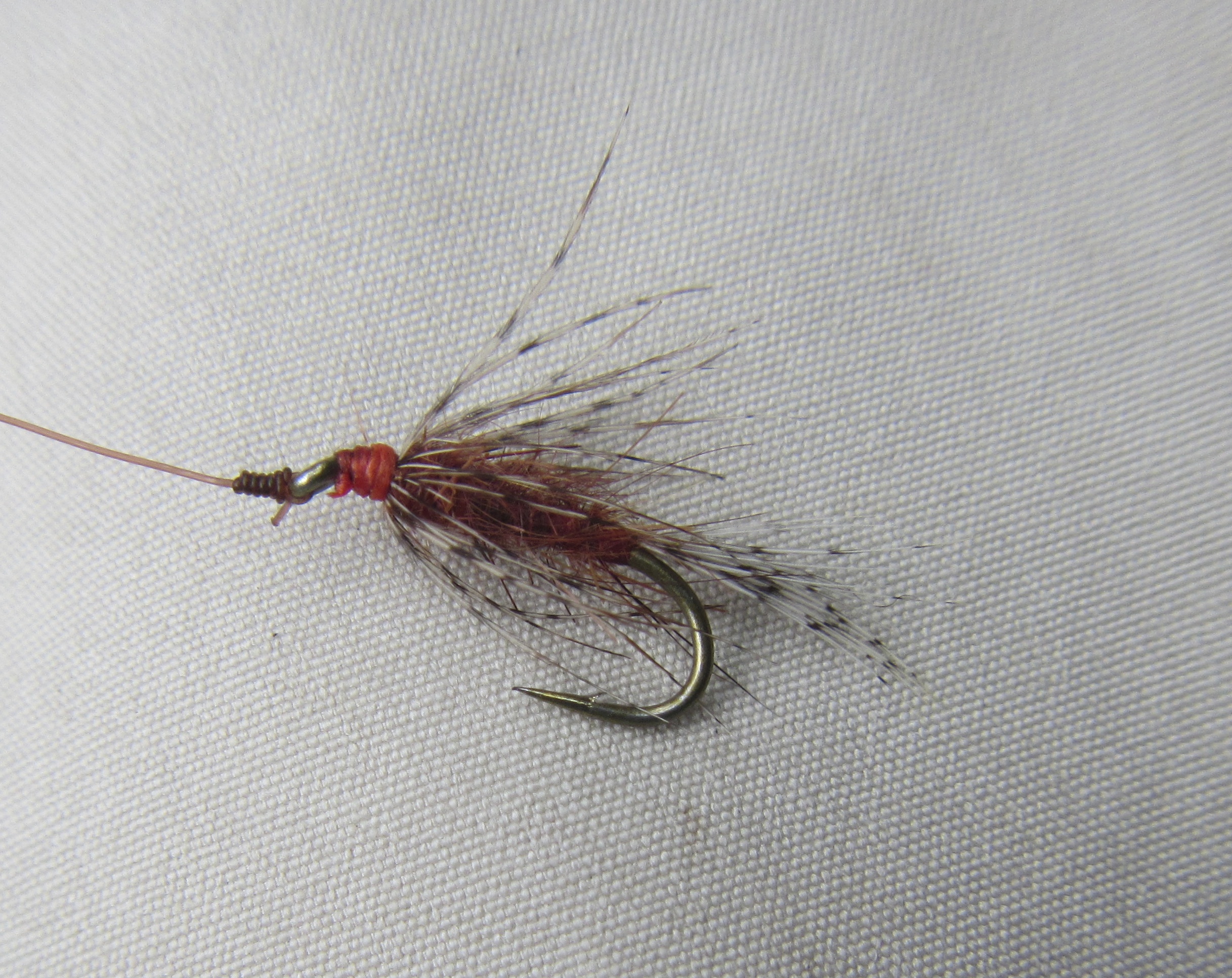
A Hackled March Brown
And a big Farmington brown who found it to her liking.

Those of us who love the Farmington River spoke out — and our voices were heard. UConn will be using the CT Water Company, rather than the MDC, to fulfill their future water needs.
The following is a quote from last Tuesday’s Hartford Courant: “The selection eliminates a controversial $51 million plan by the Metropolitan District Commission to build a 20-mile pipeline from East Hartford that would have drawn water from the Barkhamsted and Nepaug reservoirs. Opponents assailed the plan, saying it would draw down the watershed of the Farmington River, a popular recreation spot.”
Yeah, baby. That’s us. Opponents. Assailants. Righteous defenders of natural resources. Thanks to everyone who spoke up, signed the petition, wrote letters, and sent emails.
Grassroots activism is so underrated.
Winner.

And, winner.
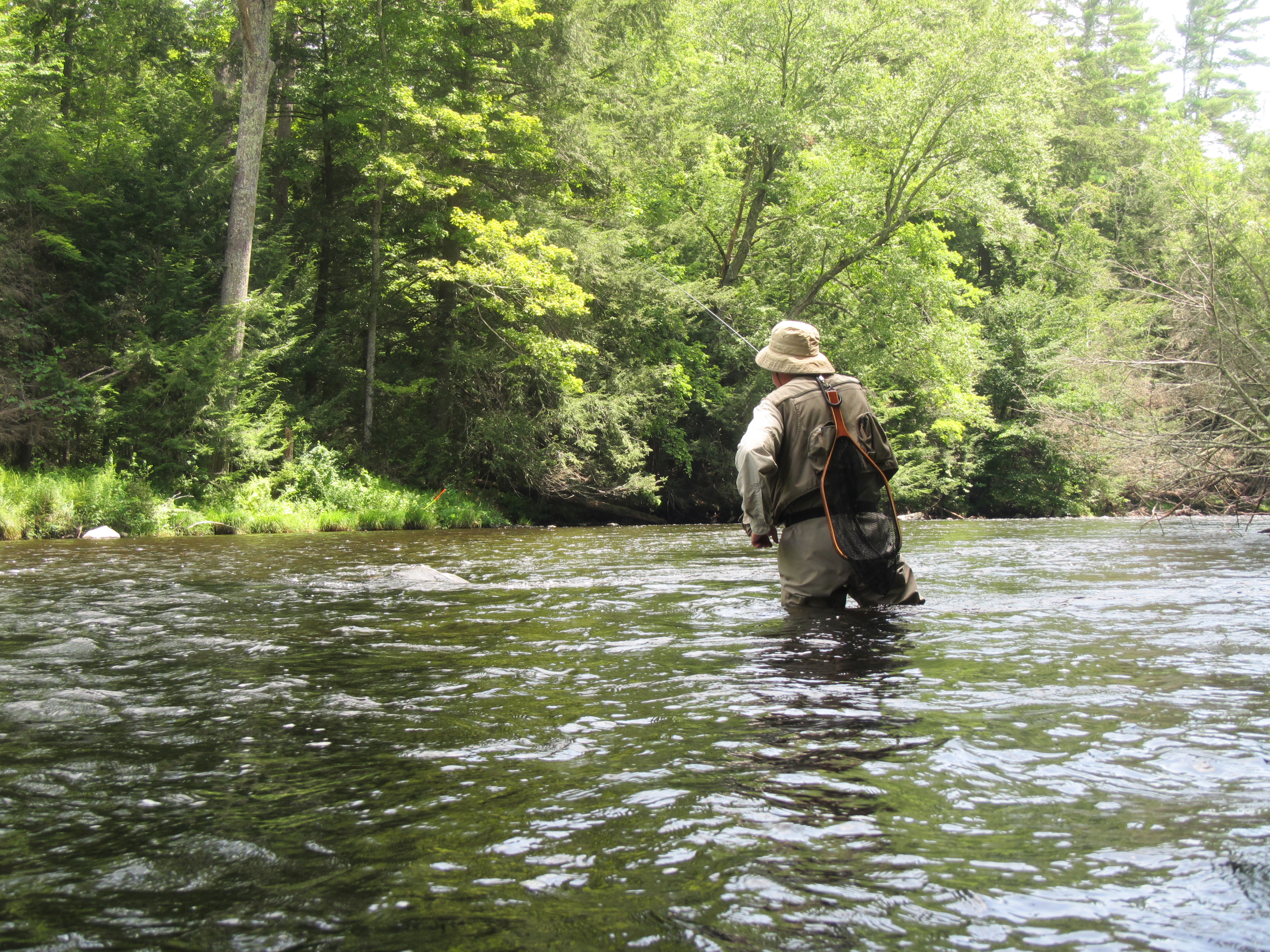
If you went fishing Friday on the Farmington, you won the weather lottery. Low humidity, temps in the low 80s, plenty of sunshine, and not a lot of other anglers(!) on the water. I guided Matt from noon into the early evening. We had a mixed bag of success, with a fish on our first couple casts, then a long time with nuthin’. It wasn’t for lack of effort. We bounced around the river, and Matt fished his wets well from top to bottom. Very little bug activity, with water temps in the mid-60s. In the last run we fished, success! This chubby rainbow was the best of the bunch.
This is what a steady diet of cheeseburgers and fries will do to your figure.
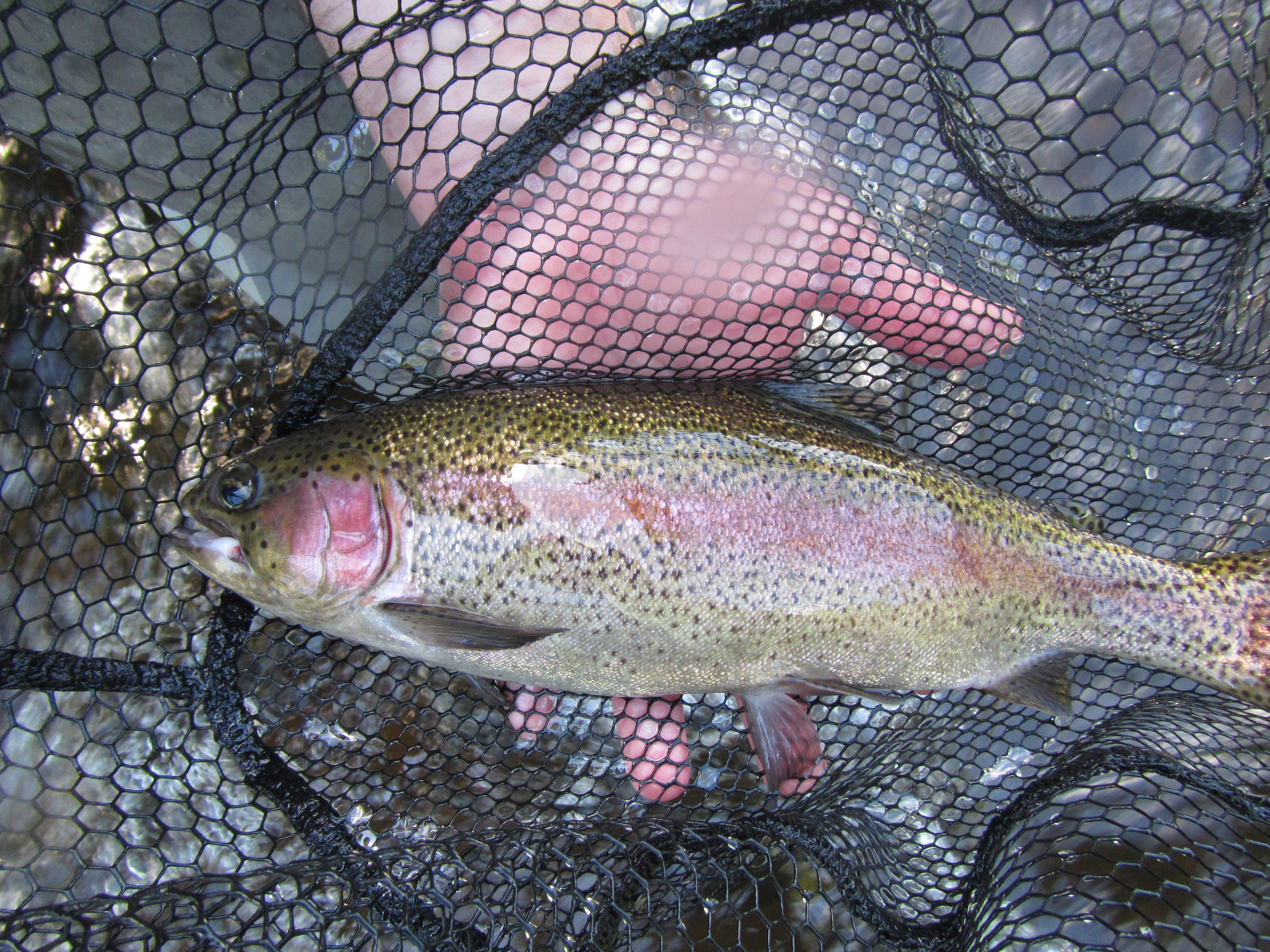
She took a Starling and Herl on the swing. What a terrific fight in the current, complete with aerials. Matt hand-stripped her in. Well done, Matt! I helped him celebrate by smoking the Punch Punch he had offered me.
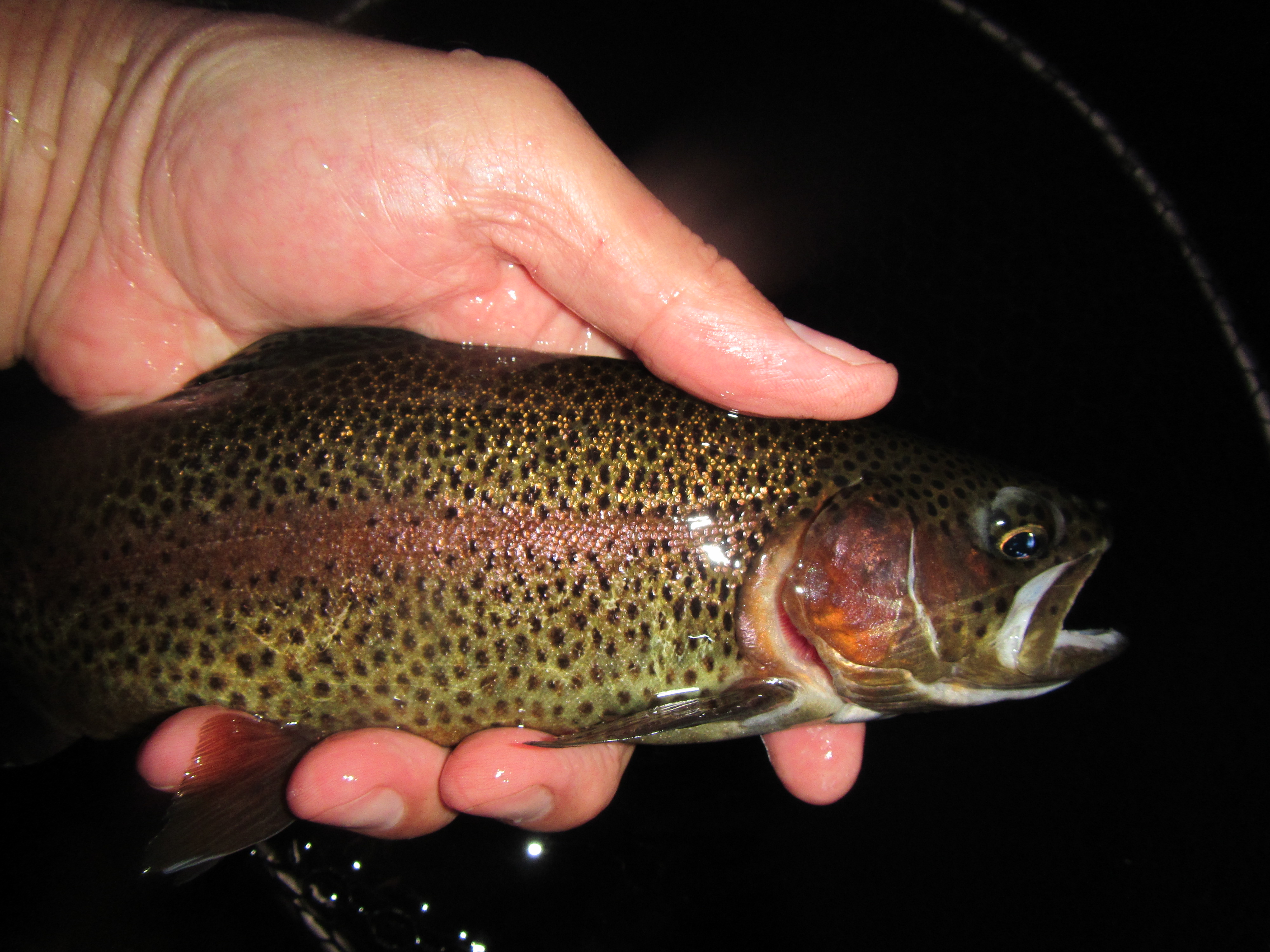
After Matt left, I fished solo for a half hour. I almost bagged it, as there were precious few bugs coming off. But a pod of fish gently sipping in the twilight talked me into it. Nothing on a size 22 Sulphur spinner. Switched over to a size 20 Pale Watery wingless wet that I fish dry and got two takers, one a brown and the other this dark matter rainbow.
I think this rainbow has been in the river a while. Besides its dramatic coloring, it did not want to come to net. Strong fish. Look at those pectoral fins. Profuse black spots, and then some.
OK, so I did have a cheeseburger on the way home. But I made up for it with oatmeal for breakfast this morning, and some interval training on the bike this afternoon.
There are 365 or so days every year when you can fish the Farmington. I manage, on a good year, to do it about 40 times. But of all those days, none is more important than July 21.
I’ve made a pilgrimage to the Farmington on that day for four consecutive years now. It’s not by accident. July 21 is the day the Summer Stenos come out. Whether they appear earlier or later isn’t important; the Stenonema have their schedule, and I have mine. There’s a certain place I go to greet them, and since it’s an evening hatch, a certain time I like to be there. Admittedly, I have an unhealthy relationship with Summer Stenos. At times I hold them in starry-eyed adoration. Others, I view them with extreme disgust and intolerance. No other hatch on the Farmington so charms me that I have the date burned into my mental calendar months in advance. No other hatch baffles me with its rise-to-hookup ratio that frequently exceeds 10:1 – even though I’ve found the perfect fly for fooling the trout.
On Sunday night I got my first three trout of the year on Summer Stenos. But first, there was some swinging to be done.
I hadn’t fished with Jon in almost two months, and for our reunion outing we agreed that wet flies and riffly pocket water were in order. At 630cfs the run was quite wadeable. Jon took the first fish, a smallmouth bass, but after 45 minutes all we had to show for our efforts was a couple of juvenile Atlantic salmon. While it’s nearly impossible to get down on the bite when you’re swinging wets with an old friend on a delightful sunny day in July, I suggested we move to another spot, upstream. I guaranteed Jon he’d catch a trout there.
Such predictions are a minefield. I had second thoughts about opening my big mouth from the time we piled into our vehicles until he took his first trout a half-hour later. I was still swinging wets, working below Jon, while he had switched over to short-line nymphing. Just as my three-fly team made the transition from swing to dangle, I felt a herky-jerky tug. The fish made two quick micro-runs, peeling a small amount of line off the reel. I thought nothing of it at the time, as the take came in the heaviest section of current. No need to get this fish on the reel.
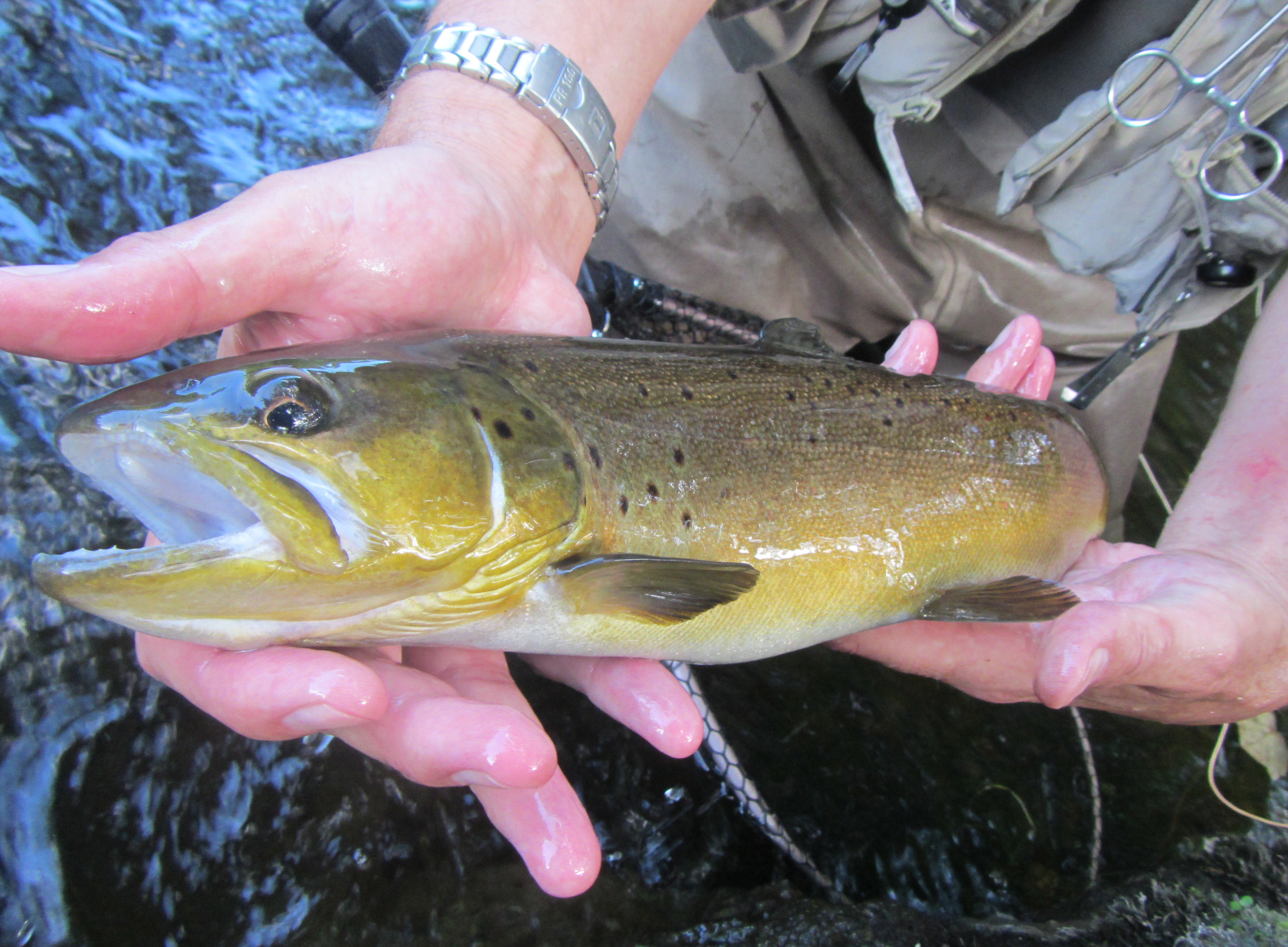
A big ol’ wild Farmington brown. These fish with a scarcity of spots are intriguing. Check out that tummy. Someone’s been eating well. He took a size 14 Drowned Ant soft-hackle.
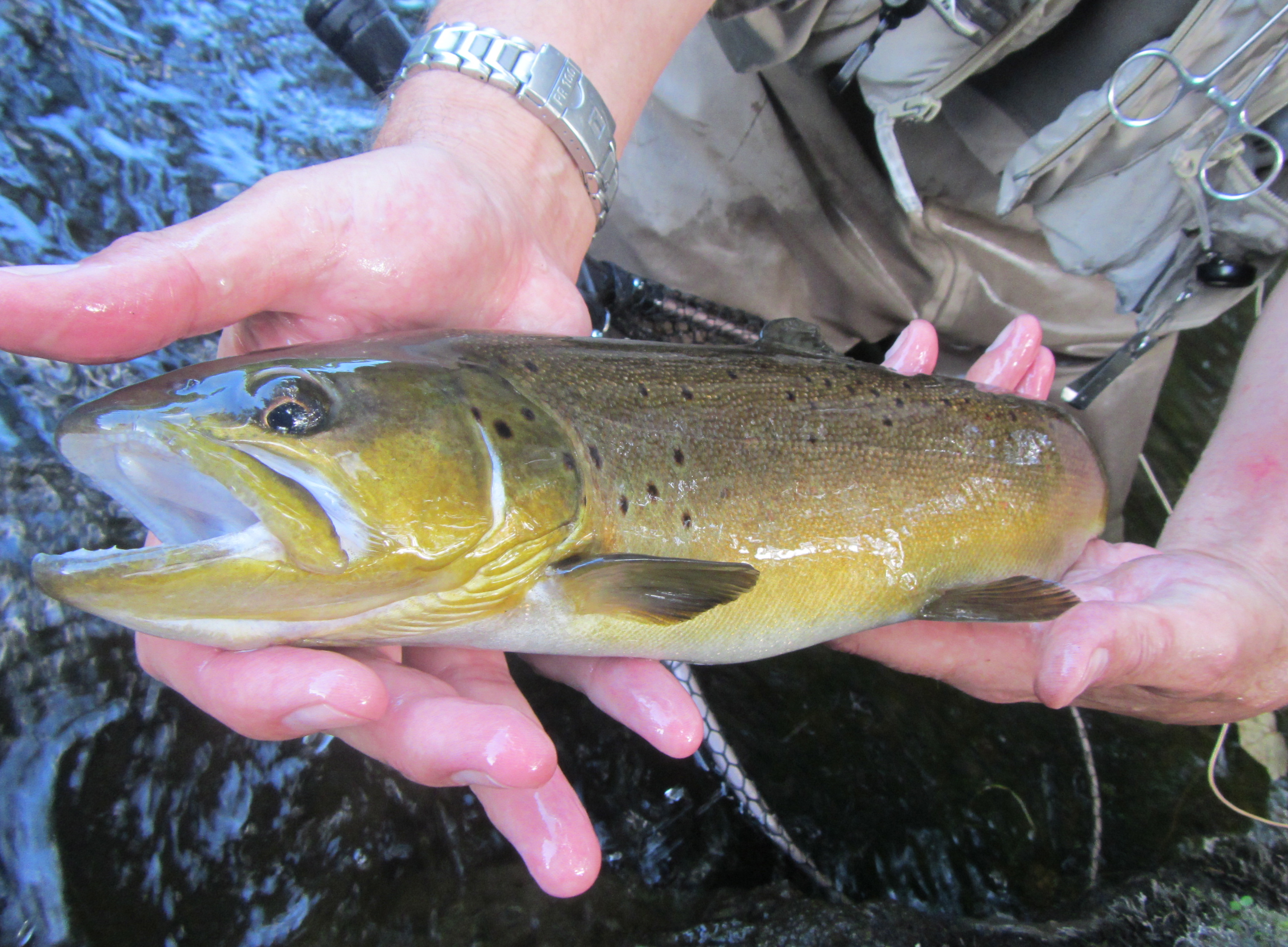
Each fight has the potential for comedy, drama, or tragedy – sometimes all three – but this one quickly declared itself a drama. The trout is usually a good one when you never see it during the encounter. Big fish have a way of hugging the bottom and using the current against you. By the time I had negotiated the trout into calmer waters, I could see that I had underestimated its size. A wild brown with an odd scarcity of spots and, despite his length, only the suggestion of the beginning of a kype.
How can you tell that you should buy a lottery ticket that day? You’re just standing in the water, savoring the moment, line dangling harmlessly beneath you, and you hook another trout. Moments later, a Cedar Waxwing lands on your rod as you hold it over the water like some conjurer’s wand. He waits there. Eyeballs you. Looks as if he’s about flee. Then stays long enough for you to call out to your friend to be your witness.
This rainbow looks like it’s been in the river a while. Jon took him short-line nymphing not too far from where he was standing.

But, lest you think we have forgotten about the Summer Stenos, rest assured. We have not.
Shortly before 7pm, we were wading into a pool where friend Todd was already fishing. Jon spotted a trout rising against the far bank. Since I was already rigged for dry, he suggested I have a go at it. As I began my false casting, Jon predicted that I would stick him on the first drift. I was thinking the same thing almost as he said the words. After all, it was a day where I could do no wrong. But, after my sixth cast, we agreed I had most expertly put the trout down. There’s nothing like fly fishing to keep a man grounded.
While the hatch hadn’t gained any steam, there were a few trout feeding sporadically on the edge of a pocket. The current seam they were rising in demanded a precision cast perilously close to an obstruction. Then a rapid series of mends to keep the fly from looking like it was on the Scrambler carnival ride. I saw a few size 18 creamy mayflies come off, and switched over to my Pale Watery wingless wet variant that I fish as a dry. With a twelve-foot leader that tapers down to 6x, the line hits the water well before the fly. I was beginning to mend even as the fly was slowly settling onto the surface.
I rose trout several times, but came away with nothing but air. Then, in a glassy plate of water three feet from the shore, I saw another active feeder. This trout obliged on the first cast. A fine Farmington brown, probably not stocked. My first Summer Steno trout of the year. July 21st. The universe is in balance. A half hour later, another beauty, lower in the pool, again on the first cast.
Time races when you’re dry fly fishing. Probably because you’re so keenly attuned to the rhythm of the rises, and the limited opportunities presented by a waning hatch. Evenings, there’s also the looming specter of darkness. Can’t see your fly, can’t dry fly fish. Or at least, not easily. Dusk was just crossing the no-man’s-land into night when I hooked my last trout. I had been repeatedly casting to a small riser – or so I thought. The splashy feeding tells were slight enough to suggest a juvenile salmon. But like that big brown, I underestimated the size of this brute, a well filled out rainbow that ignored several entreaties to come to net.
A good day on the river longs for a happy ending. So I am pleased to report that if you leave the Upper TMA, waders off, rod broken down, gear stored, by 9:20, you can make it to Five Guys in Farmington before their 10pm closing. With several minutes to spare.
I guided Yoram for a half-day today on the Farmington. Conditions were tough due to the rain. The upper TMA was 790cfs and the color of coffee ice cream. So we headed up to Riverton, where it was a more manageable 350cfs, with only a light stain. We fished streamers and the going was slow. Schizo weather with brilliant sunshine one moment and tropical downpours the next.
The last hour, we switched over to wet flies. That got us a few hits and an almost catch, but sadly we were well into overtime for our session. I saw a trout rise along the far bank, and told Yoram he had five casts to catch him. It wasn’t an easy cast to make, cross-river and just beyond the clutches of a fly-eating downed tree, then a quick mend to get a good drift. But Yoram nailed it the first three casts, and on that third cast the surface erupted. Yoram set the hook. And moments later we had a beautiful wild brown to net. He took the Drowned Ant soft-hackle on the top dropper. No picture, as Mr. Brown slipped away during his photo op. But I wanted to give props to Yoram for coming through in the clutch.
With the air temp in the upper 90s and a miserably high dew point, even standing in the brisk waters of the Farmington River offered little relief. Then the sun went below the tree line, and things were quite nice, thank you. I didn’t even need a jacket after dark, despite the cooling effects of some dense fog banks.
5:45pm found me wading a stretch of swift riffles, made all the more challenging by the MDC’s decision to bump the dam release up 125cfs. Along with the Still dump-in, that gave the upper TMA about 575cfs. I was swinging a team of three wets, and had several hits before landing a nice wild brookie.
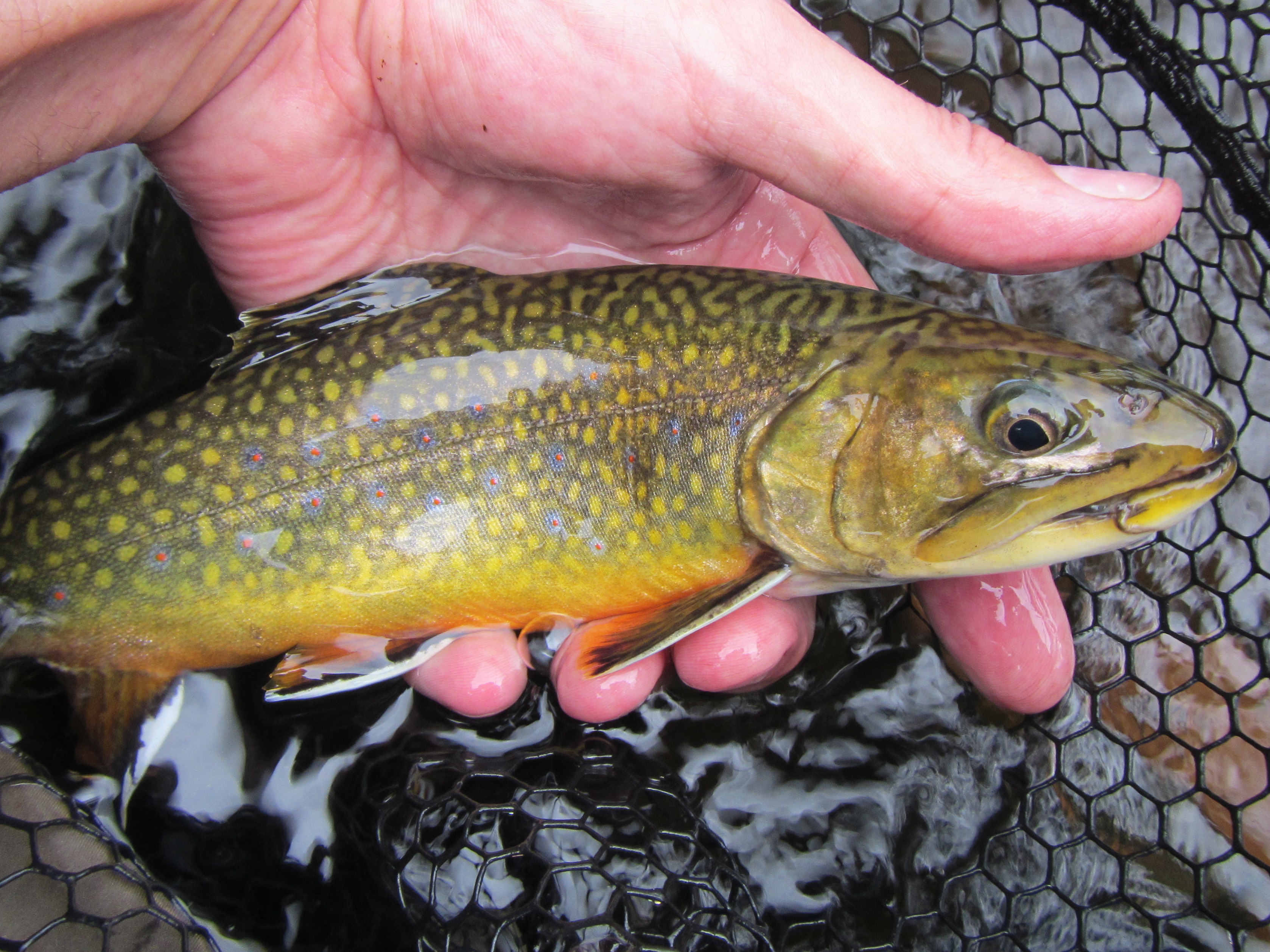
A wild Farmington River brook trout. He was feeding right where the main current met the slower water in the shallows. Got him on the dangle on a size 12 March Brown soft-hackle.

There were all kinds of birds working over the water, and sure enough there were caddis and sulphurs coming off. Since I had my heart set on some dry fly action, I closed up shop and headed to one of my favorite pools. Sadly, 575cfs is not an ideal height for this spot. Worse, nothing developed hatch-wise. I gave it a good long wait, but by 8:30 I decided to take a walk downriver and see if anything was happening there. I found some smutting trout in a glassy pool about 70 feet out, in water that I could only reach with a shorter cast-and-long-drift-presentation. I managed to fool one of them, a densely-spotted wild brown about 10″ long. Sorry, no pic. He give me the slip before I could shoot him.
Walked back up to my previous location at 9pm to see if it had begun. It had not. So I packed it in for some night streamer duty. I’ll make quick work of this: fished two long, deep pools. Not a bump. Not a lot of bugs out, either. Usually you can see thousands of spinners in your headlamp beam. Tonight, it was more like dozens.
McDonald’s is a poor substitute for Five Guys. But when you’re out close to the witching hour and your stomach’s been howling at the moon for two hours, you take what you can get.
Just like with fishing.
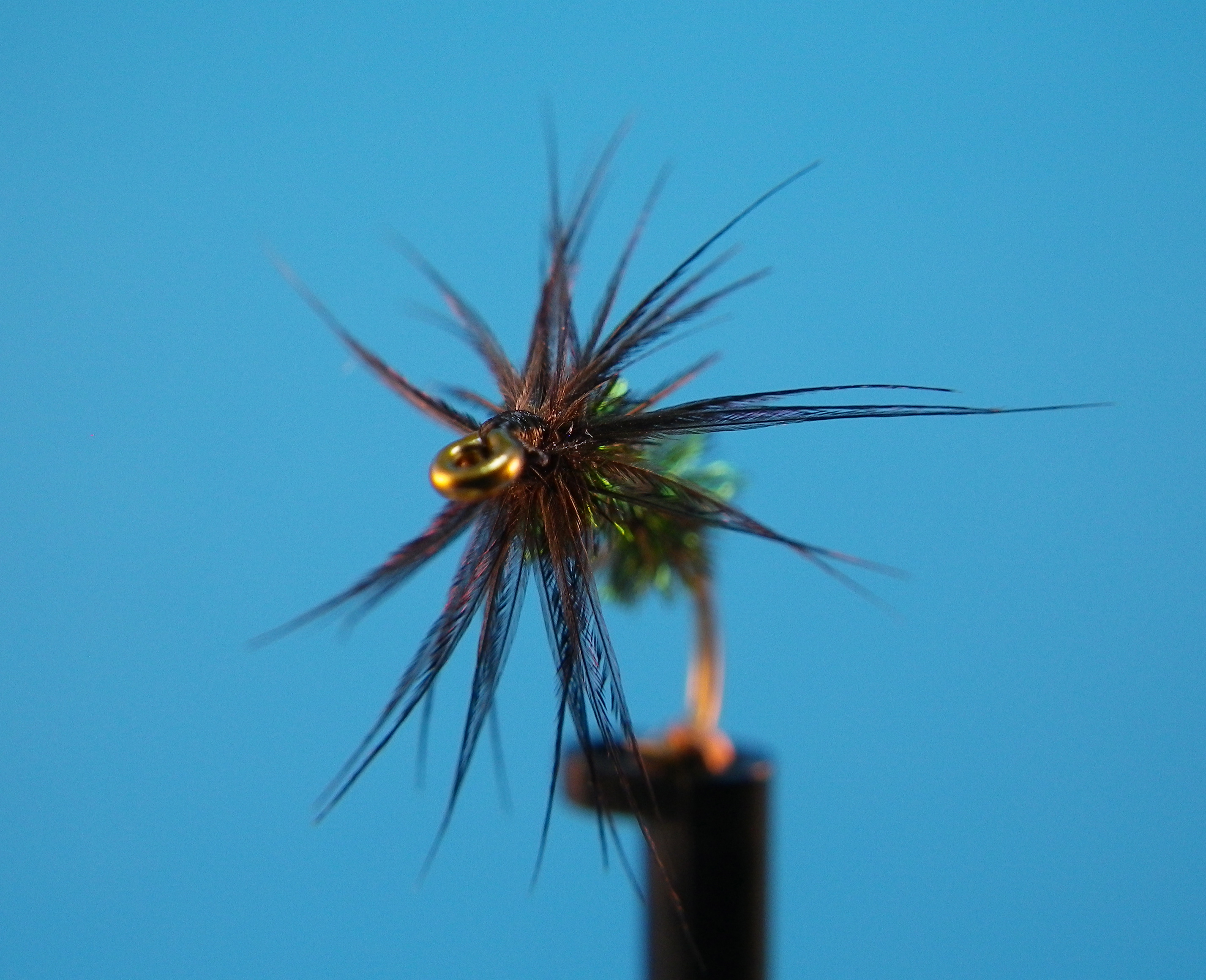
Farmington River dry fly angler extraordinaire Don Butler likes to say, “Ants is good food.” He’ll get no argument from me – or the trout. As we move into deeper into summer, terrestrials — ants, beetles, hoppers, crickets, and even field mice — become a significant food source for opportunistic feeders. This fly is a variation of the classic soft-hackle Starling and Herl. All I’ve done is add a few wraps of thread to form an ant-like body segment. You can also treat this fly with Frog’s Fanny and fish it like a dry. A lethal summertime wet, especially on small wooded streams with wild trout populations. I also do very well with this fly on the Farmington River. Now, I’ve never seen an ant tread water in a three-knot current, but I get plenty of trout fishing the Drowned Ant on the dangle. This pattern is so impressionistic it could easily double for any number of darker bodied caddis or stoneflies. Only trout know what they think it is, and at the very least, it’s that it looks like something alive and good to eat. I almost always have this fly tied on my wet fly dropper rig from June through September.
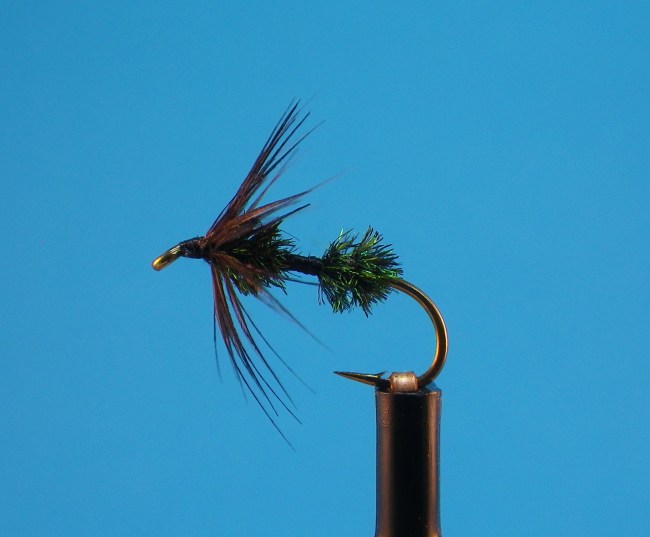
Come explore the wonders of wet fly fishing on the Farmington River with my Wet Flies 101 class Saturday, July 27, from 9am to 2pm. Whether searching, imitating drowned terrestrials, or fishing under the hatch, wet flies can be a highly productive summer tactic. Wet Flies 101 will cover basics like rigging, fly selection, and presentation. Flies will be included. Cost of this 5 hour class is $100, and space is limited to 3 people. To enroll, please contact UpCountry Sportfishing at 860-379-1952.
A fine Farmington River holdover brown, taken last week on a Squirrel and Ginger wet fly.

 currentseams.com