Farmington River Report 7/19/18: Generation Next

Yesterday I had the pleasure of guiding the next generation of Farmington River fly anglers. Patrick and his cousin David and I spent the afternoon walking a stretch of water I call “The River Wild.” Wow, a lot of anglers were out enjoying the weather. Seemed more like a Saturday than a Thursday in the middle of the summer. The fishing was slow, but both Patrick and David got into fish. I had Patrick fishing a Stim with a small BHPT dropper, and David fishing a two-fly wet team. The trout liked the Stim and the top dropper on David’s rig, a Squirrel and Ginger. Good job, guys. That was fun, and keep on keepin’ on!

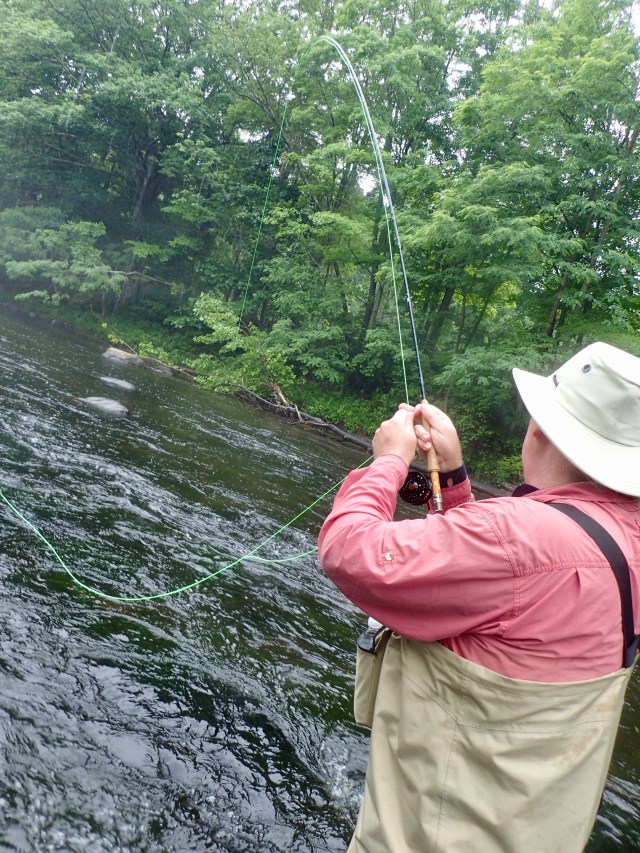
David working the seams of run. We moved into this pool moments after another angler left, and connected with a trout on our second cast.

OLYMPUS DIGITAL CAMERA

~

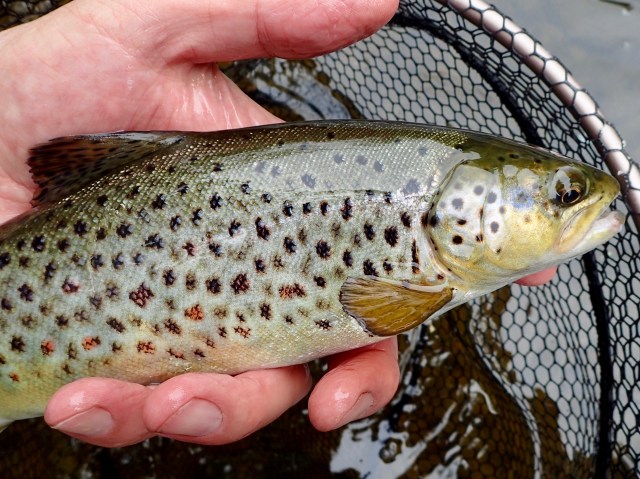
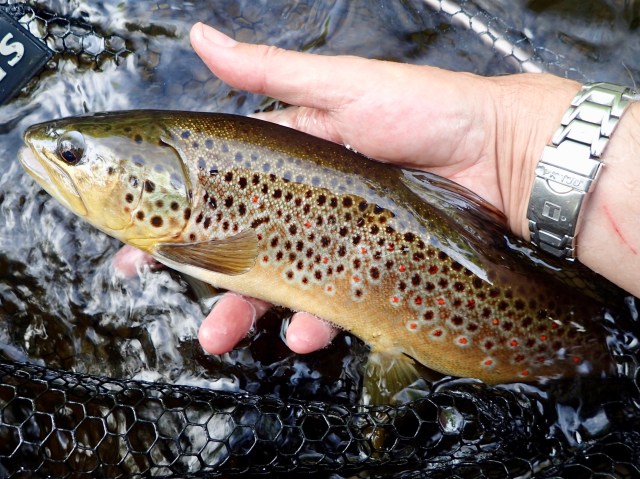
This is Patrick’s first ever Farmington River brown. He hit is a snotty riffle in about 18″ of water. 

OLYMPUS DIGITAL CAMERA

Afterwards I went dry fly fishing. Holy crowds, Batman! Nine anglers in Campground Pool at 5pm. So I sought my pleasures elsewhere. I had a tough night of sorts — I fooled well over a dozen fish (they were on larger sulphurs, Dorothea, and tiny BWOs) but only connected with four of them. I completely botched the hookset on one; another broke off at my tippet/leader connection (that’s the end of that old spool, and if you catch a nice brown with a Hendrickson Usual in its mouth, please remove it); the remainder made it in and were released to fight another day. We are now firmly in the summer dry fly fishing pattern. That is, lower water, smaller flies, trout on emergers and spinners, hatches (and therefore action) that seems to randomly wax and wane. I recommend a long tippet/leader setup  (I’ve been going about 13 feet) and be advised that the fish may not be feeding on those bright yellow bugs. The 7:30-to-dark window continues to be productive.

I think it’s about time I headed over to the Hous for some smallies…

Farmington River Report 7/17/18: Big Bang Boom

I guided Paul for four hours yesterday before the fireworks began. Atmospheric, that is — although the fishing was slow, we managed to conjure up plenty of electric action. We fished three locations within the permanent TMA and found players in all of them. The water was down to 237cfs (they dropped the dam 100cfs) but still plenty cold. Wet flies were the first order of business, and we induced a savage strike from a lovely wild brown in the snotty water at the head of a run. Upstream there were trout smutting in that difficult-to-present-to frog water along the edge of a faster current. Then I saw a moth skitter across the surface, and one of the trout snapped at it. We clipped off the SHBHPT on point and tied on a Stimulator. Three trout later, we moved to another spot. This was a very sexy run, but we had no interest in swung wets. I figured there were trout in residence, so we added a BB shot to the middle dropper knot and presented along the bottom. Ding! We have a winner, with Paul landing a gorgeous kyped Survivor Strain brown. Great job by Paul with his casting, wading, presenting, and especially his no-time-wasted landing those trout. They just didn’t stand a chance. A pleasure, sir!

The skunk was off with this lovely wild brown. Man, did he open up a can of whupass on the wet fly.

OLYMPUS DIGITAL CAMERA

~

Men at work: Paul demonstrating the advantages of a ten-foot rod on the Farmington.

OLYMPUS DIGITAL CAMERA

~

What the fly saw moments before the take. A good fish, Survivor Strain, well-earned. (There’ll be no pictures of anglers thrusting fish into the camera at arm’s length on this site.)

OLYMPUS DIGITAL CAMERA


Farmington River Report 7/11/18: The heat of the moment

Friends, I’m here to tell you that the Farmington River is cold. Readings of 58 and 54 degrees confirm that, as will Mark, my client — and he’ll also testify that the fishing is incendiary!

So. Mark came to me with the request — like so many of my clients do — to tell him “what I’m doing wrong.” In most of these cases, it’s not so much one grand point of error as it is a bunch of little things that could be improved upon. We started out below the permanent TMA for a little indicator nymphing. Mark took to it nicely, and we stuck a pile of fish on both a size 14 Rainbow Warrior (point) and a size 14 March Brown wingless (dropper).

Off we went upstream for the evening rise, which was that and then some. From 5:00 to 8:30 it seemed like there was always a target to cast to, and often multiple options within a couple rod lengths. We stuck fish on the Magic Fly, the Usual, Catskills Light Cahill, and Sulphur comparadun. The bug activity was mostly tiny BWOs, a few sulphurs, but mostly Dorotheas and perhaps some summer Stenos. The trout were on the emergers as well as duns on the surface. It was an easy night to be a guide. Well done, Mark! You were doing a lot of things right, as your fish count confirms.

Mark landed this nice wild brown on a March Brown wingless. The fish were taking the nymphs in the faster water at the head of the pool.

OLYMPUS DIGITAL CAMERA

~

The sweet sight of success: bent rod, splashy combatant. (Wide smile on client’s face not visible.) Speaking of visibility, we had varying degrees of fog for most of the evening. It didn’t seem to bother the fish.

OLYMPUS DIGITAL CAMERA

Farmington River report 7/9/18: Presentation is Everything

I guided David yesterday afternoon into the evening. David wanted to work on his presentations — a man after my own heart — and we began by swinging wets through some choppy water in the permanent TMA. Bug and surface activity was light — nonetheless, I was surprised that we didn’t find any players. We then headed upstream to some classic dry fly water to prepare for the evening rise. We had surface activity from around 4pm through darkness, and a lot more bugs in this pool: sulphurs, Light Cahills, mats of midges and a few caddis. The fishing wasn’t easy — David had dozens of quality drifts that went unscathed — but we fooled quite a few trout and netted some beauties. We fished with a 13-foot leader (9′ 5x) and tippet (4′ 6x) system, and took fish on the Pale Watery wingless (16), Catskills Light Cahill (14-16) and Sulphur Comparadun (18). Great job, David! And man, was that water cold. 56 degrees. I haven’t shivered that much since the winter. Double layers next time.

Mr. Presentation, getting it done.

DCIM100GOPROG0015823.

~

The size of the rise doesn’t always belie the size of the fish. This high teens Survivor Strain brown was making tiny swirls along the edge of some frog water. David did an exemplary job with his hook set and landing. All the fish we hooked were fat, healthy, and happy.

OLYMPUS DIGITAL CAMERA

Farmington River Report 6/26/18: Subsurface Success

Chris wanted to work on his subsurface game, so we spent the morning nymphing and swinging wets. Success! We fished three spots below the permanent TMA and found players in two of them.

We started off indicator nymphing (using my homebrew indicators) with a drop shot rig, and I continued my catching-a-fish-while-doing-a-demo streak. (If you want to look cool, pretend you meant to do it.) Chris took over and made a bunch of quality drifts with no love. All of a sudden, it happened. An unseen hatch was underway, the trout were feeding, and we hooked a bunch if fish in 15 minutes.

Wets were next. Run A was a blank, and Run B did not produce in the areas it usually does. No worries — Chris kept a positive attitude (confidence catches fish), and it rapid succession he stuck a bunch of trout tight to the bank. Great job, Chris! The trout should be worried.

We won the weather lottery: Bluebird skies, warm sun, cool air. Of course, a tight line makes any day sunnier.

OLYMPUS DIGITAL CAMERA

~

We spotted a distressed rainbow in the shallows. It had been hooked, lost, and had the terminal tackle and a short length of mono still attached. Unfortunately, we failed in out attempts to net it.

OLYMPUS DIGITAL CAMERA

~

Chris kept pounding the banks in a shade line, mended swing presentation, and was rewarded with several slashing strikes. This gorgeous wild brown took the top dropper on his team of three wets, a Squirrel and Ginger.

DCIM100GOPROG0025627.

~

After our session, I spent two very entertaining hours swinging wets. I fished a Squirrel & Ginger (caddis) on top, a Drowned Ant middle dropper, and a Light Cahill on point. I saw all three insects out and about, as well as tiny BWOs, midges, inch worms, and sedges. Among the players today were three wild brookies. Funny thing! They all took the Drowned Ant. I don’t think it was a coincidence. This stunner is clearly from the Farmington River hatchery.

OLYMPUS DIGITAL CAMERA

`~

Another hat trick today, thankfully without a broken rod. This low-teens wild brown was feeding just along a shade line in about a foot of water. First cast, bang! Squirrel and Ginger. Catch-and-release works in the wild, too — note the long-ago healed bird wound just above the gill plate. I bounced around to three spots, found hungry fish in all of them, and lost track of both time and fish landed.

OLYMPUS DIGITAL CAMERA


Farmington River Report 6/20/18: Going out with a wet fly bang

The last day of spring 2018 was a memorable one for me. The evening wet fly bite was spectacular (where one loses count of fish). I had a Farmington River hat trick (brown, brookie, rainbow). And I landed a porcine high teens rainbow (after it snapped the tip of my cane rod mid-battle).

But let’s focus on the positive. I fished below the permanent TMA from 5:30pm- 9pm. Water was a perfect height and still plenty cold. The bug activity was an 8 out of 10. I had much to work with: midges, a few small (size 18) caddis, lots of size 16 sulphurs and size 14 Light Cahills, and some mongo mayflies (10-12) that were perhaps March Browns or Isos. I fished a three fly team until 7:30pm: Snipe and Yellow size 14 on top, size 16 Magic Fly in the middle, and a winged Light Cahill size 12 on point. All three flies produced. The conditions were perfect for wet flies: bugs, birds working, and a multitude of sloppy, splashy rise forms that went on for hours. I spent most of my time targeting active fish, and often the take came on the first cast. I even caught one dangling my line in the current below me as I walked to the shore to put on my jacket.

Then, disaster. The hit came suddenly and with ferocity. It felt like a decent enough fish, but once I got it in close I could see it was a big rainbow in the upper teens. Fat, spirited, and uncompromising in its belligerence. I didn’t even feel the rod tip snap; suddenly, it seemed, it was just broken. I cursed my luck (as it was). Fortunately, I had brought a second rod stream side: I waded out, re-rigged, and was back at it.

I finished the session throwing dries: Magic Flies, Usuals, and Light Cahills. The trout liked all three. As the gloaming lost its struggle against darkness, I walked back to the truck, unsure how to process the conflicting sensations of delight and regret.

At this size and coloration, most certainly not from the factory. You can’t see it here, but the dorsal side of these fish is dramatically dark. They almost look like chrome steelhead when you’re bringing them in.

OLYMPUS DIGITAL CAMERA

~

The culprit. The opening of my net is 17″; this little piggy exceeded that. So far, the best trout hit of the year. She took the Pale Watery wingless (Magic Fly), not the Cahill as I previously posted.

OLYMPUS DIGITAL CAMERA

Farmington River Report 6/13/18: Workin’ hard, playin’ hard

On the river for ten hours today and loving every minute of it! I started by guiding Brian from 11am-3pm. Brian had a story that is typical of many of my clients: loves the Farmington, but has had too many encounters with the skunk. He wanted to focus on wets, but I suggested we spend an hour working on his nymphing game, since that is the year-round highest percentage play on this river. Brian has mostly Euro-nymped, but I set him up with a drop shot ring under an indicator. He took to it like he’s been doing it forever. There’ll be no skunk, today, Brian. The first fish was noteworthy because the indicator never went under — it merely twitched. Look for a reason to set the hook on every drift, and like that Brian was on the board.

It was a cool, wet day, and there was precious little bug activity. The water is still unusually cold, with 48 degrees at the bottom end of the permanent TMA, which was running at 330cfs. Nonetheless, we managed a mix of browns and rainbows by (you’ve heard this if you’ve taken my class) moving around and covering water. Nice work, Brian.

Every guide loves the sight of a bent rod and a tight line. Brian did a great job with his hook sets today.

DCIM100GOPROG0015239.

~

Thank you for playing. They liked the bottom nymph, a size 14 Frenchie variant.

OLYMPUS DIGITAL CAMERA

~

Now it was my turn to play. I grabbed a sandwich and headed off to a snotty run to swing wets under a leaden sky. The cold from the river was a stark contrast to the warm and humid air (my lower legs and feet were uncomfortably cold by the time I finished.) By this time (4pm) there was a slight uptick in bug activity. Whack! My second cast produced a gorgeous wild brown.

They don’t make ’em like this in the factory. Absolutely flawless fins.

OLYMPUS DIGITAL CAMERA

~

Any pre-hatch period is my favorite time to swing wets, and I moved down to a more languid section of water. Sure enough, as the clock moved toward 5pm, there was an uptick in bug activity, mostly Light Cahills (Vitreus) 12-14 and caddis 14-16. The fish were rising a little more regularly now. I was fishing a three fly team of a Squirrel and Ginger on top, a Light Cahill winged in the middle and a Hackled March Brown on point. My strategy was to target active risers, and I caught a bunch of trout on all three flies.

There comes a time during every hatch when the subsurface wet becomes ineffective, and today it was 7pm. I switched over to dries, and had a blast fooling trout on the surface. I fished Magic Flies and Usuals, 14-16, and had a good couple dozen takes — but only about half of them stuck. I was going to leave at 8pm, but I remembered how fiercely I admonish those who depart from the river before the magic hour in June and July, so I stuck around until 9pm. The last half hour, the river was simmering with rise forms. I switched over to classic Light Cahill dries, 12-14, and ended the session with a healthy brown who was just showing the beginnings of a kype.

The best part? There was no one there except for me, the trout, and the bugs.

Our Lady of the Blessed Pink Band. First Farmy trout of the year on a dry. 

OLYMPUS DIGITAL CAMERA


Farmington River Report 12/19/17: Busy and slow

If you decided to play hooky yesterday and fish the Farmy, you weren’t alone. I would officially describe the permanent TMA as “mobbed” (for a Tuesday in December the week before Christmas). Air temps in the upper 40s, water temp in the mid 30s, flow at 210cfs. A few bugs flitting about (midges, W/S caddis, small grey stones) but no observed risers. I carpet bombed one pool with nymphs, both indicator and tight line, for about two hours and could manage only one trout. Chucked streamers for 15 minutes to no avail, then moved upriver.

Now dedicated to the streamer cause, I fished an overhead-deep pool and blanked. Moved downstream with about 15 minutes left in my session and connected with a nice mid-teens brown — and decided to leave on a high note.

The Hi-Liter produces again! The Hi-Liter is one of my high-confidence winter streamers. I like it on bright days and medium flows, and you can learn how to tie it here. A cast, a mend, and as I came tight to the line, a dull thud. Many thanks to Nick who graciously shared the pool with me.

OLYMPUS DIGITAL CAMERA

Farmington River Report 11/3/17: more anglers than fish

Holy crowds, Batman! But what else could you expect on a 70 degree mostly sunny November Friday? Water was 300cfs in the permanent TMA and probably high 40s/low50s. Leaves were a minor issue today. Hatch activity was virtually nil and I didn’t see any risers. I visited two spots in the PTMA and found fish in both, although the action was slow. I carpet bombed Spot A with nymphs for two hours and produced only two hookups. Indicator nymphing was the method, and both takes were very subtle twitches rather than total submergence. Spot B was a quick in-and-out, one fish in about 20 minutes. Thanks to every who shared water and took the time to say hello. (A reminder that if you see me on the water, you’re not bothering me with questions or hellos. I rather enjoy it!)

What the heck? This used to be a Snipe and Purple. I guess the bozo who tied it didn’t fully secure the silk. Out came the nippers and on went a Zebra Midge soft hackle.

OLYMPUS DIGITAL CAMERA

~

The ZMSH was a good choice. At least this lovely wild brown thought so.

OLYMPUS DIGITAL CAMERA

~

A batch o’ nymphs and wets for a client. I used a couple of these patterns today.

OLYMPUS DIGITAL CAMERA

Farmington River Report 10/3/17: On the edge of fishable

Once again, they’ve lowered the flow from the dam, giving us (with the help of the Still River) 75cfs in the permanent TMA. The water is plenty cold and the trout are still there, but it makes for some challenging fishing. David was up to the task, and we attacked multiple locations above and within the PTMA. While we found fish and had a few bumps, we were unable to bring any trout to net. David did a great job keeping up his enthusiasm — perseverance is a powerful asset when the fishing is tough. Short line and indicator nymphing were the methods. We saw a fairly strong caddis hatch above the PTMA at 10am. Most of the risers we witnessed came in the afternoon. The river was mobbed for a Tuesday afternoon in October — surprising given the conditions.

David fighting the good fight. We had a momentary rush of glory in this run in about a foot-and-a-half of water.

OLYMPUS DIGITAL CAMERA