You probably saw this one coming a mile away. Obvious or not, signing a publishing contract with Stackpole Books and beginning work on the Fly Fishing Guide to the Farmington River was easily the biggest deal for me in 2024. Technically, I’m halfway done. Practically, I’ve got a lot more work to do.
For starters, even though I’ve finished my first 50% of the work, I’ve still got to go back through it all and make some editorial adjustments. This isn’t merely changing a few words; the workload can probably be counted in weeks. No complaints, though! It’s a privilege to be charged with writing this book, and anything with my name on it is going to be the best it can possibly be.
I’ll be back to it sometime in early January. And of course, you’ll hear all the latest and greatest right here as things develop.
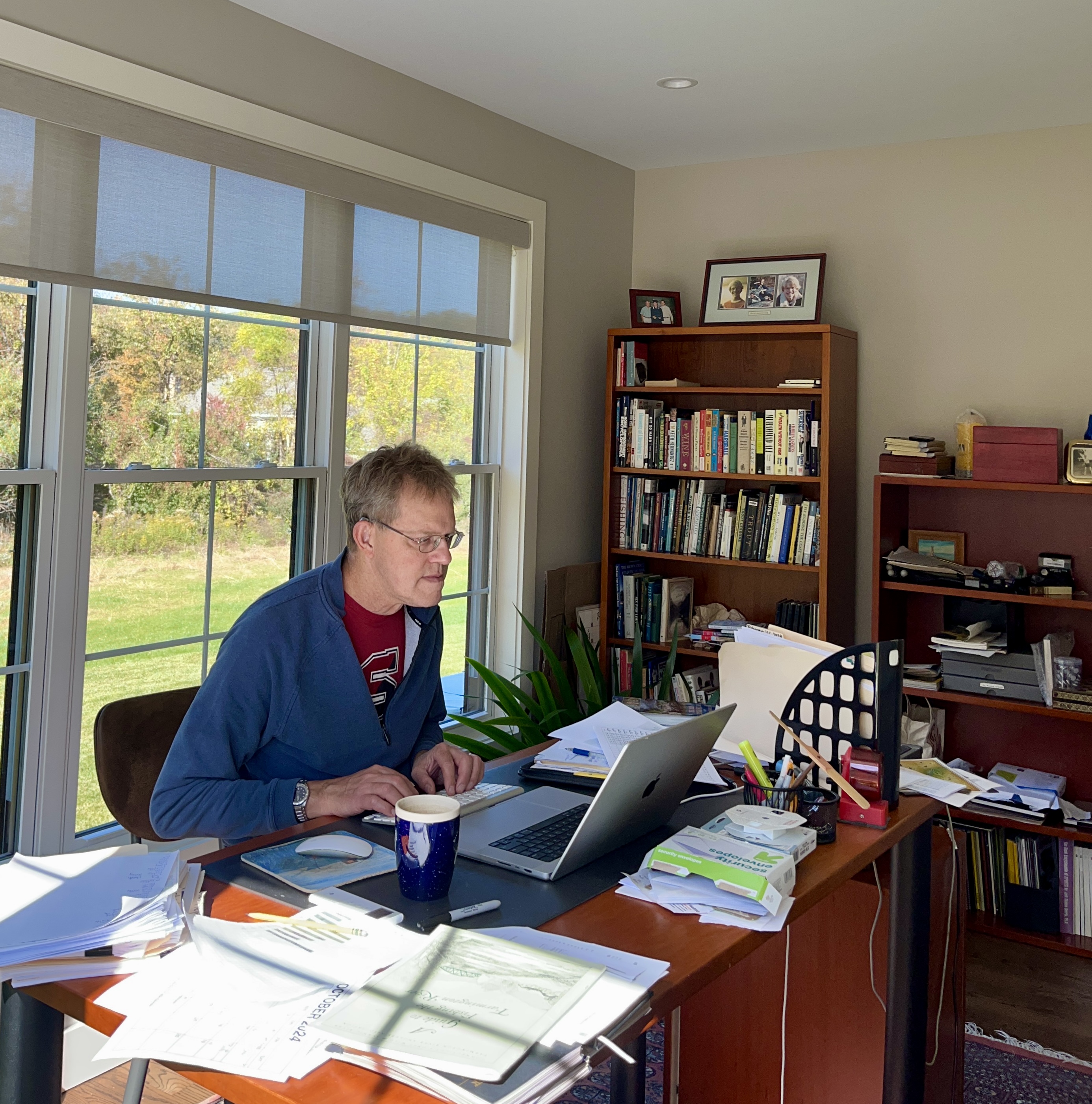
This is where the magic happens. I really like my writing space — although, the vista behind me is currently brown and white and gray. Winter is a good time for a big writing job.
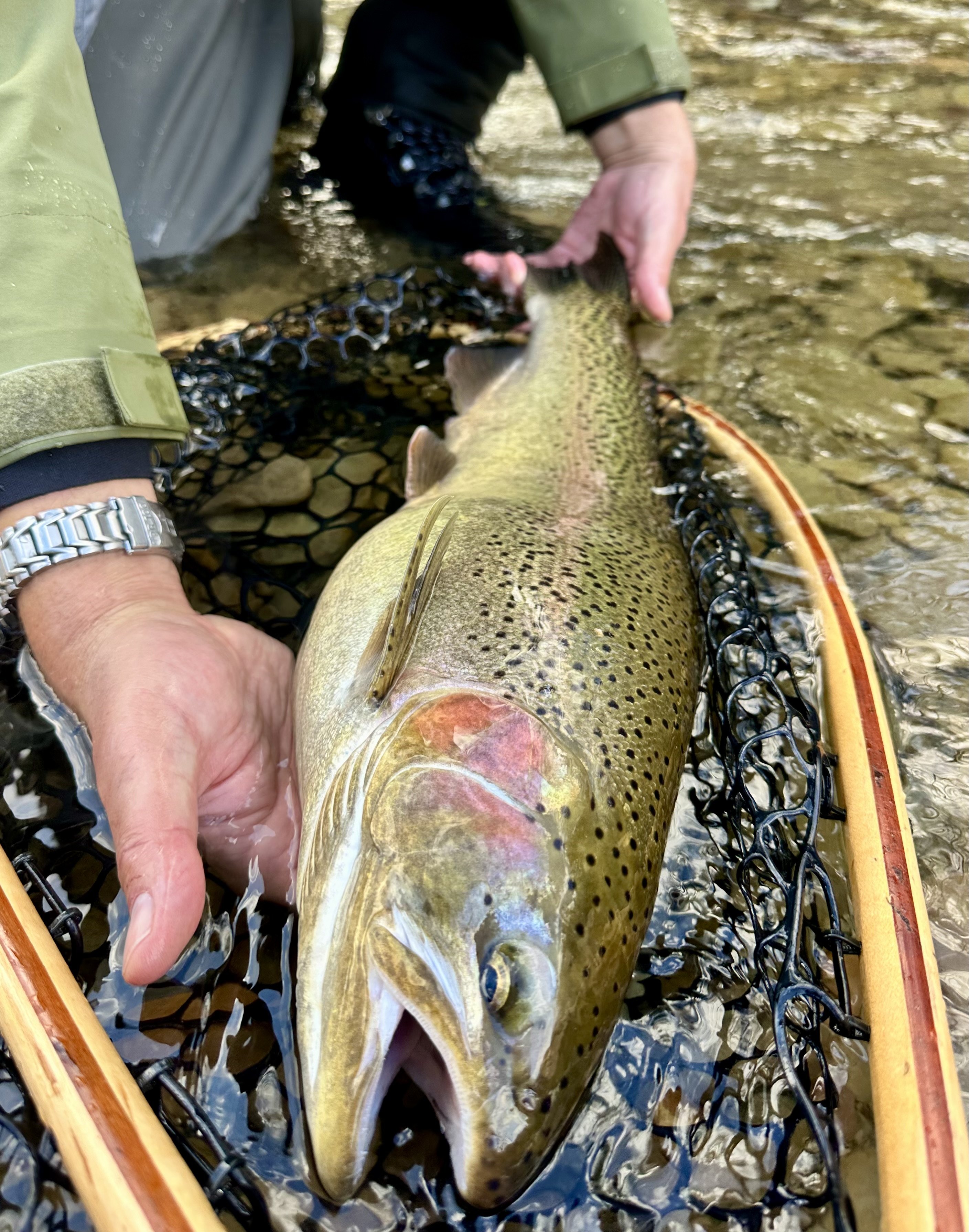
#7: Steelheading in PA. You can get spoiled pretty quickly on the Erie tribs. Not the case this year. A parching autumn drought kept the creeks at a trickle, and what did come up from the lake was skittish and in constant state of high alert. I fished Elk Creek in November with guide extraordinaire Bob Packey and solo. The water was comically low, and I saw more raptors in the trees than anglers on the water. I felt like King of the Creek with nine on the first day. Then, the heavens opened up and it poured. Too much of a good thing, for the next day the creek was the color of tea and milk and loaded with leaves. That was my first blank on Erie tribs ever. I returned in December with my middle son, and seeing as you just read about that a few days ago, I won’t make you do it again. Unless you want to, and in that case you can find it here. The point is: even when the fishing is at its worst, Erie tribs are frequently better than anywhere else.
As with small streams, it would be safe to say that I am addicted to steelheading — although the steelheading affliction is probably far worse.
#6: Featured Fly Tier at the International Fly Tying Symposium. This was my third year doing IFTS, but my first as Featured Fly Tier. I went on after Bob Clouser (what a tremendously nice guy!) and I think I crushed it. The subject was “Matching the Hatch with Wet Flies,” and you can see me do it again at the Marlborough Fly Fishing Show next month on Friday, Jan 17 at 2:30pm.
In addition to being featured tier, I really enjoyed seeing so many old friends, and making new ones. Plus all the tying swag that’s available, some of which I bought. Plus the chance to watch and learn from the industry’s best. You can do the same at the Fly Fishing Shows this January — see you there!
#5: Speaking at the Shows and to Fly Fishing Clubs. It was a busy speaking season for me. I did my usual full boat of talks at the shows, but I also spoke to eight different groups this year, both in-person and via zoom. Speaking/teaching/presenting is a true love of mine, and I hope that if you’re in the audience, you see that in my delivery. If you’re in charge of booking speakers for your group, you know where to find me!
What a treat to make a return to the FRAA in January. I hadn’t been in a while, and I must say that holding the meetings at Brewery Legitimus is a most excellent idea.
It’s been a different kind of year around Currentseams headquarters, what with us moving into a new house in April, and then diving into the process of writing the Farmington River guide book. It was a difficult year for weather, and flows. Sometimes I felt like the energy was “Fishing? What’s that?” But, you persevere, and when you get out you tend to relish it even more. Here’s my annual list, presented in installment form, of my top 10 most memorable moments of 2024.
#10: Small Streams. Not actually a moment, but rather a series of outings across the seasons. Veteran readers of currentseams are quite familiar with my passion for thin blue lines. Fishing them was a bit of a challenge this year, mostly due to the horrific drought of late summer into fall. I haven’t been since October, but I’m generally confident that nature found a way. Please, if you like to fish small streams, respect, preserve and protect the resource. Sometimes nature needs little help, too. If you’re going to be at the Edison Fly Fishing Show next month, I’ll be giving a seminar on Small Streams on Friday the 24th at 10am.
Leaves and low water made for some challenging conditions this fall. I should be standing in water instead of stream bed. Always be sure that in low flows, the water is at non-stress temperatures.
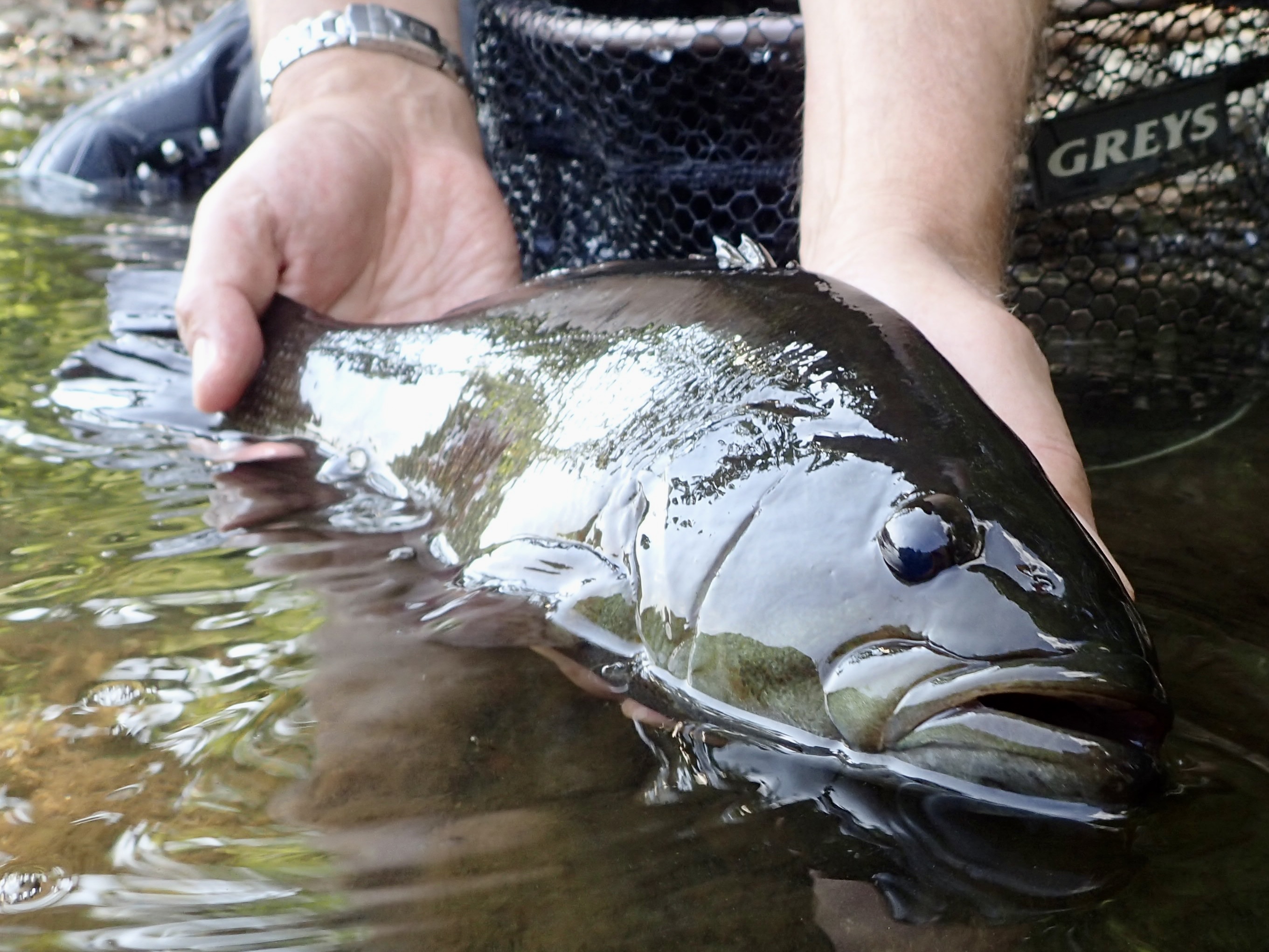
#9: Smallmouth Season. It wasn’t the best year for smallies, but nor was it dreadful — and we have had some dreadful years in recent memory. The White Fly hatch was a good one, and while I didn’t consistently get into the bigger slobs, I had enough foot-plus fish to keep me happy. Then there was the solitude factor — priceless. One day, I invited fly tyer extraordinaire Lou DiGena up to fish. We started off in an area that has been completely unproductive for me the last two years. I was fishing one of Lou’s crayfish patterns under an indicator when I connected with my best smallmouth of the year.
A hunka hunka burning hot bronze.
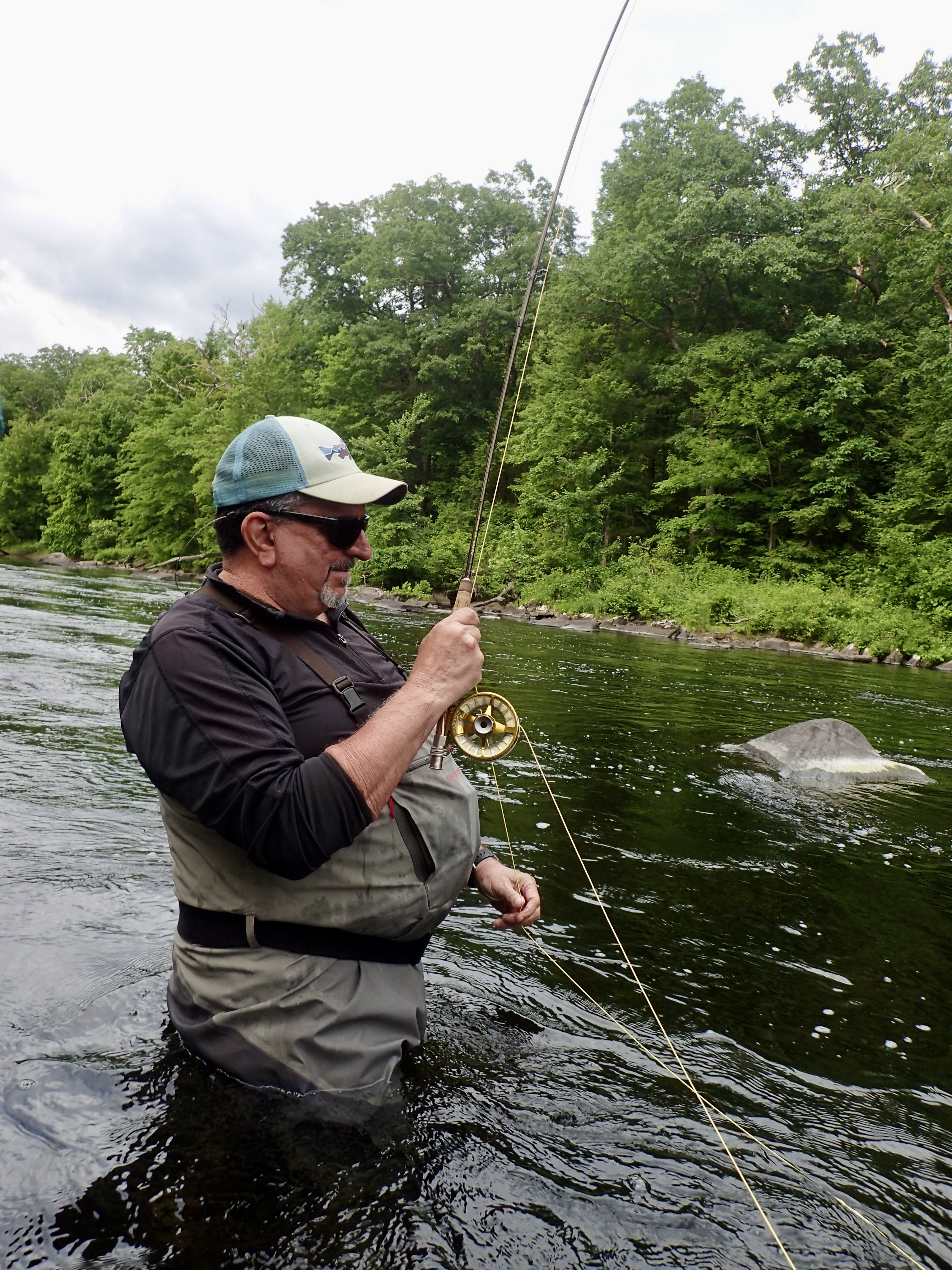
#8: Photo sessions for the Farmington River book. I spent several days as both subject and shooter and I must say that I enjoyed both roles immensely. Many thanks to Steve Hogan, Derrick Kirkpatrick, Joey Takeman, Antoine Bissieux, Yannick Riviere, and Lou Digena for letting me shadow and shoot them. Special thanks to Matthew Vinick and Bob Lindquist for taking the time to shoot me. Thanks to the DEEP for letting me tag along for their September sampling. You’ll see it all in the book, and the best part is that I get to do it again this winter and spring.
It’s just a month away! The 2025 Marlborough Fly Fishing Show will be held Friday, January 17 though Sunday, January 19. I’ll be there all three days, along with some of the best and brightest in the fly fishing world. This is a great opportunity to up your skills, meet some exceptional anglers, and have a plain old great time. From demos to talks to classes, I’ve got a busy schedule:
Friday, January 17, 11am, Destination Theater Room A: The Farmington River: Southern New England’s Blue Ribbon Trout Stream. In addition to the river, I’ll also be talking about my upcoming book on the Farmington River.
What a fantastic resource, right here in our back yard. Oh! There’s this new guide book coming out, too…
Friday, January 17, 2:30pm, Featured Tier: Matching the Hatch with Wet Flies. Come see me on the main show floor as I talk about matching specific wet flies to popular hatches — then show you how I tie the fly. These patterns are all consistent producers that should be in your box.
If you aren’t familiar with the singularly awesome power of this wet fly, you should come get acquainted.
Friday, January 17, 4:30pm, Seminar (Release Room): Wet Flies: Fishing Under the Hatch. A new look at fishing wet flies and soft hackles. If you’ve ever wanted to be that person who is catching all the fish, come to this seminar. There are times when wet flies will dramatically out-fish any other style, and the angler who understands the hatches — and how to match them — will be handsomely rewarded.
Saturday, January 18, 10am, Destination Theater Room A: The Farmington River: Southern New England’s Blue Ribbon Trout Stream. In case you can’t make it Friday, a repeat performance. In addition to the river, I’ll also be talking about my upcoming book on the Farmington River.
Saturday, January 18, 11:30am, Featured Tier: Farmington River Favorites. Come see me on the main show floor as I talk about and tie some of my favorite Farmington River guide flies. My secret weapons revealed!
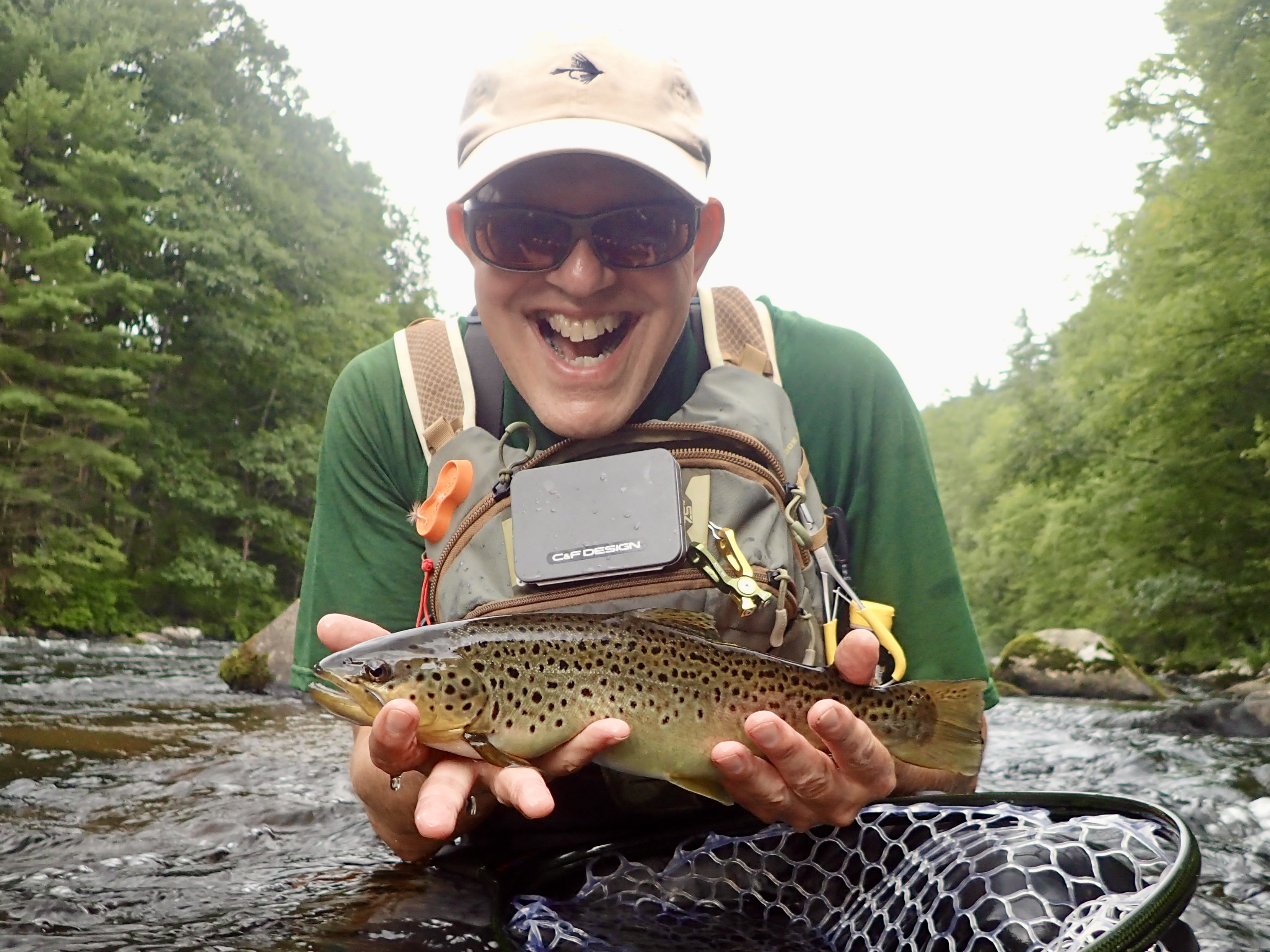
This lovely wild brown ate one of the flies I’m going to demo. You should have it in your box.
Saturday, January 18, 2pm – 4:30m, Class: Tying and Fishing Wet Flies with Steve Culton: This is the next best thing to a lesson on the water! You too can become a dangerous wet fly machine. While not a tying class, I will demo tying classic North Country spiders, winged, and wingless wet flies that trout can’t resist, and show you how to rig and fish them. The course also covers basics like leader construction, matching the hatch, fly selection, where to fish wet flies, and how to fish them. All levels. Click HERE for more info and to register.
Sunday, January 19, 8:30am – 11am, Class: Beyond Cast & Strip: Presentation Flies for Striped Bass. Have you ever wanted to catch bigger stripers on a consistent basis — or the stripers that no one else seems able to catch? This class is for you! It covers traditional New England-style bucktails, soft-hackles, and flatwings, and how to fish them. These are sparse flies that look alive even when at rest and creat the illusion of life. While not a tying class, I will demo some patterns. All Levels. Click HERE for more info and to register.
Being able to repeatedly catch big bass on the fly from shore is no accident. Come to this class and I’ll show you how I do it.
Sunday, January 19, 3pm, Destination Theater Room A: Wet Flies 101. If you’re not fishing wet flies, you’re missing out. This is an intro to the ancient and traditional art of subsurface fly fishing with wets and soft hackles.
As usual, I’m counting on the currentseams crew to make a strong turnout. See you there, and please come say hello.
I don’t usually make posts like this. But if people want to know what to get you for the holidays, and you’re struggling with gift ideas, here are two suggestions.
Book a guide trip with me for 2025. There’s no real gift certificate, but there is the promise that we’ll go out fishing for four hours next year. Your gift giver pays now, but it’s at my 2024 rate (rates usually go up every few years). I build a 20% gratuity into the price, so all you have to do is show up with your gear on a mutually-agreed-upon date and time and we have at it. If you’re interested in wet flies, we’re looking at a May-Juneish window. Because of the book writing process, I will be limiting my guide trips in 2025, so this is a great way to lock in. Easy-squeezy…
Insert your likeness here.
Take a “Classes With The Experts” with me at the Fly Marlborough Fishing Show. With this, you get almost instant gratification. Two choices: Saturday, January 18, 2pm-4:30pm, Tying and Fishing Wet Flies with Steve Culton: Watch Steve tie classic North Country spiders, winged, and wingless wet flies that trout can’t resist, and learn how to rig and fish them. The course also covers basics like leader construction, matching the hatch, fly selection, where to fish wet flies, and how to fish them. All levels.
Or, Sunday, January 19, 8:30am-11am, Beyond Cast & Strip – Presentation Flies for Stripers with Steve Culton: Learn how to tie (Steve will demo) presentation flies – traditional New England-style flies that create the illusion of life even when at rest – and how and where to present them. All Levels.
For the Fly Fishing Show classes, you cannot register and pre-pay through me. You do that on the Fly Fishing Show Site, which is here.
I’m hoping to be offering the same for Edison on January 24-26, but that schedule has not been released. Stay tuned for my full Marlborough and Edison schedules.
Last week, I reached my first manuscript milestone, which included 50% of the text, maps, and a couple dozen photos with captions. Off it went to the publisher, and here I sit with a satisfied smile on my face. So, this seems like a good time to give you a detailed update on the work.
Let’s start here: I’m really excited about what I’ve written so far. I don’t do anything halfway, so it’s particularly gratifying to be able to work on a project that I’m so passionate about. I think I’ve found a nice balance between dispensing facts, being conversational, and mixing in both anecdotes and even a little humor.
In terms of content, the template of Fly Fishing Guide to the Farmington River will generally reflect the other books in the Stackpole line of “Fly Fishing Guide To…” books. In my book, you’ll get a little history of the river; general information about the trout that live there; maps of the STMA that point out pools and major parking areas; descriptions of the major pools and the river in general; and outlines of the most productive fishing methods.
After reading the book, you’ll know that tying a big Isonychia soft hackle on point in August and swinging it through snotty pocket water is a very good idea.
But the truly useful part of the book will be the sections on hatches, seasonal conditions, and fly patterns. My goal for the work is that you’ll be able to read it and have a pretty good idea of where you should fish on December 2, with which method, and what flies to tie on. The book will feature over a dozen local patterns that are proven producers.
Even if you think you know the river, I guarantee there will be lots of information that will be new and useful to you. I’ve been fishing this river since the 1970s, I’m writing the damn thing — and I cannot tell you how much I’ve learned while writing this book.
A book like this cannot be written by one person without the help from others. I’ve been fortunate enough to be able to get input from guides and local experts; their knowledge, experience, and wisdom has been invaluable. My final deadline is June 1, 2025. My hope is that next year at this time, we’ll have a book ready for you to read!
Thank you so much for continuing to follow currentseams during this busy time. I’ll try to get you caught up a bit this month on other happenings. Up next, in this order: the IFTS redux, western PA steelhead, and SR steelhead reports. Also, the Fly Fishing Show in January. I’ll be at Marlborough and Edison.
Hot on the heels of the International Fly Tying Symposium, I went to fish Lake Erie tribs for a couple days. I plan and writing about both, just not today as soon I’m heading up to Pulaski with Number One Son Bill for more steelheading. Then it’s Thanksgiving. So, I’m busy, and I’m sure you’re busy, too. Rather than write a half-assed report on the Symposium and the Erie trip, I’m going to wait until I can do them justice.
Here’s what I can tell you: my first deadline for the Farmington River book is December 1. I’m going to take a wee break from writing then, and I’m hoping to be able to give you some better (and more) content here, if only for a short time. I’ll also have a Salmon River report for you. Plus, I have my Fly Fishing Show Marlborough schedule for January 17-19 — Edison to come soon as well.
I’ll give you all an early Thanksgiving shout-out: I’m very thankful for everyone’s patience as I write the book, and I’m grateful that so many of you have told me how much you enjoy Currentseams. So, thank you all!
All work and no play etc., so I played hooky for a few days this week, and I’m going to do it again in short order. Here’s a fine, fat, egg-laden hen from Wednesday.
Time flies when you’re writing a book, and I can’t believe we’re only one weekend away from the 2024 International Fly Tying Symposium. That’s right, next weekend, November 16-17 in Somerset, NJ. They will be vendors galore with all kinds of hard-to-find-stuff, along with some of the best fly tyers in the world. There are classes, seminars (free with admission) and featured fly tyers (like yours truly!) Check out the seminar schedule:
And the featured tier list! (Note the slot on Sunday at 11:45, which of course will be of particular interest and importance.)
I’m looking forward to seeing you there. Please come say hello!
I got this question when I spoke earlier this month the EJTU meeting. It’s a good one. I’d just shown the group a video of trout taking sulphur emergers. The rises were regularly timed and showy/splashy. You could also see the bugs in the air.
The question was: When you get to the river and you see a scene like that, do you automatically go to a a dry/dropper? A: No. I will start with a wet fly team of three, and two of them will likely be sulphur patterns. There’s a lot to unpack here in terms of that decision. In this particular video, it was late afternoon in June. The rise forms clearly said the fish were on emergers. The time of year, time of day, rise forms, and visible bugs (sulphurs, whose nymphs are in the drift a good long time before emergence) indicated that the trout were taking their food just below the surface. A dry/dropper might get you some takes, but why not feed the fish like they’re already eating? Which is, subsurface, just below the film. A wet fly team of three fits that bill perfectly.
A splashy, emerger rise form (upper left) still taken from the video. You can also confirm that the trout are taking the emerger by the lack of duns on the surface. This doesn’t mean you can’t catch fish on the surface. It just means the dry fly may not be the most efficient method.
Note that a dry-dropper may be a better method for presenting just under the surface with different hatches. A midge pupa in winter would be a good example of that.
Hello, fellow fly fishers and readers! I ‘ve been on an intense writing jag this week, trying to finish up the bug and food forage sections of the book. I think it’s going to be very helpful. It’s divided into mayflies, caddisflies, stoneflies, midges, and other stuff trout like to eat. There will be some hatch details (although it’s not meant to be a biology or Latin names monograph). And then, for you fly tyers, there will be photos and recipes of some essential, proven fly patterns, mostly from local experts, guides, and anglers.
Current situation…add the sfx of fingers on keyboard…
To the Farmington we go! Water remains low, but fishable. It’s plenty cold and that’s the good news. Caddis is the main hatch right now, soon to be joined by Tiny BWOs. We’re getting near spawning time, so if you see a redd — a light oval shaped patch is gravelly riffles — keep your distance. Mark its location in your memory so you don’t walk through it in the winter and accidentally wipe out the next generation of wild browns. Please do not target trout on redds — it’s bad form.
Two more notes: as we get deeper into fall, streamers will increasingly come into play as a primary fishing method, as will egg patterns. Try an egg this winter as an attractor on a two fly nymph rig, and make the top dropper something small and match-the-hatch. And remember that the entire river from the dam down to the steel bridge in Unionville is catch-and-release. If you see poaching, please call the TIP line: 800-424-HELP. Program it into your phone so you’ll have it ready when you need it.