Anyone can luck into a big fish. Way back when, when I was just starting out, I wanted no part of that. I wanted to be able to consistently catch big stripers.
If you want to catch big bass — and make it repeatable — you don’t need a casting lesson. You don’t need to be able to reach 90 feet. You don’t need the latest in intermediate line technology. You don’t need a huge monstrosity that looks more like a plug than a fly.
You need to study. And ask questions. Why would there be a big striped bass where I’m fishing? Is there current, cover, and food? Is it pre-spawn? Is it migration time? Is the bait spawning (and therefore gathering in large numbers)? Is it dark, so the fish feels comfortable coming in close? What’s the barometer doing? Which way is the wind blowing? What’s the tide, and how is it moving? These are all part of the equation.
Then, you need the right fly. Something that looks like the bait, or what the bait should be at this time and place. Does the fly look alive and like something good to eat, even when at rest?
Don’t forget presentation. You need to learn that, too. Big fish are lazy, and frequently unwilling to chase. How can you present the fly in a way that makes it easy for the striper to eat?
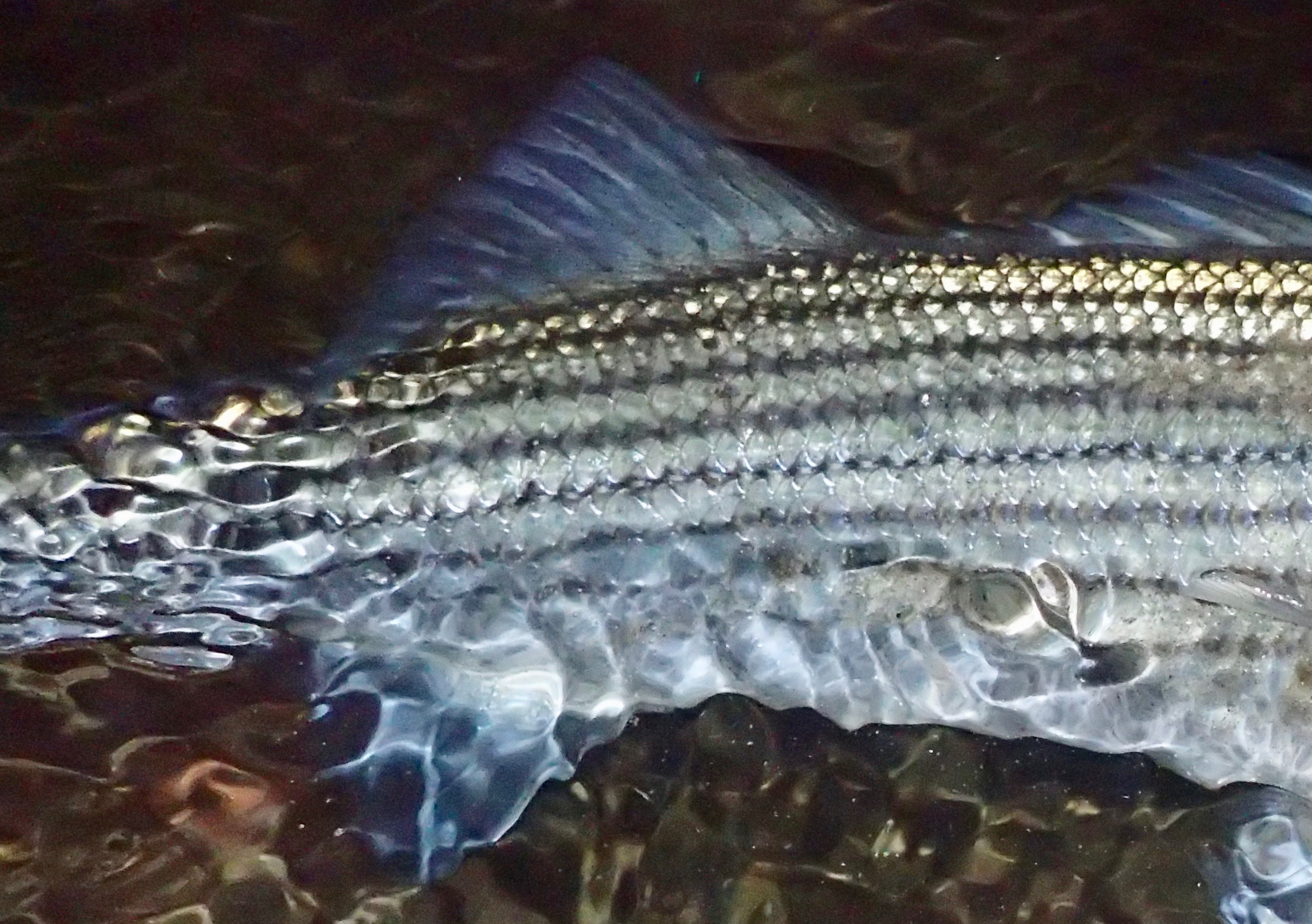
Last but not least, you need to put in your time. There is no substitute for time on the water. You can do all of the above, check all the boxes, and still blank. (Ask me how I know.) Nevermind, I’ll just tell you. Last year, I fished the mark I fished last week six times and had only two tiny bass nibbles and no bass to hand for my efforts. But every year is different, and this is what I found on a greased line swing with an 11″ Bombardier flatwing in March of 2024:



 currentseams.com