I don’t mean to sound greedy. But after potting 23 steelhead and breaking 300 on Tuesday, all I could think about was landing more.
Fair enough, but things don’t always work out the way you hope they would. How many times have you planned a fishing trip, only to see Mother Nature and the elements conspire to crush your dreams with cruel indifference? We were supposed to get 3-5 inched of snow overnight, which would mean slush-filled creeks for most of the morning. And with temperatures predicted in the upper 30s/low 40s, melting would follow, then runoff. I didn’t have a good feeling.
But forecasts change, weather people are notoriously often not right, and we got only an inch of snow, if that. We were so optimistic, we started the day an hour earlier than yesterday. There was a little slush in the system, but far less than the day before, and it was all gone within an hour. Best of all: no one was out fishing. We saw three other anglers all day, and then only for a couple hours. That meant I could bounce around the creek and fish wherever my little heart desired. (My phone later told me that I’d walked and waded nearly 3 miles).
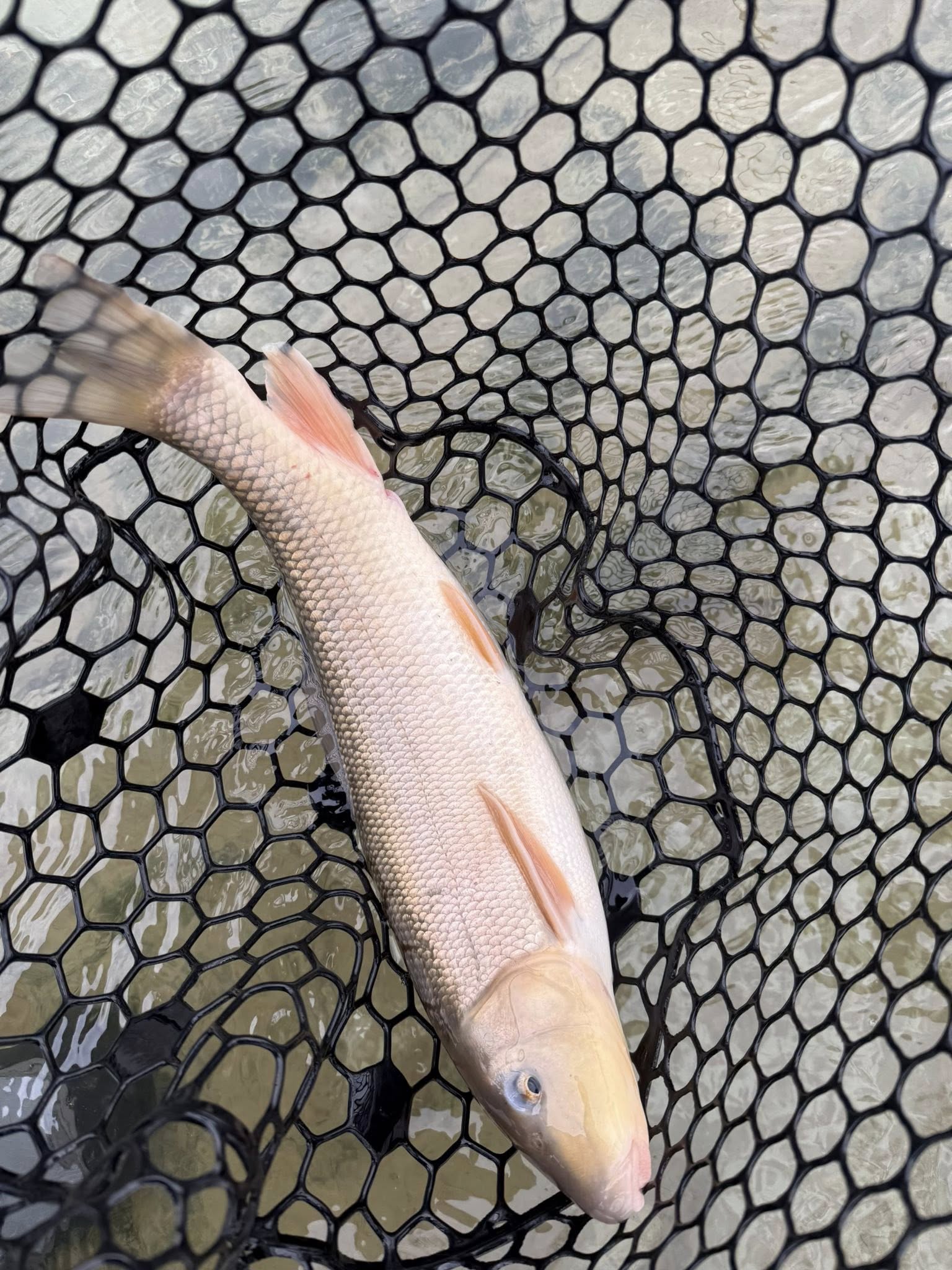
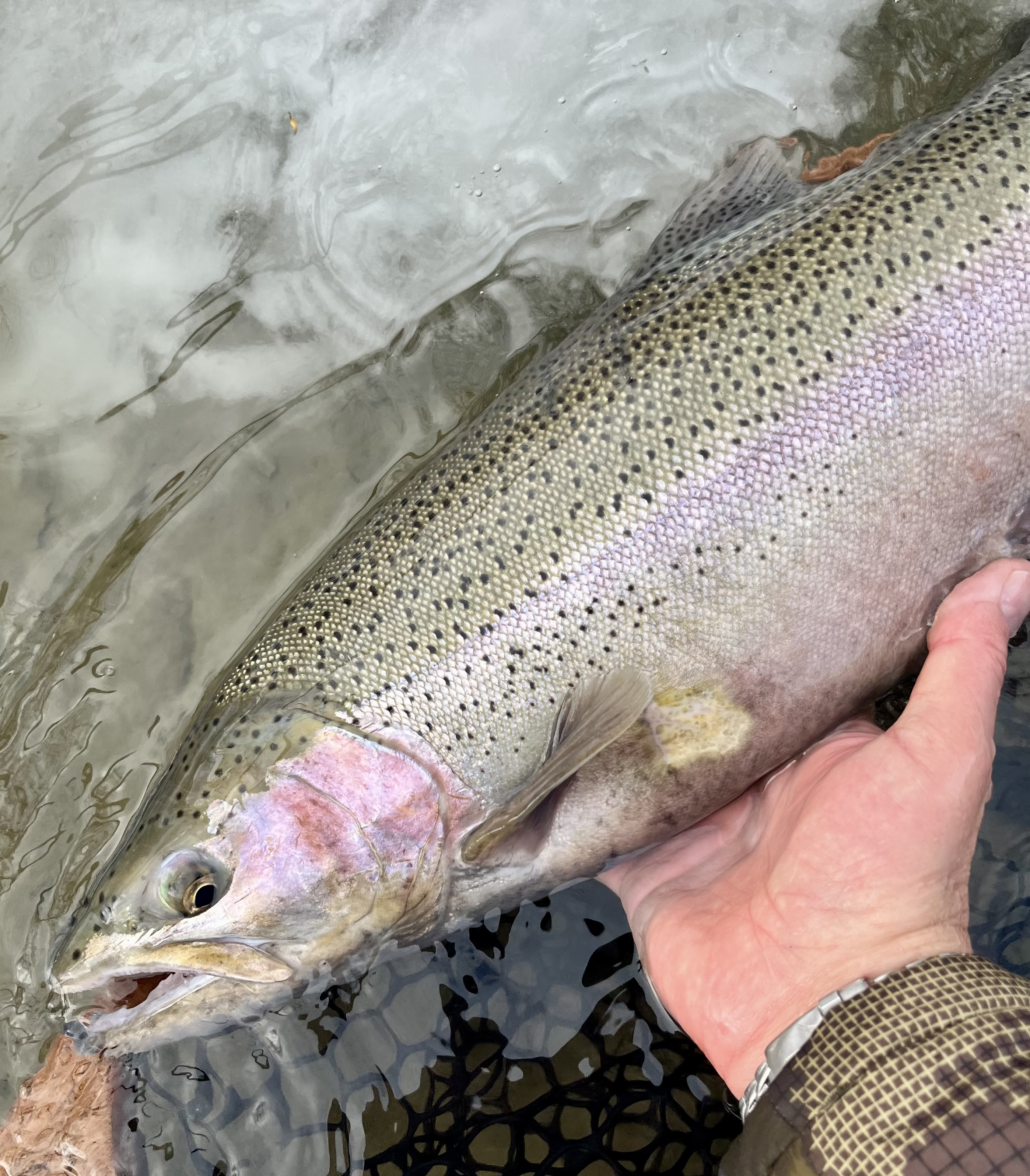
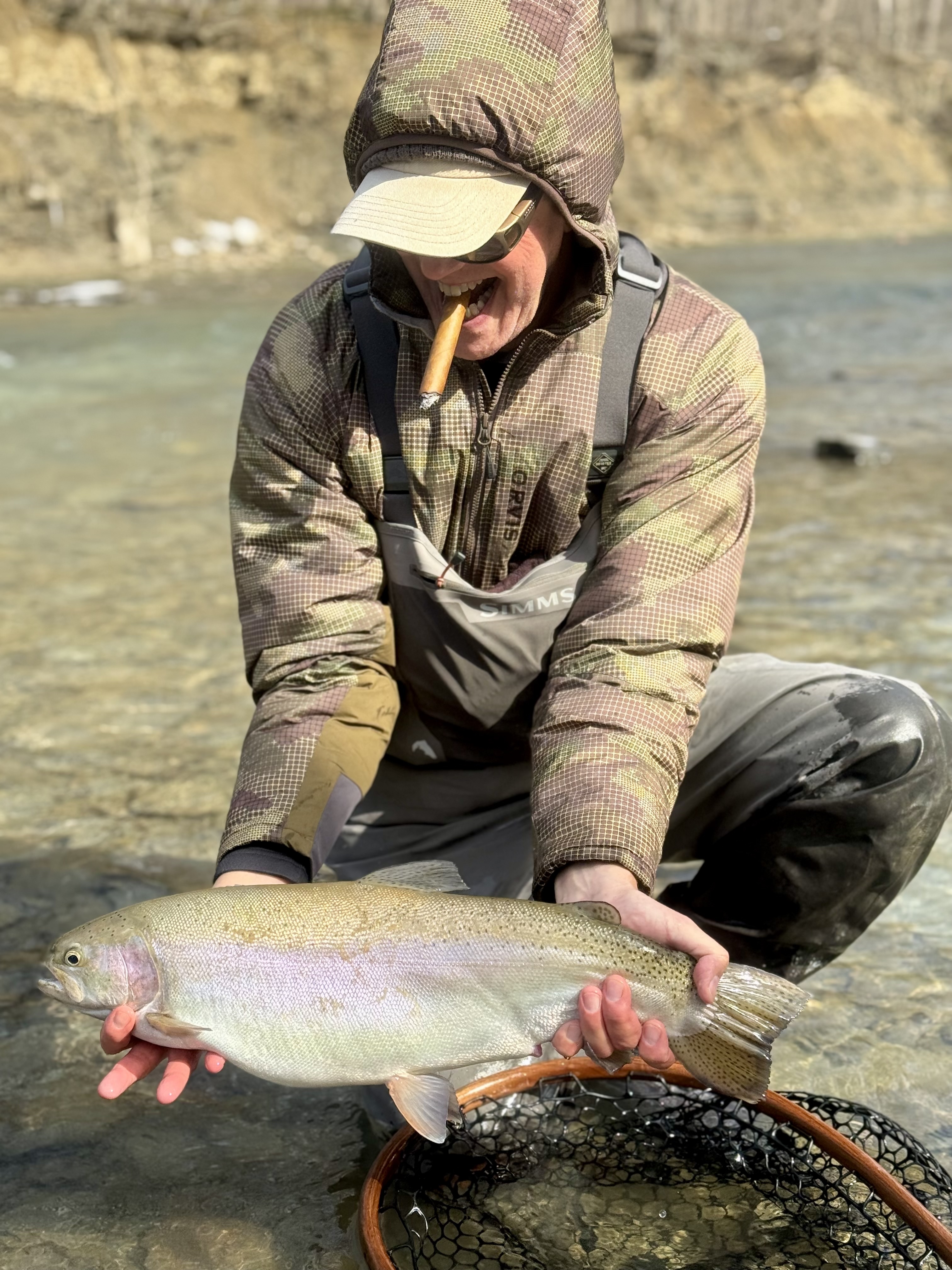
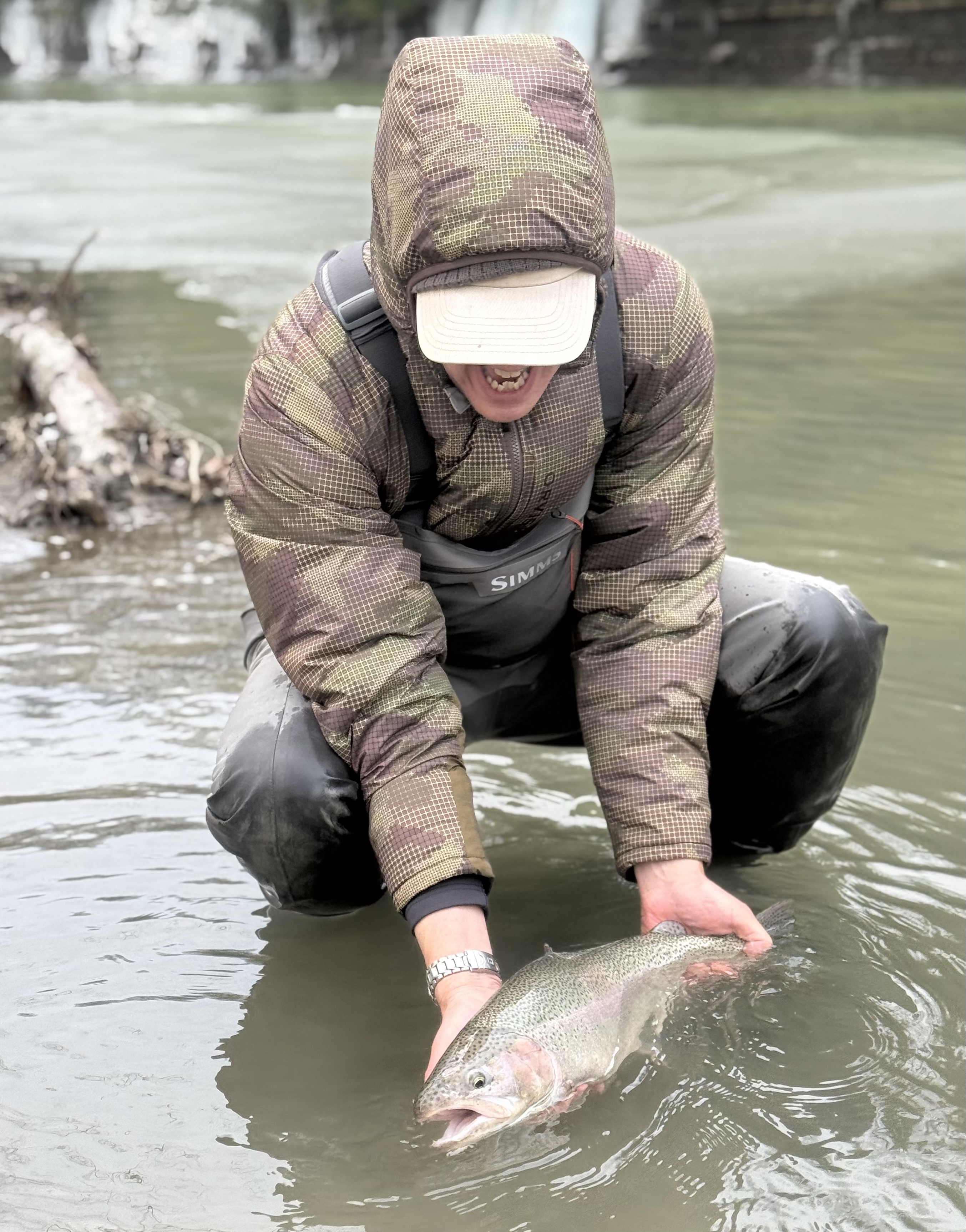
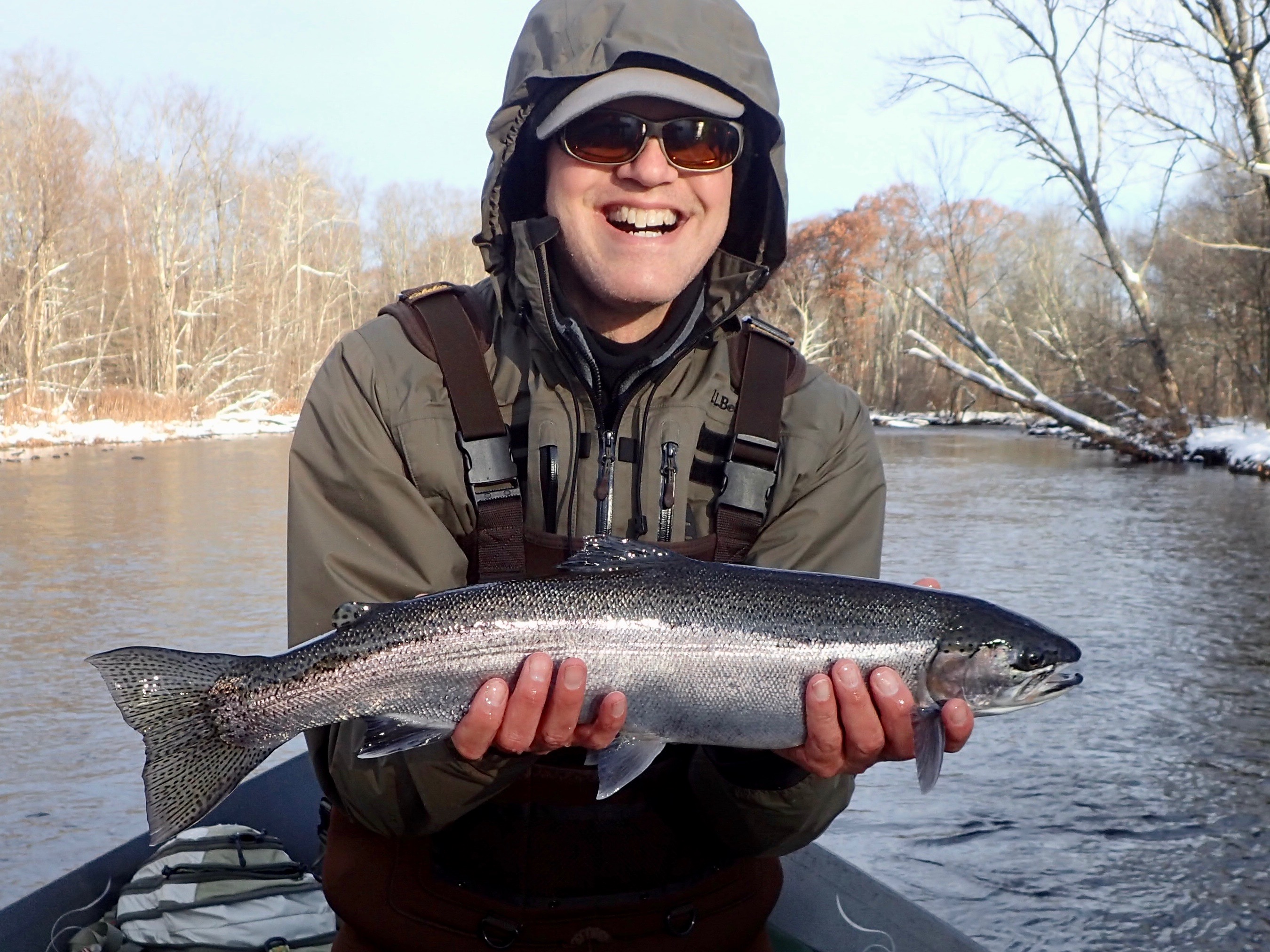
The suckers are in! Or singular, if you like, as this was the only one I found over two days. It was a little early to be matching the hatch with sucker spawn or Crystal Meths, although the patterns absolutely work any time during the season.Despite the lamprey scar, a breathtakingly beautiful fish. The water was still barely above freezing, but on this day the steelhead had a lot more fight in them. We worked upstream, targeting likely holding areas, concentrating on the ones that held fish and presenting flies until the bite stopped. I went from one landed to a half dozen, and then a dozen by about 1pm. It was already a fantastic day.One tank of a hen steelhead. While there were several good battles, I had three over the course of the day that truly tested my landing skills. I really wanted to land this fish, as she kept bulldogging me and running and refusing to come civilly. By early afternoon, a front began moving through; it got gusty and noticeably colder, and while it didn’t shut down the bite, it definitely tapped the brakes. The water began to take on color. And then, there were no more eats. It was time for lunch and another section of river.As you can see, the final section of river had a tea-with-a-few-drops-of-milk opacity. My batting average was not the best in this last mark, as I went 2-for-5. But I have no right to kvetch. The hump day total was 17 steelhead in the hoop, giving me 40 for the two-day trip. Did this really happen? Wasn’t I trapped by hundreds of feet of deep, wet snow a few days before? Weren’t conditions supposed to be entirely unfavorable? This is the argument for, “You don’t know if you don’t go” — and this is steelhead number 322.
The pre-Thanksgiving Salmon River steelhead float trip is traditionally for myself and my middle son, Cam. But Cam was away at school. Gordo had school and hockey. Yup. Solo road trip! Coming off my Everglades experience, I was mentally prepared (but still dreading) the inclement weather I was sure to encounter. So, armed with my trusty Ken Abrames Salmo Sax #3, neoprene waders, and a pile of hand warmers, I headed northwest.
I have a knack — no, really, it’s a talent of mine — for picking days months in advance that are (ahem) un-ideal for fishing. This year I chose high water (1,500cfs out of the gate) and the coldest two days in the 10-day forecast. I can deal with both, but jeez Louise…again? The first day was the warmest, although it was mostly cloudy and we had long, frequent spells of “Salmon River Sunshine,” aka lake-effect snow. We did the Altmar-to-Pineville run both days, with the bulk of the fishing in the Altmar area. I would call the angler traffic moderately low, as higher water tends to keep the shore anglers away. Early on, we found an open hole that was deep, dark, and mysterious. My leader butt was 10 feet long, and I had four 3/0 shot on, but I still wasn’t getting down — I could tell by the lack of indicator chugging and dipping. So I asked my guide, Jim Kirtland, to build me a butt section of about four feet or so. That little adjustment was everything, as three casts later the indicator dipped, I set, and steelhead on hijinks ensued. It was a chrome skipper in the 16″18″ class, and I was thrilled to be on the board. My 1-for-1 was short-lived, though, as I dropped my next four touches. To be fair, I had no chance for a hook set on two of them as they occurred as I was lifting the rig at the end of very long drifts; one was totally operator error; and, maddeningly, one was a clean tippet break mid-battle. Not the best luck, but surely that can change.Persistence pays off. I tried not to let the previous misses get me down. We’d moved to a long, swift-flowing glide where I had the comfort of knowing that at 1.5K, any take would be amplified by the indicator. I’d been on my hook sets pretty good, and I tried to remain vigilant. I stuck this guy firmly, which was a good thing given his size, freshness, and propensity for hystrionics. One thing I haven’t mentioned yet was the unique problem we’d created by lengthening the leader. The position of the indicator on the leader system meant that I could only reel up so much line — not enough to lift the fish’s head to the net in a normal fashion. (I was using plastic Thingamabobber-type indicators because of the amount of weight, and those can be notoriously difficult to adjust, let alone in the middle of a battle with a steelhead.) To have a chance at landing the fish, I would need to navigate my way to the stern of the boat, reel the indicator to the rod tip, then lift the rod, arms completely extended over my head while trying to steer the fish to the front of the boat, where Jim would be waiting with the net. Easy enough with a skipper, but a challenge with a chrome buck like this. As you can see, we were successful! The first fish came on a Copperhead Stone. The second came on a small nymph called the Spider. Photo by James Kirtland.I wish I was signaling that I’m currently engaged with my fifth steelhead of the day, but it’s just a simple “Hi, Mom!” Tuesday was substantially colder than Monday — temperatures never got above freezing — and wind and iced-up guides were a constant scourge. Because of the cold front, the fishing was noticeable slower, and the only touch I had all morning was a certainly foul-hooked fish that began to roar upstream with unbridled speed before suddenly coming off. I also re-discovered that it’s a really good idea to crimp those shot down tight on the leader, as once they start wandering along its length, casting becomes a chuck-and-duck nightmare. On the positive side, I’d like you to notice the angle of attack of the rod. I’ve got the tip low to the water and the fish is being fought off the reel and the butt section. To be hyper-critical, I should probably have the cork of the rod pointed more upstream. Don’t let them breathe, put the screws to them, and you’ll get ’em in fast. Speaking of hyper-critical, we witnessed a steelhead being played to death. The battle lasted well over 15 minutes (not an exaggeration) and may have pushed past 20. You bet that it featured plenty of high sticking and long stretches of the steelhead holding in the current without reel handle being cranked. Inexcusable.Video still by James Kirtland.Victory is mine. After my success the day before with black and copper nymphs, and little to show for it today, I tied on a fluorescent chartreuse Crystal Meth, and boom! Sometimes you get lucky. I was right on this fish with my hook set, but I dropped one a few minutes later when I was slow on the draw. So, 1-for-3 on the day, which isn’t great, but all I need is one steelhead to make me happy. Photo by James Kirtland.
The Breaking Skein Glitter Fly is a Crystal Meth variant created by Joe Montello. I first learned of the fly in John Nagy’s book Steelhead Guide. If you haven’t read it, Steelhead Guide is loaded with productive steelhead fly patterns. Although its focus is on Erie tribs, I can tell you that the Ontario steelhead like the Erie flies just fine.
I’ve changed a few things from the original recipe; you can see what I use in the video. Here are Joe’s original specs:
Hook: Mustad 3366 size 12
Thread: UNI peach 6/0.
Tail: 3 strands pearl Krystal Flash
Body: Fluorescent orange or pearl sparkle braid ribbed with regular white Estaz between each loop of sparkle braid
The best colors for the Crystal Meth fly are the ones the steelhead want to eat…or the ones in which you have the most confidence.
Debates on the best color for Crystal Meths, egg patterns, and beads for steelhead and trout are never-ending. Everyone has their theories. Everyone has their favorite colors. Everyone can prove you wrong. So I stand by my opening statement. In case you don’t know what a Crystal Meth is (besides one of the best fly names ever, right?) it’s a sparkled-up version of a Sucker Spawn. You can tie them with or without a bead and a Krystal Flash tail. When the steelhead are feeding below salmon redds — and even when they’re not — the Crystal Meth can be a very productive fly. And since they’re firmly in the junk/guide fly category, you don’t fret when you lose one to the bottom gods.
Our Lady of Blessed Crystal Meth — chartreuse — accounted for my only fish on this painfully slow day.
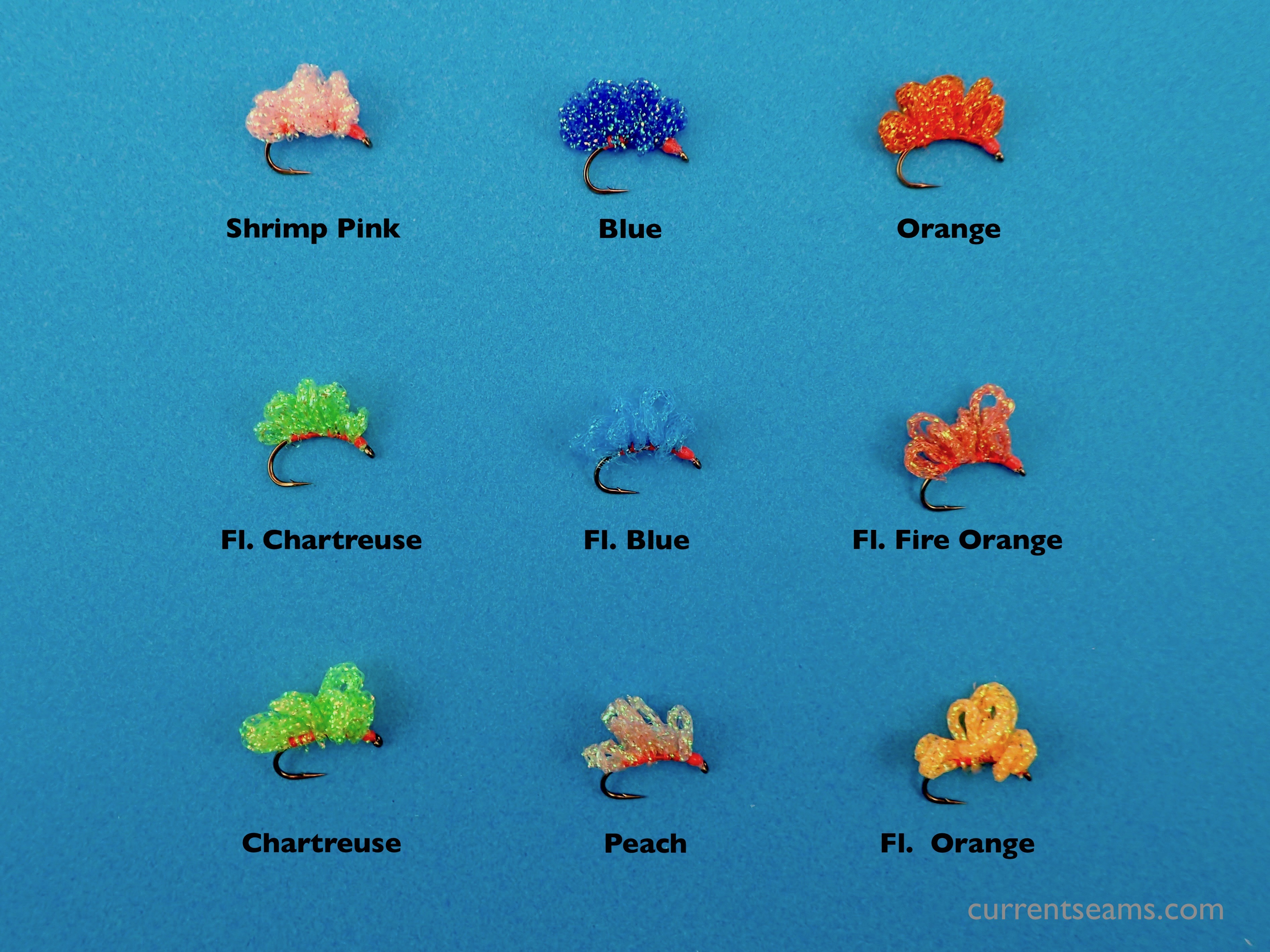
So, what are my favorite colors for the Crystal Meth? Here’s a handy-dandy photo reference chart. I use them all, but if I had to choose a top three, I’d go chartreuse, fluorescent blue, and fluorescent fire orange. YMMV.



 currentseams.com