Drat this cursed rain! Last year the river was pathetically low. This year it’s disgustingly high. The upper Housatonic has been mostly unfishable this month, and as a result we’ve missed out on what’s normally a very productive period. I’ve been feeling bitter about the whole thing, so I decided to take a drive out to the river and see what the conditions were first-hand, and maybe even wet a line. You know — you don’t know if you don’t go.
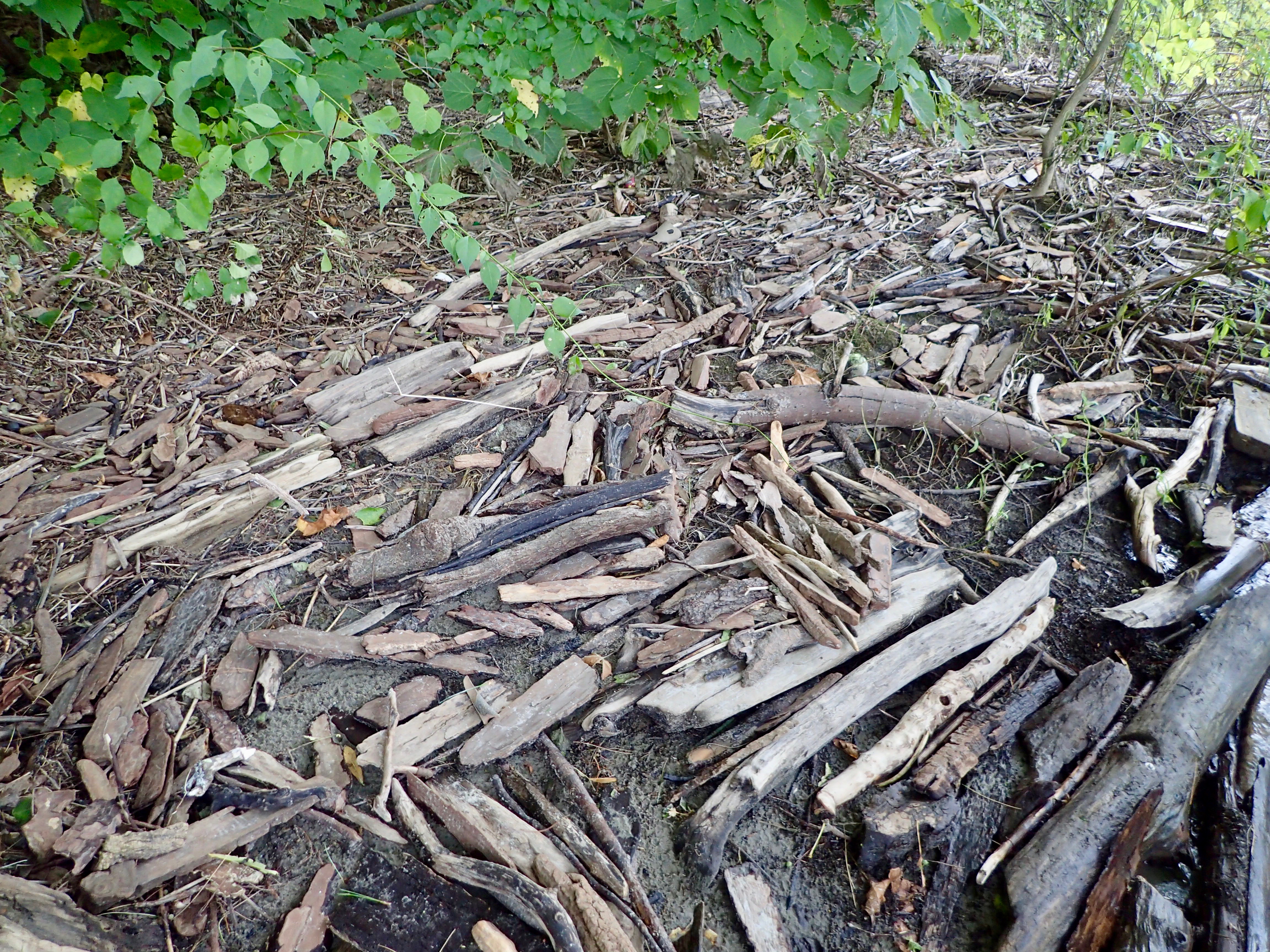
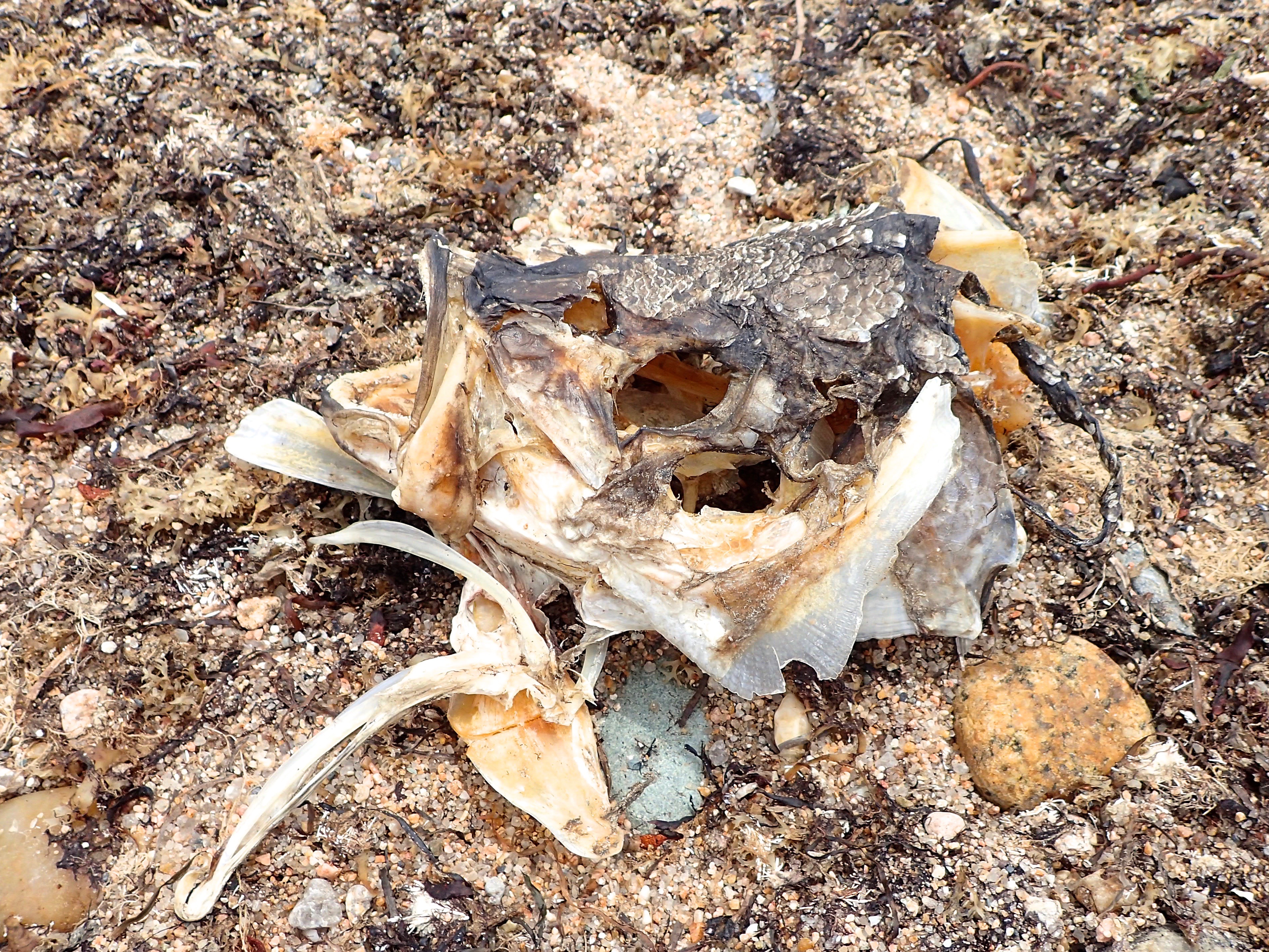
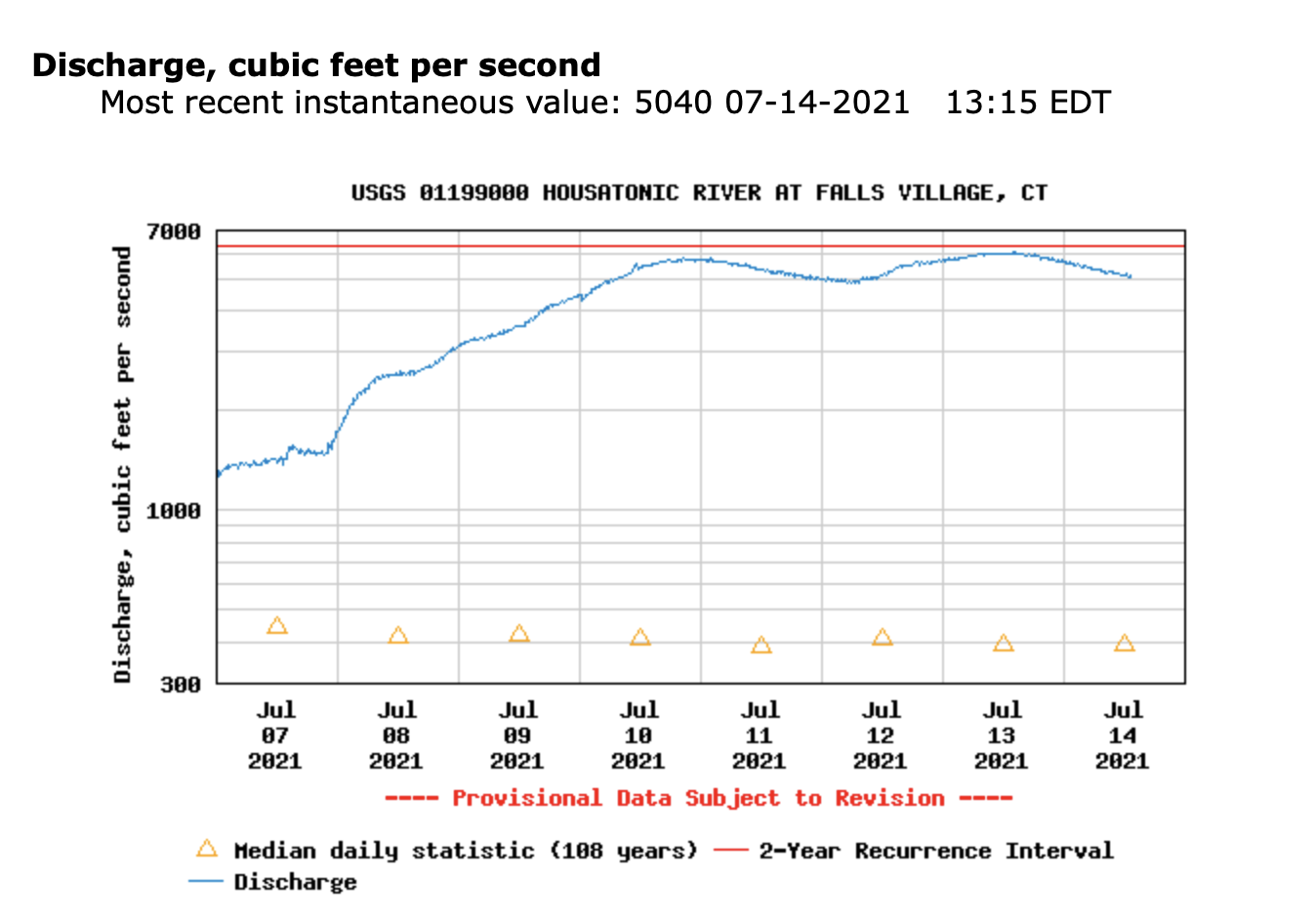
After peaking around 7K cfs, the river dropped about a thousand cfs a day in the trout TMA until it stalled at 2.1K. It’s holding there now (with more rain on the way, of course). At 2K+, the river is either raging whitewater or a vast, featureless glide. This mark is normally a series of riffles and pockets that dumps into a deeper run flanked by frog water on one side and a rocky flat on the other. Now it’s this garbage.Speaking of garbage, the shores are littered with debris. Most of it is natural, like this driftwood, but there are also tennis balls, plastic bottles, and other man-made crap. This photo was taken ten feet away from the present water line. My heart sank at my first sight of the river. I don’t know why, but I expected that perhaps the water would have cleared up a bit. Wrong. Depending on your location, its color ranges from tea-stain to chocolate milk. Visibility ranges from one to two feet. The culprit is silt, which is everywhere, particularly along the riverbanks. Your first couple steps off the bank will be a sinking experience. Never wade into low/no visibility water unless you know the bottom structure intimately, and then, never stray into the current. Studded boots and a wading staff are a must. Be smart and stay safe.Here’s the thing: fish don’t know that the river is flooded. They’ve still got to eat. While you can’t wade to places you’d normally fish in high water, the beauty is that the bass aren’t out in the raging torrents — they’re in the calmer water close to shore, particularly as the daylight transitions to dusk. I fished two evenings this week. One was not good — only one 8″ smallie to hand. The other was a little better, including this slob that could be measured in pounds. What a battle in a 2K flow!
Surfcaster’s Journal 68 is live right now — it’s an online-only ‘zine — and within its fantastic digital walls you can find my latest story, “Sensei Elmer & The 50-Fish Nights.” This is a piece I wrote a long time ago, revisited, rewrote, re-edited — and now, instead of hiding on my hard drive, it can be yours to read and enjoy. You get to see some decent photos taken by me, and some extraordinary shots from my immensely talented brother David . (You can see more of David’s work on Instagram @theplayoflight.) “Sensei Elmer” is about two memorable fly fishing nights I had one October. Or is it about something far deeper than catching fish?
Most of what I write eventually ends up here, but this piece won’t — so if you want to read it, you’ll have to subscribe to the Surfcaster’s Journal. It’s only $20 a year and you get six issues. Tell ’em Steve sent ya.
Happy Friday! I hope your summer is going along nicely. If you’re a river and stream angler here in southern New England, it’s been a tough July. But it looks like we’re going to get a fairly long semi-dry spell, and that should allow the rivers to come down. I’m curious to see what, if any, negative impacts the flooding created. Rest assured, there will be impacts. As for the Farmington River, they’re still blowing water out of Hogback (over 2K cfs), but I think there’s a good chance they may lower the flow for the weekend. Check the USGS Water Data site for Connecticut for real-time information. In other happenings:
I’m working on a short piece about using a floating line in the surf. It takes the form of a case study, using a specific location/conditions, and it will be a currentseams exclusive.
Yesterday, I recorded a podcast for Fish Untamed. The subject is “Trout Fishing For Striped Bass,” and I’ll let you know when it goes live. (Give it two weeks.)
Drat this high water! I had all kinds of smallmouth fly experiments planned for July, and they’ve been blown to smithereens. So, we punt. I’m hoping flows drop enough in the next week so I can proceed. In the meantime, to the tying bench…
My article for Surfcaster’s Journal, “Two Nights in October,” should be live next week. This is an online subscription-only zine, so if you want to read it you’ll have get a subscription. It’s $20/year, which isn’t much for quality writing and storytelling, is it?
Stay safe, be well, and thank you as always for reading.
What’s the big deal, if any, with UV materials? Let’s find out. UV or not, this is going to get stomped.
The best system for organizing your fly tying hooks and beads is the one that works for you. In the case of my ever-growing collection of such stuff, that means storage compartment boxes. But not just any boxes. They need to be adjustable, stackable, and easily transportable. Since I’m not fishing this week, I’m using the time to organize the disaster area that is my tying space. I thought I’d share my process of sorting and storing hooks and beads with you.
Let’s start with the storage boxes. I’m a big fan of the 3700 Series Plano Prolatch(TM) Stowaway(R) and 3600 Series Deep Prolatch(TM) Stowaway(R) bulk storage containers. I’ve been using them for years. You can find them at many hardware and big box retailers, and you can also order them directly from Plano. They’re very reasonable priced, and they’re a quality product. I like these boxes because they allow custom configuration; you can create numerous different-sized compartments within each box. The boxes stack neatly atop one another. And if I’m doing a show or a class on the road, I just latch the box and toss it into a larger container for transport. (Plano offers many more options in the way of fishing hardware/lure storage — it’s worth browsing their site if you’re looking for ideas.)
This is the Deep Prolatch: 11″ x 7.25″ x 2.75″. I’m using this one for my freshwater streamer hooks. Everyone will have their own system of organization; for example, I’ve got hooks of different sizes and makes and models in the middle two compartments. But all the 3x long hooks are on one side, and the 4x long hooks are on the other. Stingers and other shorter shank hooks are in front. Large jig and Atlantic Salmon hooks in the back. Works for me!
I can’t tell you how to organize your boxes –that’s up to you — but I can tell you how I organize mine. I have one box for beads and dumbbell eyes, sorted by color and/or material. For example, I have one compartment for brass copper beads and another for tungsten copper beads. But there’s only one compartment for gold beads, regardless of material, because I don’t have a lot of gold beads. There’s a box for freshwater streamer hooks, and a box for saltwater streamer hooks. My smaller hooks box is organized by hook type, with compartments for light wire hooks, heavy wire hooks, shrimp/scud hooks, heavy steelhead hooks, egg hooks, etc. Again, there may be many sizes and different makers within a compartment, but I can easily find the right hook for a size 14 North Country Spider (light wire hooks section) or a size 12 Dark Hendrickson winged (heavy wire hooks section). Easy-squeezy.
The Beads Box, a 3700 Series Prolatch Stowaway, 14″ x 9.13″ x 2″.Saltwater Hooks, 3700 series. I use fewer types of hooks for salt than other endeavors, hence the extra space at the rear. (Those are spare dividers you see. Each Plano box comes with a set of dividers so you can customize your box.) To be fair, I sometimes use freshwater hooks in the salt, such as Atlantic salmon hooks, and those are kept in the streamer box.My workhorse freshwater box, also 3700 series.Stack ’em up! It’s also very cool to be able to grab a box, toss it into a large container, and hit the road without having to worry that I’ll open the box to find a thousand mixed beads rolling around. Everything stays in its own little space.
Twelve stripers to hand, and not a single picture of any of them? It’s true. We’ve all seen enough cookie-cutter bass photos; the one striper that was photo-worthy escaped into the waves; and several of them were landed in very fish-photo-unfriendly conditions. So, you have to settle for this (slightly) humorous photo essay of my week on the Block. Oh! You may also learn something…
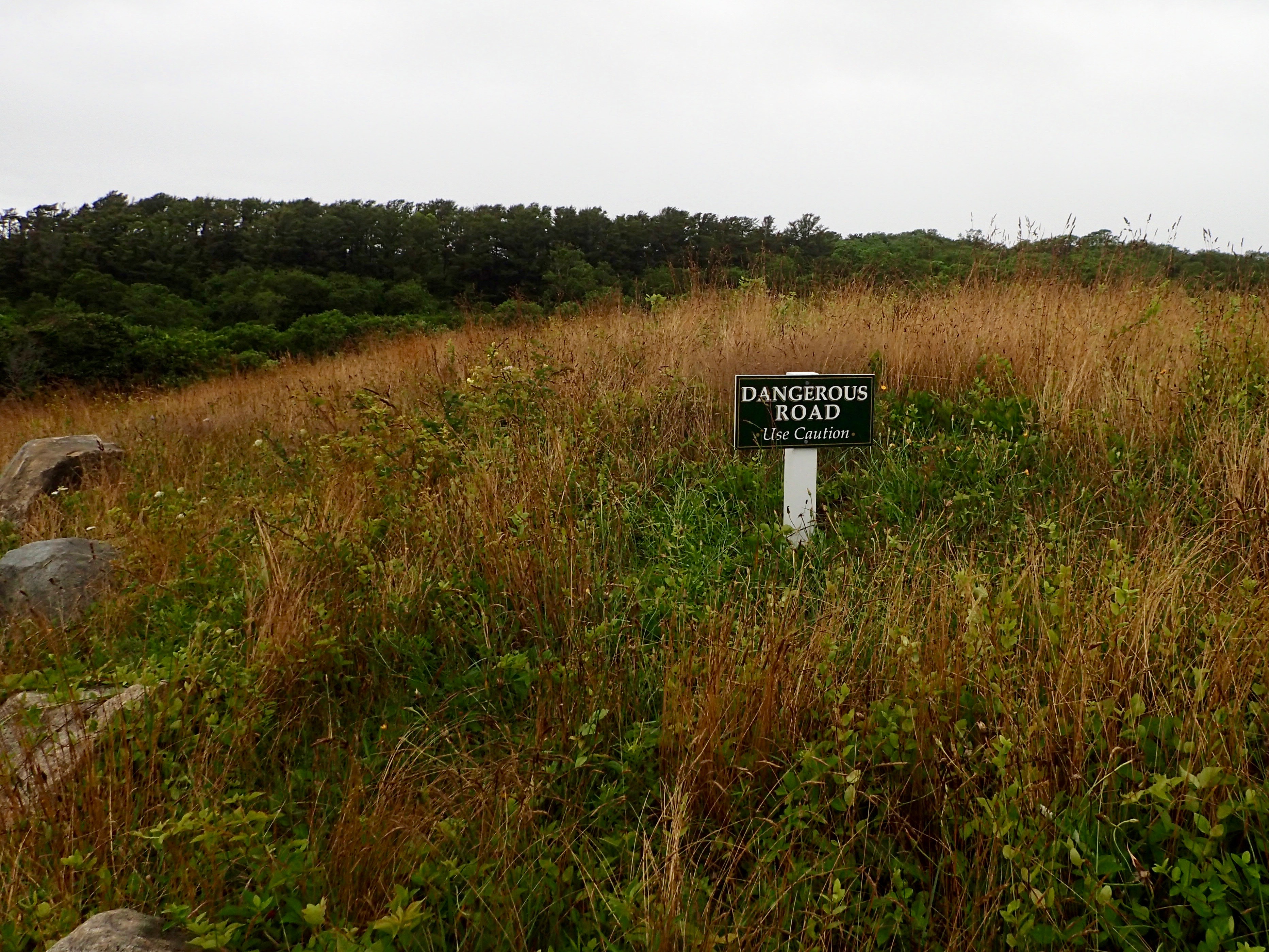
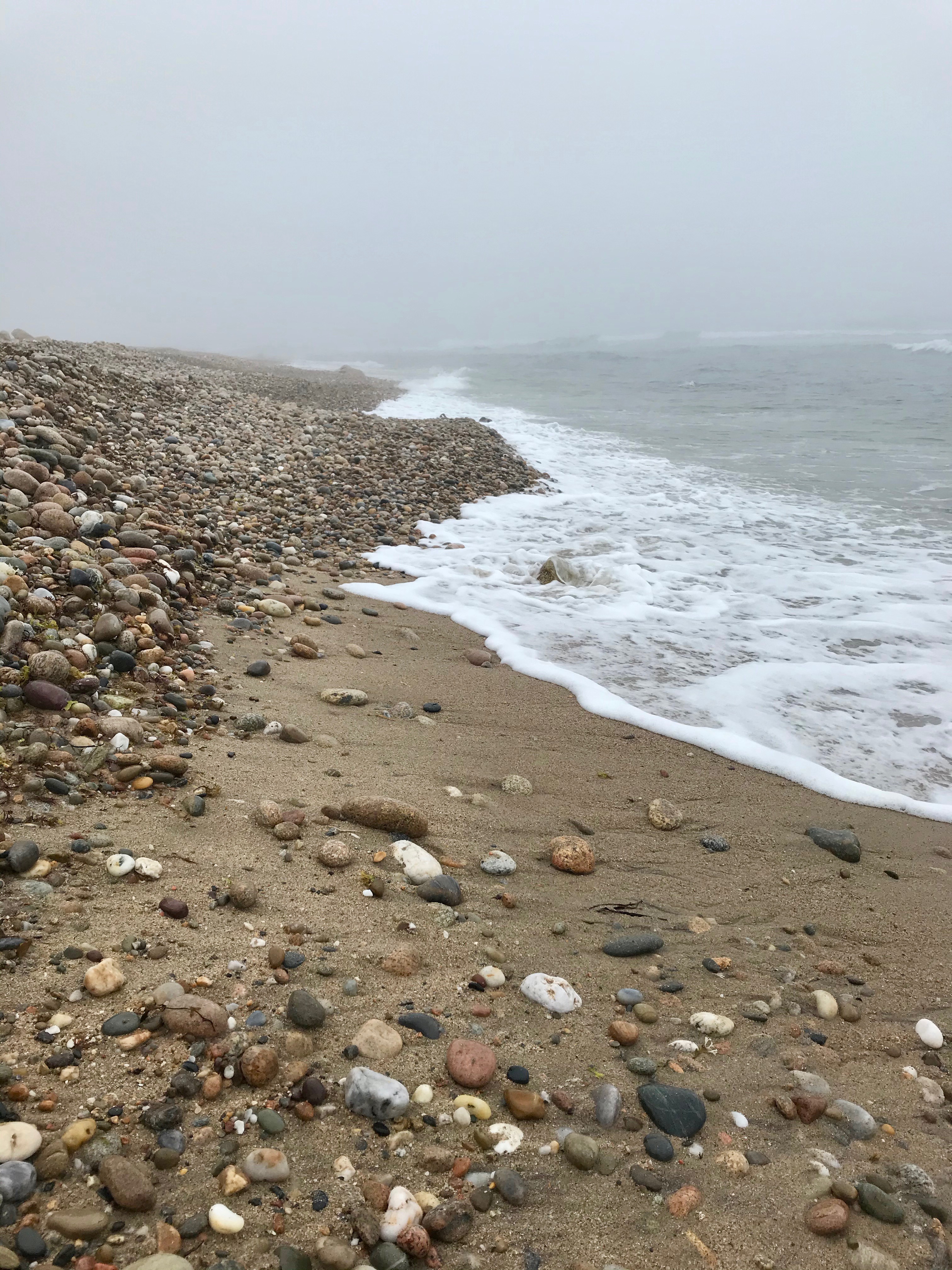
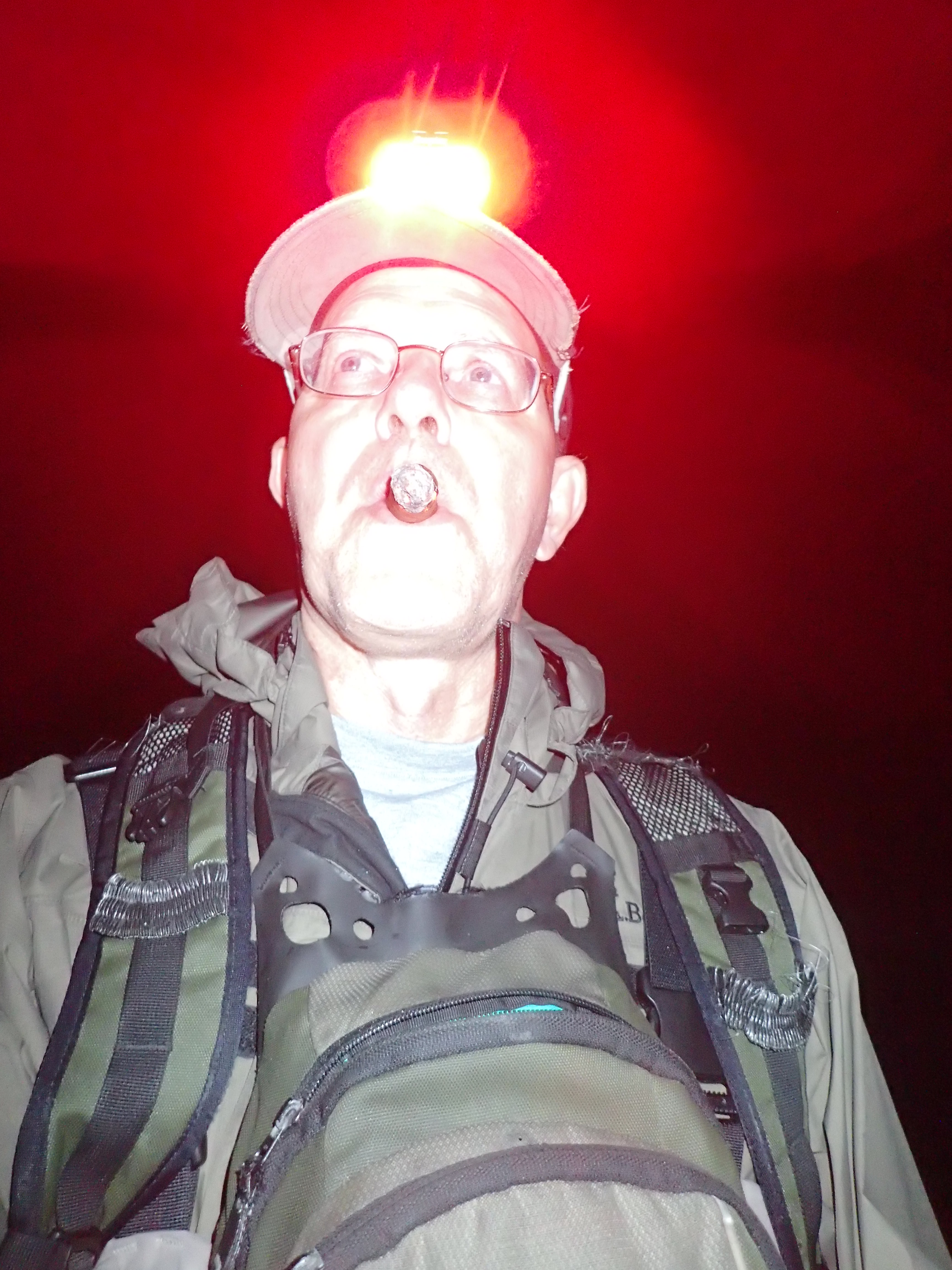
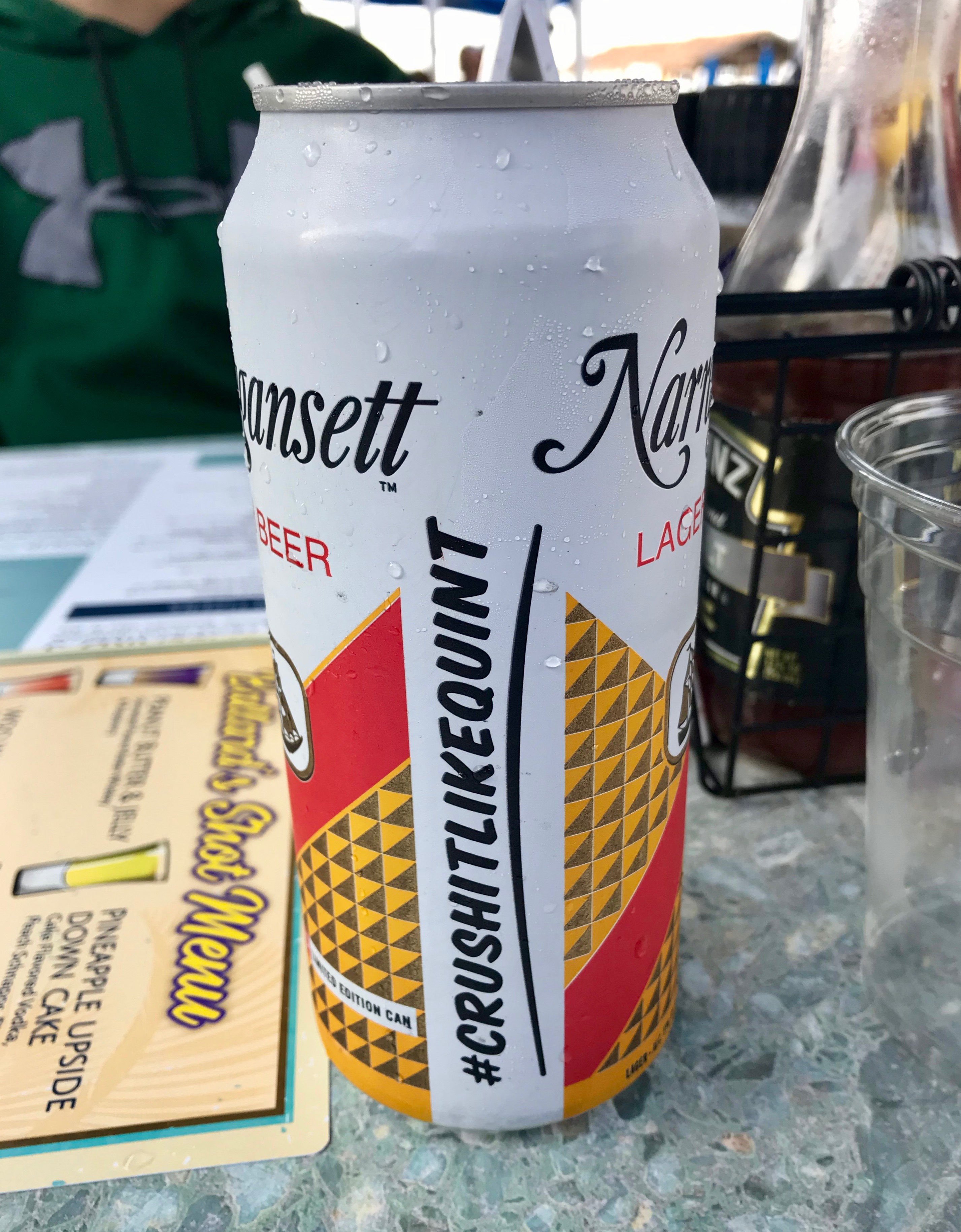
It helps to have a 4WD vehicle on Block. Some of the better fishing can be found along the dirtier of its many dirt roads.Here’s a little lesson in scouting a new mark. This is a section of beach on the south side. I planned to fish it at high tide, so I first visited it at dead low. This gives me an opportunity to see what and where the structure is that will be covered by water. (Of course, I also visited it in daylight at the corresponding tide I’d be fishing). Also, note the tremendous drop-off between where I’m standing and the rock pile-of-a-beach lip at the left. Where I’m standing will be filled at flood, creating a trough through which stripers can cruise for bait. It also tells me two more critical pieces of information. First, I won’t have to cast far to reach viable water. And two, under no circumstances do I want to get too close to the edge, or wade into this trough. Sadly, the surf was too big for the fly rod when I actually fished it, but I believe this mark will produce bass for me in the future.Fine, but I just caught a bass after four hours of banging all over this island, and now I’m going home to have a late night beer.Elsa’s remnants produced some impressive surf. To give you some perspective, those waves are hundreds of feet away and well overhead high. In my experience, an approaching tropical storm/hurricane on Block can turn the bass on big time the night before (nope, didn’t happen this time) and then completly mess up the fishing the next night (yep, that did happen). To be fair, the fishing stunk all week, so it made little difference.Electrical storms were an almost constant threat that week. Here I am keeping my eye on a system that was moving over the mainland. I’m also celebrating my only bass of the night, which is always a cigar-worthy occasion.“Here’s to swimmin’ with bow-legged women.” I remember these retro-cans from the 70s. To Block Island: you’re a truly special place to fish.
After last year’s feast or famine full-moon struggle, I was really looking forward to fishing the dark of the moon on Block. To add to my excitement, the shore fishing in the weeks leading up to my trip was en fuego. I’ll quote Chris Willi of Block Island Fishworks: “I haven’t seen this much bait and bass and blues and shad in the pond in 20 years.” Captain Hank chimes in: “There’s life in the drink everywhere!”
By the time I arrived, it was all gone.
The front that came through on July 4th weekend sent everything packing. To add to the weather mischief, tropical storm remnants swept through mid-week and further cocked things up. The result was some of the poorest fishing on Block I’ve experienced in the last decade. A dozen fish over the course of seven nights was the best I could do, and I felt like I did really well given the conditions. To give you some perspective, I got a dozen fish or more on four different nights last year. I did not see another angler catch a striper from the shore, fly or spinning, for the entire trip. I did not speak to any anglers who managed more than two stripers the entire trip. Perhaps worst of all, this is now the third consecutive year that I have not caught a bass over 28″ on Block. Not good.
The Cut was a barren bait and striped bass wasteland. Charlestown Beach likewise. The flats fishing, my favorite form of Block Island fly fishing entertainment, stunk. Even the East side beaches were spotty, with a fish here, a fish there — and that’s if you could find a weed-free zone. And yes, I hit up the South side and SE sides. Blanks.
But enough kvetching. There were some positives. I did not blank on any night. I fished three marks that I’d never fished before, and found fish in two of them. (In fact, one of them became my defacto skunk saver.) I loved all three spots, and I will be adding them to my rotation. I spent more time fishing open beaches in wind and wave, and the two-handed cannon once again proved its mettle. On the opposite side of the rod spectrum, I finally baptized my five weight with a Block Island bass. And let’s face it: anyone who gets to spend a week banging around Block Island with a fly rod and a humidor full of premium cigars has a pretty good lot in life.
There’s always next year.
Now, if the rivers would just come down so I can harass some smallies.
I had planned on some serious smallmouth expeditions this week, but Mother Nature and the new normal — extreme weather — have put the kibosh on that. Last year it was drought, heat, and low water. This year, it’s torrential downpours and flooded rivers. This is now the sixth rainiest July on record, and here’s the kicker: we’re not even halfway through the month. (Anyone who doesn’t think we are experiencing climate change should note that of those six rainiest Julys on record, three of them have happened since 2001.) Some of you have inquired about wet fly guide trips, but I’d like to see the Farmington come down below 500cfs before we plan. Hang in there folks. Tie some flies, fish the salt or small streams, and sooner or later it will stop raining….for months…and we’ll be in another drought.
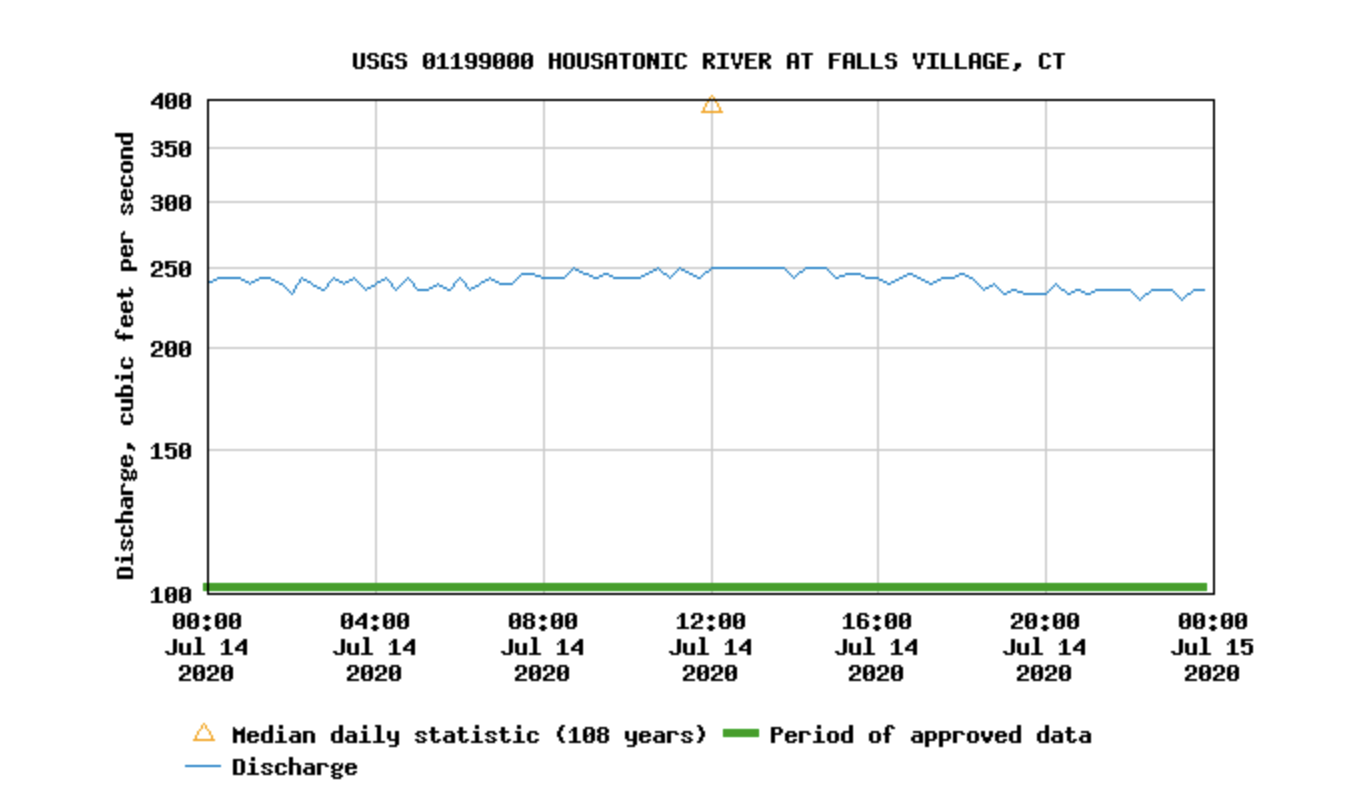
Last year at this time, the Housatonic was medium low. (This is about 100cfs below historical normal.) We were in the beginning of the drought, and while manageable, the flow never got consistency higher than this for the duration.Yikes! What a difference a year makes. Twenty times the amount of water, and I’ll consider us fortunate if it comes down to 1K some time next week. I generally favor high water over low water, but this episode makes one reconsider that position.
In his classic Stripers and Streamers, Ray Bondorew serves up an unimpeachable truth: fly tyers tend to overcomplicate things. Nowhere is this more true than in striper fly tying, where realism is king. Sand eels, also known as sand lances, are pretty basic — slender body, pointed snout, lighter on the bottom, darker on the top. Yet, as Ray observed, “Many sand eel patterns have been devised over the years, and many seem to involve much work to copy such a slender, simple bait. Complex bodies with Mylar tubing, Corsair, and epoxy have evolved. Several patterns require tandem hooks.” He doesn’t mention my pet peeve: eyes, which do a fantastic job of catching anglers. But I digress. I’ll let the man continue.
“I have always thought,” Ray said, “that there must be a way to formulate a simple, quickly tied, and effective pattern, especially for sand eels less than four inches long.” So Ray went forth and prospered at the vise. Ray’s Marabou Sand Eel is another favorite of mine, along with Ken Abrames’ Eelie, for imitating small sand eels, three inches long or less. Like Ken, Ray has some very specific thoughts on how best to tie this pattern.
“The trick here,” he says, “is to use as little marabou as possible.” Any thicker than a paper match width is, as Ray calls it, “overdressed.” Wet your fingertips and run them along the length of the completed fly to see if you’ve achieved your goal. Those who channel their inner sparse, impressionistic fly artist shall be rewarded with fat, cantankerous stripers.
Ray’s Marabou Sand Eel. Thread: Light green monocord. Hook: Eagle Claw 254 size 1 or 1/0. Body: Pearl braid. Tail: Several wisps of long white marabou over which are tied two strands pearl Flashabou and a few wisps of olive marabou. Wing: A few wisps of olive marabou topped by 2-3 strands of peacock herl.
Tying notes: As with Ken Abrames’ Eelie, I use the Eagle Claw 253 or other light, wide gap hook. No monocord for me, so I use Olive UNI 6/0. Leave a 3″ tag of thread near the hook bend; use this tag to bind down the wing. (Ray says if you choose to go the non-bound wing route, the pattern makes a fine silverside fly.) The pearl flash should extend beyond the wing by 1/2″. Use high quality marabou quills, and keep it sparse. What’s pictured here is as heavily dressed as I go.
If you tie Ray’s Marabou Sand Eel and it looks too thin, you probably tied it right.
Many of you know that Ken Abrames’ Big Eelie is my favorite sand eel fly. I use it primarily when the bait is at least 3″ long, or when I’m fishing an open beach or need a sand eel searching pattern. Oh, did I mention that it’s my favorite fly for Block Island? But smaller bait requires a smaller fly. Enter Ken’s Eelie, little brother to the Big one. The Eelie is basically a Big Eelie minus a saddle and the soft hackle. I rarely tie the Eelie longer than 4″; 3″ seems just about right. I love this fly as part of a three fly team; that’s how I most often fish it. Like the Big Eelie, the Eelie lends itself to all manner of color variations (try white, chartreuse, and olive, with a chartreuse body).
The Eelie is an exercise in sparse construction (some bucktail and a few hackles), simplicity (it’s a fast, easy tie), and impressionism (no eyes). The key to the Eelie is its thinness. I’ll quote Ken from Striper Moon: “The secret of tying effective sand eel flies is how thin you make them. Sometimes, an eighth of an inch thick is too heavily dressed.” You’ve been so advised by the master himself.
Ken Abrames’ Eelie. Hook: Eagle Claw 254 sz 2-1/0. Tail: White bucktail, then a white saddle, then pearl flashabou, then a yellow saddle, then an olive saddle. Body: Pearl mylar tubing. Wing: None
Tying notes: Ken’s original recipe is listed above. I make a few changes when I tie the Eelie. For years, I’ve been using the Eagle Claw 253 1/0 and some smaller hooks from brands like Gamakatsu; the key is to find hooks that are short shank, wide gap, light and strong. I match thread color to body color (here I used UNI 6/0 white). Instead of tubing, I use pearl braid for the body. Follow Ken’s instructions for thinness, and you’ll make the bass — and yourself — very happy.
For sand eel flies like the Eelie, thin is always in.
Happy Birthday to the United States of America. I hope you’re have a safe and fun Fourth of July; maybe you’re getting together with family, or perhaps you’re out on the water. To help you celebrate, here’s bonus from the archives: the Olive Fireworm Big Eelie variant. This is my traditional 4th of July favorite sand eel pattern. Tie some up, and let the fireworks begin!







 currentseams.com