New Tying Class: Wet Flies and Fuzzy Nymphs for the Farmington River

This is one of my more popular tying classes. We explore buggy, impressionistic wets and nymphs geared toward fishing the Farmington, but the patterns and skills you’ll learn will serve you well on almost any trout stream. The class places an emphasis on using natural materials to create flies for specific hatches, as well as attractor patterns. Participants will need a vise, thread and tools. All other materials will be provided from my magical, mystical stash. The cost is $50.

Learn to tie the Squirrel and Ginger, and many other patterns that trout won’t be able to resist.

Image

When: Sunday, February 9, 2014, 9am-2pm

Where: UpCountry Sportfishing, New Hartford, CT

Sign Up:  I can’t enroll you; you can sign up by calling UpCountry at 860-379-1952.

1/8/14: Current Farmington River conditions

Yup. It’s cold out there.

As you can imagine, the recent deep freeze has transformed the Farmington into an icy mess. I drove along its length today from Farmington to Pleasant Valley. Vast stretches were completely iced over; others were clogged with slushy ice. Only the faster sections remained frozen stuff-free. This is not uncommon for the Farmington during extended periods of Arctic temperatures. If you absolutely have to fish, by all means do so. If it were me, I’d tie some flies and wait for a few consecutive days of near-forty-degrees.

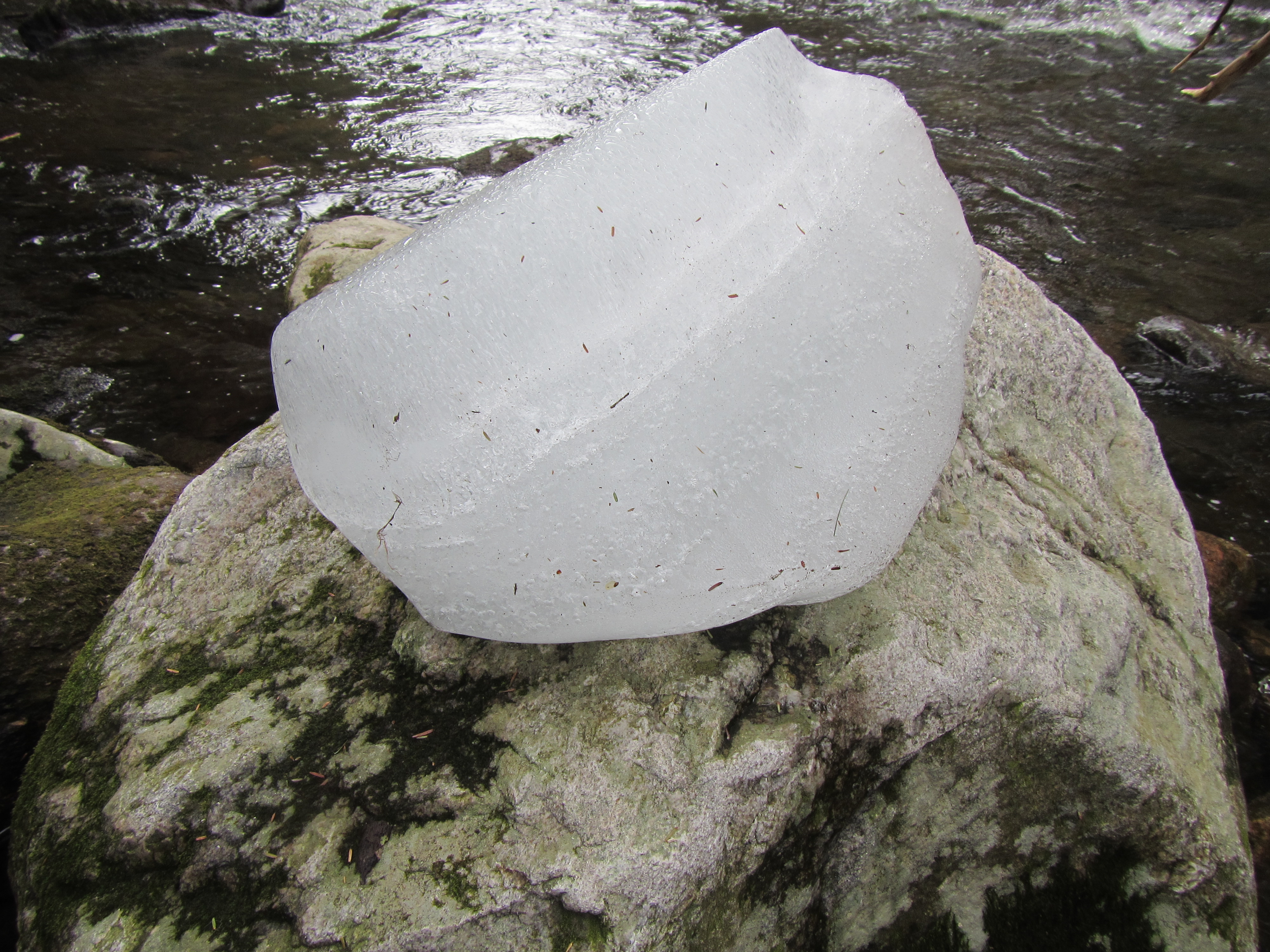
It even looks cold. Taken from the Collinsville Bridge. The stretch of water directly behind me and around the bend below were totally iced over.

Image

It’s a New Year’s Top 100 Celebration!

Wowee! 100 followers of Currentseams. I can’t thank all of you enough for your interest in the site, and I’ll try to continue to provide you with more of the same good stuff in 2014.

Speaking of which, let’s celebrate with a little giveaway. The prize is a selection of one dozen wet flies tied by yours truly. Here are the rules:

1) No purchase necessary.

2) You must be one of the original 100 followers of currentseams. That means you started following before January 5, 2014.

3) To enter, leave a comment on this thread saying you wish to enter. (Additional flattering comments about me, my writing, or the site will be appreciated, but will have no bearing on your chances of winning. Really.) One entry per person. Deadline for entering is 11:59pm January 12, 2014. The winner will be chosen at random by Mrs. Culton, official accountant and attorney of currentseams. The winner will be notified in the comments section of this thread, and will be responsible for sending me their address so I can ship the flies out.

4) All decisions by me are final.

Photo for drooling purposes only. Flies may or may not look like these. You get what you get and you don’t get upset. Flies guaranteed to be lovingly crafted by Steve Culton and doused with an abundance of good fishing karma.

Image

November 2013 Steelhead: Fishing with Robert Zimmerman

Day One: Stuck inside of Altmar with the Pineville blues again.

Right from the start, I knew this trip was going to be a bust.

The river was pumping at 2000cfs. That’s high by anyone’s standards, and at that level vast stretches would be transformed into featureless aqua super highways. The weather was supposed to be bad. But the kicker was Bob and Bill. They had just returned from four days on the Salmon. Zero steelhead landed. Days between strikes.

There is a technical term for all this. “Sucks,” I think.

Then, there was last season. Six days of fishing from November through January. Only two steelhead to hand. Two days without a single touch. Yes, it would be fair to say that I was not stoked about this trip. But you don’t know if you don’t go. Maybe by some incongruous twist, my luck would change.

Five hours in, there was no sign that it would. We had left Connecticut before sunup and were on the water by 10am. A motion was made to focus on one of the Salmon’s diversions – small streams under normal conditions, but at 2K proper rivers. Jon was into steelhead right away, tussling with three in the first hour. Tommy and Todd decided to seek their fortunes downstream. I settled in on a 200-foot section that had a corner bend, riffles, and a mysterious dark hole. But nothing. It’s terrible when you’re wishing you were back home on the first day.

“Dang. I knew this was a stupid place to build a nest.”

Image

Finally, at 3pm, I hooked up. Not a steelhead, but a king salmon. I figured this would be me versus dead meat, but the fish treated me to some whale-like surface rolls and an earnest attempt at going airborne. With precious little action coming my way, I really wanted to land him. Fellow flyaddict Gary, who was downstream from me, went above and beyond trying to help me get it to shore. After a long walk, he and Jon were able to corral it. It wasn’t very attractive, and it was foul-hooked, but at least a skunk of some sorts was off.

I had one more take about an hour later. A steelhead, eight or nine pounds, fresh from the lake. As it performed its initial cartwheel, Gary wished aloud, “Stay on.” Seconds later, it was off. The new normal.

It was beginning to look like a long four days.

~

Day Two: They’ll stone you when you’re floating in a boat.

I hemmed and hawed about floating the river solo. Before we left home, I had called Jim Kirtland (aka Row Jimmy, an excellent guide, and a fun person to spend a day with) to see if he had any open dates, and as luck would have it, he had a cancellation on Sunday. The rest of my group decided to wade, so I’d be going it alone. If I were lucky, I would not only catch steelhead, but also  gather intel on where they were hiding out.

We launched just before 7am. If you’ve never been, the Altmar boat launch is the upstate New York version of Burning Man. Instead of a towering tinder structure in human form, there’s the monolithic cement bridge. Replacing semi-nude hippy art chicks in furry leggings are porcine middle-aged men with near-ZZ Top facial hair, mad bomber hats, and camo hunting bibs. Not a fair trade, I’ll grant you. But it is an experience. Crowded. Chaotic. Carnival-like.

And of course, there is the jamoke factor, to which I contributed mightily. We had just passed under the bridge, and I put my second backcast over another angler’s line. To deflect my embarrassment, I announced to him that I was, in fact, a douche bag. And, if he ran into my friends later on the river, he should tell them what I douche bag I was. He laughed it off good-naturedly, and there were no further casting incidents. But the fishing was slow. One dropped steelhead in the first two hours.

We slipped down into some very promising water that I’d never fished before and anchored center stream. Egg patterns were getting me nowhere. So I announced that I was going to try little black stones. Every once in a while, you make an adjustment upon which the entire day turns. On my first cast, the bright yellow yarn indicator suddenly disappeared. I raised the rod tip and was greeted by a substantial pull at the other end. I lost the fish, but this was encouraging. Another take soon followed, and I began hooking steelhead in earnest. Whether it was a Copperhead Stone or a 60 Second Redhead or any of the many stonefly variants I tie, there was something going on down below hatch-wise that had the steelhead acting like winos at a Night Train open house. It certainly wasn’t the anecdotal fish on every cast, but it was as close to hooking an unreasonable number of steelhead in a brief period as I’ve ever experienced.

So much depends on a little black stonefly, nestled inside a steelhead’s mouth. The flies I was fishing were all tied on 2x strong, 2x short size 10 scud hooks. As Jim says, it’s hard to go wrong with black and copper on this river.

.Image 

The bite was so good that I hardly even noticed the wind-whipped downpour that parked over us for nearly an hour. All the while I kept telling Jim, “We’re staying here a little bit longer.” Damn right we are. In the midst of this embarrassment of riches, though, I began to feel self-conscious. What if Jon, Todd, and Tommy weren’t having any luck?

After two hours and close to fifteen steelhead, it was time to move on. We ran into the guys about a thousand yards downstream. Not to worry. They had found their own little paradise and were into a bounty of chrome, many of their steelhead in double-digit pounds. When Jim and I pulled out in Pineville, I shelved the idea of hiking over to meet them. I sat in the cabin at Fox Hollow and let the day’s events wash over me. A truly sensational steelhead buzz is hard to come by. I was going to savor this one, ably assisted by Mr. Adams and Mr. Fuente.

~

Day Three: You want hard-boiled eggs.

I’ve known about trout beads for many years and I always poo-pooed them. But the winds of change were swirling. I told Jim yesterday that I’d even use that fluorocarbon tippet of his (Drennan 6-pound. I still hate knotting fluoro, but I’ll be damned if that stuff wasn’t so impressive at holding big fish that I went right out and bought a spool). So today, with vast reserves of steelhead currency safely banked, I decided to see what this bead thing was all about.

We were now a party of three. Todd and Jon decided to focus their efforts on a riffle downstream where Jim and I had observed scores of steelhead the day before. I was captivated by a lovely little pool upstream, and set up shop there. It wasn’t long before the indicator dipped, and my rod thrummed with energy. It was a steelhead – a small one, freshly minted, highly spirited. Since I was playing around with new things, I thought I should hand-strip a steelhead in for the first time. A substantial pod of skippers was passing through, so I got to do it again and again. They were all sub 16-inch fish, but perfect in their own guileless way. Some of them even displayed the fading parr marks. Original artwork suitable for framing.

Meanwhile, Todd and Jon had been waging war with some significantly bigger fish. They were fifty yards downstream, and I could hear their cackles over the chatter of the river and see the deep bends in their rods. I considered joining them, but I figured with steelhead, what is downstream must soon come up. Besides, this pool was my idea of perfection. It had a clearly defined center seam that held fish along its entire length. There was enough bottom structure to entice the steelhead to pause on their journey, but not enough to cause repeated snags. The current moved at casual walking pace, making line management a breeze. (I was focused on improving my line management on  this trip. Less slack line on the water meant a better hook set, and a better hook set meant less heartbreak.) And because I had it all to myself, I could work the pool at my leisure. Surely the moment I vacated it, someone would materialize out of the woods to claim the prize. I would be a fool to leave it now.

Why beads work. The shores of the pool were littered with naturals. Inquiring minds will want to know, so here it is: 8mm Glow Roe by Troutbeads. I know, I know, it’s not fly fishing. But it sure is fun.Image

Bigger fish started to move through, and they found my peach-hued plastic spheres to their liking. I could do no wrong. Even when I fair hooked a king salmon – certainly a late traveler, as he had a translucent tail and not a suggestion of rot on his body – he was landed despite the fact that I was using six-pound for tippet. (Not to be ignored was some brilliant net work from Jon. Using a landing net without a handle, both he and Todd had perfected their technique, and I am grateful to them for helping me bring so many good steelhead to hand.)

Not bad for 6-pound tippet. I’ve never seen a king in this good condition this far into the season. Note that his head is bigger than mine — not an easy feat any time of year. 

Image

As I reached the quarter-century mark of steelhead hooked, the enormity of the day began to sink in. If there is such a thing as good steelhead karma, it was truly directed at me. The bitter memories of last year’s fishless outings and numb fingers  seemed impossible now to recall, let alone understand. And that’s when I decided to swing.

You hear stories of people who do nothing but swing flies for steelhead. They are content to go days without a strike if it means the opportunity to hook a single fish with this purest of methods. I admire their conviction; clearly their spiritual resolve is stronger than mine.  Armed with the confidence of a constant stream of fresh steelhead, I pulled from my box a streamer I had tied specifically for this trip: the Grapefruithead Leech. It’s basically an oversized egg-sucking leech with a contrasting head of fuchsia and chartreuse. On it went, and off I went to the other side of the pool where the fast water met the edge of the sod bank.

The take was not what I expected. I was hoping for an earth-shattering kaboom. But instead it was a dull thud, albeit a sizeable one. “Are you in?” asked Jon from the opposite bank? “Yes!” I shouted back, and we were off to the races. The steelhead quickly found the riffles below me, and so began an extended dance of silver, spray, and prayer. At one point I thought the fish was foul hooked; but as she move into more clement waters, I could see that the leader had wrapped around one of her pectoral fins during one of her flurries of leaping madness. The tippet came free with the sound of a plucked guitar string, and I was afraid I would lose her. In the fading light, I directed her between two downed trees along the bank hundreds of feet below where I had hooked her.

She sped off before I could take her picture, kissing my face with a spray of water.

~

Day Four: I didn’t feel so cold then.

The bargaining phase works in reverse. That is, you can have beyond-wildest-dreams fortune, and negotiate downward: “I’ve caught far more steelhead in the last two days than I have in the last two years. So if you make the fishing lousy today, I won’t mind.” Lousy fishing seemed inevitable. Even reasonable, given the cold front and snow showers that were supposed to come through today.

Not a chance. On my first cast I hooked a sixteen-inch steelhead that made a laborious tour of the run, complete with several aerials, taking far more time than any sixteen-inch fish had a right to before coming to hand. A creature of routine and habit, I was back in the same pool, with Todd and Jon once again downstream. Within the first hour, I had landed three, the last two about eight pounds each, gleaming with the metallic brilliance of Lake Ontario. Without a landing posse, I had to steer both fish away from the swift water at the tailout and beach them in the shallows. But steelhead of eight pounds or less are usually manageable, even if they are obstreperous. Besides, I was fishing with newfound confidence, and I did not fear losing them.

Three steelhead were enough for me on beads, and I happily returned to the fly. My fourth came on a Copperhead Stone, neatly planted in ivory mouth. I stalked that fish with the utmost care after I noticed him porpoise in some glassy water near the head of the pool. My presentation was upstream, as delicate as I would have made it to a trout sipping spinners. I felt great satisfaction when I hooked and landed that fish.

But, the nature of steelheading is that you will lose fish. As skilled an angler as you may be, it only takes a little bad decision-making or a little bad luck. I managed both with my largest steelhead of the trip. A buck with shoulders, well into double-digit pounds took my purple Steelhead Hammer. Down the run he went, tail-dancing and cavitating before sulking on the bottom. I had re-learned from Jim the concept of not letting the fish breathe: that is, after an exhausting run, the steelhead will pause to regroup. The angler should not. This is the time to press the fish; kick him when he’s down; take unfair advantage of his oxygen deficit. I began to reel, the butt of my rod pointed upstream, a deep flex in the blank.

This merely annoyed the fish. Big steelhead aren’t like their smaller brethren. You simply cannot dictate terms to them. At least not early in the fight. He burst upstream with an almost otherworldly power, over the riffles at the head and into the pool above. This was worrisome, but I was still confident I’d land him. I had a good initial hookset, and I had hit the fish again when he was down below me. I’d be holding this one in my hands soon.

And just like that, things went south. Downstream came the fish, barreling over the riffles and streaking past me with frightening speed. To keep tight to him, I had to decide instantly: strip the line or crank the reel like a maniac. I have done both and landed fish. Today I chose wrong. As I frantically reeled, the tip of the rod wobbled like an antenna in a windstorm. I was so focused on the fish, I didn’t notice the line curling around the tip of the rod. I came tight to the steelhead. Too late, I saw the imminent danger. He ran farther downstream. The coiled line tightened around the rod. Tippet strained. In an instant, he was gone.

I stood in the river, alone and fishless.

The cold front arrived around noon, bringing lake effect snow. I could still see steelhead coming through the run, but the bite was over. And at three o’clock, we decided, so was our trip.

The obligatory grip-and-grin. This was our trip in microcosm: plentiful fresh fish. Lots of smiles.

Image

Out with a shiver

The last blast of 2013 was a late afternoon excursion to a small brook a few miles from my home. The temperature never got above freezing, and there were some snow flurries to embellish the wintery streamscape. Despite a generous pre-outing application of Stanley’s, ice in the guides and on the leader were a constant problem for the 90 minutes I fished. Shelf ice was everywhere, but it was easy to break through with a well-placed, forceful step of the boot.

The brook was running cold today. Black ice on some of the rocks gave them the illusion of being wet. It almost cost me a swim or two (three cheers for studded boots). This ice halo just looked pretty. I liked its contrast against the green moss.

Image

To the fishing. There was plenty of that. Catching, not so much. I decided to cast my lot in the subsurface direction, swinging and stripping a small streamer (or a very large wet, depending on your point of view) without finding a favorable response. The last ten minutes, I fished dry. No dice. On a positive note, I got to be blissfully alone in the woods and the snow with a Casa Magna Extraordinaire diadema.

I probably won’t go back to this brook until April. The fish will want to play then. I’ll be about ready, too.

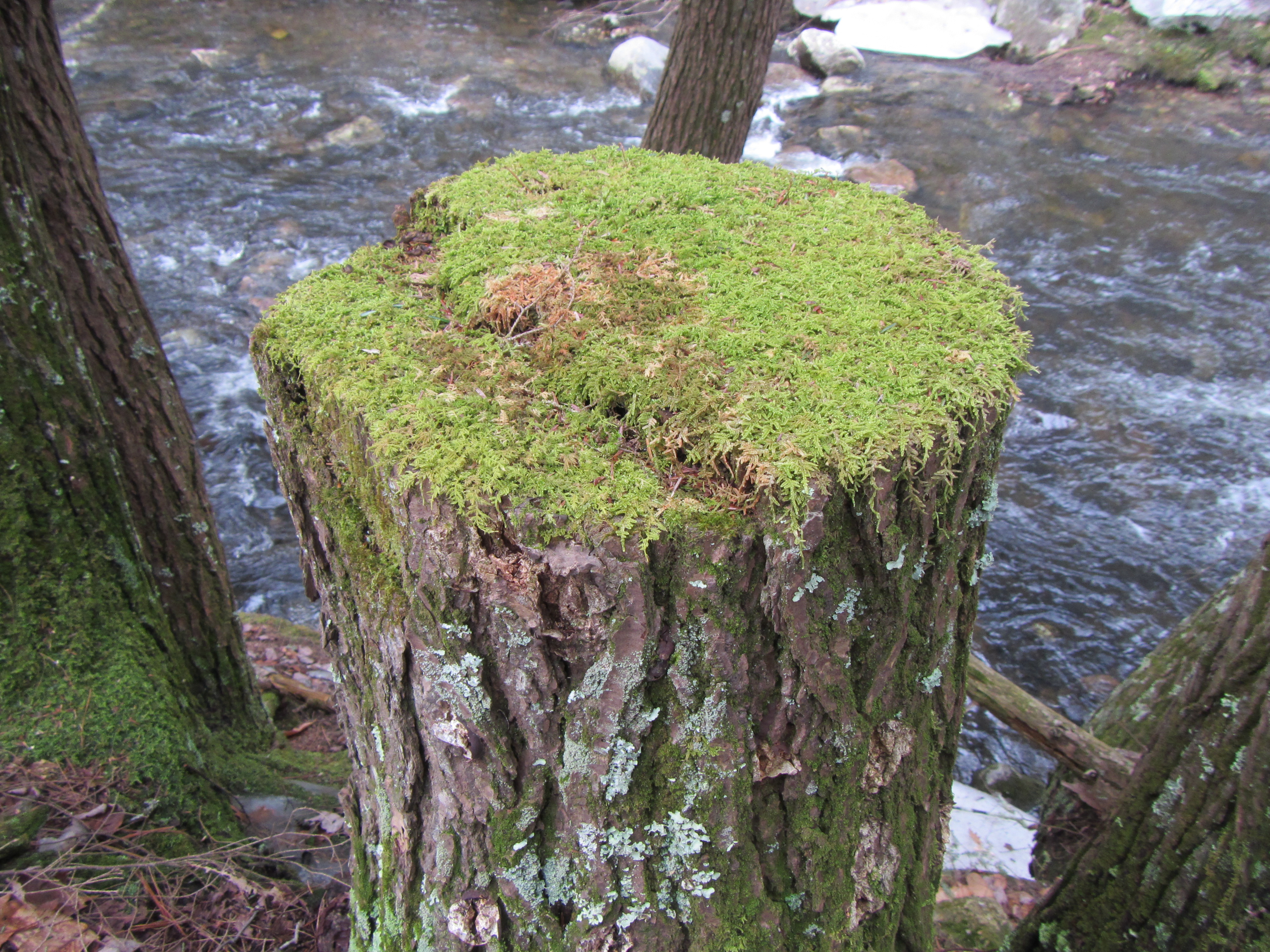
I didn’t get a water temperature, but it must have been in the low 30s. We’re in for a cold snap, so these mushroom caps won’t go away any time soon.

Image

“Wet Flies 101” Presentations in February 2014

If you’re interested in wet flies and are within driving distance of Danbury, CT, or Coventry, RI, mark your calendars for February 2014. I’ll be making my presentation of “Wet Flies 101” to the Candlewood Valley TU chapter (cvtu.org) on Tuesday, February 11, and to the Narragansett, TU chapter (tu225.org) on Wednesday, February 26. You don’t need to be a member to attend, and you can get directions and times from their respective websites.

Wet flies have been fooling trout for centuries — and the fish aren’t getting any smarter. While the wet fly fell out of favor in America decades ago, more and more trout anglers are discovering that the best match for a hatch is often a wet fly. “Wet Flies 101” is a basic overview of the method. I cover history, fly styles, leader construction, where to fish wets, and presentation. Hope to see you there!

This big summertime brown took a Drowned Ant soft-hackle on the Farmington River.

Image

The Drowned Ant is a simple soft-hackle, based on the centuries-old pattern Starling and Herl. Trout can’t resist this fly.

Drowned Ant

Tying Demo: “Small Stream Flies for Wild Trout,” March 1, 2014 at The Compleat Angler

I’m pleased to announce my first event for 2014: I will be returning to the Compleat Angler in Darien, CT for another tying demo. This year’s subject will be flies for small streams. Fishing small streams presents a unique set of challenges to the fly angler – and sometimes, fly selection (and size) is the difference maker. “Small Stream Flies for Wild Trout” will cover dries, wets, nymphs, and streamers that will help you build a basic kit for all kinds of waters, from shallow riffles on woodland brooks to deep plunge pools on high-gradient mountain streams. I’ll also discuss tactics and presentation. My demos are highly interactive, whether we’re doing Q&A or just talking fishing. Hope to see you there!

Where: The Compleat Angler, 541 Post Road, Darien, CT, 203-501-1713, compleat-angleronline.com

When: Saturday, March 1, 2014, 10am-2pm

This breathtaking beauty liked the look of a tan caddis skittering across the surface of a remote mountain stream. One of the things we’ll talk about is fly selection — dry or subsurface — and whether to fish up or downstream.

Image

Merry Christmas from Currentseams

I’d like to take this opportunity to thank all my loyal readers for hanging in there with me over the last couple months. Now that the holidays are winding down, the big kitchen project is almost finished, and there is light at the end of the work tunnel. I’m hoping to get back to posting more reports (this would mean actually getting to go fishing — yes!), stories, articles, and fly patterns on a regular basis this week. I have some appearances to tell you about, and I’m about a third of the way through my fall 2013 steelhead story. I think you’re going to like it.

I hope everyone had a very happy and safe Christmas day.

Image

Two. For Two.

I don’t know about the rest of you dads, but it annoys the hell out of me when I try to give my boys a life lesson and life teaches them the exact opposite.

That’s what happened last year when I took Cameron steelheading for the first time. I grimly outlined the 40 hours it took me to land my first steelhead; explained that you can do everything right playing the fish and still lose him; how the lake effect weather is dicey at best. So what happens? We get 50 degrees in late November, bluebird skies, and the kid hooks and lands a 10-pound chromer in the first 30 minutes of the trip.

But not this year. I told him that on this trip, we’d find out if he was cut out to be a steelheader. A cold front was blowing in as we drove up. We awoke to a couple inches of fresh powder and the mercury in the teens. This was going to be a baptism in ice.

What’s more, these sudden temperature changes – especially downward – are usually bad for business. Sure enough, what had been a consistent bite over the previous week was almost nonexistent. Five hours after floating under the Altmar Bridge, we still hadn’t had a single take. It wasn’t for lack of trying. Or giving the fish a choice. I had been carpet-bombing the bottom with everything from egg flies to nymphs. Cam was throwing an egg sack under a float. The steelhead weren’t having any of it.

But, I kept telling Cam that he had to be ready, because the next cast could be the one that you get a strike. And you’ll hate yourself if you miss it.

I was getting enough false positives to keep me focused, but even those became adventures in bad luck. As we floated between holes, my indicator disappeared. I set the hook on the bottom, pulled, and then watched as my rig sailed over my head – into the only tree for 200 feet. It got worse. Drift boats are like trains; they take a while to stop. As Jim furiously back rowed, my line stretched tight, and the top section of my rod came loose. Now it was sliding along the no man’s land between the rest of my rod and the tree. If the leader or line snapped, it would be gone. Fortunately, I am over six feet tall. By standing on one of the boat’s benches, I was able to just reach the leader with an outstretched arm and a hunting knife. Tip was reunited with rod, much to its owner’s relief.

Meantime, Cam was patiently earning his winter steelhead stripes. Five hours is a long time to go without a strike for a grown man, let alone a ten year-old. If he was discouraged, he wasn’t showing it. Jim (Kirtland, our guide, of Row Jimmy Guide Service fame. This was the third time I’ve floated with Jim. Highly recommended. Nice guy, knowledgeable, and if you have a child you want to introduce to steelheading, he’s terrific with kids) made the observation that Cam was now a member-in-good-standing of the Frozen Chosen.

The indicator went under, and this time the bottom thrummed with energy. Fish on. I could tell it was a good one by the fact that the steelhead did not surface. His first run was deep and upstream. I have a love-hate relationship with upstream runs. They’re good because they force the fish to burn a tremendous amount of oxygen. Bad because those big steelhead turn on a dime and shoot back downstream faster than you think any fish has a right to. Meanwhile, you’re flailing away at your reel or the slack, trying to regain line and keep that precious hook set. But this was a most obliging creature. Once he turned, he came back slowly and wallowed deep, even with the boat. I didn’t want to give him the opportunity to breathe, so I pressed him. Now I could see him a few feet below the surface. Fresh chrome. Double-digit pounds.

At the midpoint of the fight, steelhead can loll you into a false sense of security. You just need to remind yourself that the fish has probably got a few more good runs in him. And off he went, bulling his way downstream. While I admired his power, something didn’t feel quite right. Simultaneously, I realized the fish must be fouled. As he rolled near the far shore, I called out to another angler to confirm my suspicions. He did. Reluctantly, I pointed the rod at the fish and snapped the tippet.

My adventure seemed to energize Cam, who had been warming himself by the heater. (Wonderful thing, propane heaters in drift boats. Best invention in steelheading since 5mm neoprene integrated boot foot waders.) Five minutes later, he was on. This was another good fish, one that doggedly refused to come to net. Every time Cam got him close, the steelhead found a reserve of energy and bolted. I finally picked Cam up by the waist and moved him to the center of the boat so Jim could get a better angle from the bow. Steelhead netted. A long, lean dark horse of a buck.

What a miserably cold ten year-old looks like after sitting in a boat for seven hours without a strike. All it takes is one fish. Well done, Cam. Your father couldn’t be prouder.

Image

Cam was now two-for-two in his steelheading career. We took some photos of him brandishing his prize, grinning, as Ridley says in The Right Stuff, “like a possum eating a sweet potato.” Any father-son steelheading trip where the son hooks and lands is, by any definition, a good one. Smiles populated the boat.

But the sun was getting perilously close to the treetops, and we hadn’t even made Ellis Cove. So in the interest of time and fishing, we decided to fish western style, until we reached Pineville. I was surprised how empty the riverbanks were; we only saw three other people. The fishing mirrored the scarcity of anglers; whatever was swimming under the boat wasn’t eating.

On top of that, I had been shivering in my waders for a few hours now. Desperate for a tactile advantage on any potential hookset, I had made the decision to spend large chunks of the day gloveless, an unheard of practice for me in cold weather. Any useful feeling I had in my fingertips had long since vanished. When I lost my rig at the tailout of the Hemlocks, I declared my day over.

Seconds later, I thought the better of it. What if the next run held that hungry fish? With shaking fingertips, I clumsily lashed some tippet material to the swivel and forced on a pink Steelhead Hammer. If I was going down, I was going to go down fishing.

As we drifted through the Refrigerator, I made a cast downstream toward the head of the pool. The indicator disappeared. The bottom was moving. Upstream. It was another chrome fish, not as big as the one Cam hooked, but this beggar was not going to unconditionally declare for choosing. A few cartwheels and frantic bursts later, the fish was ready to come to net. I gave my salvation a faux peck on the snout and released it into the snow-capped shallows.

This is my “Look, I pulled a steelhead out of my butt in the last five minutes of the trip” face. 

Image

“Dad,” Cameron said on the ride home, “you were really happy after you caught that fish.”

I was, too.

Book review: 50 Best Tailwaters To Fly Fish

So one day in October I got an email from Robert D. Clouse, Publisher at Stonefly Press. He wanted to know if I would review Terry and Wendy Gunn’s new book, 50 Best Tailwaters to Fly Fish, what with currentseams being a website Stonefly follows and enjoys. Well, heck, Robb, flattery will get you everywhere. Besides, it’s good for writers to make nice with editors and publishers.

After I thought about it, I said sure. On one condition: it would have to be a totally honest review. Happily, we can all breathe easy now, because I really liked this book.

Image

Despite its name, there are 56 tailwaters within its covers. Bonus rivers, if you like. Cool! In case you didn’t know, tailwaters are rivers that flow out of dams. The dam regulates the flow, and the benefit is a consistent year-round supply of trout-friendly water. The authors divvied up the country into four geographic regions: West, Rockies, South, and East. Very logical. Most rivers get four pages of attention, starting with an easy-to-read full-page map of the river with turnouts and access points. There’s a basic overview of the fishery, followed by hatches, regulations, and tackle. Each chapter concludes with a handy listing of where-tos, like fly shops, outfitters/guides, campgrounds, hotels, and superlatives like “Best place to get a cold, stiff drink.”

How could the authors possibly know enough about all these rivers to write intelligently about them? Well, they couldn’t. So they’ve wisely called upon local guides and outfitters to present a topline view of their home waters. (I’m still getting over the sting of not being asked to write the Farmington River section, but since my good friend Grady Allen, owner of UpCountry Sportfishing, did the honors, it eases the pain a bit. Although – ouch – I also didn’t get a mention as a local guide. All good-natured kidding aside, Robb, perhaps in the second edition?) Naturally, with so many authors, the writing is a bit of a mixed bag. But this isn’t high literature. It’s how-to/where-to reference. Most everyone brings something to the party with their writing, and there are plenty of insightful tidbits sprinkled throughout:

“A good rule of thumb: If it looks like you are going to die climbing down to the river, that is likely a good spot to fish!” (Deschutes River)

“If you give the river permission to intimidate you, it will.” (Upper Delaware River)

“Here are two helpful hints: Pick one section of the river and get to know it. Bring a reasonable expectation.” (Madison River)

There are the requisite ooh-ahh streamscape photos, enchanting those of us who’ve never been to River X. Among the many shots that captivated me is one of the Madison wending through a golden valley. Threatening clouds loom overhead, and mountains majesty stand watch from a safe distance. I am so there in my head right now. Truth be told, I’m a homebody, and I don’t do a lot of traveling to fish. But some of these chapters have gotten the ramblin’ fishing dudes in my brain working overtime. Western road trip, anyone?

A few quibbles. Too many chapters are dependent on fish porn for visual support. I get it, everyone wants to catch a big trout. But several pages into the book, I’m already overloaded by grin-and-grab lunker imagery. What’s more, each chapter ends with a quarter page devoted to the guide who wrote it, often accompanied by a photo of them brandishing a big fish. Too much for this reader. While I recognize that perhaps this was the price of admission for the contribution, might that real estate have been used to give us a few more words on the fishery?

In the end, though, 50 Best Tailwaters To Fly Fish proves to be a tremendous resource for the traveling angler. (Or the dreaming-of-traveling-angler, for those of us with kids.) Its greatest strength is that it gives you enough information about a river to whet your appetite – then leaves you wanting more. Or at least, wanting to make a pilgrimage there.

That’s a good destination fishing book by anyone’s standards.

Here’s the url to the promo video: https://vimeo.com/69999267