It’s been a few years since I first published the Steve Culton’s Drowned Ant tying video, and with so many new subscribers — particularly those of you who have a keen interest in wet flies — this seemed like a good time to revisit the pattern. I like this as my middle dropper on summer team of three wets. To the vise!
Back in the lonesome, isolated days of the pandemic, I mentioned that I’d never read Gary LaFontaine’s masterwork, Caddisflies. Currentseams subscriber Mayson Neel would have none of that. So he found a used hardcover copy of Caddisflies in fantastic condition (the book is out of print) and had it shipped to me. I started reading it, was intrigued, but like so many other projects, finishing it just fell by the wayside.
Cut to this winter, where I cracked it open, found my trusty yellow highlighter, and started anew. I’m happy I did, because I can tell you that what I’ve learned has resulted in dozens of trout caught, for both me and my clients.
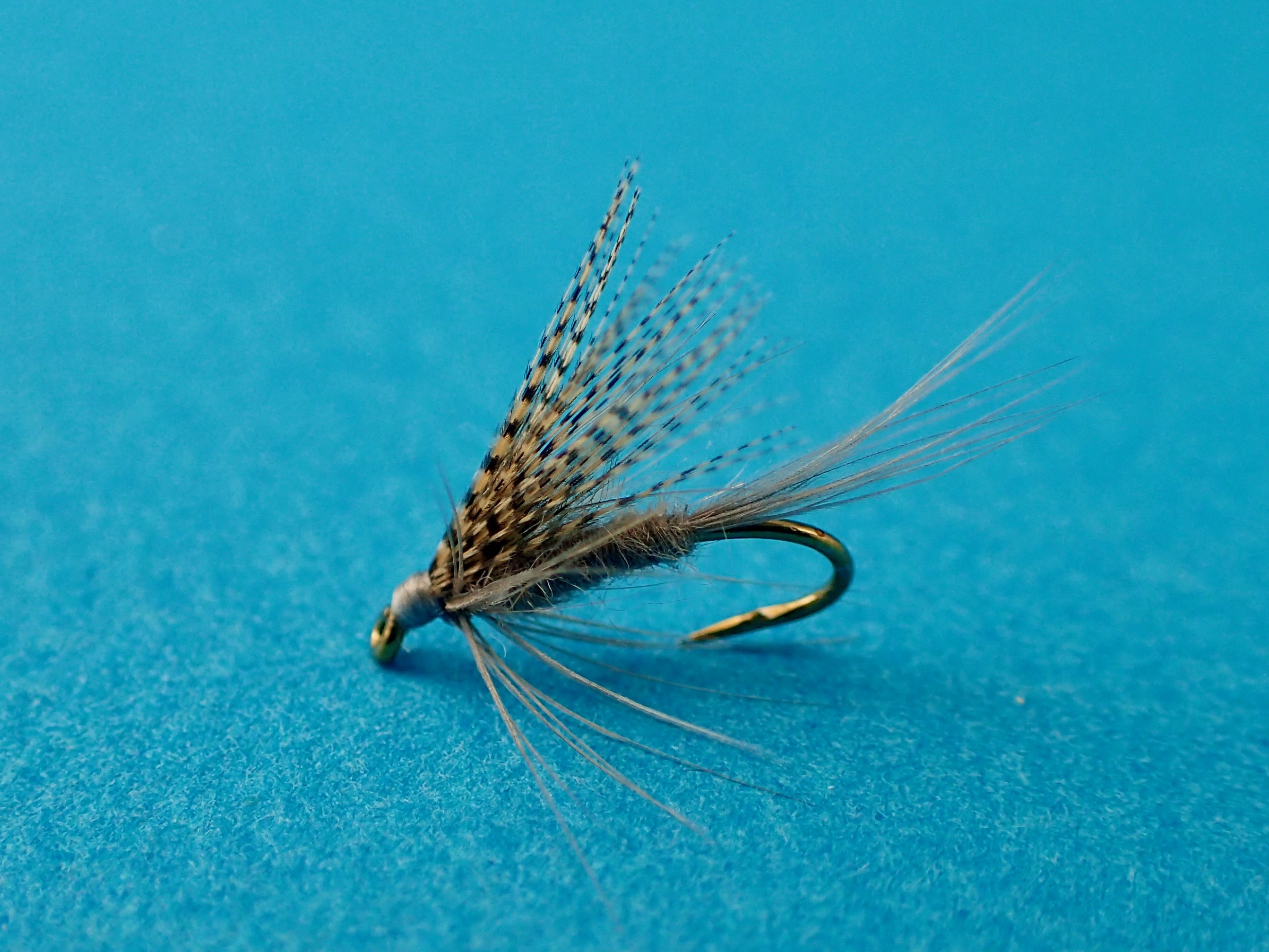
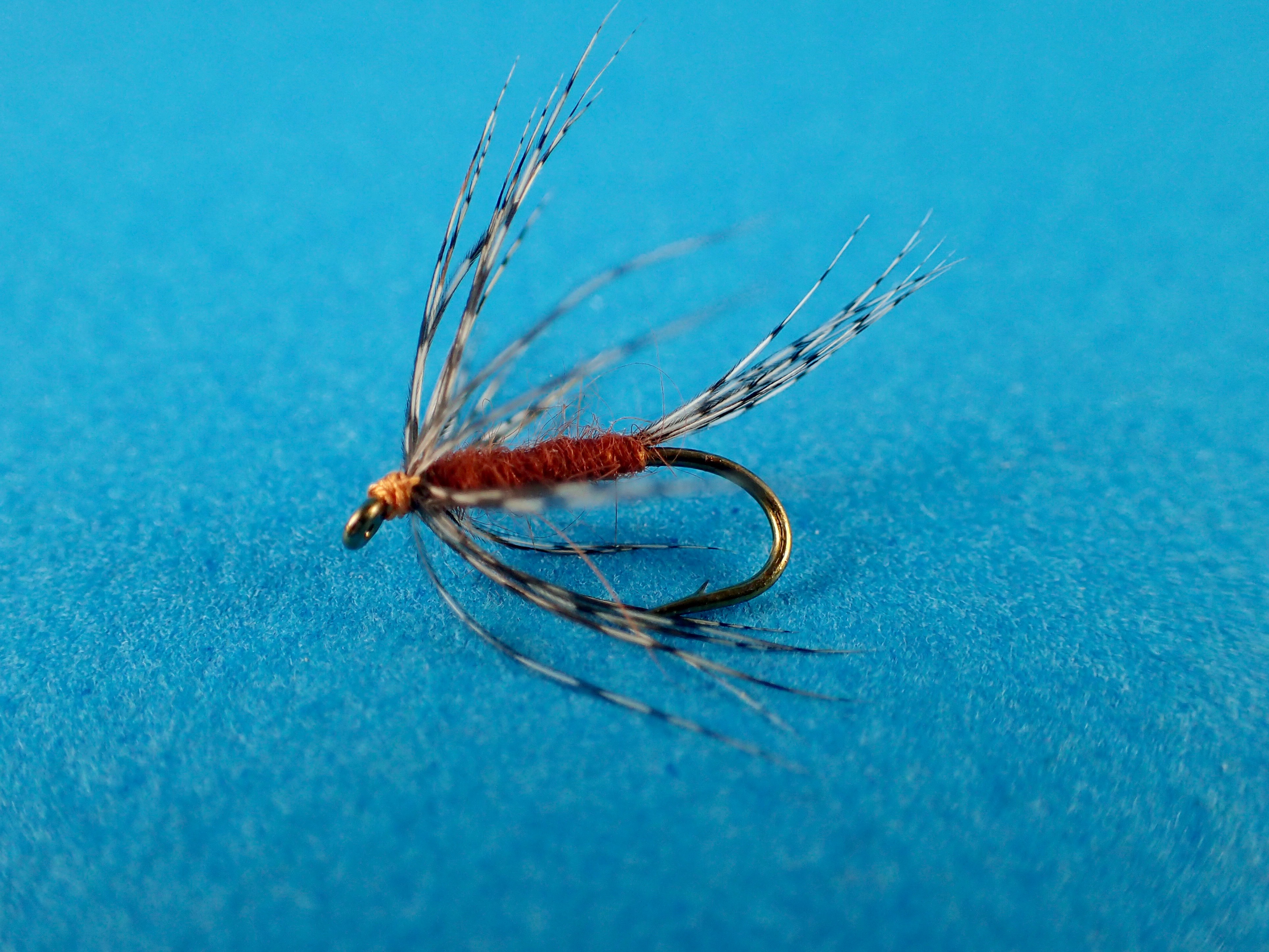
I have so much to share about Caddisflies — I really can’t believe I ignored this book for so long — but I’d like to start with LaFontaine’s Diving Caddis wet fly. The female of many caddis species dive to the streamed to lay their eggs, encased in a gleaming bubble. LaFontaine writes, “Both the brightness and the action of the diving female are enough to make a wet fly imitation necessary…(the fly’s) pure Antron filaments, hanging free over the back, reflect more light.” He goes on to list four primary patterns, plus eleven secondary ones. I was dumbfounded to see that there isn’t a tan caddis pattern in the group; the closest we get is a tan/pale green version. So I made up my own tan diving caddis variant:
LaFontaine Tan Diving Caddis (Steve Culton variant)Hook: Standard wet fly size 14-20; Thread: Tan UNI 6/0; Body: Tan Caddis LifeCycle dubbing, small gold wire rib; Underwing: brown partridge feather fibers; Overwing: 20-30 tan sparkle yarn filaments; Hackle: One turn brown rooster hackle
Tying notes: LaFontaine specified the Mustard 7957-B hook; I went with my standard issue heavy wet fly hook, the TMC 3769, size 14. He doesn’t include a rib, but I like the segmented look it creates. While he specifies Sparkle yarn for the body, the LifeCycle dubbing makes a fine stand-in with its blend of natural and synthetic fibers. I plan on trying a few without the rib, and using the sparkle yarn, chopped up, to create a rougher, buggier body. I found it curious that he chose stiff rooster hackle, but LaFontaine explains that the fibers “Stand out from the body and add vibrancy to the moving wet fly.” Many of the photos I’ve seen of other ties feature a collar using several turns of hackle, but LaFontaine is adamant that the collar be kept sparse.
Although I’ve only been fishing this fly for a month, I’ve had several outings where it was the only fly on the team of three that was getting eaten…or the fish chose it by a wide margin over the other patterns.
If you’re heading away for the weekend, I’ve got you all hooked up for some drive time listening. Or maybe you just want to sit back at home and listen. Long drive to the river on Saturday? Whatever! You can listen to “How to Swing Soft Hackle Wet Flies With Steve Culton” here. My segment starts at 42:39. Many thanks to Orvis and especially to Tom Rosenbauer for letting me play. This was a lot of fun, and I hope it helps.
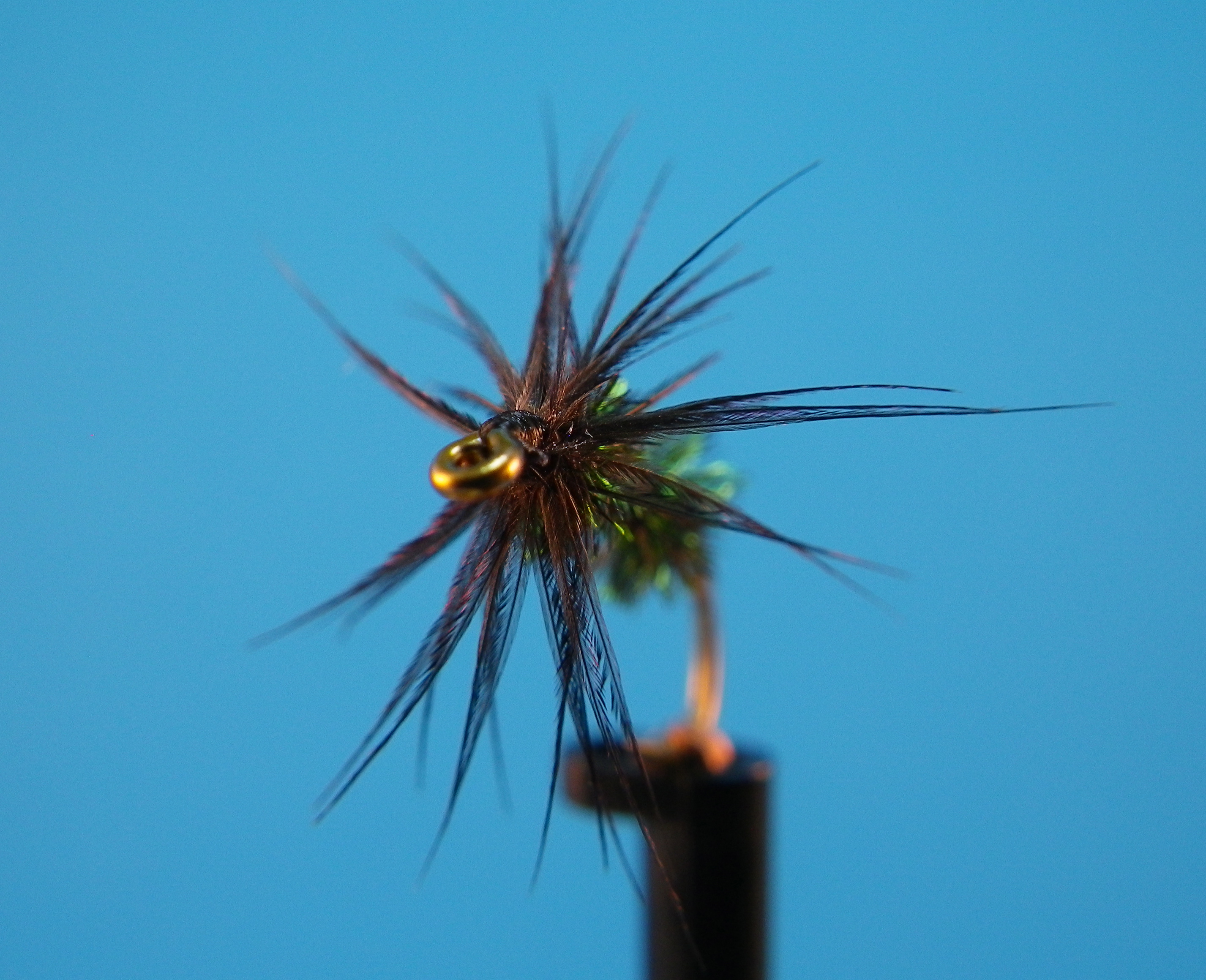
This is the cover shot from a presentation I made last November at the International Fly Tying Symposium. That bug is about as soft hackle as it gets.
I get lots of questions about tying wet flies, and Jim B. recently sent me this one: Do you use hen saddle or hen cape feathers for your wet fly ties? My answer: hen cape feathers, primarily Whiting or Hebert Miner.
Then it occurred to me that some of you may be wondering, what’s the difference? For starters, capes and saddles come from different areas of the bird. The saddle is located on the lower back just in front of the tail. You’ll find the cape on the back of the neck. Both produce useful soft hackles with varied degrees of webbing. For me, the difference maker in favor of capes is their shape, and most importantly, the range of sizes of the feathers. For the sake of simplicity, I’m going to limit this discussion to the Whiting and Hebert Miner (not “Herbert”, as I often see them mistakenly called) genetic lines of wet fly hackle.
Whiting (left) and Hebert Miner genetic hen capes. The Hebert Miner cape is specifically marketed as “wet fly hackle,” and as you can see it’s a little longer than the standard Whiting cape. Like the Miner, the Whiting genetic packaging says “hen cape” at the bottom; that graphic is obscured by the feathers. Both capes come stapled to the thin cardboard sheet; if you remove the staple, do it carefully. Otherwise you’ll rip the skin patch if you try to pull the cape off the sheet. The Whiting cape is white dyed dark dun; this is the color I use for the Dark Hendrickson winged wet. The HM cape is a natural medium brown dun.
Capes give you the widest choice in feather size and colors. The feathers tend to be longer and narrower than saddles. But where capes really shine is that they give you feathers to tie bigger soft hackles (8 and larger) as well as the smaller ones you’d need for patterns like tiny BWOs and midges. (For one of my favorite tiny soft hackles, Smut Number 1, I use a Whiting cape for hackle; likewise with Pat Torrey’s Tiny BWO Soft Hackle.) That’s a huge range of sizes, and those tyers who value both extremes will be in hackle heaven. Even if you’re never going to tie size 6 steelhead or bass soft hackles, you can use the larger feathers for tailing material.
A tale of two feathers. Both of these hackles came from the same cape. Both have their uses. You can see that I’ve already begun taking some of the fibers from the larger feather for tailing material. Once removed from the patch, I keep these feathers in a ziplock baggie and store it in the back of the original packaging for easy access. Note that the larger feather has a generous amount of webbing; typically, the webbing becomes less prevalent as you work your way down the patch toward the smaller feathers. This is why I always recommend buying capes in person; you’ll want to rummage through the bags and find the capes with the webbiest feathers throughout. The smaller feather would make a fine hackle for a midge or a tiny BWO soft hackle.
I’m not going to get into the multitude of other hen soft hackle options that are available to you, like India Hen, Bantam Hen, Coq de Leon, and American Hen. I own several of these types of feather patches, both saddle and cape, and while they all have their uses, the vast majority of my wet fly tying with hen involves Whiting or Hebert Miner capes. It should also be mentioned that I primarily use genetic hen hackle for winged and wingless wets. (Most of the North Country Spiders I like to tie use game bird or starling hackle.)
It would be nice if money were no object, but the current going rate for these hen capes is about $30. Still, that represents a tremendous value since you’re getting hundreds of usable feathers. (I have some capes that are almost 20 years old and still have many flies left in them.) If I had to start with only three colors, I would choose, from left to right, light dun, brown, and light ginger. You can expand your collection as you get more into the wonderful world of soft-hackled flies.
If you’ve read James Leisenring’s book The Art of Tying The Wet Fly, you know that he was quite particular about hackle. (Cockerel, anyone? In case you didn’t know, cockerel is a young-of-year rooster.) He even suggests making friends with poultry farmers so you can pluck their birds, preferably in February or March. A fine pro tip, but certainly not as convenient as buying a patch of good genetic hackle. Fortunately for us, modern wet fly hackle is pretty darn good in terms of color options, feather size range, and availability.
One of Leisenring’s favorite wingless wets, the Brown or Red Hackle, tied with a furnace hen hackle. Interestingly, “furnace” isn’t what the package is labelled — it’s simply called “brown” — but this particular cape was a variant with many feathers that were close the classic furnace pattern, which Leisenring describes as a dark list near the stem and on the tips of the fibers, with a lighter color in between. Grab one if you see it, or I will!
“What are the best soft hackles (or wet flies) for fishing the Hendrickson hatch?” is one of those questions I get a lot this time of year. As always, the best flies are the ones in which you have the most confidence. I should also make this clarification: technically, with Hendricksons you’re fishing wet flies under the hatch. On the Farmington River, prime time for swinging Hendrickson wets is generally in the 11 am-to-3 pm window. Every day is different. Once you see duns on the water, and trout snapping at them, the wet fly game is all but over. But if you want to catch more trout, you should be swinging wets in this pre-hatch time frame. (Of course, you’re fishing a team of three wets. Here’s how to build a wet fly leader.) And so, in no particular order, these are some of my favorite Hendrickson wet fly and soft-hackled patterns.
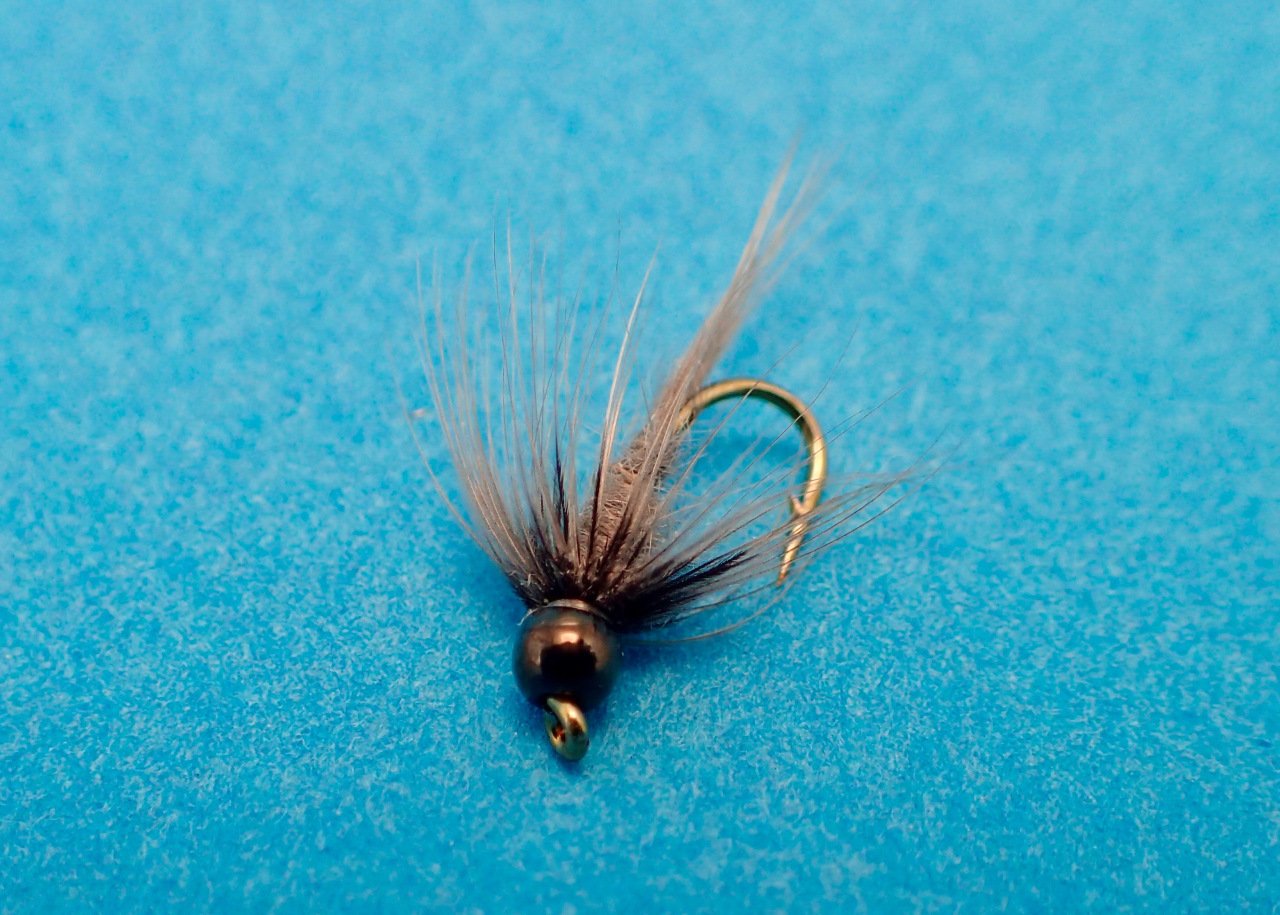
Bead Head Soft-Hackled Dark HendricksonDark Hendrickson winged wetHendrickson Spiders. Size 12, wet or dry fly hook, gray or rusty brown thread, tail material of your choice, a dusting of muskrat fur or dubbing, then brown partridge or dark dun hen hackle.Bead Head Soft-Hackled Pheasant TailOld Blue DunSquirrel and Ginger. Yeah, I know. Not a Hendrickson pattern. But on the Farmington, we often get a strong caddis hatch around Hendrickson time. If you place this as your top dropper, you’ll be covered if the trout are selectively feeding on the caddis.
Many thanks for the enthusiastic group of students who attended yesterday’s virtual fly tying class. We tackled the subject of winged and wingless wets (both how to tie and how to fish, although the focus was largely on the tying part). I appreciate your passion and energy, and I’ve received some excellent questions via email. Next tying class is TBD, both date and subject, although we discussed topics like streamers, proven local nymphs, and some saltwater/flatwings, too. Of course, I’d love to hear from you, since you’re the customer. Tie on, and dream about those sharp tugs that are coming this April.
The fruits of our labor, clockwise from bottom: Red or Brown Hackle, Pale Watery Wingless (AKA The Magic Fly), Dark Hendrickson winged wet.
“Smuts — I welcome smutting trout.” So writes J.C. Mottram in his book Thoughts on Angling. I don’t have the book, but I do have Syl Nemes’ second edition of The Soft Hackled Fly and Tiny Soft Hackles. In that book, Nemes devotes a chapter to Mottram and his collection of soft-hackled smuts. (“Smut” is a colloquial British term for a very tiny fly, such as a midge, and trout that are “smutting” are delicately feeding on those miniature bugs.)
There are six Smuts listed by Nemes. I’ve only tied one, the Number 1 (shame on me for not exploring further). I revisit it today because I happened to have Nemes’ book out, and this is a great time of year to fish midges. (Midges are a major, consistently available food source for trout in the winter.) I’ve mostly fished Smut Number 1 as a dry fly, but I’ve also used it subsurface. The wise winter nymph angler will no doubt want to include this tiny soft hackle as the top dropper in their nymph rig.
Nemes includes a photo of the Smut Number 1, and it bears only a faint resemblance to what I tie. His looks like the body is entirely constructed of working thread; mine uses the specified wool. (UNI makes a nice wool yarn thread on a spool.) His hackle is wound wingless wet style, covering the front third of the body; mine is wound at the head. I suspect the wingless wet style would be very appealing to trout. Worth the price of admission alone is the blank stare you’ll get from the angler who will inquire, as you hook trout after trout, what fly are you using? “Smut Number 1,” is your response. Soak in that moment. And here it is, J.C. Mottram’s Smut Number 1.
Don took a wet fly lesson with me in July, and while the bugs and trout weren’t very cooperative, we still had enough action to make things interesting. I always tell my students that if they keep on with this wet fly thing, good things will follow. Don has been in touch since then, asking questions, practicing and tying, and most importantly, spending time with a team of three on the water. That’s how you become a better wet fly angler.
In my report from that day, I stated that if Don learned wet flies, he would become a dangerous fish-catching machine. Although conditions have been challenging in the last couple months, Don has kept at it. Last week he scored this gorgeous brown on a Squirrel and Ginger. I think it’s a Survivor Strain broodstock — that looks like a left-eye elastomer and clipped adipose. Way to go, Don!
This time of year, with river flows down and hatches spotty, do not underestimate the power of the strategically fished terrestrial. Dries, for sure, from parachute ants to mongo Chernobyls to beetles to hoppers and crickets. But don’t neglect the submerged terrestrial like my Drowned Ant. Here’s a link to a tying video and my original writeup on the pattern.
To quote the Delta Tau Chi Deathmobile float from Animal House, “Eat me.” (And let’s not forget that it’s Flying Ant season! Look for them on damp, humid days.)
If you want to catch more fish, pay attention to the little things. You’ve heard that from me before — heck, I’ve got three presentations and written several articles on the subject — but it bears repeating. Here are a few lessons I hammered home to both clients and myself (we all have to pay attention to the little things) on some recent wet fly outings.
On the swing and especially the dangle, don’t set the hook. Let the fish set itself. When you feel the strike, ask yourself, “Are you still there?” The answer will always be yes, if you allow the fish to turn away and drive the hook point home.
Look for consistent, active feeders on emergers. You’ll know the bug/feeding stage from the rise form (slashy, splashy, showy) and that there are no duns visible on top of the water. Those are the fish that will rush to eat your wet flies. Just left of center in this photo is what I’m talking about.
Match the hatch! If you see size 16 creamy/sulphury mayflies coming off, and you don’t have anything like that on your leader, get some on. Now.
Give the fish a choice. Droppers are always the fastest way to find out what the fish want. Different sizes, colors, species, life stages. The fish will always tell you when you get it right.
The Hackled March Brown continues to be a consistent summer big fish producer. It’ll be my default point fly pattern through August.







 currentseams.com