IFTS 2025 redux, Regal Pro Staff, page proofs for the book are in!

Much to talk about today. I’m currently recovering from last weekend’s International Fly Tying Symposium. That is, I’ve unpacked everything, gotten back to my regular sleep and eating (and coffee!) schedule, and here I am, clacking away at my keyboard on currentseams.com.

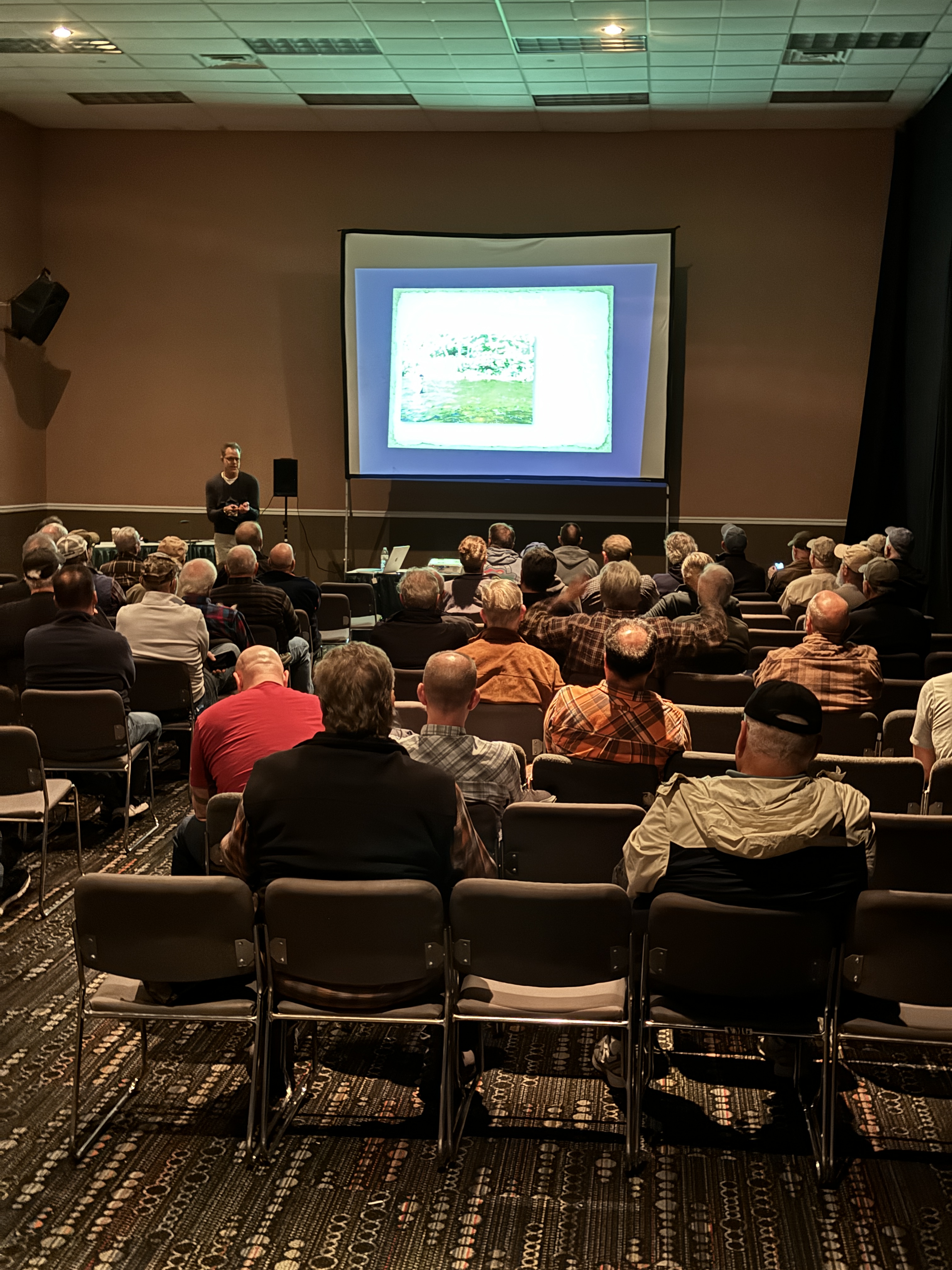
While this is the largest fly tying show in the world, there’s a sense of intimacy about IFTS that resonates with me. (If Goldilocks tied flies, she’d be all over this show.) I behaved myself wallet-wise, coming away only with a pack of size 14 Ahrex North Country Spider hooks (LE810). My Saturday seminar on Tying and Fishing Wet Flies was very well-attended, and I want to thank everyone for showing up and for asking so many thoughtful questions. I couldn’t have asked for a better tying bench mate than Peter Simonson, who specializes in classic Carrie Stevens-style streamers. I spent the rest of the day tying wet flies and soft hackles and socializing and answering questions about the Farmington River book.

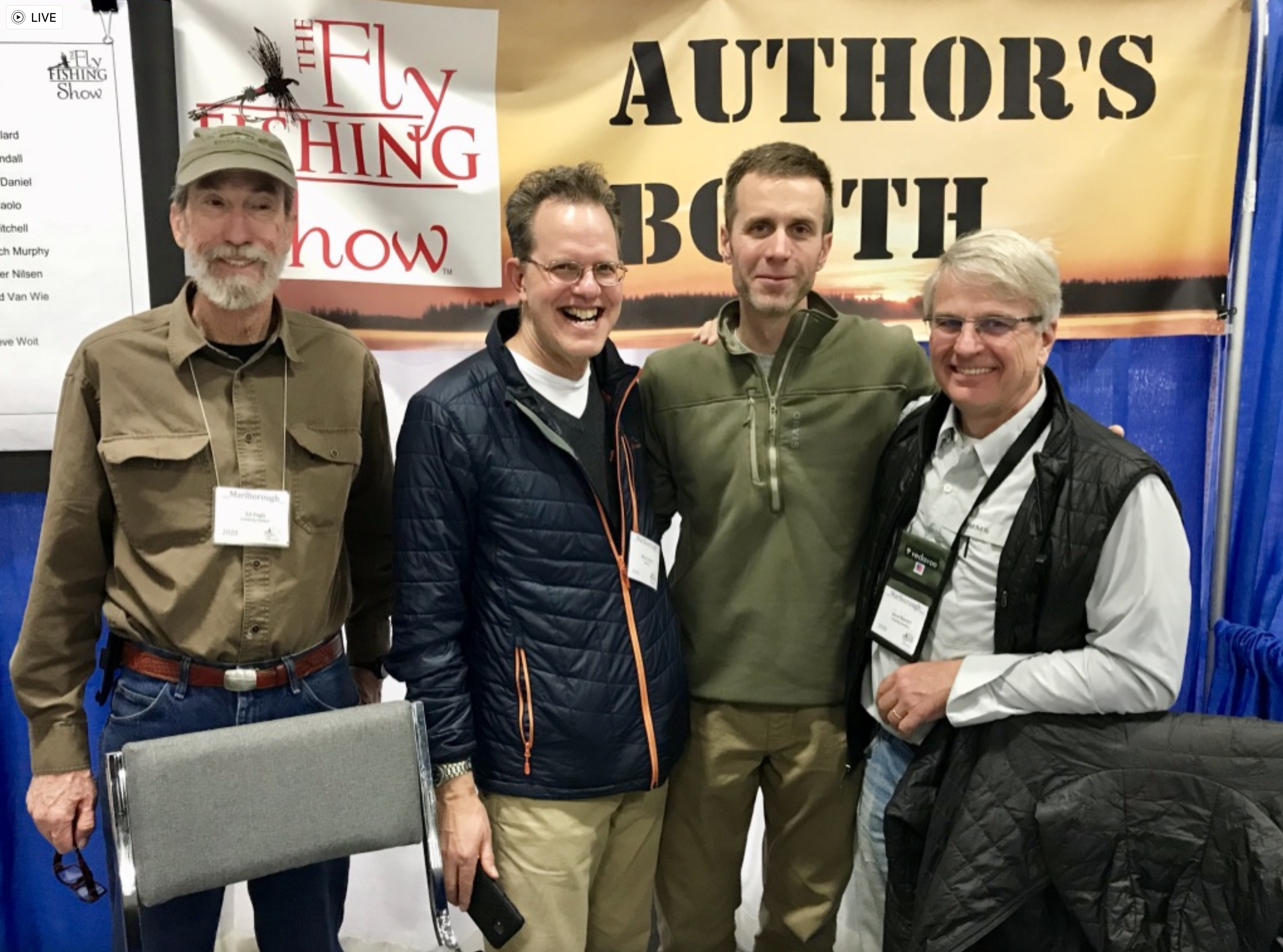
The view from my bench Saturday morning. What a treat to reconnect with so many old and newer friends, and to put faces to names of currentseams subscribers.

After a delicious banquet Saturday evening — complete with a wonderful fly tying swag bag from show sponsor J.Stockard — I was featured fly tier Sunday morning. The subject was Farmington River Favorites, and we managed to get through each of the four food groups (nymph, wet, dry, streamer). Again, many thanks to everyone who attended. I truly appreciate your support.

But the highlight of the show for me was formally becoming a member of the Regal Pro Staff. I’ve been tying on a custom Regal Revolution for years, so this was particularly gratifying. Those of you who know me know that I don’t endorse anything on these pages that I don’t use and love, and I’ll be talking more about my Regal vise in future posts.

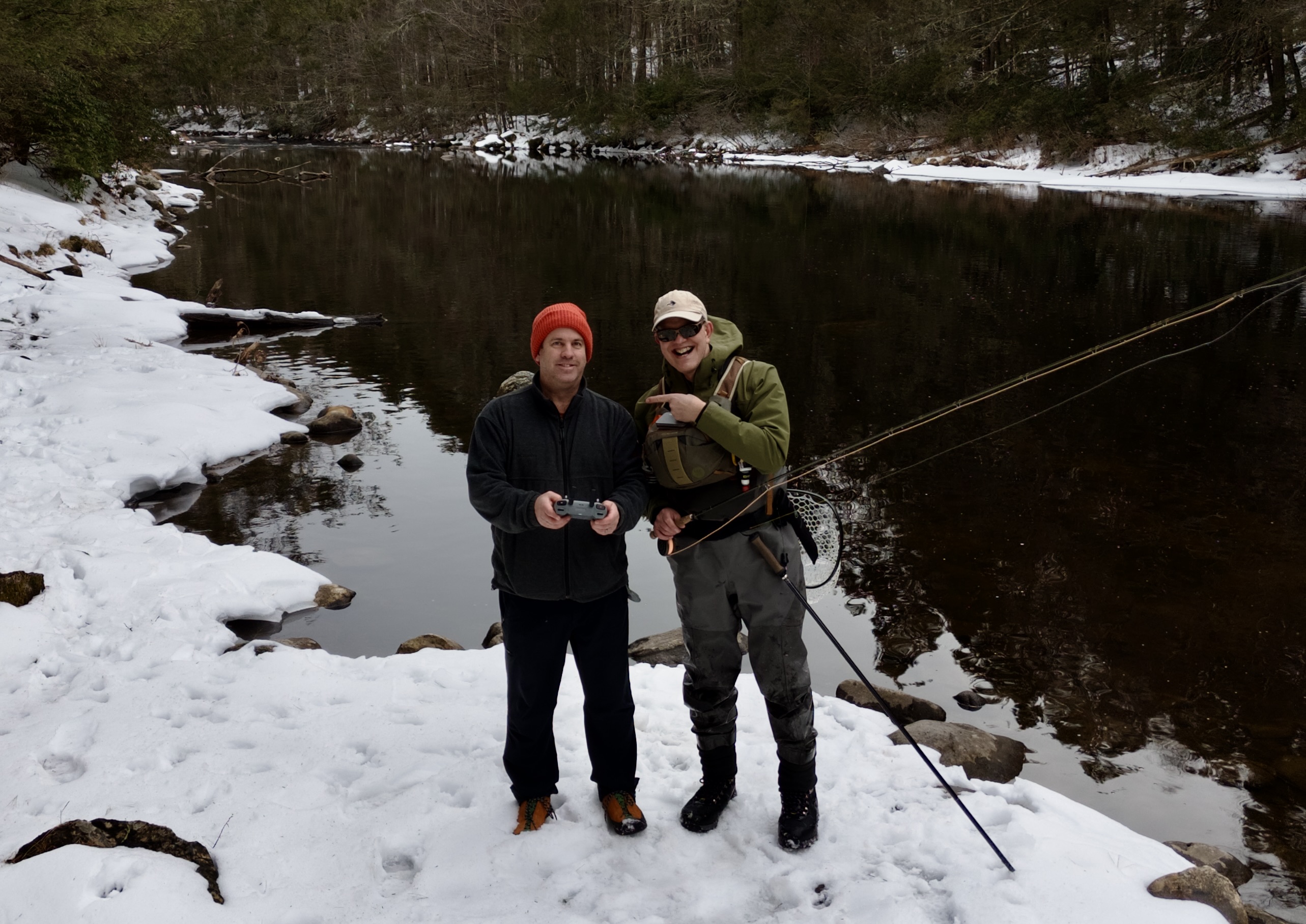
And now, me too! There are so many incredibly talented tiers in this group, and I’m honored to be a part of the team.

Finally, I’m back on the book for a bit: page proofs are in! These are basically an e-version of the layout of the book, complete with photos and other visual reference. I go through it, make minor corrections as needed, send it back to the publisher, and the whole shebang goes to press early next year. Exciting times! People stopping by the table showed a lot of interest in the book, and even if you don’t fish the Farmington a lot, I’m comfortable telling you that much of it — fly patterns, how to, hatches — is applicable to southern New England trout streams.

And now, I’m off to read.

Menhaden action alert, Farmington River book, IFTS, and other fishy goings on

The first thing I’d like you to do after reading this opening paragraph is head over the ASGA website and sign their official letter calling for major reductions to the menhaden harvest. It will take you less than five minutes, and it’s an excellent use of your time. Long story short: Atlantic menhaden are a critical bait and ecosystem fish; they’ve been grossly over harvested; that needs to stop now. Please do this, even if you don’t fish for striped bass. We need all the voices we can get.

Galley copy for the Fly Fishing Guide to the Farmington River has been reviewed by yours truly and sent back to the editors. This was simply my review and comments on their edits. I was pleased to discover that the edits weren’t substantial, and book flowed from one subject to another like…a river? There. I’ve made my unfunny joke of the day. Maps were also reviewed, and I really like the artwork. If you don’t know the river, you’ll find them highly useful. Next steps: the whole shebang gets put into page layout, then reviewed. That should happen in November. We’re getting closer!

A successful spawn means more of these. This fish was sampled by DEEP last September during broodstock collection for the Survivor Strain program. If you see a redd and canoodling trout, be like The Beatles and let it be.

Speaking of the Farmington river, the spawn has begun. If you’re fishing, please be on the lookout for redds! They are generally lighter, oval-shaped patches surrounded by dark substrate. Keep a safe distance. And of course, never target spawning fish. That’s just bad form.

A reminder that the International Fly Tying Symposium is November 15-16, now just over two weeks away. I’m doing a wet fly seminar on Saturday and a Farmington River tying demo on Sunday. More on those coming soon.

Cover reveal for “Fly Fishing Guide to the Farmington River”!!!

Is this exciting, or what?!? At least, I’m excited. I hope it meets with your approval, if not favor. I’m continuing to plug away at the copy edit review, so this will likely be my only currentseams post this week. I hope some of you are getting out on the water. And we need rain — let’s see those rain dances!

ASMFC Draft Addendum III to Amendment 7 For Dummies

About ten years ago, there was a phenomenon experienced by football fans known as “Patriots fatigue.” Always on TV, always the darling of analysts, hard to like, frequently winning in ways that defied mathematical probability or opposing coach logic (Super Bowl LI, anyone?).

I have ASMFC fatigue.

Another draft addendum, another public comment period, another chance for the rogue states of New Jersey, Maryland, and Delaware to behave stupidly, blah-blah-blah-blah-blah. (Insert heavy sigh here.)

If the bass closes its eyes, will it look like it’s yawning?

Nonetheless, we must do our duty and voice our opinion. The goal of all of this is to improve the SSB, or Spawing Stock Biomass. No SSB, no future stripers. Here are the two simple things you need to do. It’ll take you 15 minutes.

First, go to the ASGA website for the conservation-based opinion on what to comment. (Look for the heading “Proposed Management Options in Addendum III). Two, email your comments to the ASMFC. The following is from their website: “The public is encouraged to submit comments regarding the proposed management options in this document at any time during the addendum process. There are four ways to submit comments, written comments via this page or the comment@asmfc.org email below, the public comment form, mailed written comments, or attend a public hearing. The final date comments will be accepted is Friday, October 3 at 11:59 p.mEST.


First week of September Potpourri: Speaking, Guiding, Book, Flows….

Just when you think you’re going to have more time to do writing…you don’t. I have to confess that I didn’t take into account that I would be this busy with non-fishing pursuits, but here we are. It’s mostly yard-home-garden-kitchen — ’tis the season for drying hot peppers, and making tomato and hot sauces — like the tides, ripe fruits wait for no one — and that’s the current situation. Still, I have much to talk about.

If you’re the person in charge of booking speakers for your fly fishing club, I have openings this fall and winter. You can find my presentation menu here. Be advised that when the Fly Fishing Guide to the Farmington River is published next year, I will want to come out and speak to your group about the book and the river. Something to look forward to!

I’m booked for the rest of the month with guide trips. Thanks to everyone who reached out! We are in rainfall deficit, so they’ve dropped the flow out of the Hogback gate to 165cfs. Note the release temperatures, and how they increase during the day (these readings are in Riverton, not at the gate). Be aware of water temps downstream. You should be OK through the PTMA, but carry and use your thermometer.

I’m supposed to get copy galleys for the book — this will be what the publisher has edited, in document form — mid-month. After I make comments, it goes back to them. It’s all very exciting. I’ll be locked away in my lonely writer’s garret that week, but if you see me on the river the other weeks, please say hello.

Next up will be the Montana trip, Part 2.

Farmington River book timeline update

TGIF! I did a little fishing this week, and a lot of house- and yardkeeping, along with various other tasks. We got a wee slug of rain, which made a slight dent in our water deficit.

To the Fly Fishing Guide to the Farmington River book news. I should have copy edits for review in mid September. Fly photo review is next. Then the whole shebang goes into layout and typesetting, then back to me for review. That should happen by the end of October. Once final edits are made, we get into physical production. A revised target release date is June 2026! I know you’re excited and can’t wait — as am I — but like an angler resting a fussy fish, we’ll all just have to be patient.

No reason to be crabby! The book is moving along, and I’ll raise a glass (or a plastic cup) to that.

Meanwhile, I’ve started putting together my Montana report (no, really). Look for the first installment next week.

If you’re not doing so already, you should be following me on Instagram

Long-time currentseamsers already know this, but for the newer folks — or for the procrastinators among us (of which I’m one!) — it bears repeating. I have an Instagram account, and on it you’ll find unique material that you won’t see here. For example, in the last couple weeks I’ve posted two how-to videos, one wet fly, and one nymphing, for smallmouth bass. (Now that the book is “done,” I’m hoping to be doing more videos.) Hop to it. You can find and follow me on Instagram at stevecultonflyfishing.

Come see what you’ve been missing on Instagram at stevecultonflyfishing.

And, we’re back! (Plus some odds and ends.)

Hopefully, you noticed I didn’t post last week. Maybe you even missed me a little. I was way out west — Montana, Idaho, Wyoming — on a family vacation. Oh, you betcha there was fishing. I’ll get to that in greater detail later this week, but for now, I fished the Kootenay in NW Montana, Hebgen Lake in southern Montana, and the Madison and Henry’s Fork rivers in Montana and Idaho. We drove around Yellowstone and Grand Teton for a couple days, but (sadly) no fishing in either location for me.

I’ve never been to this part of the country, let alone fished it, so it was all new and wondrous. The water I fished was unlike anything we have back here.

You’re kidding, right? We stayed in a private cabin on the banks — really, as this is the view just a few feet from the back porch — of the Kootenay River in northwestern Montana, a ‘way up near Canada. That far north, and at the western edge of the Mountain Time Zone, it gets dark late. This photo was taken at 9:24PM!

~

Before I left, I finished a piece for Surfcaster’s Journal on fishing small flies for striped bass. This will be essential reading for anyone who’s interested in fishing a three-fly team in marshes with small bait-imitating flies, or sight fishing with smaller patterns on beach fronts or flats. I’ll let you know when it comes out.

~

I just received the first pass on rendered maps for the Farmington River book, and I think they look great! My goal was to have a graphically simple, eye-to-brain-friendly design for you, dear reader, and the artist hit it out of the park. There’s a large overview map, and then five detail maps that focus on the 22-mile stretch from Hogback to Farmington.

~

On the home front, the Farmington is running at a fantastic, cool, trout-friendly summer level, reminiscent of yesteryear when the MDC wasn’t toying with the flows. Tricos are the big little hatch right now, which horrifies night owls like me. Get on it, early birds, while you can.

~

Finally, I have some availability the rest of this month and through September for guide trips/lessons. If you’ve been hemming and hawing about getting out with me, this is best time to do it for the rest of the year. I used guides on my trip out west, and even I learned a ton — I’m a better angler than before I left. You know where to find me.

Getting better all the time

I tend to look at fly fishing as one big, fun, science project. Figuring things out, making new discoveries, trying a new fly or method that produces good results — these are just a few of the rewards that await the curious angler. As most of you know, I’m a teaching guide, and my guide trips are lesson-based. The guides I use when I fish for pleasure know the marching orders: tell me when I’m doing something wrong, show me how I could do it better, teach me things I don’t know (or have forgotten). No matter how good you think you are, we all have something to learn. That’s how you get better.

Since I’m a put your money where your mouth is kind of guy, on Monday I accepted 2025 Orvis Guide of the Year Antoine Bissieux’s gracious invitation to tag along and participate in his class with French world champion Bertrand Jaquemin. We won the weather lottery with a good flow and gorgeous weather. The class began at Orvis in Avon at 10am, and we were on the river about 12:30pm. It was gratifying to see that other people include off-the-water classroom as part of their lessons.

I can see this method working for pressured or skittish steelhead in low, clear water. Hmmmmmm……

The focus of the class was long-leader upstream presentations to pressured trout. Although the business end of the rig is a small nymph, the presentation and drift management was not unlike an upstream dry or wet fly drift. I’m guessing after the fact — I don’t have the leader with me — that the leader was about 15 feet long. It includes a sighter, which I had trouble seeing — that’s a problem with a sighter — until Bertrand ran it along a knife edge to curly pigtail it. Visual acquired! While I didn’t connect with a fish, I did see the benefits of this style of fishing. More practice time on the water is needed before I can render a better judgement on the method. (I prefer to be lazy and work downstream. This is upstream, and requires stealth and vigilance.) I’m not arguing that it’s not productive; I’m just not sure it’s right for me. And happiness and confidence catches fish.

I was dopey enough not to take pictures, so my bad. Many thanks to Bertrand and Antoine for sharing their knowledge.

The summer pattern settles in

Here we are, already at the mid-point of July. Blink, and you might miss summer. We really don’t have much to complain about weather-wise — it’s standard-issue hot and humid, there have been rains (but nothing catastrophic [he said, knocking on wood]), and the reservoirs are full. The Farmington is running clear and cold — in the 50s coming out of the dam — and at a terrific summer height. Please be sure to carry and use a thermometer, and make your cutoff 67 degrees. You should be able to find ample cold water from the PTMA and points north. Tip of the week: ants, beetles, crickets, and small hoppers, fished in faster water and languid currents under trees and shade. Oh. And small nymphs. You can thank me next time you see me.

Try Stewart’s Black Spider fished as a dropper. Size 16-20, please.

I owe you a Block Island report, and spoiler alert: it’s not good. Locally, I know a few surfcasters who are doing OK. Things may pick up in another 30 days or so.

Meanwhile, I’m trying to play catch-up with my fishing. The yard work is settling down a bit, the garden’s in good shape, and the book is off with others. I think I’ll smoke a few cigars while I’m at it.

Stay cool and have fun.