The Myth of the Tapered Leader (and other striped bass nonsense)

The subject of saltwater fly fishing leaders comes up all the time on internet forums. The accompanying question is usually “which leader is best?” (Answer: There ain’t no best. Only what’s right for you.) Then, human nature being what it is, people come forward with many suggestions. They describe the leader they use, sometimes in great formulaic detail.

A client from my advertising agency days used to say that the internet is a great resource, but all it does is throw information at you. It doesn’t separate the good from the bad. I know what he means, because during these leader discussions someone invariably states that you need a tapered leader to turn your fly over.

Horse hockey.

For years now I’ve been using striped bass leaders constructed of a straight shot of 20, 25, or 30 pound test mono. (The stuff is called World Wide Sportsman Camouflage, and it’s sensational.) This is also the material I use to build my three-fly striper rig. Somehow, my flies manage to turn over. Somehow, I manage to catch fish. If, as so many internet quarterbacks maintain, a single diameter construction consistently led to the leader landing in a pile, my three fly team would be in a perpetual state of tangle.

This is not to say that tapered leaders don’t help a fly turn over. But if you’ve ever executed a pile cast with a tapered leader, you know that it’s the mechanics of the cast, not the leader, that determine if the fly turns over.

I find stripers to be a fascinating fish. But I have yet to meet one that cared if my fly turned over. Maybe you know one who does.

If so, please send him my way.

My three-fly striper rig, in case you missed it. 

OLYMPUS DIGITAL CAMERA

~

The last thing I’m thinking about on a striper outing is whether or not my flies are turning over. Stripers don’t care, either.

OLYMPUS DIGITAL CAMERA


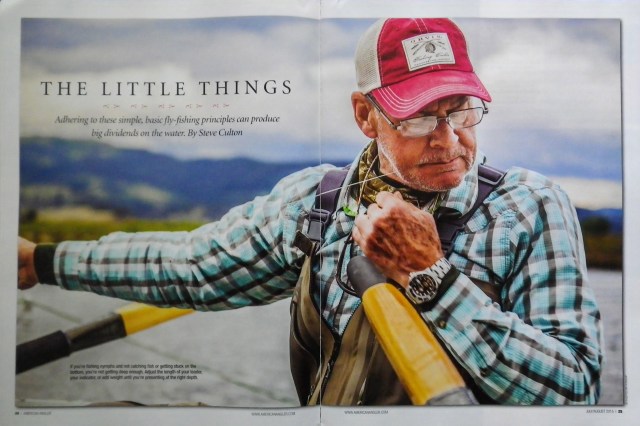
Two pieces in the July/August 2016 American Angler

Submitted for your reading pleasure: “The Little Things V2.0” and “I’m Not Dead Yet — The last hurrah for wild Connecticut River strain Atlantic Salmon” in the current issue of American Angler.

“The Little things V2.0” serves as a springboard for a new presentation coming this fall (I will kick it off in Coventry, RI at the TU225 meeting in late September.

Many thanks to the Connecticut DEEP for sharing their time and knowledge for the salmon article, and a shout out to currentseams.com follower RM Lytle for the same (and a very spiffy photo of his prized catch).

The little things is like compounding interest. It all adds up. Then one day you’re rich.

OLYMPUS DIGITAL CAMERA

~

Look for it at your favorite fly shop or newsstand.

13310538_10154282210394038_8643290678313944983_n

Words flowing through the article pipeline

It seems like I am always writing. Some of it ends up here. Some of it never goes anywhere (sloth, concept that never gelled, editor indifference). And some of it makes its way into glorious print. Here’s what’s coming soon to a news stand or mailbox near you.

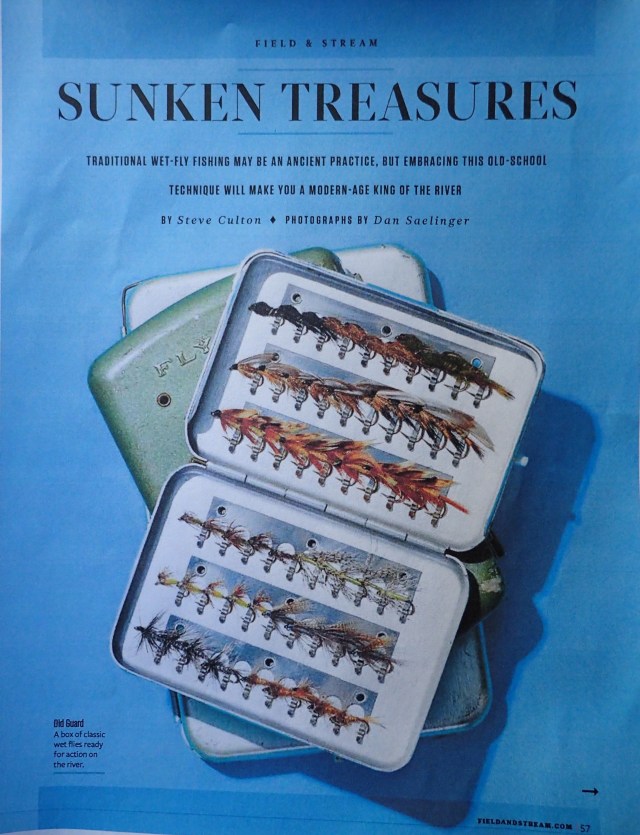
A feature article on wet flies in Field & Stream. Sometime this summer.

The Little Things V2.0. This summer in American Angler. More seemingly insignificant things you can do to help you catch more fish.

An shorter conservation piece on the failed Atlantic Salmon restoration project (Connecticut River strain-specific). American Angler, this summer (I think).

A primer on Block Island stripers on the fly from the shore. This fall in the Mid Atlantic Fly Fishing Guide.

Thanks for your continued readership and support. Speaking of support, I see we are tantalizingly close to 400 followers. Once we crack — and hold — that barrier, we’ll do a fly giveaway.

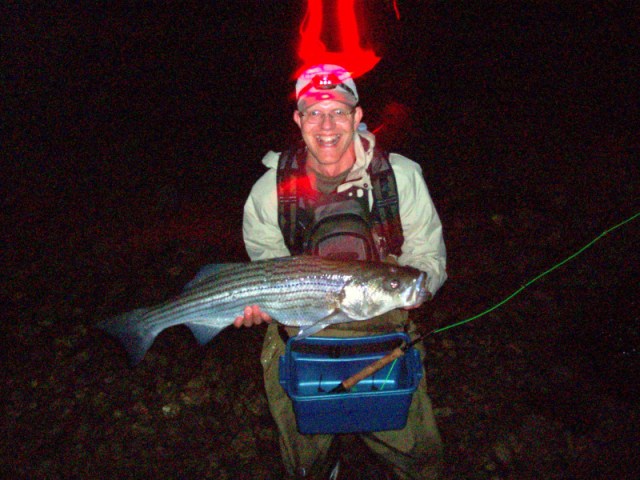
Working the night shift with a Rock Island flatwing.

IMG_0255


Read “The Little Things” on the American Angler site

I wrote “The Little Things” a couple years ago in support of a new presentation I was creating. Since then, it’s become one of my most popular talks. The concept behind “The Little Things” is as simple as it is effective: sweat the small stuff, and you’ll become a better angler. You can read the original piece by clicking here.

AALittleThings 2

Look for “The Little Things 2.0” this summer in American Angler.

Match Game (matching the hatch with wet flies)

“Match Game” first appeared in the May/June 2014 issue of American Angler. I’ve included several of the original wet fly portraits; you can find most of the recipes by doing a search on this site.

Match Game by Steve Culton

Next time your attempts to match a hatch with dry flies fail, try matching it with one of these time-tested wet fly patterns.

The words “match the hatch” conjure up images of dry fly aficionados patiently sifting through their boxes, searching for the perfect fly, achieving Nirvana when they make the correct selection. Indeed, there’s nothing I like more than fooling a trout on a dry – unless it’s fooling a trout on a wet fly.

The more I fish them, the more I recognize that wet flies are often the best match for a hatch. That’s because wet flies allow you to fish under the hatch – where the trout are feeding – as insects emerge or lay eggs. You’re fishing, as James Leisenring said, “at the point where the trout is most likely to take his food.”

Matching the hatch with wets isn’t rocket science. Most days, all you need to do is duplicate the size and color of the natural, then drift or swing the fly over the trout’s position. The takes on wets are among the most aggressive hits you’ll experience. What’s more, the fish also tend to be larger (big trout get that way, in part, by being shy about showing themselves).

Here are eight popular, widespread hatches, matched with a proven wet fly pattern, so you can look like a trout savant the next time you’re on the water.

Dark Hendrickson

Dark Hendrickson

Woody Allen said that 80% of success is showing up. It’s kind of like that with the Dark Hendrickson. In the initial stages of this hatch, trout wantonly gorge on the emerging mayflies. The surface erupts with their frenzied slashes and frantic boils. The dry fly will often be ignored, and those casting them can be identified by their grim countenance. This classic American wet will turn those puzzled frowns into mile-wide grins. Target a feeding fish, time his rise pattern (if he has one – I find that trout get reckless during a strong Hendrickson emergence), and drift your fly over his position. Trout will hammer this fly on the dead drift, the swing, and on the dangle (the fly holding in the current below you). Sometimes a slow, hand-twist retrieve on the dangle will draw a strike.

Don’t wait for the mayflies to be visible to fish the Dark Hendrickson. I like to start working it through runs and transition water a good two hours before the duns are scheduled to appear. If there’s going to be an impressive hatch, you’ll know long before anyone else. I like a 12, but go up or down a size if you need to match the profile of what’s hatching. If necessary, a bead head will help sink the fly; fish it as the point fly in your team of wets.

There will come a time late in the emergence where the wet fly is no longer effective. You’ll notice fewer splashy rises, and the trout will stop throwing themselves at your fly. That’s the time to switch over to a dry, like a Hendrickson Comparadun.

Tiny Blue-Winged Olive

Tiny BWOSH

Wet flies are incredibly versatile creations. For proof, look no further than the Tiny BWO. Pat Torrey describes the logic behind his design. “Almost every afternoon from mid-October until the first week of December, the Farmington River has a very consistent hatch of small Baetis mayflies. The extended time frame of the hatch allows the fish to get pretty familiar with this food source. Most anglers fish this hatch with standard dry fly and emerger patterns, which become less effective as time goes on.”

Pat’s use of a soft-hackle on a small fly is traditional and proven. (Sylvester Nemes devoted eleven new chapters to tiny soft-hackles when he revised his masterwork The Soft-Hackled Fly.) While Pat prefers to fish his diminutive wet just under the film, I like to present it as a dry-wet hybrid. Start by giving the hackle a gentle dusting of silica powder. This creates an emerging wings and legs profile on the surface, with a body and shuck just beneath it. As the dusted hackle loses its hydrophobic properties, the fly beings to sink a little deeper into the film. That’s usually when the fun begins.

Flies this small can be a difficult sell in fast-moving, broken water, so try presenting it to rising trout in a glassy pool. The pattern template also works for midges; try black thread and white hackle.

Squirrel and Ginger
Squirrel & Ginger

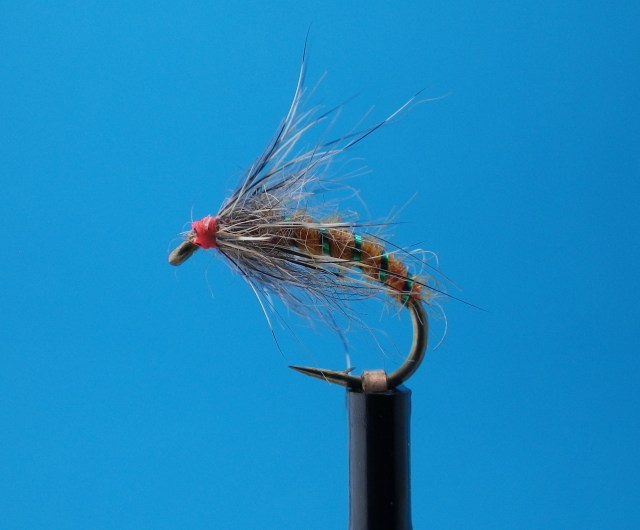
Dave Hughes said, “Trout aren’t interested in neatness.” I’ll add that ugly, buggy flies catch fish. This fly started out as a fuzzy nymph called the Caddis Larva. I played around with adding a traditional feather hackle, but it wasn’t until I gave the fly a sparse collar of fox squirrel that the fly took on a dramatic new energy. The first time I fished the Squirrel and Ginger was a steaming hot July afternoon. The sun was high, and there was precious little hatch activity. Yet I took trout after trout as I walked the length of a swift two-foot deep run.

Besides being a reliable searching pattern, the Squirrel and Ginger excels at matching the caddis hatch. I like it on a 2x short scud hook; my default is a size 12, but you should alter its size and body color to match the naturals. A few notes about tying this fly: The hero is the fur hackle, so keep the body thin. Less is more with the squirrel. Use a quarter of what you think you need to start, and pull out the longer guard hairs. I like to spin the fur on a dubbing loop, then stroke the fibers back as I wind the hackle. Don’t fret if you end up with a messy head – remember the wise words of Mr. Hughes.

Light Cahill

IMGP2434

They have a seemingly endless parade of names. I just call creamy mayflies Light Cahills, after the old-school American pattern. Like the Dark Hendrickson, the Light Cahill uses a seductive wood duck wing. Its banding pattern whispers to trout, “I’m alive,” and offers an enticing contrast to the pale fur body and hackle.

Selectivity in feeding trout has always fascinated me. I don’t think trout are picky eaters (in the sense that you can’t get your kids to finish their broccoli); they are simply eating what’s hatching. It’s up to us to find out what that is, then properly present it. That’s where droppers become an indispensible tool. One evening I was fishing a hatch of Light Cahills with three flies: Light Cahill winged wets on the top dropper and point, and a soft-hackled bead head Pheasant Tail in the middle. Of the dozen fish I caught, none chose the Pheasant Tail. They were keyed on the lighter colored flies.

Follow Ray Bergman’s advice: “If it were necessary to confine my assortment of flies to only two or three, this would be one of them.” Tie the Light Cahill in sizes 10-20, and you’ll be ready for any virtually scenario.

Pale Watery Wingless Wet

Magic Flies

I don’t believe in magic flies; that is, if you fish with Fly X you’ll become an instant expert. But this fly makes me want to believe. Based on an old English pattern, I dispense with the original’s gold rib, tie it on a 1x fine hook, dust it with silica powder, and fish it like a dry.

Sulfurs are another in a long list of hatches that leave anglers muttering, pondering the error of their ways on the long drive home. But once you examine the science of the hatch, the magic behind this fly is revealed. Sulfurs take a long time to emerge from their nymphal shucks. This is significant for two reasons: it results in a high percentage of stillborns and cripples; and the emerger is sub-surface for an extended period. Absent duns on the water, those rise rings are from fish feeding just below the surface. Like the Usual, the Pale Watery Wingless Wet has a spikey body, and its soft hackle absorbs water, causing the fly to ride in the film, rather than on it.

If you’re getting refusals, try fishing this fly one size down from what’s hatching. Alakazam! Magic ensues.

Hackled March Brown

Hackled March Brown

There are so many wet flies – both caddis and mayfly patterns – called “March Brown” that the name reads like a generic label. This particular March Brown comes from an English book published in the 1930s, Trout Fishing From All Angles. It lists a winged and a wingless dressing; this is the wingless. The recipe calls for a “red ant colour” hare’s ear body; I have been tying this with rusty fur.

While we do get some March Browns on the Farmington, it isn’t a major hatch. There is, however, an impressive late summer Isonychia showing. Since it is likely to be the largest on my three-fly team of wets, I tie the Hackled March Brown on point. Because of its size, this fly shines in swift water: deeper riffles, pocketed slots, and boulder-strewn runs. If there’s no hatch, it also makes a fine searching pattern. I’ve taken some substantial trout on this fly while fishing it on the dangle. The hits are the rip-the-line-from-your-fingers type, the kind that make you wish it was August right now.

Drowned Ant

Drowned Ant

The Starling and Herl has been fooling trout for centuries. It possesses the alchemy created by the natural iridescence of starling and peacock. The fly represents any number of insects, from beetles to dark caddis to little black stones – and maybe ants? Let’s make sure. To create an ant-like profile, I’ve simply added a segment of working thread to the middle of the body.

Each summer, I catch a hefty percentage of my trout on this fly. To increase its durability, I reinforce the herl with a strand of thread, twisting the herl around the thread to form a chenille-like rope. If one of the herls happens to break, the entire fly will not be compromised.

I especially like to fish this fly along shaded wooded banks – prime territory for ants to take an accidental tumble. The dangle seems to produce an inordinate number of strikes. Curious, considering I’ve never seen ants tread water in a three-knot current. Sylvester Nemes said, “Any sunk artificial fly, to be good, must transform itself in the water into something alive, something suggestive and moving, something that looks good to eat.” That is clearly the case with the Drowned Ant.

The Hopper Hammerdown
Culton_Hopper_Hammerdown

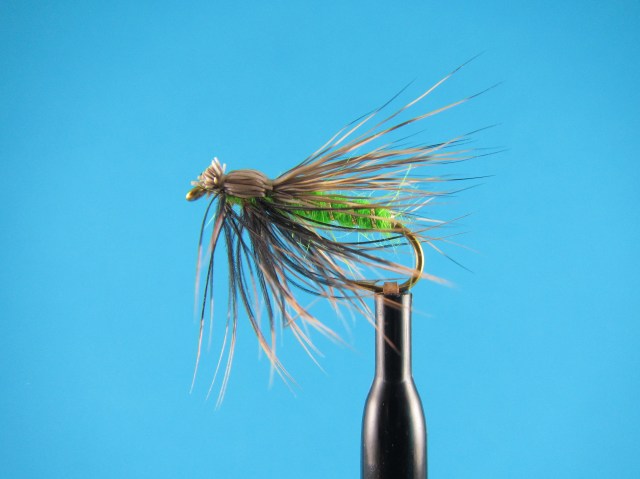
A consistent theme of wet flies through the centuries has been impressionism. Wets do not attempt to carbon copy an insect; they simply match its general size, color, and profile. With so many hopper patterns available, why the need for another? In three words: Simple. Impressionistic. Effective.

The Hopper Hammerdown is based on a steelhead fly called the Golden Stone Hammerdown. The fly does not give the fish, as Bill McMillan said, credit for being “more complicated than the rather primitive animal it is.” And it promises a calorie-dense meal to the trout, well worth the fish’s effort. This is another fly I’ll fish near the surface, usually as the top dropper. Sometimes I’ll treat it with floatant and fish it on a dead drift like a dry. It plays well along grassy and wooded banks on warm summer days when the trout instinctively know that something large and yummy might come struggling along at any minute.

No hatch? No worries.

What do you do if you get to the river and there are no signs of a hatch? You fish. With confidence. Wet flies make excellent searching patterns, and with a team of three, you can cover a lot of water quickly. Remember the first rule of droppers: they are the quickest way to find out what the fish want. Give the trout a choice: different sizes, colors, species, or life stages. Hedge your bets by choosing flies that are most likely to be hatching when you’re fishing. For example, on a late summer afternoon, you might fish a Squirrel and Ginger (caddis) as the top dropper, a Drowned Ant as the second dropper, and a Hackled March Brown (Isonychia) on point.

More rock snot in the Farmington

The Didymo hits just keep on coming. It’s all over the local media, but in case you missed it, here’s the story that appeared in this morning’s Courant.

While the news is discouraging, the sky has not yet fallen. If you fish the Farmington River, please use safe wading practices and common sense. I have a dedicated pair of boots and waders for the Farmington. If you don’t want to go to those lengths, be sure to clean/dry your gear before you venture elsewhere. You can learn more about preventing the spread of Didymo by doing an internet search.

Fred says: “A new species of rock snot? That blows.” This photo was taken well downstream of the invasive algae blooms.

Wild Farmy Brown 7/29/15

“Bill Peabody’s Flat-Wing Patterns”

A few years ago, Capt. Ray Stachelek gave me a copy of an article Bill Peabody had written in the May-June 1998 issue of Fly Fishing In Salt Waters. I mentioned it here, then mostly forgot about it. A few weeks ago, one of you asked if I could share the piece. With my Compleat Angler flatwing demo tomorrow, this seemed like a good time to do it.

Below is a pdf of “Bill Peabody’s Flat-Wing Patterns.” The quality is as good as I can make it, this being photos of a photocopy. I want to be clear that I did not write this piece. Bill Peabody did.  Enjoy!

Bill Peabody’s Flat-Wing Patterns

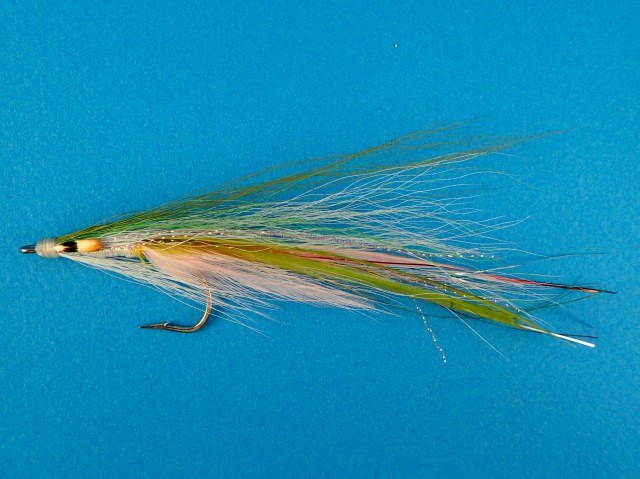
My rendition of Bill Peabody’s Flat-Wing Bay Smelt. The fly has not yet been shaped under water.

OLYMPUS DIGITAL CAMERA

Beware of the Casting Police

The Casting Police are as vigilant as ever. You’ll find them in breachway parking lots, along beaches, and especially internet forums.

They flash their badges at the first suggestion that you cast differently from the rest of the pack.

It does not matter if you like to cast that way.

It does not matter if you catch hundreds of stripers a year.

What matters is that there is The Way. The way of the double haul. Practice it not, and you shall be — if you’ll pardon the expression — cast out. Banished forever from their imaginary kingdom.

Fortunately, the Casting Police have no real power over you, me, or anyone. You may cast and fish as you like. There are many, many ways, and you are free to explore the wonders of all of them as you see fit.

Ray Bergman wrote, “You may gather from this that I am not particularly interested in perfect form casting, and that is very true…it is best to concentrate on the other points rather than on form, and the casting will usually take care of itself.”

I think I’ll use that Get Out Of Jail Free Card now.

He even looks like a heathen! Fortunately, all casters are equal in the eyes of striped bass.

900x900px-LL-8da1a41d_38incher-1


Survivor: Farmington (Browns Built To Last)

“Survivor: Farmington,” an essay about the CT DEEP’s Farmington River Survivor Strain Program, first appeared in the Spring 2014 issue of The Drake. The photo and caption did not appear in the article, and this is my original text. 

by Steve Culton

They took her from the river in September, 2012. She was chosen for her wild traits and rounded belly that indicated a healthy female ready to spawn. Once her eggs were harvested, she was returned to her home waters. But not before a red elastomer was inserted near her left eye. That color and placement would forever identify her as a broodstock female, one of many mothers of the Farmington River Survivor Strain Class of 2013.

The next April, I fished the West Branch of the Farmington. The Hendrickson hatch was winding down, and the trout were transitioning from taking emergers in the film to picking off duns that haphazardly lingered on the surface. Her take was powerful enough to rip the line from my fingertips and cause my drag to buzz in protest. I rarely put trout on the reel; this was going to be my first of 2013. What’s more, this fish was not going to come easy. I ended up walking a fair distance downstream to land her. It wasn’t until I was reviewing the day’s photos that I noticed the elastomer. I had sensed there was something readily distinguishable about the way she hit, bulldogged, and refused to come quietly. Now, it all fell into place. Survivor Strain.

Here she is in all her glory: the actual fish I was writing about.

Big Survivor Strain brown hen

The Farmington River Survivor Strain program was initiated in 1993 by what is now known as the Connecticut Department of Energy & Environmental Protection (DEEP). Neal Hagstrom, DEEP Senior Fisheries Biologist, describes the program as, “an attempt to use the river to select the best possible animals for that environment. We take certain trout to the hatchery, spawn them, then put their progeny back in the river, assuming that those fish will be best adapted for the conditions they’ll face.”

Survivor Strain’s inaugural class were descendants of stocked Cortland, Rome, Bitterroot, and Seeforellen browns. “The hope was that we would get improvements in production and survival,” says Hagstrom, “and we saw that in the first year. We went from about a 20% holdover rate to about 50%. We now find fish in the West Branch that are upwards of eight years old.”

Broodstock for the program are collected through electroshocking. Each September, the Metropolitan District Commission draws down the flow from Hogback Dam so that DEEP crews can complete their harvest. Their goal: one hundred brown trout worthy of producing the next generation of Survivor Strain. Like an NFL scout on draft day, Hagstrom explains the DEEP’s talent evaluation process. “We try to get fish that have spent at least a year in the river. We want genetic diversity. We want browns from multiple age classes, and multiple sources like Survivor Strain, and most importantly, wild fish. We want a lot of different parents to get as many possible combinations of genetic material.”

The DEEP harvested approximately 80,000 eggs in 2013. That biomass will generate 70,000 fry. In keeping with the tenet of genetic strength and diversity, the hatchery will set up dozens of parental combinations for the young ‘uns: wild mother/ wild father; wild mother/Survivor father; small wild father/large Survivor mother; and so on. This elasticity creates a population that is well equipped for the natural challenges of the river – not to mention heavy fishing pressure. Young-of-year Survivor Strain are wary of humans, even in their hatchery pens. Where standard-issue stockers are indifferent to people, Survivor Strain fish will dart away. “When we first saw it, it was like, wow, this is really cool!” says Hagstrom. “We had two tanks together, and their behavior was like night and day.”

To facilitate their annual trout census – and inadvertently, enable you to track your catch – the DEEP color codes Survivor Strain trout with elastomers. Left eye placement means the fish is an adult; right eye, a yearling. Colors change every year; 2011 yearlings received red or yellow, while 2012 yearlings received green. Thankfully, for those of us who are color blind, Survivors also have their adipose fin clipped off.

Not surprisingly, anglers are the program’s biggest fans. What’s not to like about cantankerous trout with breathtaking colors that grow to trophy size? As a bonus, the West Branch has seen an explosion in the wild brown population since the introduction of the program. A new record was set in 2013 of just over fifty percent of trout that were naturally spawned in the river. That bodes well for those of us who live for chasing gator browns. Mike Humphries, DEEP Inland Fisheries Biologist, says it’s a myth that the river’s lunkers are pen raised. “The highest percentage of big trout on the Farmington aren’t hatchery fish. They’re wild.”

And to think it all started with one tough mother of a stocked brown.

How To Tie And Fish Dropper Rigs For Stripers

“How to Tie and Fish Dropper Rigs for Stripers” first appeared in a 2010 issue of Mid Atlantic Fly Fishing Guide

Not every day is April on the lower Housatonic when the stripers are ready to pounce on your fly with reckless abandon. No, this was an August evening in Rhode Island, and while the bass were open for business, hookups were few and far between.

I was fishing a spot where a rocky bar merged with a shallow sand flat before dropping off into a deep channel. Pop! Tock! Every few minutes, I could hear the distinctive tells of feeding fish, all within casting range. The water was loaded with dense schools of silversides. Peanut bunker were in the mix, and I had even seen clamworms earlier in the week. But what were the stripers feeding on tonight? Within a few minutes, I would have my answer. I cast my dropper rig into a surface seam, and started mending for a greased line swing.

As the flies swam across the current, the water exploded. I set the hook, and soon a fine striped bass was in my hands. With the dropper rig, he had three fly choices: a clamworm, a small bucktail menhaden, and a Ray’s Fly. He chose the menhaden. A few casts later, bap! Another striper on the menhaden. Satisfied, I clipped the other flies off the leader. Once again, droppers had proven to be the fastest way to find out what the fish wanted.

Dropper rigs take a little more effort than store-bought tapered leaders, but they’re easy to tie and the rewards can be great. A dropper rig is a terrific searching tool, giving the bass multiple targets, and letting you present at different depths on a single drift. I’ve always been the curious sort, and I like the surprise a dropper rig provides when I discover which fly fooled the fish. And, as an angler who embraces traditional methods, the dropper rig has proven itself — you’ve heard of a brace of wet flies — over the course of hundreds of years.

The original article had an illustration of a three fly team by Ken Abrames;  I’m replacing it with a detailed rigging diagram. It’s a simple leader — you’re basically making a triple surgeon’s loop and then tying two triple surgeon’s knots.

OLYMPUS DIGITAL CAMERA

Here’s a pdf: Striper Dropper Rig

A basic dropper rig is about seven to eight feet long, with two dropper flies and one fly on point. The flies are spaced 18 to 24 inches apart, and the dropper flies are tied on tags that extend a few inches out from the leader. I use 20, 25, or 30 pound mono to build my dropper rigs. Start with a length of mono a little over four feet long. Tie a loop about the circumference of a baseball at one end; this will be the butt of the leader. I use a triple surgeon’s knot, but you can use the knot of your choice. Always wet the mono before you tighten your knots, and remember the wisdom that no knot is worthy of your trust. I test every knot I make before I fish any leader system.

Next, take a three-foot section of mono and attach it to the butt section with a triple surgeon’s or double uni-knot. The tag of the butt section will form the first dropper, so be sure to leave plenty of material (about 8”) for it. Snug that knot up good and tight, then repeat the process to form the second dropper. You should now have a length of mono with two tags, spaced about two feet apart, extending toward the point fly end of the leader. All you need to do now is tie on some flies. I like them between four and six inches away from the leader.

What flies? Think different: Different sizes. Different colors. Different species. Give the fish a choice. They will tell you when you’ve made the right one. In my experience, this rig fishes and casts best with the largest fly in the point position. Don’t be afraid of fouling or tangles. You can cut down on their incidence by slowing down your casting stroke, and making sure the line straightens out on your back cast before making the forward stroke.

Here are a few simple guidelines to help you decide if a dropper rig is a good idea. Use one when:
• You’re searching for fish.
• There are multiple baits in the water and you’re not sure what the stripers are feeding on.
• There is an abundance of small bait in the water, i.e. anchovies, grass shrimp, clam worms, sand eels.

A dropper rig might not be the best choice if:
• There are bigger fish about (landing multiple large fish on a single leader can be a dicey proposition).
• You’re having difficulty casting into a strong wind (use a shorter leader and a single fly).
• You start consistently hooking doubles or triples.

Droppers aren’t a magic bullet solution. But if you want to catch more fish, they are an excellent arrow to have in your quiver.