Here’s where I ended up after this past April:

Here’s where I ended up after this past April:
I lost my fishing hat. I’ve no idea where, but it’s gone. And it’s not coming back.

Okay. So, it was on its last legs. So, it was decades old. So, it’s been fraying and worn and even threadbare in a couple places for years. But it was a constant companion from shoreline to mountain stream to steelhead alley and back. It fit just right. It worked in the summer and it worked in the winter. And now I don’t have it. Which makes me very sad.
Sure, I was going to replace it soon. But I would have liked to have archived it. L.L.Bean no longer makes that hat, so I can’t even replace it with something similar. It was lightweight and supremely comfortable. It was a wonderful understated earth tone color combination. I’ve got a ton of other hats, but none of them are MY hat, and I’m very particular about what I put on my head. What shall I do?
An exhaustive search lead me here. It’s an Orvis Battenkill cap, and it has a lot going for it. It’s a good earthy color. It’s simple. It’s not an obnoxious branding billboard. And what’s that fly?!? A bead head soft-hackled Pheasant Tail? I love that fly. I tie that fly. I fish that fly.
Hello, new friend. Let’s go on an adventure.

Official custom Currentseams hats, anyone? Because I’ve been thinking about it for a while now…
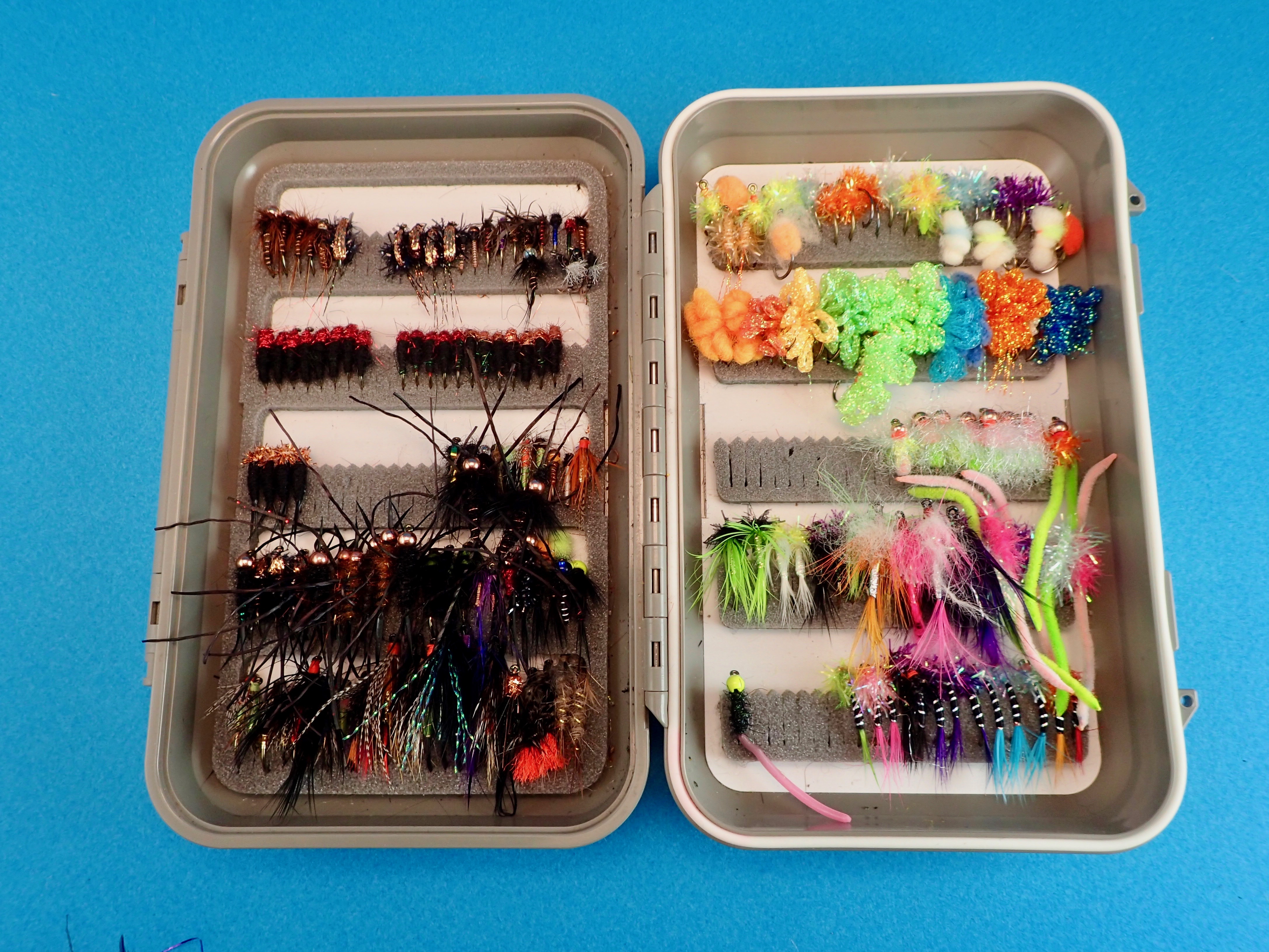
About this time every year, my thoughts turn to steelhead, and of course, steelhead fly tying. I pull out my steelhead chest pack and the two fly boxes within its zippered pouches. The “big box,” as I call it (both boxes are, in reality, the same size) doesn’t change much from season to season — it’s mostly streamers and experiments and one-offs and flesh flies. The nymph and egg box, however, gets a serious going over and then a restocking.
But, things are a little different this year. I’ve got plans for two sorties to Steelhead Alley. These rivers and creeks are a universe away from a big, brawling river like the Salmon in upstate New York. They’re smaller, with different bugs and different water color and clarity and flow (very low right now) and different bottom structure. So I should be thinking differently with my flies.
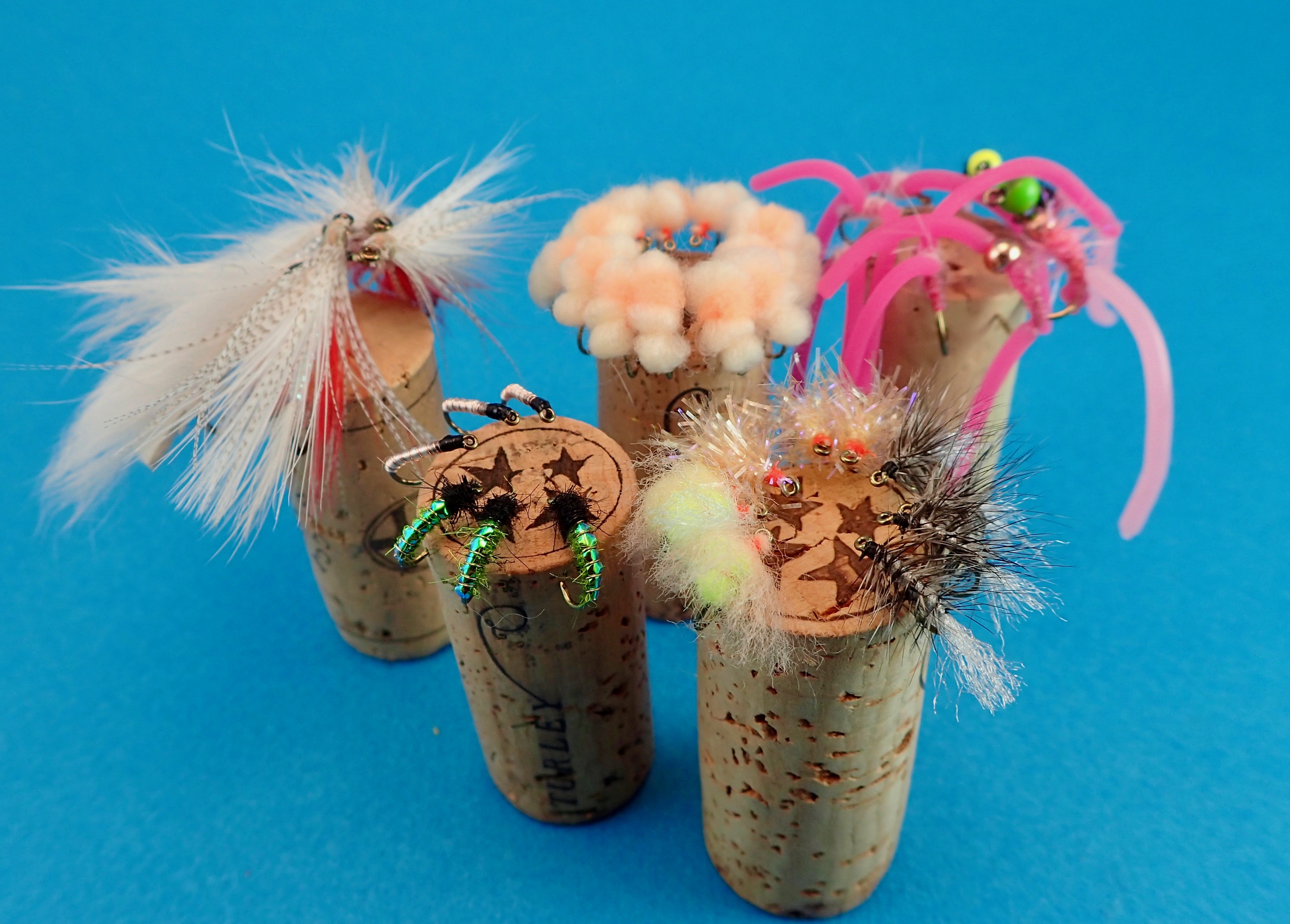
What I’m currently tying up is generally smaller and more muted. I’ll give you a closer look next week. But right now, I’ve got corks to fill.

Last night I presented The West Branch Farmington River — Southern New England’s Blue Ribbon Trout Stream to the New England Fly Tyers. NEFT operates out of central Massachusetts, and they are an enthusiastic, dedicated group of tiers and anglers. For understanding that a fed presenter is a happy presenter, I hereby award them the Legion of Potluck Yumminess with Homemade Brownie Clusters. Thank you again, and I hope you’ll invite me back!

A quick greetings and salutations before I dive into a sound bites — word bites? — edition of currentseams. Hope you had a swell weekend. Me, I took a beating in my NFL ATS pool but still managed to win. (Unlike my Dolphins, but that’s another story.)
Many thanks to the fine men & women of the Croton Watershed TU Chapter for hosting me Thursday night. The subject was “The Little Things 2.0” — the second chapter in my series of seemingly insignificant things that can have a huge impact on your fishing. And the pre-pres cheeseburger was delicious. Therefore, I bestow upon Croton TU the Order of the Cheeseburger with NE-style IPA Clusters for recognizing that a fed presenter is a happy presenter. I’m at the NE Fly Tyers tonight in Massachusetts, talking about the Farmington River.
I hit a small stream last week for a quick 90-minute session. I went bushy dry the whole way, and pricked a bunch of fish. None were brought to hand, and that was just fine with me. Water was low and clear and there were no signs yet of redds on this brook.
The Maryland Juvenile Striped Bass Index recently came out and the results were discouraging again:

The ASMFC Striped Bass Board will soon release Addendum II for public comment. You can read more about their annual meeting here from the American Saltwater Guides Association, who once again are doing so much of the striped bass conservation heavy lifting. We can’t thank them enough! Stay tuned for the official ASGA position on the commenting. We’ll need all hands on this one!
I just completed a piece for Surfcasters Journal. It’s about waiting out a slow spot or hour or night. Should you stay or should you go? You can read the answers in the November edition. Again, SJ is an e-zine that’s loaded with fantastic saltwater and surfcasting nuggets, and is a bargain to subscribe. If you’re not subscribing, you should be.
Now, off I go to rehearse tonight’s presentation.
Tomorrow night, Thursday, October 19th, I’ll be presenting “The Little Things 2.0” to the Croton Watershed Chapter of TU. The meeting is open to the public, and you’re invited! Doors open at 6:30pm, and the meeting starts at 7pm. It’s all happening at the Emanuel Lutheran Church, 197 Manville Road, Pleasantville, NY. If you’re a currentseams follower, please come and say hello.

On Thursday I had the opportunity so spend a couple hours on small stream so I jumped on it. I hadn’t fished here since April and boy, did the heavy rains of the summer alter the streamscape. Entire pools were missing, and others were created. The fish were well spread out, and I did not see any signs of redds, nor of fish staging to spawn. Hatch activity was light with some lonely midges and a few stray small caddis. I fished downstream, subsurface, using a Squirmy Worm jig. I did tie on a bushy dry at the end just for fun.
It’s a good time to revisit some basic small stream best practices. First, learn to ID redds. It’s a good idea to stay our of the water from around now through mid-April. The lives you same may be the future of the brook you love to fish.
Please mash down your barbs or fish barbless hooks. You can also fish hook size that’s just a little too big, like a 12 or 14. This will self-eliminate smaller fish from eating the fly, and you’ll still have the sport of seeing them whack it and feeling their aggressive tugs.
Handle fish as little as possible. Keep them in the water if you can. The less exposure to air, the better. Reduce potentially damage to fish by taking the Wild Trout One Photo Challenge.
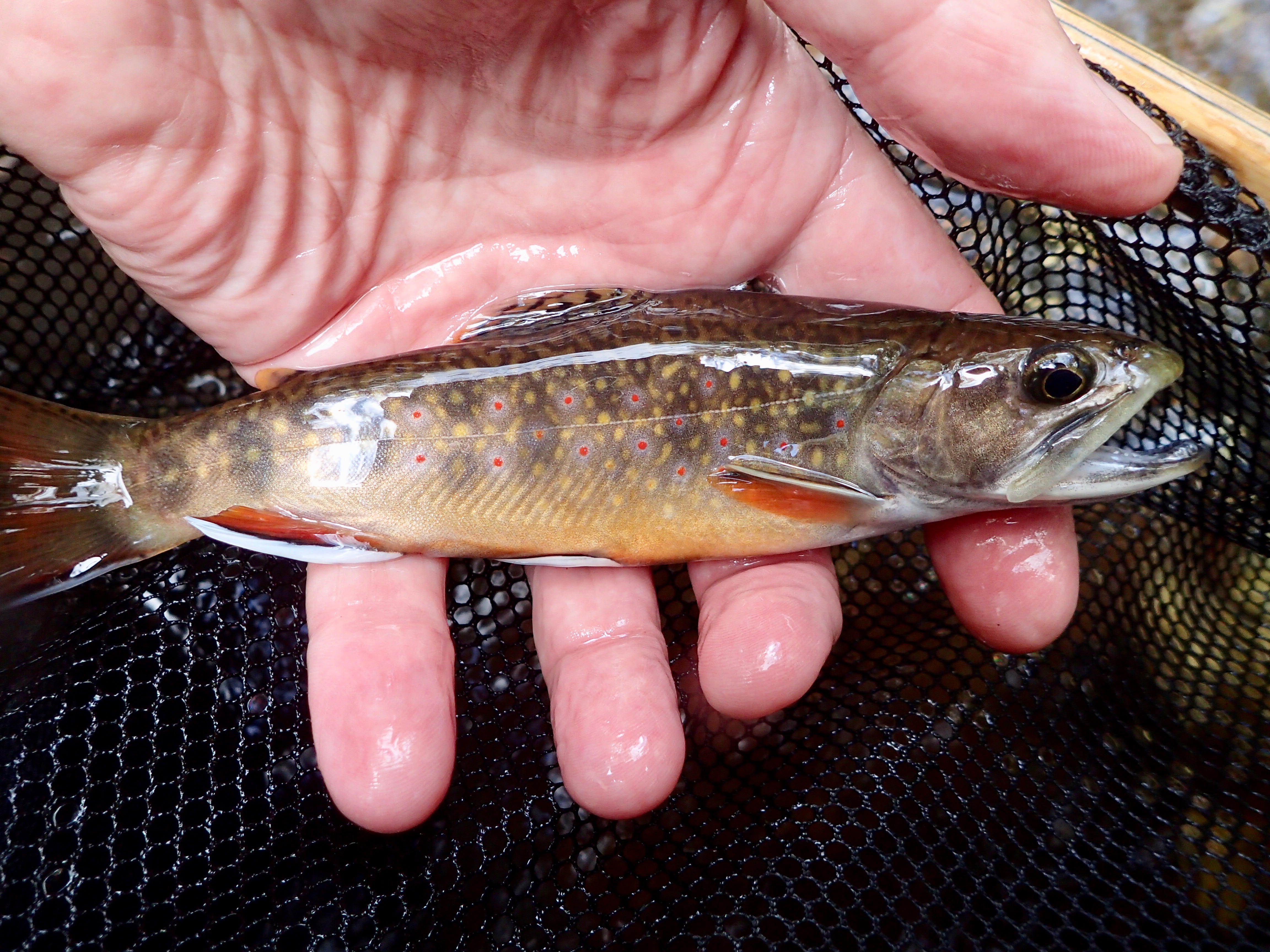
This morning I dumped all the entries into a virtual bucket and had my independent panel of one randomly select three winners: Jim D., Jack W., and Geoff K. Congratulations! The winners have already been notified by email. (Geoff K, your Charter email is bouncing back, so please send me a valid email address!) Now, to the vise…
I’d like to thank everyone who entered, and everyone who reads and follows Currentseams. Onward and upward…if you get a fishing friend to subscribe and we’ll be doing this again soon, although I may now go in increments of 250.
What a treat to spend a day fishing with #2 Son Cameron on a small woodland stream. The water was on the high side of medium, 55 degrees and crystal clear. Although the spawn has not yet begun, some of the resident char were sporting their ready-to-get-jiggy finery. The leaves are beginning to tumble down, and although they were not an issue, I would expect that they would start becoming one this week. Like my previous trip, the fish were unimpressed with the dry fly; anything subsurface was immediately bull-rushed and nipped at. If you’re heading to a small stream from now until April, please stay out of the water and be on the lookout for redds!
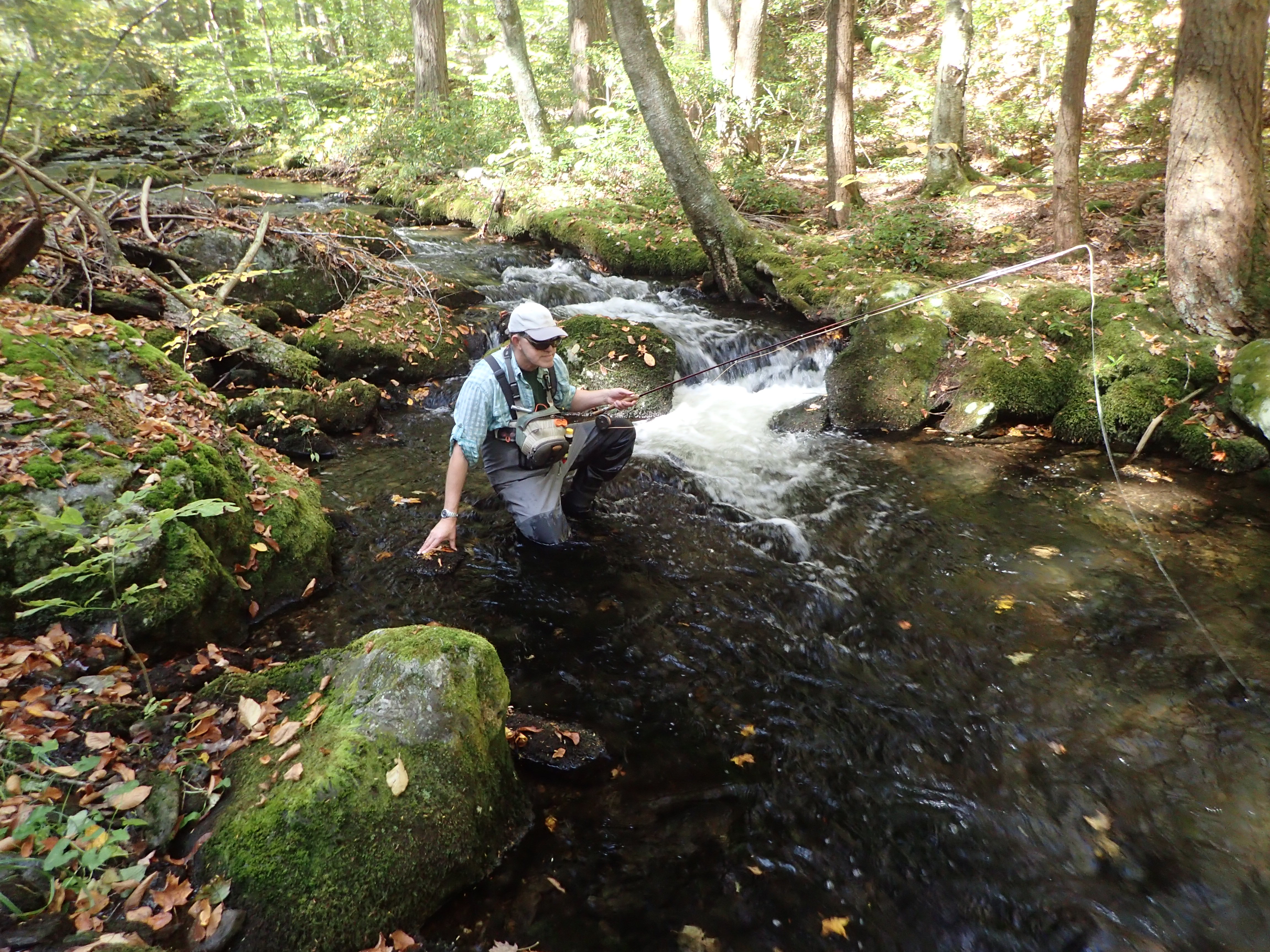

Last week I spent a couple hours on Ye Olde Brookie Emporium. The water was medium-high and running clear. I hadn’t fished this stream since last spring, and there were some changes over the summer. A constant supply of too much water really moved the fish around, placing them in some holes that are normally low and devoid of char this time of year. A couple pools underwent significant structural changes that altered their size and depth, mostly due to old logjam dams being swept away and new ones being formed. The bottom line was that there were fish almost everywhere, and they were in great shape and eager to jump on.
Due to the volume of water, I started subsurface with the Squirmy Wormy Jig, which was a good call. Almost immediately, the brookies began attacking the fly. I used a size 12 to minimize hookups; later in the day I went down a size to actually land a few. Stripped, dangled, swung, hopped, it didn’t matter. This fly was under constant assault.

Next, I wanted to try out a new pattern I’d read about this winter in Pat Dorsey’s book Favorite Flies for Colorado, the ARF Humpulator. This pattern from Al Ritt was designed to float better, longer. As its title suggests, it’s a riff on a Stimulator and a Humpy. (My favorite feature might be the hi-vis indicator tied onto the wing, something I’ve thought about doing on my Stimulators and Improved Sofa Pillows for years.) Although it is intended to be tied in sizes 6-10, I made my ARF Humpulators in a size 14. Like any big, bushy dry, the wild things slashed and crashed and bashed and mashed it. Again, by going with a larger size, I eliminated unnecessarily hooking smaller fish.
I was disappointed in several of the hero pools, but that may be a function of them being easy to access, and the resulting increase in fishing pressure. Leaves were not yet a factor. No redds were observed, but I did see a pod of good-sized char milling about at the bottom of one deeper gravel bed. I decided to let them be. While it was a work day of sorts (shooting photos and video), it’s hard to beat a day at the office like that.


