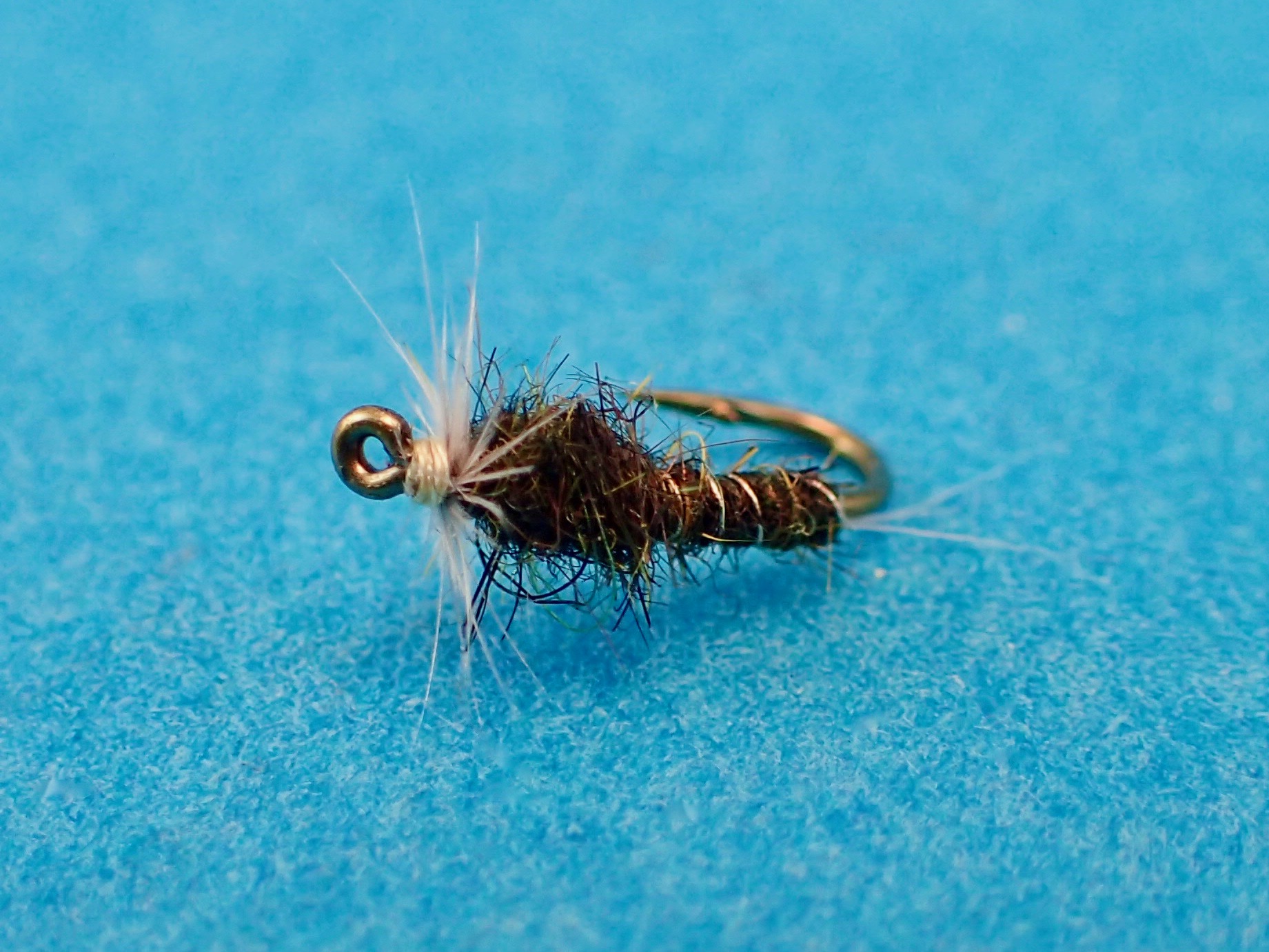
Looking back at this post, I can happily say that I’ve given many of these patterns far more than a test drive. I find it highly satisfying that the flies that Leisenring fished with confidence on his beloved Pennsylvania streams work just as well on the Farmington River. The post is formatted so that if you click on a pattern title, you’ll be taken to the recipe, along with a little blurb about the fly.
Hot tip: try Liesenring’s Old Blue Dun in a size 12 during the Hendrickson hatch. The original works, but if you want to make it a little truer to the natural, use dark dun for the tail and hackle.
Today’s question comes from Jim B., who asks. “How about a greased line swing with a 4 foot Airflo fast sink leader? Would there be any advantage to this? “
The shortest answer is, “Sure.”
The more complete answer is, “Yes… No… Maybe.”
And my best answer comes in the form of a follow-up question, which is: “What do you want the fly to do?”
When it comes to solving some of fly fishing’s thorniest problems, “What do you want the fly to do?” is about as close as it gets to a universal solution. It’s especially applicable in this case. If you want to fish a shorter tippet and give the fly some depth — you’ll achieve depth on the mends because the sinking leader will act as split shot — then have the fly rise toward the surface as tension is introduced — then yes, you have an advantageous situation.
You could fish a neutrally buoyant fly on a longer leader, and have the fly present somewhere between the film and a greater depth. (If that’s what you want the fly to do.)
If you want the fly to sink just below the film and fish it at a depth of 1 foot, then no, it’s probably not advantageous.
You can see where this is going. There are multiple answers because there are multiple possible situations. Which line? Which leader? Which leader material? Which leader length? Which presentation? You can answer them all by determining what you want the fly to do. Hope that helps!
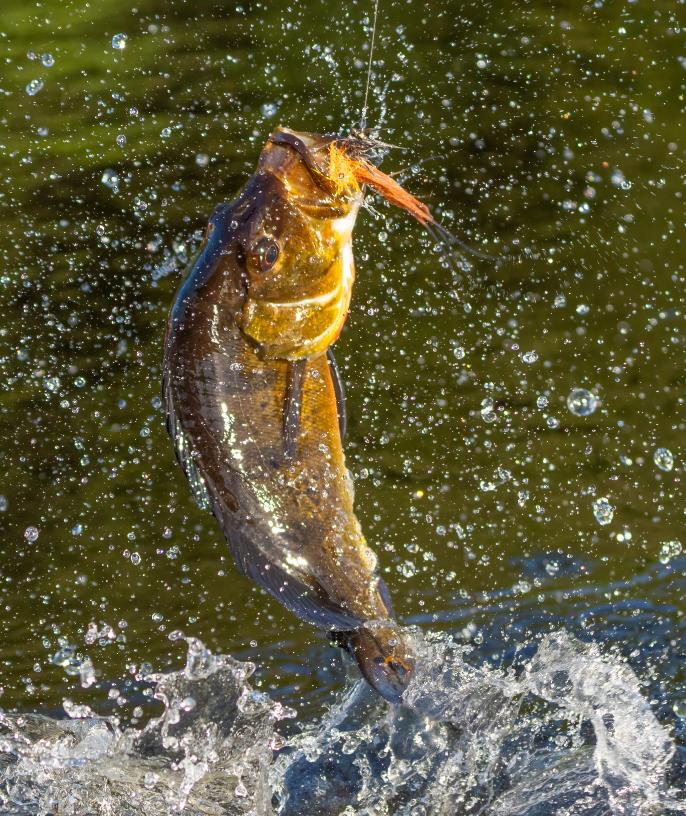
We were fishing in a canal with current. I told the guide that I wanted the fly to sink a bit, then rise as it moved past a likely ambush point. I used a floating line and about a nine-foot leader. A cast upstream, 2-3 big mends, then come tight so the current grabs the line, introduces tension, makes the fly rise up, and WHACK! What do you want the fly to do? Photo by Capt. Mark Giacobba.
When I went back to this oldie-but-goodie article, I was struck by two things. First, I love how Leisenring incorporated the soft hackle into these nymph patters. And second, I have not fished these patterns nearly enough, whether on a dead drift near the bottom or as a swung wet fly. None of them have beads or UV dubbing or special sparkle flash, but they all look like they’re alive and something fish would like to eat. To the vise (again)!
Anyone can luck into a big fish. Way back when, when I was just starting out, I wanted no part of that. I wanted to be able to consistently catch big stripers.
If you want to catch big bass — and make it repeatable — you don’t need a casting lesson. You don’t need to be able to reach 90 feet. You don’t need the latest in intermediate line technology. You don’t need a huge monstrosity that looks more like a plug than a fly.
You need to study. And ask questions. Why would there be a big striped bass where I’m fishing? Is there current, cover, and food? Is it pre-spawn? Is it migration time? Is the bait spawning (and therefore gathering in large numbers)? Is it dark, so the fish feels comfortable coming in close? What’s the barometer doing? Which way is the wind blowing? What’s the tide, and how is it moving? These are all part of the equation.
Then, you need the right fly. Something that looks like the bait, or what the bait should be at this time and place. Does the fly look alive and like something good to eat, even when at rest?
Don’t forget presentation. You need to learn that, too. Big fish are lazy, and frequently unwilling to chase. How can you present the fly in a way that makes it easy for the striper to eat?
Last but not least, you need to put in your time. There is no substitute for time on the water. You can do all of the above, check all the boxes, and still blank. (Ask me how I know.) Nevermind, I’ll just tell you. Last year, I fished the mark I fished last week six times and had only two tiny bass nibbles and no bass to hand for my efforts. But every year is different, and this is what I found on a greased line swing with an 11″ Bombardier flatwing in March of 2024:
Miss Piggy went 25 pounds and taped 39 inches. This was one of the best fights I’ve ever had with a bass, and I hope to write about it sometime soon. I am humbled and grateful for the chance to hook, land, and release this fish. I’ve been doing this for years, folks, and I was so pumped with adrenaline that my hand was shaking as I took this photo.
On Wednesday night I spoke to the East Jersey Trout Unlimited group about wet flies — specifically, getting into wet fly fishing, with the program title being “Wet Flies 101.” What a great group, very involved audience, and a gratifying turnout. The passion this group has for fly fishing is very evident. I’m already looking forward to coming back, especially if I can start the evening off with a burger and an IPA at ReBar just a few minutes away.
During the post-presentation Q&A, I was asked a really good question. I didn’t like my answer, and it bothered me all the way home. I’d like to represent the question, and give what I think is a much better answer.
Q: You say when you’re swinging wets, you have to wait a few seconds before you set the hook or you’ll lose the fish. How come when you’re nymphing you need to set the hook right away? A: I don’t know if this is a definitive answer, but I can tell you my best calculated guess. When you’re swinging or dangling a wet fly downstream in current, you’re fishing a tight line. There’s tension present. And then, you have a moving fish applying force, and then quickly changing the direction of that force. My advice to clients is to feel the hit, ask the question, “Are you still there?” and then set the hook. Do that, and the fish essentially hooks itself. When you’re nymphing, the fish behaves differently. It doesn’t rise from the depths, then turn and swim a few feet back down to the bottom. It’s typically feeding on station, near the bottom, perhaps not moving much at all, or maybe just a few inches. It sees your nymph, opens its mouth, and eats the fly. It’s a far more passive transaction. Setting the hook forcefully downstream seals the deal before the trout can reject the fly (if it does that at all). When you’re nymphing, you can still catch fish without setting — we’ve all had instances when we’re not paying attention and we manage to hook and land the fish regardless — but setting the hook had and fast will certainly result in more trout to net.
Do this when nymphing — a downstream set with a low, hard sweep — and your catch rate will soar. Hooksets are free, so look for a reason to set the hook on every drift!
I received a message last week from a fan of Stewart’s Spiders. He was delighted to find them so lovingly rendered on this site by yours truly, so I thought it might be a good time and place to revisit them. (Yup, I’m still encumbered with house stuff and other projects.) If you haven’t seen them, you’ll like. This is simplicity, elegance, and deadly rolled into a single pattern format. Here’s the article link.
The CT State Legislature is holding a public hearing on the Farmington River flow situation this Friday, March 8. All interested parties are invited to submit oral or written testimony to be entered into the public record. The deadline to register is Thursday, March 7 at 3pm. This is your chance to make an impact!
The following is taken from the Farmington River Anglers Association website and has everything you need to know. Let’s get to it, people!
“Establishing an optimum flow regime in the Upper Farmington River remains one of our top priorities.
To this end, House Bill 5355 – AN ACT CONCERNING CONSERVATION OF CERTAIN WATERS OF THE UPPER FARMINGTON RIVER, will receive a public hearing on Friday, March 8 starting at 11 a.m. I encourage you to submit written and/or oral testimony. If you testify orally (in-person or Zoom) it should be accompanied by written testimony. The deadline to register is Thursday, March 7 at 3 pm.
From early June, 2023. The water should be up past Michael’s knees, not just above his ankles. Help us end ridiculously low, unnecessary, harmful flows like this.
This old post tells you everything you need to know about building a team of three for wet flies. Well, almost everything. Looking back at the directions and diagram, I see how my leader formula has evolved. For starters, the tags should be a minimum of 6″, not 4″-6″. Certainly that old 4-6″ length works, but for me, the current sweet spot is probably more like 6″-7″. Next, the spacing between flies should be 24″-30″, not 18″-24″. My current thinking is that 18″ is too close. My current leaders are probably closer to the flies being 30″ apart, which I believe allows you to cover more water and achieve great depth. I almost always use a 3x tapered leader section for the butt. And no, I don’t use tippet rings.



 currentseams.com