Back in the Small Stream Groove

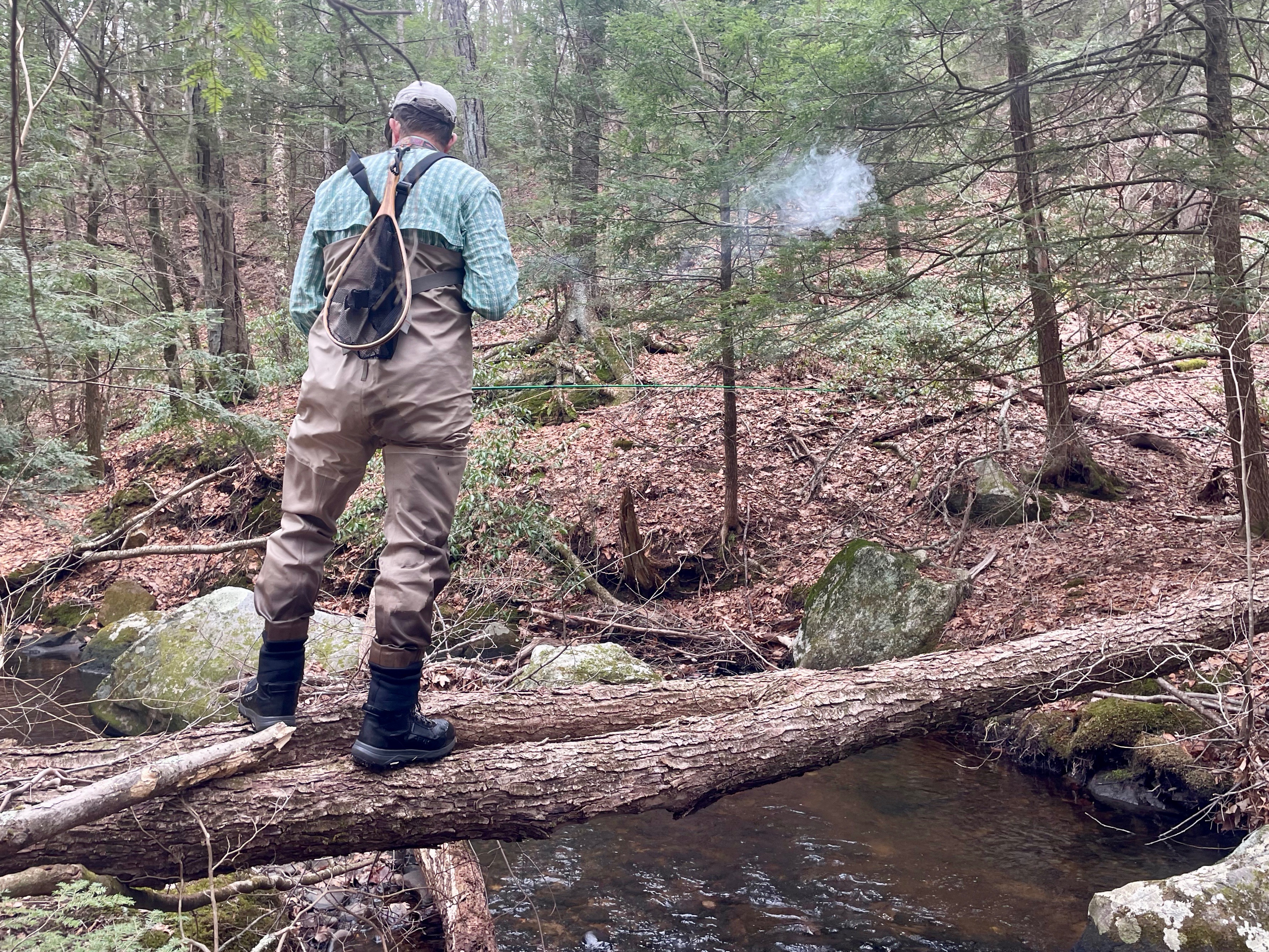
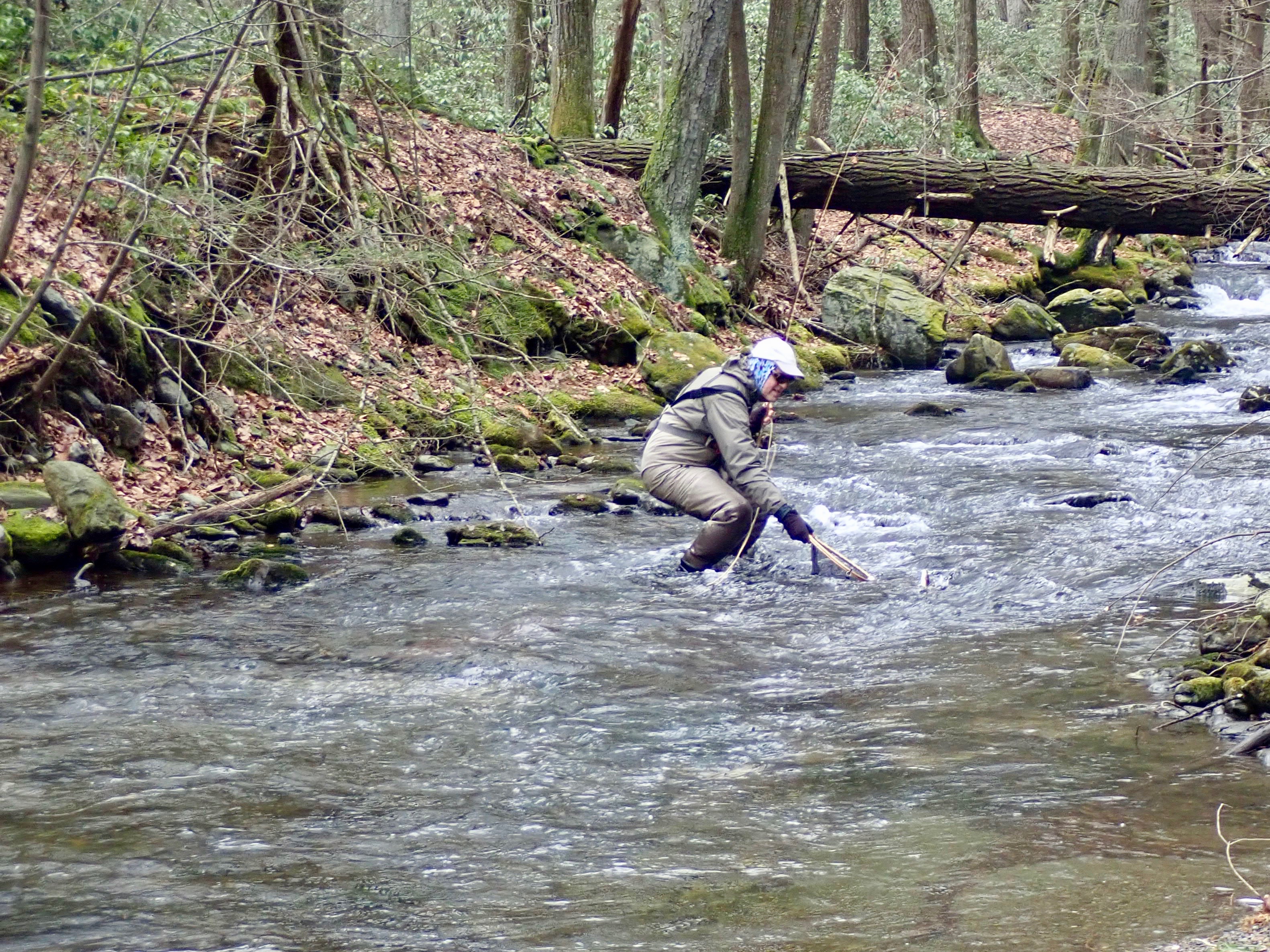
What a treat to be able to fish a small stream again. It’s hard to believe that this was my first fishing-for-fun-only outing of 2025. Surfcaster extraordinaire Toby Lapinski and I spent a few hours last week exploring a woodland gem. Although we fished mid-afternoon, dense canopy blocked the sunlight and the water was surprisingly cold. Water height was on the low side of medium. Although I fished a dry dropper system, the local char showed a clear preference for the dry. Toby fished a size 10 hopper, and they attacked it with wanton ferocity. We pricked a bunch, landed several, and left feeling happy.
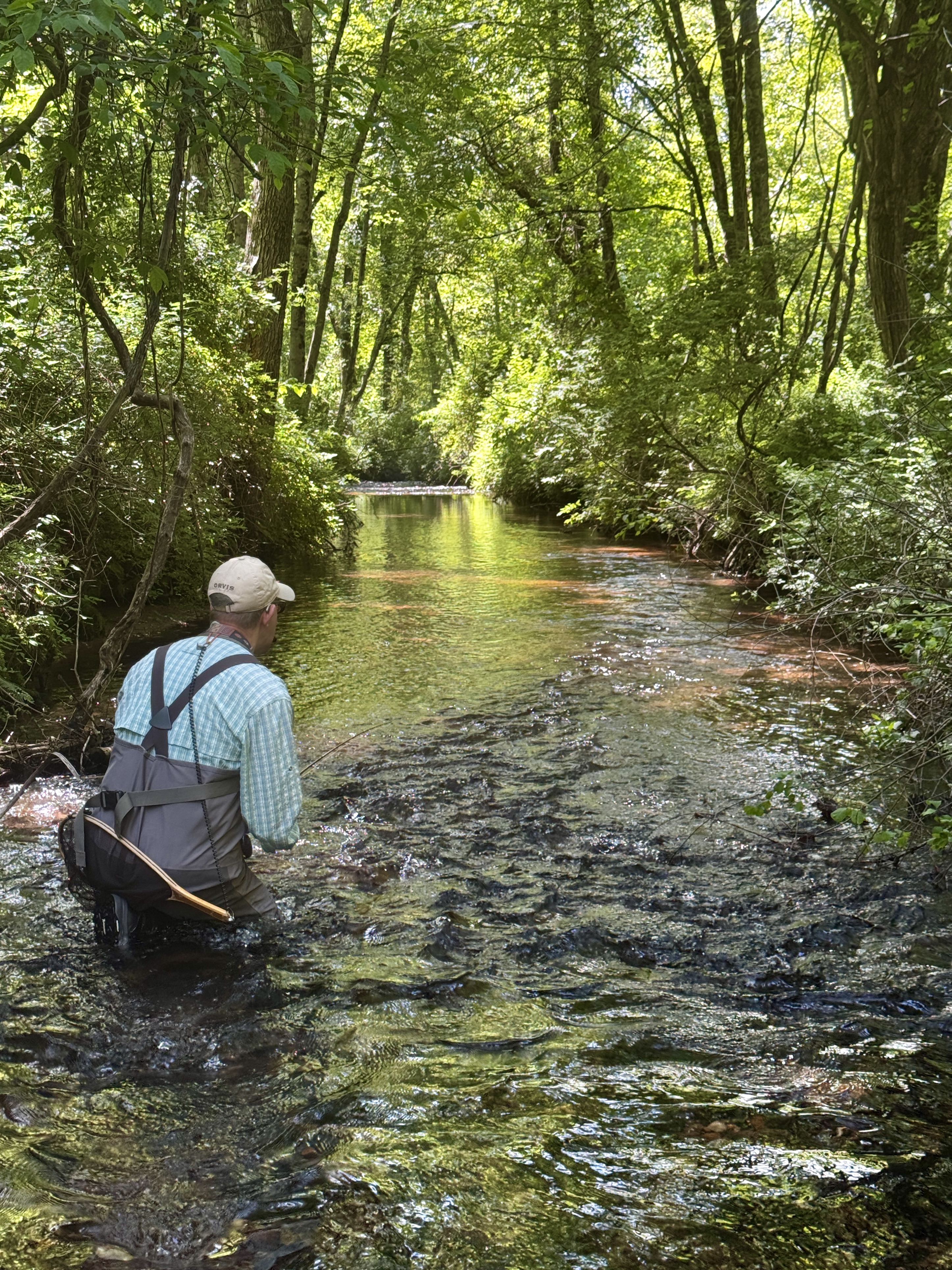
I could get used to this. I really, really could. Toby Lapinski photo

Given the daylight and shallower water, I found it curious that the fish weren’t that interested in subsurface offerings. Besides the dry/dropper, I also fished the Squirmy Jiggy Thingy. I felt many nips and tugs, but those were clearly generated by smaller fish. (By the way, we saw/spooked dozens of fingerlings, which portends for a bright next year.) The moment of the day, however, was when we witnessed a 3-foot long northern water snake capture and kill an 8″ brook trout. I’d never seen anything like it. The snake took the fish out of the water, and clamped down on its “neck” to suffocate it. There’s a theory which states that on small streams, terrestrials become a huge part of the trout’s summer diet. Apparently, the tables are sometimes turned.
Back in the CT groove, writing up a storm, TU talks, and small stream advice from the archives

Greetings, fellow currentseamsers. I wish I could tell you that I’ve been out fishing, but alas, no. I’m nearing the home stretch for the first deadline for the Farmington River book, and that’s been my focus. I was visiting #2 son in Ohio over the weekend, took the train, and was able to bang out thousands of words. (I love writing on the train.) I’m really liking what I’ve written so far, and I think you will, too. I appreciate your loyalty and I’m looking forward to not only finishing the book, but getting back a normal posting schedule on currentseams.

On Thursday, October 3 (tomorrow) I’ll be speaking at the Bucks County (PA) Chapter of TU. If you’re in the Philadelphia area, come join the party. The topic is “The Little Things 2.0.”

Next week, October 9, I’ll be celebrating John Lennon’s birthday with an appearance at the East Jersey TU chapter in Rochelle Park, NJ. The meeting starts at 7:30, and I’ll be presenting “Wet Flies 2.0.” If you’re there, please say hello.

The Farmington River continues to run at a very low level. We need rain! The good news is that the water is plenty cold. Lower light will be your best time to fish.

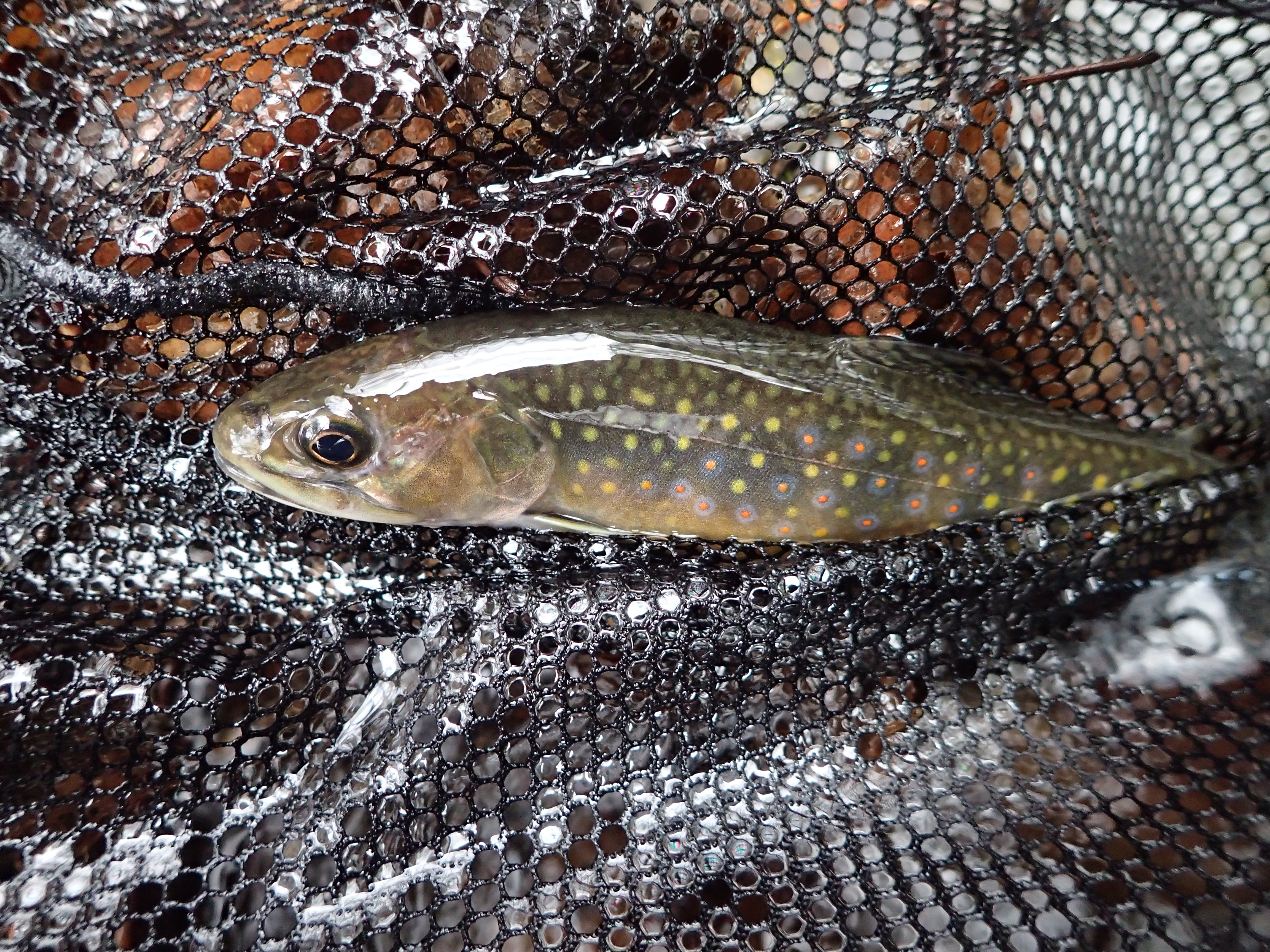
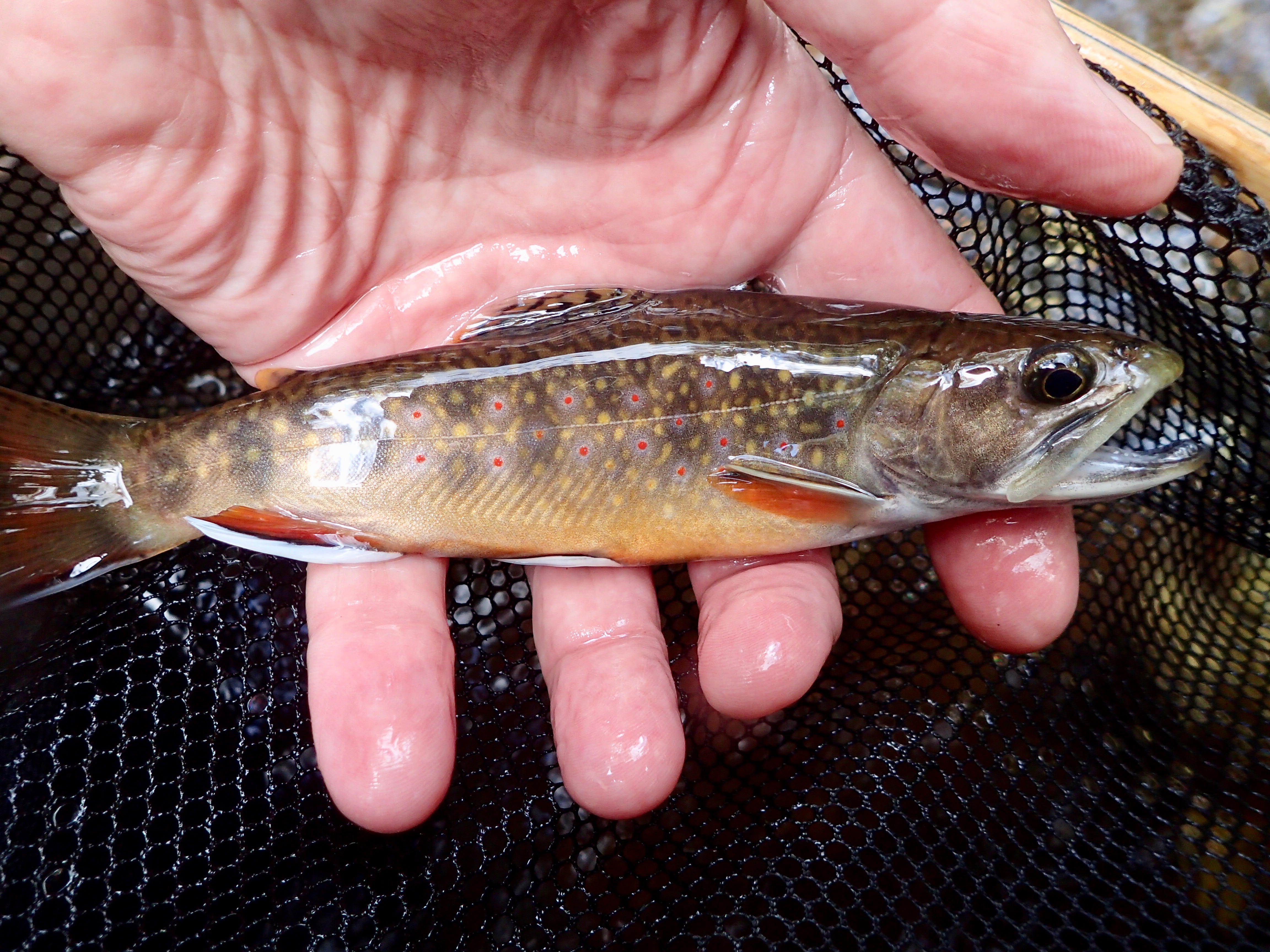
Love me some fall wild brookies. I crossed paths with this handsome char just about one year ago. Those fins! Those haloed spots! Those parr marks! Yeah, I’m a big fan.

Finally, it’s fall, which is a great time to be fishing wild brook trout streams. If you’re going to partake, please read this quick article from the archives, Three Small Stream/Wild Trout Best Practices.

Small Stream Report, or: I finally go fishing!

We all know the scientific certainty that all work and no play makes Jack a dull boy. But add a bout with Covid, a never-ending string of home improvement projects, change Jack’s name to Steve, and holy cow, the dullness is magnified when there’s no fishing in January.

So, I snuck out during the last few hours of the month to visit a small stream. It was chilly and overcast, but the water was a good medium height, running clear with an occasional bit of decaying vegetation detritus tumbling by, and a surprisingly warm 42 degrees. Here are some details.

I pricked four and landed three, all on a swung/dangled/stripped Squirmy Worm jig. They had no interest in the dry nor tiny nymph dropper.

I interested, but did not hook, two behemoths (for this size stream) in separate locations. Both fish came out from their holes to inspect the fly, follow it, and then ultimately reject it. In both cases, I tied on, then offered, a larger micro Woolly Bugger in black, but neither fish reappeared. Round 1 to them. (Be advised, fishies, that I know where you live.)

Most of the fish came in water moving at a moderate pace, and all of those locations offered both depth and some form of cover, be it logjams, cutbacks, boulders, etc. Another smaller guy repeatedly whacked the fly as it dangled near his hideout beneath a cutbank.

The last fish was a spawned out female, 8″-9″. Please take care not to wade in gravel beds until mid spring s that the next generation can get a healthy start.

On the board for 2024, and my first fish was a beauty. Please consider taking the Wild Trout One Photo Challenge. It’s better for the fish, the resource, and you’ll feel good about it, too.

More fun on a small stream and some conservation tips

On Thursday I had the opportunity so spend a couple hours on small stream so I jumped on it. I hadn’t fished here since April and boy, did the heavy rains of the summer alter the streamscape. Entire pools were missing, and others were created. The fish were well spread out, and I did not see any signs of redds, nor of fish staging to spawn. Hatch activity was light with some lonely midges and a few stray small caddis. I fished downstream, subsurface, using a Squirmy Worm jig. I did tie on a bushy dry at the end just for fun.

It’s a good time to revisit some basic small stream best practices. First, learn to ID redds. It’s a good idea to stay our of the water from around now through mid-April. The lives you same may be the future of the brook you love to fish.

Please mash down your barbs or fish barbless hooks. You can also fish hook size that’s just a little too big, like a 12 or 14. This will self-eliminate smaller fish from eating the fly, and you’ll still have the sport of seeing them whack it and feeling their aggressive tugs.

Handle fish as little as possible. Keep them in the water if you can. The less exposure to air, the better. Reduce potentially damage to fish by taking the Wild Trout One Photo Challenge.

This was my first brookie to net, and it was an easy decision to make this my One Photo Challenge fish. I’m telling you, those blue haloed dots were positively glowing! I lost a few char bigger than this one, and a bunch of smaller ones, and that’s all just fine with me.

Small Stream Report: The Kids Are (more than) Alright

Last week I spent a couple hours on Ye Olde Brookie Emporium. The water was medium-high and running clear. I hadn’t fished this stream since last spring, and there were some changes over the summer. A constant supply of too much water really moved the fish around, placing them in some holes that are normally low and devoid of char this time of year. A couple pools underwent significant structural changes that altered their size and depth, mostly due to old logjam dams being swept away and new ones being formed. The bottom line was that there were fish almost everywhere, and they were in great shape and eager to jump on.

Due to the volume of water, I started subsurface with the Squirmy Wormy Jig, which was a good call. Almost immediately, the brookies began attacking the fly. I used a size 12 to minimize hookups; later in the day I went down a size to actually land a few. Stripped, dangled, swung, hopped, it didn’t matter. This fly was under constant assault.

A woodland pond in miniature, lovingly rendered by Mother Nature.

Next, I wanted to try out a new pattern I’d read about this winter in Pat Dorsey’s book Favorite Flies for Colorado, the ARF Humpulator. This pattern from Al Ritt was designed to float better, longer. As its title suggests, it’s a riff on a Stimulator and a Humpy. (My favorite feature might be the hi-vis indicator tied onto the wing, something I’ve thought about doing on my Stimulators and Improved Sofa Pillows for years.) Although it is intended to be tied in sizes 6-10, I made my ARF Humpulators in a size 14. Like any big, bushy dry, the wild things slashed and crashed and bashed and mashed it. Again, by going with a larger size, I eliminated unnecessarily hooking smaller fish.

I was disappointed in several of the hero pools, but that may be a function of them being easy to access, and the resulting increase in fishing pressure. Leaves were not yet a factor. No redds were observed, but I did see a pod of good-sized char milling about at the bottom of one deeper gravel bed. I decided to let them be. While it was a work day of sorts (shooting photos and video), it’s hard to beat a day at the office like that.

Designed for larger western rivers, the ARF Humpulator also works on small eastern brooks. Please consider taking the Wild Trout One Photo Challenge on your next small stream outing.

The single best thing you can do for small streams and wild trout is:

Zip it. Hush. Shaddup. Small streams and wild trout are a finite resource — and more pressure is usually a very bad thing. So for goodness’ sake, never post stream names and locations on social media. Never take photos that clearly identify your location. (Picture this scenario: you make a video and post it on YouTube. The brook is clearly identifiable. Someone sees it and comments on how beautiful the place is. Someone else comments, “I know where that is!” Someone 1 reaches out to Someone 2, and the location is revealed. Someone 2 likes to share locations with his friends, and the cascade begins. Don’t laugh — I’ve seen it happen.)

And if someone asks, you can always use my line: “I won’t even tell my mother where I fish.”

From the article archives: Stalking Wild Trout on Connecticut’s Small Streams

We continue “Wild Trout/Small Stream Week” on currentseams with a deep dive into the archives. Stalking Wild Trout on Connecticut’s Small Streams was one of the first articles I wrote for myself. That is, not for a specific publisher or editor, but for my own personal use. Although it’s nearly 20 years old, and some of the information is out of date, the piece remains worthy. And I’m guessing that many of you newer subscribers have yet to see it. In case you missed the link above, you can find the article here.

To give you an update: I never did catch Gus. But I did catch and release a few of his relations. Sadly, the pool Gus lived in disappeared not long after I wrote the article. Small streams are highly susceptible to change during high water events.

The Responsibilities of Chasing Wild Trout

If you love and value wild fish — especially native fish — you have a responsibility to preserve and protect the resource. Yes, fishing is a blood sport. Yes, no matter how careful we are, some of what we catch may perish. But there are ways to dramatically minimize loss. And there are certainly ways to ensure the next angler has the opportunity to enjoy the stream as much as you.

So, I’m declaring this “Wild Trout/Small Stream Week” on currentseams.com. As you know, small stream fishing is an experience that is sacred to me. My goal this week is to educate and inform as much as possible. And this wonderful essay by a Pennsylvania angler named “Fly Tier Mike” is a good place to start. In The Responsibilites of Chasing Wild Trout, Mike outlines four best practices for those who fish for wild trout on small streams: Proper wading techniques (staying off of redds); proper fish handling; minimizing damage while taking photos/videos; and the pitfalls of social media that can lead to over-pressuring a stream.

Anyone who fishes for wild trout should read it, if only as a refresher. Thanks for your consideration.

I was gratified and encouraged to see someone else taking a stand for small streams and wild trout. Way to go, Mike!

Small Stream Report: First foot instead of last blast

As a creature of habit, I lovingly cling to my routines. So I was as surprised as anyone when I decided to not go small stream fishing on New Year’s Eve. Logic trumped tradition; by delaying a few days, the water would be a little warmer and hopefully any residual ice would be long gone. On the drive up, we did see some sheltered woodland streams where mini-glaciers abounded. But when we (myself and surfcaster extraordinaire Toby Lapinski) arrived at the stream we were relieved to see that frozen water was almost non-existent.

The water was barely into the high side of medium, which is just about right for winter fishing, and the brook was running clear and cold. Overcast skies didn’t hurt, nor did temperatures in the low 40s. Toby started out bottom bouncing and jigging, while I went the dry/dropper route. The action far exceeded our expectations. As you can imagine, going deep won the day, but I had enough action on both the dry and dropper that I kept them on for hours. (If reading this is getting you fired up for small streams, I have a presentation tonight in Danbury, The Eastern Brook Trout; later this month, you can see me present Finding Small Stream Nirvana at the Marlborough Fly Fishing Show, and a week later in Edison.)

The first fish of any year is noteworthy, even more so when it’s a stunning display of nature’s paint box. Taken on a size 14 Improved Sofa Pillow.
When I was a kid, I ruefully wondered why tropical fish had all the cool colors. Cut to 55 years later when I now know better. Since fish like this aren’t ever getting replaced by the stocking truck, it bears repeating: barbless hooks only; keep photos to a minimum (I landed dozens and took shots of only three); make sure your hands are wet; keep fish in the water in your net until ready to shoot; never expose fish to air for more than a few seconds; and never lay a fish down on rocks/gravel/leaves/grass. Thank you. (Photo by Toby Lapinski)
Small stream fly fishing for native trout may be fly fishing in its purest form. (Photo by Toby Lapinski)
Halo, I love you (again). Besides pulchritude, this fish is noteworthy because its thinness indicates a spawned out fish — and therefore a redd may be nearby. It’s a good idea to limit walking within the stream bed from mid fall to mid spring; the last thing anyone wants to do is tread on a redd and make all those future brookies dead. (Yes, I know it.) (Photo by Toby Lapinski)

Small stream anglers, take care: the spawn has begun

The spawn is taking place on some northeastern wild brook trout streams. I recently fished a brook on consecutive Thursdays, and the changes over the course of a week were dramatic. Seven days ago, there were only a few leaves in the water and no visible signs of spawning activity. A week later, the brook was congested with foliage and several redds were apparent. I spotted a large hen on one, and a few active fish on another.

In case you don’t know, a redd is a spawning bed. The fish select an area with enough water and current and the right size gravel, then clear the area of debris and other sediment before depositing eggs and spreading milt. (This is why spawning and post-spawn fish often present with scraped bellies and frayed fins.) Redds are fairly easy to spot; they look like light colored patches contrasting against much darker substrate. On a small stream, redds may be anywhere from a couple of square feet in area to significantly larger. A distinct light colored patch with fish darting about on the bottom nearby is a sure sign that you’ve discovered a redd.

Every small stream angler should know how to identify a redd, or spawning bed. Here’s a classic, can’t-miss-it redd: A dramatically lighter patch of gravelly stream bottom surrounded by darker substrate. There were a few fish milling about, but they scattered when I stood up to take this photo.

Maintaining the integrity of redds and protecting spawning fish is vital to the future of any wild trout stream. The stocking truck is not coming to replenish what humans destroy! Here’s what to do if you see a redd: First, leave it and the fish that are near it alone. Don’t try to catch spawning fish. Let nature take its course. Next, make a mental note of the location. Chances are that the fish have been using the general area to spawn for dozens or hundreds or thousands of generations. Finally, stay out of the water near the redd for the remainder of the fall, winter, and early spring. If you crush the eggs or the developing fry, that would be bad.

Besides, it’s pretty cool to simply sit on a rock and watch the beginnings of the next generation of Salvelinus fontinalis.