Thanks to today’s Wet Flies 101 Class/Farmington River Report

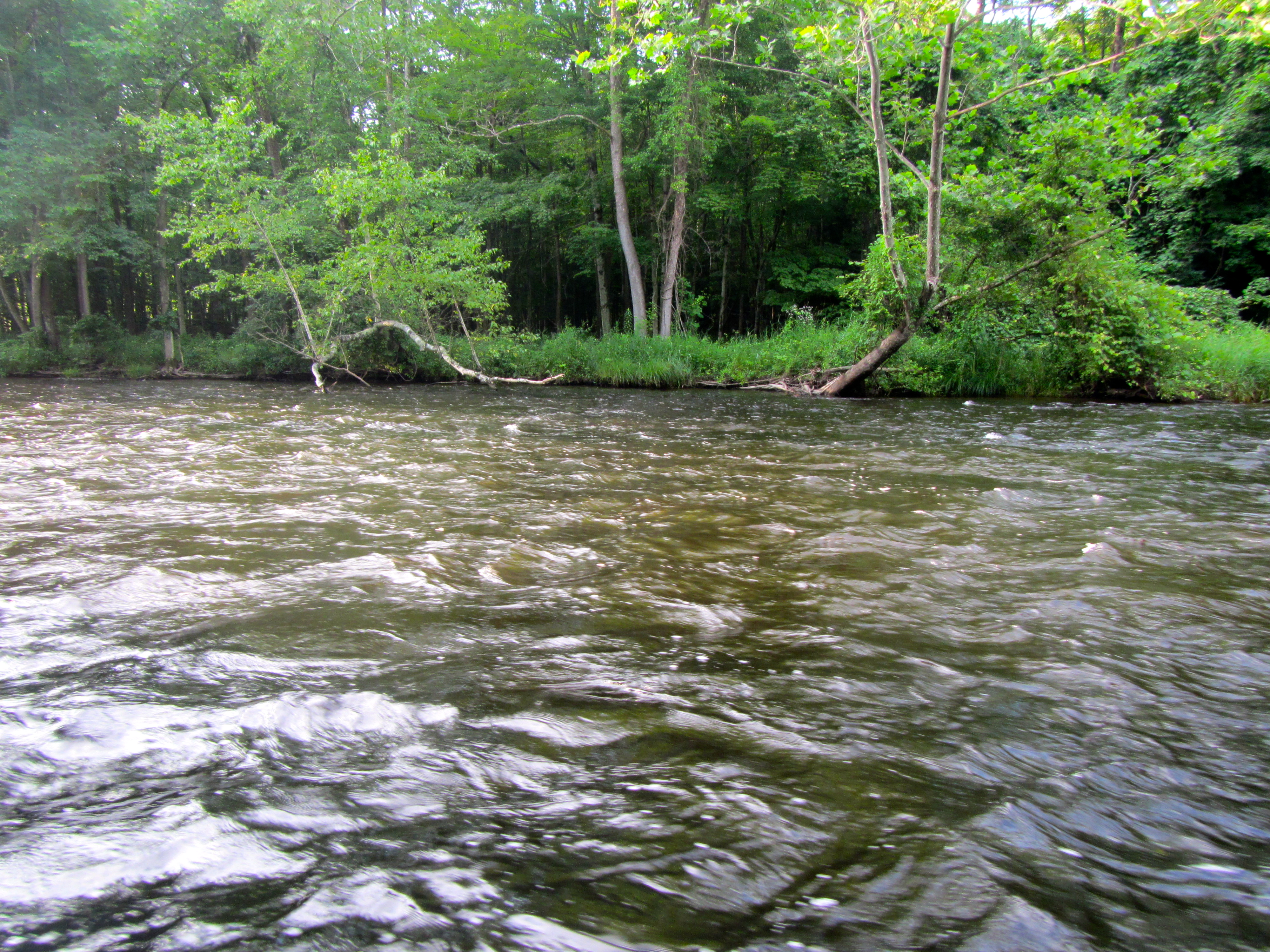
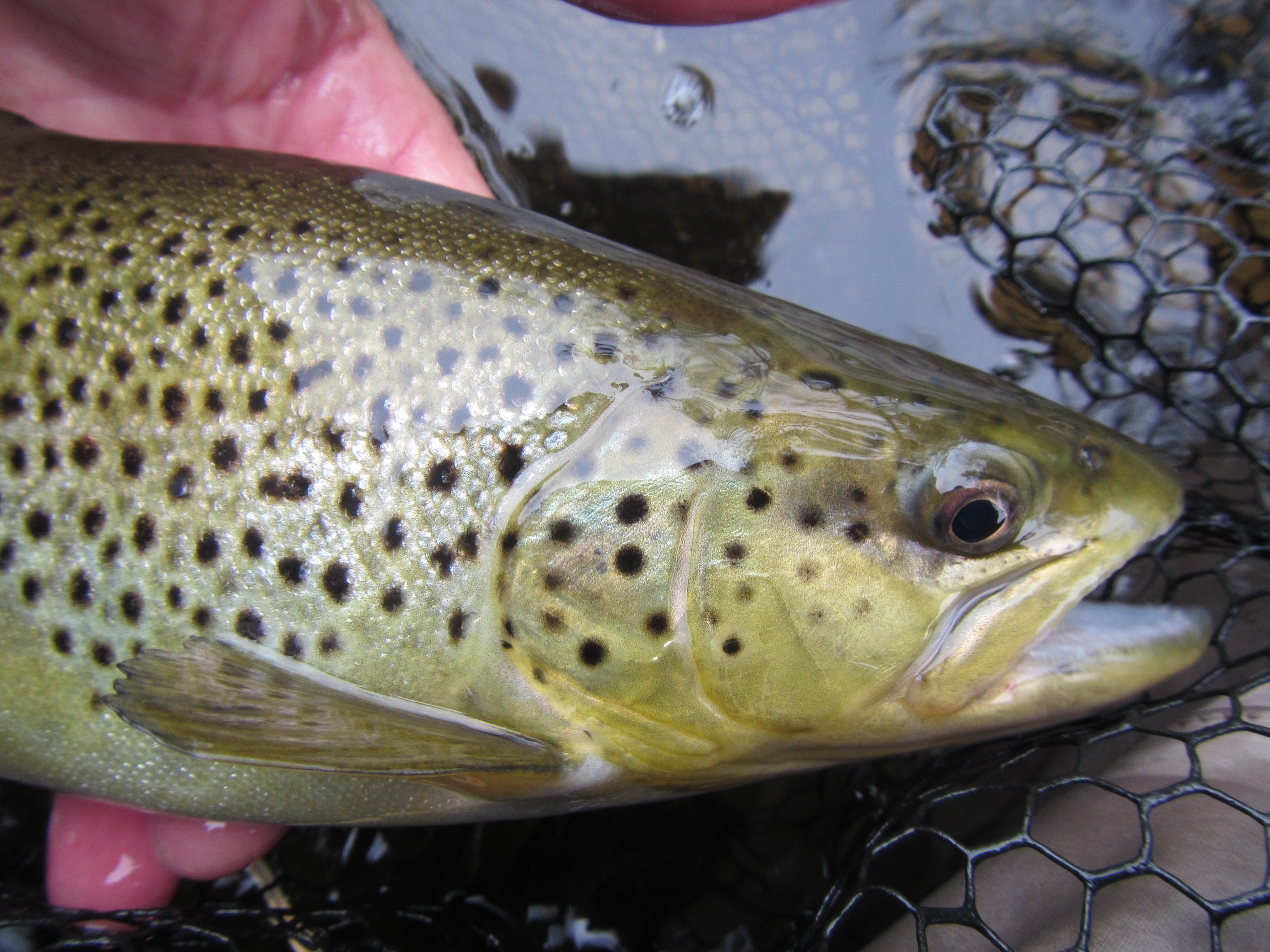
Many thanks to John and Matt who attended today’s Wet Flies 101 class. We were blessed with outstanding weather, and the river was in terrific condition: clear, 64 degrees in the upper TMA,  and running at just under 400cfs. Although bugs were few and far between, we did find a bunch of fish that were willing to jump on. It’s exciting to witness someone landing their first trout on a wet fly. Well done, gentlemen.

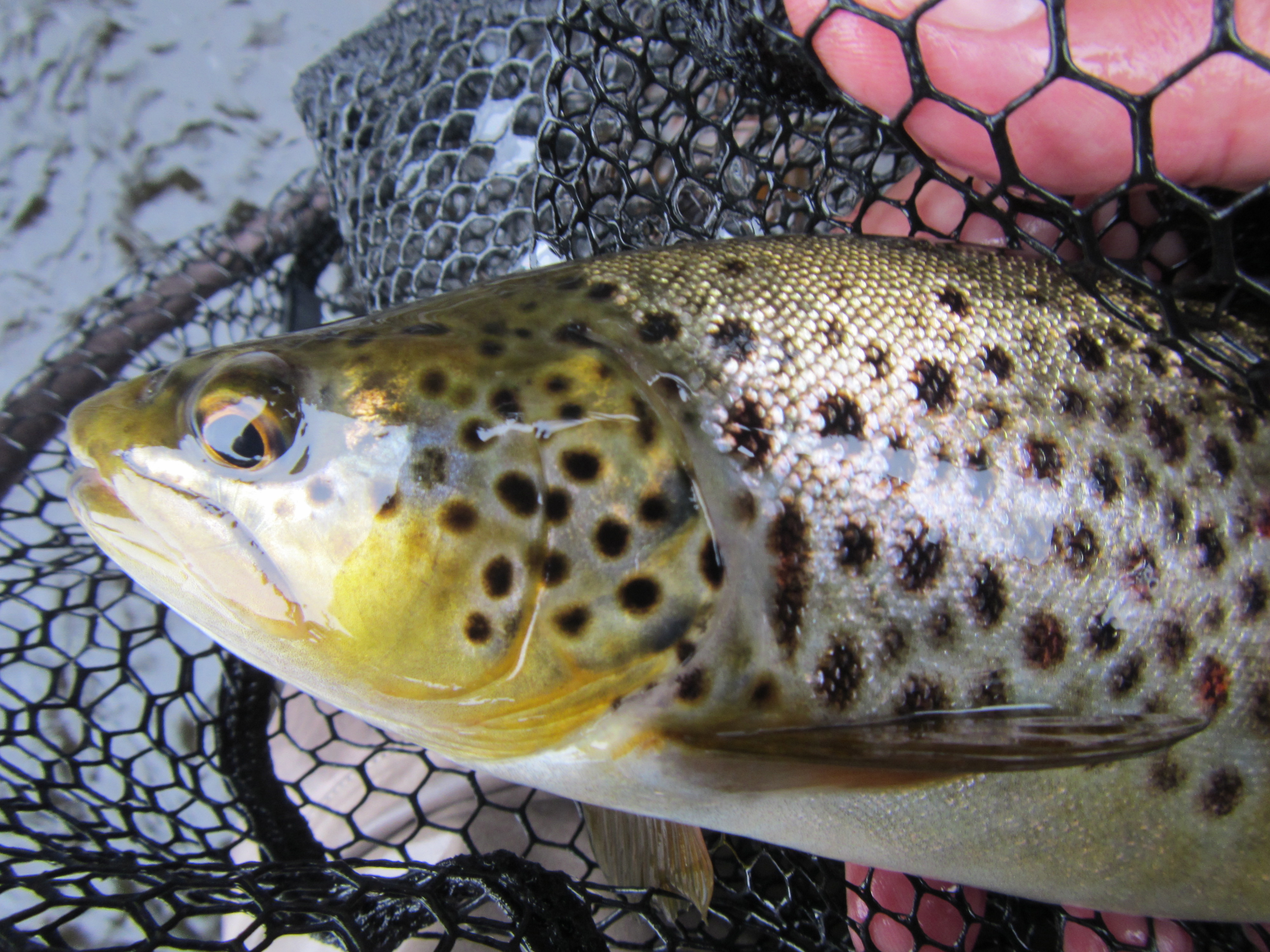
A wild brookie that fell to the charms of a Light Cahill winged wet. Been catching more of these gems this year than in recent memory.

Image

Friday, I fished the river with friend Jon from 4pm-9pm. We found trout everywhere, first on wets, then on wets and dries. Jon took an assortment of browns and an exquisitely parr-marked wild brookie. He also put on a wet fly clinic, catching two fish in a pod of rising trout in just a few minutes. I, on the other hand, chose to be tortured by trout feeding on emerging Summer Stenos (this hatch has yet to pick up any steam where I’ve been fishing). I spent over an hour stubbornly trying to catch this one fish that was holding hard up against an obstruction — not to mention the triple black diamond current seams I had to mend across. I’d say maybe one in six presentations was good. You can probably still hear the echoes of my hoot when he finally took.

I ODed on the Farmington this week, five days on the water. What a way to go.

This may look like a big honking stonefly, but it’s actually a cleverly disguised top-secret NSA drone. (Joke courtesy of Matt.)

Image

Tip of the Week: Whitewater

You know all those snotty, pocketed riffles on the Farmington that were impossible for you to fish during the rains and high flows of June and early July? Well, no one else could fish them either. But now you can. And they’re loaded with trout that haven’t seen an artificial fly in weeks. I know, because I waded one of those runs today.

In just two hours, idly swinging and dangling wets, I caught over a dozen fish. I fished four flies — a deer hair head/wing soft-hackle, a BH Squirrel and Ginger, a March Brown soft-hackle, and the Drowned Ant — and caught trout on all of them.

Regardless of June rains, this time of year is a good time to focus on riffly water. As water temps rise, trout move into these oxygen factories. You’d be surprised at how big some of the fish are, even though the water’s not even knee high. Wet fly, nymphing, even bushy dries like a Stimulator will all take fish.

Here are some of today’s customers.

Several smaller wild browns like this one. They fight like tigers.
Image
All the really cool stoneflies hang out on this rock to smoke cigarettes and shed their exoskeletons.
Image
The last fish of the day, taken on a size 12 March Brown soft-hackle.
Image
On the Drowned Ant, size 14. This one had some shoulders, and really clobbered the fly.
Image

Wet Flies 101 Class on the Farmington River, 7/27/13

Come explore the wonders of wet fly fishing on the Farmington River with my Wet Flies 101 class Saturday, July 27, from 9am to 2pm. Whether searching, imitating drowned terrestrials, or fishing under the hatch, wet flies can be a highly productive summer tactic. Wet Flies 101 will cover basics like rigging, fly selection, and presentation. Flies will be included. Cost of this 5 hour class is $100, and space is limited to 3 people. To enroll, please contact UpCountry Sportfishing at 860-379-1952.

A fine Farmington River holdover brown, taken last week on a Squirrel and Ginger wet fly.

Image

Farmington River Report 7/8/13: Wet, dry, then very, very wet

Good God, man! Has it been over a month since I fished the Farmington? Incessant rain, work, and home improvement projects have kept me from my beloved river. But not yesterday. There would be fishing for trout, come hell or high water.

As it turns out, I ended up with both.

Started off in the Upper TMA in a run that rarely gets fished. While most of what I’ve caught there in the past few years has been of the smaller, home-grown-in-the-river variety, there are some big trout that lurk within. I fish it not only because it’s textbook wet fly water, but also, as my friend Eric once said, to keep it honest.

It was still steambath hot at 6pm, and even in the cool confines of the water I was dripping with sweat after a few minutes of wading. I was mostly fishing lazy wet fly swings and dangles as I worked my way downstream, with the occasional upstream presentation. In certain spots, the saplings extended a fair distance over the river, and an upstream water haul, lob, and heave was the only way to cast. My wet fly team consisted of a Squirrel and Ginger top dropper, Partridge and Cahill middle dropper, and an Alexandra on point. I had a few touches in the first 50 yards, but no hookups.

Then, in a nondescript run, I was making a series of upstream casts, taking in the slack line as the rig flowed toward me, then throwing mends as the flies continued downstream. On one of those casts, my floating line stalled. I immediately set the hook.

I fought the good fight with the hand-stripping method, but in the end this big brown buck made the put-it-on-the-reel decision for me. Twice I almost had it to net. Twice, it darted away into the current, pectoral fins flared and tail powering it with strong, determined strokes.

Someteen inches of holdover Farmington River brown, taken on an an upstream wet fly presentation. It choose my Squirrel and Ginger caddis emerger, the top dropper on a team of three wet flies. The more I fish this fly, the more it proves itself as a core subsurface pattern.

Image

There’s a logjam just below the run I was fishing. I took two of his little brothers, both on the Alexandra, then decided to seek my pleasures elsewhere.

Classic wet fly water: broken surface, about three-to-four feet deep, and moving at a brisk walking pace. I’m thinking that nymphing here is now on the short-term bucket list.

Image

I love fishing wets, but since I missed the June sulphur hatch I thought I’d better make it up to myself with a little dry fly until dark session. The good news was that I had one of the upper TMA’s most popular pools to myself; the bad was that at nearly 600cfs, it wasn’t the placid, easily wadeable water I love to fish on the surface. What few trout were rising were out of reach for me. Since there was no hatch to speak of, I thought I’d make one. I tied on a size 16 Usual variant with an Antron tail. I had just released a fine 9″ wild brown when I head the low grumble of thunder. A steady drizzle soon followed. As I waded toward shore to put on my raincoat, lightning shattered the rapidly darkening skies. Moments later, I was in a good old-fashioned southern Baptist downpour. Picture me crouched on the forest floor in an electrical storm with rain so heavy it extinguished my cigar. When I timed a lightning strike at less than a quarter mile away, I made the command decision to sprint for the car.

By the time I reached Canton, the rain was over. I relit my cigar. I had just enough of it to last me till I got to Five Guys, where I had a very important appointment with a cheeseburger.

Farmington holdover browns on wet flies

Spent a few hours today doing some advance scouting for Saturday’s wet fly class. Found fish everywhere I went. Gloriously alone today, but that won’t be the case on Saturday. Water was a crisp 50 degrees, skies overcast, and a few showers here and there. We need more rain than this.

Not a lot going on bug or rising fish-wise, but I did see some light tan caddis, about a size 16, a few lonely Paralepts, and mounds of miniscule midges. I was fishing a Squirrel and Ginger as the top dropper, Leisenring’s classic Iron Blue Dun in the middle, and a black bead head grey soft-hackle nymph on point. The trout were split right down the middle, half of them on the Squirrel and Ginger, half on the point fly. They took the fly with gusto. Powerful, demonstrative hits.

A lovely Farmington River holdover brown that took the top dropper, a Squirrel and Ginger, on the dead drift.

Image

Two trout of note. The first came where a riffle dumps into a long, deep pool. I was being lazy, mindlessly fishing wets downstream, when I looked above me and saw this pocket that I’d swung flies through a thousand times before. I made an upstream cast to it, letting the flies dead drift, when I saw a trout flash at an emerger just below the surface. Just as my brain was forming the thought, “Must cast there again,” I realized the emerger was my Squirrel and Ginger. It was a  handsome holdover brown, metallic and buttery.

A little farther upstream, there’s a sapling that hangs over the river like a drunk caught in mid-stagger. Its branches drag in the current, and the shade from its leaves clouds the already mysterious waters beneath it. It’s one of those spots where there’s always a fish. But not today. Well, not on the upstream side. Just below, whack! This brown did her finest impersonation of a steelhead, cartwheeling out of the water multiple times. I could see it wasn’t a big trout, but I almost put her on the reel. Up and down the pool she went. Foul hooked, I wondered? Nope. Just a fat, obstreperous holdover brown, about 14″,  with the Squirrel and Ginger lodged neatly in the corner of her mouth.

For a moment, I considered putting her on the reel. She had some shoulders, this one.

Image

Now, if the trout will only cooperate Saturday.

It’s wildflower season on the Farmy. I don’t know what these are, but they’re everywhere.

Image

Thanks to everyone who visited my tying table at the NE Spey Clave II

Lousy weather, terrific energy. That’s a good way to sum up today’s festivities. Thanks to everyone who stopped by my tying table. It’s always nice to put faces to names, whether you’re from an internet forum or a faithful follower of currentseams. I always enjoy the discussions, and for those of you who had questions, I hope I helped.

The Purple Spider, a steelhead soft-hackle

Image

And to those who walked away with one of my flies: do me proud.

New class forming: Wet Fly 101 at UpCountry Sportfishing

Join me Saturday May 18 from 9am-2pm as we explore the wonders of wet fly fishing on the Farmington River. Wet flies have been taking trout for centuries, and the fish aren’t getting any smarter. Wet Flies 101 will cover basics like rigging, fly selection, and presentation. Flies will be included. Cost of this 5 hour class is $100. I like to keep my classes small, so space is limited to 3 people. To enroll, please call UpCountry at 860-379-1952. Hope to see you there!

And of course, I am also available for private instruction and guided trips. For more information, please see the Fisherman LLC part of my site.

This fine, fat brown took a Dark Hendrickson wet a couple weeks ago on the Farmington.

Image

A Fuzzy Nymph: The Ginger Caddis Larva

Ever heard of a guide fly? In case you haven’t, guide flies have two qualities: They can be tied quickly, and they are high-confidence fish magnets. The Ginger Caddis Larva is such a fly.

It’s one of those flies that, if you saw it in the bins at your local shop, you might not give it a second look. But the trout certainly will. Angora goat is one of my favorite tying materials. It takes on a translucency underwater, and the fibers trap miniature air bubbles much like an emerging or diving caddis might.

The Ginger Caddis Larva is a quintessential fuzzy nymph; I fish it as nymph, bouncing it along the bottom, then as a wet, letting the fly swing up toward the surface. I’ll also fish it as a straight wet in a team of three flies. If I don’t get a strike, I let the fly sit there at swing’s end.

This pattern lends itself to dozens of variations. Try it in Insect or Highlander Green. Get some black or brown Angora and make it a little stonefly. Add a soft hackle (like partridge). Give it a bead head. Swap out peacock herl for the hare’s ear thorax. You get the idea.

Back to the guide fly thing. Two years ago I passed this fly out at one of my wet fly classes. It was a slow day on the river, but what little action we saw came on this fly (we were fishing teams of three flies, so the trout had a choice). A few weeks later, I ran into one of my students outside the local fly shop. “Steve,” he says, “I need some more of those Ginger Caddis Larvas and I can’t find them anywhere.”

He bought every single Ginger Caddis I had in my box on the spot.

Image

Hook: 2x strong, size 10-18
Weight: 8-12 turns undersized wire
Thread: Orange
Body: Ginger Angora goat, very spikey
Thorax: Dark hare’s ear

Tying notes: To make it spikey and rough, try chopping the hairs up with scissors and winding them on a dubbing loop. Angora goat has long, unruly fibers that become problematic on smaller flies, so the chopping remedies that. I use high tack wax with Angora, like Loon Swax. I like to underweight this fly. Underweighting doesn’t mean that you’re putting wire under the body – you are – but rather, it refers to using lead wire that is thinner than the diameter of the hook wire. The goal is to help the fly sink, not suck the life out of it.

Classic Bergman Wet Flies Tied With Jungle Cock

Last week, someone used the search term “wet flies tied with jungle cock” to find currentseams. I found that intriguing because I had never tied a wet fly with jungle cock in my life. Sure, I’d done classic steelhead patterns. And untold numbers of flatwings and bucktails for stripers. But not a single wet with that most enchanting of feathers, the enameled nail from the cape of the male junglefowl.

Well, if someone took the trouble to navigate all the way to my humble site, they must have been disappointed when their search came up empty. And so, lonely internet sojourner, I took to the vise just for you. I have no idea who you are. But I hope you come back some day and find the little gift I left for you. And I thank you for the one you gave to me.

Here are four wets from Bergman’s classic, Trout. Clockwise from upper left: Silver Jungle Cock, Dr. Burke, Lord Baltimore, and Secret Pool No. 1. They are all tied on a size 8 1x short, 2x strong hook, the Orvis 1641.

Image

(upper left)
Silver Jungle Cock
Tail: Golden pheasant crest
Body: Silver tinsel
Shoulder: Orange floss, palmered with grizzly hackle
Wing: Jungle cock
~
(upper right)
Dr. Burke
Tail: Peacock sword
Body: Flat silver tinsel with oval silver tinsel rib
Hackle: Yellow
Wing: White with jungle cock
~
(lower right)
Lord Baltimore
Tail: Black quill
Body: Orange floss with black floss rib
Hackle: Black
Wing: Black with jungle cock
~
(lower left)
Secret Pool No. 1
Tail: Golden pheasant tippet
Body: Peacock herl butt and shoulder with gold tinsel center
Hackle: Claret
Wing: Slate with jungle coc

Tying notes: Some tie the Silver Jungle Cock with a longer shoulder; I kept mine more thorax-like. I think this would make a great steelhead fly. It was the easiest of the four to tie.

You can tie the Dr. Burke with as many or as few peacock sword hackles as you like. I chose four for this size. Trivia: Dr. Burke is Dr. Edgar Burke, the man who painted all the files in the color plates at the beginning of Trout. Dr. Burke is credited with creating the Secret Pool No. 1 pattern.

The Lord Baltimore is the first Bergman-style wet I tied with a quill tail. It was far less intimidating than I imagined.

I didn’t have any claret hackle for the Secret Pool, so I used wine marabou. I also tend to use more golden pheasant tippet fibers in my tails; again, that’s an individual choice for each tyer. No matter how many fibers you use, I like to show the second black band.

The Peter Ross Wet Fly

The next time you fish the Peter Ross, be grateful that his name was not Aloysius Karbuncle. The Peter Ross is a traditional Loch style fly that dates back to the late 19th century. Ross based his pattern on the Teal and Red, another stillwater fly.

This fly is also a popular sea trout pattern, and you can easily see why. I like the contrast of the red, the black, and the dramatic barring of the teal. With its silver body, I’m thinking small baitfish or fry. Perhaps even something shrimpy. Something that looks alive and good to eat. I’ve already used it for steelhead, and I’m going to try it as the point fly on a team of three wets this spring.

The Peter Ross

Image,

Hook: 8-16
 (this is an Orvis 1641 size 10)
Thread: Black
Tail: Golden pheasant tippets
Body: Rear half silver wire, front half red angora goat
Rib: Fine silver tinsel
Hackle: Black hen
Wing: Teal flank

Tying notes: When you’re tying a small wet that calls for a body of “half this, half that,” it’s easy to mess up calculating how much area you need on the shank for each section. (Ask me how I know). You end up with a body that’s two-thirds one and one-third the other. Remember to take the head of the fly into consideration. Then, divide the remaining space between where you think the head will end and the end of the shank. There are many ways to tie in waterfowl wings. Some like to create an effect like a quill wing. Others like to fold the wing several times on top of itself, dull side in. Another way, the one I used here, is to tie the wing in small folded sections. For this size fly, I used three sections of teal flank about ¼ to 3/8 inch wide, folded them once, dull side in, and tied them on top of each other.