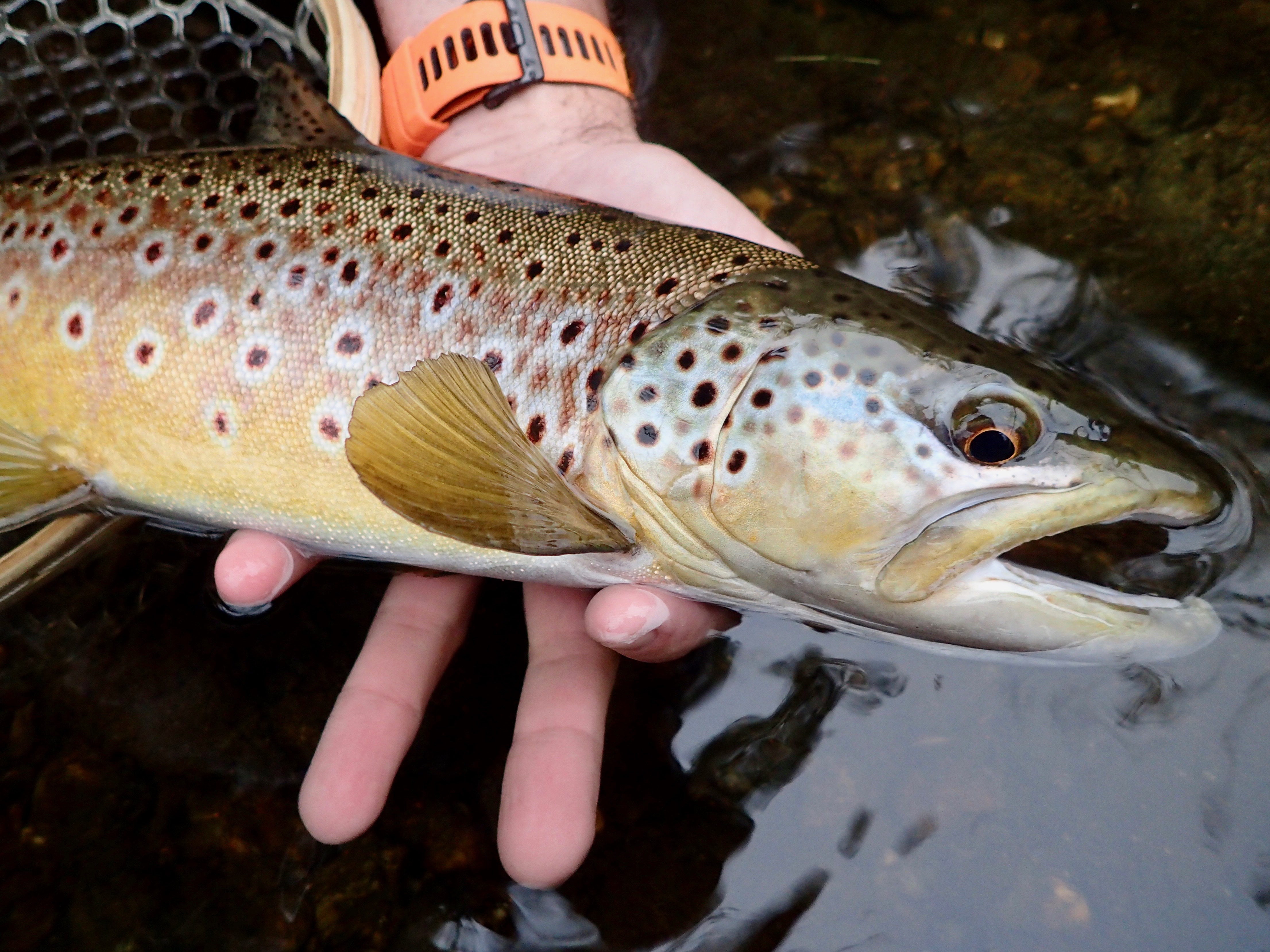
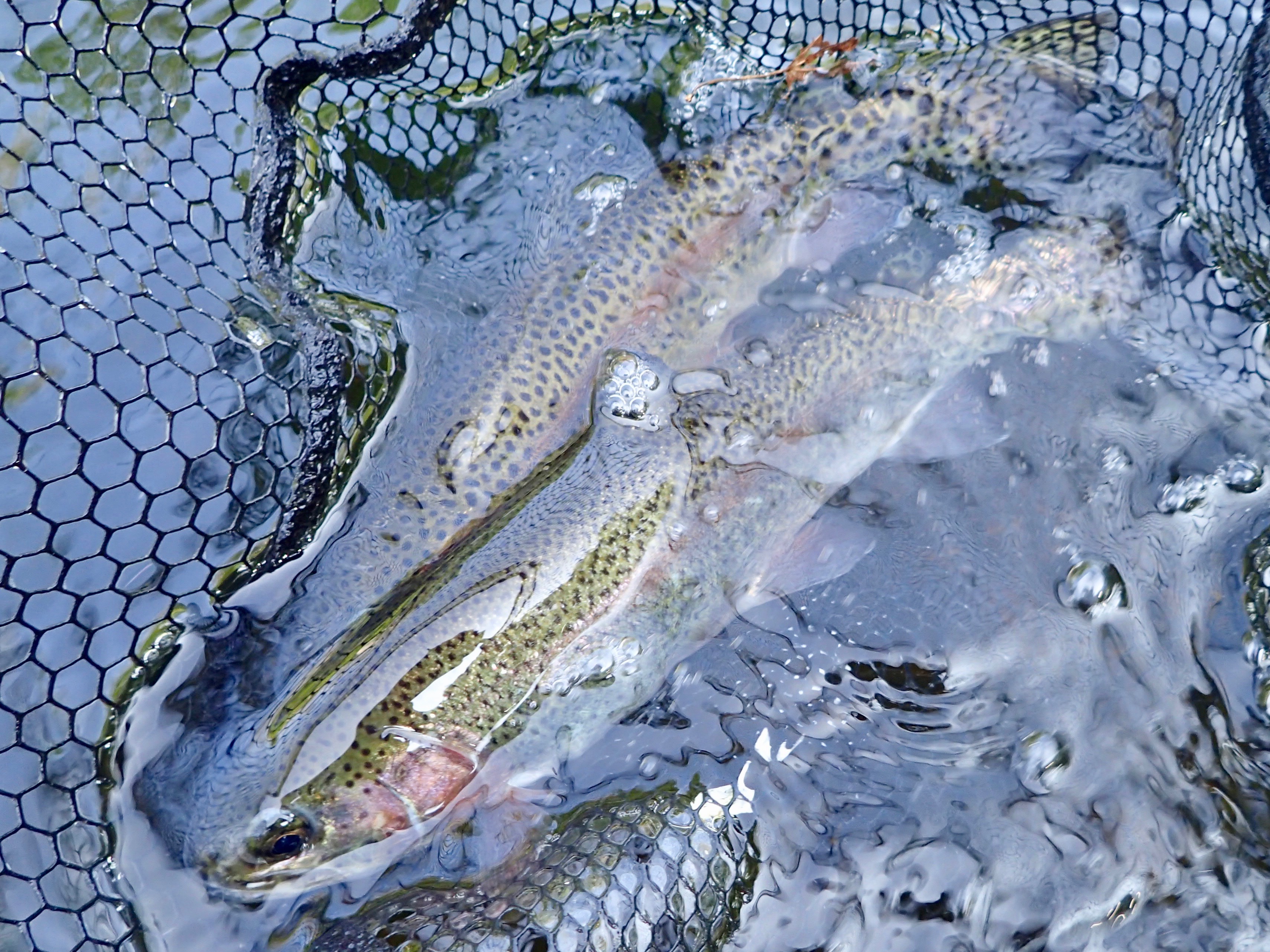
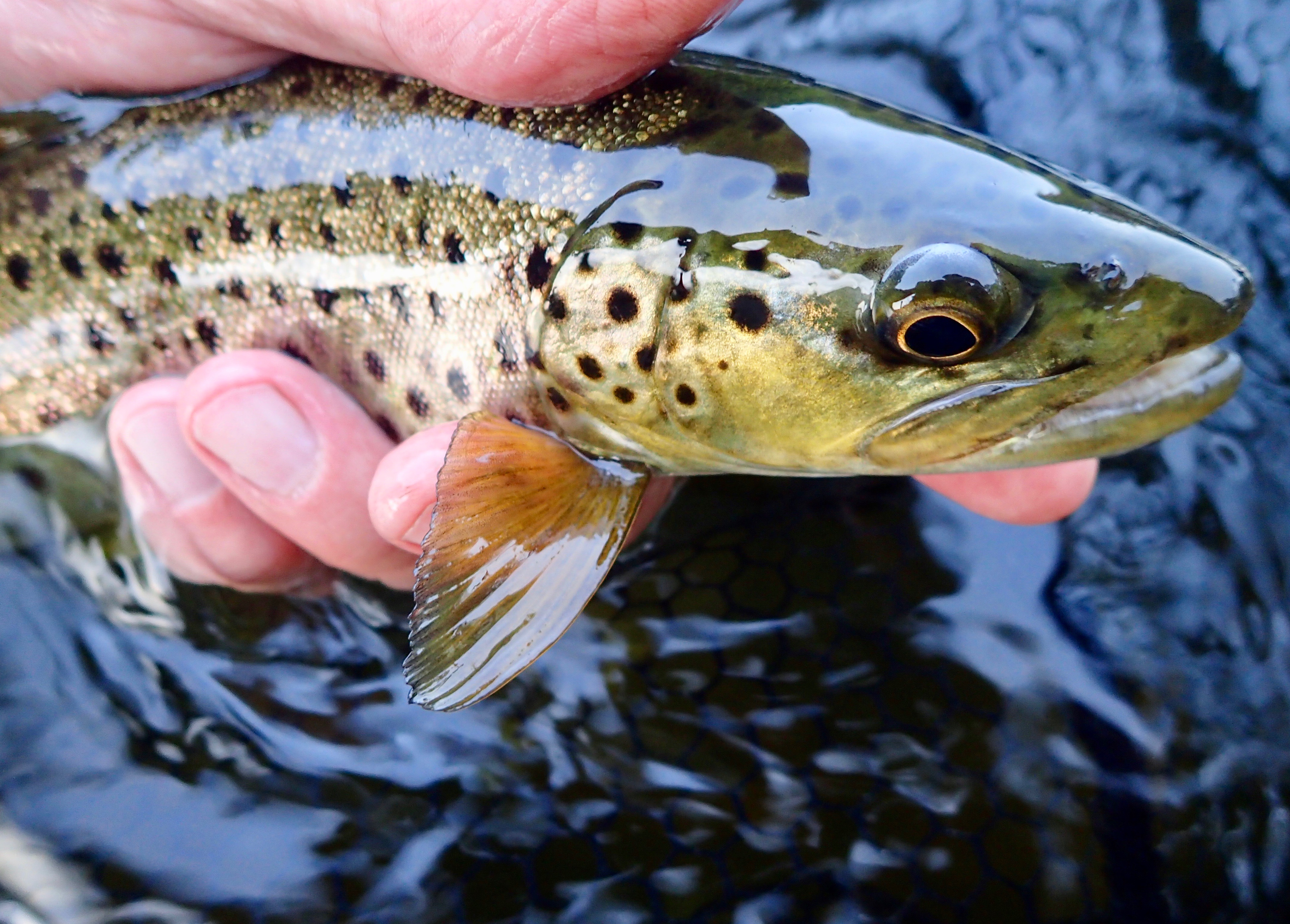
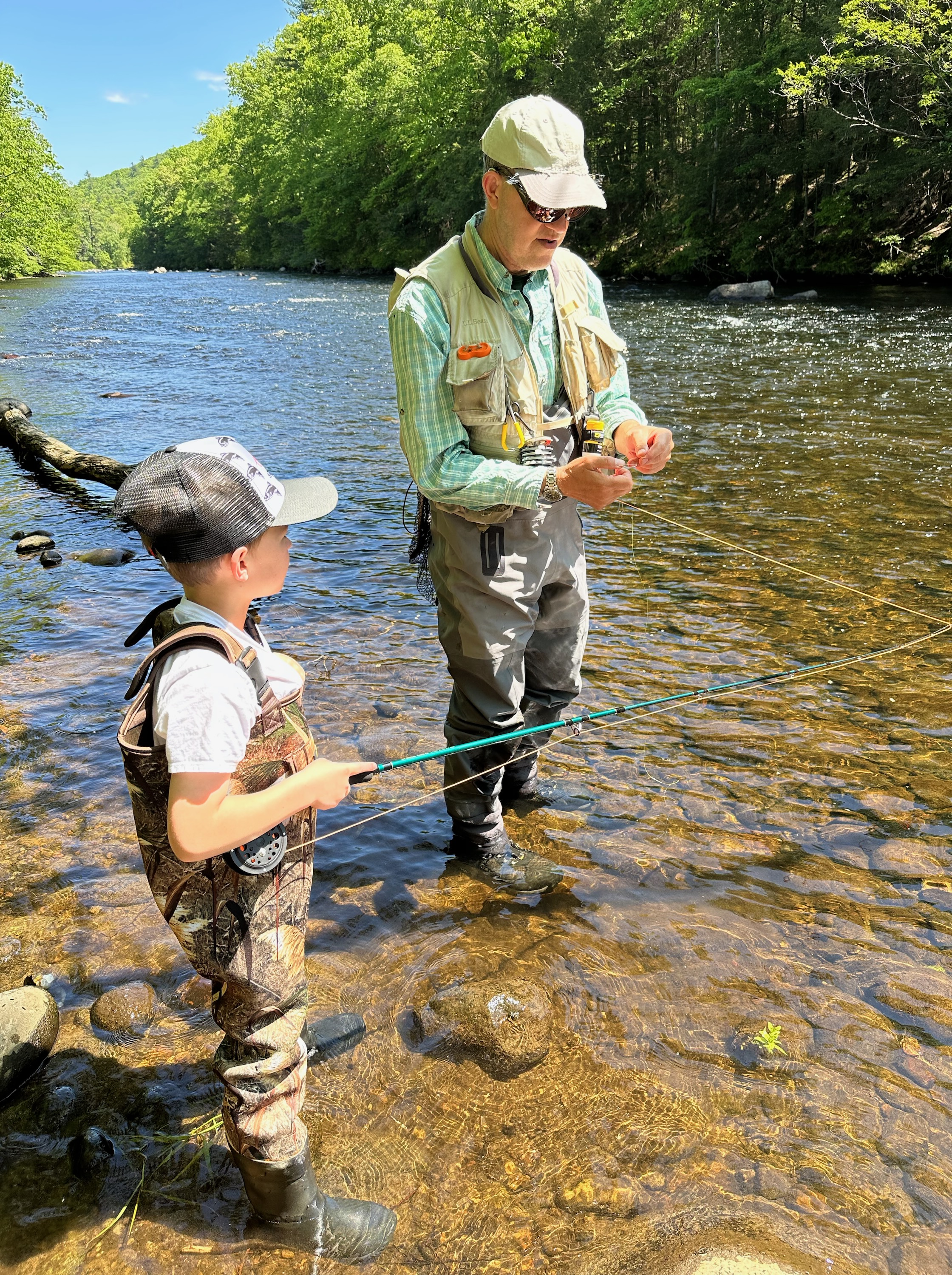
I just got back form two days of spring — uh, make that winter’s resurgence — steelheading on the world-famous Salmon River in Pulaski. The weather was dreadful and so was the bite. More on that tomorrow. But for now, I’ll give you an image that perfectly sums up our Tuesday. As for the striper report, I went Sunday night for 90 minutes to Ye Olde Top Secret Striper Spot and am excited to report…not…a…touch. So it goes…
This photo needs no caption. Bonus points if you know the mark. Courtesy of Row Jimmy Guide Service.
I have a traditionalist streak a mile wide. So for years, I used one of those old-school wool fly patches. I shudder to think of all the dozens of flies I lost with that system.
Then, fly fishing pack makers introduced the rippled foam fly patch. They conveniently placed this patch inside the front compartment of their packs. Except, if you’re like me and tend to load up your pack, that system is not very convenient. I shudder to think of all the smaller items I’ve dropped into a river trying to get to a fly.
This product is absolutely brilliant. I attaches to your vest, pack, jacket — whatever — by means of two powerful magnets and a steel backing plate. (Note: the maker suggests that the magnets are so powerful, they are not advisable for use by anglers with pacemakers.) When you’re done with a fly, you place it onto the patch and it stays stuck. No more flies going AWOL. No more wondering where that midge nymph went. No more struggling to get to your stash.
Magnet-ique is headquartered in England. You can order directly from them, and possibly from your local shop. I actually saved some money by ordering a double (two of the orange units) and an extra backing plate, which gave me two usable separate patches.
The Magnet-ique MagMini Double on my steelhead pack. They also make a smaller, single size. Suffice to say I need the room of the double, especially for steelheading where I may be going through double-digit fly numbers in a day.
This is the “Bead Head Stone, Rubber Legs” pattern from the first edition of Matt Supinski’s Steelhead Dreams. My spies in Pulaski tell me that this time of year, big stones with wiggly jiggly legs are all the rage, so I tied up a few (along with some long-legged Kaufmann Stone variants) to have in my box.
Here’s how I tied the Bead Head Stone, Rubber Legs: Hook: Orvis 1524 #8; Thread: black UNI 6/0; Legs/Antennae/Tail: black Life Flex; Abdomen/Rib: black SLF, copper wire; Thorax: black hen hackle; Bead: copper 5/32″; Head: black SLF.
Until today. Back in November when I made my debut at the International Fly Tying Symposium, there was a Saturday night banquet. If you attended, you received an amazing fly tying swag bag courtesy of the IFTS, Keough Hackles, Hareline, Ahrex, and Core. And here it is!
What an amazing bounty! Most of this will get put to good use. Thanks again to the show and the suppliers/vendors who made this possible.
This weekend, I received a question about tying Leisenring’s March Brown Nymph. The reader wanted to know if I thought three pheasant tail fibers for the body was enough. As you can see from my original writeup, I had a few initial questions (or opinions) about the recipe as well. Here’s a little more about my M.O. when I’m tying a pattern for the first time.
I always like to honor the original recipe — at least in the beginning. I want to see what the the tier had in mind, what his or her vision of the pattern was, and perhaps try to figure out what they were trying to accomplish in terms of materials and look. In the case of Leisenring, a giant in the pantheon of American wet fly fishing, respect to the original was surely due. If Big Jim liked the pattern enough to include it in his book, that carried a significant weight. But, even if the pattern creator isn’t on the fly fishing Mount Rushmore, I still like to stick to the original design.
Now, there’s nothing that says you can’t improvise. Indeed, countless patterns have been improved upon because other tyers asked, “what if I?…” So, for example, if there’s a stone fly pattern I’m tying and I think — do I really need that wing case? — I might leave it out after a few iterations. If you’re really curious about discovering the necessity of certain elements or materials, use droppers. Tie one fly according to the original, and then tie one fly your way. Place them on droppers, change the positions frequently to keep it a fair fight, and see if the fish have any preference. Droppers are always the fastest way to find out what the fish want.
I hope this helps. Tie on, ladies and gentlemen.
The Steelhead Hammer (shown here) recipe I found all those years ago specified stretch floss for the underbody. I hated the stuff, so I don’t use it anymore. The original Tom’s 60-Second Redhead called for a mix of beaver, Angora, and flash. I use plain black rabbit fur, and the steelhead seem to like it. And so on…
Zip it. Hush. Shaddup. Small streams and wild trout are a finite resource — and more pressure is usually a very bad thing. So for goodness’ sake, never post stream names and locations on social media. Never take photos that clearly identify your location. (Picture this scenario: you make a video and post it on YouTube. The brook is clearly identifiable. Someone sees it and comments on how beautiful the place is. Someone else comments, “I know where that is!” Someone 1 reaches out to Someone 2, and the location is revealed. Someone 2 likes to share locations with his friends, and the cascade begins. Don’t laugh — I’ve seen it happen.)
And if someone asks, you can always use my line: “I won’t even tell my mother where I fish.”
We continue “Wild Trout/Small Stream Week” on currentseams with a deep dive into the archives. Stalking Wild Trout on Connecticut’s Small Streams was one of the first articles I wrote for myself. That is, not for a specific publisher or editor, but for my own personal use. Although it’s nearly 20 years old, and some of the information is out of date, the piece remains worthy. And I’m guessing that many of you newer subscribers have yet to see it. In case you missed the link above, you can find the article here.
To give you an update: I never did catch Gus. But I did catch and release a few of his relations. Sadly, the pool Gus lived in disappeared not long after I wrote the article. Small streams are highly susceptible to change during high water events.
Anglers wielding cameras have killed more small stream wild trout — intentionally or not — in the last 10 years than in the previous 100. You can blame it on the convenience and portability of digital devices. You can blame it on social media. You can blame it on anglers. Or narcissism. Or all of the above.
Whatever the root cause, I still see far too many images on social media of mishandled wild trout. Fish being held in dry hands. Fish thrashing around in landing nets, airborne, nowhere near the water. Fish photographed laying on grass, twigs, leaves, rocks, and other substrate no wild trout that’s going to be released should ever touch.
Let’s assume for a moment that I’m not talking about you. You’ve visited keepfishwet.org. You know the drill for ensuring more favorable catch and release outcomes. I applaud you. And now, I’d like to ask you a small favor.
Stop taking so many pictures of wild trout.
We all agree: wild trout are beautiful. The delicate parr marks, breathtaking halos, and butter-yellow hues of wild browns. The intricate, Faberge Egg-like designs and vivid colors on wild char. They’re all a wonder, and a marvel to look at. But do we need to see a photo of 2…4….6…and more… wild fish from your most recent small stream outing? The answer, I believe, is no.
So next time you’re on your favorite brook, take the Wild Trout One Photo Challenge: You photograph one fish, and one fish only. That’s it. All the others go quickly back into the stream, and you get bonus points if those non-photo subjects never leave the water. Think of how many wild fish you’re not subjecting to additional stress. It’s a win for you. It’s a win for the next angler. And most of all, it’s a win for the fish. Remember, the stocking truck isn’t coming back to replace what wild fish we kill, accidental or not.
I truly thank you for your consideration.
I don’t know how many wild brookies I landed on this day, but I do know that this was the only one I photographed. 1-2-3-lift-shoot, then back into the water. Less isn’t always more, but it usually is when it comes to small streams and wild trout.
If you love and value wild fish — especially native fish — you have a responsibility to preserve and protect the resource. Yes, fishing is a blood sport. Yes, no matter how careful we are, some of what we catch may perish. But there are ways to dramatically minimize loss. And there are certainly ways to ensure the next angler has the opportunity to enjoy the stream as much as you.
So, I’m declaring this “Wild Trout/Small Stream Week” on currentseams.com. As you know, small stream fishing is an experience that is sacred to me. My goal this week is to educate and inform as much as possible. And this wonderful essay by a Pennsylvania angler named “Fly Tier Mike” is a good place to start. In The Responsibilites of Chasing Wild Trout, Mike outlines four best practices for those who fish for wild trout on small streams: Proper wading techniques (staying off of redds); proper fish handling; minimizing damage while taking photos/videos; and the pitfalls of social media that can lead to over-pressuring a stream.
Anyone who fishes for wild trout should read it, if only as a refresher. Thanks for your consideration.
I was gratified and encouraged to see someone else taking a stand for small streams and wild trout. Way to go, Mike!