If you have not done so already, please take ten minutes and send an email to the ASMFC regarding Addendum II.
Here’s the ASGA’s (the good guys) official positions on Addendum II. You want to mirror these, but don’t cut-and-paste everything or it looks like a form letter/email, which the ASMFC will disregard.
Email your letter to: comments@asmfc.org (Subject line: Striped Bass Draft Addendum II). you’ll know your email was received because ASMFC will send you an acknowledgement.
I know you’re busy, but it really only takes 10 minutes and we need your voice to be heard. I thank you. The stripers thank you. ASGA thanks you.
I’m hoping you’ve already penned in the Marlborough Fly Fishing Show, now less than 3 weeks away! In addition to my Classes, Tying Demo, and Seminar, the show has added three more talks:
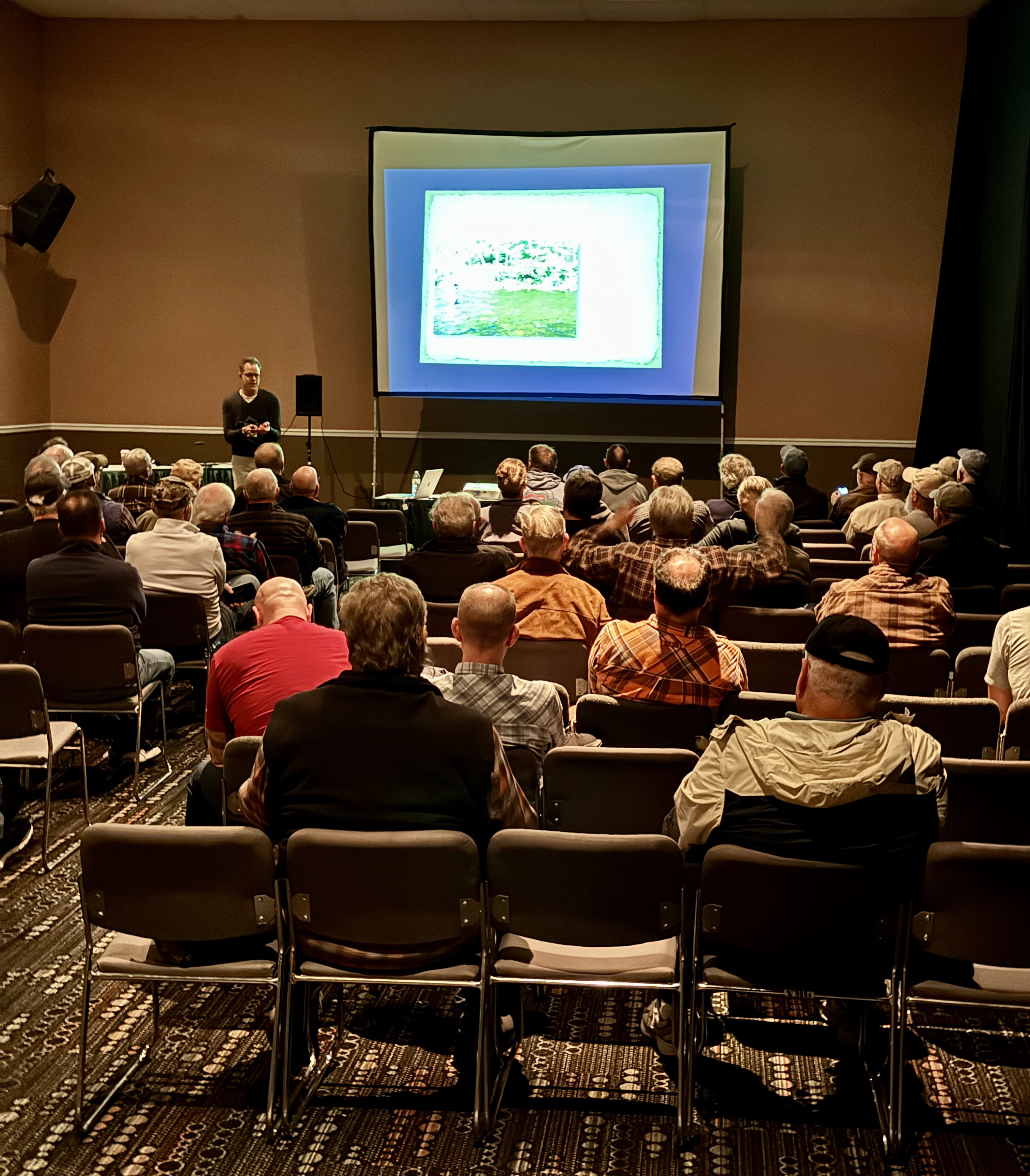
Friday, Jan 5, 11am, Destination Theater Room A: The West Branch of the Farmington River. This will be the next best thing to getting out on the water and learning about southern New England’s blue ribbon tailwater.
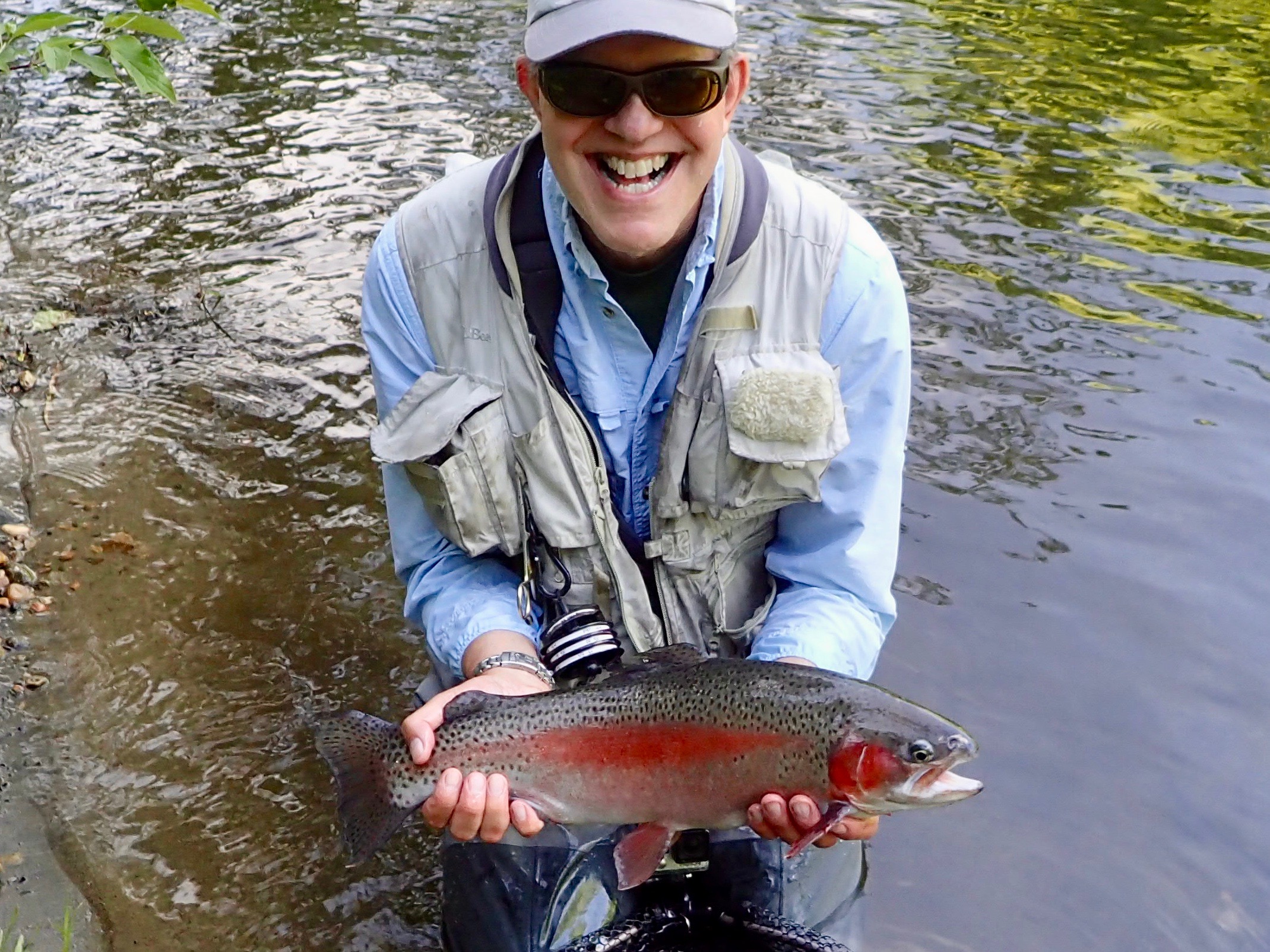
Two of my favorite things: swinging wet flies, and catch big, fat Farmington River trout. Come to my talks at the Marlborough Fly Fishing Show Jan 5-6-7 and learn how to do both.
Saturday, Jan 6, 1pm, Destination Theater Room B: Modern Wet Fly Strategies. I’ve designed this presentation to replicate a wet fly lesson on the water. Except here, we’ll be doing it in a nice, warm room. If you’re not fishing wet flies, you’re missing out!
Saturday, Jan 6, 3pm, Destination Theater Room A: The West Branch of the Farmington River. Even if you’re a Farmington regular, you’ll probably learn something new about southern New England’s blue ribbon tailwater.
Sunday, Jan 7, 1pm Destination Theater Room A: Trout Tactics For Striped Bass. This is for everyone who wonders if there’s more to catching stripers than cast and strip. There is. And you can learn how to catch more, and bigger stripers if you come to this presentation.
If you want to learn how to consistently catch stripers like this, you’ve got to go beyond simple cast-and-strip. I can teach you how.
I don’t normally count fish. But steelhead are a special case. They can be hard to find, hard to hook, and hard to land. You can do everything right, and still lose the fish. So every one you bring to the hoop and safely release is to be savored, even treasured.
Last Friday morning found me on Elk Creek in western PA at first light. The tally at that point was 175. I figured that 200 might be in reach on this three-day trip, and that five on day one would be reasonable. (In retrospect, it’s a little foolish to plan on catching a certain number of steelhead. You just never know what stream conditions, the elements, or the fish will throw at you.) I was flying solo, and got to the creek early enough to secure a prime mark. Within ten minutes, I was one-for-one. Then things slowed. I worked down the run and bagged another, a shiny fresh hen just in from the lake. Then nothing. By now the sun was up and I could clearly see into the tailout. It looked barren.
Every substrate is different, and ever-changing light also affects how well you can spot fish. As you can see, steelhead are masters at adapting their coloration to the environment. Sometimes you see them; sometimes you don’t. Learning to determine where they might be holding in any given condition, especially when you can’t see them, goes a long way toward improving your catch rate. I fished a couple pools and runs that certainly must have held fish — except they didn’t. At least not on that day and hour. If you’re not catching and you’re not snagging the bottom, you’re not fishing deep enough. And if you are fishing deep enough, and you’re not fouling a fish or two, there probably aren’t any steelhead in the pool. I lost many a rig in one indescribably sexy pool without a single hookup. But once I found the fish, it was go time.
Since another angler had jumped into my original spot, I decided to take a chance and walk upstream. As I neared some prime water, a guide materialized from the river banks to deter me from slipping in below his client. I gave them both a friendly wave, and announced that I had no intention of crowding them. This put everyone at ease, and I struck up a conversation with Glen, the client, and T (dagnabbit, I forget his name) the guide. Cigars were offered, flies and pleasantries exchanged, and before you know it I was fishing in a nifty slot above their pool. Funny how kindness and politeness goes a long way!
Friday was a tricky day. Whether due to pressure or other environmental factors, the steelhead went through stretches where they just would not eat. I got pretty good at recognizing early if a fish was fouled, and at taking steps to quickly de-hook the fish. I did land every fair-hooked fish, and on a challenging day where many anglers reported slow-to-no action, I was delighted to land eight steelhead. Many thanks to Glen for taking net duty, then this photo.Glen’s on! I can’t say enough kind words about Glen and T, who were kind, matey, and so generous with their water. In a matter of minutes, it was as if we were all old fishing buddies . You can see the different colored strata on the stream bed. The basic rule of thumb on a creek like this is to fish in the dark water, and near the edge of ledges. I hooked up several times by targeting a deeper, darker slot just downstream of a ledge. I’d toss my rig onto the ledge upstream, then let it drift down into the hole. If there was a player steelhead holding there, it would eat the egg fly the moment it dropped off the ledge.
I gave myself a hard stop of 1:30pm. I had to drive to OH to pick up Cam at college. Tomorrow, we’d be fishing in OH with a guide, and I wanted to be rested and ready. 183. We’re getting there.
As I mentioned last week, I’m doing things a little differently this year with my classes at The Fly Fishing Show in Marlborough. Rather than leading a striper fly tying-centric class, I’ve decided to turn it into the closest thing we can get to an actual lesson in the salt! I’m really excited about the change, and I think everyone attending the class will get a lot more out of it. So, instead of spending a few hours on a salt marsh or estuary, we’ll gather in a cozy meeting room and learn all about tying and fishing presentation flies for striped bass. If you’ve ever wanted to fish with me, but have been unable to do so, this will be a great opportunity to get some quality instruction.
What are presentation flies? They are flies that rely on specific materials — mostly natural — and specific construction — mostly sparse — to create the illusion of life. Presentation flies are highly impressionistic. They look alive and like something good to eat, even when at rest. Most of all, you don’t need to strip them in, ad nauseum, to get stripers to eat them. In this class, I’ll talk about materials and construction and will demo at least one pattern.
There’s a time and place for this rig, and for flies so sparse you can read the newspaper though them. Regiter for my class, Beyond Cast & Strip — Presentation Flies for Stripers, and we’ll talk about it.
So, how and where do you fish such patterns? I’m glad you asked, because that’s the next part of the class. I’ll show you how to build a saltwater team of three flies; we’ll discuss different bait and feeding scenarios; we’ll talk about the different kinds of water where presentation flies shine; and of course, we’ll dive into presentation — you know, that thing you do when you’re not treating your fly rod like a glorified spinning rod.
This bass was caught on a fly with no weight, no eyes (you can see it floating on the surface) and from cast to hookup, not a single strip was attempted. Come learn how traditional salmonid tactics like the greased line swing can work wonders for you.
If you want to catch more striped bass, and do it in ways that are under-appreciated and under-utilized, but powerfully effective, this class is for you.
Jeff took this class last year. Here’s what he’s been doing this year! Photo by Jeff Carson.
Class-wise, I’m doing things a little differently this year at The Fly Fishing Shows. Rather than a fly tying-centric class, I’ve decided to turn this into the closest thing we can get to an actual lesson on the water! I’m really excited about the change, and I think everyone attending the class will get a lot more out of it. So, instead of sitting on a picnic table bench next to the Farmington River, we’ll gather in a cozy meeting room and learn all about tying and fishing wet flies. If you’ve ever wanted to fish with me, but have been unable to do so, this will be a great opportunity to get some quality instruction.
Why is this angler smiling? Because he’s smarter than the fish…and because he’s wet fly fishing.
My plan is to offer a combination of video and real-time demos. I’ll demo-tie some wet flies so you can see what goes into building an effective soft-hackle, wingless wet, and winged wet, from construction to materials; demonstrate how to build a traditional three fly team; show you how to prevent that rig from tangling; talk about essential wet fly gear and tackle; and more. Of course, you’re going to want to learn how to present wet flies and catch more fish. Yep, we’re going to cover that, too.
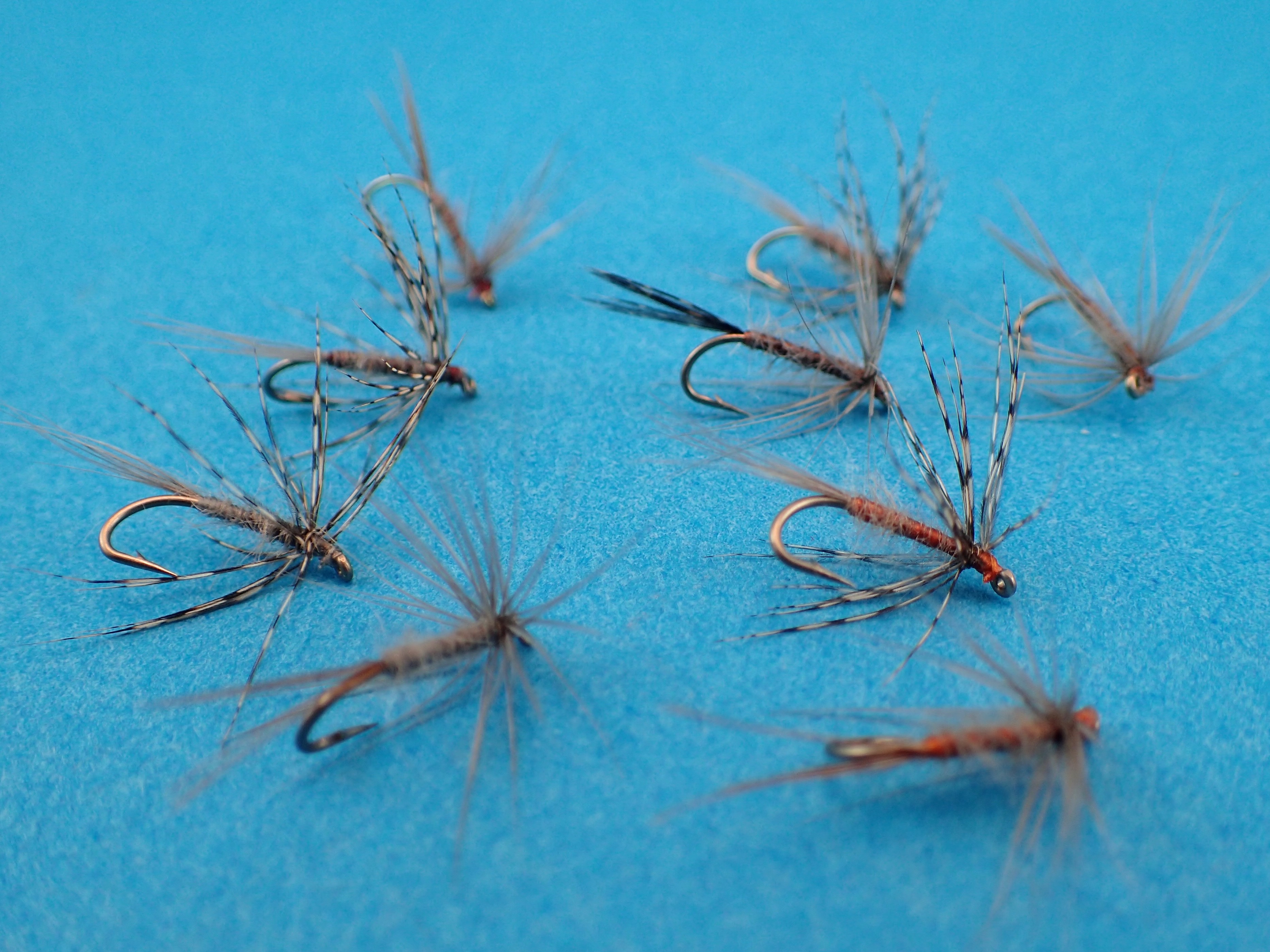
Why can’t trout resist soft hackles like these? Find out at my class, “Tying and Fishing Wet Flies with Steve Culton, Sunday, Jan 7, 8:30am-11am.
Wet flies have been fooling fish for hundreds of years, and the fish aren’t getting any smarter. Learn the ancient and traditional art of the wet fly, and you too can become a dangerous fish-catching machine.
Let’s start here: the 2024 Marlborough Fly Fishing Show happens earlier this time around! It’s the first full weekend in January, right after the new year. It’s going to come up fast, so get ready. Friday, January 5, Saturday January 6, and Sunday January 7. I’ve got a busy schedule, so there will be plenty of opportunities to see me speak or take a class.
Friday, January 5, 2:30pm, Featured Fly Tier, main show floor: Guide Wet Flies. I’ll be demoing some of my favorite soft hackles, wingless, and winged wets. These are all guide flies — that is, they are quick, simple ties, that are consistent producers. I’ll be tying at least one pattern you haven’t seen.
Friday, January 5, 4:30pm, Seminar, Release Room: Hot Bronze — Wade Fly Fishing for Summer Smallmouth. This is new and updated with fresh video and lessons learned.
Saturday, January 5, 8:30am – 11am, Class: Beyond Cast & Strip: Presentation Flies for Striped Bass. This class covers traditional New England-style bucktails, soft-hackles, and flatwings, and how to fish them. Sparse flies that look alive even when at rest. Steve will demo some patterns — this is not a tying class. All Levels. Click HERE for more info and to register.
Sunday, January 7, 8:30am – 11am, Class: Tying and Fishing Wet Flies with Steve Culton: Watch Steve tie classic North Country spiders, winged, and wingless wet flies that trout can’t resist, and learn how to rig and fish them. This is not a tying class. All levels. Click HERE for more info and to register.
I don’t have a Destination Theater schedule yet, but when that comes out I’ll share it. Since the classes are a little different this year, I’ll be devoting a post to each of them in the future. The Fly Fishing Show is a wonderful opportunity to meet and greet and improve with some of the best fly anglers in the country — not to mention find all kinds of gear and hard-to-find tying supplies. I’m hoping to see you there!
I don’t know if The Clash ever fished for striped bass, but they might as well have been singing about it in their early 80s hit. So, when do you admit defeat and leave a mark? When do you stick it out? These questions and more are addressed in “Should I Stay or Should I Go?” written by yours truly. You can read it in the current issue #81 of Surfcasters Journal. This e-zine is available by online subscription only, and its written by some of the best surf anglers in the Northeast. Oh! it’s only 20 bucks a year! You can subscribe here.
If you’re not reading Surfcasters Journal, you should be. Even if you’re a fly-only angler like me, there is an insane amount of useful intel contained within. $20 for one year.
I haven’t done a winter lesson in years, which is too bad. Winter can be a great time to fish the Farmington, especially if you like walking into any hole you damn well please because no one else is fishing. OK, so it’s not always like that, but with Monday’s cold front coming through — the mercury dropped 13 degrees in a matter of 10 minutes — and Tuesday’s forecast for gusty winds and snow showers — anglers were few and far between.
We fished from 11am-3pm, a good winter window. The method was drop-shot nymphing under an indicator, two-fly dropper system. The first mark was a popular spot within the PTMA. We had it all to ourselves for a half hour, then two more anglers showed up. The four of us managed one take in an hour, so I made the decision to head up to Riverton, where we’d find lover flows (PTMA was about 500cfs, Riverton 250cfs) and warmer water.
We also had solitude. The angler fishing 100 yards downstream from us left after 20 minutes. We stuck two fish at the the first place, one on the first cast, but then the action slowed. With 45 minutes left in our session, we moved upstream a quarter mile. Both Andy and Ross connected here, too, but sadly both trout wriggled off. With ice in the guides and the sun falling farther below the tree line, we called it a day.
Both Andy and Ross made significant, noticeable improvements over the course of the session, from casting to presentation. Lessons that bear repeating: it’s a bunch of little things that draw the line between fishing and catching. Drag-free drifts, false positives that let us know our flies are on the bottom, line management and mends, and especially looking for a reason to set the hook on every drift are all crucial to success. Well done, Andy and Ross!
I was so into the teaching thing that I didn’t get any shots of the lads in action. Here’s a sample of some of the bugs were were using.
Finally, a reminder that I do guide year-round. If you want to take advantage of reduced angler traffic, a winter lesson — it really is a different game than spring-fall-summer — will start you on the way.
It’s time once again to make our voices heard for the conservation and preservation of striped bass. There are two ways you can help.
Go to the Connecticut public hearing this Thursday, Nov. 30. CT DEEP has now scheduled an additional in-person hearing on Draft Addendum 2 on Thursday November 30, 2023, from 6:00 – 8:00 PM in Milford, CT. The hearing will be held at the Connecticut Audubon Society Coastal Center at Milford Point, 1 Milford Point Road, Milford, CT 06460. The November 30th hearing in Milford will provide identical information as that presented at the November 16th hearing in Old Lyme and is intended to provide an additional opportunity for the public to comment on Draft Addendum 2.
Send email comments to ASMFC by December 23: Public comment will be accepted until 11:59 PM (EST) on December 22, 2023 and should be sent to comments@asmfc.org (Subject line: Striped Bass Draft Addendum II).
What to say. The draft is a ponderous document. No need to wade through it! Here are the American Saltwater Guides Association’s positions: 3.1.1 Ocean Recreational Options: Option B—1-fish at 28-31″ with 2022 seasons (all modes); 3.1.2 Chesapeake Bay Recreational Options: Option B1—1 fish at 19-23” across all CBAY jurisdictions with the same 2022 seasons; 3.2.1 Commercial Quota Reduction Options: Option B with a 14.5% reduction to both the Ocean and Chesapeake Bay Quotas; 3.3 Response to Stock Assessment: Option B—Board Action.
If you’ll pardon the wordplay, I offer relief to those who are already weary of the crass holiday commercialism that seems to start earlier each year. Here are three favorite patterns that feature basic black. Give yourself the gift of tight lines, and tie one on.
The Bombardier Flatwing. Treat yourself to an explosion when you swing this big flatwing in the wee hours of a chilly April very early morning.
The Bruiser Big Eelie. Unlike the unis of the New Zealand All Blacks rugby side, this lethal sand eel sports some blurple. Perfect for getting into a scrum with some stripers on a moonless night.