New article in American Angler: Wet Fly 101

Check out the current (Nov/Dec) issue of American Angler for my latest article, “Wet Fly 101.” Wet flies have been fooling trout for centuries, and the fish aren’t getting any smarter. This piece serves as a broad introduction to wet flies. It covers basics like fly types; building a traditional three-fly team; what kind of water to target; and presentation. For those looking to take the ancient and traditional path to subsurface success, it’s a fine place to start.

Image

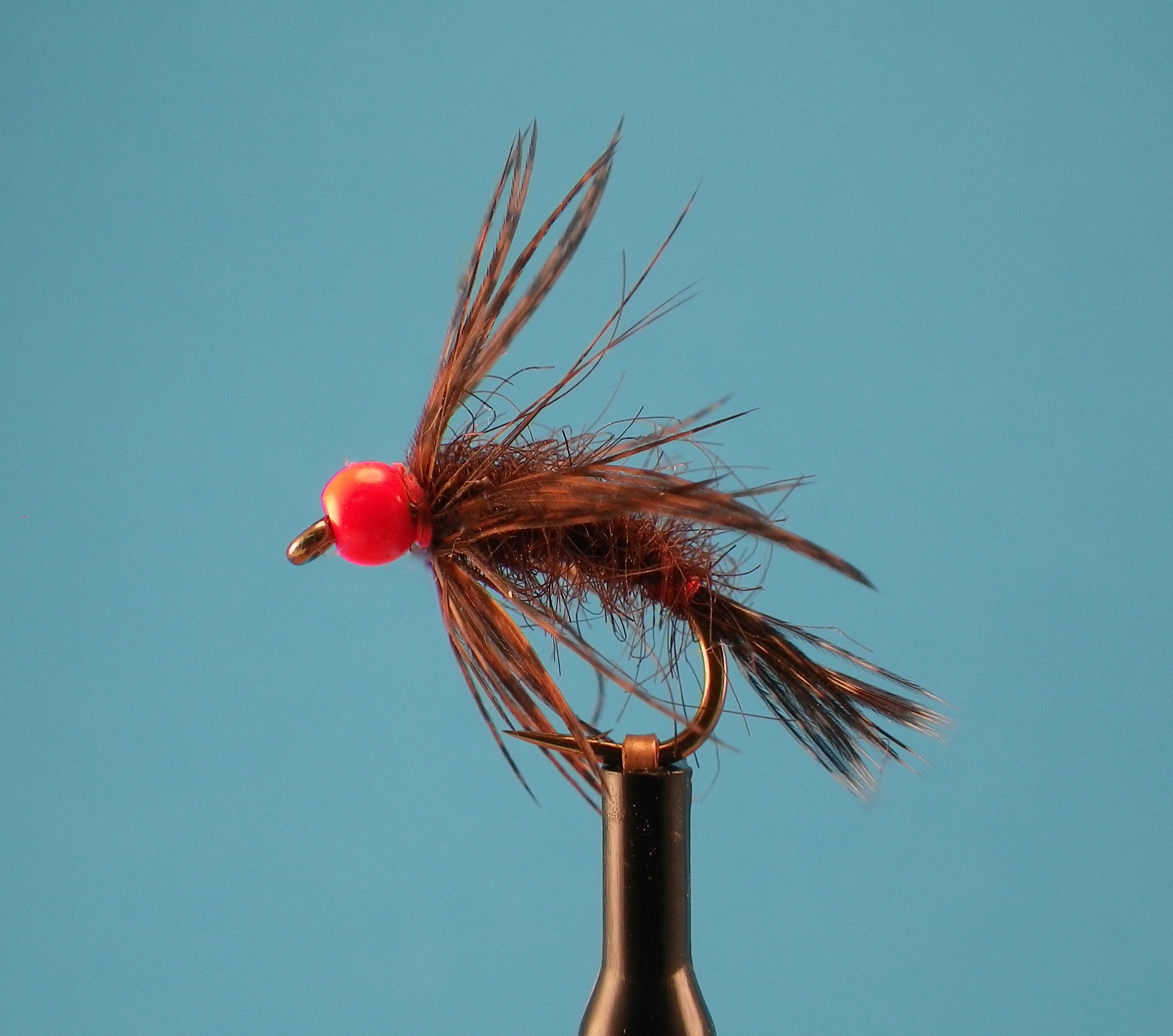
The Hot Chocolate Stone steelhead nymph

You’re up before the sun. As you hike to the river, there’s a distinct chill in the air that tells you in another month the trail will be covered in snow. Once you get to your spot and wade in, you can feel the gripping cold of the water against your legs. Should have worn the neoprenes. Maybe not, though. It’s supposed to get up to the high 50s today. It’ll be warm enough later. But for now, damn, you’re just about shivering. You’ve already had your coffee, but you want something else. Something warm. And sweet. A cup of hot chocolate would do nicely. The kind your mom used to make after you came in from outside on a snow day. Hmm. Maybe the steelhead would like some, too. A little chocolate brown stone, just like the ones you saw hatching yesterday morning. A hot orange bead to get their attention. Soft hackles that say, “I’m alive.” And a buggy body because that’s what fish like. Once you get that first steelhead on, you’ll be downright toasty.

The Hot Chocolate Stone

Image

Hook: 2x strong, 1x short emerger, size 8-12
Thread: Hot Orange
Tail: Brown Coq de Leon
Body: Fiery brown angora goat, dubbed roughly
Hackle: Grouse
Bead: Hot Orange

Tying notes: This is a pretty straightforward tie. If you want to add a little more weight to the fly, you can seat the bead with about 8 wraps of undersized wire. Coq de Leon and grouse are beautifully barred materials that naturally create the illusion of segmentation. Angora goat is one of my favorite body materials; it’s spikey and rough, and you can get it in all kinds of colors from muted naturals to fluorescents. Use a dubbing loop to get than uber-buggy look. Play around with different bead colors at your discretion; the fish will always tell you if they have a preference.

~

The Hot Chocolate Stone Rogues’ Gallery:

Salmon River (NY) November 2012

Image

Farmington River Report 9/29/13: Blue ribbons all around

First Place Winner: James. James is an experienced fly angler who wanted to learn the ancient and traditional ways of the wet fly. He aced Wet Flies 101, got into double digits of fish, and even had a double on a February Red and a Squirrel and Ginger. Good job wading, good job mending, good job presenting. If he keeps at it, James is going to be a dangerous machine. Trout, you’ve been warned.

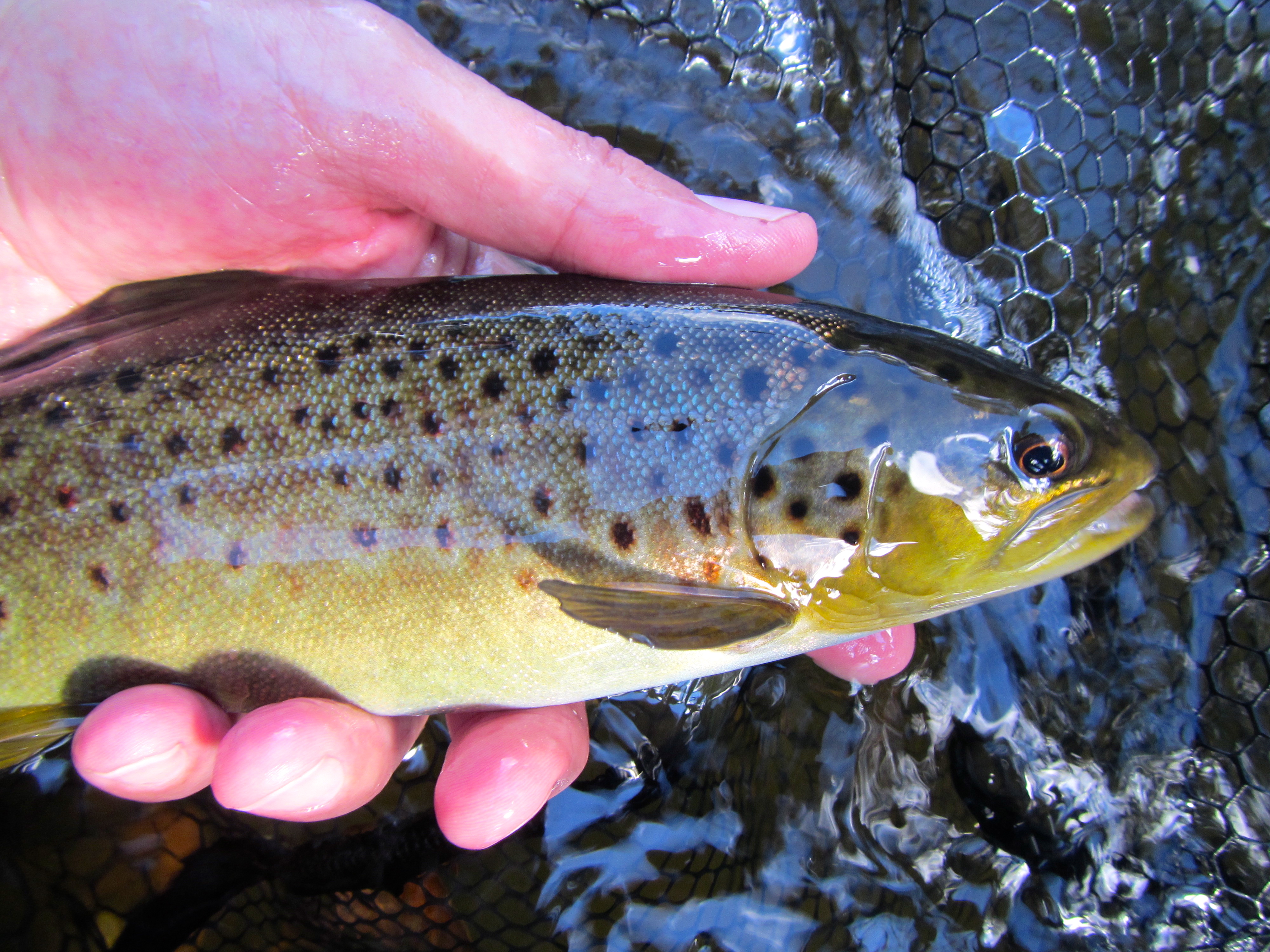
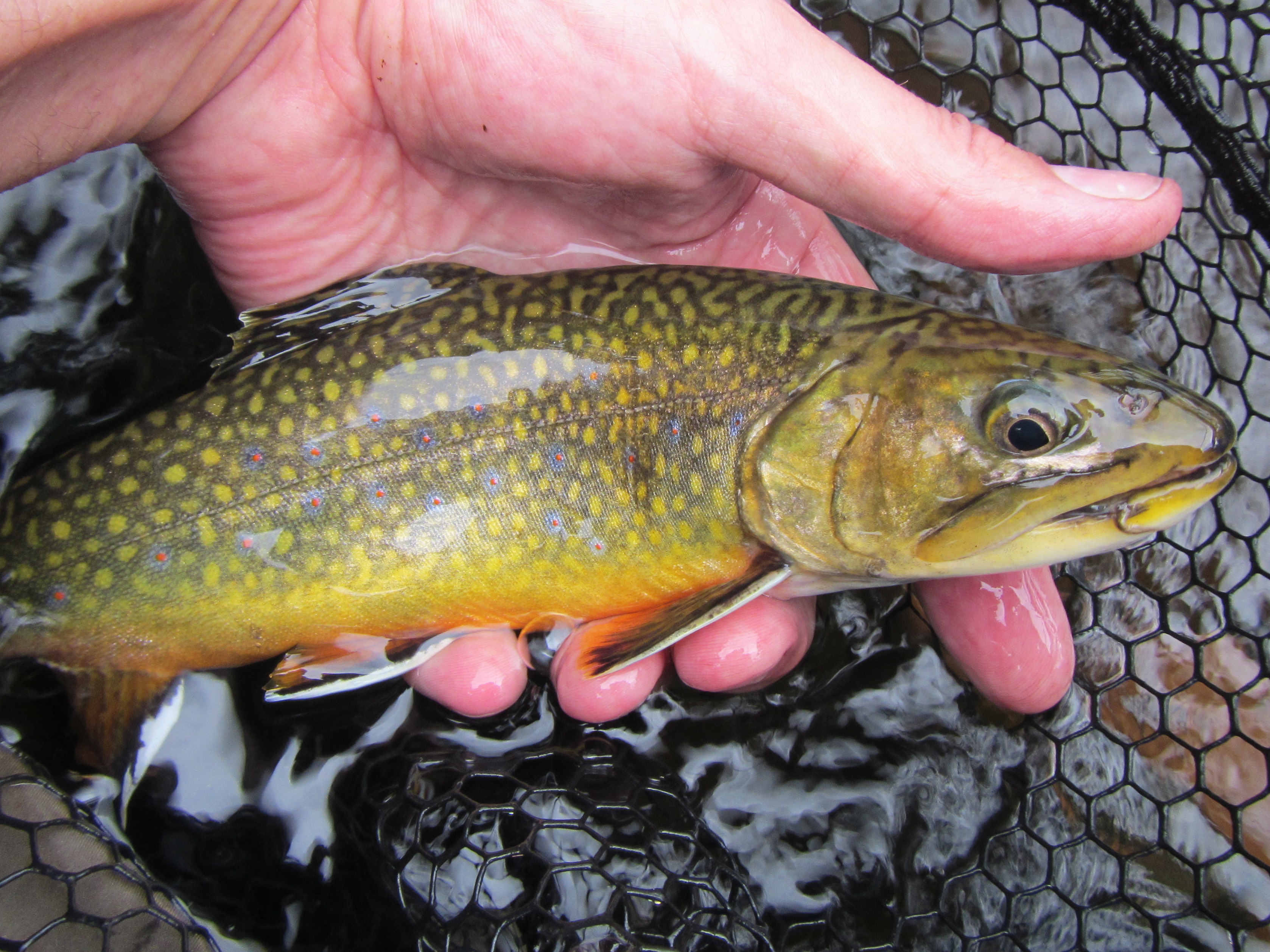
Almost a grownup. The signature ink of youth has just about faded away from his flanks. A spirited fish, this one. I’m amazed he held still long enough for a photo.

Image

First Place Winner: The weather. Cool air. Warm sun. Blazing, brilliant sunshine. All day long. Water temp 59. Whoever ordered this day, I’d like to buy you a drink. And a cigar.

First Place Winner: The bite. Thank you, trout, for making my job easy. Your recklessness creates the illusion of genius in the form of a fishing guide. I really appreciate it.

First Place Winner: The hatches. See “The bite.” Caddis (smaller creamy size 16 and big tan size 12s), midges, BWOs, and especially a bumper crop of Isonychia. All our trout came on the Squirrel and Ginger (caddis) size 14, size 12 February Red, and size 12 Hackled March Brown.

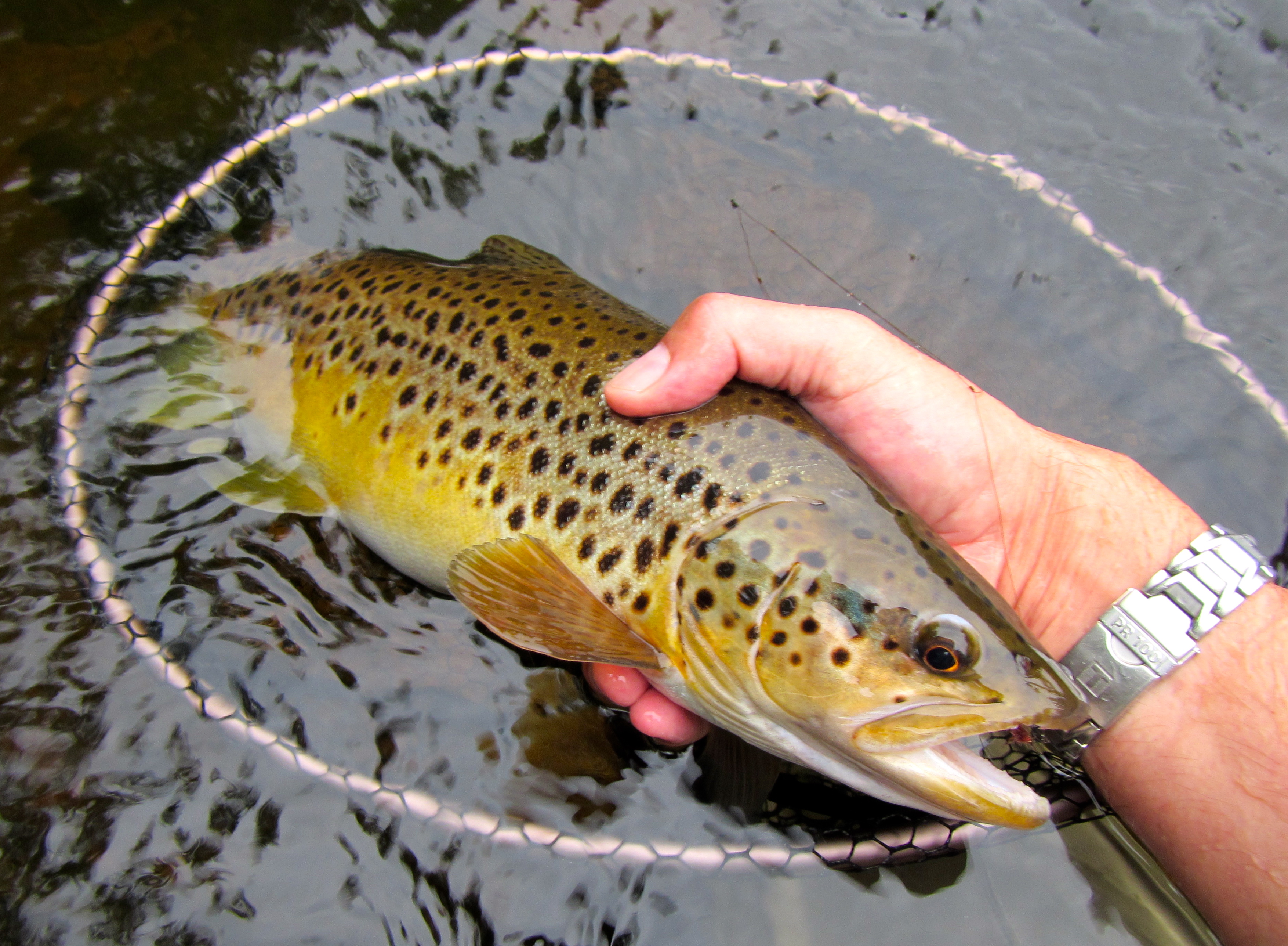
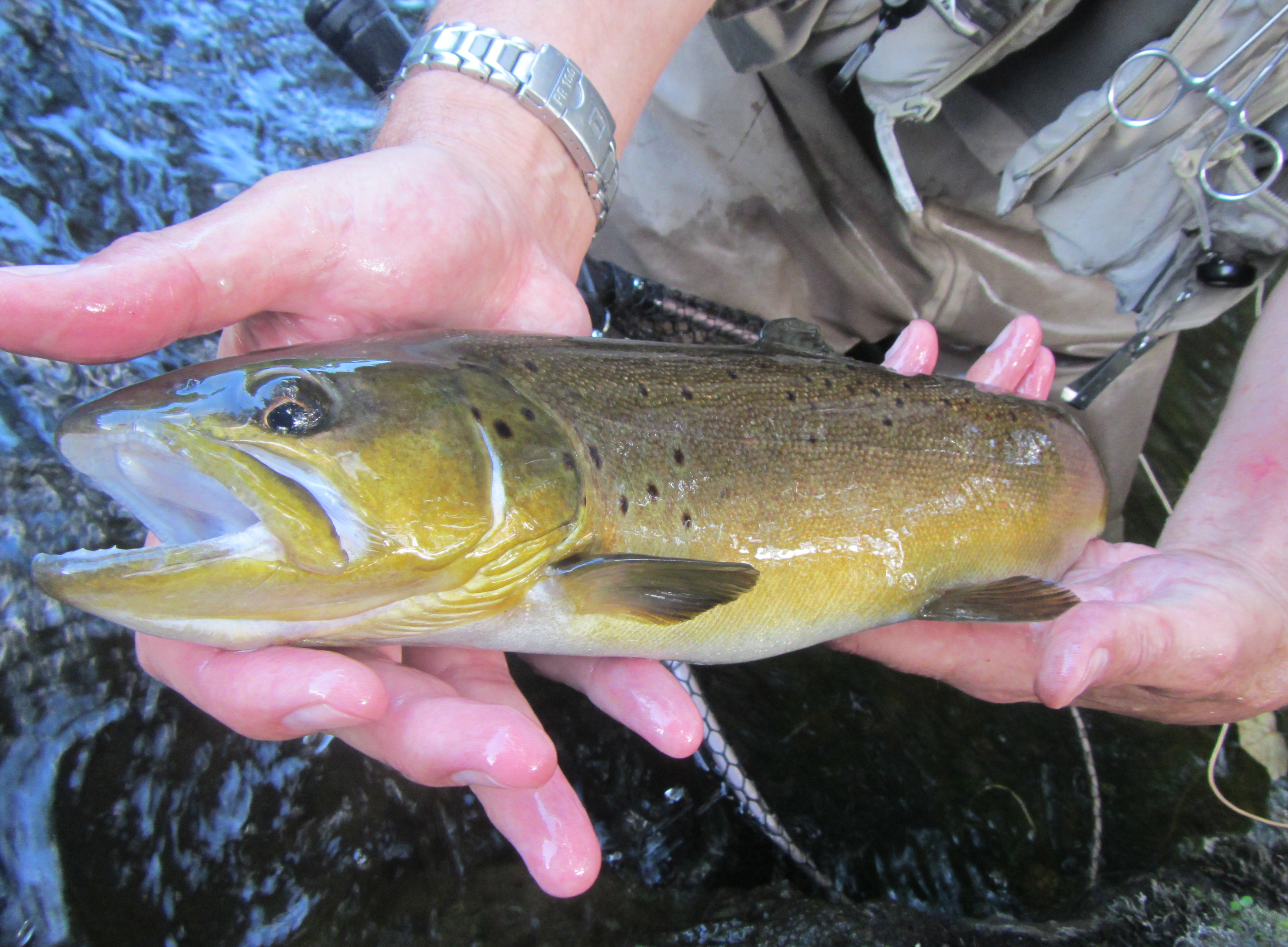
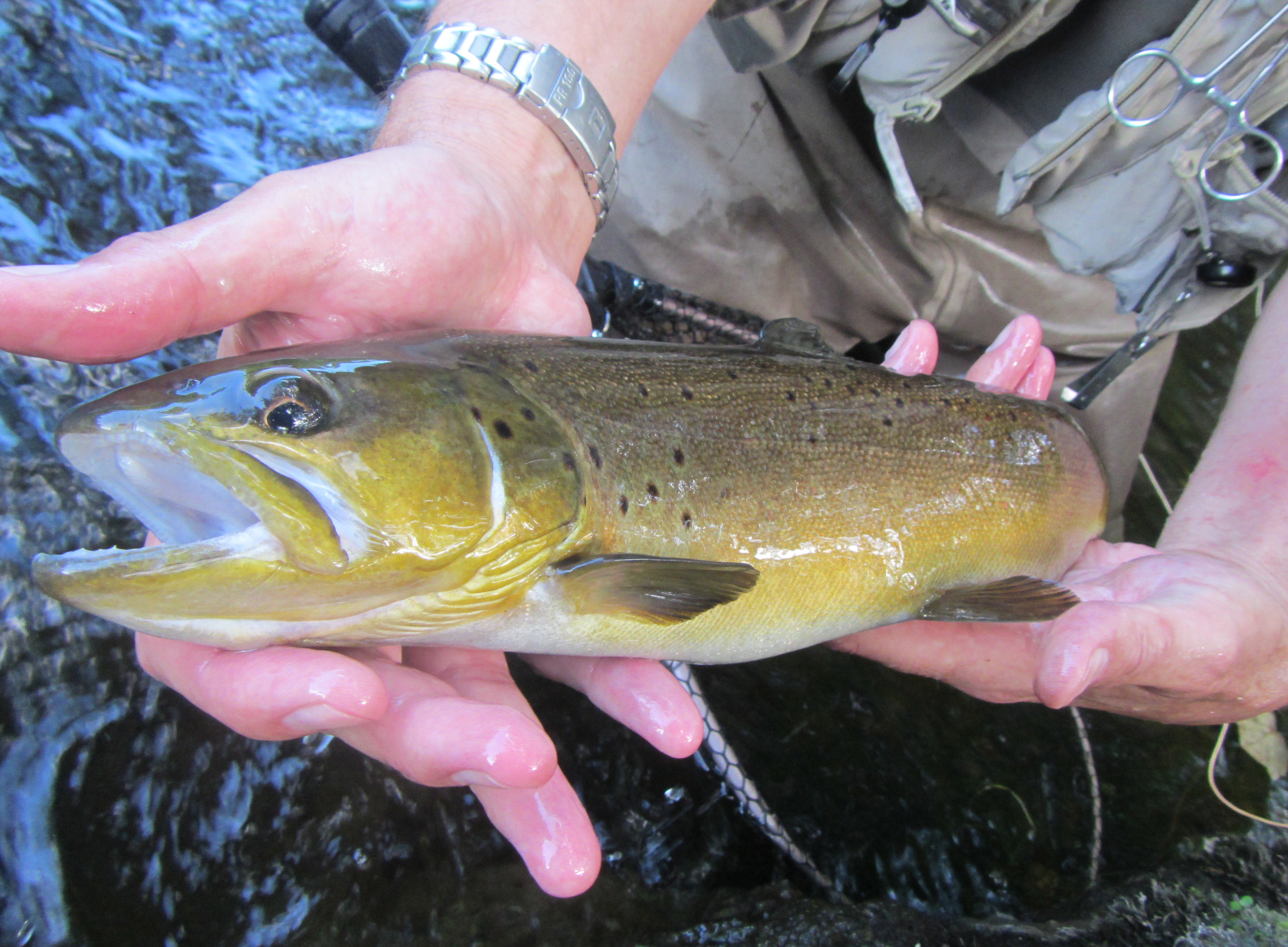
James’ brown. The hardest working trout in the Farmington River? Or simply one of the many fish James brought to net?

Image

“Wet Fly 101” at the October FRAA meeting

I’ll be the featured speaker at the Farmington River Anglers Association meeting, Wednesday, October 16, 7pm in Unionville, CT. My presentation will be Wet Fly 101, a basic overview of wet flies and wet fly fishing. Wet flies have been taking trout for centuries, and the fish haven’t gotten any smarter. If you can’t make the September Hammonasset presentation, hope to see you at this one. You can learn more about the FRAA at their website, fraa.org. As always, If you’re interested in having me speak at your club meetings, you can contact me through this site.

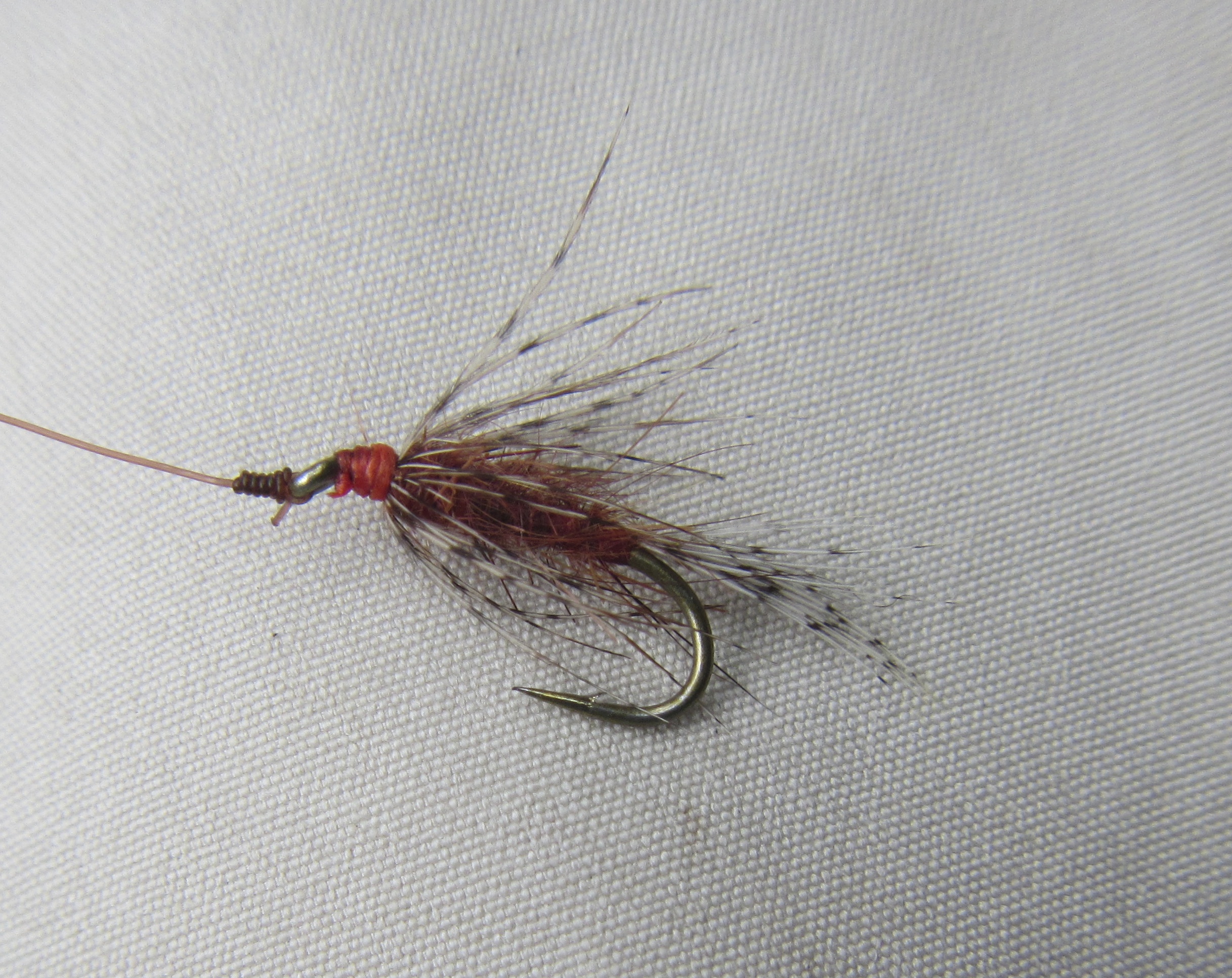
 A Hackled March Brown

MarchBrownSH

And a big Farmington brown who found it to her liking.

Image

Farmington River Report 8/18/13: Crash, Bang, Wallop

If you put in enough time, eventually you’re going to cross paths with a big fish. Yesterday was my turn.

I’m in the middle of working on a wet fly piece for American Angler, and I wanted to try to get some photos of trout-with-soft-hackle-in-mouth. Right off the the bat, I was into a good brown. Then things slowed a bit.

Conditions were perfect: 75 degrees, overcast, showers, water running at 400cfs and a cool 65 degrees. What the bugs lacked in numbers, they made up for in variety: small BWOs, light-colored caddis, midges, and a few stray Isonychia. The bird were working industriously overhead. I was fishing a team of a March Brown soft-hackle as the top dropper, a Drowned Ant soft-hackle in the middle, and a bead head Squirrel and Ginger on point.

Near the end of a mended swing, she hit the fly with untamed ferocity. I’ve encountered enough of these larger trout now that I can tell immediately there’s a big’un at the end of my wet fly leader. The surface erupts in swirling upheaval, and line is bulled from the reel. That’s the last glimpse I’ll have of the trout for a while. Bigger fish almost always go deep, and this one was no exception.

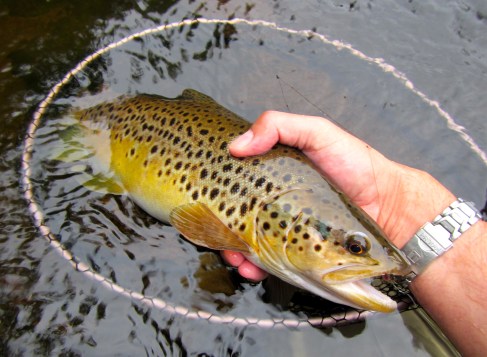
Now, I was faced with the predicament of where to land her. I was surrounded by treacherous pockets and swift currents. I had to manage both wade and battle — this was the kind of fish you really wouldn’t mind falling in for — but I finally  made it to a calmer section to claim my prize. And here she is.

What a gorgeous creature. It would have been nice to get a full-length shot, but I was flying solo, and I wanted her swimming freely in the water ASAP. A quick measurement against my rod placed her at just over 20″.  Clearly this trout could also be tallied in pounds.
Image

This was the kind of fish that, after you release it, compels you to sit on a rock mid-stream and contemplate your fine fortune in the scheme of the universe. So I did. And I smiled.

I took a few more fish, including one of the larger wild brookies I’ve caught on the Farmington this year, then headed to another spot. Juvenile salmon city, but at the end of the run I saw a splashy rise in the shallows. One cast, a partial swing, and whack! An eight-inch wild brown took the Squirrel and Ginger. I took a few more pictures, then headed home for dinner.

Nice work (if you can get it).

The winning fly, a Hackled March Brown. It comes from an English book published in the 1930s. Makes a fine Isonychia imitation.

Image

Wet Fly 101 at the Hammonasset TU Meeting, Sept. 19, 2013

I’m kicking off my 2013/2014 speaking schedule with an appearance at the Hammonasset Chapter of Trout Unlimited, Thursday, September 19, 7pm at the Wallingford Rod and Gun Club. My presentation will be Wet Fly 101, a basic overview of wet flies and wet fly fishing. Wet flies have been taking trout for centuries, and the fish haven’t gotten any smarter. Hope to see you there. If you’re interested in having me speak at your club meetings, you can contact me through this site.

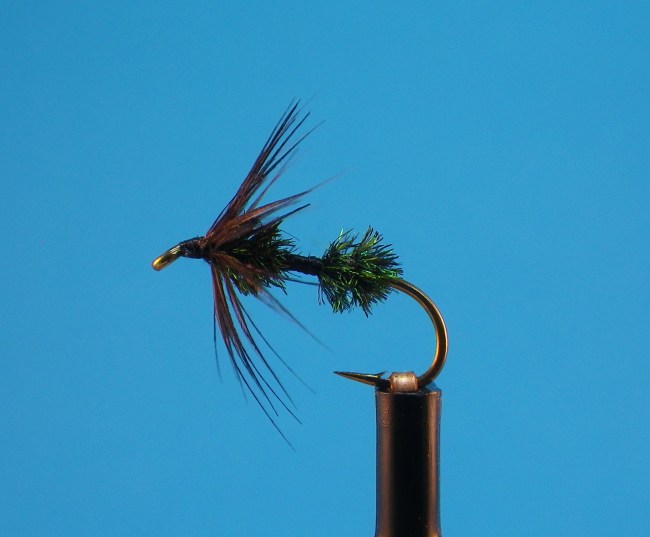
The Drowned Ant soft-hackle

Image

A wild Farmington River brown taken on the Drowned Ant, July 2013

Image

The Drowned Ant soft-hackled wet

Farmington River dry fly angler extraordinaire Don Butler likes to say, “Ants is good food.” He’ll get no argument from me – or the trout. As we move into deeper into summer, terrestrials — ants, beetles, hoppers, crickets, and even field mice — become a significant food source for opportunistic feeders. This fly is a variation of the classic soft-hackle Starling and Herl. All I’ve done is add a few wraps of thread to form an ant-like body segment. You can also treat this fly with Frog’s Fanny and fish it like a dry. A lethal summertime wet, especially on small wooded streams with wild trout populations. I also do very well with this fly on the Farmington River. Now, I’ve never seen an ant tread water in a three-knot current, but I get plenty of trout fishing the Drowned Ant on the dangle. This pattern is so impressionistic it could easily double for any number of darker bodied caddis or stoneflies. Only trout know what they think it is, and at the very least, it’s that it looks like something alive and good to eat. I almost always have this fly tied on my wet fly dropper rig from June through September.

Image

Hook: 1x fine, size 10-18
Thread: Black 8/0
Hackle: Iridescent starling body feather
Body: Two strands peacock herl, twisted on a thread rope
Segment: Working thread
 
~
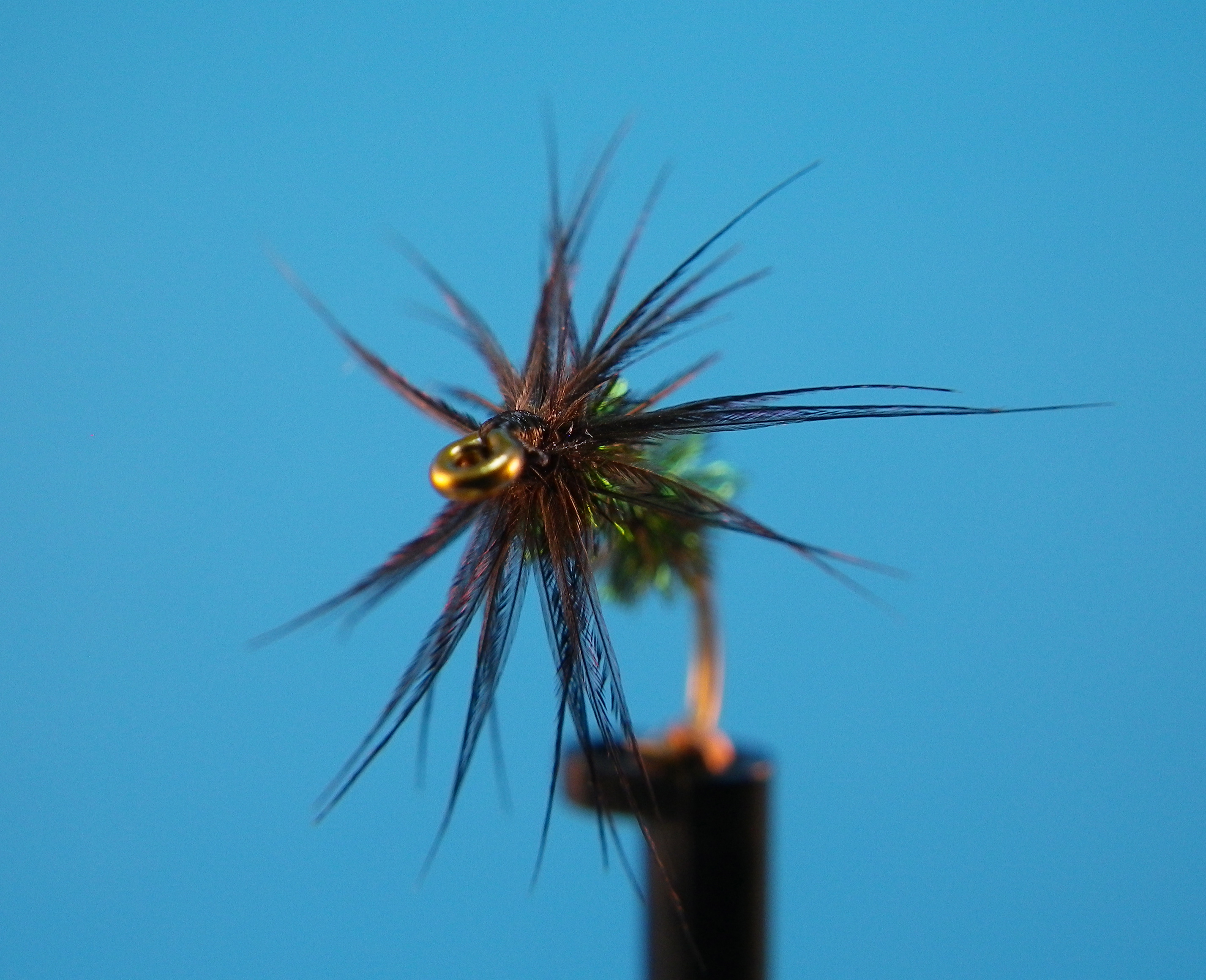
A head-on view. Starling is a fragile hackling material, but it does wonderful things in the water.
IMGP2498
 
~
Tying notes: For a more durable fly, make a rope of herl and thread before you wind the body. I tie this on a fine wire hook, and fish it as the top or middle fly in a three-fly team. When I was working this pattern out in my head, I considered using a more solid material for the body, like wool, working thread, or floss. But there is something about peacock herl and its mystical ability to attract fish that enchanted me. Besides, peacock herl is a traditional material, and seemed a proper nod to the heritage of wet fly tying. There are all kinds of feathers on a starling. Look for those iridescent purplish ones to add another subtle splash of magic to this terrific little fish-catcher.
~
 
The Drowned Ant Soft-Hackle Rogues’  Gallery:
 
7/21/13, Farmington River
BigWildBrownFarmy 7:13
 ~
 8/12/14, Farmington River
 IMG_2314


Big Eelie Variant: The L&L

While I am loathe to use the phrase “go-to-pattern,” I beg to report that whenever there are large sand eels around, Ken Abrames’ Big Eelie is my go-to pattern.

The Big Eelie differs from 95% of other sand eel flies in that it is not an attempt to carbon copy the bait. Those legions of epoxy- and tube-bodied flies with eyes certainly work, but you can get away quite nicely with something far more impressionistic (if that’s your fancy) like the Big Eelie or Ray Bondorew’s Marabou Sand Eel.

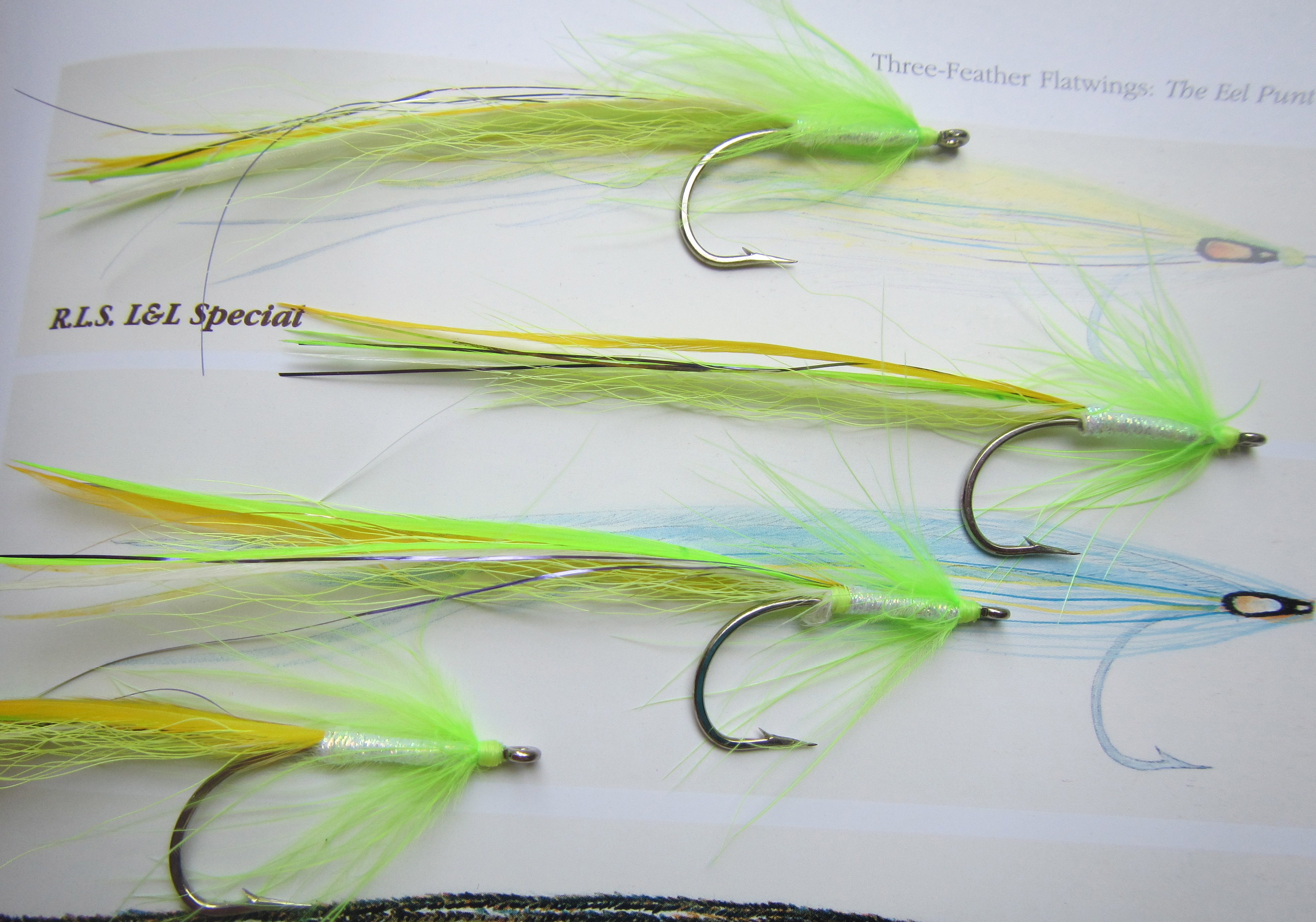
The classic Big Eelie is a four-feather flatwing/soft-hackle hybrid; it’s colors are white, yellow, olive, and blue. I’ve discovered over the years that the Big Eelie works in all kinds of color schemes. One of my favorites is taken from Ken’s three-feather flatwing, the L&L Special. This tart mix of yellow, fluorescent yellow, white, and chartreuse shines on sand flats, day or night.

The L&L Big Eelie

Image

Hook: Eagle Claw 253 3/0
Thread: Chartreuse 6/0
Platform: 30 hairs fluorescent yellow bucktail
Tail: A white saddle, under one strand each of gold and silver flash, under two chartreuse saddles, under two strands purple flash, under a yellow saddle.
Body: Pearl braid
Collar: 2-3 turns chartreuse marabou, tied in by the tip.

Tying notes: Sand eels are a slender bait, so make your saddles about the width of a pencil. You don’t want a flaring broom shape for the platform, so likewise make it slim, and take the bucktail from near the tip of the tail. All the saddles are tied in flat. The marabou adds the magic here, as it veils the body when wet, creating movement and an almost glowing effect. Feel free to play around with different colors on this pattern; some of my favorites are blue/black/purple and white/pink/olive. Stripers love them all. I like to tie this fly about 4  1/2 inches long.

Chunky Farmington browns on streamers

On Thursday night, the Farmington crested in the upper TMA at around 1,500cfs. By this afternoon, is was still pumping out 750. Winds were gusting to 30mph. What a great day for some streamers.

I felt like fishing something new, so this morning I went down to the bench and pulled out a size 6 streamer hook. Since I didn’t know how much the water had cleared, I went for high-visibility. On went a gold bead, seated with some heavy wire. Made a tail out of marabou and gold Krystal flash, a body of gold mylar braid, and a doubled white marabou collar as long as the fly. On top, some silver Krystal flash. Any self-respecting ambush predator should be able to see that.

Line choice was a bit of a puzzler. I hemmed and hawed, and finally decided to go with an integrated full-sink tip, not so much to get the fly down — that would certainly be welcomed in areas where the current slowed — but mostly for casting in the banshee wind, and to keep the line below the flotsam that was sure to be bobbing merrily on its way downriver.

Yowzah, it was cold. I immediately regretted leaving my fleece vest in the truck. The wind chill had to be in the 40s or 30s. Some pinhole leaks in my waders and 53 degree water certainly didn’t help. But at least I was no longer slinging mulch in my garden. Even if I was able to do that in the comfort of a t-shirt.

The river was off-color, more of a tea-stain than muddy. As I suspected, lots of leaves/branches/twigs combos in the water. There were bugs out, but their presence was mostly belied by the legions of swallows working overhead. And yes, there were trout.

I spent most of my two hours working the banks, casting and stripping in short bursts. In my first cycle through the run, I took four browns and dropped a couple more. The trout weren’t particularly big, but most of them were chunky holdovers that fought well in the current. (Sorry, no pictures. Left the camera at home. Too cold/lazy to get the iPhone out.) I had a few swipe, miss, and come back for seconds. That’s always good for a thrill.

Dropped a handful more on my second and third go-rounds, and that was it. Pretty soon it will be time for streamers under cover of the night. And if I’m lucky, I’ll be fishing in shirtsleeves.

Lousy fishing, terrific class

Many thanks to Mark, Ron, and Ted for taking my Wet Fly 101 class yesterday. We had excellent weather and a good group of anglers who came loaded with questions. Unfortunately, we didn’t find too many cooperative trout (I found the wet fly fishing to be slow on Friday, too).  But the day will come when those bashful fish be racing to get to that soft-hackled fly, and then it will all fall into place. We learned some new water, and plenty of new fishing tactics. Thanks again, guys.