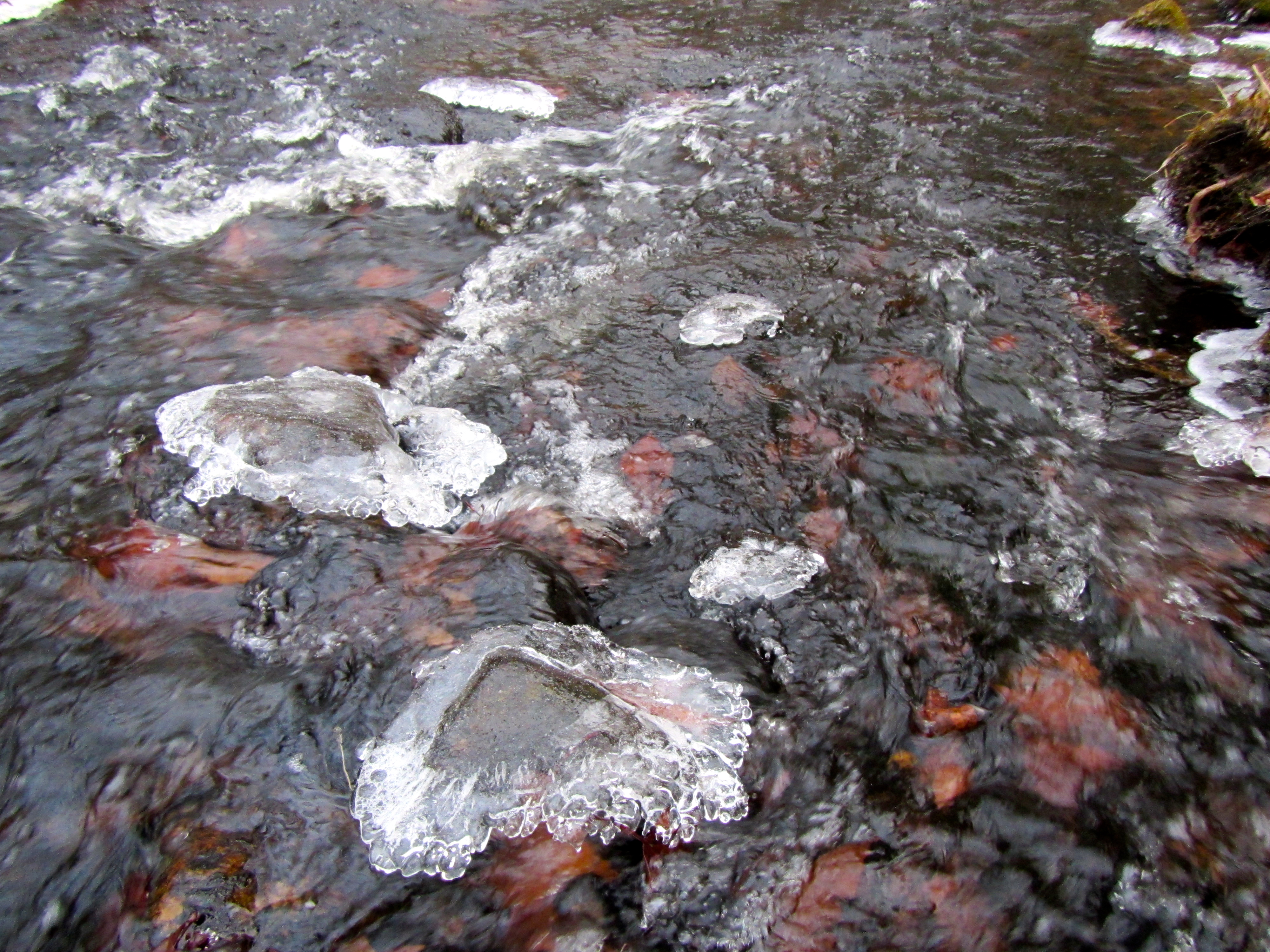
November 2013 Steelhead: Fishing with Robert Zimmerman

Day One: Stuck inside of Altmar with the Pineville blues again.

Right from the start, I knew this trip was going to be a bust.

The river was pumping at 2000cfs. That’s high by anyone’s standards, and at that level vast stretches would be transformed into featureless aqua super highways. The weather was supposed to be bad. But the kicker was Bob and Bill. They had just returned from four days on the Salmon. Zero steelhead landed. Days between strikes.

There is a technical term for all this. “Sucks,” I think.

Then, there was last season. Six days of fishing from November through January. Only two steelhead to hand. Two days without a single touch. Yes, it would be fair to say that I was not stoked about this trip. But you don’t know if you don’t go. Maybe by some incongruous twist, my luck would change.

Five hours in, there was no sign that it would. We had left Connecticut before sunup and were on the water by 10am. A motion was made to focus on one of the Salmon’s diversions – small streams under normal conditions, but at 2K proper rivers. Jon was into steelhead right away, tussling with three in the first hour. Tommy and Todd decided to seek their fortunes downstream. I settled in on a 200-foot section that had a corner bend, riffles, and a mysterious dark hole. But nothing. It’s terrible when you’re wishing you were back home on the first day.

“Dang. I knew this was a stupid place to build a nest.”

Image

Finally, at 3pm, I hooked up. Not a steelhead, but a king salmon. I figured this would be me versus dead meat, but the fish treated me to some whale-like surface rolls and an earnest attempt at going airborne. With precious little action coming my way, I really wanted to land him. Fellow flyaddict Gary, who was downstream from me, went above and beyond trying to help me get it to shore. After a long walk, he and Jon were able to corral it. It wasn’t very attractive, and it was foul-hooked, but at least a skunk of some sorts was off.

I had one more take about an hour later. A steelhead, eight or nine pounds, fresh from the lake. As it performed its initial cartwheel, Gary wished aloud, “Stay on.” Seconds later, it was off. The new normal.

It was beginning to look like a long four days.

~

Day Two: They’ll stone you when you’re floating in a boat.

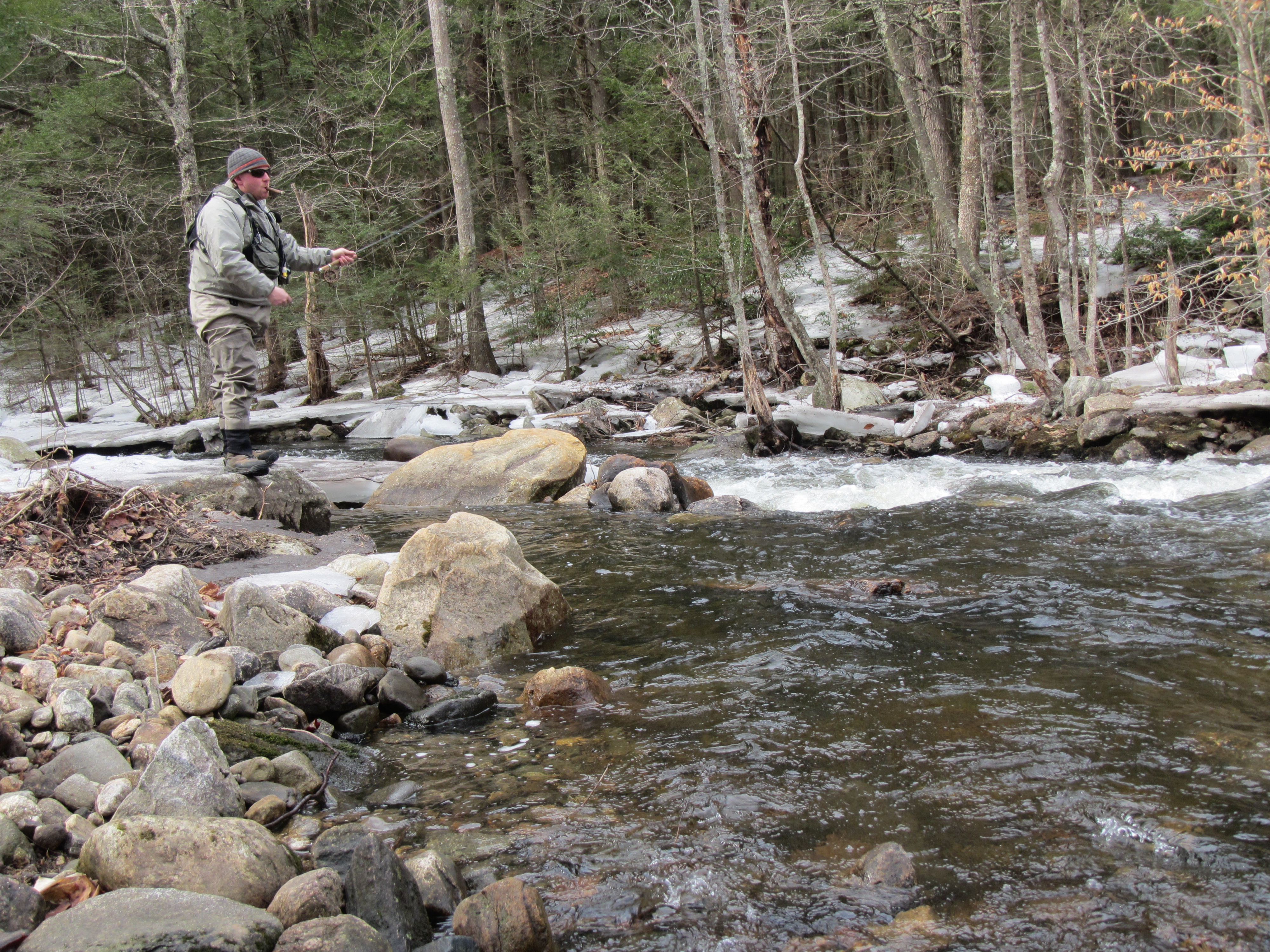
I hemmed and hawed about floating the river solo. Before we left home, I had called Jim Kirtland (aka Row Jimmy, an excellent guide, and a fun person to spend a day with) to see if he had any open dates, and as luck would have it, he had a cancellation on Sunday. The rest of my group decided to wade, so I’d be going it alone. If I were lucky, I would not only catch steelhead, but also  gather intel on where they were hiding out.

We launched just before 7am. If you’ve never been, the Altmar boat launch is the upstate New York version of Burning Man. Instead of a towering tinder structure in human form, there’s the monolithic cement bridge. Replacing semi-nude hippy art chicks in furry leggings are porcine middle-aged men with near-ZZ Top facial hair, mad bomber hats, and camo hunting bibs. Not a fair trade, I’ll grant you. But it is an experience. Crowded. Chaotic. Carnival-like.

And of course, there is the jamoke factor, to which I contributed mightily. We had just passed under the bridge, and I put my second backcast over another angler’s line. To deflect my embarrassment, I announced to him that I was, in fact, a douche bag. And, if he ran into my friends later on the river, he should tell them what I douche bag I was. He laughed it off good-naturedly, and there were no further casting incidents. But the fishing was slow. One dropped steelhead in the first two hours.

We slipped down into some very promising water that I’d never fished before and anchored center stream. Egg patterns were getting me nowhere. So I announced that I was going to try little black stones. Every once in a while, you make an adjustment upon which the entire day turns. On my first cast, the bright yellow yarn indicator suddenly disappeared. I raised the rod tip and was greeted by a substantial pull at the other end. I lost the fish, but this was encouraging. Another take soon followed, and I began hooking steelhead in earnest. Whether it was a Copperhead Stone or a 60 Second Redhead or any of the many stonefly variants I tie, there was something going on down below hatch-wise that had the steelhead acting like winos at a Night Train open house. It certainly wasn’t the anecdotal fish on every cast, but it was as close to hooking an unreasonable number of steelhead in a brief period as I’ve ever experienced.

So much depends on a little black stonefly, nestled inside a steelhead’s mouth. The flies I was fishing were all tied on 2x strong, 2x short size 10 scud hooks. As Jim says, it’s hard to go wrong with black and copper on this river.

.Image 
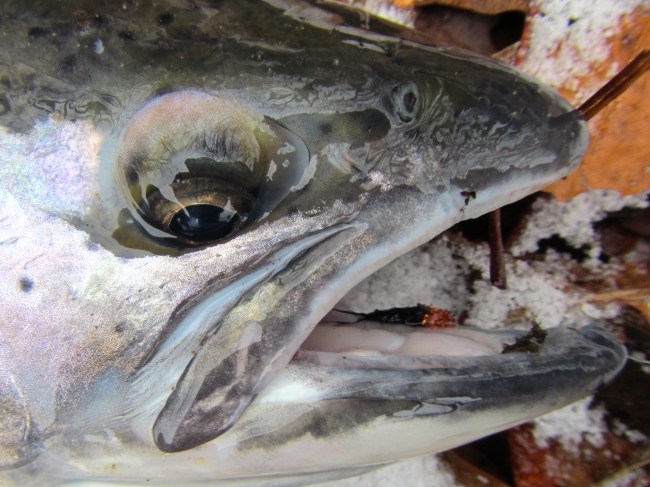
The bite was so good that I hardly even noticed the wind-whipped downpour that parked over us for nearly an hour. All the while I kept telling Jim, “We’re staying here a little bit longer.” Damn right we are. In the midst of this embarrassment of riches, though, I began to feel self-conscious. What if Jon, Todd, and Tommy weren’t having any luck?

After two hours and close to fifteen steelhead, it was time to move on. We ran into the guys about a thousand yards downstream. Not to worry. They had found their own little paradise and were into a bounty of chrome, many of their steelhead in double-digit pounds. When Jim and I pulled out in Pineville, I shelved the idea of hiking over to meet them. I sat in the cabin at Fox Hollow and let the day’s events wash over me. A truly sensational steelhead buzz is hard to come by. I was going to savor this one, ably assisted by Mr. Adams and Mr. Fuente.

~

Day Three: You want hard-boiled eggs.

I’ve known about trout beads for many years and I always poo-pooed them. But the winds of change were swirling. I told Jim yesterday that I’d even use that fluorocarbon tippet of his (Drennan 6-pound. I still hate knotting fluoro, but I’ll be damned if that stuff wasn’t so impressive at holding big fish that I went right out and bought a spool). So today, with vast reserves of steelhead currency safely banked, I decided to see what this bead thing was all about.

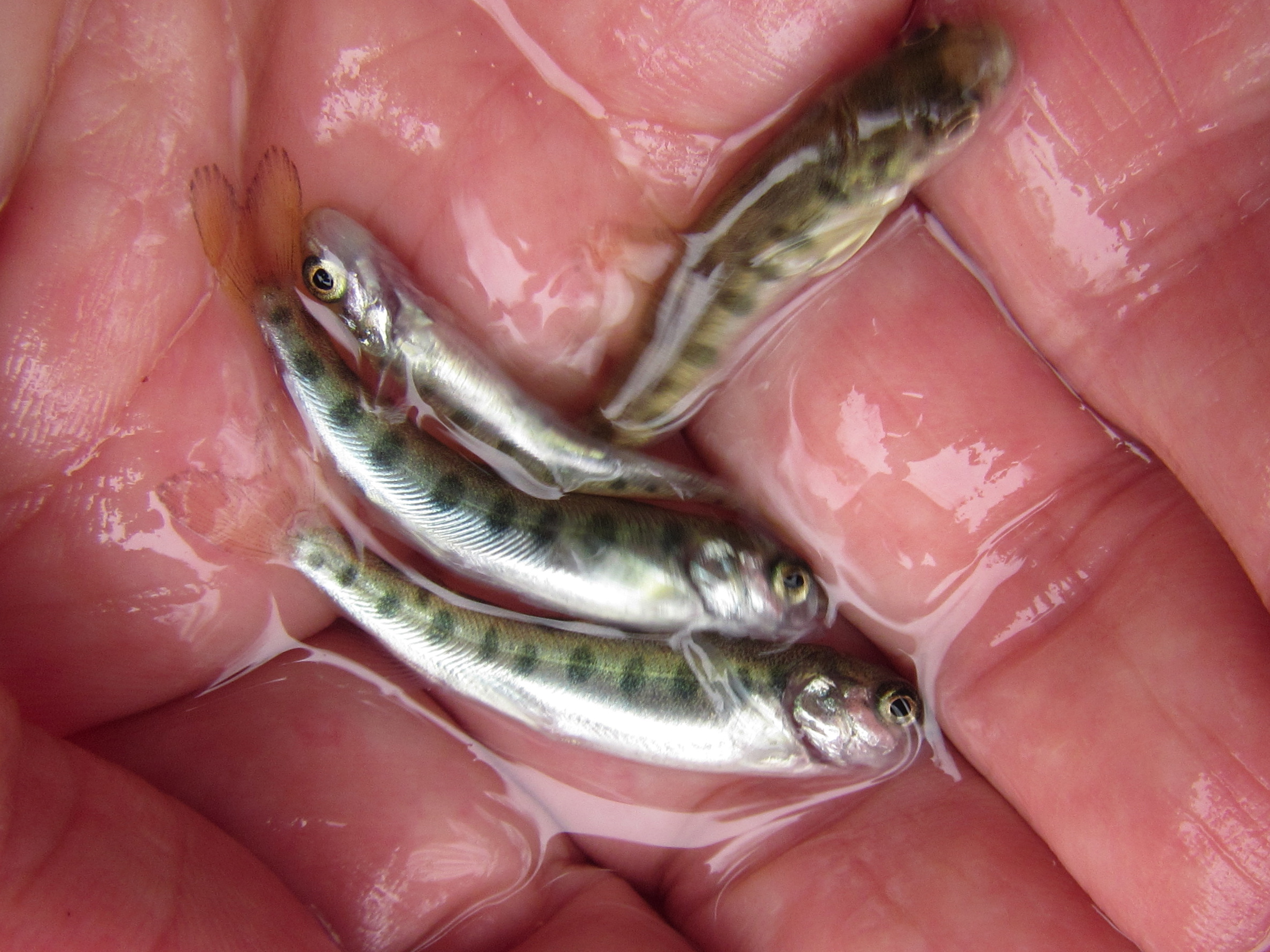
We were now a party of three. Todd and Jon decided to focus their efforts on a riffle downstream where Jim and I had observed scores of steelhead the day before. I was captivated by a lovely little pool upstream, and set up shop there. It wasn’t long before the indicator dipped, and my rod thrummed with energy. It was a steelhead – a small one, freshly minted, highly spirited. Since I was playing around with new things, I thought I should hand-strip a steelhead in for the first time. A substantial pod of skippers was passing through, so I got to do it again and again. They were all sub 16-inch fish, but perfect in their own guileless way. Some of them even displayed the fading parr marks. Original artwork suitable for framing.

Meanwhile, Todd and Jon had been waging war with some significantly bigger fish. They were fifty yards downstream, and I could hear their cackles over the chatter of the river and see the deep bends in their rods. I considered joining them, but I figured with steelhead, what is downstream must soon come up. Besides, this pool was my idea of perfection. It had a clearly defined center seam that held fish along its entire length. There was enough bottom structure to entice the steelhead to pause on their journey, but not enough to cause repeated snags. The current moved at casual walking pace, making line management a breeze. (I was focused on improving my line management on  this trip. Less slack line on the water meant a better hook set, and a better hook set meant less heartbreak.) And because I had it all to myself, I could work the pool at my leisure. Surely the moment I vacated it, someone would materialize out of the woods to claim the prize. I would be a fool to leave it now.

Why beads work. The shores of the pool were littered with naturals. Inquiring minds will want to know, so here it is: 8mm Glow Roe by Troutbeads. I know, I know, it’s not fly fishing. But it sure is fun.Image
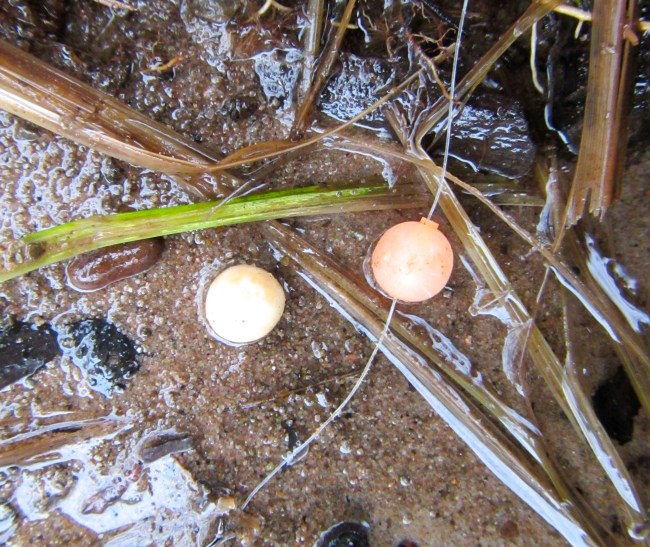
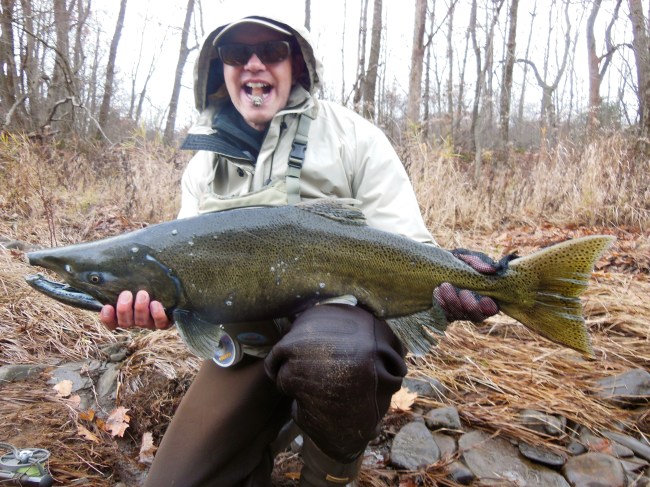
Bigger fish started to move through, and they found my peach-hued plastic spheres to their liking. I could do no wrong. Even when I fair hooked a king salmon – certainly a late traveler, as he had a translucent tail and not a suggestion of rot on his body – he was landed despite the fact that I was using six-pound for tippet. (Not to be ignored was some brilliant net work from Jon. Using a landing net without a handle, both he and Todd had perfected their technique, and I am grateful to them for helping me bring so many good steelhead to hand.)

Not bad for 6-pound tippet. I’ve never seen a king in this good condition this far into the season. Note that his head is bigger than mine — not an easy feat any time of year. 
Image

As I reached the quarter-century mark of steelhead hooked, the enormity of the day began to sink in. If there is such a thing as good steelhead karma, it was truly directed at me. The bitter memories of last year’s fishless outings and numb fingers  seemed impossible now to recall, let alone understand. And that’s when I decided to swing.

You hear stories of people who do nothing but swing flies for steelhead. They are content to go days without a strike if it means the opportunity to hook a single fish with this purest of methods. I admire their conviction; clearly their spiritual resolve is stronger than mine.  Armed with the confidence of a constant stream of fresh steelhead, I pulled from my box a streamer I had tied specifically for this trip: the Grapefruithead Leech. It’s basically an oversized egg-sucking leech with a contrasting head of fuchsia and chartreuse. On it went, and off I went to the other side of the pool where the fast water met the edge of the sod bank.

The take was not what I expected. I was hoping for an earth-shattering kaboom. But instead it was a dull thud, albeit a sizeable one. “Are you in?” asked Jon from the opposite bank? “Yes!” I shouted back, and we were off to the races. The steelhead quickly found the riffles below me, and so began an extended dance of silver, spray, and prayer. At one point I thought the fish was foul hooked; but as she move into more clement waters, I could see that the leader had wrapped around one of her pectoral fins during one of her flurries of leaping madness. The tippet came free with the sound of a plucked guitar string, and I was afraid I would lose her. In the fading light, I directed her between two downed trees along the bank hundreds of feet below where I had hooked her.

She sped off before I could take her picture, kissing my face with a spray of water.

~

Day Four: I didn’t feel so cold then.

The bargaining phase works in reverse. That is, you can have beyond-wildest-dreams fortune, and negotiate downward: “I’ve caught far more steelhead in the last two days than I have in the last two years. So if you make the fishing lousy today, I won’t mind.” Lousy fishing seemed inevitable. Even reasonable, given the cold front and snow showers that were supposed to come through today.

Not a chance. On my first cast I hooked a sixteen-inch steelhead that made a laborious tour of the run, complete with several aerials, taking far more time than any sixteen-inch fish had a right to before coming to hand. A creature of routine and habit, I was back in the same pool, with Todd and Jon once again downstream. Within the first hour, I had landed three, the last two about eight pounds each, gleaming with the metallic brilliance of Lake Ontario. Without a landing posse, I had to steer both fish away from the swift water at the tailout and beach them in the shallows. But steelhead of eight pounds or less are usually manageable, even if they are obstreperous. Besides, I was fishing with newfound confidence, and I did not fear losing them.

Three steelhead were enough for me on beads, and I happily returned to the fly. My fourth came on a Copperhead Stone, neatly planted in ivory mouth. I stalked that fish with the utmost care after I noticed him porpoise in some glassy water near the head of the pool. My presentation was upstream, as delicate as I would have made it to a trout sipping spinners. I felt great satisfaction when I hooked and landed that fish.

But, the nature of steelheading is that you will lose fish. As skilled an angler as you may be, it only takes a little bad decision-making or a little bad luck. I managed both with my largest steelhead of the trip. A buck with shoulders, well into double-digit pounds took my purple Steelhead Hammer. Down the run he went, tail-dancing and cavitating before sulking on the bottom. I had re-learned from Jim the concept of not letting the fish breathe: that is, after an exhausting run, the steelhead will pause to regroup. The angler should not. This is the time to press the fish; kick him when he’s down; take unfair advantage of his oxygen deficit. I began to reel, the butt of my rod pointed upstream, a deep flex in the blank.

This merely annoyed the fish. Big steelhead aren’t like their smaller brethren. You simply cannot dictate terms to them. At least not early in the fight. He burst upstream with an almost otherworldly power, over the riffles at the head and into the pool above. This was worrisome, but I was still confident I’d land him. I had a good initial hookset, and I had hit the fish again when he was down below me. I’d be holding this one in my hands soon.

And just like that, things went south. Downstream came the fish, barreling over the riffles and streaking past me with frightening speed. To keep tight to him, I had to decide instantly: strip the line or crank the reel like a maniac. I have done both and landed fish. Today I chose wrong. As I frantically reeled, the tip of the rod wobbled like an antenna in a windstorm. I was so focused on the fish, I didn’t notice the line curling around the tip of the rod. I came tight to the steelhead. Too late, I saw the imminent danger. He ran farther downstream. The coiled line tightened around the rod. Tippet strained. In an instant, he was gone.

I stood in the river, alone and fishless.

The cold front arrived around noon, bringing lake effect snow. I could still see steelhead coming through the run, but the bite was over. And at three o’clock, we decided, so was our trip.

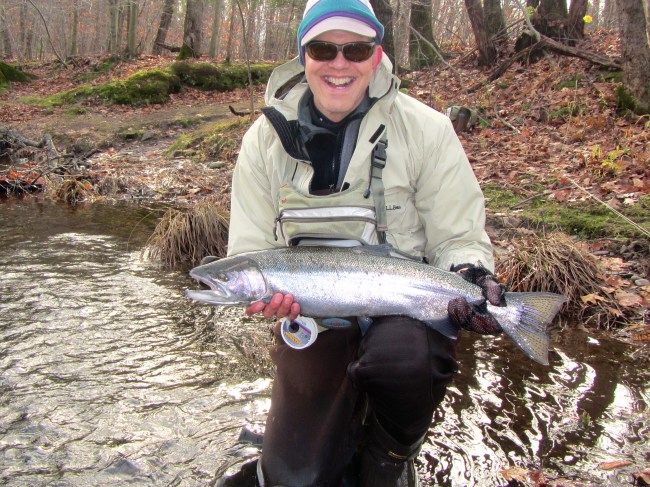
The obligatory grip-and-grin. This was our trip in microcosm: plentiful fresh fish. Lots of smiles.
Image

Out with a shiver

The last blast of 2013 was a late afternoon excursion to a small brook a few miles from my home. The temperature never got above freezing, and there were some snow flurries to embellish the wintery streamscape. Despite a generous pre-outing application of Stanley’s, ice in the guides and on the leader were a constant problem for the 90 minutes I fished. Shelf ice was everywhere, but it was easy to break through with a well-placed, forceful step of the boot.

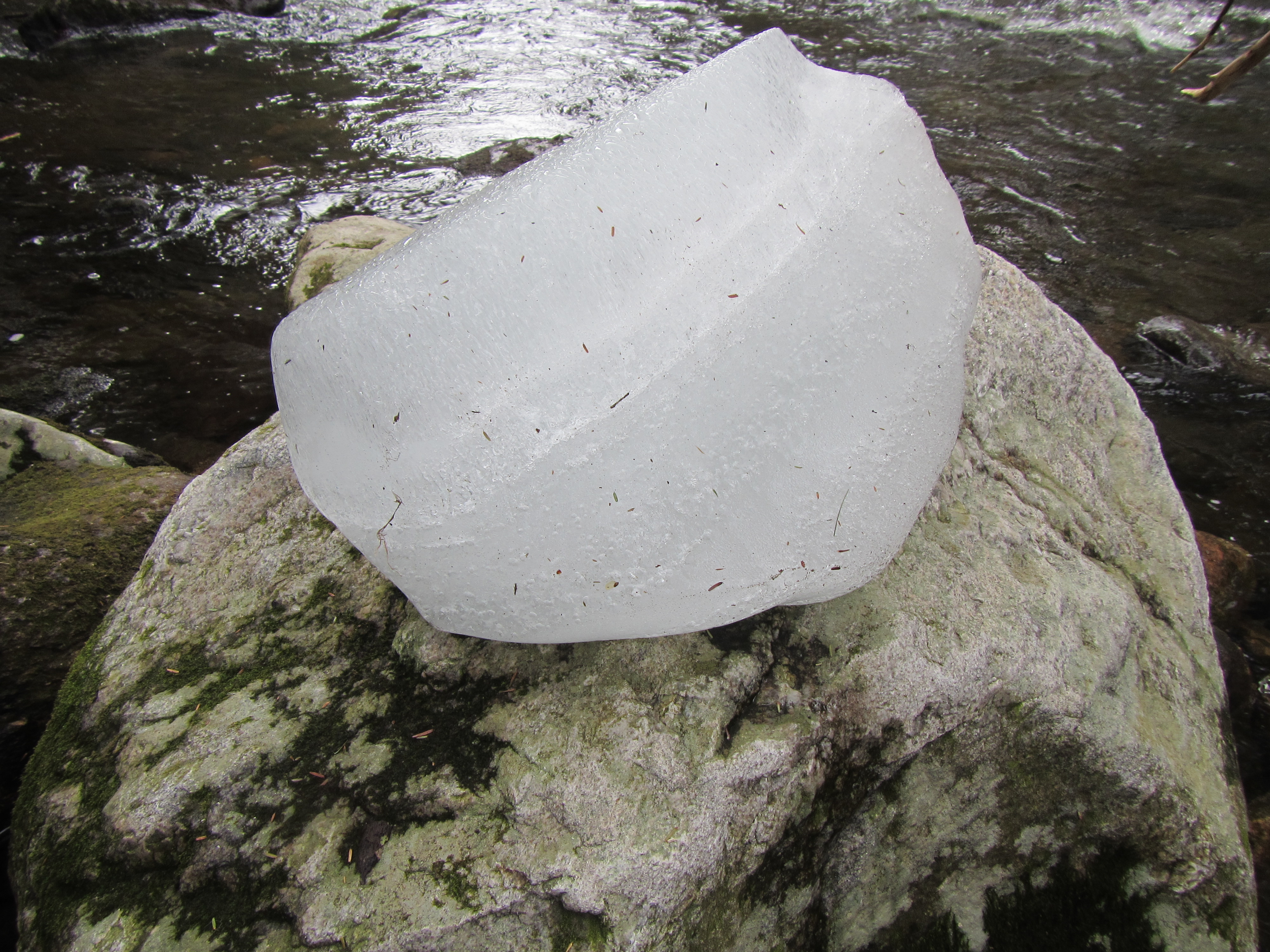
The brook was running cold today. Black ice on some of the rocks gave them the illusion of being wet. It almost cost me a swim or two (three cheers for studded boots). This ice halo just looked pretty. I liked its contrast against the green moss.

Image

To the fishing. There was plenty of that. Catching, not so much. I decided to cast my lot in the subsurface direction, swinging and stripping a small streamer (or a very large wet, depending on your point of view) without finding a favorable response. The last ten minutes, I fished dry. No dice. On a positive note, I got to be blissfully alone in the woods and the snow with a Casa Magna Extraordinaire diadema.

I probably won’t go back to this brook until April. The fish will want to play then. I’ll be about ready, too.

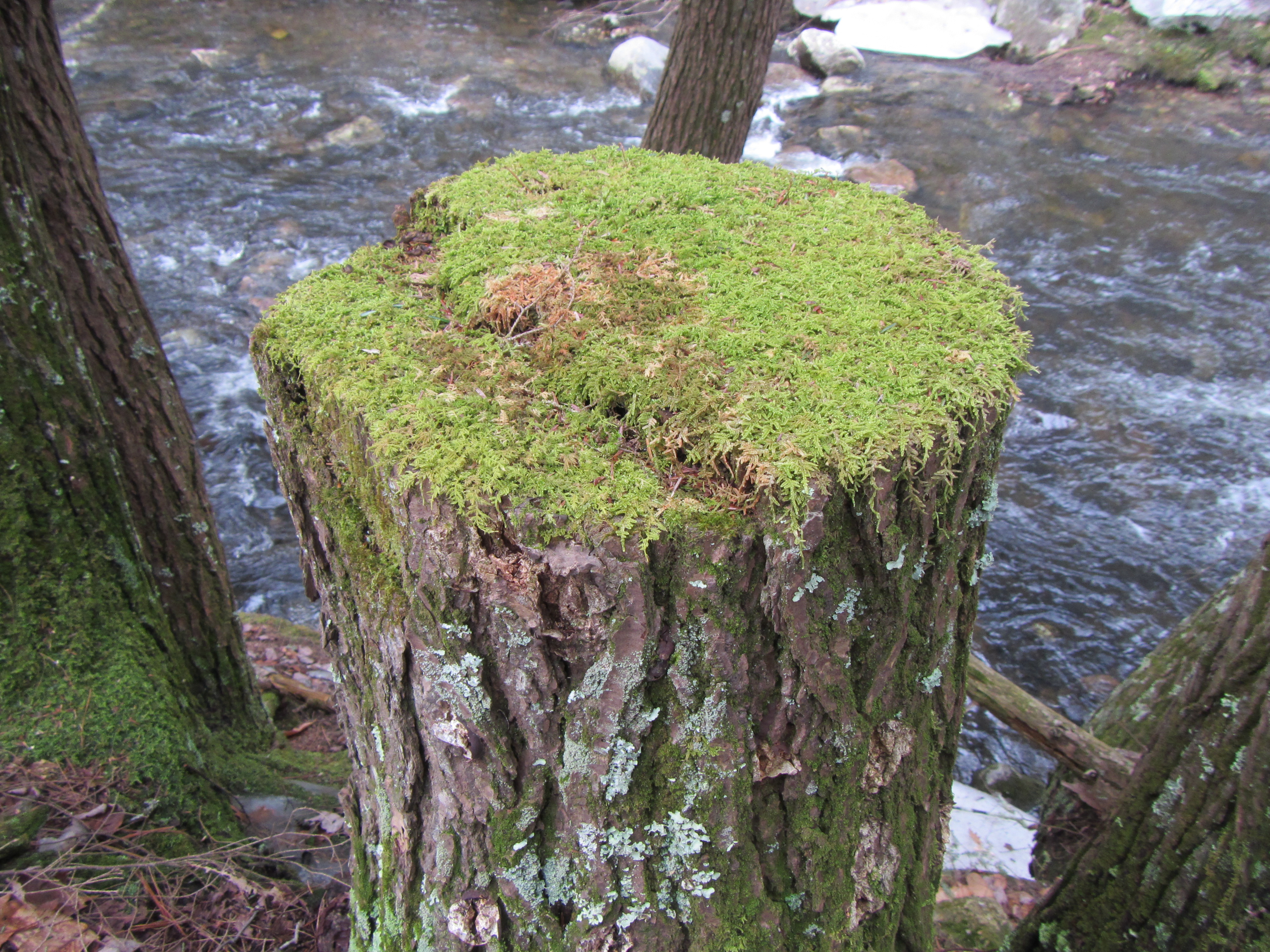
I didn’t get a water temperature, but it must have been in the low 30s. We’re in for a cold snap, so these mushroom caps won’t go away any time soon.

Image

Hudson River Striped Bass 101

Smile, oh big-mouthed Hudson River tribe member. 

Images

Bob Creeden recently made a detailed post about the Hudson River striper stock on the Stripers Online Fly Fishing forum. I found it so informative that I asked Bob for permission to share it with my readers. He graciously agreed (thanks, RJ). And here it is:

The Hudson River filling in was done mostly in the 19th Century. The Railroad did 80% of it. Especially on the eastern shore between Manhattan and Albany. It was polluted in the 19th and early 20th Century. And when the bass crashed in the mid 1980s it included the Hudson River strain.

There have been many changes in the past 45 years in the Hudson River and the 25,000 square Mile watershed that feeds it.

Today, the Hudson is clean. Clean enough to be recognized as a Class “A” swimming water from Albany to the NY City Line. The Hudson River striped bass stock was the quickest to recover from the over fishing of the 60s, 70s and early 80s. It is the best environment for healthy striped bass production. The 100 miles of freshwater tidal from Cornwall, NY (below Newburgh) to the first barrier dam North of Troy, NY, is consistently productive with no lack of water and no high water temperatures like the Chesapeake Bay Estuary has been experiencing for the past 20 years.

I was born on the banks of the Hudson. (Manhattan – Washington Heights) Grew up and maintained a boat on the Hudson from the age of 12 (docked a 1/4 mile up the Croton River at Crotonville) and lived most of my adult life on or near the Hudson in the Catskill Creek to Kinderhook Creek portion above the Rip Van Winkle Bridge. When I got out of the Marines in the 1960s, the upper Hudson from Catskill to Troy, NY was a dead sewer of a river. Since the mid 1960s, thanks to Nelson Rockefeller’s Clean Waters Act that had water filtration plants built in every village, town and city down the NY City line, the river is vibrant and alive. A birthing place and nursery for hundreds of fresh and saltwater species. I was appointed to the Hudson River Estuary Management Advisory Committee (HREMAC) during Cuomo’s administration and sat on it through two other Governor’s terms. George Pataki’s Environmental Bond Issue, voted by the majority of New York residents, built on the foundation supplied by the Clean Waters Act. It has gotten better and better from those great environmental steps.

We still have landings of 50 to 70 pound striped bass and a solid female contingent of 8+-year-old female striped bass producing a decent level of Young of the Year striped bass. Healthy 30 to 40 pound Hudson River DNA striped bass are counted, tagged and released every spring while they hang out in the freshwater tidal portion of the river. The spawning creates each year class, that are counted in September in that same clean freshwater tidal area of 100 miles as they come out of the bays and creeks along with YOY American Shad and YOY Blueback and Alewife Herring. The daily bag length should be reduced to a single fish and the length set at 35 inches. This would at least allow the females to have two full years of egg production with out being culled from the biomass before they can contribute to the stability of their species.

Another Hudson Riverling. Hard to imagine she was once smaller than a silverside.

Image

The Hudson River DNA Tribe is the second largest producer of migratory striped bass on the East Coast. The Chesapeake Bay DNA Tribe produces 60% to 70% of all YOY counted annually in September. The Delaware River DNA Tribe is the smallest producer, due to the shortness of its spawning range and its reliance on a strong spring run off of snow pack and spring rains to keep the salinity of Delaware Bay from Chester, PA to the C&D Canal just below New Castle. 2011-12, “The winter that wasn’t” failed to produce enough freshwater to allow for a minimal spawning effort. I’m not sure the runoff this past spring was much better.

The problems caused by human population explosions along the shores of the Chesapeake Bay’s western shoreline and the Chicken Broiler production of a billion chickens annually for meat consumption down the length of the Eastern Shore in DE, MD & VA has loaded the bay with a choking amount of nitrate’s and potassium that create algae blooms that have cut off the cool deep water refuges needed by juvenile striped bass. They are genetically programmed to spend almost three years in the Bay and its tributaries before migrating out into the clean and cold Atlantic. It is estimate that 70% of the YOY counted in the Chesapeake Bay the September after they are hatched will die before they are old enough to reproduce. That is were a huge loss is occurring. Millions of immature Chesapeake Bay striped bass are dying because they cannot seek the cool depths and are forced into the stress of living in 90 to 95 degree water in the summer months. These conditions are destroying the productivity of the Chesapeake Bay Striped Bass Tribe.

A fully mature female striped bass is 8 years old. She is between 31 and 32 inches and weighs 15 to 16.7 pounds when full of eggs. The Hudson River 8+ Female count is strong and steady. No great fluxuations over the past 15 to 17 years. I’d really like to see what the Female age 8+ is doing in DE, MD and VA. In 2011 VA or MD declared the greatest number of YOY striped bass in 50 years had been produced. in 2012 it declared it had the worst YOY count ever for striped bass.

We folks in NJ, CT, RI, MA, NH & ME benefit from the migration of striped bass from the Chesapeake Bay every spring, summer and fall. I believe the anglers in the areas north of Cape Cod in MA, NH and ME have seen a steady decline in the number of mature striped bass they are seeing in their waters. Most of the striped bass south of the Cape Cod beaches are Hudson River fish with a little bit of Delaware River SB mixed in. The Hudson River Tribe’s migration after spawning goes south to Cape May and North to the southern beaches of Cape Cod. We all should pay a little more attention to what is happening to the Chesapeake Bay Striped Bass tribe.

Striped bass, like shad and river herring, need freshwater to spawn in. The river herring tribes and the shad come out of the summer nurseries they grow in between May and September and they come down the fresh water rivers and make their way to the ocean.

The Hudson River YOY move down the river and travel to the rivers and bays that are salty. They move into the Hackensack, Passaic, Raritan, Shrewsbury, Navesink and Shark rivers of NJ. They make their way up the East River and out into Flushing Bay and the western end of LI Sound. From there they invest in all of the salty ends of the south flowing CT, RI and MA River. Plus the north and south flowing rivers and bays of Long Island, NY. They will spend the next two seasons growing and sharpening their predatory skills in those waters. When they reach their 3rd Spring (in March or April) they begin to migrate to the Atlantic Ocean and spend the next 5 or 6 years maturing. Then they return to the Hudson River starting in March of their 7th or 8th year. Some 7 year old females will produce eggs and spawn that spring. Others will produce eggs and fail to spawn at age 7. Those green eggs will be absorbed back into the flesh of the 7-year-old female as protein. A baby striped bass will hatch and the outer shell of its egg will remain attached to the tiny, perfect striped bass baby. That tiny fish will absorb the shell protein into its body and when that process is completed it will begin to prey on food too small for us to see. As it grows and needs more protein, it will begin targeting larger and large prey. The biologists believe that immature female striped bass use the egg absorption process they used as tiny YOY.

Young-of-year brook trout

I was bushwhacking past a bathtub-sized pool deep in the northeast woods when I saw dozens of dark forms scatter. So I sat at the water’s edge for a few minutes. Then stuck the camera underwater and started rolling. This is a good-sized school of young-of-year Salvelinus fontinalis — the eastern brook trout. Class of 2013. Can’t wait for them to put on a few ounces. Stay strong through the winter, my little friends!

Somewhere out there. (Thataway.)

Middletown isn’t actually in the middle of Connecticut. It’s more like the mid-point between New York and Boston. Being centrally located has its benefits. I’m 45 minutes from Housatonic stripers. Just over an hour to Rhode Island. The Farmington River is as close as 35 minutes. But to get where I was going Thursday, I needed about two-and-a-half hours. One way.

In addition to drive time, the price of admission includes a hike that sends your heart rate soaring. (And, if you like to detour off the trail to get to those feeder streamlets that tumble down the sides of mountains as much as I do, some semi-treacherous bushwhacking.) It’s definitely not for everyone. But for the adventurous soul, rich rewards await in the form of magnificent solitude. Seductively clear water. And armies of obliging brookies.

~

The day began grey with dense fog banks and light drizzle. My energy on the way into the woods was the typical I-can’t-wait-to-get-my-line wet rush. It usually takes a lot to distract me when I’m in hurry-up fishing mode. But I was captured by this splash of color against muted brown.  Sitting here at home now, I’m glad I stopped.

Image

~

We haven’t had much rain in the northeast during the last month. The brooks were way down compared to last fall. (And nice and cold at 50 degrees.) But even the feeders were teeming with char. Nature finds a way. Like this hemlock, growing hard against a rocky outcrop, roots searching for precious water, splayed out like the tentacles of a beached squid.

Image

~

I began fishing downstream, dry, with a size 16 Improved Sofa Pillow. When streams are this low and clear, the bite is often better if you go subsurface. It’s easy to figure why. The fish are feeling vulnerable in the lower flows. Whereas they’re bashful about showing themselves on top, they remain undisciplined gluttons below.  Once I made the change to weighted beadhead soft-hackles, I saw an exponential increase in strikes. The nips began the moment the fly settled beneath the surface. One of the flies I used — as yet unnamed — was a soft-hackle with a hot chartreuse bead head I tied up a few weeks ago. I could easily track the fly in the water, as well as the dark forms that would materialize out of nowhere to attack the intruder.

Image

Image

“Unnamed”
Hook: 2x stout, 3x long, size 14
Thread: Black
Bead: Tungsten, chartreuse
Tail: Black Krystal flash
Body: Peacock Ice dub
Hackle: Grizzly hen

~

Most of the brookies I pricked and brought to hand were in the 3-6″ class. But there were a few more substantial fish in the mix, like this handsome buck, ablaze in fall spawning colors. A proper Brobdingnagian, he’s been in the brook for quite a few years.

Image

~

Turned out nice again. It’s hard to manage the thought of the coming snow and shelf ice when the mercury’s pushing 65 and the sun is dancing off the tree tops.

Image

~

Can you stand to look at one more picture of a brook trout in blazing fall technicolor? If we must. I could wax poetic about the Fontinalis fin, the haloed spots, and the vibrant belly. But the camo pattern on the dorsal fin is inspired.

Image

~

Like fishing trips, all fishing reports regrettably must end. This is the fish from the photo above just at the moment of release. Till we meet again.

Image

So, this guy walks into the woods carrying a fly rod…

We haven’t had rain in a while; the brook was low and the forest floor dry as tinder. Still, I found a spirited rivulet of groundwater that wended down the fall line before tumbling over a mossy ledge. When the water is this clear and low, the brookies tend to stay in the darker, deeper sections — or in the whitewater just below that miniature waterfall next to the moss-covered boulder.

Image

~

Vibrant red spots ringed by blue halos adorn an eastern brook trout. Brookies are the only trout (technically, they are char) native to much of the eastern United States.

Image

~

Fall is living up to its name. The deluge of soon-to-be-ex-flora has already begun in the hills. Fishing-wise, the leaves weren’t really an issue; I only hooked a few here and there. I was looking for photo ops when I glanced down at my feet. I was struck by contrast of these two leaves against the rock, but what really captured my fancy was how, in that swift current, did they manage to find a toehold — and how are they able to so stubbornly cling to their perch?

Image 

~

A lot of people don’t know this, but Vincent Van Gogh was an avid fly fisherman. He used to jet from his estate in Holland to his cabin in the Appalachian foothills, where he could pursue his passion: fishing for Salvelinus fontinalis. The flank of the brook trout is said to have been Vincent’s inspiration for his masterwork Starry Night

Well, at least that’s what I heard.

Image

Fishing notes: Water was 56 degrees. Not surprisingly, most of the fish I pricked came from deeper holes, dark runs, and plunge pools. I found one abyss where there was a bona fide lunker (for this size stream) of about 11-12 inches. Pricked him twice, but couldn’t get a good enough hookset to close the deal. I tried for over a half hour, and in the end decided that that fish might be responsible for populating hundreds of yards of brook — and with spawning season so close, would be better left uncaught. I fished mostly downstream. Dry fly was a size 16 Improved Sofa Pillow; wets were a cornucopia of bead head soft-hackles. Cigar was an Aroma de Cuba Reserve maduro Churchill.

Block Island Diary 2013: Hey! I Remember You. (Kindof.)

If you’ve followed my previous Block Island Diaries, you know that the last two years of fly fishing from the shore have been – ahem – underwhelming. Used to be, a good night on the Block was a dozen stripers. An off night, two or three, with an odd visit from the skunk tossed in to keep you honest. But in 2011, I took only six bass in seven nights. Last year, a measly four bass. Buoyed by a strong 2012 fall run in Rhode Island and an equally impressive 2013 spring migration here in Connecticut, I ventured once again to the magical land of the Manisses.

Saturday: Red Right Return

There’s a reason Luke Skywalker doesn’t blow up the Death Star at the beginning of Star Wars. Unfortunately, you don’t have the luxury of manufactured drama in non-fiction. You get what the fates throw at you. And what I got tonight was a good old-fashioned summer blockbuster climax. It was so humid it felt like you could grab handfuls of air. Low clouds and fog banks whipped past, accentuating an already mysterious setting. Five casts in, and I had my first bass of the trip, a porcine twenty-one-incher that went immediately on the reel. Twenty minutes later, I’d already caught more stripers here than I did all last year. Halleluiah! These bass were gathered for one purpose: to eat with extreme prejudice. Sand eels were the entree, and I could hear them plink-ploinking through the water as I waded. There were stripers everywhere, and they attacked my fly, a Big Eelie in a Crazy Menhaden color scheme, with undisciplined fury. Missed strikes were frequently followed by punishing returns. Without a sealed drag, the moisture in the air and an occasional dip in the water reduced my reel to a shadow of its locked-down-tight self. Once hooked, the bass were off to the races, and I did my best to palm the reel. My knuckles took a beating as the handle repeatedly whacked them, but it was a good hurt, and I laughed at my clumsiness. The commotion I created sent several spin and fly anglers scurrying over to join the fray. By some perverse twist they all caught few or no fish. Some muttered as they left, and others departed with a palpably grim silence. Twice I told myself I would give the spot a rest and seek my pleasures elsewhere. Twice a fifteen-pound fish talked me out of it. The action slowed only when Mr. Boating Dipstick 2013 set a course for the wrong side of the channel marker – despite his blazing, brilliant spotlight – and momentarily hit the sandbar. But that was the only wrinkle in an otherwise flawless night. When it was over, my thumb looked like a pound of ground chuck under cellophane. My fly had been surgically reduced to a couple hackles and some forlorn strands of bucktail. Even when I tried to stop fishing, I couldn’t. I caught a legal fish just reeling in my line. One of the stalwart souls still on the beach called out to me. “Are you leaving?” Yep, I’ve had enough. “How many did you get?” I don’t really know. I stopped counting after fifteen. “You had some big fish there.” At least a half dozen in the 15-pound range. “Can I see what fly you were using?” Absolutely. “Wow. That’s it? It doesn’t even have eyes” Nope. Here, take this fly, and this one too. Color doesn’t matter. Good luck to you! Then I began the long walk back to the truck. As I trudged through the sand, I switched on my headlamp, and basked in the warm red glow of an absolutely righteous return.

Any night filled with ten to fifteen pound stripers doesn’t suck. I know, I know, it’s not the most fish-friendly photo. If it makes anyone feel better, I lipped the rest.

Image

That’s gonna leave a mark. The price of admission for a dozens-of-bass outing. 

Image

Sunday: The five most feared words in fly fishing

My friend Bill arrived on the Island today, and I’ve been regaling him with tales of gluttonous bass, buckets of bait and thumb-wrecking action. Word travels fast about a good bite, and the parking lot is mobbed. The weather and the wind are a carbon copy of last night. All we have to do is wait for dark and a little more of that flood tide. Unfortunately, there are more anglers than bait. Or stripers. Plenty of skates, though, in thick and beaching themselves, wings flailing away, frantically slapping against the sand. The wind picks up in intensity, and brings with it brief tropical downpours. I can see a light grey band in the skies over Block Island sound, then a foreboding line of India inkiness over the mainland. In the end, the bite never materialized. I managed a single bass by moving around and fan casting with a black, blue, and purple Big Eelie I call the Bruiser. I couldn’t blame Bill when he bailed after the second squall came through. As he walked off I called out to him, “You shoulda been here yesterday!”

Until someone brews up Silver Stoat Stout, Todd’s Norway Ale, or Flyrodder Lager, I’m still the only dude in my crew with his own label. (“The Fisherman” is my internet forum nom de voyage.)

Image

Monday: Gettin’ jiggy wid it

The wind is banshee bitch, even more so than the previous two outings. The fishing’s about the same as last night, possibly a degree less of suckiness: three fluke in about 90 minutes of fan casting over an expansive flat. Einstein’s definition of insanity being what it is, I decided to go for a wade along some shallows that border rocky structure. I spooked a fluke, then saw some suspicious upheaval on the surface about 50 feet away. I climbed up onto a rock to investigate. Three casts and two bass later, I had my answer. The fish were standard-issue Block Island mid-twenties schoolies, which is to say that they were rotund, powerful swimmers that went on the reel. Not much else going on, and I was in bed by 2am. While I was sleeping, Ravi, who works at the Block Island Fishworks, was jigging for squid in New Harbor. At 3:30am, he hooked a squid, which moments later was swallowed by a 31-pound cow. He said her stomach was full of calamari, from 2” to over a foot long. Now, which box do I keep those Banana Squid flies in?

When the fishing’s slow, you look for ways to amuse yourself. Here’s my attempt at an abstract: a long exposure of boat masts swaying in the wind, accentuated by a rogue fireworks shell burst.

Image

Tuesday: A very deep trough

Nothing. I fished the snot out this Island tonight, and nothing. Nothing at the Saturday night heroics spot. Nothing at my favorite jetty. Nothing at Charlestown Beach. (Not that five minutes of beleaguered casting in hellacious 20mph crosswinds counts for much.) Bill came back out tonight, and I talked him into trying a spot on the west side I’d never fished before. We were sheltered from the wind by a kindly bluff, but it’s generally a bad idea to wade out into unknown waters at night, even if you scouted them from the shore in the daylight hours. Bill gave it 15 minutes, but he just wasn’t feeling it, and after he left I got the standing-in-the-ocean-at-night-by-myself-catching-nothing blues. The visibility was so poor that I couldn’t even make out the horizon. All it took was one good gut-high wave to knock me off the rock I was standing on. Off to more clement waters, where, of course, I caught nothing. There was the mystery of the glow-in-the dark shooting basket to keep me entertained, though. I noticed that at odd intervals, the inside of my basket would glow a dull red. It was a puzzlement until I realized it coincided exactly with each draw I took on my cigar.

Yup. That about sums it up.

Image

Follow the fish. If only finding stripers was this easy.

Image

Wednesday: The natural

Tonight I’m taking my 10 year-old out with me. Last year was Cam’s first time night fishing for stripers, and although we didn’t catch any bass, he aced the outing. Whether it’s because I’m with my new fishing buddy or I’m attuned to some angling sixth-sense, I feel like we’re going to see some saxitillus tonight. Cam is fishing a 4” jig-head Sluggo, and lands a fluke in short order. We move to a different spot where Dad hooks a bass. It’s a standard-issue schoolie, but Cam is more than happy to land it on the fly rod in the misty twilight. Our last stop is the jetty. We experience our first double, although it is curiously strange that we have both hooked skates, Cam’s from the bottom and mine on the surface. We go out in a blaze of glory when I tie into a keeper bass about 70 feet away. I set the hook, and hand the rod over to Cam, who’s never fought a striper that large before, let alone on a fly rod. I take a quick picture, then clamor down the weed-covered rocks, telling Cam to let the fish run when it wants, reel it in when he doesn’t, and take his time until I can get down into the water. I’m standing at the bottom of the jetty, about to tell Cam to start getting the fish in, when I see a splash at my feet. Cam’s already beaten the striper, and there it is, waiting to be lipped. I got goose bumps when I realized that he’d landed his first keeper bass a lot quicker than his old man did.

A portrait of the artist as a young man, focusing on the job at hand and doing his father proud.

Image

Thursday: Fireworks cancelled due to fog

And the bass followed suit. At least for me they did. We all put our waders on one leg at a time, and tonight I’m living proof. Everything that could go wrong did. Everyone caught a striper but me. It’s not much fun when you’re going through it. At least afterward you have the comfort of humorous remembrance. Things started poorly when I drove a spot on the east side that was on lockdown – and they were catching fish. No room at the inn, so I drove to the west side where my line repeatedly insisted on wrapping itself around my rod. Literally sprinted a hundred yards down the beach after an angler reported blitzing fish on a sand bar – and found nothing. To make matters worse, I was wearing my stubborn hat tonight. I stayed out way too late. At least the birds weren’t singing by the time I drifted off into the fog of sleep.

Fortunately, there’s nothing in Chapter 10, Section 9 about carrying a cold one out on a jetty.

Image

Friday: Right where he’s supposed to be

It’s good practice for any serious striper angler to know a spot – and know it cold. I’ve fished the Island long enough now to have a certain level of competency. I have a mental index of where to fish at what tide, wind direction, moon, etc. Tonight I had my heart set on catching a striper at X. There were a few problems with my plan. X is generally a two-hours-either-side-of-the-flood spot. Tonight was fireworks night with the family. That would put me there well into the third hour of the dropping tide. The best I could do would be to have the truck pre-loaded so I could make tracks even as the finale’s last boom! was echoing across the hills. There was enough bait in the water to keep me hopeful, even after a fruitless fifteen minutes of casting. Then, bump! Missed him. Mortal depression. This being such a mercurial week, that might be my only touch of the night. But somewhere out there, in the rapidly fading twilight, I could hear the mischief of a bass feeding. I couldn’t quite place him; there was enough wind chop to make sighting the rise rings impossible. Bump! He hit it again. I let the fly sit there. Gave it a short strip. Bump! What gives? Must be a small fish. Another strip. Whack! Got him now, a silvery ten-pound striper that was the perfect fish in a perfect place at a perfect time. As I’ve gotten older, I’ve tried to embrace the concept of, “I don’t need to be right.” But oh my goodness, sometimes it feels so damn good when I am.

A perfect fish. Just what I needed to close out the week. As tradition dictates, taken on a Big Eelie in the original colors.

Image

El Rey Del Mundo

I used to work at an advertising agency where the owner would go from floor to floor and ask each of us, “Is this the best job you’ve ever had?” At the time, for me, it was. But as it turns out, now I’ve got the best job I’ve ever had. I work for myself. There are multiple tradeoffs with any entrepreneurial venture, particularly in writing for a living. For example, I don’t get any paid vacations. But I do get to set my own schedule. And no. I’m not trading with you.

Because last Friday, I decided I needed some photos of small stream wild trout for an upcoming article. So while most of the rest of the world was working for someone else, I was heading out into to the woods on one of the Ten Best Days of the Year. You know the kind. Bluebird skies. Sun that coats your body with gratifying warmth. Cool, crisp air you can almost taste as you suck it into your lungs.

When this tree fell, it changed the whole structure of the pool. I don’t often use it for a bridge, but ants and squirrels do.

Image

The brook was at an ideal height, 60 degrees, and running clear. While there wasn’t much in the way of hatch activity (impossibly small creamy midges and some size 16 tan caddis), the water was teeming with aggressive brook trout. I started working my way upstream on the surface with a size 16 Improved Sofa Pillow. (At first glance, you’d think the fly was a Stimulator, but among its differences are a tail made of soft fox squirrel. I like that material, as it makes it easier to get a hook set with smaller fish.) I pricked dozens of brookies, mostly in the four-to-six inch range. Some of them I could see as dark forms materializing from the mosaic of the streambed, lunging at the fly as it skittered along the surface before resigning themselves to defeat, or stubbornly refusing to relinquish pursuit until the prize was theirs. Others launched themselves clear of the water, cartwheeling across the surface once hooked. All of it made for magnificent sport, and if there’s such a thing as rapture while fly fishing, I do believe I have reached that state many times now on waters like this.

Clearly, Mother Nature needs to have her name added to the list of great impressionists.

Image

Once I reached the top section of the brook, I switched to subsurface. I discovered a long time ago that wild brookies are of a curious mien; when you introduce an artificial fly into their world, they rush to examine it, and more often than not, try to eat it. Deeper holes that drew no rises to the dry were packed with trout that weren’t the slightest bit bashful about telling me they preferred their dinner wet. I was using some underweighted flies: a black and grizzly beadhead micro-bugger, and a beadhead version of the classic Gray Hackle Peacock wet. Both served me well in the more substantial plunge pools, where I could swing, jig, and strip them across the depths.

The Kate McLaren makes its small stream debut. Stonefly? Salamander? Sculpin? Clearly something that looks alive and good to eat.

Image

Then it occurred to me. I’ve never fished that size 14 Kate McLaren I tied up last winter. It seemed like the perfect fly for dapping along the broken surface. On it went. Nothing at first, and I began to regret my decision. Surely there would be some takers. Yes? You betcha. There, in that shallower run. On the other side of that seam. Between those two boulders. Just past that undercut bank with the sapling ready to keel over during the next freshet. I was having so much fun, I almost forgot the reason I came out today.

Having a job like this makes me wonder whether, in fact, life actually is fair. I don’t know the answer. But I do spend a lot of time laughing while I’m working.

A picture perfect day. A small stream filled with hungry brook trout. And an El Rey Del Mundo Flor de Llaneza. Surely I must be the king of the world.

Image

8/14/13 Farmington River Mini-Report

It was a slow day on the river for most of the anglers I spoke to. We were likely done in by the sudden shift in weather and the noon spike of the dam flow (the Upper TMA jumped from 370 to 480cfs; water was lightly stained and 65 degrees). Still, my friend Pete and his brother got into some very nice larger browns in the Upper TMA. As for your humble scribe, I had to be content with a mob of juvenile Atlantic salmon and one lonely rainbow trout. I was committed to the wet fly cause today — I just got an article assignment from American Angler on wets and was hoping to get some good fly-in-trout-mouth shots. Instead, you’ll have to settle for this simple flora-at-dusk portrait:

Image

Farmington River 1, UConn 0

Those of us who love the Farmington River spoke out — and our voices were heard. UConn will be using the CT Water Company, rather than the MDC, to fulfill their future water needs.

The following is a quote from last Tuesday’s Hartford Courant:  “The selection eliminates a controversial $51 million plan by the Metropolitan District Commission to build a 20-mile pipeline from East Hartford that would have drawn water from the Barkhamsted and Nepaug reservoirs. Opponents assailed the plan, saying it would draw down the watershed of the Farmington River, a popular recreation spot.”

Yeah, baby. That’s us. Opponents. Assailants. Righteous defenders of natural resources. Thanks to everyone who spoke up, signed the petition, wrote letters, and sent emails.

Grassroots activism is so underrated.

Winner.

Image

And, winner.

Image