Part of my wet fly lessons includes leader construction. As we’re building a team of three flies, I tell students that the single best material I’ve found for dropper rigs is 4-lb. Maxima Ultragreen. In fact, I tell them, it’s the only stuff I use. But every once in a while, I try to cheat the process and make the tag with some other stuff, thinking it will be OK. And it usually isn’t.
The most recent incident came last week when I tied a simple two-fly wet fly team for smallmouth. I lazily decided to attach a piece of Maxima Ultragreen to the end of the tapered 3x leader. A few casts into my fishing, the non-Maxima tag section was already tangling. What do you know? I re-rigged the leader with Maxima Ultragreen 4lb for the dropper tag and point fly, and suddenly all was right with the world.
The one, the only. Accept no subsitutes.
How much do I love and use this stuff? I buy it in the One Shot spool size, which gets you 280 yards of glorious green dropper goodness. I just wrap 30 yards of it around a smaller spool, and it fits easily into my pack or on my tippet holder. It’s so true: confidence catches fish.
This old post tells you everything you need to know about building a team of three for wet flies. Well, almost everything. Looking back at the directions and diagram, I see how my leader formula has evolved. For starters, the tags should be a minimum of 6″, not 4″-6″. Certainly that old 4-6″ length works, but for me, the current sweet spot is probably more like 6″-7″. Next, the spacing between flies should be 24″-30″, not 18″-24″. My current thinking is that 18″ is too close. My current leaders are probably closer to the flies being 30″ apart, which I believe allows you to cover more water and achieve great depth. I almost always use a 3x tapered leader section for the butt. And no, I don’t use tippet rings.
I had a rare Saturday night to myself so I ventured out to points salty. I won’t bore you with the details of the first 90 minutes, although they were pretty eventful, featuring: wedding party songs I don’t like, fireworks in the distance, almost perfect conditions, that long slow pull mystery solved (squid, of course), not a touch from a bass, and finally, a parking ticket. Egad!
After all that excitement, I decided to amuse myself at a well-lit estuary. I find places like this highly addicting; my intention was to fish for 15 minutes. Over an hour later, I had to drag myself away. The action wasn’t that great — there was a decent amount of bait (silversides and juvenile menhaden), but predators (hickory shad and bass) were few and far between.
Which brings me to the point of this post. I was, of course, fishing a three-fly team — you do too, right? (If you don’t, you should read this short article on how to build a dropper rig for striped bass. You can thank me later.) Hits were few and far between, but every time I did get hit, I was doing one of three things: dead-drifting the team of three in the current, letting it dangle in the current, or performing a very slow hand-twist retrieve. I call this “trout fishing for stripers” because these are all traditional trout or salmon fly fishing tactics. Learn the art of presentation, and you’ll be able to catch the fish that everyone can’t.
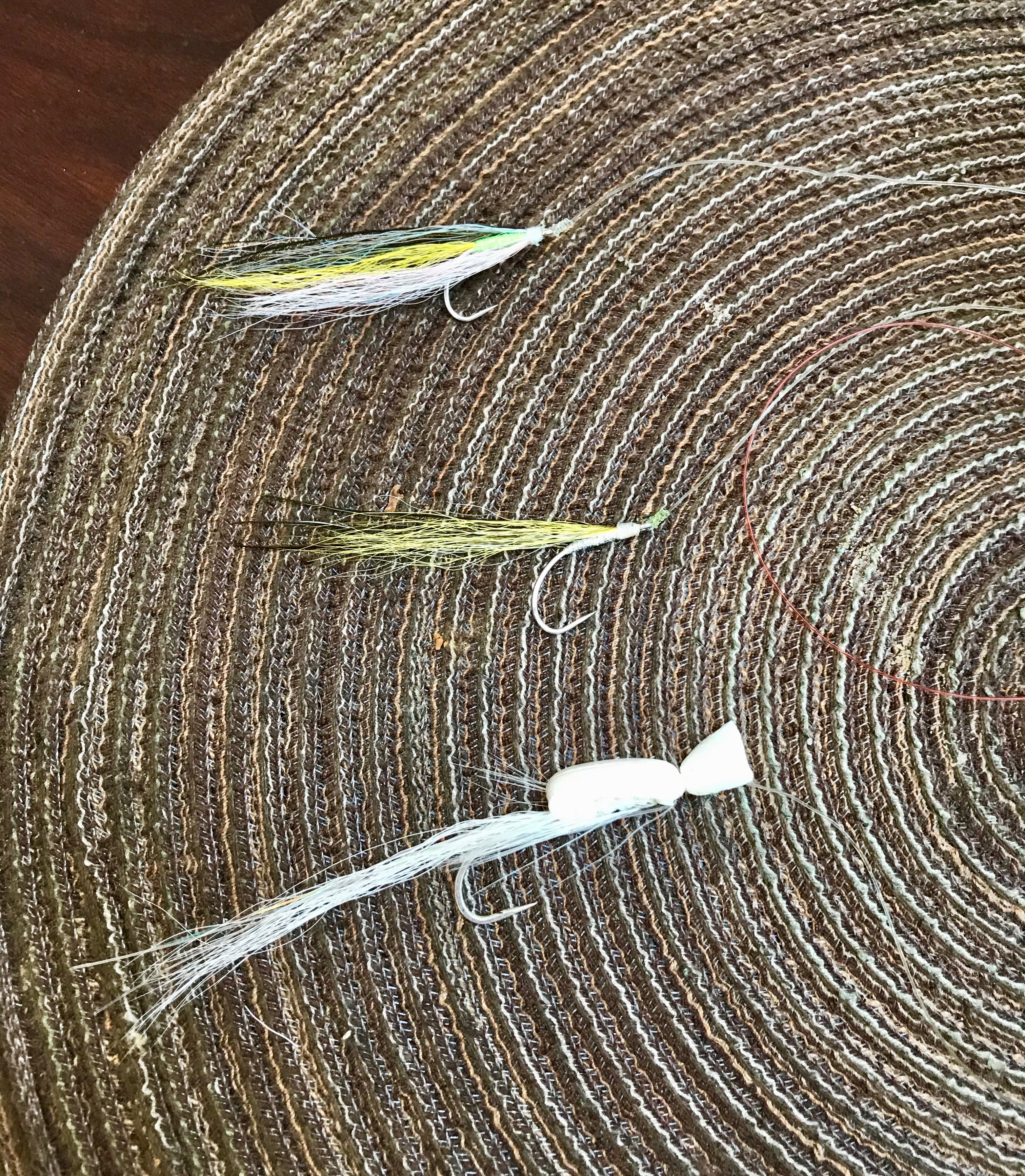
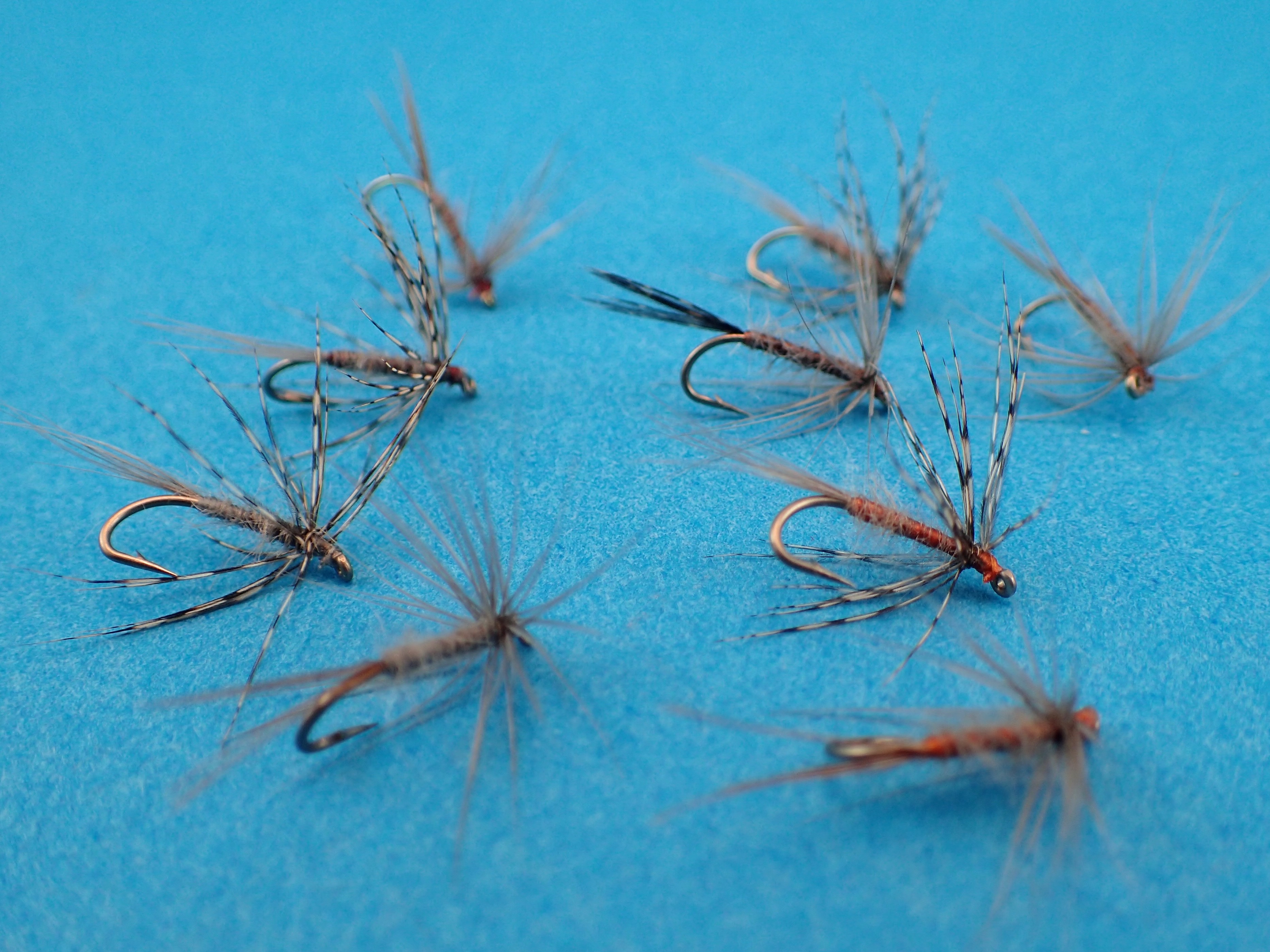
Saturday night’s crew. I had touches on all three patterns.
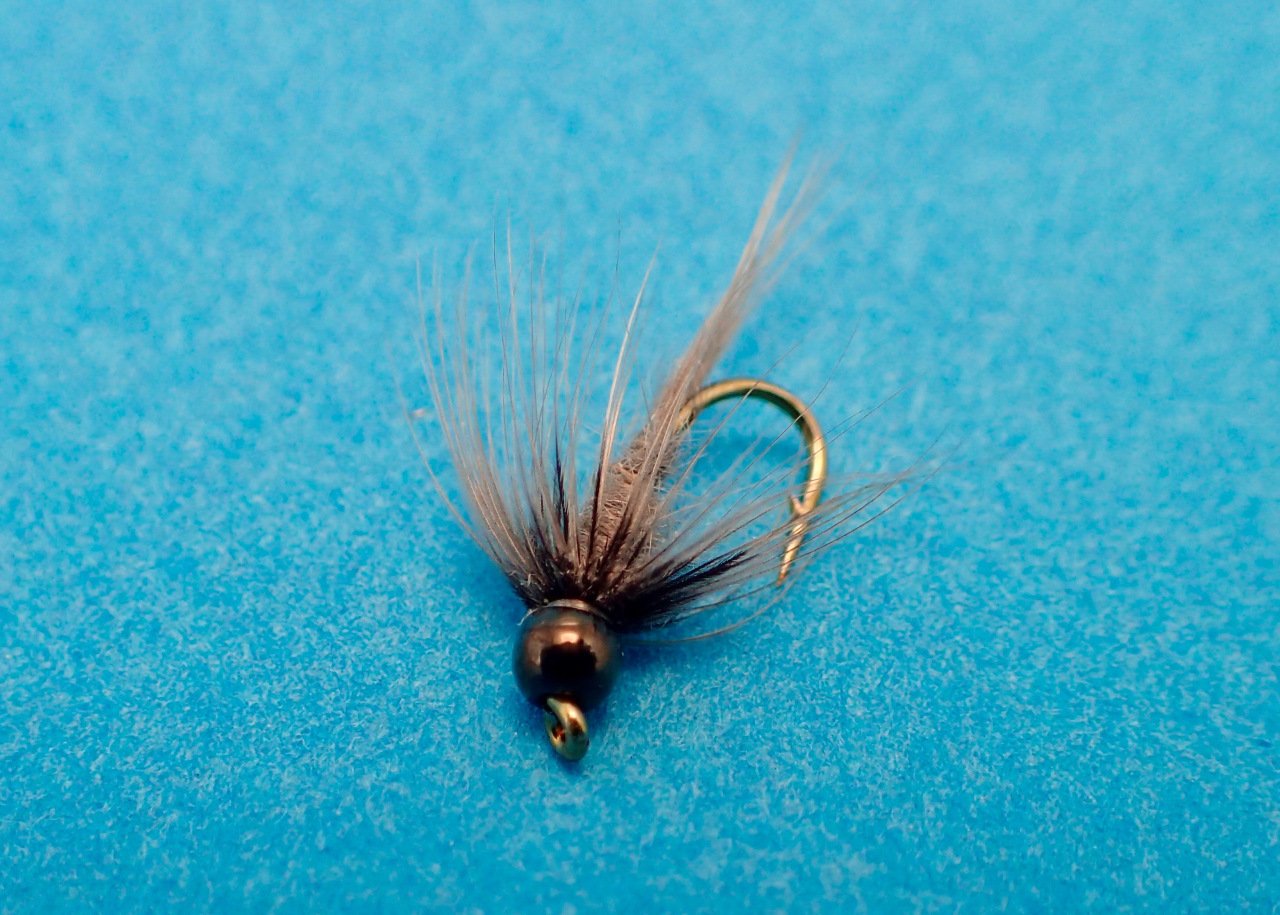
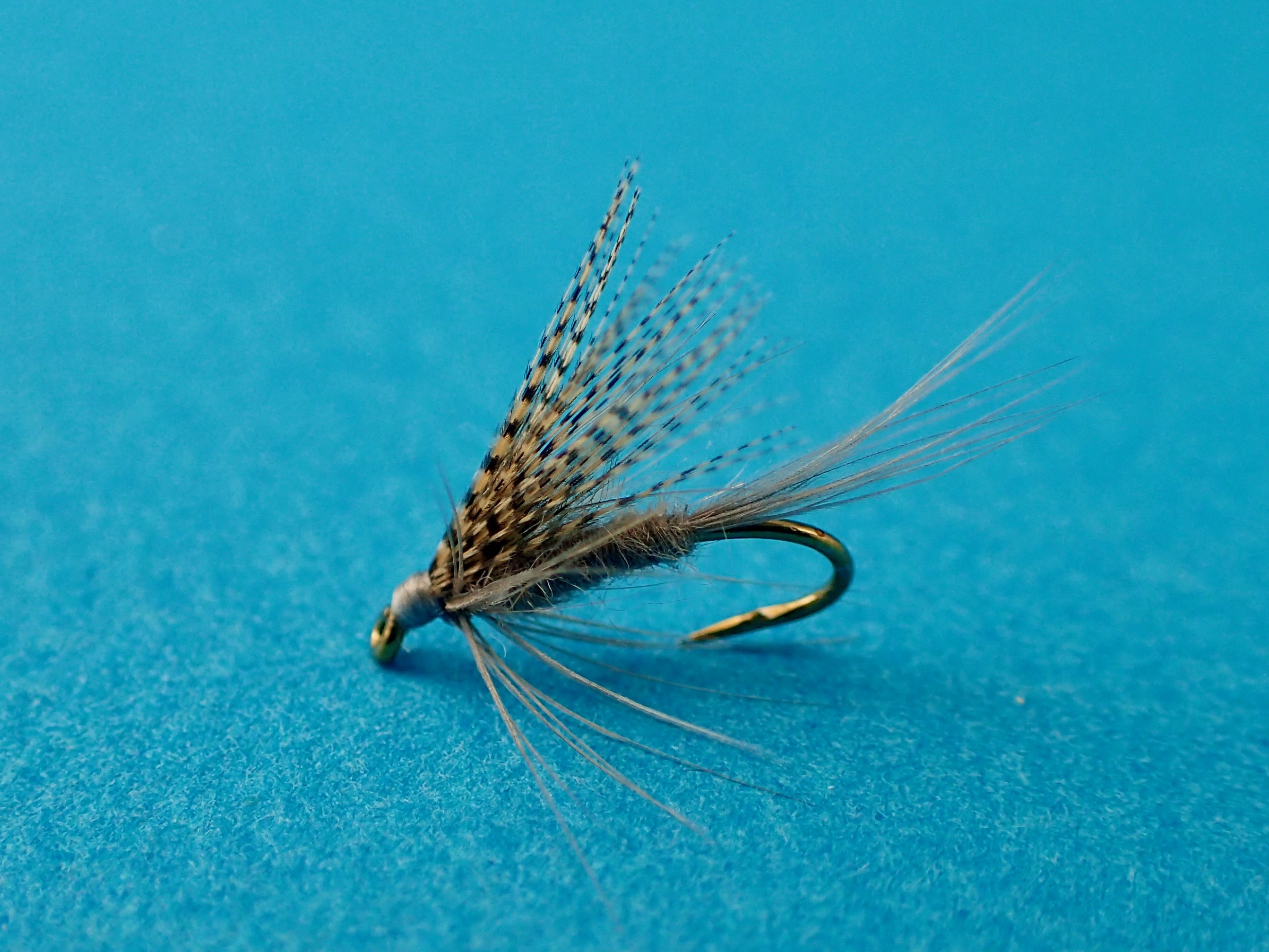
“What are the best soft hackles (or wet flies) for fishing the Hendrickson hatch?” is one of those questions I get a lot this time of year. As always, the best flies are the ones in which you have the most confidence. I should also make this clarification: technically, with Hendricksons you’re fishing wet flies under the hatch. On the Farmington River, prime time for swinging Hendrickson wets is generally in the 11 am-to-3 pm window. Every day is different. Once you see duns on the water, and trout snapping at them, the wet fly game is all but over. But if you want to catch more trout, you should be swinging wets in this pre-hatch time frame. (Of course, you’re fishing a team of three wets. Here’s how to build a wet fly leader.) And so, in no particular order, these are some of my favorite Hendrickson wet fly and soft-hackled patterns.
Bead Head Soft-Hackled Dark HendricksonDark Hendrickson winged wetHendrickson Spiders. Size 12, wet or dry fly hook, gray or rusty brown thread, tail material of your choice, a dusting of muskrat fur or dubbing, then brown partridge or dark dun hen hackle.Bead Head Soft-Hackled Pheasant TailOld Blue DunSquirrel and Ginger. Yeah, I know. Not a Hendrickson pattern. But on the Farmington, we often get a strong caddis hatch around Hendrickson time. If you place this as your top dropper, you’ll be covered if the trout are selectively feeding on the caddis.
I had some excellent Q&A sessions about wet fly fishing at the Marlborough and Edison Fly Fishing shows (great job, people!) and I wanted to share some of what we discussed with you.
Q: What knot do you use when you build your wet fly team leader? A: I’ve been using a triple surgeon’s knot for years. It’s easy for me to tie, and it’s reliable — I don’t think I’ve ever had one fail. People also asked about the blood knot, and the answer is: use the knot you feel most confident about/is easiest for you to tie.
Q: Do you use tippet rings when you build your wet fly team leader? A: I don’t, mostly because I don’t see a need. The perceived need is that it would be easier to replace a dropper tag (rather than build a new leader) with a tippet ring and it’s hard to argue with that. This is a “what works best for you?” situation. I don’t use tippet rings because I rarely change flies on my leader system, and even when I do I’ve learned how to reattach a fly using a minimum of tag material. Speaking of attaching flies, here’s a nifty tutorial from my buddy Tim Flagler on the Davy Knot, which uses very little material.
Q: You say to pause before you set the hook. Aren’t you afraid the fish will spit the fly? A: No. I quote from The Book of Syl: “With the soft-hackled fly, the trout throws caution to the wind, because he’s not afraid to move under the water, and speeds to the fly with urgency.” The fish has made the decision to eat. He’s said “yes” to the fly. With an immediate hookset, you’re saying “no” to the fish. By pausing — asking, “Are you still there?” before you set the hook — you’re ensuring that the fish will turn away with the fly in his mouth, having neatly hooked himself.
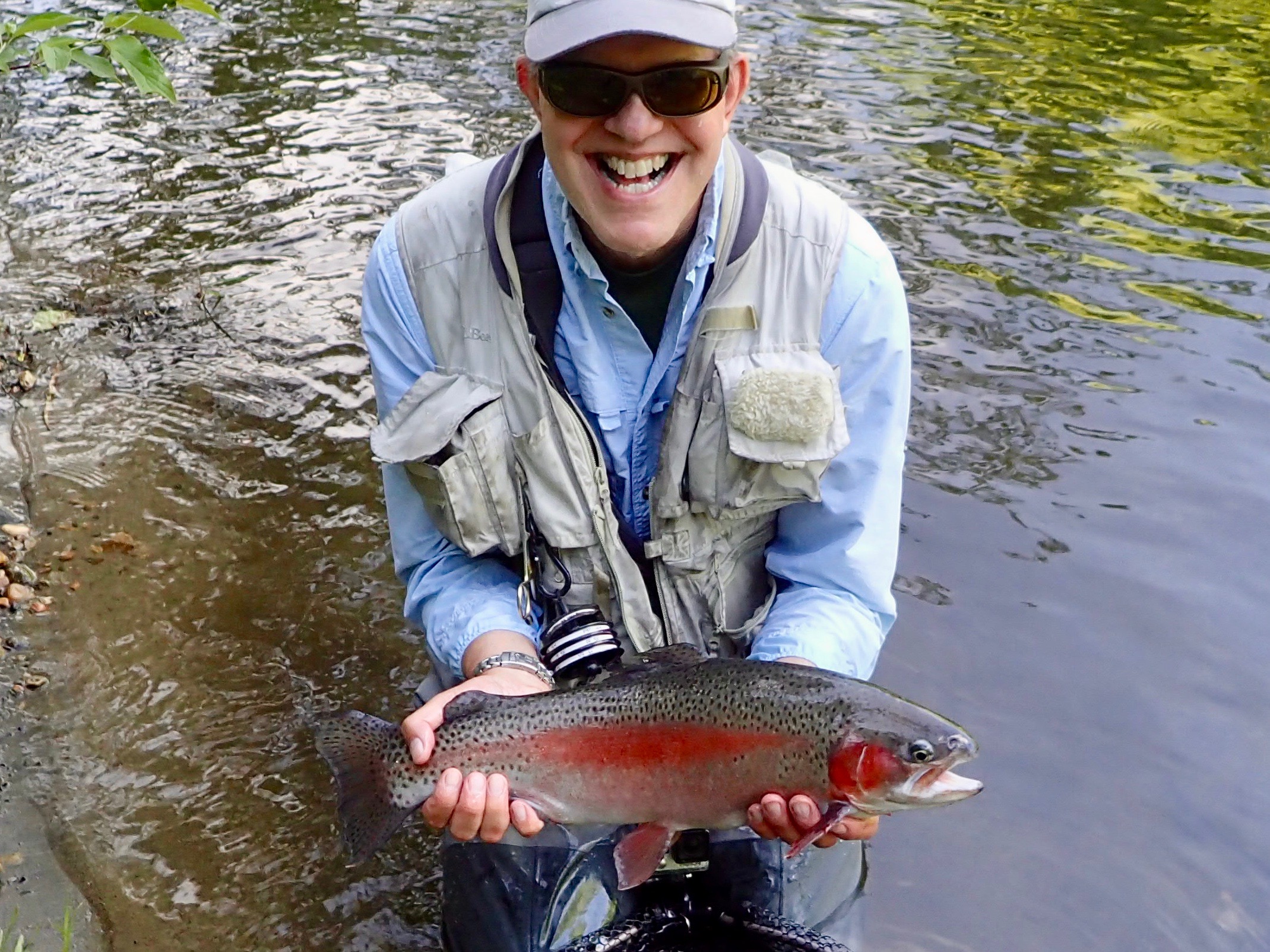
This massive hen blasted the fly, an old English pattern called a Hackled March Brown. She hit so hard she ripped the line out of my hands. There was no need for me to set the hook.
Q: Is fishing wet flies a secondary tactic, or do you ever go to the river intending to fish wet flies? A: I frequently go to the river with the sole intent of fishing wet flies. In fact, I’d say wet flies account for the vast majority of my trout fishing — and catching — between late April and mid-summer.
Ask currentseamser Greg about how good the pre-hatch fishing can be with wet flies!
Q: You talked about using wet flies to catch trout feeding on emergers. Is there a point during the hatch, such as when you see duns on the surface, that you’ll switch to dry flies? A: What a great question! The answer is yes. If I am pounding up fish on wet flies and suddenly my hookups stop — but the river is still boiling with feeding fish — that’s my cue that they’ve either stopped eating what I’m throwing or may now be feeding on the surface. If I see the duns getting taken, and my wets aren’t catching, that is compelling evidence to switch to a dry fly. This scenario frequently plays out during the Hendrickson hatch. It’s wet fly gangbusters up until about 3pm, then suddenly the hookups slow to a crawl. Changing over to a dry usually solves the problem.
I hope that helps, and if you have questions, please don’t hesitate to ask.
Arrive noonish or a little before. Walk the floor, make the rounds, say hello. You can always text me if you’re looking for me — you can find my number here. I’m going to try to catch parts of a few presentations before my Seminar, which is 4:30pm in the Catch Room, Wet Flies 101. Of course, I’ll see you there. Right?
Calling all wet fly junkies! This article discusses the how and why of fishing a three-fly team of wet flies. It includes a diagram that shows you how to build a three-fly leader. MAFFG is distributed free in fly shops all over the — well, Mid-Atlanctic area. Who knew?






 currentseams.com