Thank you, UpCountry Sportfishing and today’s wet fly class

Another great class today at UpCountry Sportfishing in New Hartford, CT. UpCountry is my home shop, and it’s always nice to be tying along the banks of the Farmington River. We covered the same basics as yesterday’s class, took a few new directions, but the result was the same. We all learned something, and a splendid time was had by all.

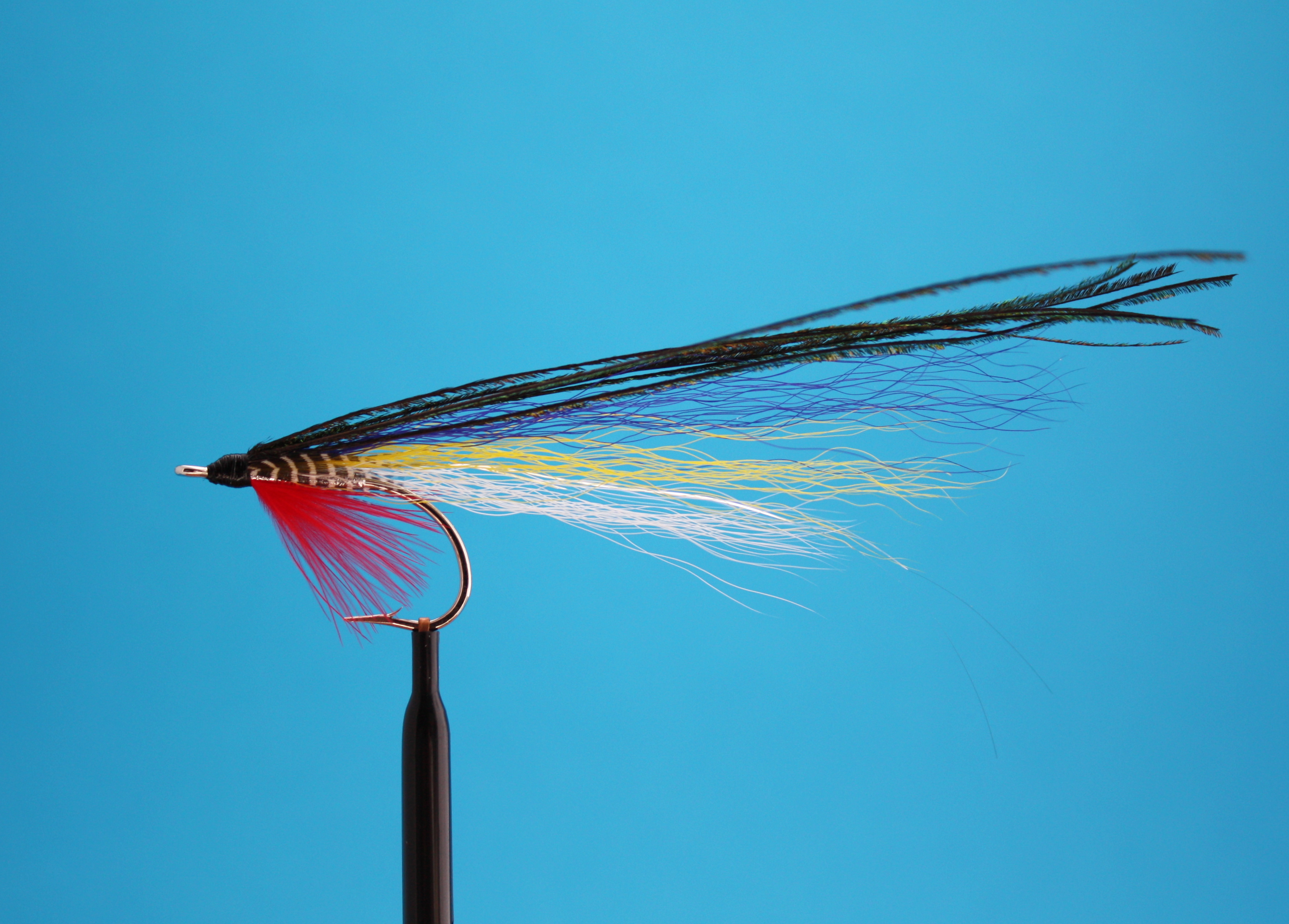
Steelhead Spiders or Soft-Hackles

Image

Next up: flatwing demo Thursday night at the Saltwater Edge in Newport, RI.

Thanks to everyone who attended my wet fly class at River & Riptide.

I love tying flies, but teaching others how to tie runs a close second. I am fortunate enough to be able to do it at a number of area fly shops. Today’s was at River & Riptide in Coventry, RI. Great group of guys, all eager students. It’s amazing watching the transformation that happens in someone’s tying in just a few hours. Our focus today was on wet flies. We covered basic soft-hackles, wingless wets, winged wets, and fuzzy nymphs. Thanks to R&R for letting me teach, and thanks to everyone who made the afternoon so enjoyable.

Drowned Ant Soft-Hackle

Image

I’ll be doing the same class tomorrow at UpCountry Sportfishing in New Hartford, CT.

The Crazy Menhaden three-feather flatwing

This flatwing draws its inspiration from Ken Abrames’ classic streamer, the Crazy Menhaden.

The original pattern calls for eleven saddles. But what if you don’t have all the right colors? Or, what if you have precious few saddles? One solution – the one I’ve chosen here – is to use bucktail instead of saddles to complete the proper color blend that makes this such an attractive fly.

Image

For this version of the Crazy Menhaden I’m using one white, one yellow, and one orange saddle to anchor the center of the fly, add length, and provide the swimming action flatwings are renowned for. (The exception is the biggest fly pictured, which has eight saddles.) The bucktail on the top half of the fly is tied like a Blonde, at the tail end of the shank and near the head. These fibers provide the bulk of the color and content, along with some flashabou accents and long peacock herl. The beige and yellow bucktail throat and sides remain true to the original pattern.

Along with the saddles, the rest of the color palette is bronze, pink, ginger, red, blue, chartreuse, olive, light green, and copper. The largest fly here is 12″ long; the smallest, just a bit over 7″.

I’ve had a lot of success with this fly at night on our rivers here in Connecticut. I like to fish it during the bottom of the tide, on a greased line swing.

You can find the original pattern in Ken’s book, A Perfect Fish, on page 93. When it comes to fly fishing and fly tying, I don’t usually speak in imperatives. But if you’re interested in flatwings and you don’t have this book, you need to get it. It’s the flatwing bible.

Image

Hook: Eagle Claw 253 3/0
Thread: Tan
Platform: Orange and yellow bucktail, mixed
Support: White neck hackle
Tail: Natural white saddle, under 2 strands copper flash, under a yellow saddle under an orange saddle, under 2 strands red flash, under 30 total hairs ginger, pink and violet bucktail, mixed, under 20 total hairs pink and chartreuse bucktail, mixed, under 2 strands green flash under 20 total hairs blue and red bucktail, mixed.
Body: Bronze braid
Collar: Beige bucktail on bottom, yellow and beige bucktail, mixed, on sides
Wing: 15 hairs orange bucktail under 30 hairs olive bucktail
Topping: Peacock herl
 Eyes: Jungle cock

 A closer look at the head detail and the color blends:

Image

A Classic Bergman Wet: The Fontinalis Fin

This is a fly with a great backstory.

The Fontinalis Fin Wet Fly

Image

Hook: 6-16 (this is a 1x short, 2x strong Orvis 1641 size 10)
Thread: Black
Tail: White hackle fibers
Body: Orange wool with fine gold tinsel rib
Throat: Furnace hackle fibers
Wing: Orange mallard married to a thin strip of black or natural grey mallard, then a slightly thicker strip of white mallard

The old-timers up in Maine (or down East, if you’re going for authenticity) who were fishing for brookies thought their quarry was highly territorial. So after they creeled a fish, they’d clip off one of the fins and use it for bait. And what an attractive bait it was: shiny, deep orange, contrasted against dramatic black and white bands.

An enterprising fly tyer named Phil Armstrong realized he could replicate this bait in the form of a married-quill wing wet fly. And thus was born the Fontinalis Fin. “Fontinalis” from the second half of the brook trout’s taxonomic name, Salvelinus fontinalis. “Fin” for rather obvious reasons. What a brilliant concept.

The real McCoy

Image

While it’s tempting to look at the flies featured in the color plates of Berman’s Trout (this fly appears on plate 10) as more of an exercise in tying legerdemain than practical fish catchers, I can tell you from experience that this fly does work. It’s pretty simple as far as married quill wings go, and the rest of the pattern is something anyone with basic tying skills can do.

Tying notes: If you’ve never tied a quill wing, don’t start. Your first quill wing can be the fly-tying equivalent of the Bataan Death March. While I was kidding (mostly) about not starting, I think it took me over a half hour to tie my first quill wing — and that was accompanied by a generous use of rather colorful language. Once you get it, though, the process becomes easier. I’m often asked at classes and demos, ‘How do you glue the different quill sections together?” You don’t. The edges of quill fibers are like velcro — they stick together quite nicely. There’s a specific technique to matching quills (the wings should be a mirror reflection of one another) and marrying the sections. Perhaps someday I’ll post them. In the meantime, you can probably find a good how-to by doing a web search. Also, the quill wings should sit a little higher on the shank so as to not hide the body; I was in a rush to finish this fly, so I plead sloth.

Thanks to everyone who attended my wet fly demo at the Compleat Angler

I think the biggest fears of someone who’s giving a presentation are that no one will show up — or no one will care what what you’re talking about. We were about as 180 degrees from that today as possible. I was overwhelmed by the number of people who attended, and grateful for all the questions that were asked. So, thanks to Scott and Scott and Bob for hosting (and for the sandwich — man does not live by soft-hackles alone). And thanks to everyone who helped make the day so much fun.

The Catskill Wet Fly

I first learned of the Catskill when I read Ray Bergman’s classic, Trout. While it lacks the garish palette of the majority of the flies that appear on the color plates at the beginning of the book, the Catskill is nonetheless an attractive fly – albeit in a rather understated way.

There’s something seductive and buggy about wood duck. The soft brown hen hackle will collapse and pulse in the current, contrasting nicely against the orange floss body. It’s easy to imagine this as an over-sized caddis. Or at least as something that looks alive, and good to eat.

I tied it large, but I can see going down to about a 16 or so with this fly. Although I have not yet fished it, I already have supreme confidence that it will be a fish catcher.

You can, too.

The Catskill

Image

Hook: 1x short, 2x strong size 8-16 (this is an Orvis 1641 size 10)
Thread: Black
Tail: Wood duck
Body: Orange floss under brown hen, palmered
Wing: Wood duck

The Kate McLaren Wet Fly

Ah, Kate-O, my little not-so-yellow friend.

Every year, I’m on the lookout for new flies to tie and fish. My friend Jon, who’s been wet fly-fishing forever, also happens to be from the UK. So he’s been exposed to a broad cross-cultural mix of patterns. When I asked him for some suggestions, he immediately offered up the Kate McLaren. It’s fair to say that I liked Kate the moment I laid eyes on her.

The Kate McLaren is a Scottish loch fly, intended to be the top dropper (or bob fly) on a team of three. While its traditional use is on still water, I’m going to be fishing this on rivers. And while I might give it some time as a top dropper, it’s going to get the lion’s share of action on point.

There’s something about the contrast of the golden pheasant crest tail and the dark body that I find magnetically appealing. Golden pheasant crest almost glows when wet. Who knows what a fish will think this fly is – perhaps a flash of spotted salamander, or a chubby stonefly – but I can’t wait to feel that first take.

Kate McLaren

Image

Hook: 8-14 (this is a 1x short, 2x strong Orvis 1641 size 10)
Thread: Black
Tail:  Golden pheasant crest
Body: Black seal fur (I used angora goat)
Rib:  Fine oval silver tinsel
Body Hackle: Black rooster (I used soft hen)
Head hackle:  Brown rooster (ditto on the hen)

Tying notes: Technically, this is a Kate McLaren variant since I used soft hen instead of stiffer rooster hackle. Since I primarily intend to fish this fly subsurface, I wanted the action the soft hackle would provide. When finishing the body, I tied the black hackle in near the head, leaving the thread at the tie-in point, and then wound the hackle backwards toward the tail. I then secured the hackle with the tinsel, and wrapped it forward to the thread. Also note that the black hackle is smaller than the brown. Some of the Kates I’ve seen have a longer tail, but I like the proportions of this one. I got lazy on the head and left it rough. As Dave Hughes said, trout aren’t interested in neatness.

A new flatwing from the Culton bench: the Rock Island

Rock Island Flatwings

Depending on your cultural exposure, Rock Island Line is a blues, country, or skiffle song. I won’t go into the details of the story, but there’s a railroad and a train involved. It takes place ‘way down south, miles away from the Metro North line, but that’s the route I take when business calls in the City. That train parallels the shoreline, and it goes over plenty of marshy, salty estuaries — you know, the kind stripers like to hang out in. If you’re a bass angler, you can’t help but notice them, especially that rocky island right next to the channel that’s just got to be holding some decent size fish.

The Rock Island is a flatwing bucktail hybrid about 8″ long. Like a lot of the flies I make up, the tying process wandered around a bit before the pattern discovered where it wanted to be. For example, I started with black thread, then switched to purple. Then changed some of the bucktail color blends. I really like the contrast in this fly from bottom to top.

The Rock Island will get fished on a greased line swing on a cool May night when the herring are in. A’board!

A closer look at the head detail:

Rock Island CU

Thread: Purple
Pillow: Pink
Platform: Gray bucktail
Tail: Pink saddle, under 2 strands blue flash, under lavender saddle, under blue saddle, under 2 strands red flash, under 30 total hairs royal blue, amber, and olive bucktail (mixed), under 20 total hairs dark blue and red bucktail (mixed), under 2 strands purple flash, under 20 strands purple bucktail.
Body: Purple braid
Collar: Pale blue, light blue, and gray bucktail, mixed
Wing: 15 strands purple and 30 strands black bucktail, mixed
Topping: 7-8 strands peacock herl
Eyes: Jungle cock