Stuff I Use: Orvis Midweight and Heavyweight OTC Wader Socks

I have to admit it: I’m big on value and small on spending money that seems, at first glance, to be part of some elaborate inflated price scheme. You’re talking about a guy who used beater winter wool socks under his waders for decades. So when you tell me there’s a pair of wading socks that will set me back close to $40, I’m going to look at you a little sideways with my nose scrunched up and maybe make a grunting noise or two.

Having said that, I love the Orvis Midweight and Heavyweight OTC Wader Socks. I’ve used the Heavyweights for several years now. They’re my first choice for a sock when I’m using stocking foot waders in colder water. While no sock keeps my feet truly warm in cold water, these are highly comfortable. I like how I can pull them up over my calf and whatever fleece pants/leggings system I’m using.

I just got the midweight socks and they’re a dream for summer wading. Again, perfect fit, lightweight, and an excellent base layer between your feet and a neoprene boot foot. I typically roll these down to above my ankles to take full advantage of my summer layer. Both highly recommended!

Junky socks for $37.95 would suck, but right out of the box, the Orvis Midweight and Heavyweight OTC Wader Socks scream quality build. These are the midweights. Highest marks for stocking foot summer wading.

Stuff I Use: UnderArmour HeatGear Leggings

As a general rule I thumb, I’m always cold. An exception would be walking a long (or short distance) in waders in 90-degree August heat, blazing sunshine, and stinking Connecticut humidity. Even with breathable waders, my lower body is rendered a soggy hot mess. Fleece becomes the enemy. Enter UnderArmour HeatGear Leggings.

This performance base layer is a revelation. Form-fitting and stretchy, they serve as a protective layer between you and your waders. After a hike, you’re still warm, and you still sweat, but they do a fantastic job of wicking moisture away from your body. After a 15-minute walk, all you need to do is drop your waders and let the fabric do its thing. These leggings are very fast drying, and you can actually feel the cooling effect on your legs as the sweat evaporates. I’m 6′-2″, 185, and I wear a men’s large. Great stuff! Highly recommended.

My new summer kit. I’m not going to win any fashion points, but no one needs to know that I look like a dork under my waders. I stole this idea from Chris Steinbeck and Pat Dorsey when I fished the South Platte last summer. UnderArmour HeatGear Leggings come with an outer patch pocket, but I’m a lefty and the pocket is on the right side only. Some cheap breathable athletic shorts solve that problem.

Farmington River Report: Potentially dangerous temps for trout

The flows have come down on the West Branch (about 325cfs from the dam and about 450cfs in the PTMA). But all’s not well. As predicted, the ridiculous volume released by the MDC burned through the colder stores at the bottom of the reservoir, and those won’t be replaced for months. Right now, the dam release is about 64 degrees, which is barely trout friendly. The problem is, the farther you go downstream, and the warmer the air temp and the more intense the sunshine, the warmer the water gets.

This is from Torrey Collins on this morning’s UpCountry Sportfishing river report: “(water temperature) rises varying amounts depending upon the day, time of day, and distance from the dam (it reached a peak of 67 degrees in Riverton in the late afternoon yesterday). With a much cooler forecast this week and cooler nights, I’d say you can safely fish downriver as far as New Hartford in the mornings, but by noonish I’d be up at People’s Forest/Mathie’s Grove/Campground & upstream in Riverton where the water temps will be a little cooler as the day progresses and water temps rise a bit. Bring a thermometer with you and actually use it.”

So if you choose to fish for trout on the Farmington, please consult this infographic from ColoradoTU.org:

Stuff I Use: Loon Outdoors Classic Mitten Scissor Clamps

The best fly fishing clamps are the ones that you use without having to fret about the product design or the procedure you’re about to perform. Like the Loon Outdoors Classic Mitten Scissor Clamps.

For years, I carried a hemostat. For years, I was frustrated and bothered by their unidextrous design. I’m a lefty, the hemos were righty, and if you’ve ever suffered through an elementary school art class as a southpaw who was forced to use right-handed scissors, you feel my pain. As a remedy, I carried small needle nose pliers. Those worked, but if they’re buried in a pocket, they’re not handy when you need them — if you’ll pardon the expression — in a pinch.

Enter the Loon Outdoors Classic Mitten Scissor Clamps. They fit neatly in the palm of your hand, and they work whether you’re a lefty or a righty. They work in the gloveless dog days of summer, and in the mitten-encased dead of winter. They lock with a snap — hear them click! — onto a tab or loop on your vest or pack, and they’re not coming off unless you want them to. Best of all, they seamlessly meld form and function, so you’re not thinking, “Here we go again,” when you grab for them. Bravo, Loon Outdoors!

The Loon Outdoors Classic Mitten Scissor Clamps are 6″ long, and are constructed of surgical quality stainless steel. They feature a half smooth/half serrated jaw; hook eye-clearing needle; comfy grip with just the right amount of tack; and locking handles. I own several. Best 23 bucks you’ll ever spend.

Farmington River update: flows and land and maybe some non-sucky news for a change

Happy Monday. This morning, Hogback dam is still pumping out nearly 1.2K. According to Torrey Collins, 50cfs is coming from the bottom and the bulk from the over-the-top-spillway. The upshot is a lot of water leaving the reservoir, and not much of it cold. If you choose to fish, please be vigilant about water temperature — and of course, be careful!

As far as the flows getting back to normal: this water dump will continue until the reservoir reaches a level deemed safe by the Army Corps of Engineers. Meanwhile, the CT DPH has ruled that the MDC can be released from their drinking water obligation. This is encouraging as it means the MDC gets their way, and should no longer have a reason to be a dick about releasing a minimal amount of water. But “should” doesn’t mean “can,” or even “will.” Once the ACE determines the reservoir as at a proper level, we’ll see what the MDC does with the bottom release flows. For now, I like that the MDC is releasing only a minimal amount from the bottom, as this will help with restratification. Stay tuned on this one.

So, how about some confirmed good news? The MDC has agreed to a conservation easement that will assure 5,500 acres of land around the watershed will remain undeveloped. You can read more about that here and here.

Up next: the Block Island report.

Let’s try to keep it that way!

Mark your calendars for The Fly Fishing Show in January 2024!

I know, I know, it’s July. It’s hot and the sun is shining and even though your favorite river may be blown out, we’re all still thinking about — if not actually doing — fly fishing. Since it’s never too early to plan, mark your calendars for the 2024 Fly Fishing Show in Marlborough and Edison. Note the new time frame for Marlborough — it’s earlier in the month than usual. I don’t have a schedule yet, but assume I’ll be doing talks and classes and demos as usual. I’ll likely be in Marlborough all three days and in Edison Friday & Saturday. Hope to see you there!

Back from Block, water woes, and a lost season

I feel like my current fishing world can be best summed up by Ray Davies, who wrote, “The news was so bad that I fell out of bed.”

The fishing on Block was soul-crushingly bad. This is the third straight down year, and I felt lucky to have landed five stripers in seven nights. (Yes, you read that correctly.) Four skunks in the mix. (Really?) My biggest fish was 22″, bringing my streak of not landing a keeper or better to three years. How far that shore fishery has fallen!

Back on the home front, Mother Nature and the MDC are wreaking havoc upon the Farmington River. A couple days from now is my traditional date to go fish the dorothea at a favorite mark, but that’s obviously not going to happen. To add insult to injury, I’ve had to cancel both wet fly lessons scheduled for this week.

Normally, I’d console myself by heading to the Housatonic, but that river is also experiencing catastrophic water levels. No smallmouth for you! And no smallmouth for me, either. The white fly hatch will come and go, and none of us will be able to enjoy fishing it. Maybe the Hous will come down to a dry/wet fly fishable level in 2-3 weeks. That’s assuming we don’t get pounded by rain…again. This is now four consecutive alternating years of flood, then drought. It’s the new normal, and it sucks for all of us. What’s worse, it can’t be good for the ecosystem. Would a happy medium be too much to ask? Perhaps the silver lining will be more trout holding over to this fall. We shall see.

Bloody hell! 5,500cfs is a long way from being even remotely fishable.

Finally, good reader, I must apologize for all this doom and gloom. I try to be a positive force, but I also feel compelled to tell it like it is. I suppose I could use this time to prep my fall striper box, or my winter nymph box, or even get a head start on some steelhead flies. Maybe some bluegills down at the pond on Elk Hair Caddis and a six-foot glass rod would cheer me up? Now there’s a thought…

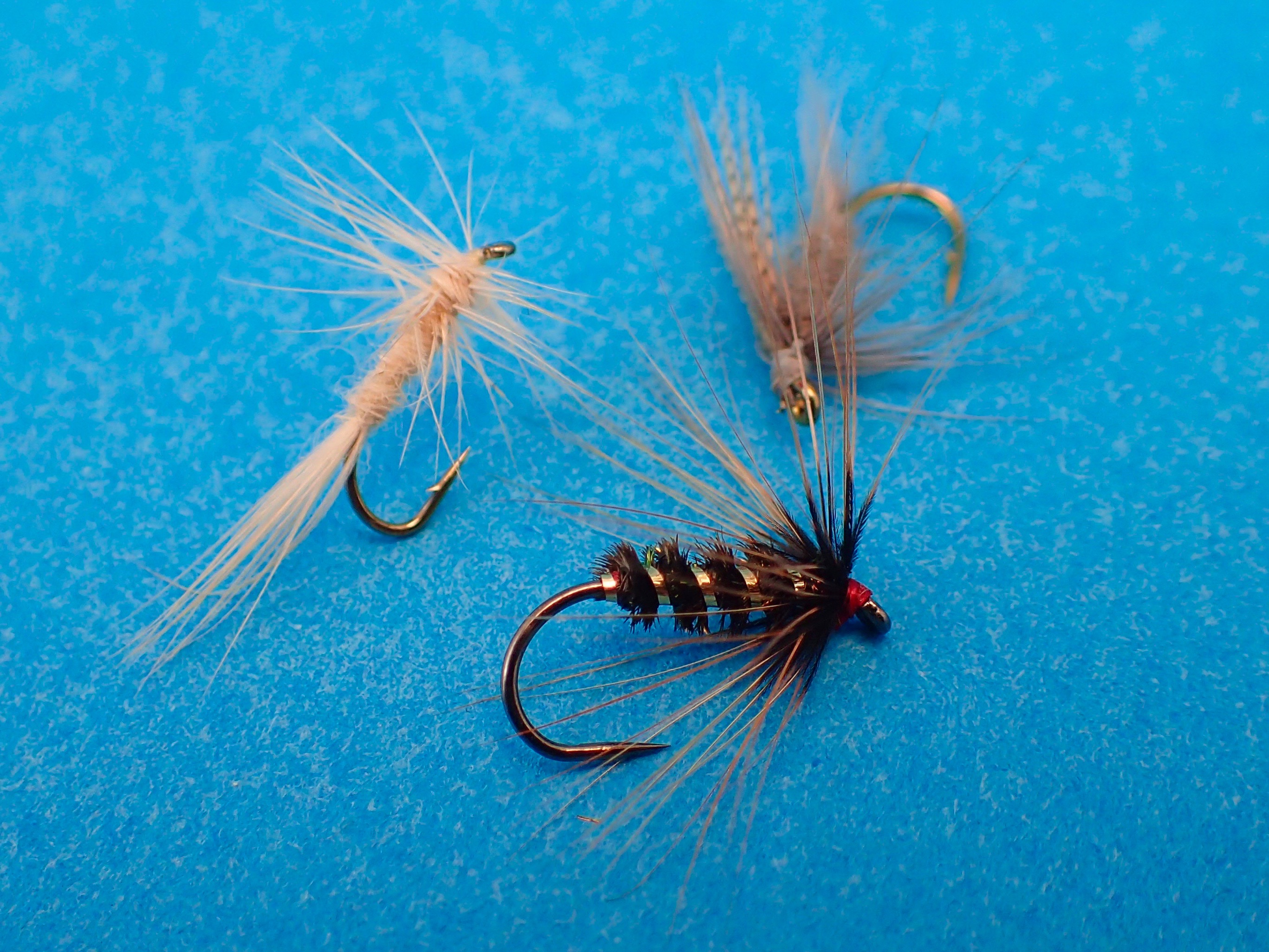
Revisiting a summer classic wet fly: the Drowned Ant Soft Hackle

It’s been a few years since I first published the Steve Culton’s Drowned Ant tying video, and with so many new subscribers — particularly those of you who have a keen interest in wet flies — this seemed like a good time to revisit the pattern. I like this as my middle dropper on summer team of three wets. To the vise!

You can read my original post on the Drowned Ant Soft Hackle here.

Steve Culton at the International Fly Tying Symposium, Somerset, NJ, Nov 11-12, 2023

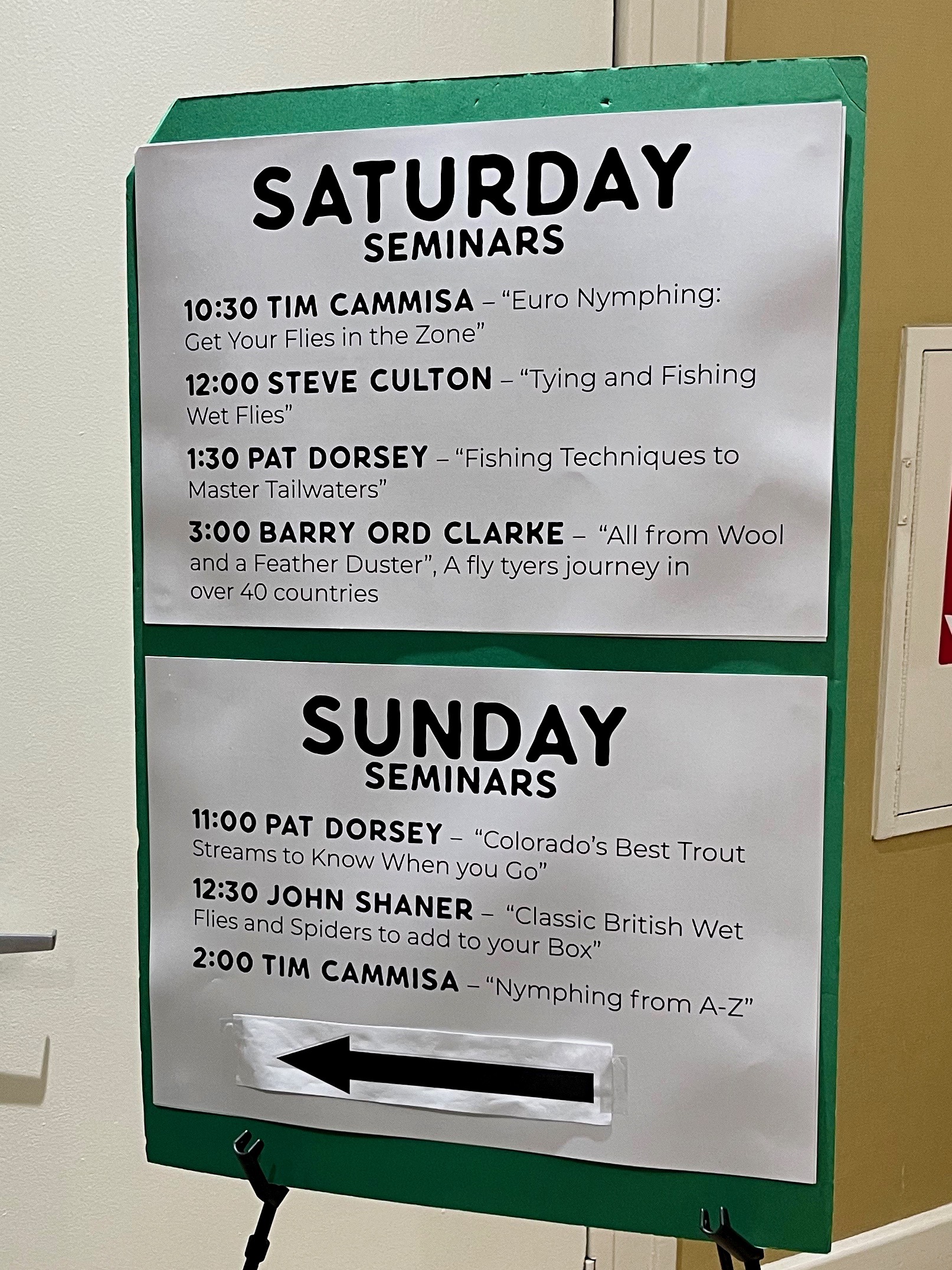
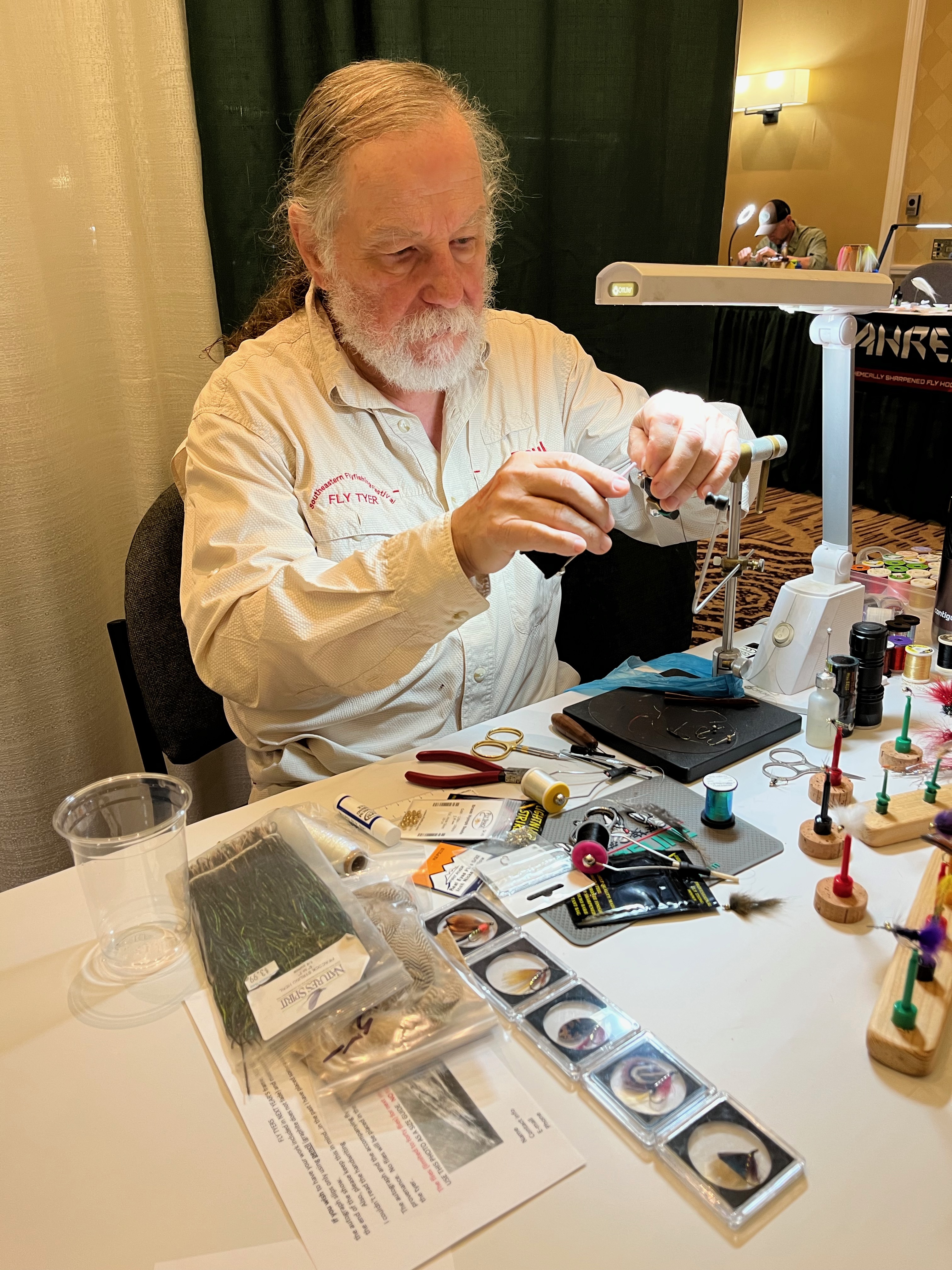
Once again, I’ll be appearing as a celebrity tier at the 32nd International Fly Tying Symposium. That means in addition to having a tying table on the main floor, I’ll potentially be leading classes, teaching seminars, and appearing as a featured tier. I don’t have any details yet, other than to tell you that my contract is signed and in the mail. Once I find out more, I’ll let you know here.

Here’s what I do know: the IFTS is at the Doubletree by Hilton Somerset Hotel and Conference Center. The dates are Saturday, November 11 and Sunday, November 12, 2023. Last year’s show was a blast; you get vendors, tiers, and the chance to see some of the most talented people in fly tying do their thing. Classes are $80; seminars are included in the price of your ticket. Pen those dates in your calendar now!

Of high water, lemonade, and filthy lucre

Yeah, I thought that headline would suck you in.

If you woke up this morning and checked the Riverton gauge, you were greeted to the incredible sight of 1070cfs (now 1240cfs). This, of course, is due to the MDC, under the direction of the Army Corps of Engineers, needing to bleed water from an overfilled reservoir. We’ve been pounded with excessive rain in the last week, which is a good thing. Or is it?

It’s tricky. On the lemonade side, we have water volume just at the right time. 68cfs and an oppressive heat wave do not make a good mix for the survival of trout. From that perspective, this is a good thing. On the lemon side, we have an unusually high water dump that cannot be sustained. Those of us familiar with the total disregard the water gatekeepers have for the natural resource can easily imagine a sudden, catastrophic drop in water levels that will no doubt do damage to trout and invertebrates. The question must be asked: Could you not have released a steady 250cfs, the average release, for the entire month of June, with your already near-full reservoir, thereby avoiding this wasteful dump? (We’ll get to that answer in a moment.)

One thing is certain: a sustained 1K+ water dump is going to hemorrhage irreplaceable stores of cold water. In just one week, we’ve gained 5 degrees of released water temperature:

That sub-50 degree water isn’t coming back until we get some very cool fall nights. The reservoir simply cannot re-stratify in the heat of summer. It’s happened in recent years: the flow from the dam is robust, but it’s coming out at temperatures that are close or at the stressful threshhold for trout.

Never was this resource so ridiculously managed, and it’s all because of money. In what has to be one of the most absurd contracts in the history of water management, the MDC actually saves money by ignoring requests from downstream stakeholders for increased flow. At a recent meeting, the MDC head stated that they currently have no mechanism for releasing more water than the legal minimum or what the Army Corps orders for flood control. That’s not entirely true. They can release water called for for power generation downstream — and pay a fee of $1 million to do so — or ignore such requests and pay a fee of $250K. So MDC has decided to keep their $750K and screw everyone else who uses the river for recreation, screw the wildlife, and screw those of us who depend on the river for income.

To that last point: I should be on my way to the river right now to give a wet fly lesson, but I’m not. I had to cancel. So, I’m out a guide fee today. It’s not that big a deal to me. Because unlike the MDC, I’m not completely beholden to profit.