What’s this? Two posts in one week? Yessir, campers! As promised, we are trying to return to a regular posting schedule on currentseams.com. I want to thank everyone for their patience and loyalty over the past year. Let’s get to it.
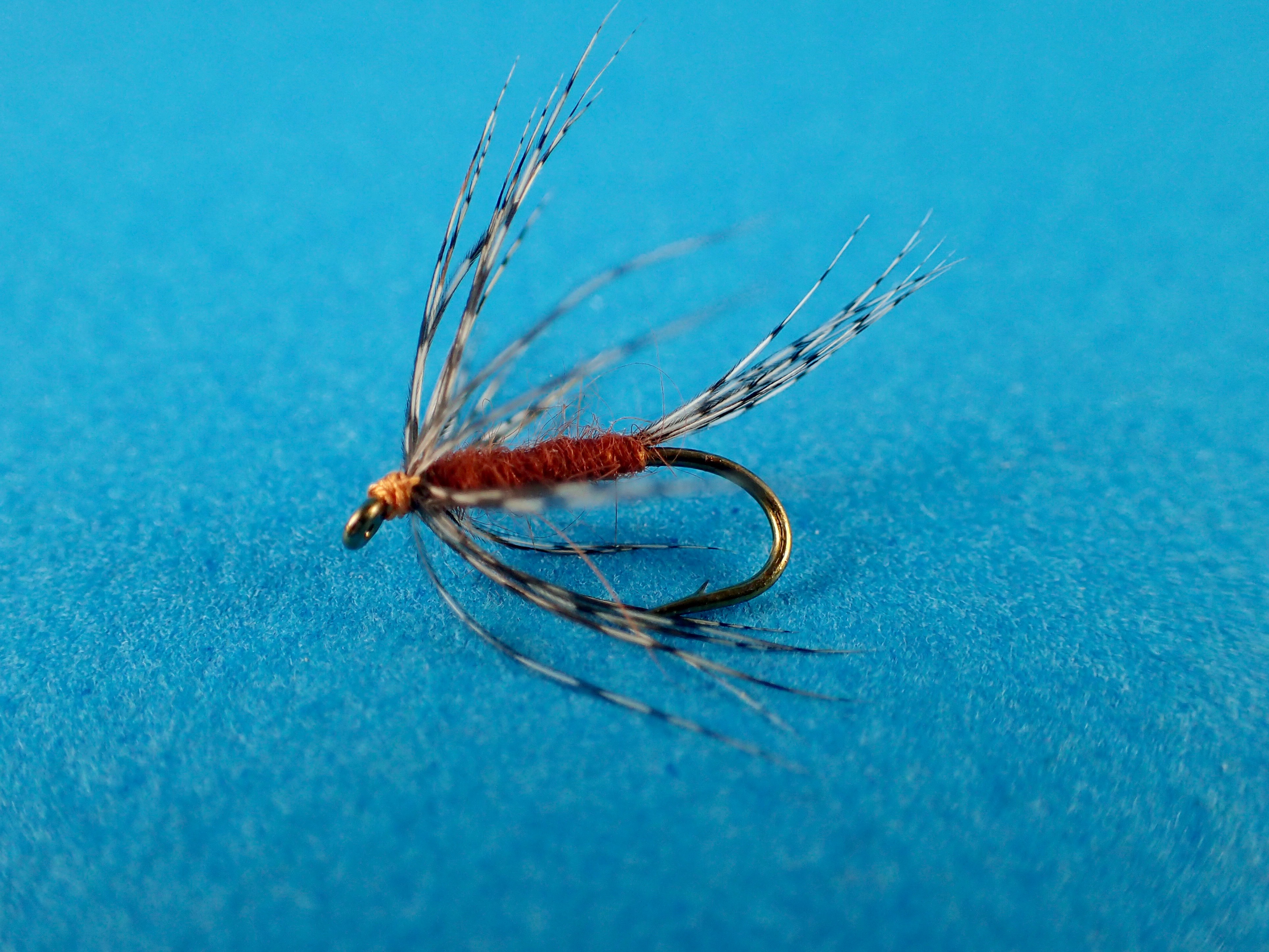
The Iso Soft Hackle is a wet fly I prototyped several years ago. Then, I test it on the river for months or years to prove its worthiness before I pass it along to you. This is an outstanding pattern (he said, modestly). The past two summers, it has accounted for some of my biggest trout taken on wet flies. It’s easy to tie, and the materials are readily available. Here’s the fly and the recipe as outlined by Tony Lolli in his outstanding Guide Flies column from On The Water. So what are you waiting for? Get to the vise. It’s Iso time!
Last week I mentioned that I was testing a “new” Isonychia wet fly. (I placed the word in parentheses, because so much of modern fly tying is derivative, riffing off countless other patterns that came before. Not that that’s a bad thing! Rock ‘n’ rollers and jazz hepcats have been doing the same for decades.) Of course, I didn’t expect that mention to go unnoticed; in fact, I received multiple requests for more details.
But to quote Don Vito Corleone, my answer is no…and I will give you my reasons.
For me, a new fly pattern is a multi-faceted process. I start with the creative spark, and determining the need for a new pattern. That need can be as simple as, “I want my own fly,” or that I just don’t like what others have done before me. Then, I go the vise and build prototypes. Next comes testing. I may refine the fly and make small or large changes, depending on the pattern. The most important part is the conclusion. Does this fly work? Do I enjoy fishing it? And most of all, do the fish eat it?
All of this can take weeks, and usually months or years.
So, my apologies. No new Isonychia pattern for you…yet. I can share with you that so far it looks like a winner. Once it gets the seal of approval, you’ll all be the first to know. Not to drive anyone further bonkers, but I’ve also got a LaFontaine-inspired version of the Squirrel and Ginger in the works, and the early results are also very favorable. Plus that Henry’s Fork cripple (not a new pattern, and not mine, but worthy of inclusion in your box). It’s a crazy few weeks so I beg your pardon and ask for patience. Remember the sage words of Hannibal to Clarice…
Every day is different. For proof, I offer yesterday. Yesterday was my worst wet fly fishing outing of 2022. If you had shown me the conditions, the mark, the number of actively feeding fish, the time of day, then offered a bet that would not catch a fish, I would have taken your money without another thought, Then, for over 90 minutes, I would have been frustrated to the point of incredulity. I would have eventually won the bet, as I managed one 11th hour trout, but the lack of wet fly hookups was a mystery that I pondered as I re-rigged for dry fly.
My best guess as to what was happening was that the fish were keyed on really small stuff — and they wanted the fly delivered on an absolute dead drift. Over the course of two hours, I had two bumps, both coming when I raised the rod tip to cast. This kind of reaction strike that doesn’t result in a hook set is clearly the result of a fish not committed to the take. I was fishing with Toby Lapinski, and he was working some slower water below me. Toby had a good dozen bumps on his team of three wets, but no hookups. Clearly, these trout were feeding on something other than what we were throwing, and how we were throwing it. Still, I’d expect at least a few accidents — trout being the small-brained-wired-to feed-opportunistic creatures that they are. The final piece to the puzzle that clued me in to the fact that they would only eat on the dead drift (rather than the mended swing or dangle) was that each of our wet fly trout came on an upstream dead-drift presentation.
A hefty mid-teens rainbow taken by Toby on one of my size 12 soft-hackled Hendricksons, which is a fair stand-in for an Isonychia. The late afternoon Iso hatch was pretty good — I’d give it a 7 out of 10 — and yet the trout were not keyed on that bug. That’s too bad, because if they were I have no doubt we would have caught far more trout on wets. We never heard any of the loud splashy takes that are so typical of trout feeding on Isos. The sulphur hatch was disappointing — that gets a 2 or 3 — but hatches progress and evolve and it up to you to crack the code. Which, as it turns out, I did once the pattern changed. (Photo by Toby Lapinski.)
I often talk about making adjustments to increase your fishing success. But sometimes you’ve got to be prepared to fail, and fail miserably, in order to figure things out. To wit: I kept fishing wets on mended swings and dangles to prove that the trout were keyed on small bugs on a dead drift. I was also fascinated by the prospect that they would not hit any of my wet flies (Squirrel and Ginger, Partridge and Light Cahill, Hackled March Brown) even when presented directly over their lie. It’s all more useful data for the fishing experience bank.
But I’d had enough experiments. By 7:20 I was in position and rigged for dry fly. I started with a size 20 because the rise forms were textbook smutting trout. Remember last week when I told you that I stuck fish on seven consecutive casts? On this night, I rose nine consecutive fish before I could rack up a hook set. By then, it was after 8pm and I’d made the command decision to go with a bigger fly. Our Lady of Blessed Magic Fly (size 16) don’t fail me now! And she didn’t.
Any misgivings I may have had about catching fish during this session were gleefully crushed by the last half-hour of dusk into darkness. Using a mix of Usuals, the Magic Fly, and Catskills Light Cahills, I took a good number of trout on the surface. We stayed until dark; my last two customers came when I could no longer see my fly. One was bucket method hook set, the other a sharp tug as the trout, Mykiss the Leaper, came tight to my reel. Toby was still casting to rising fish as he slowly made his way out of the pool in the indigo darkness.
I guided Joe yesterday, and while it wasn’t a textbook wet fly day, we experienced some tremendous action (I lost count of how many trout we hooked and landed). Joe is an experienced angler who has dabbled in wet flies, but wanted some serious instruction in the ancient and traditional subsurface art. We fished from 2:15-6:15pm, and visited two marks, one within the Permanent TMA and one below it, 385cfs and 465cfs respectively. It was a strange kind of wet fly day in that there was no voluminous hatch, nor were there frequent, consistent risers to target. Nonetheless, Joe slayed ’em. This speaks not only to Joe’s abilities, but also to the efficiency of the wet fly. It may not look like anything is going on, but there can indeed be mischief afoot underwater. Joe fished a three fly team of a Squirrel and Ginger top dropper, Light Cahill winged middle dropper, and Hackled March Brown on point. All three flies took trout, a mix of rainbows and wild browns. Several of the rainbows we landed had bird wounds — watch out, trout! A great job by Joe and a fun afternoon of fishing and catching.
After our session, I headed north to catch the “evening rise.” The quotes are sarcastic, as the hatch never materialized. Oh, sure, there were a few caddis and suplhurs and some huge creamy duns, but they were few and far between. The river never got to boiling — the best it could muster was a brief simmer around 8:45pm. I had several swings and misses (I was fishing dry fly) and only stuck two trout. A disappointing performance by Mother Nature, but there are worse ways to spend two hours than standing in a river, waving a stick, and enjoying a fine cigar.
This was the scene for much of the afternoon. I told Joe he was going to become a dangerous wet fly machine, and here’s your proof.
If you want to catch more fish, pay attention to the little things. You’ve heard that from me before — heck, I’ve got three presentations and written several articles on the subject — but it bears repeating. Here are a few lessons I hammered home to both clients and myself (we all have to pay attention to the little things) on some recent wet fly outings.
On the swing and especially the dangle, don’t set the hook. Let the fish set itself. When you feel the strike, ask yourself, “Are you still there?” The answer will always be yes, if you allow the fish to turn away and drive the hook point home.
Look for consistent, active feeders on emergers. You’ll know the bug/feeding stage from the rise form (slashy, splashy, showy) and that there are no duns visible on top of the water. Those are the fish that will rush to eat your wet flies. Just left of center in this photo is what I’m talking about.
Match the hatch! If you see size 16 creamy/sulphury mayflies coming off, and you don’t have anything like that on your leader, get some on. Now.
Give the fish a choice. Droppers are always the fastest way to find out what the fish want. Different sizes, colors, species, life stages. The fish will always tell you when you get it right.
The Hackled March Brown continues to be a consistent summer big fish producer. It’ll be my default point fly pattern through August.




 currentseams.com